
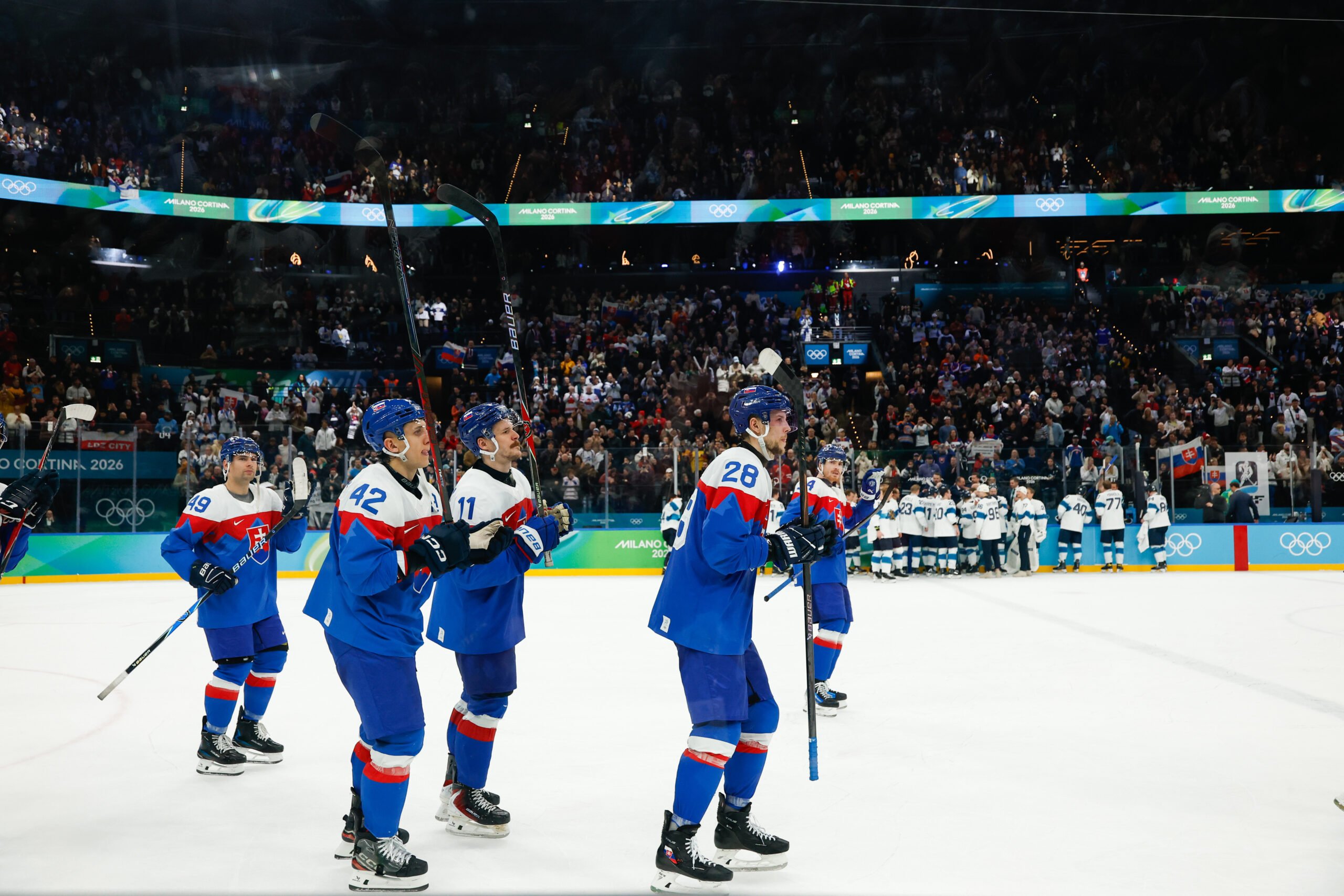
Slovakia played a tight bronze medal game for 40 minutes, then the third period got away in a hurry. Down 2-1 late in the second, Slovakia had the game in reach and a path to pressure Finland into a one-goal finish. Instead, the third opened with penalties, Finland’s power play struck, and a one-goal game turned into a rout.
The Middle of the Ice Was Never Slovakia’s Game
Slovakia’s biggest issue was not effort. It was access.
Finland owned the neutral zone and forced Slovakia into low-value entries. When Slovakia did gain the red line with possession, the next touch often went into a wall of sticks, and the next play became a chip and a change. Over time, that pattern drained Slovakia’s ability to build any sustained offensive zone time.
You could see it in the way Slovakia attacked. Most rushes ended wide, then died at the boards. The few looks that did come from the middle were isolated, one shot, then Finland recovered and reset the game back to the same problem. Slovak postgame reaction leaned into that; the team felt it had the game set up well after two periods, but could not create enough with the puck to flip the score.
This is the takeaway that matters for the next best-on-best tournament. Slovakia can defend at this level. The next step is building an entry plan that creates middle-lane touches, not just safe dumps and perimeter retrievals.
Unnecessary Penalties Put Finland on the Horse
Slovakia’s comeback window was the start of the third period. It closed quickly.
The moment Finland made it 3-1, the game state changed completely. Slovakia’s bench knew it. Multiple Slovak players pointed to the same issue postgame: the third period started with shorthanded time, and it is hard to chase a goal while killing penalties.
Erik Černák’s wording was direct. Slovakia had it “very well played.” Finland led by one after two, and then Slovakia took “unnecessary fouls” that handed Finland momentum. Samuel Hlavaj echoed it from the crease; the third did not go as planned, and starting it with penalties made the job harder.
That is the bronze medal game in one paragraph. Slovakia did not lose because it lacked talent. It lost because the margin is so thin that one bad penalty sequence turns into a power-play goal, then the next shift becomes a scramble, and the next goal follows before the game can breathe.
The finishing stretch also showed how fragile the score became once Slovakia had to chase with six attackers. Slovakia pulled the goalie and tried to manufacture offense, but mistakes in puck management led to empty-net goals that made the final score look harsher than the game felt for two periods.
The Group Has a Core, But It Needs More Finish In These Games
Slovakia’s tournament still matters. The team beat Finland 4-1 in the group stage and reached the medal weekend, which is a result. The bronze medal game shows the difference between being in the match and winning it.
Related: 3 Takeaways From Slovakia’s 6-2 Loss to Team USA
Tomáš Tatar called the final score “cruel,” and he was not wrong. Slovakia was one goal away from forcing a real finish after his late second-period marker made it 2-1. But the cruel part is also the honest part. Slovakia did not generate enough consistent threat to make Finland change its posture.
That is where the roster construction shows. Slovakia has young NHL pillars and legitimate high-end pieces, but the team still leans heavily on a small group to create offense. When the game tightened, Slovakia did not get a second wave that could keep Finland stuck in its own end.
The positive is that the experience was still high-level national play for players. Players framed this as a learning moment for a young group that expects to be in these spots again. The negative is that “learning moment” is often code for missed opportunity, and Černák said it plainly, this was a unique chance to win bronze in an NHL-player tournament, and Slovakia let it slip when the game was still there.
