
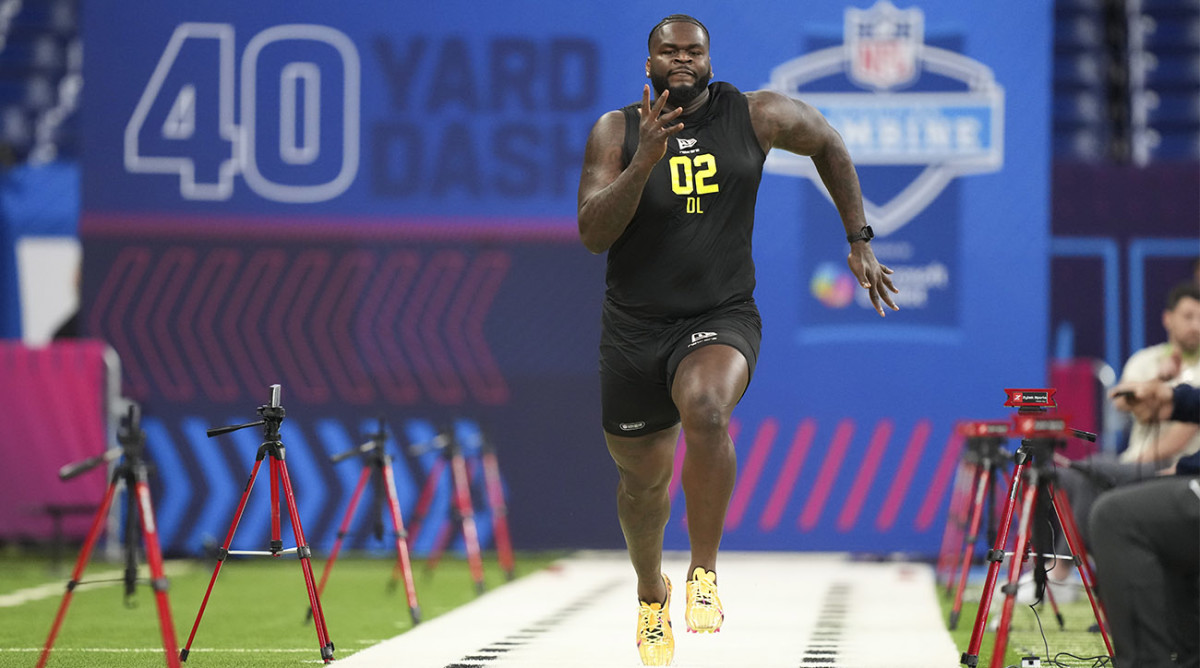
The NFL Scouting Combine is dying. The annual event in Indianapolis is starting to feel like officials using chains to measure first downs – a relic of the past that the league keeps around for reasons that have nothing to do with the stated purpose. Elite players don’t work out. More teams are skipping the annual event. Everyone knows the drills are irrelevant. It’s time to consider re-doing the entire concept.
The Combine has always had critics. It has been able to survive despite the argument that it’s a “meat market” and doesn’t have the players’ best interests at heart. That topic is still worthy of debate, but that’s not why the combine is losing relevance. It no longer feels necessary. Are players gathering at Lucas Oil Stadium in Indianapolis to inform teams or to help the broadcast?
The two biggest arguments for the combine being worthwhile are the medical evaluations and in-person interviews. Even those factors feel like they could use an update. The current system has been in place a long time. Expect it to be challenged moving forward.
Here are five reasons the combine is losing its luster…
1. Technology
Amazingly, the core physical tests have barely changed since 1982. The ability to measure athleticism has increased tremendously thanks to GPS data and other sources. And yet the league still has players bench-pressing and running around cones in shorts.
Why would a team care how a player runs a 40-yard dash when it can break down exactly how they move in pads in the heat of competition? Even the drills that correlate closer to positional skills, like offensive linemen running the short shuttle, can be measured more accurately on the football field. Even if they added more specific movements and got away from the long-established standards, nothing could compete with tape. Paul Brown, credited with introducing the 40-yard dash in the late 1940s, was known for his commitment to innovation. He’d be embarrassed that players still run it.
The interviews, which have always been a bit of a minefield because of teams’ insensitivity, could be done on Zoom. And sharing medical data, if done carefully, is easier than ever. Is it necessary to bring these players to an Indianapolis hospital just before their workouts or meetings?
2. Elite players bail
Potential first-round quarterbacks have been trending away from throwing for some time. Why would they? They’re not passing to their guys and are almost always better served to wait for their school’s pro day. The apprehension about working out has spread to stars at other positions. Last season, the only top-6 pick to participate in drills on the field was Patriots offensive lineman Will Campbell.
Criticizing players for not competing overlooks the fact that this isn’t really a competition. Yes, they are performing under pressure. But it’s impossible to replicate a game environment, which is the only place players should be judged.
3. It’s a house of lies
The media availability of team decision-makers has become a big part of the combine. The only thing more nimble than a talented player navigating the cone drill is a general manager or coach sidestepping the truth. Arizona Cardinals GM Monti Ossenfort’s claim that he had a “good dialogue” with quarterback Kyler Murray on Tuesday was debunked by reliable ESPN reporter Josh Weinfuss the same day. Fitting for a franchise that had then-coach Kliff Kingsbury stand at the podium in Indy and say the Cardinals were committed to quarterback Josh Rosen… a couple months before they took Murray at No. 1 overall.
A good general manager always has a motive. Serving the media in any way is rarely one of them. Instead, they treat the press conferences less seriously or use it to publicly negotiate. One thing they never do is share how they really feel about a prospect.
The players themselves are often rehearsed and inauthentic. That surely extends to their team interviews. Remember when Johnny Manziel blew away the Jaguars front office by knowing most of their names having never met them? Jacksonville GM David Caldwell told Peter King that Manziel was “impressive” and “prepared.” As it turns out, it was closer to a parlor trick than an indication Manziel was ready for the NFL.
4. Teams get fooled
The famous “workout wonders” – like Mike Mamula (1995) and Vernon Gholston (2008) – should be a phenomenon of the distant past. But these drills appear to still affect teams’ thinking. Why else would the Indianapolis Colts have selected inexperienced quarterback Anthony Richardson at No. 4 overall in ’23?
Successful teams like the Rams — who don’t go to Indy — probably don’t want to fall in love with irrelevant data points. Why even put this kind of information into your brain when it can only distract you from everything on tape?
5. Entertainment alone is not enough
Creating content is not a worthy goal for the combine. If the overriding purpose is to get ratings and add juice for talk shows that still desperately want to talk football, why still pretend the workouts matter?
For fans of the draft, the combine is a great primer and the broadcasters do a fantastic job setting up the next two months. Does the NFL need the players going through the motions to achieve that? Just do a series of draft preview shows and make the GMs and coaches available locally.
The NFL has mastered creating events in the offseason. But when it makes a huge deal out of the schedule release, no one is pretending it’s anything more than what it is. We still hold onto this idea that the scouting combine is a critical test for the players that are going to end up in the pros in a few short months. More and more, that feels like an empty promise from a league that knows its audience will always be hungry for more football.
Related: 4 NFL Trade Predictions Based on Prediction Market Numbers
Related: 2026 NFL Mock Draft: New 3-Round Projection for Combine Week