
For some bikepackers, dialing in their packing setup is part of the fun. For others, it’s a frustrating obstacle on the road to adventure. Love it or hate it, there’s no way around it. We all need to outfit our rigs to carry our stuff securely and sensibly before we pedal off into the great unknown.
As creator of BikepackBaggregator.com, I’m immersed in the latest gear and the creative ways riders put it to the test. I’ve spent more hours than I’d like to count entering products into spreadsheets and reading a delightful variety of real-world bike and gear pairings submitted to our bikepacking setups collection.
With this hardwon perspective, I offer you six current trends that will shape the way you load your bike in 2026 and beyond.
Trend 1: Gear Adapting to Riders (Not the Other Way Around)
This meta-trend underpins the rest, and it’s a very good thing. As bikepacking moves further toward the mainstream, we see a wider variety of people looking to make it their own. They want solitude and adventure away from busy roads, they want to carry enough stuff to be safe and relatively comfortable, and they want to do it on a wide variety of bikes.
Many modern off-road-capable bikes have limited bag space thanks to smaller frame triangles, 29er wheels, and dropper seatposts. Unless you’re really tall or really minimalist, carrying enough stuff in a classic soft bag setup with a seat bag and handlebar roll can be tough. Fortunately, as the trends below illustrate, modern bikepacking gear is reducing the number of compromises you have to make. Your legs will still thank you for packing light, but the choice is now yours no matter your height or bike geometry.
Asa Rogers
Many of bikepacking’s recent gear trends also involve what I call “quality of life improvements.” Easy, frustration-free cargo access saves time and energy, both physical and mental, for the miles ahead. This doesn’t mean bikepackers are lazy. Far from it! It makes us a bit faster and more efficient, better equipped to tackle routes at the edge of our comfort zone, or simply, and importantly, just happier.
Trend 2: Rackpacking Still on the Rise
The best way to carry more gear on a bike is and always has been a rack (or two). Until recently, cyclists with capacity problems and bikes without rack mounting eyelets were mostly out of luck. Racks and panniers were for touring: riding pavement and light gravel using rigid bikes with mounts in all the right places.
Soft, rackless bikepacking bags were designed with rugged, off-pavement riding in mind. They’re lighter and more streamlined than racks and panniers, mountable on almost any bike, and less likely to break, leaving you stranded in the middle of nowhere with an armful of gear. But they’re limited in capacity, and packing them has always been a frustrating exercise in stuffing, cinching, and staving off the dreaded droop.
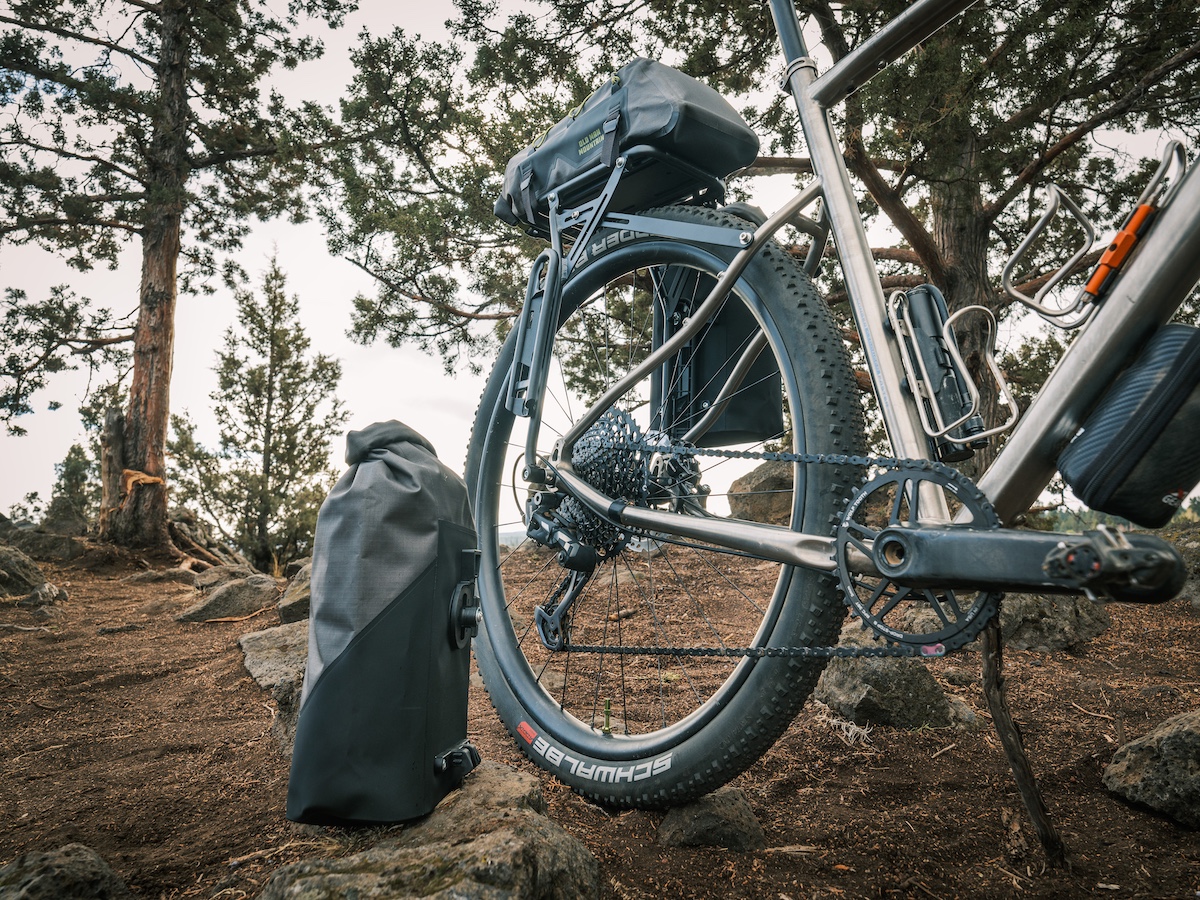
Enter the universal-mount rack. These magical cargo carriers attach to any bike without eyelets by mounting to a special axle, or sometimes seat stays or fork blades. The concept opens the door to reliable, copious cargo space on the bikes we already love to ride, from full-suspension MTB to carbon road bike.
The Old Man Mountain Divide, Tailfin CargoPack, and Aeroe Spider were universal mount pioneers, each with a different approach to style, weight, cost, and bag compatibility. Tailfin is light but pricey, Aeroe heavier and more affordable, and Old Man Mountain right in the middle, with wider, non-proprietary bag compatibility. Now, newer additions to the category such as the Mica Rat Tail, MTB-friendly sizes of Ortlieb’s Quick-Rack, and Restrap’s brand new Switch Rack give riders even more options to choose from.
Courtesy of Old Man Mountain
For bikes that do have rack eyelets, possibilities are nearly endless. Pizza racks, basket racks, stabilized systems that blur the lines between cradle and rack, and creative cargo mounting options beyond panniers (more on this next) are increasingly common. Yes, racks add weight, both on their own and via their invitation to overpack. But many riders find this a penalty worth paying for a setup that is stable, reliable, and actually fits their ideal packing list.
Looking at the Baggregator setups collection, most off-pavement setups use at least one rack. That’s a huge change from roughly five years ago, when the industry was all-in on soft bags. Now bikepacking has come full circle back to racks, or more accurately spiraled forward toward a wide range of more refined options.
Trend 3: Cargo Cage Racks Come into their Own
If there’s one type of rack currently ascendant in the bikepacking realm, it’s the cargo cage rack. Instead of pannier rails, these minimalist racks sport 3-pack mounts on their uprights, the same system used to attach cages to fork blades. This means you can mix and match between the front and back of your bike, potentially running four sets of cage plus straps plus dry bag (or water bottle) in various sizes with plenty of versatility for ride-specific tweaks.
Cargo cage racks have picked up steam over the last few years, starting with offerings from Tumbleweed in 2018 and Tailfin in 2020. Old Man Mountain’s Elkhorn marked a breakthrough into the bikepacking mainstream in 2022. Last year saw several small makers experimenting with unique designs, including Velo Orange (two cage mounts per side), Hunter Cycles (cages built in), and Relentless Components (all the mounts). In 2026 we already have the intriguingly minimalist Restrap Switch Rack, and more likely on the way.
I’m personally a big fan of cargo cage racks. Strap on a couple 5-liter dry bags, plus another 8 to 10 liters on the deck, and you have nearly 20 liters of stable, dropper-post-friendly capacity — substantially more than a seat bag, but smaller and more streamlined than most panniers. Bikepacking-friendly mini panniers are proliferating, too, but most of them strap to pannier rails in ways that are fiddly to get on and off. Fork bags, by contrast, are quick to mount and remove, and getting even quicker as we’ll see in the next section.
Trend 4: Goodbye to Constant Strap Cinching
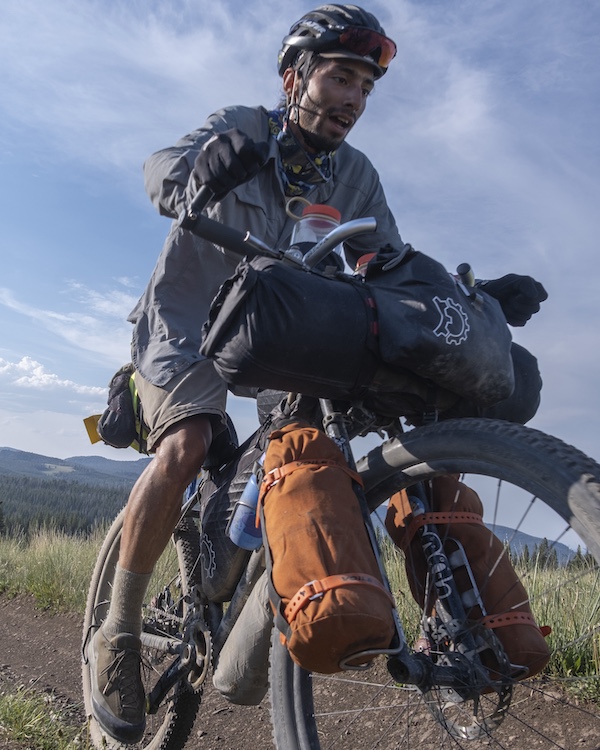
Bikepackers worship the versatile Voilé strap with good reason. A collection of durable dry bags in a few sizes, plus the necessary straps and cargo cages, can cover nearly every part of the bike. But it’s possible to have too much of a good thing: all that buckling, cinching, and tail tucking can add annoyance to daily life on the road. As Baggregator user jenridesbikespdx puts it in her setup entry appropriately titled All the Straps!!!, “I don’t love this setup. It requires a LOT of unstrapping and restrapping every day.”
Asa Rogers
Fortunately, gear makers have come to our rescue with two new subcategories of strap-free, purpose-built dry bags designed for specific spots on the bike: QR fork bags and dedicated rack top bags.
Quick-release Fork Bags
Instead of the typical dry bag strapped to a cargo cage, a quick-release (QR) fork bag clips to a mounting plate bolted directly to 3-pack mounts on a fork blade or cargo cage rack. It’s the bag and cage all in one — no more fussing with straps.
QR fork bags offer more than just convenience (as if that weren’t already enough). They’re stable without being stuffed full, so you won’t struggle to keep them secure as your food supply dwindles. You also never have to worry about crushing potato chips or smushing your avocado while cinching straps. They’re often larger than a typical fork bag, but smaller and less awkward than panniers during hike-a-bikes.
Prior to 2025, this category was small: a couple premium bags by Tailfin and Ortlieb and a budget-friendly option from Rhinowalk. Each of those companies uses different proprietary mounting hardware, so mixing and matching wasn’t an option. Old Man Mountain changed that in 2025 when it launched the Hemlock and opened its FLiP Cage mount system to other bag makers, triggering a range of new FLiP-compatible bags.
So what’s the catch? Surely the tradeoff is weight or cost? I did the math on a few popular combinations and found that a typical QR bag actually weighs about the same as a comparably sized combo of bag, cage, and straps. Some QR bags also win on price, because the cost of all those individual parts can add up fast.
All that said, a modular cage and strap setup is cheaper if you already have some of the parts, and more versatile if you like to tweak your setup for different rides. Modern QR systems are designed with off-road durability in mind, but a cage and straps might offer more peace of mind for a long rough trip due to its lack of moving parts.
Rack Top Bags
A simple dry bag strapped to a rack deck shares the same frustrations as standard fork bags: wobble and droop, limited on-the-go access, and frequent strap cinching. Dedicated rack top bags combat all this with mounting straps that originate on the bottom of the bag instead of passing over the top, and thoughtful features like pockets and shock cord.
While not quite as trendy as QR fork bags, dedicated rack top bags are having their own moment. Old Man Mountain launched the Atlas Rack Pack in 2025, and Revelate Designs recently announced the Rohn. Tailfin doubled down on their popular AeroPack last year, splitting it into the CargoPack and SpeedPack. Smaller gear makers are jumping in as well, including the Ride Forward J-Bag and the Love Handles Rack Harness from South City Stitchworks. I expect more in 2026 as makers delve into the pros and cons of this relatively unexplored category.
Trend 5: Modular Bag Convenience
If you’ve ever stuffed a sleeping bag into a skinny handlebar roll while it’s still on your bars, especially in the rain, you understand the appeal of modular bags. Packing in the shelter of your tent or hotel room is a surprising luxury that single-piece bags — essentially dry sacks with straps sewn on — aren’t designed to deliver.
Thankfully there’s a broader trend toward modular systems with separate mounts and bags. In seat bags this often means holster-style designs like the early Revelate Terrapin first launched back in 2013, and more recent mainstream offerings from Osprey, Salsa, and Decathlon. Other creative solutions include Ortlieb’s QR Seat Pack from 2022 and Dispersed’s minimalist Dropper Seat Bag, a unique system of inner and outer bags, launched in 2025.
Handlebar systems, such as Tailfin’s Bar Cage and Rogue Panda’s Kaibab Cradle, are on a similar path, and even panniers are edging in this direction. In late 2025, Revelate Designs launched their long-awaited Portage Panniers, joining Rockgeist’s Microwave Panniers in the small category of holster-style bikepacking panniers. The quick-release fork bag phenomenon, essentially a new type of mini pannier mounting standard, fits this trend as well.
Single-piece bikepacking bags aren’t going away any time soon. A majority of minimalist, handmade, and budget-friendly bags still use integrated designs, but many riders are choosing to spend more, or carry a few more ounces, for the convenience of bringing bags into their shelter at night.
Trend 6: Supporting Local Makers
Small brands handcrafting made-to-order and small batch gear have always been part of the bikepacking community. As riders become increasingly aware of global supply chains, more are choosing to support makers closer to home, and more makers are creating the gear those riders want to see. Social media and the web have made it possible, though definitely not easy in today’s saturated attention economy, for individual makers to find an audience.
Bikepack Baggregator is a global gear directory, and we organize gear by manufacturing country as well as U.S. state if you’d like to find your local shops. Supporting local makers is a luxury not everyone can afford, since small brands often need to charge higher prices to make their business feasible. I also don’t mean to say bigger brands aren’t worth supporting. Many are. But riders who support their small local makers fuel a vibrant network of bikepackers creating gear for other bikepackers in ways that are ethical, sustainable, and fun.
Make It Your Own
As gear options expand, riders have more ways of combining them to suit their bikes, packing lists, and routes. I admire the effort, thought, and love each rider has put into their trusty rig and the ways they’ve made it their own. I see people pairing expensive custom frame packs with budget-friendly accessory bags or DIY hacks. They mix motley colors, curate in monochrome, or prioritize function over form. They run a seat bag and a rack, because why not? This is one of my favorite things about bikepacking gear: intentional or not, it becomes a form of personal expression.
If gear shopping is on your to-do list, rest assured the options are more plentiful, thoughtful, and rider-friendly than ever before. Your setup may not be perfect at first, but it will probably be good enough. And if you stick with bikepacking, it will definitely evolve. Your bike and gear will become part of your team out there, part of your bikepacking story, and part of the fun.