
[GRM+ members read this article first. Subscribe and gain access to more exclusive content for only $3/month.]
The year was 2014 and a revolution had just occurred in SCCA’s most popular autocross category. Expensive and fragile R-comps were out–we’re looking at you, Hoosier–and 200tw street tires were in. So substantial was this change, the category was renamed from Stock to Street.
Street tires had already been highly successful in the Street Touring category for over a decade, and many manufacturers brought new products to play there. Falken, Toyo, Bridgestone, Yokohama, Kumho, Hankook and Dunlop all had their day in the sun.
With the proposed broadening of the application scope of these tires to Street, BFGoodrich jumped into the fray in 2013 with the g-Force Rival, offering lots of big sizes popular with the Pro Touring crowd. The tire was an instant hit.
Long before today’s Super 200 tire wars, Andy Hollis was running the Radial T/A on his Shelby GT350. Photograph courtesy Andy Hollis
Bridgestone responded in 2014, developing the Potenza RE-71R and quickly usurping BFG’s dominance. With an all-out tire war now breaking out, BFG responded quickly to update its offering with the Rival S. It was softer, stickier and quicker to turn on than the original Rival.
Even more amazing was how BFG publicly tested the prototype product–by renting out the Tire Rack SCCA Solo Nationals site in Lincoln the day after the 2014 event. By placing the new offering in the hands of a chosen few–we were one, having run the tires since the days of the original Radial T/A decades prior. The new tire’s superior performance on a fully rubbered-in championship surface could now be validated.
The Rival S would later get another update, dubbed the Rival S 1.5, but eventually it fell off the radar as new designs from Yokohama, Bridgestone and Nankang stole the limelight.
Thanks to its more durable compound, however, the original Rival later found a new home in endurance racing and was put back into limited production in sizes popular for ChampCar, Lemons and WRL competitors. It was the perfect blend of durability, consistency and pace. Eventually, newer offerings like the Continental ExtremeContact Force obsoleted it, so BFGoodrich recently went back to the drawing board.
Result? The g-Force Rival +.
We recently tested BFG’s other new offering–the g-Force Phenom T/A–directly against its target market competitors in the low-cost UHP category, dubbing it the best all-rounder of the bunch.
[Performance tires that won’t break the bank? | Budget UHP tire test.]
This time, we add in the Rival S 1.5 and Rival + as a vertical taste test to demonstrate the differences between tires with different use cases. Typically, as pace is increased, durability, streetability and cost are all compromised.
To gauge relative performance versus the competition within their respective categories, we’ve also added benchmarks to represent each: the Continental ExtremeContact Force for Endurance 200 and Vitour Tempesta P1 for Super 200.
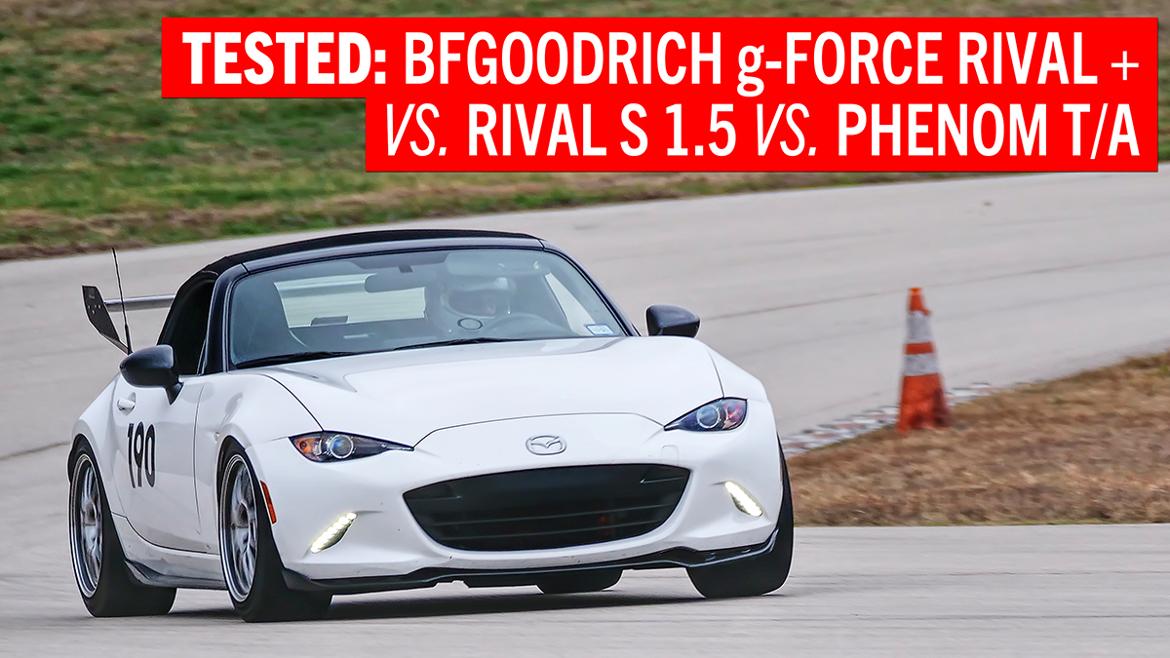
Tires were all sourced in a 245/40R17 size and mounted on 17×9-inch 6UL wheels from 949 Racing. This has proven to be an ideal fitment for our trusty Triple Threat ND Miata, now nearing 50,000 miles as a test mule.
All of our test tires were subjected to our usual heat cycling routine, a back-and-forth road trip to the track with six laps of ever-increasing intensity. Afterward, they were removed from the car and allowed to cool, reforming stronger molecular bonds. This exercise also gave an opportunity to evaluate the varying street handling characteristics of each.
Test day at Harris Hill Raceway dawned warm, with ambient temps in the lower 80s. These would climb another 10 degrees by the end of our test morning, but partly cloudy skies mitigated the effect on track surface temps. Further, a strong but brief overnight shower had cleaned the usual dust accumulation off the surface. Heading out on a warmup session on some scrubs revealed a surface that was consistent and ready for action.
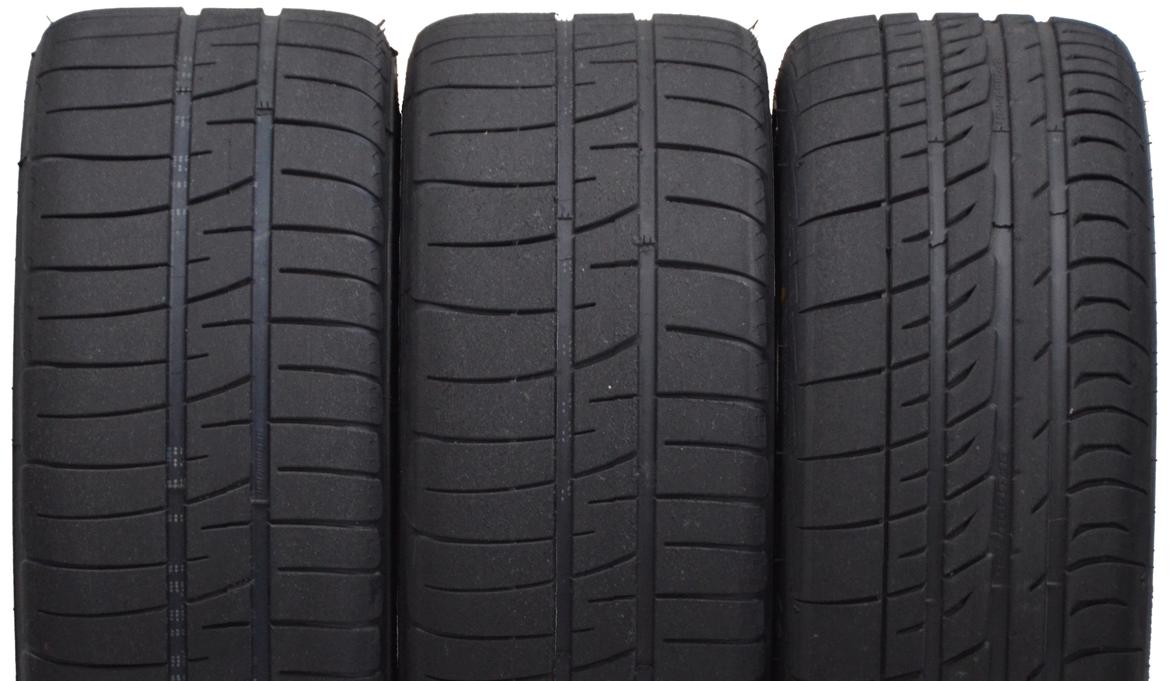
From left to right: BFGoodrich g-Force Rival +, BFGoodrich g-Force Rival S 1.5, BFGoodrich g-Force Phenom T/A. Photograph by Andy Hollis
BFGoodrich g-Force Rival +
- Endurance 200
- $273.81
- Best Lap: 1:27.19
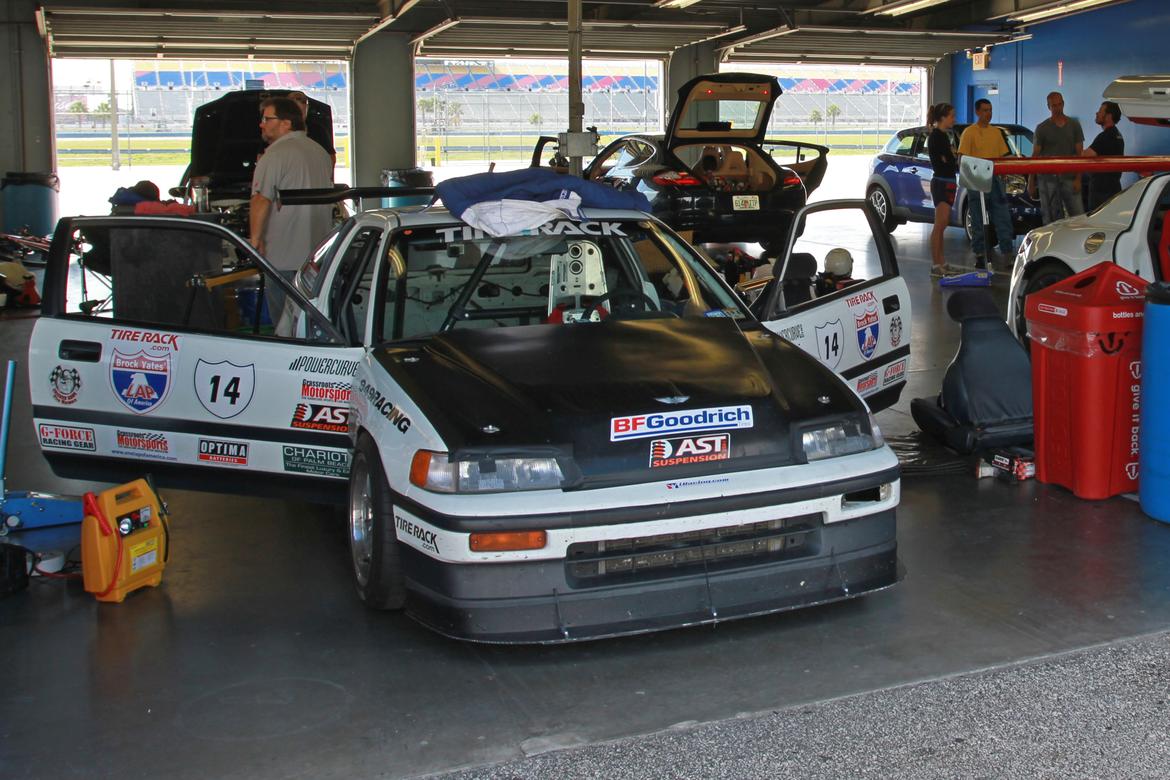
Our first experience with the original Rival was fitting it to our One Lap CRX for the 2013 running of the event. The results were both a blessing and a curse: While it afforded consistently high grip levels once warmed, it was decidedly awful in the wet. And that year, we had plenty of precipitation on transits, resulting in many white-knuckle hydroplaning moments.
Photograph by David S. Wallens
A decade on, the Rival + update addresses that deficiency with a modern silica-infused tread cap compound. Silica typically enhances both wet grip and durability, proving to be a win-win for this endurance-focused tire.
On the Road: The Rival + exhibited harshness typical of this category. Expansion joints, bumps and rough pavement all announced their presence via the stiff carcass. Steering was linear for small inputs, ramping up quickly as cornering loads built up. On smooth pavement at lower speeds, a slight whirring could be heard from the tread design.
On the Track: The Rival + was easy to place, with some audible feedback arriving near the limit of adhesion. That quick steering ramp-up under load hunted apexes easily, and when combined with smooth breakaway, made dancing at the limit effortless. Overcook an entry, and a slight throttle adjustment brought the tire right back on line.
As with most street tires, there’s a flyer lap hiding in the tire while cool if you can connect the dots on your first pair of laps. On this day we did just that, nailing two laps in a row that overlayed perfectly on the data log. Some heat soak then crept in, and the tire stabilized at a slightly slower pace.
BFGoodrich g-Force Rival S 1.5
- Super 200
- $248.68
- Best Lap: 1:26.43
Moving from the Endurance 200 to a Super 200, we next fitted up our Rival S 1.5 tires. These are designed to turn on quickly and produce excellent grip for that one fast time attack lap or autocross run, compromising durability and consistency along the way.
Looking through our notes, we found it had been almost five years since we’d tested the Rival S and had only done so in an autocross setting. Further, we’d never bolted on a set of the updated Rival S 1.5 version. It was high time to right that slight.
On the Road: The Rival S demonstrated similar road characteristics to the Rival +, with some of the harshness muted by the softer compound. Steering was also a little livelier. As noted on the sidewall, both tires share the same basic belt package components, but they’re arranged differently to tune the handling to their different compounds. Typically, a softer compound by itself will make a tire less responsive, so belt angles are often adjusted to compensate.
On the Track: On this warm day, the Rival S came up to temp fairly quickly and delivered three good laps before beginning to heat soak and slow. Looking at the data, we fully connected all the dots on the second lap, making it a good example of the tire’s ultimate pace. Handling was similar to the Rival +, albeit with more grip.
Vitour Tempesta P1
- Super 200 Benchmark
- $276.00
- Best Lap: 1:26.64
New to the scene for 2025, the P1 has been making waves in a variety of arenas. We’ve track tested it outright amongst all of its Super 200 peers and found it to be superior at full tread depth. But during long-term use, that advantage disappears at about 5/32 inch. Further, those tests were done at much cooler temperatures. How would it fare on this much warmer day?
This particular set of P1s had been run twice before for a total of 12 laps, so they were in their prime. Yet on this day, only a single fast lap could be extracted before they fell off–most notably in the high-energy combined loading sections of the track. Hard braking after a straight, followed quickly by sustained cornering, simply cooked the compound. It was quite noticeable on track and later data analysis backed that up. Shockingly, it had failed to beat the Rival S.
Continental ExtremeContact Force
- Endurance 200 Benchmark
- $273.00
- Best Lap: 1:27.01
Knowing that we’d be running the Rival + again for bracketing purposes at the end of the main test, we next bolted on its category benchmark. These were also the tires we had used for the warmup session earlier, but they’d been allowed to cool for several hours.
We love this tire for its handling dynamics, so natural and easy to extract performance lap after lap. However, paddock talk from World Racing League use, where it is the spec tire, tells us it can be tricky at times to dial in an optimal setup.
The ExtremeContact Force gave us two good cool-tire flyers before settling into a consistent pace. The first of those was a little slower due solely to a lack of driver faith on the very first turn of the track, a high-consequence, full-throttle, 100 mph blind entry. The rest of the two laps overlayed perfectly on the data logs.
BFGoodrich gForce Rival + (retest)
The Rival+ was then up for another stint to verify driver consistency and measure any track evolution. We’d now also get a true back-to-back comparison with its category benchmark in identical conditions.
After its first round, the Rival+ had been stacked in the shade to keep internal temps in check, but there was still some residual heat. This showed up in the results as we were only able to produce one full cool-tire flyer before heat began to slow us midway through the second lap. Still, the results almost perfectly matched those of the ExtremeContact Force, both for flyer times and eventual sustained pace.
BFGoodrich g-Force Phenom T/A
- Trackable UHP street tire
- $194.99
- Best Lap: 1:29.37
With the main, fully bracketed test now complete, we rounded out our BFG full-line comparison by sampling the new Phenom T/A. Having been fully reviewed in a previous test against its category brethren, today’s mission was simply to compare and contrast it to its BFG stablemates.
As more of a true UHP street tire design, the Phenom trades track focus for streetability, especially when it comes to wet usage. It’s also a lot less expensive than the track weapons.
Still, the Phenom can deliver consistent laps on track. Given the marked difference in grip compared to the other tires, we underdrove our braking zones for the first lap but adjusted well on the second to get in a flyer while the tires were still in their optimal heat range. Performance fell off a bit thereafter.
Conclusions
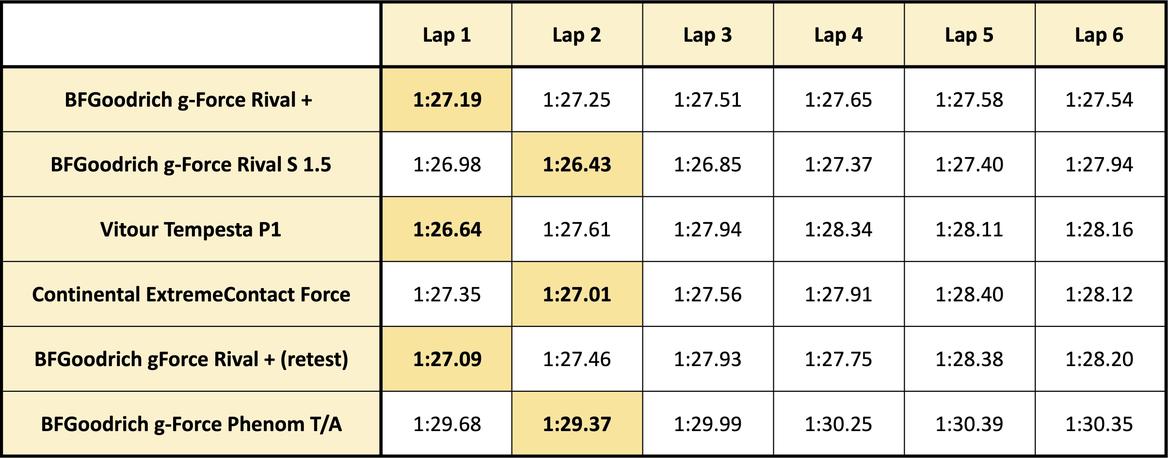
Today’s scene is awash with tires–so many that we’ve created different subclasses. How do they compare in real life? You can use this data as a guide. A UHP model, for example, just isn’t going to run with a current Super 200. While an Endurance 200 can’t match that top pace, either, it’ll deliver more consistency.
And welcome back, BFG, with top-shelf products across that range. Need a consistently quick and durable tire for endurance racing or track day use? The Rival + could be the one. Competing for fast lap around the circuit? Consider the Rival S 1.5. For a strong street focus with occasional track use at a low cost of entry, Phenom may be your droid.
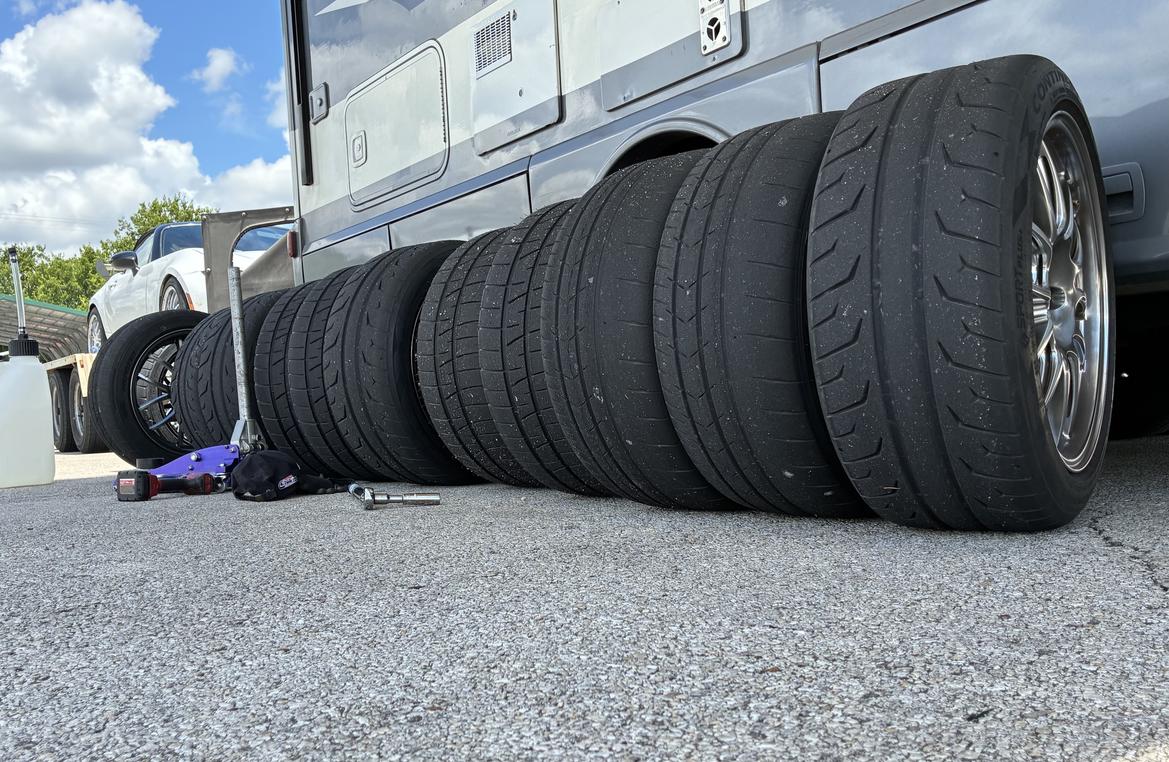
Photograph by Andy Hollis
Comments

Very nice. Seeing a lot of activity from BFG these days. Awesome to see it. Looks like the “g-Force” family of products are back in pretty big way.

Welcome back, BFG.
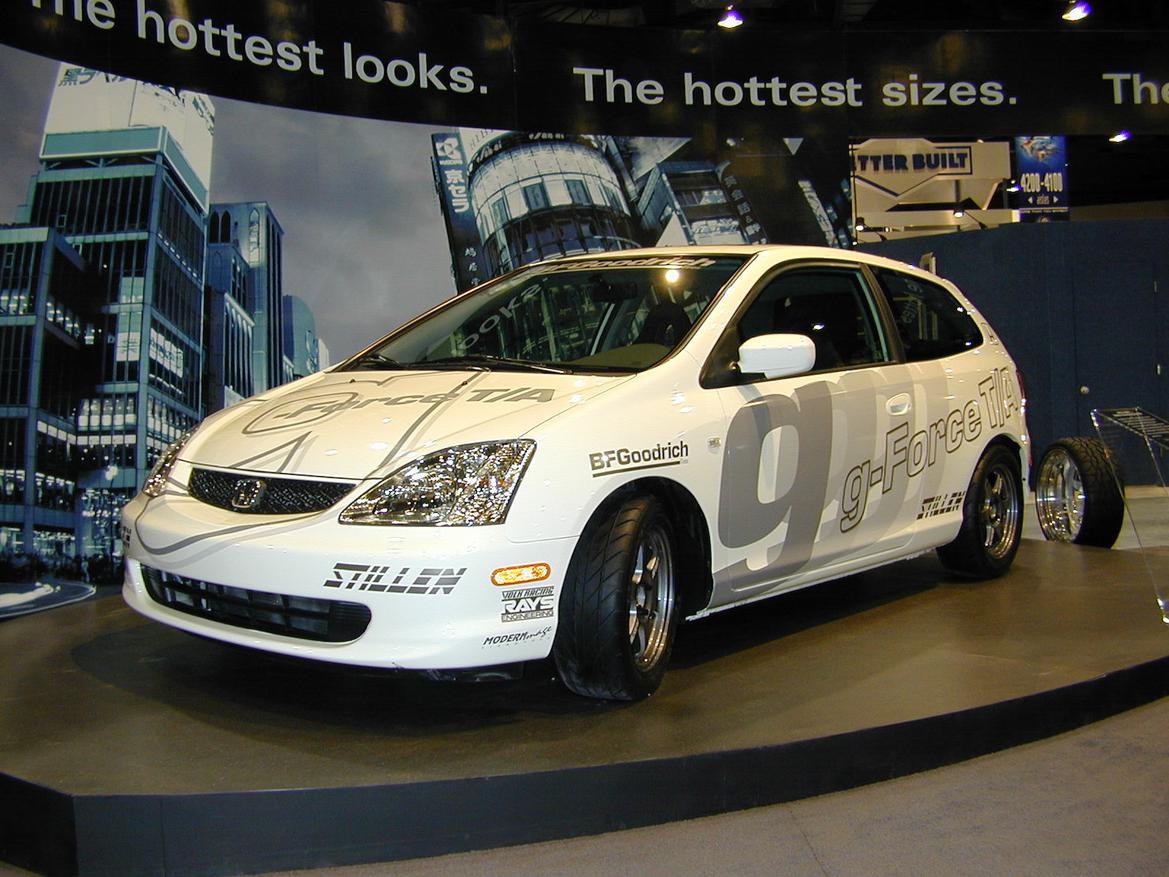
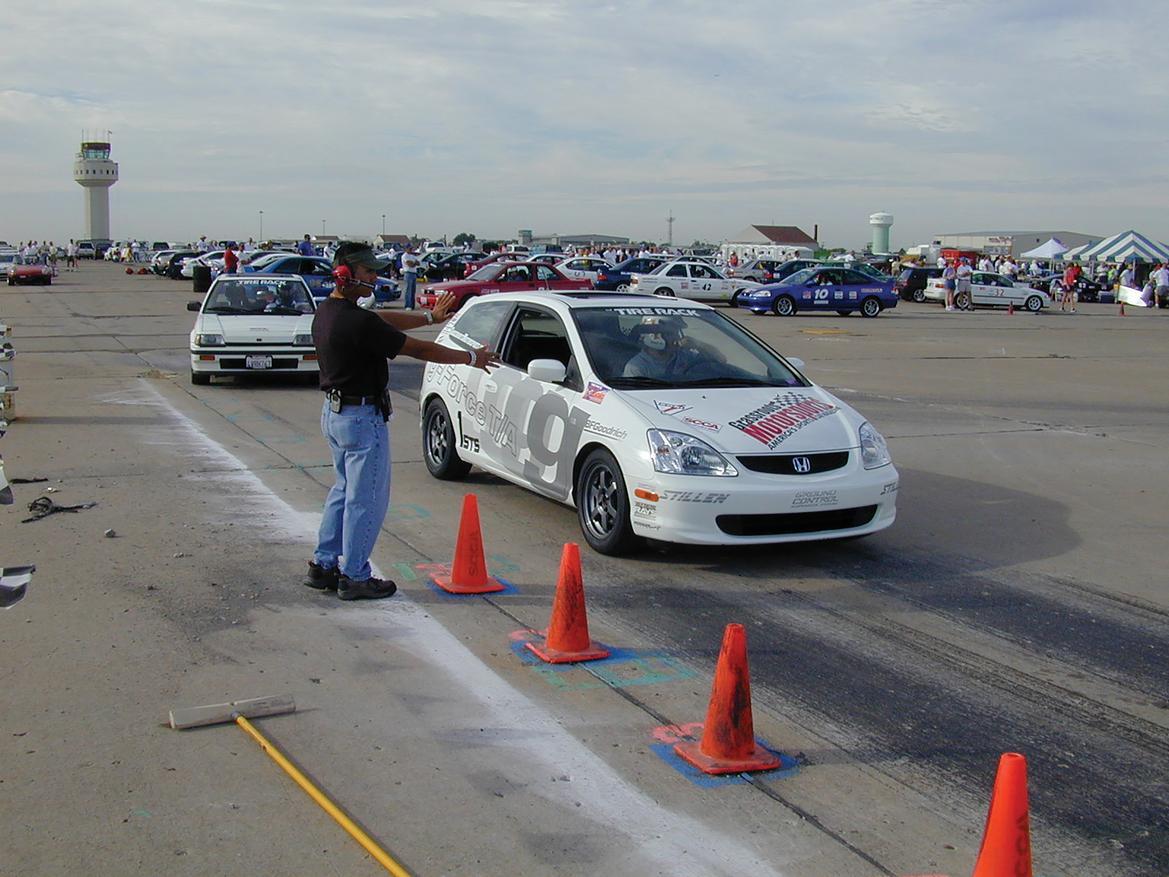
Back in 2002 or so, we ran their SEMA car in Street Touring.
Let me find a pic.
Here’s the car at the 2001 SEMA Show.
And here we are at Solo Nats with Per behind the wheel.
Calhoun
New Reader
7/23/25 1:19 p.m.
Designed, engineered, and made in America. As mentioned within what also made Rival unique within the category at its inception were sizes for American muscle that the Asian brands had ltd use for in their local markets. 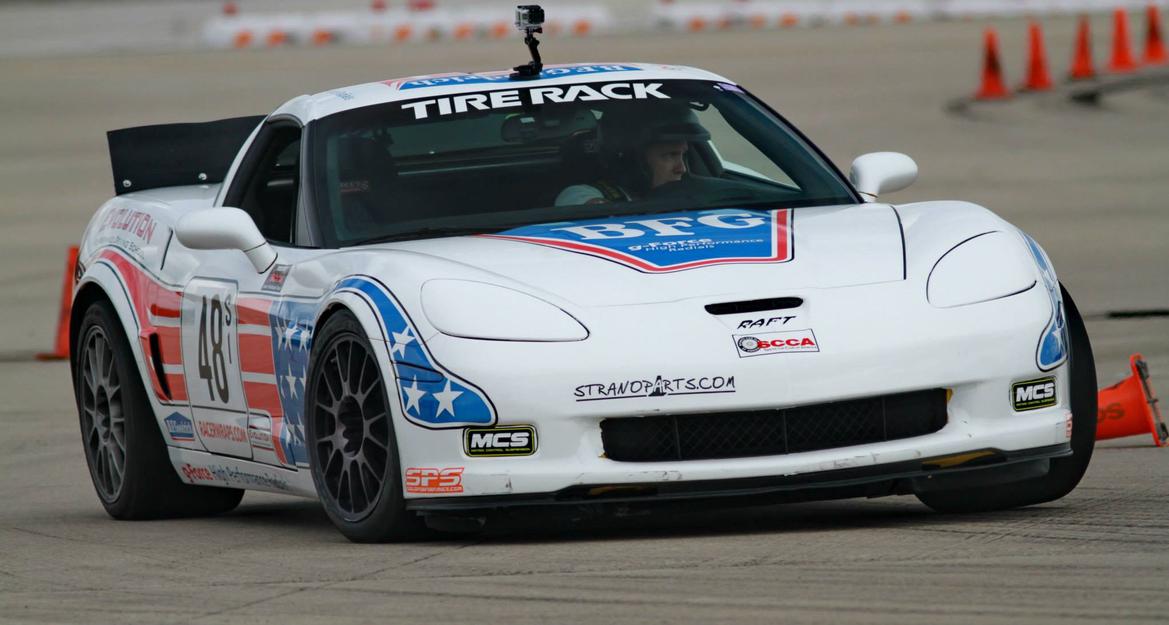

BFG is a sponsor for July Track Night in America events and they were giving away a free set of tires to one lucky attendee.
In reply to ClearWaterMS :
Dang, that’s a cool prize. (205/50R15 for me, please.)

ClearWaterMS said:
BFG is a sponsor for July Track Night in America events and they were giving away a free set of tires to one lucky attendee.
Glad to hear it’s a full set and not just a single tire. Could you imagine? 
Is the Rival S 1.5 the new hotness for 2025?
Kidding.
Ordered a set of Phenom T/As for my TT – seem like a good tire for daily driving and occasionally hitting a casual event.
Great comp. The Rival S 1.5 was one of my favorite tires for solo on a FWD car in the heat.

Mousse_Upset said:
Is the Rival S 1.5 the new hotness for 2025?
Kidding.
Watch for Tire Rack’s yearly track test result which also includes Rival S 1.5 — it does very well there, too.
Of note also is the test set of Rival S were two year old build dates. So maybe there’s some “fine wine cellaring” going on? 
TBH, the small ECF vs P1 margin suggests that the P1 underperformed In this scenario.
Im going to play around some more with the P1 in very hot conditions to see if my hunch is correct. I have two sets at various tread depth.
Any wear data? This is an important detail for an endurance 200. Thanks.
Displaying 1-10 of 23 commentsView all comments on the GRM forums
You’ll need to log in to post.