
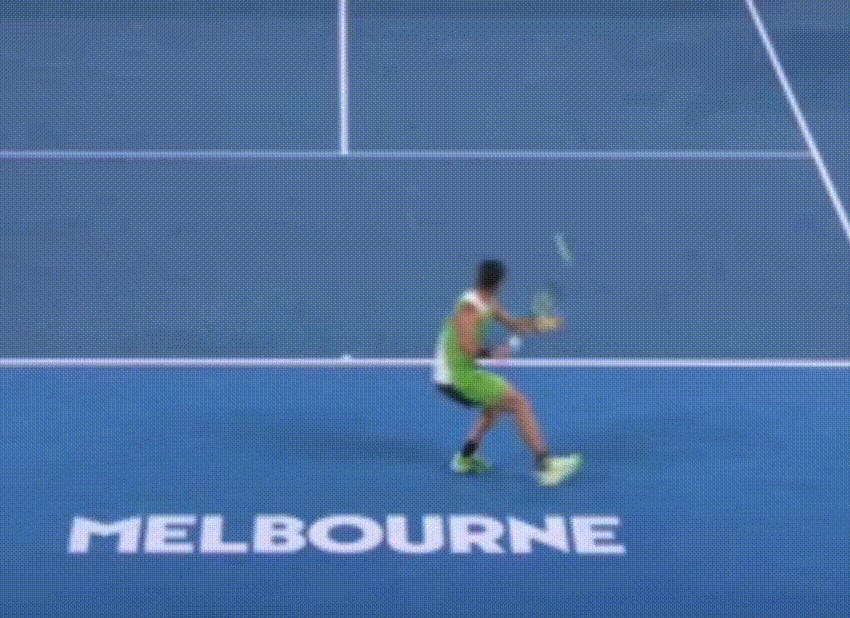
People may be surprised to learn that their H2H is tied at 6-6. Sure, Zverev got some hardcourt wins early on against a green Alcaraz, but there is no question that the German has enjoyed this matchup for a couple of reasons. Firstly, Alcaraz’s heavy kick serve and forehand weapons aren’t as bothersome for the 6’6” Zverev, who enjoys wailing on shoulder high backhands. Second, in previous encounters a young Alcaraz has tried to blast his way through Zverev (see: Australian Open Quarterfinals 2024), with the result being a car crash of a match start. That tends to happen when teenaged brains have the keys to Ferrari forehands. Third, and related to point two, by trying to hit through Zverev you play into his deep court position, where he can happily react and defend on instinct, without having to generate pace or second-thoughts.
But Alcaraz has matured and developed into a better player since then. Their most recent encounter — in Cincinnati last year — showcased a far more cerebral and patient Alcaraz, who was willing to temper his power and deliver off-paced balls, especially into the weaker German forehand:
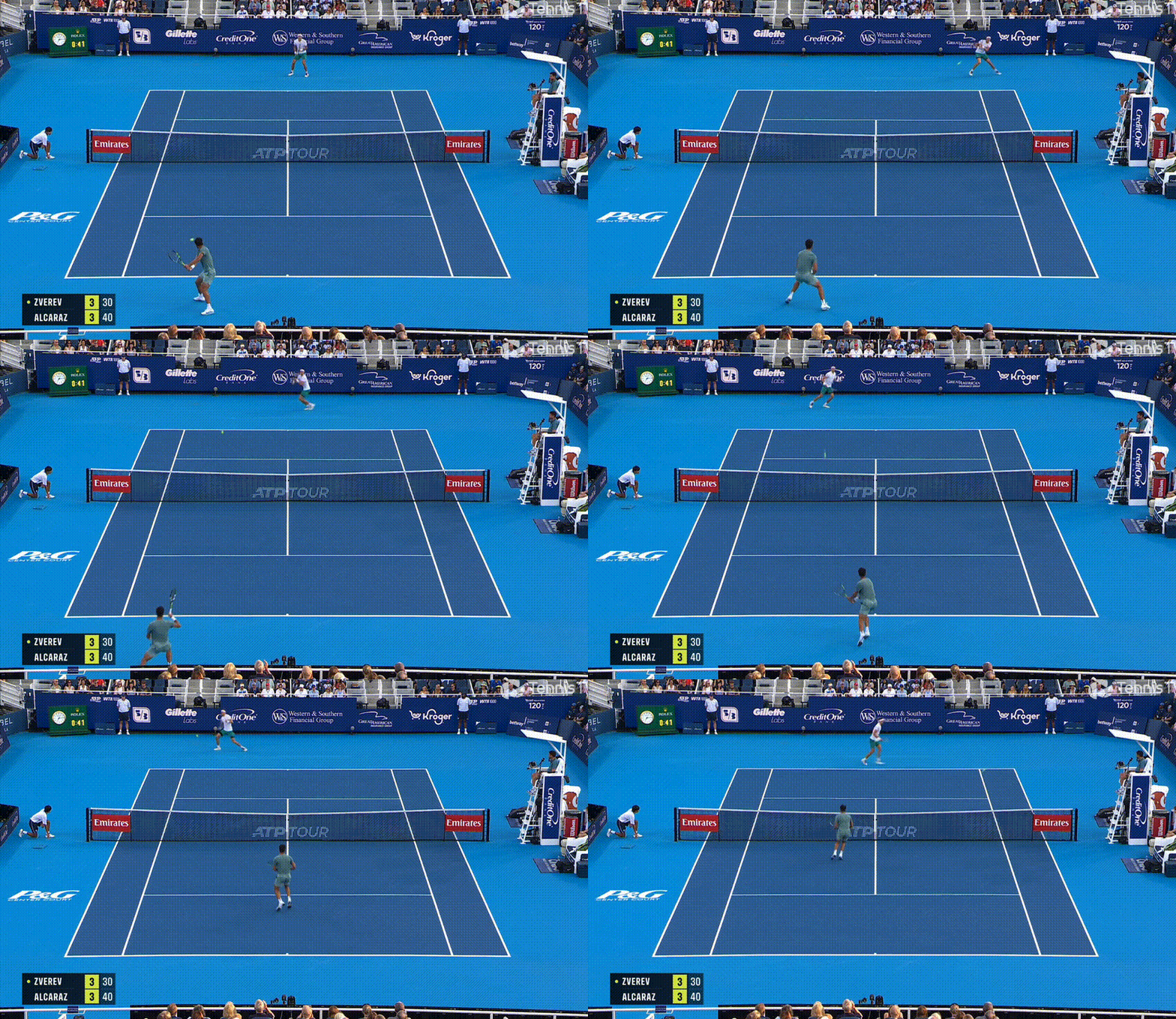
This match is slated for the daytime slot (2:30pm), so conditions won’t be wildly different from Cincy, but that Alcaraz patience has still been on display in Dunlop-deadened evening conditions this fortnight.
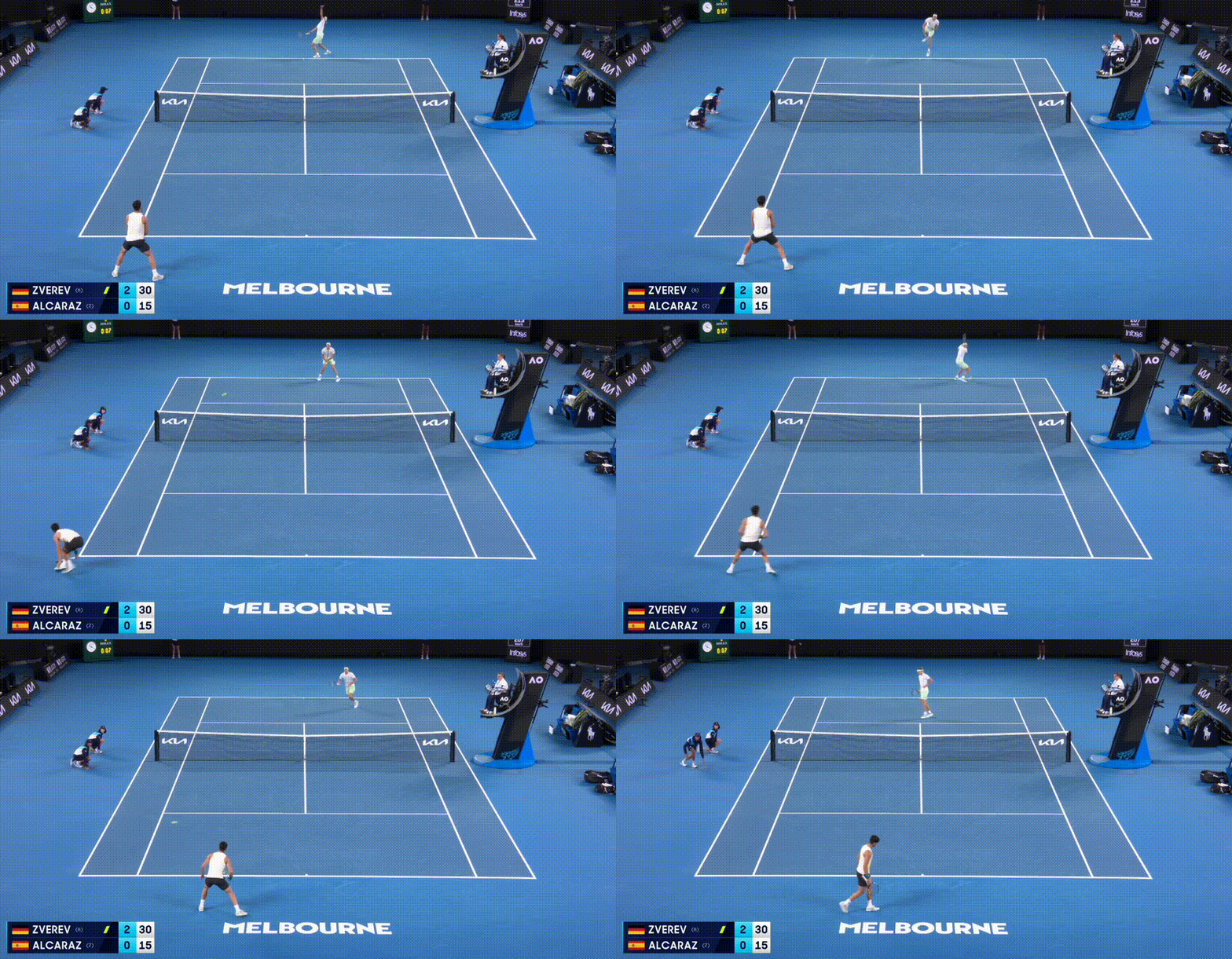
When he first burst on tour, the game plan against Alcaraz was to rush the ornamental forehand and watch it self-immolate. But one of the downsides of finding an exploitable weakness against GOATs is that they tend to patch them with an ease that betrays the technical complexity of the game itself. So in addition to making his forehand more compact, Carlos now also uses this old-school-Federer 05 shuffle step when rushed through the middle, as a way to sweetly time skidding incoming balls and patiently trade back deep middle to his opponent, neutralising their attacking options.
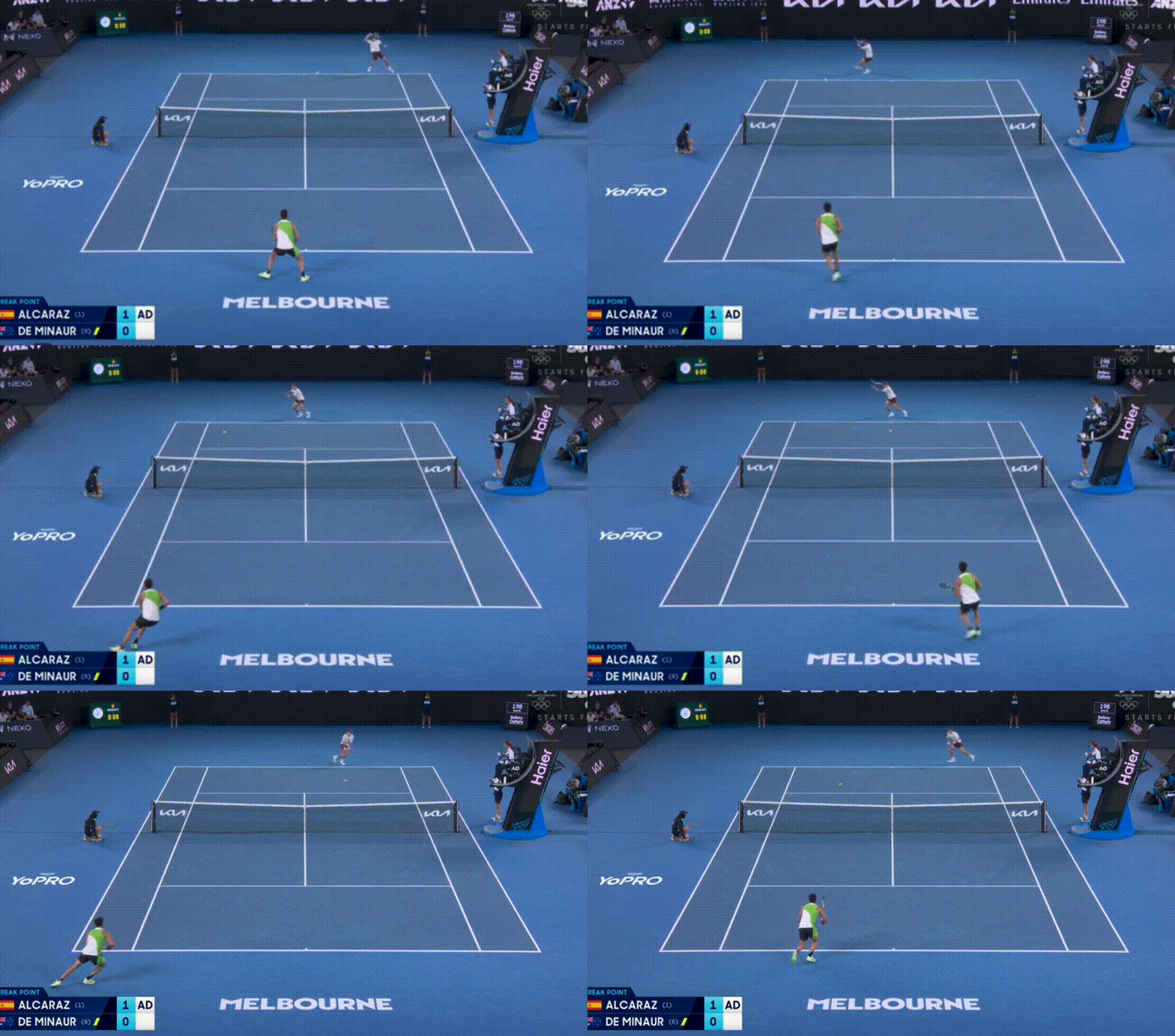
See it?
This is kind of a grass court/90s move, but Alcaraz did this around 10 times against de Minaur. Here’s a collection, with the last point showcasing a final contemporary open-stanced slide when pushed wide that achieves the same tactic of resetting the point:
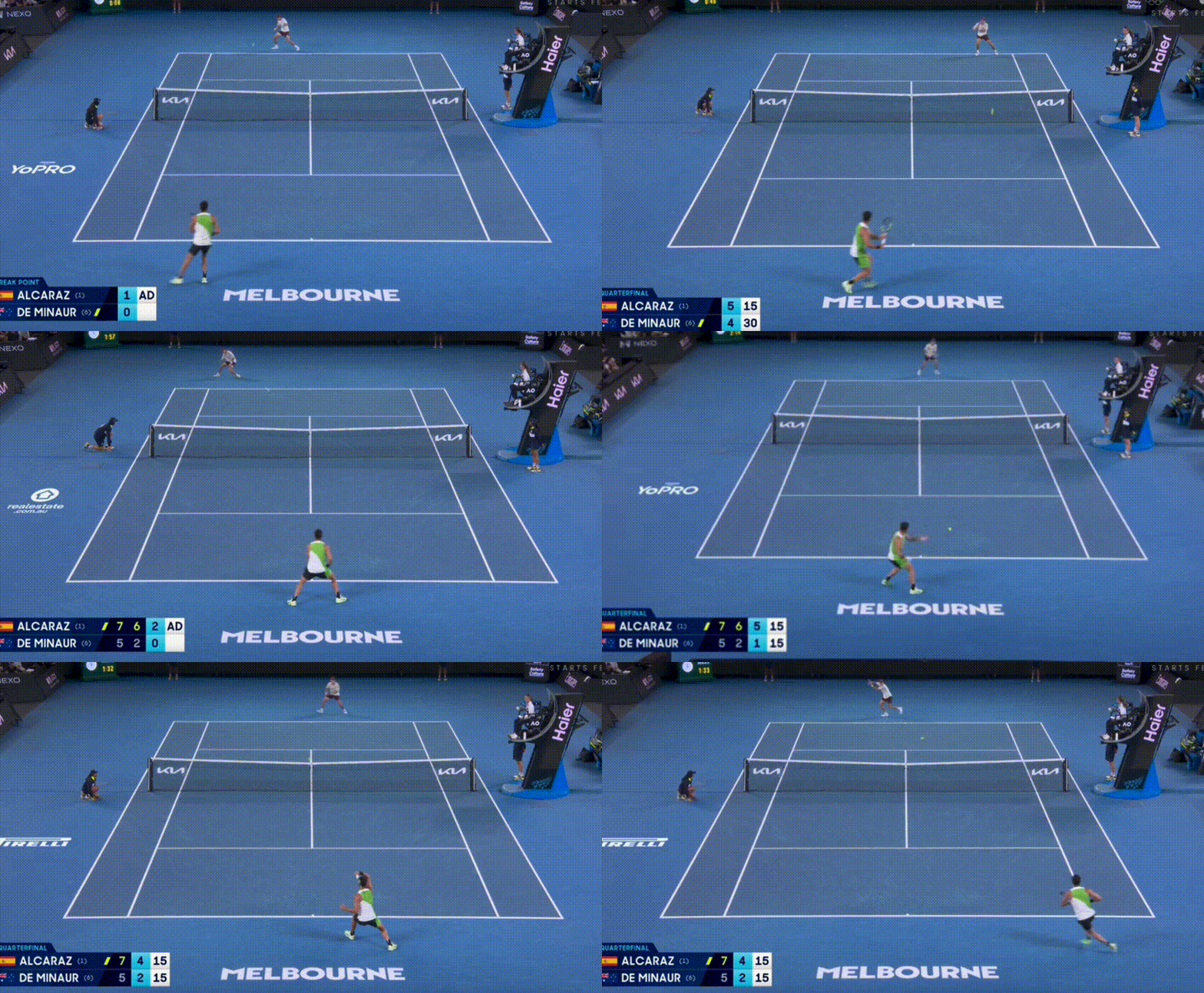
“Such a smart forehand from Alcaraz on the run back through the middle of the court. Just took away all of the geometry Alex was hoping he was going to get given back.”
— Mark Petchey
And so I think Alcaraz will come out with a clear intent to play more patiently, trade middle if Sasha rips the backhand hard middle himself, and assess how aggressive the German is willing to be on his own forehand. He tested that wing more extensively in Cincy, both on serve:
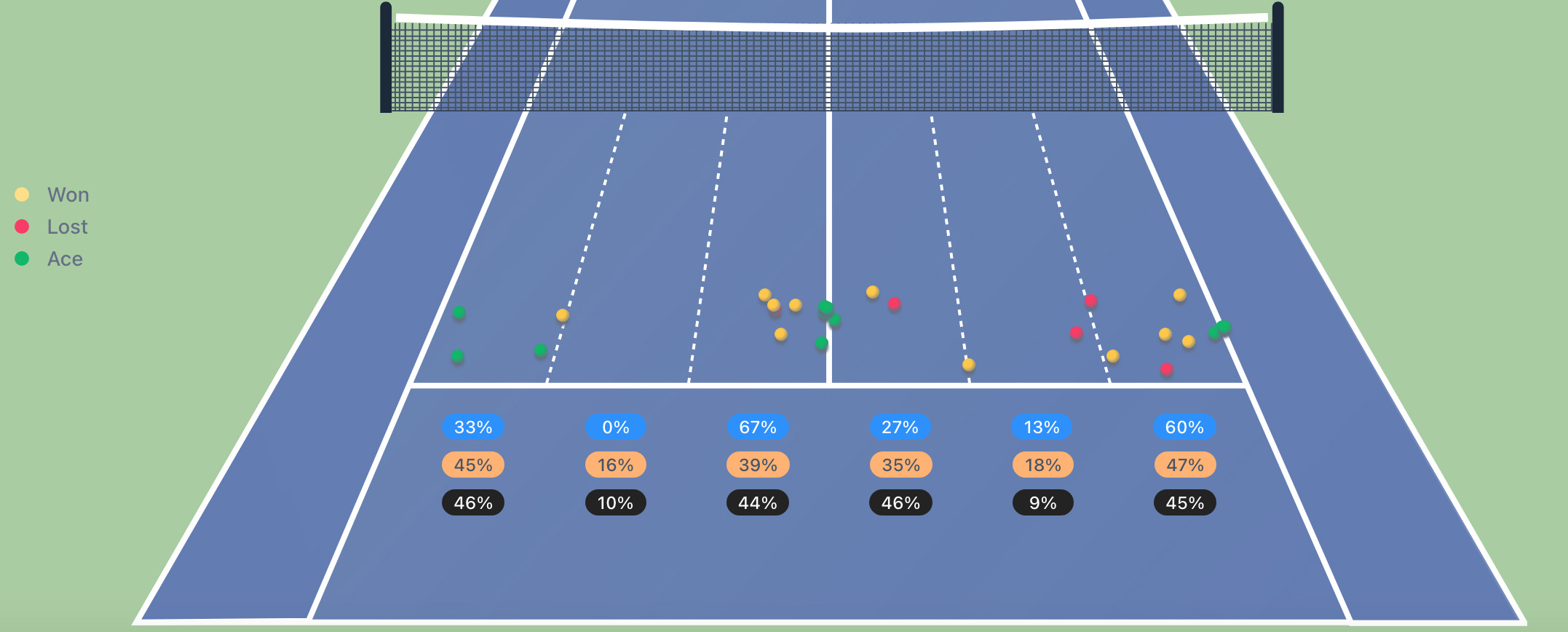
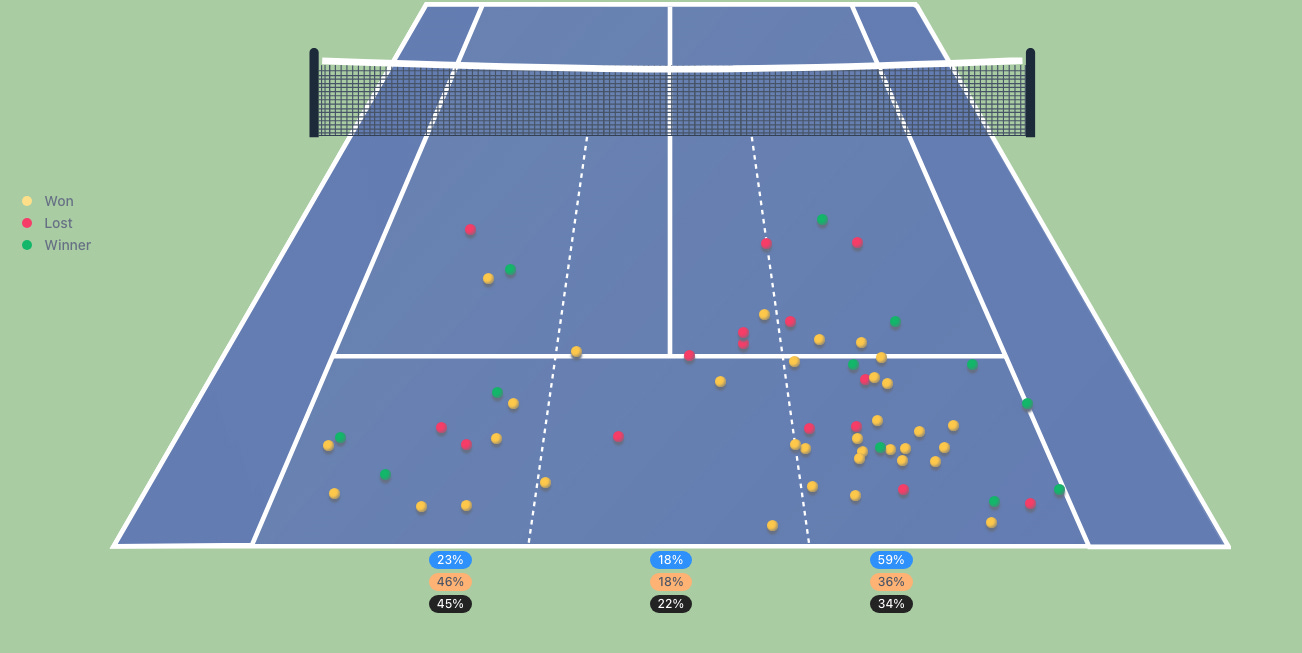
And with his ground game, taking his forehand into the Zverev forehand corner 59%, way up from his 36% 52-week average:
Of course Zverev wants none of this. Off the ground he wants to make it a linear backhand battle, where the ball speeds and altitudes get flattened to something more monotonous. But more than that he wants to — needs to — suck the life out of this match and servebot, pick off easy plus-ones, and create some scoreboard pressure, just like he did in 2024. Don’t let Alcaraz get going:
If Zverev can settle into this match, I think he plays without much pressure. Alcaraz is expected to win, and Zverev’s forehand can fire when he is confident and free-swinging on that wing. I think a major reason he consistently scores highly on Tennis Insight forehand metrics is because he kind of stat-pads that wing when pressure is low, and if the serve is firing, he is a tough front-runner. Break points, tie-breakers, fifth sets; make him generate racquet speed on the forehand in those moments. I said all this in Vienna last year:
To be critical of the German is to concede that his boldest tennis arrives during those games and sets where nothing happens, and just as quickly deserts him during those points where decades happen.
Zverev was impressive against Tien. He took advantage of the indoor conditions with his serve, and played boldly on his forehand +1 when he needed to. He’ll need just as much courage come Friday.
Alcaraz keys: first-serve targeting the Zverev forehand, less kick-serves to the backhand on second serve, more patience and variation in rally, drop shots to bring the German closer to the baseline
Zverev keys: first-serve % above 70, forehand courage, willing to move forward and execute at net, make it a match of backhands as much as possible.
Prediction: Historically, Zverev has played some of his best tennis against Alcaraz in slams (Roland Garros 2022, Australian Open 2024, Roland Garros 2024), and I think we will see a high level from the German today, but Alcaraz continues to patch even the hairline cracks in his game. Outside of Zverev’s serve, the match is on Alcaraz’s racquet, and I think he has the confidence and maturity to take the favourite tag and wear it. Alcaraz in 4 tight sets.
Sinner leads the H2H 6-4 and has won the last five encounters, and the last eight sets in a row.
On paper this is a mouthwatering matchup where Djokovic comes in without too many miles on the legs, but off paper the Serbian’s quarterfinal escape against Musetti was far from the level that would be required to take down a healthy and firing Sinner. Before their most recent encounter at Roland Garros last year, I described the almost insurmountable task that Djokovic has when taking on the young Italian:
Sinner’s game is basically the T-1000 to Djokovic’s original Terminator Model 101 game style: suffocating returns, elite movement from the corners, relentless consistency.
Sinner just does it with more spin and power, and that’s going to count in cool conditions:
The numbers from their last Australian Open match backed up this view:

Sinner himself had a physical collapse in the heat in the third-round, but that kind of weather won’t be present on Friday evening, and the Italian looked like business-as-usual in his quarterfinal win over Ben Shelton, winning his 22nd set in a row against the lefty American.
In a way I don’t have as much to say on this matchup because as Djokovic has lost his baseline coverage and defensive ability, the tactic has been relatively straight-forward for both. Djokovic will try and execute elite serve +1 tennis (ATP Finals 2023 is the blueprint), but it requires him to redline all aspects of his game for three sets, and I’m not sure he has that in him right now.
“Sinner just can’t get on balance during these points. There’s never been a player [Djokovic] better at changing direction off both forehand and backhand. Sinner is just constantly moving; he’s never set and able to get the big hit in.”
— Tennis TV commentary, from the ATP Finals 2023 match
Although, if there was one player who has made a habit of making us look stupid, it’s Novak Djokovic. Yet, despite the baseline excellence of both, the heaviest shot on the court will be Sinner’s forehand, and his enhanced topspin grants him an ability to break the sideline, even from middle of the court. It was the most impactful play in their 2024 Shanghai final, earning Sinner ~55% points with forehands from the middle and ad-court:
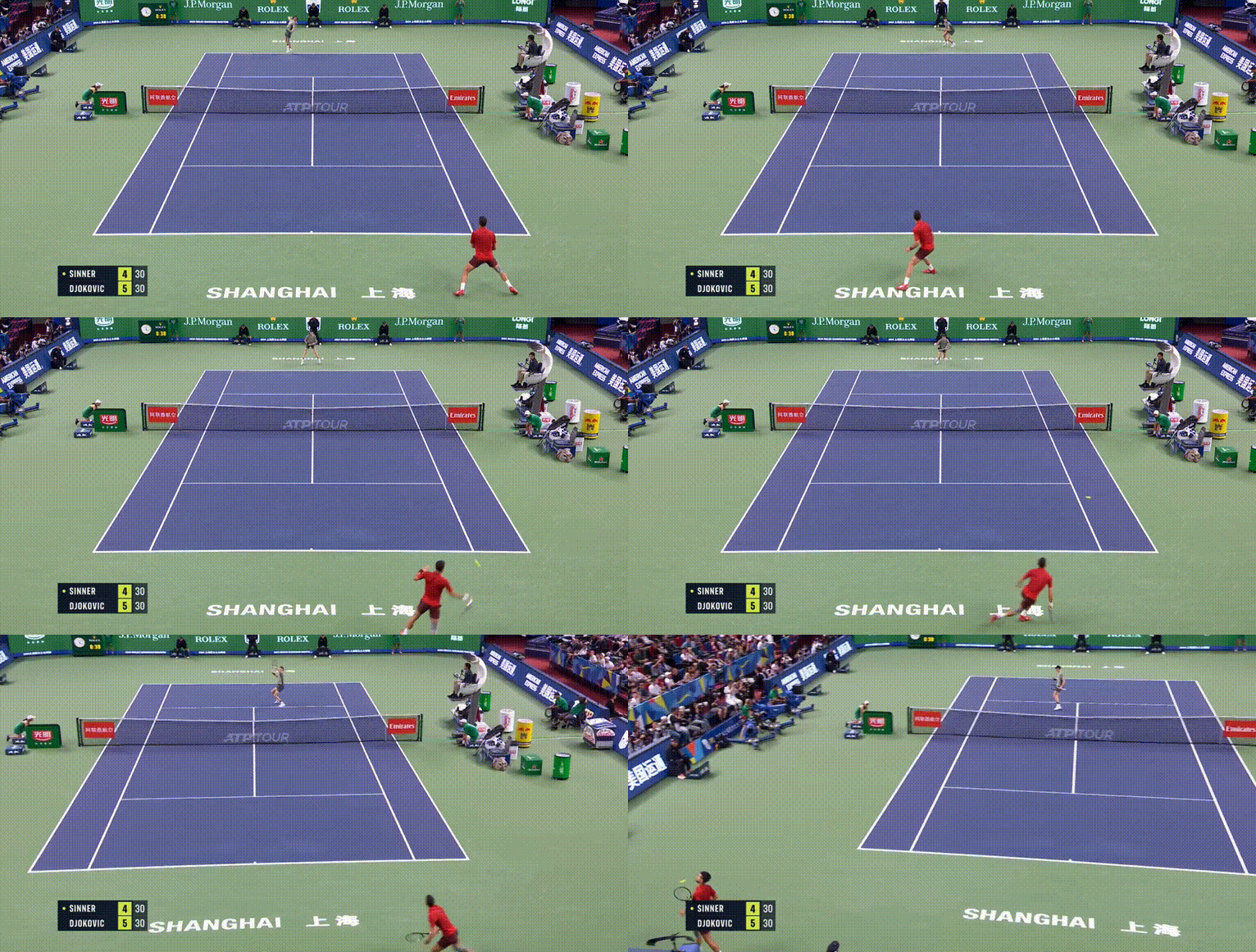
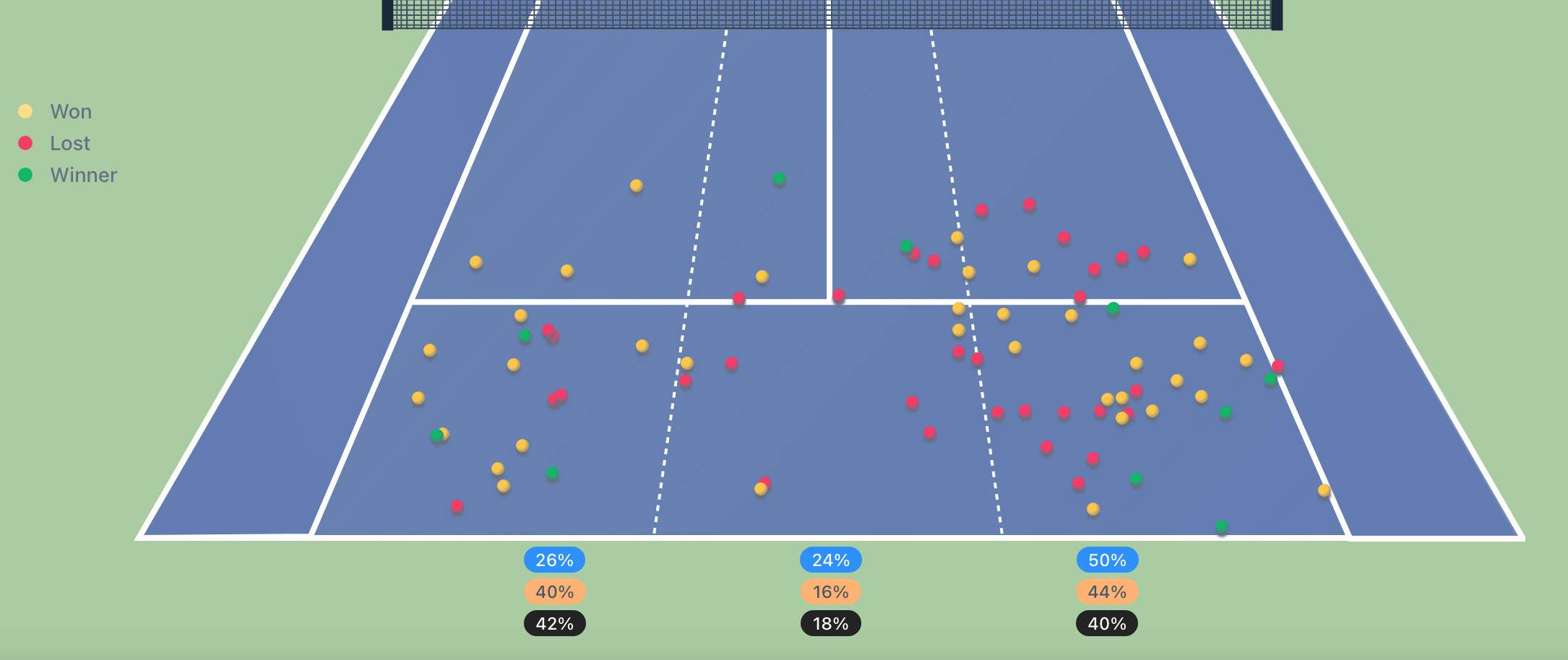
In a bid to escape that pattern, Djokovic plays his forehand down-the-line more frequently, trying to trade with the (relatively) weaker backhand wing of the Italian.
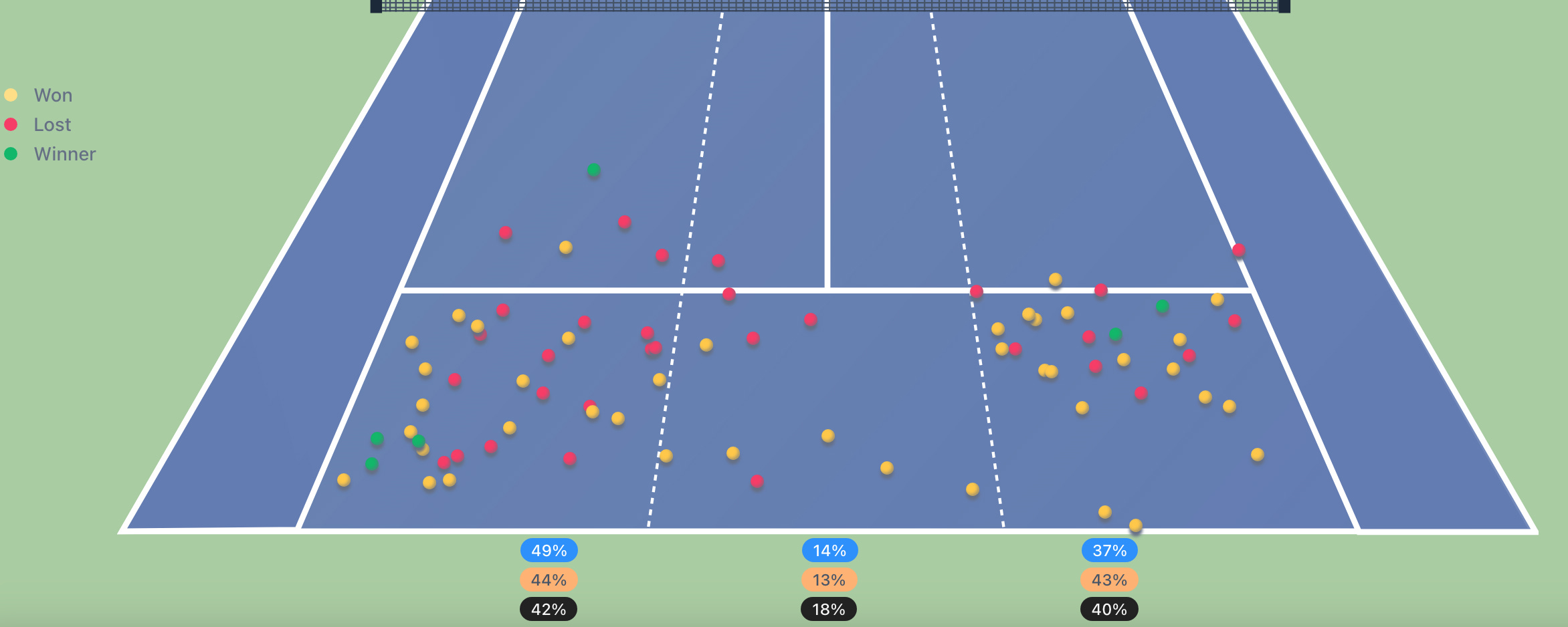
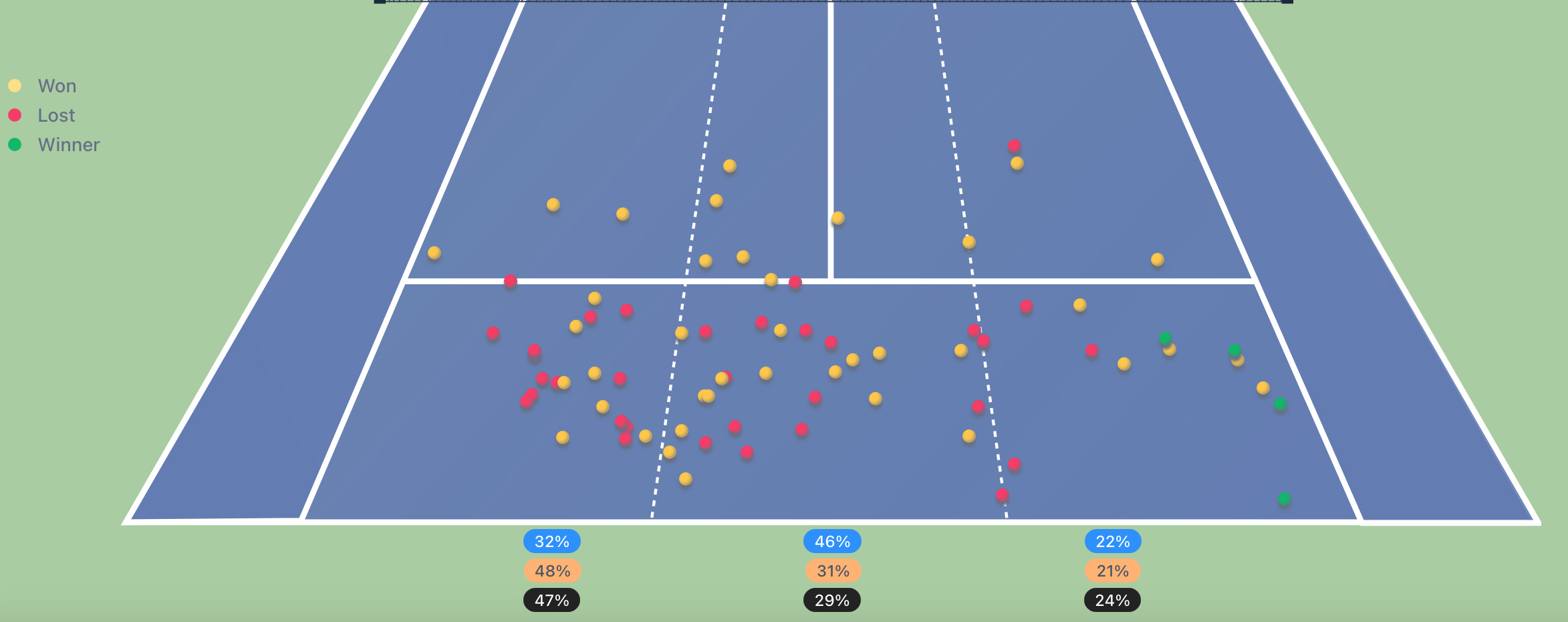
And the cat-and-mouse tactic plays out on the other wing: Sinner plays his backhand much more centrally, making it harder for Djokovic to avoid the Italian’s forehand. Sinner’s backhand placement from Shanghai: 46% through the middle third:
As a result, Djokovic is forced to pick sides; hard crosscourt into Sinner’s backhand, or make the Italian at least run to his forehand side. Only 17% through the middle:
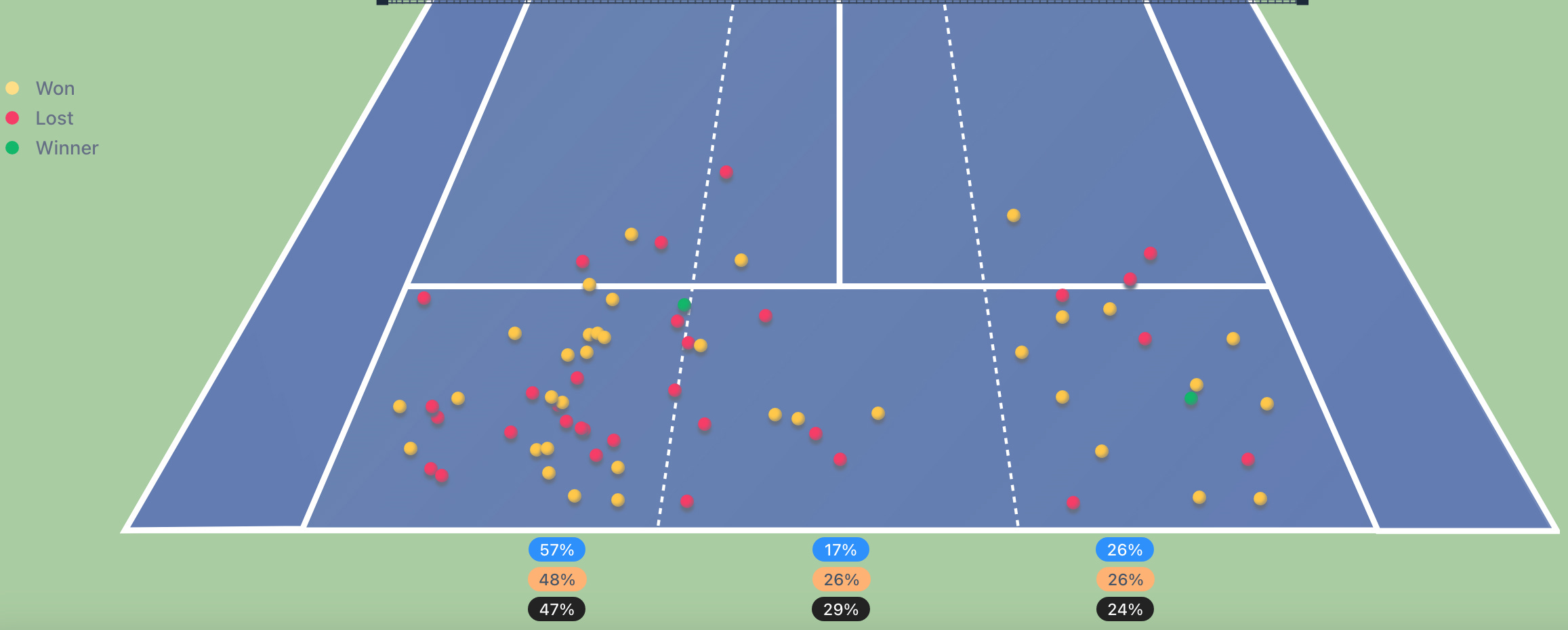
If the errors pile up on the Serbian’s famously solid backhand, it’s for good reason: avoiding the Sinner forehand requires a degree of risk-taking that is hard to measure.
Sinner keys: find forehands and use his elite racquet speed to spread the court, trade backhands more centrally. Of course, serve well. If Djokovic stands up in a bid to be aggressive on second serves, the pace will be upped.
Djokovic keys: first-serve near 70%. He played with incredible depth of shot in his 2023 finals win, and he will need that again. Don’t give weak central balls to the Italian’s forehand, keep him moving.
Prediction: Recent history has been one-way traffic in favour of the younger man. While both have shown physical frailties this fortnight, I won’t speculate on that and assume they are both going to be ready to battle. Given the experience and motivation of Djokovic, I expect him to find his best tennis come Friday night, but I also am expecting Sinner will be ready for the challenge. Sinner in 4.
Let’s hope all four men bring their best and put on a show. See you in the comments. HC.