

Do rankings and points matter in cycling? Demonstrably not as they’re hard to find. You need to get to the regulations page on the UCI website then scroll to road races and find the right PDF to download. Manage that and 87 pages into a 400 page document come the badly-formatted tables.
Anyway this blog post is just to put the UCI points scales all on one page for handy reference during the year. So if you want something to read today… try something else.
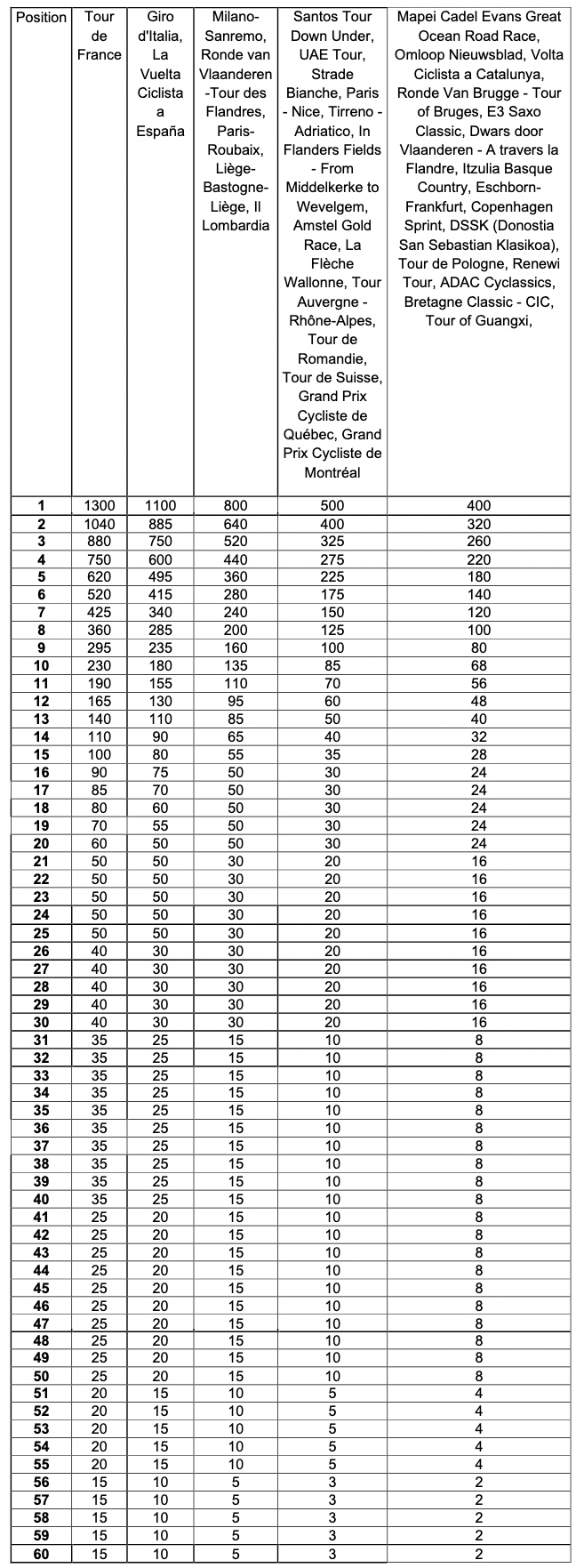
The table below is for the men’s World Tour races, if it’s a stage race then it’s for the final overall classification. Note the unusual numbers, 1,300 points for the Tour de France win for example rather than, say a round 1000 and then everything scaled proportionately to this.
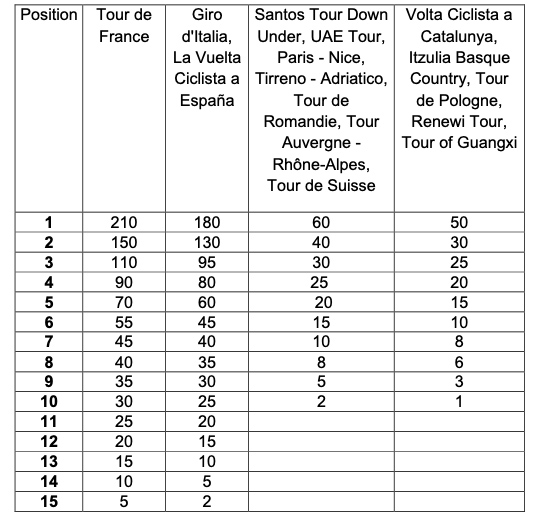
Next comes the points per stage in the World Tour stage races, as you can see a Tour de France stage is 210 points and points in the grand tours go down to 15th each day and 10th for the other stage races.
Next you can see points on offer for final place in the secondary competitions of a grand tour, namely the mountains and points competition, as you can see winning points or mountains jersey is worth as much as a stage win. And even if a sprinter or climber is arithmetically unable to win the competition late in the race you can see why they might carry on chasing points as there are points for being a runner-up.

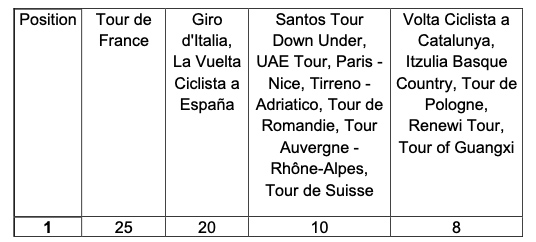
Next comes a daily award for leading a World Tour stage race, the real prize is the publicity and opportunity but the points are here to signal it counts too. Someone who wins overall takes plenty for this, they’ll often win stages along the way and they also collect for every day in the lead too, a winner-takes-all scenario. New for 2026 is the small boost for UAE and Guangxi, no longer 6 points per day.

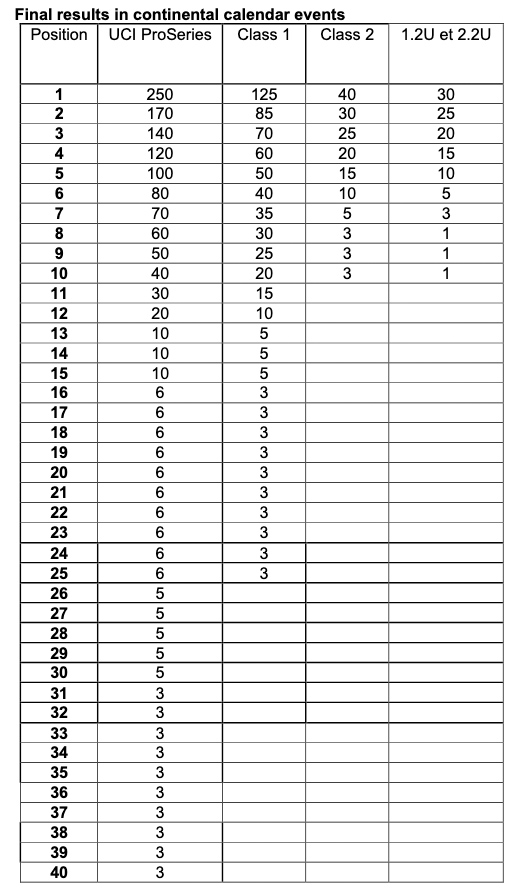
Now comes arguably the most important table here for the promotion/relegation contest because there are points galore outside of the World Tour. These results are often more accessible, and teams devote time and resources to finding races where they can score best, including jetting around the world in search of the easiest pickings even if the team’s sponsors have no commercial interests there and it’s not on TV back home either.
Managers of teams trying to avoid relegation know the table below by heart. Here winning a stage race overall or winning a one-day brings the same points haul, which makes one-day races very important. The season-opening Challenge Majorca races are a good case study, all Class 1 one-day events where the winner banks 125 points each day, but if it was a stage race only the final overall would bring this many points.
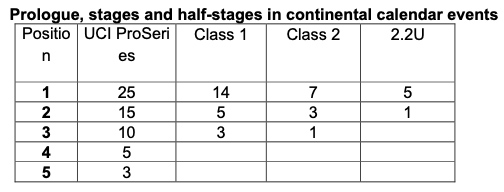
The next two tables below shows the points on offer for stages in non-World Tour races and the daily points for leading the race too. It’s just cosmetic but note the clumsy formatting, these tables just don’t seem to be designed with public consumption in mind.

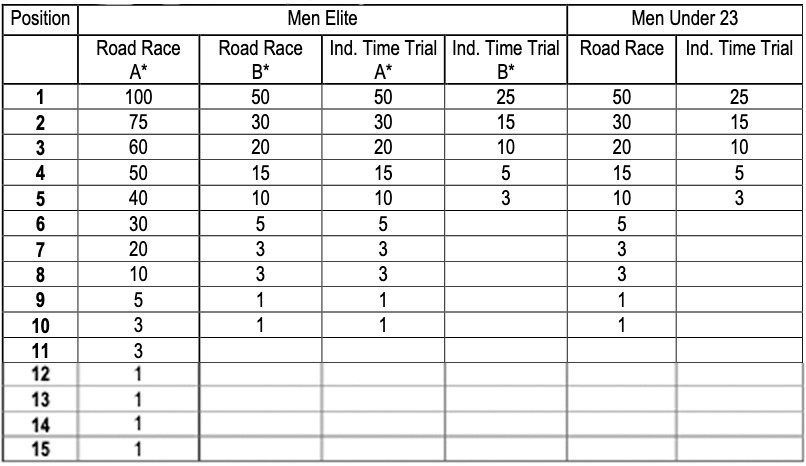
Below are the national championships, split into A and B groups, where A is defined as a nation that started at least one rider in the previous Men’s Elite world championship road race. These points matter because often when we look at the teams with few wins and placings in the year, several of their best results can be from national championships in smaller nations, the kind with only a few pros. Sometimes we’ve seen big name riders skip their national championships but smaller teams hunting points ought be paying business class returns for their riders to go and grab the jersey and points:
Now comes the Continental Championships, think the European championships for the best example. If these championships have a team time trial and/or a mixed relay time trial event, the small table further below also applies:


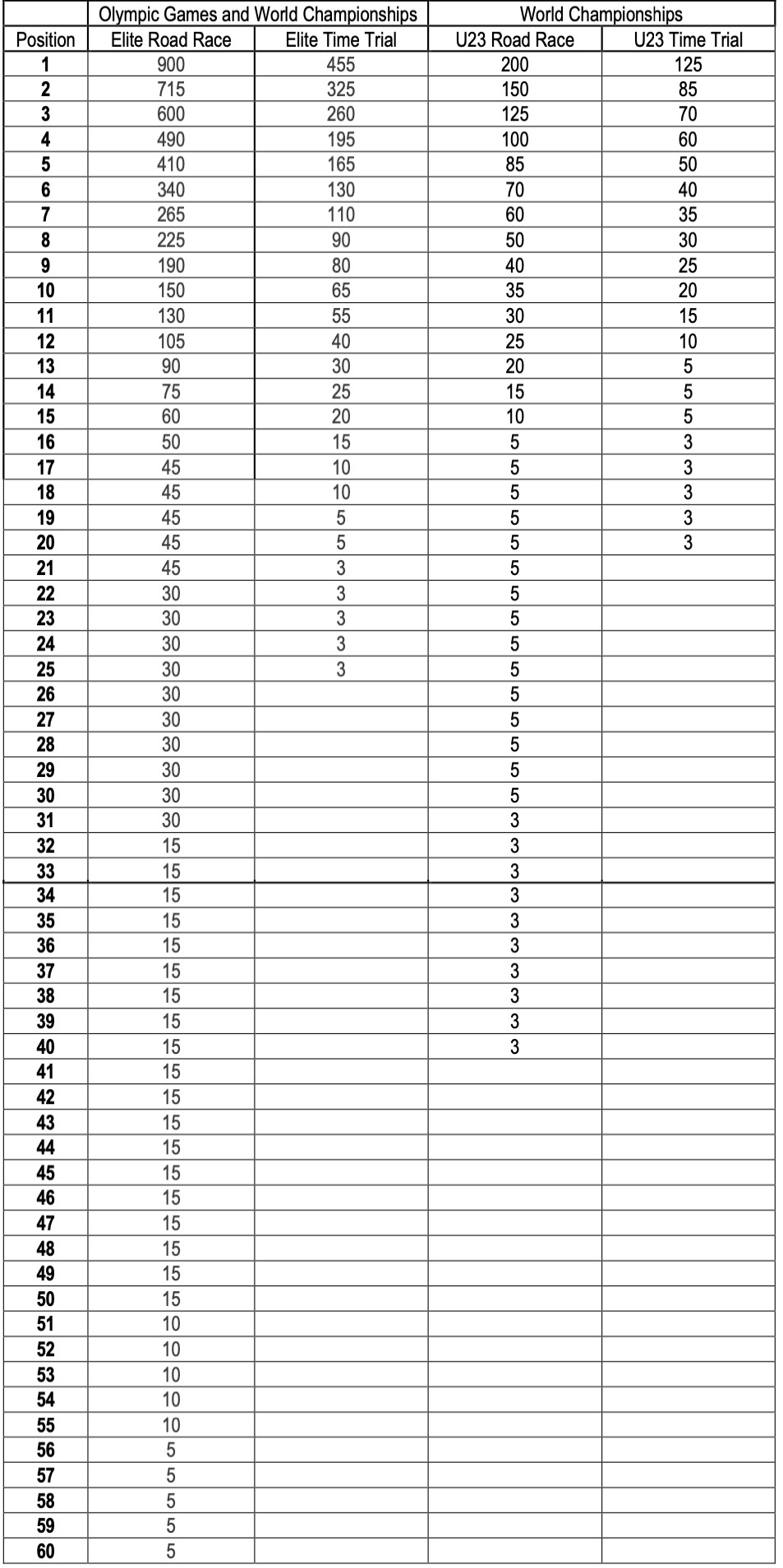
Now for the Worlds and Olympics, big events but the UCI is keen to big them up even more and they are the most lucrative one day races on the calendar in terms of points, 100 more than a Monument classic:
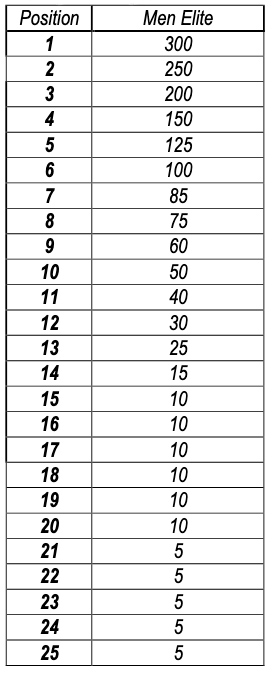
For the last of the tables, here’s the mixed relay time trial at the worlds which the UCI is keen on promoting, it’s 300 points but this is divided by the three men, so 100 points each (of course the women get 100 each too):

How to forfeit points
Riders can lose points too. The UCI rules include penalties for bad behaviour and some come with points deductions. They concern cheating like taking short-cuts, using sidewalks, ignoring level-crossing red lights, littering and other misdemeanours, right down to failing to sign on for the day’s racing or show up for the post-race press conference if invited. Any team manager sweating about winning points needs to also encourage riders not to lose them. Remco Evenepoel won’t worry about 25 points lost at the Tour but given the efforts others go to in order to earn 25 points these penalties matter too.
Where to find them
Go to uci.org > “Regulations” link at the top of the page > Scroll down to “Part II – Road Races” > open the big Part II – Road Races PDF > Scroll to Chapter X in the document.
Comment
The allocation of points is imperfect but reflects the UCI’s priorities. If the rankings correlated with media attention the Tour de France would have an extra zero on the points but the UCI system evens things out.
Is the Tour Down Under better than the Itzulia Basque Country? The rankings say yes but most would disagree. One of the charms of the sport is it retains a qualitative aspect that eludes rankings and the committees that establish them.
If incentives matter then UCI points do too. Many riders can earn bonuses from their points haul. For outsiders it’s a way to compare riders and teams during the season but also used for the three-year promotion and relegation contest. It’s this secondary battle that is arguably where the points matter most these days as teams target races and results in order to get points, both strategically in terms of race calendars and rider resources but also tactically on the day.
You can sit back and ignore a lot of this as “inside-cycling” but if you’ve scrolled this far then you’re up for these subtleties. So the next time you watch a rider sprint for a place well-outside the top-10 this explains why, or see how 25th place vs 26th in the Giro or Vuelta is worth 20 points and see which riders try to fight for this in the final week of a grand tour.
If you want the women’s points tables on one page, a separate blog post will follow soon and a link will be added here. In the meantime, new for 2026 is the women’s points score aligns with the men, eg 1,300 for the Tour de France, 125 points for winning a *.1 race and so on.