

Published February 13, 2026 02:50AM
The negative headlines keep pouring in for Visma-Lease a Bike and Jonas Vingegaard.
The Dane crashes, gets sick, and scratches his season debut. Wout van Aert breaks an ankle, misses CX worlds, and classics are in doubt. Sepp Kuss abandons sick. GC lieutenant Simon Yates suddenly retires, leaving a huge hole in grand tour ambitions. And Vingegaard’s personal coach and training guru leaves in a shocking exit.
From the outside, there seem to be plenty of flashing red lights for the eternal rival of Tadej Pogačar.
Could the wheels look to be coming off the cart for the Dutch powerhouse that once dominated the super team era?
It’s hard work to get to the top, even harder to stay there.
Momentum can turn quickly in cycling, both good and bad. Visma and Vingegaard are living that right now.
And while there’s no hiding that there’s plenty of turmoil inside the Killer Bee’s hive right now, it’s also early days in a season that’s barely left the starting blocks.
Visma says there’s no need to panic, at least not yet.
“We’ve had a lot of bad luck,” Niermann told Wielerflits at the Tour of Oman. “It is what it is, but we’re handling it well, and we’ve always kept trying to make the most of it.
“We do have to reschedule some races, especially now that Jonas won’t be riding the UAE Tour. But that’s not a disaster,” Niermann said. “The big goals will come later in the year. Wout is doing great in training. But right now, there’s absolutely no panic.”
How bad are things? And what’s really going on? And how will it impact the team during its inevitable clash with Tadej Pogačar?
Let’s dive in:
What’s wrong at Visma? A few things, but topping the list is a steady loss of homegrown talent.
There is no sugarcoating this one. Several marquee names from Visma’s unprecedented 2023 grand tour sweep are no longer pulling on the yellow jackets.
Visma’s depth has always been its strength, but key pieces of the core are gone.
Primož Roglič bolted after 2023, Dylan Van Baarle exited for Soudal Quick-Step, and Tiesj Benoot, the quiet, hard-working Belgian who was the glue of the classics and grand tour squads, left for a better deal at Decathlon CMA CGM.
Others are MIA as well. Christophe Laporte continues to battle long-term illness, and Nathan Van Hooydonck was forced into early retirement over heart issues. Cian Uijtdebroeks broke his contract and searched for some space at Movistar.
Kuss remains one of the peloton’s most lethal domestiques, but he’s stepped back from the idea that he could become the team’s next GC threat.
Natural turnover is part of any elite program, and Visma has historically recruited well. Matteo Jorgenson, Victor Campenaerts, and Edoardo Affini have stepped up to plug gaps.
How bad is it really?
Visma is still one of the top teams, but its stars are getting older, and fresh recruits are not delivering as soon as some expected.
The key remains Vingegaard. If he’s the fastest horse in the race, Visma will have a chance.
The supporting cast is still there, but the team is looking thinner than ever going into 2026. A few more injuries and illnesses later in the season could compound losses.
2. Simon Yates and a surprise retirement
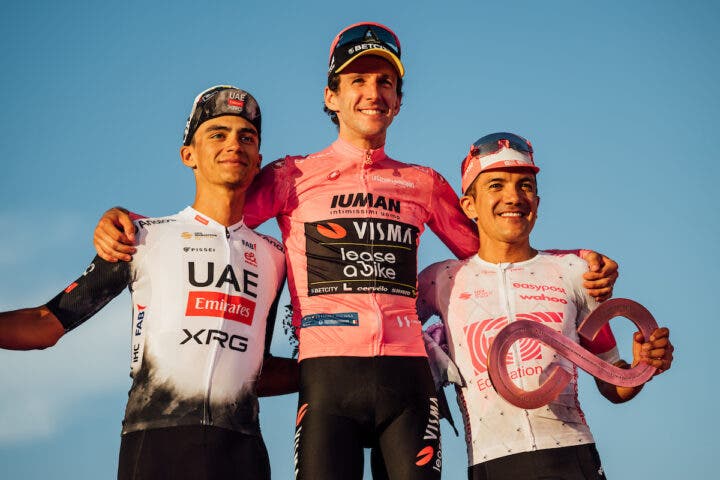
This one blindsided everyone. Of all the early-season shocks, this is the one that could hurt the most when rubber meets the road in the key dates this season.
There were rumors that Yates was already done with cycling after winning the Giro d’Italia last year, but his two-year deal meant that everyone planned on him being back for 2026.
All indications were that he remained central to the program. Then, days before the January team camp, he dropped the bombshell: retirement, effective immediately.
That caught the team completely off-guard and left the staffers grappling for answers without one of its best signings in years.
Yates not only could provide a Plan B in the GC, but he was the kind of motor and engine that Vingegaard needs in the high mountains.
Yates’s exit reveals a deeper crack in the Visma house.
And if Yates was a temporary patch for the team’s most obvious gap, who eventually succeeds Vingegaard as the team’s next grand tour leader?
Jorgenson is ready for more GC upside, but team brass isn’t sending him to the Giro, and wants him ready for the Tour.
Some of the team’s bets on young talent haven’t paid off as they hoped over the past few years. They hit pay dirt with Matthew Brennan, but he’s more of a one-day/classics rider. The 21-year-old Jørgen Nordhagen — third in the Tour de l’Avenir — is showing promise and is expected to make his grand tour debut at the Vuelta.
Of the team’s newest signings for 2026, Davide Piganzoli — already twice inside the top 15 at the Giro — hints at more upside after joining the WordlTour.
UAE and Red Bull-Bora-Hansgrohe are well-positioned for the post-Pogačar-Vingegaard era, backing Isaac del Toro at UAE, and Remco Evenepoel and Florian Lipowitz rising fast at Red Bull.
There’s some other talent bubbling up, but so far, Visma has yet to tap that next big grand tour winner.
How bad is it really?
Had Visma known Yates was leaving, management could have moved aggressively in the transfer market. That window is now closed. The team will miss his climbing depth and GC insurance all season long.
Of all the winter drama, Yates’s unexpected exit could be the gaping hole that could pay a cost in July and in the future.
3. Unwanted early injuries and setbacks
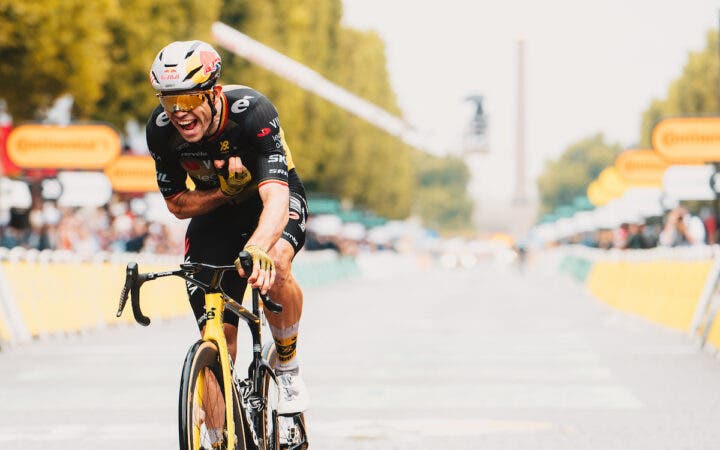
Crashes and injuries are part of every season. The real question is timing.
An ankle injury to Van Aert in December and Vingegaard’s January training spill have ripple effects, but neither appears likely to compromise July.
The most urgent is how Van Aert’s injury could blunt his spring. Visma’s stated goal of landing a monument will take a direct hit if he is not at full capacity. The damage, however, was not as severe as feared. It wiped out his cyclocross campaign, but he is already back riding. His classics campaign may begin on the back foot, but there is no indication that the Tour de France is at risk.
Vingegaard’s crash and subsequent illness, picked up during cold winter training in Spain, ruled him out of the UAE Tour. The decision was precautionary, aimed at preventing a minor issue from escalating. The Volta a Catalunya may be his only race before the Giro, though the team could still adjust to add race days.
The larger concern is what happens next. Vingegaard’s past two Tour buildups were compromised by cruel misfortune, with the violent Itzulia Basque Country crash in April 2024 and the concussion at Paris-Nice last March.
The plan is as simple as it is critical: get the Dane through the Giro, ideally in pink, without incident, and arrive in July in full yellow jersey peak.
How bad is it really?
Had these setbacks landed in March or June, the alarm would ring louder. In February, the calculus is different.
Van Aert is already the king of the comeback, and though his spring might be impacted, he should be back at full revenge mode by July.
And the same goes for Vingegaard. The key is to keep him upright and healthy through the Giro and into July.
Right now, panic feels premature.
4. Coaching and other backroom drama
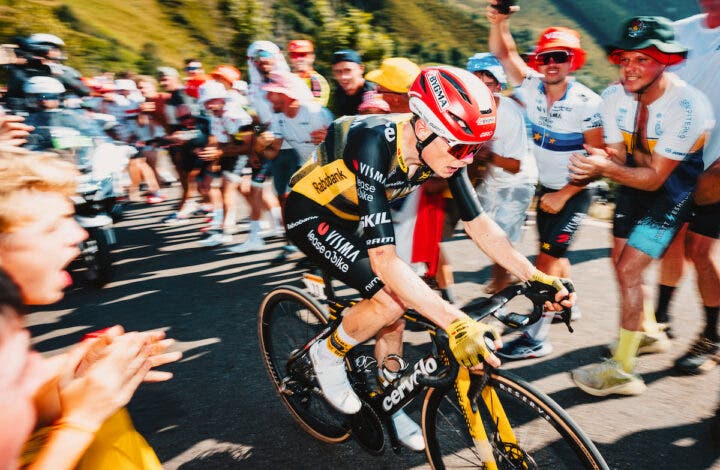
Another stunner was the sudden departure of Vingegaard’s longtime coach, Tim Heemskerk.
Like Yates’ retirement, it appeared to arrive without warning. In public comments, Heemskerk hinted he had run out of ideas on how to crack the Pogačar code.
Martin Heijboer, Visma’s head of coaching, will assume a larger day-to-day role in Vingegaard’s preparation.
Whether this shift was long planned or triggered by deeper internal concerns remains unclear. The team has offered few details.
Is Visma, once one of the peloton’s innovators, suddenly missing a step?
There’s been a string of comments from former Visma riders, including Cian Uijtdebroeks and Van Baarle, who said they felt restricted and over-monitored under the team’s training regimen.
Tactically, Visma is also under pressure to come up with something new. Last year’s attempt to bury Pogačar early in the Tour backfired when the Slovenian flipped the script and buried Vingegaard on back-to-back Pyrenean stages.
A coaching change may signal a new strategy in the almost impossible task of cracking Pogačar.
These shakeups come as Visma tries to close a widening performance gap. Pogačar appears at full throttle and has humiliated V-Lab the past two summers.
Grischa Niermann remains in charge on the sporting side after replacing Merijn Zeeman, who left in 2024 for a role in football. Niermann’s first full campaign in 2025 delivered wins at the Giro and Vuelta and second overall at the Tour.
Far from disastrous, but the level the team is racing at now, anything less than yellow can seem like a disappointment.
How bad is it really?
Without full transparency on the coaching reshuffle, it is difficult to measure the impact.
Change is not always negative. New ideas can spark progress, but what raises eyebrows is the timing and late-hour shakeups.
February is hardly ideal for major changes. Integrating new methods and refining a grand tour strategy before May and July is a tight window.
5. Pogačar factor
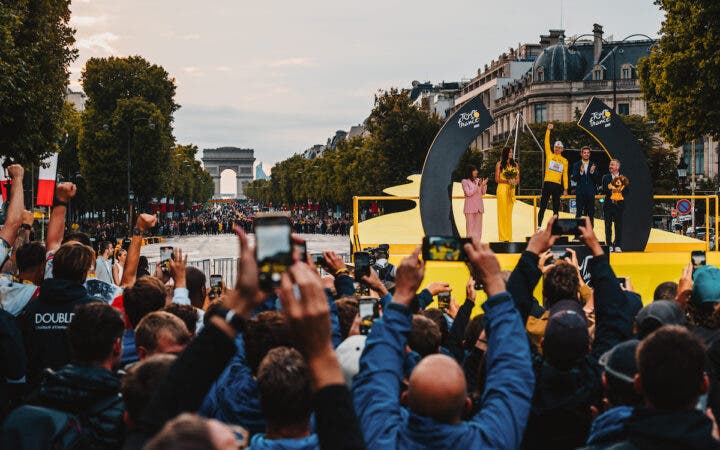
And then there is Pogačar.
The Slovenian superstar is both the benchmark and the burden for the Killer Bees. He is the rider they are obsessed with beating. They have done it twice. They have also been completely overwhelmed twice since.
Vingegaard and Visma remain the only rider and team to defeat Pogačar in a grand tour, discounting the Slovenian’s 2019 Vuelta debut.
In 2022, Visma outmaneuvered him in the Alps with pitch-perfect tactics. In 2023, Pogačar arrived at the Tour compromised by the broken wrist he suffered at Liège-Bastogne-Liège.
Since Visma’s 2023 grand tour sweep, the balance of power has shifted. Pogačar is stronger, more complete, and backed by a deeper UAE squad. Visma seems to be largely reacting rather than having the initiative.
To reset for 2026, Vingegaard is changing the season blueprint.
The Giro-Tour double is a huge undertaking, and Pogačar was the first rider in 25 years to pull it off in 2024.
Why the Giro now? Vingegaard said it’s a new motivation and a chance to become only the eighth rider to win all three grand tours, something that even Pogačar has yet to do.
In some ways, targeting the Giro before the Tour can be seen both as a bit of capitulation as well as cold-blooded calculation.
With victory at the Giro, at least the team can put something on the board. And the Giro won’t be a cake walk, the GC rivals keep getting better. Better that than bet everything on the Tour and come up short again.
Of course, that’s not to say something couldn’t happen to Pogačar.
Luck is cycling’s X-factor.
Last year, he dodged the bullet twice — first with his high-speed crash at Strade Bianche and again during the Tour when he wiped out on the road to Toulouse. Both times could have resulted in broken bones or worse.
How bad is it really?
Pogačar is the alpha. Vingegaard remains the most direct threat, something amazing to think about considering his Tour de France track record.
Evenepoel is the would-be usurper, already thinking he can get past Vingegaard to finish second behind an untouchable Pog.
If Vingo misses out on the Giro and later cannot jettison Remco, then we can start to say something is rotten in Denmark. Until then? Give him his due.
The bigger picture: Is this already decided?
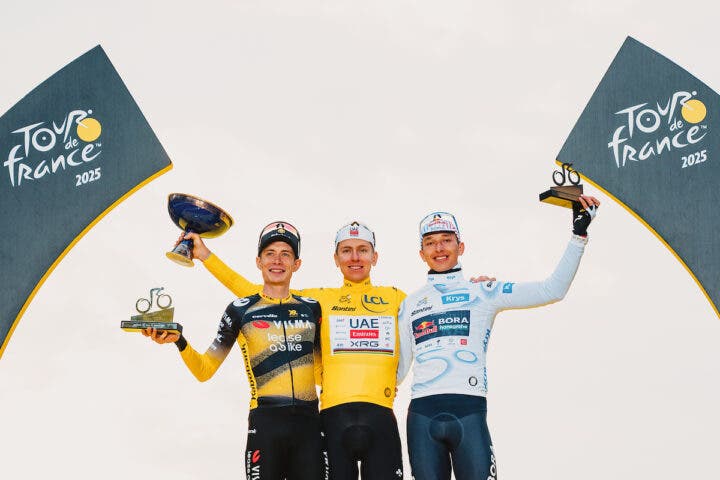
Declaring the 2026 Tour already lost is just a tad premature, yet there’s no hiding that Visma-Lease a Bike — a team that ushered in the super team era — is at a crossroads.
Right now, Visma might not project the aura of inevitability it carried in 2022 and 2023, but it’s worth remembering that Vingegaard has won or finished second in every Tour he’s started.
When healthy and fully supported, the Dane can still challenge Pogačar on pure power metrics. The margins are thin and not completely irreversible.
Sure, it’s been bumpy out of the gates in 2026, but Tours are not won or lost in February.
Setbacks are part of any racing season. It’s how severe the injuries are and how a team reacts that will determine what happens in July.
Perhaps more than any team, Visma has consistently shown it’s able to roll with the punches. Van Aert’s comebacks and Vingegaard’s returns from serious crashes are proof that this organization handles adversity as well as anyone in the peloton.
Against any other rival besides Pogačar, this would be the Dane’s era. Vingegaard remains one of the most efficient grand tour riders of his generation.
Ask rival sport directors what it takes to beat Pogačar, and the answer is typically resignation: hope for a bad day.
Visma and Vingegaard remain the only committed unit, perhaps now with rising Red Bull, that pack the talent, resources, and ambition to take it straight to Pogi.
That does not mean Visma is waiting for fortune to intervene? No.
The team is working aggressively behind the scenes to regain control of the yellow jersey narrative. These shakeups and setbacks are just part of what’s always a highly unpredictable process.
It is far too early to write off Visma or Vingegaard. The true verdict will come in July.