
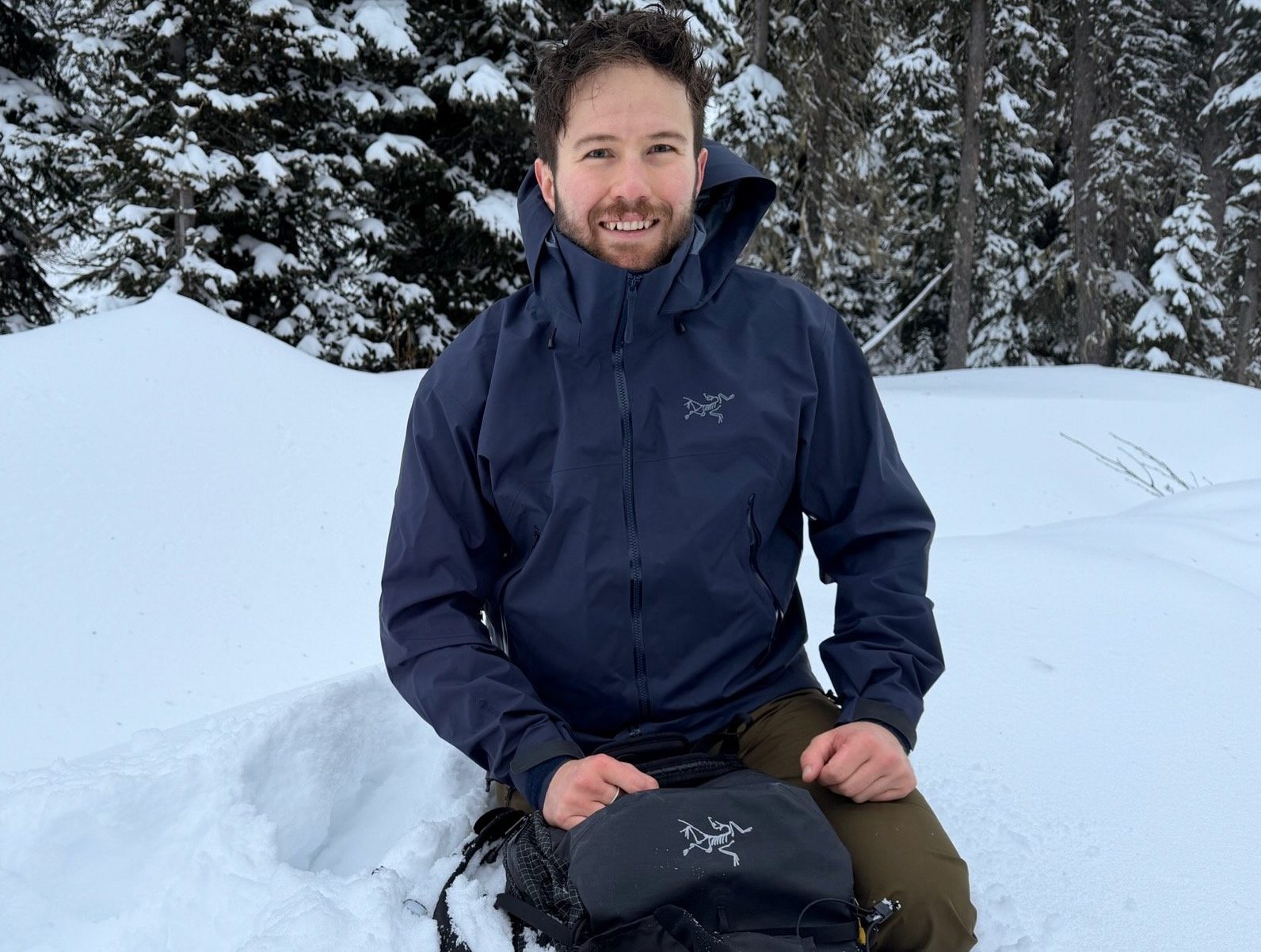
There’s nothing quite like the feeling of zipping an Arc’teryx shell up to your chin on a blustery day. I have been fortunate to have a number of Arc’teryx shells over the years for testing and guiding, and I totally feel like they add a little sense of security for me when the weather is unsettled and I’m out for a long day or extended backcountry trip. Arc’teryx continues to refine their shells, and this year’s iteration of the Beta AR brought some exciting changes that we’ll unpack here. It’s a stellar product for someone looking for maximal protection.
Arc’teryx Beta AR GORE-TEX Shell Features:
- Waterproof, windproof, breathable GORE-TEX PRO ePE membrane (PFAS-free)
- Reinforced in high-wear zones
- PFAS-free DWR (Durable Water Repellent) finish
- Articulated patterning for unrestricted mobility
- Helmet-compatible DropHood™ with precision adjustment
- Internal hood cordlocks
- Glove-friendly Velcro cuff adjusters
- Adjustable hem drawcord
- Pit zippers for ventilation
- Two zippered hand pockets
- Internal chest pocket
- RECCO® reflector in the brim
- bluesign®-approved materials with recycled and dope-dyed content
- MSRP: $650
From Burly to Burlier
The Beta AR has been around for many years as a staple in the Arc’teryx shell lineup. Their product offerings evolve like every major outdoor brand, but the Beta and Alpha series have consistently been anchors. The Beta still has a few siblings, including the straight-up Beta and lighter Beta SL. There are some important differences between these pieces.
In short, the Beta AR is the burliest all-weather option. While the Beta and Beta SL have a soft GORE-TEX C-Knit backer, the Beta AR is built with GORE-TEX Pro ePE fabric. This is bonded to a 100D nylon face fabric on the shoulders and helmet, with 80D making up the remainder of the body. This is the same combo making up the uber-durable Alpha SV, their premium jacket still made in Vancouver (wow). The weight difference between the Beta AR and the Beta SL is substantial, around 120g or 25% weight savings with the Beta SL. All of these jackets are waterproof and breathable, with pit zips to dump heat.

A major structural difference with the Beta AR is the use of a DropHood design. Arc’teryx has two hood styles: DropHood and StormHood. The StormHood is their most common by far, and it incorporates the hood and collar together. The DropHood has a separate tall collar that protects your neck and chin while the hood lies flat.
There’s no right choice between these two collars: you just need to try them on and see which is more comfortable to you. I’ve mostly used StormHoods in the past, and I like them; they seal like a (comfortable) gauntlet around your neck to keep the elements out. The DropHood is nice because it lets the hood sit a bit further down when you’re not wearing it. If you’re really sensitive about stuff around your ears, you might like it better. I personally found the DropHood’s tall collar to be a bit like a GORE-TEX turtleneck and it was a little impeding. Both are good designs, just difference: try them out.

The Beta AR has all of the other features that make it a premium alpine shell. Unlike the Beta and Beta SL, the Beta AR has three hood adjustments to fine-tune your fit. This is really nice when you’re spending a lot of time with the hood on, with or without a helmet. The brim has a subtle stiffener to help it keep its shape, and it held up well to heavy wind. Peripheral vision with the DropHood is excellent.
The two pit zips deserve special mention. I really feel like manufacturers have made leaps and bounds with making them easier to pull one-handed, and the Beta AR’s pit zips are some of the best I’ve tested. They’re easy to open and close but still seal out water.

Inside, the Beta AR has a small zippered security pocket where you can throw your phone or snacks. My iPhone 16 Pro Max in a case fit snugly. The hem secures with two toggles, and the cuffs have a nice rubberized cuff adjusters.
With all of my reviews, my goal is to help buyers make a good choice about whether a specific product suits their needs. With the Beta AR, the use case is pretty clear: in my mind, this is basically an Alpha SV that’s not made in Canada. I’m being tongue in cheek, but in many ways it’s true. The face fabrics are the same, the cut is very similar, and the overall product durability is going to be comparable. This is a jacket that’s meant for really severe conditions with lots of abrasions and scrapes. If I was alpine climbing in the rain, I would choose either the Alpha SV or the Beta AR.

In reality, most of my testing these days is backcountry touring, Cascade volcano climbing or backpacking. The Beta AR is totally suited to those things, too; the abrasion resistance will help fend off ski edges and poles, whipping branches and backpack wet spots. You get Arc’teryx’s excellent tailoring, which helps the jacket feel simultaneously roomy but sleek. That’s one of the things that has been the hardest to find in other brands’ shells. The Beta AR can appeal to many users, and it truly is an all-around performer.
Fit: I’m 5’11, 205 lbs. (let’s be honest, it’s 210 in the winter) wearing a Large.
Buy it now: Available from Arc’teryx.com
The Bottom Line
All-Arounder
The Beta AR is a purpose-built shell for people who like it rough. The GORE-TEX Pro build is extremely durable, the ventilation works, and the fit plays well with a pack or harness. The DropHood will be something you should try for yourself, and lighter Betas make more sense for fast missions. But when conditions are bad, abrasion is guaranteed, and you don’t want to think about your jacket, the Beta AR is exactly what it claims to be: a no-nonsense, maximum-protection shell.
The Good:
- Extremely durable GORE-TEX Pro fabric in 80 and 100D
- Overall I like the three-way adjustable DropHood
- Shockingly good pit zips for easy, effective ventilation
- PFAS-free, bluesign-approved materials with premium construction
- It’s like an Alpha SV but $250 less expensive
The Bad:
- Heavier than other Beta shells, not ideal for ultralight people
- DropHood collar can feel restrictive; you’ll either like it or you won’t
- It’s got that Arc’teryx premium price tag
-
Weather Protection
-
Breathability
-
Mobility
-
Fit
-
Features
-
Value