
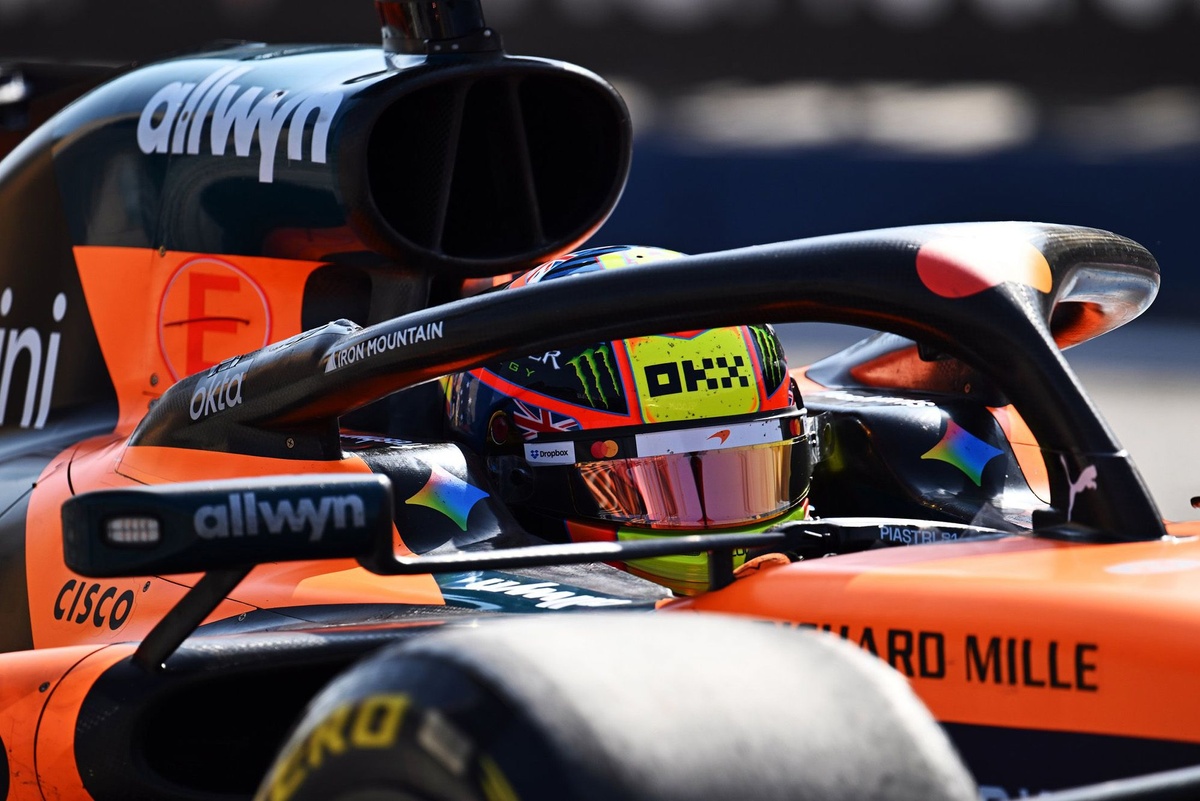
Oscar Piastri reckons a bad race start in the 2026 Formula 1 campaign will be so costly that a driver may lose up to “seven spots” – likening it to an F2 contest.
Race start procedures have been a contentious topic since pre-season testing began last week, because they are now much more complex than before due to the removal of the MGU-H.
This means drivers must rev their engines for at least 10 seconds to reach the required turbo level, but timing it wrong could either cause a slow getaway or putting the car into anti-stall.
That happened to Franco Colapinto in Bahrain on Friday as he almost spun into the pitstraight barrier, showing they’re far from as seamless as before this regulation change.
Piastri said: “Everyone’s going to need different things for the start, and to be completely honest with you, I’m not sure any of us know exactly what we need yet.
“I think we’ve probably got rough ideas, I’m sure we’ll find a way to do a proper start. It’s just that the difference between a good and bad start last year was you got a bit of wheelspin or you had a bad reaction time.
“This year it could be effectively like an F2 race where you almost go into anti-stall or something. You’re not just losing five metres or so, you could be losing six or seven spots if it goes wrong.”
Oscar Piastri, McLaren
Photo by: Steven Tee / LAT Images via Getty Images
It could be even worse for drivers towards the back of the grid, given they might not even get the required 10 seconds to spool up the turbo under the current procedure.
So there are safety concerns which come with the whole situation; McLaren boss Andrea Stella called for “imperative” tweaks, something Piastri agreed with.
“The starts need to be addressed,” added the McLaren driver. “As we’ve all seen, it’s a pretty complicated process now to have a safe start, let alone a competitive one.
“It’s something that we’ll talk about between now and Melbourne, I’m sure, and there’s plenty of topics to address. Starts, overtaking – overtaking is certainly going to be different as well.
“DRS was obviously just a pure advantage you used to gain, whereas now with the energy boost you’ve obviously got to harvest that extra energy somehow and then deploy it, which with some of the rules in place is not always that straightforward.
“So there’s also some optimisation from all the manufacturers, I’m sure, on how to redistribute things and make overtaking as easy as it can be. I think following is very similar to last year, in all honesty, which is not a big surprise to me, but there’s definitely a lot of things to talk about and address before Melbourne.”
A lot of those topics are expected to be discussed in Wednesday’s F1 commission meeting during this week’s second Bahrain test, ahead of the Australian season opener on 6-8 March.
We want your opinion!
What would you like to see on Motorsport.com?
– The Motorsport.com Team