
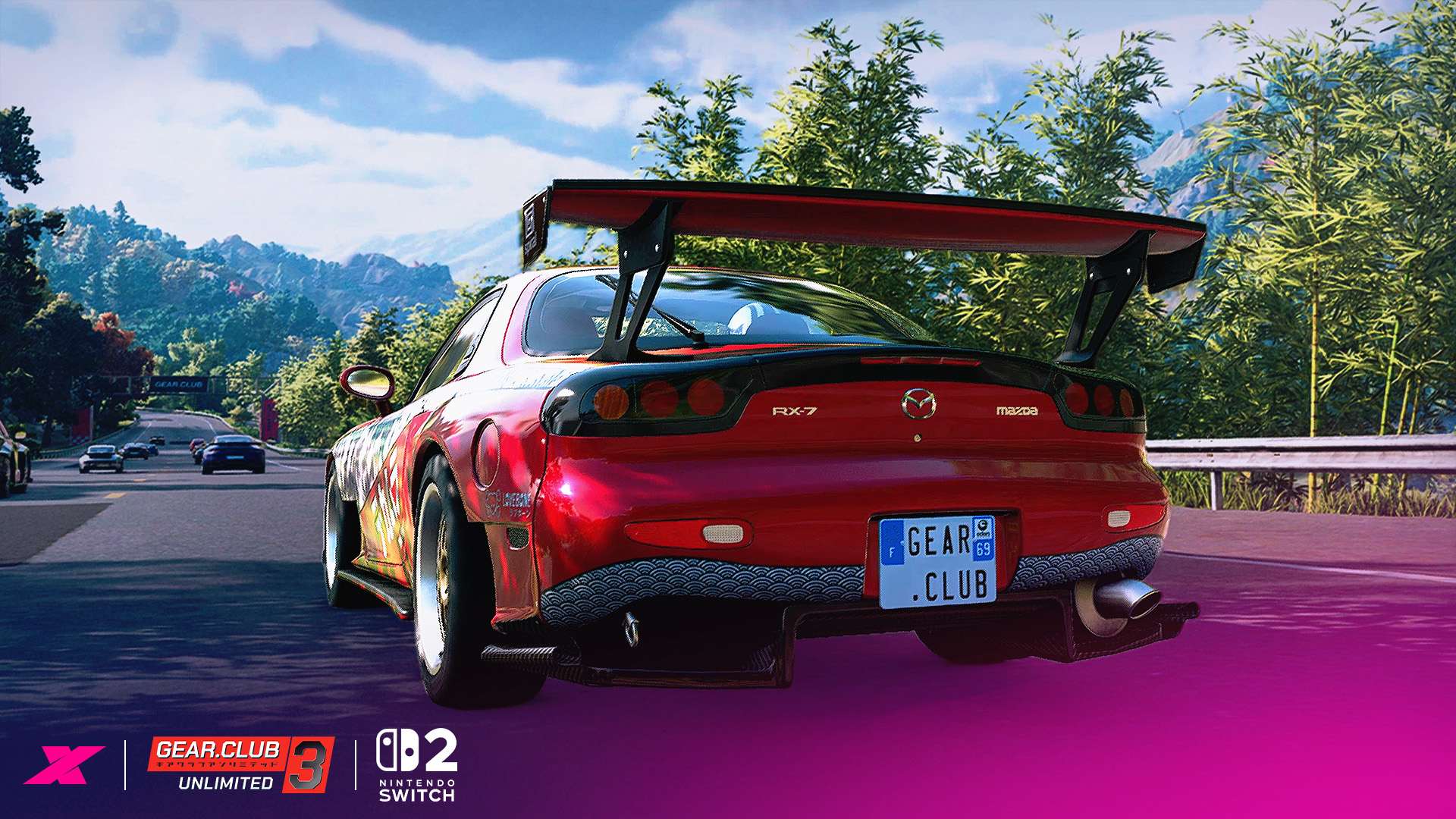
In just over six months, the Nintendo Switch 2 has accumulated a delectable library of racing games, from Mario Kart World to Fast Fusion and Sonic Racing: CrossWorlds.
But if you want to drive real-world cars, your options are limited to essentially last month’s excellent GRID Legends port. Enter Gear.Club Unlimited 3, the latest in the long-running racing franchise that aims to fill this shortfall.
For the uninitiated, Gear.Club started as a mobile-exclusive, with the first entry releasing in 2016. An expanded version devoid of microtransactions was ported to the original Switch a year later, spawning the Unlimited franchise.
Like its console precursors, Gear.Club Unlimited 3 is a timed Nintendo-exclusive. It aims to deliver the grounded racing experience the Switch 2 sorely lacks, with PC, PlayStation, and Xbox versions arriving later this year.
Test Drive Unlimited DNA
Before Gear.Club, French developer Eden Games was best known for helming the first two Test Drive Unlimited games until the series was handed over to KT Racing. Connections between the two racing franchises don’t end there either. Incidentally, Gear.Club Unlimited 3 is published by Nacon, the French publisher of, you guessed it, Test Drive Unlimited Solar Crown.
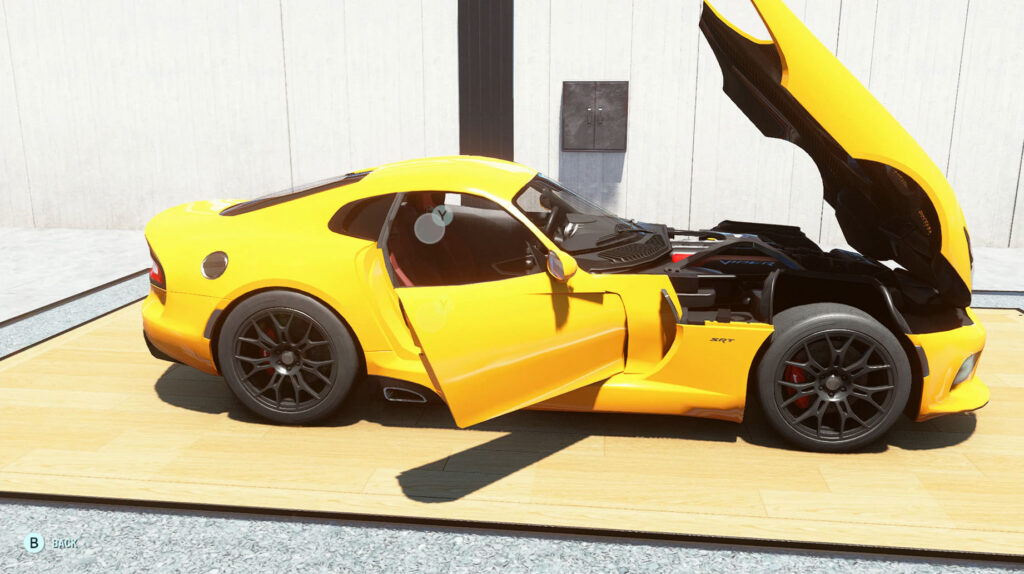
Traces of that revered series’ DNA can be found in this latest instalment, from the idyllic coastal roads to the interactive dealerships that let you freely walk around cars for sale, open the doors and bonnets, and choose the paint colour, brake callipers and wheels. But before you start thinking this is a spiritual successor to Test Drive Unlimited, the similarities end there.
Unlike Test Drive Unlimited, Eden Games’ latest racer doesn’t feature a gigantic open world to explore, with races instead taking place on closed road circuits. That’s not necessarily a drawback. With the saturation of open-world racers, there is a dearth of arcade-style circuit racers like Project Gotham Racing and DriveClub.
A story mode sees you and your established clan move from the French Riviera to Japan and build a new racing headquarters, recruit staff and acquire new cars, with the campaign alternating between the two locations at set intervals.
Both locations have distinct visuals and vibes, with French locations featuring a warmer colour palette than Japan. While there are 50 layouts, the abundance of winding country roads can get familiar.
That said, Gear.Club Unlimited 3’s road circuits are often a joy to drive on when you get into a flow state. One highlight sees you navigate a high-altitude mountain road in Japan with stunning views, sweeping turns and consecutive hairpins.
Cutscenes before each event give the racing purpose. Unfortunately, the lacklustre presentation lets the campaign down, with characters represented as static illustrations and no voiceovers accompanying the dialogue. The result looks cheap, reminding you of the series’ mobile origins.

A redundant upgrade system
A staple of the series, Unlimited 3 takes a unique approach to vehicle upgrades. When in Japan, you can customise your garage by displaying your car collection and installing workshops, from paint shops to wind tunnels.
Each workshop caters to a specific upgrade, whether it’s improving performance and aerodynamics or installing cosmetic parts, and can be levelled up for better results. Upgrades require resource points, earned in events and ‘Unlimited’ bonuses for clean sectors and achieving top speed. This leads to the dilemma of whether to prioritise buying cars or upgrading workshops.
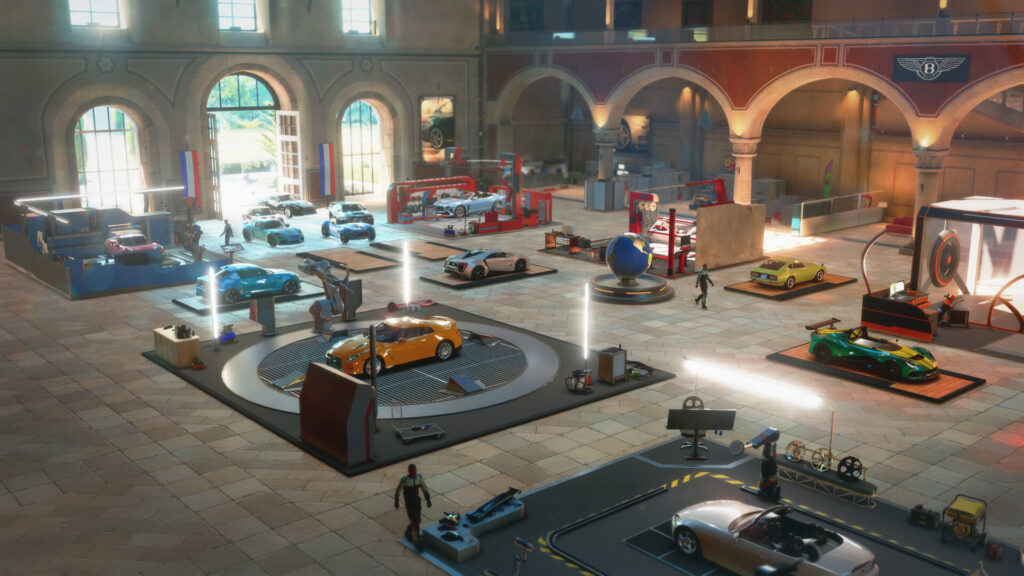
Alternatively, you can hire staff to unlock perks such as gaining more resources in events. There’s a lot to manage and keep you engaged outside of events, and watching your garage expand with workshops, cars on display and purchasable furniture is satisfying. It’s well balanced and executed, with RPG-style elements adding an extra layer of depth that elevates the campaign.
There is, however, one catastrophic issue: the upgrade system is utterly redundant.
Some events require you to tune your car or buy a new one to meet the performance level criteria. But there is otherwise no incentive to upgrade your car thanks to the passive AI that removes any challenge. Opponents will battle each other and blast past you on straights, only to brake far too early for corners and cluster together, making it easy to overtake and gain several places.
This makes for some lacklustre, lonely races, with no option to adjust the AI difficulty in story mode. When you’re miles ahead in the lead before the first lap, races can feel more like hot laps.
Mercifully, while it’s too easy even in later events, the story campaign is well-paced. The plot and paper-thin characters, ranging from a corporate boss to a reliable mechanic, are forgettable, yet there’s enough intrigue to see how it progresses as you secure partnerships and expand your club with new drivers.
Similarly, cars are unlocked gradually, with the remaining vehicles hidden under covers at dealerships, enticing you to progress to find out what lies underneath. The story begins with the usual trope of tantalising you with a drive of the game’s cover car, a modified Mazda RX-7, before taking it away and giving you a budget to buy a starter car and work your way up.
This isn’t a game that hands you the keys to the fastest cars straight away in the campaign (we’re looking at you, Forza Horizon 5), and it’s all the better for it. Alternatively, if you want to access the top-tier hypercars without progressing through the campaign, every car is unlocked in the free play mode.
An outdated car roster
At launch, Gear.Club Unlimited 3’s roster features a grand total of 39 cars, plus an extra three models included in the Performance Pack DLC. That would be a slim selection for a game released in 2006, let alone 2026.
Disappointingly, that’s fewer cars than its console predecessor, which launched with around 50 vehicles, many of which are recycled. The third entry introduces new Japanese manufacturers like Subaru, Honda and Mazda, but manufacturers including Chevrolet, Jaguar and MINI are absent, despite appearing in Gear.Club Unlimited 2.
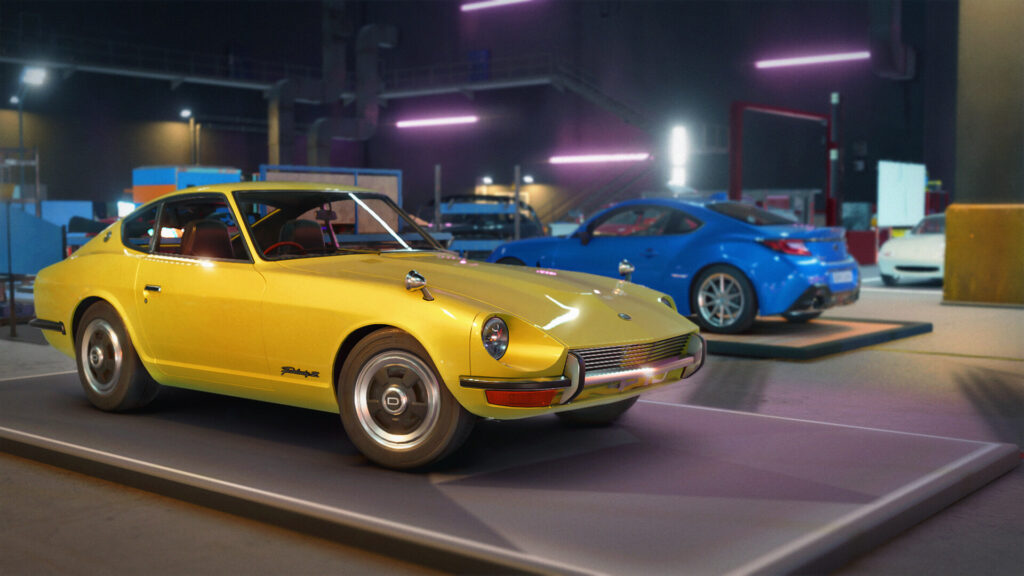
It may not be the largest car roster, but it’s eclectic, with a mix of hatchbacks, sports cars and supercars from US, European, Middle Eastern and Asian manufacturers across different eras. But with only four models from this decade, with the newest car being the 2024 Bentley Bacalar, it feels somewhat outdated. You can drive the Bugatti Veyron Grand Sport, but not its Chiron successor, for example.
Every car is well modelled with exquisitely detailed interiors and, in a first for the series, a cockpit camera. If only it had a full steering-wheel turning animation and working mirror reflections. There is no visual or mechanical damage, either.
Inherently, the vehicle handling is hampered by the Switch 2’s digital controls, whether you use a Joy-Con or Pro Controller. With no analogue triggers for acceleration or braking, it’s not an ideal setup for racing games that require subtle inputs for car control.
An alternative control scheme lets you use the right analogue stick to finesse the throttle and brake, but this isn’t a practical solution. If you want analogue triggers, you’ll need a Switch 2 GameCube controller.
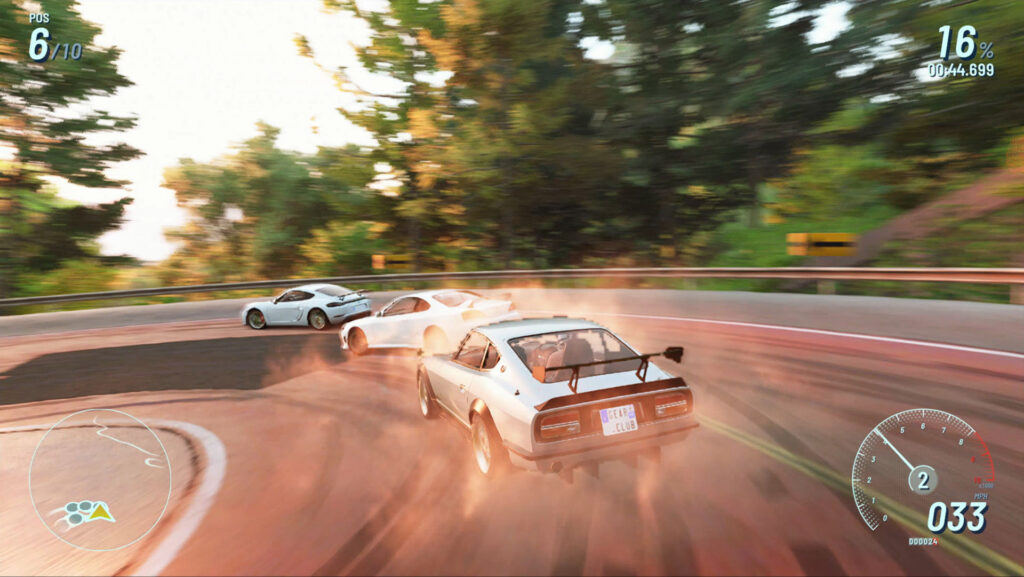
Gear.Club Unlimited 3 accommodates this with cars that are grippy and intuitive to control at the limit, with a convincing sense of weight. Driving a light and nimble Lotus feels markedly different from a cumbersome Bentley, which understeers like a luxury barge.
With assists off, it’s usually easy enough to recover if the rear steps out in RWD cars like the BMW M2 or Ford Mustang GT by letting off the throttle. Extended slides around tight turns require encouragement from the handbrake, but this feels clunky by comparison, likely due to the aforementioned lack of analogue controls.
We also occasionally experienced a glitch where cars would automatically straighten up during a slide. Overall, though, the driving feels fun and responsive given the Switch 2’s limitations. It’s a noticeable improvement over the last game, too, which suffered from irritating input lag that made some cars undrivable.
Hitting the highway
Alongside standard races and time trials, the third instalment introduces two new event types woven into the story mode.
Duel mode unashamedly borrows from Tokyo Xtreme Racer. This sees you attempt to outrun a rival and deplete their meter by widening the gap in front. It plays like a fighting game, even triggering a “KO” if you win. Sound familiar? Genki probably thinks so. Adding to the Tokyo Xtreme Racer vibes, the first story event is set on a nighttime Japanese highway.
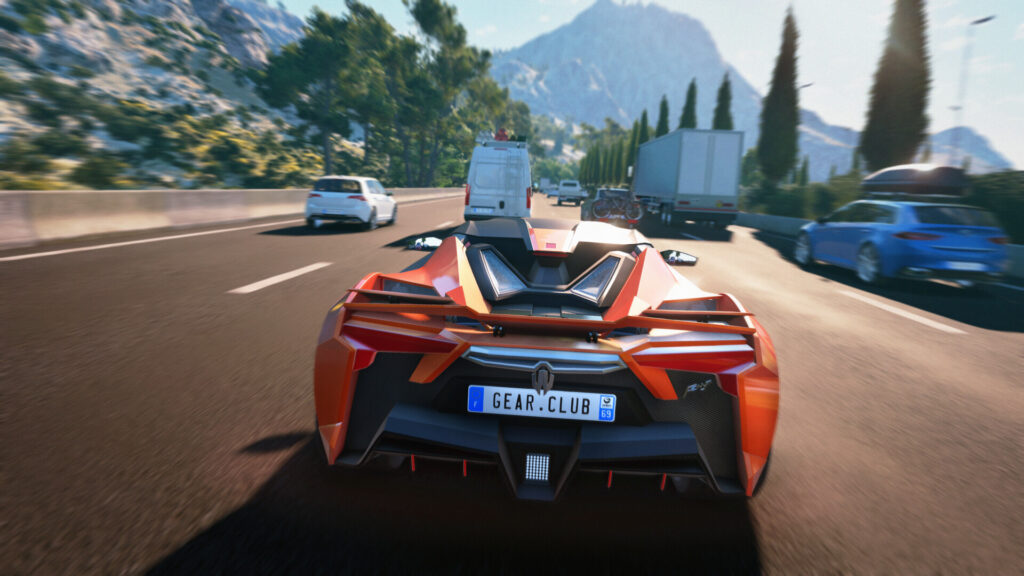
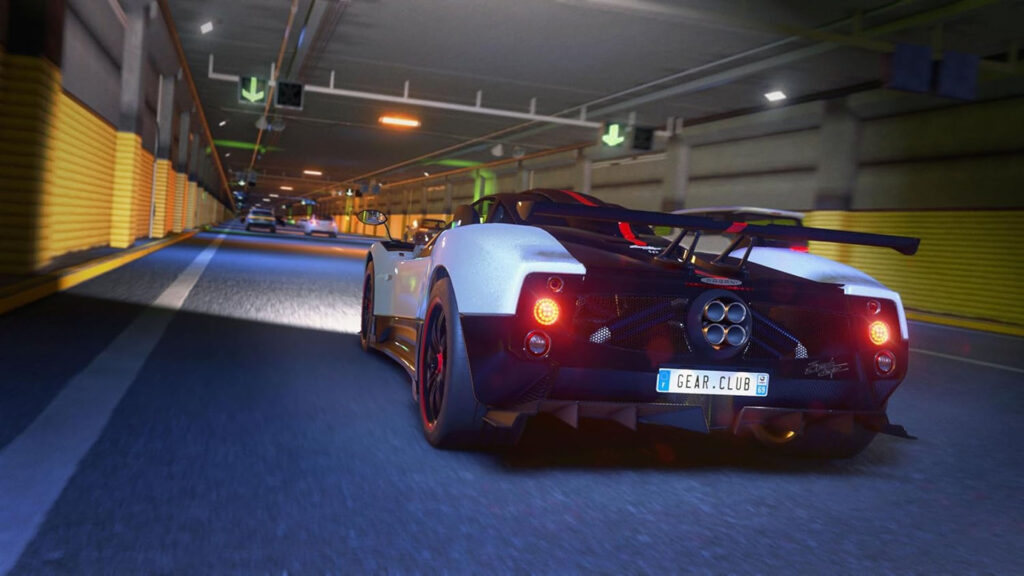
Then there is Highway Rush, which challenges you to keep your bar topped up by weaving through traffic like a slalom skater. Both modes are fun extras, and the traffic density is impressive, though it’s a shame there is no optional traffic in standard races. Traffic cars are also blind to your position and will ram into you at full speed if you cut in front of them at the wrong moment. A glitch also sometimes makes them disappear in front of you.
Further breaking up the story mode are one-off special events in specific cars, with one pitting you against a train in a Veyron. Another has you race a hot air balloon in a modified Porsche. These are less exciting than they sound, lacking the spectacle of Forza Horizon’s Showcase events.
While there is enough variety and extra side missions to complete, the story’s event curation could be better. After the Bugatti race, you retrace the same route in a time trial with your own car, followed by yet another time trial. It makes for an occasionally repetitive experience.
Sadly, there is no online multiplayer either, but the lengthy campaign and online time trial leaderboards make up for this.
High performance
During our playtest at Gamescom last year, the choppy performance on Switch 2 was concerning. Wisely, the racer was delayed several months, and the extra time for optimisation has mostly paid off.
Graphics and performance presets let you prioritise fidelity or frame rate. Graphics mode reduces performance to 30fps, while Performance mode runs at 60fps whether your’e playing on a train or in the living room.
In Graphics mode, there can be slowdown when multiple opponents are on-screen. Performance mode delivers a stable experience in both docked and handheld, but the visual cutbacks are noticeable, with blurrier textures and environmental pop-in.
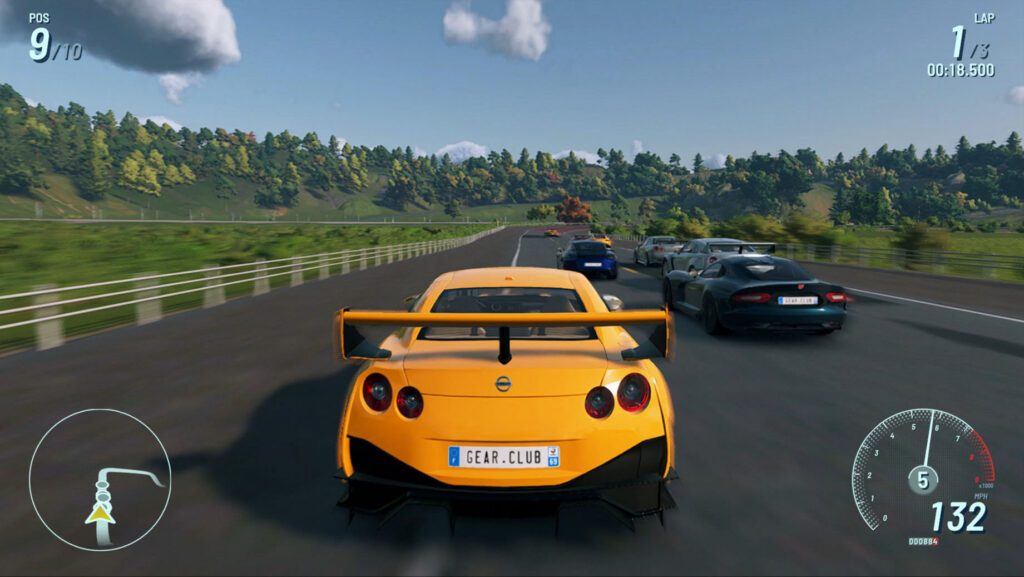
Unsurprisingly, the visuals are further downgraded when playing in handheld, with abundant aliasing. While it’s not the best-looking racing game on Switch 2, the visuals still hold up, with striking sunsets and sharp car models.
Unfortunately, this was overshadowed by GRID Legends last month. Despite being a port of a nearly four-year-old game, Codemasters’ racer is more polished, has much more content and, crucially, is half the price at £24.99 / $39.99. That makes this third installment a tougher sell, though it still stands out with its emphasis on production cars and road racing.
With its smaller scope, Gear.Club Unlimited 3 is not the Switch 2’s answer to Gran Turismo or Forza, but it’s currently the closest equivalent.
The result is a valiant attempt to bring serious racing to Nintendo’s new console for car enthusiasts, with its heavenly driving roads, enjoyable vehicle handling, and an engrossing campaign. It’s the best entry in the Gear.Club series yet, but AI issues, a lack of online multiplayer and a small, stagnated car roster make it fall short of greatness.