
Good morning!
This might get buried in the World Cup news, but there is a report on private equity (PE) firms eyeing up RCB and other IPL teams. It’s interesting for a variety of reasons – and I’m sure we’ll get enough hot takes on it soon enough – but I wanted to make a quick point about the potential new owners.
PE in sports is new. Really new. The first purchases were at the turn of the century, but it’s really accelerated in the last 7 years. Baseball allowed minimal PE investments from 2019 onwards, and it kickstarted sales across the major Western sports; football, American football, baseball and basketball.
We’re still in the early phases of what this means for the sport, but it’s important to draw a distinction between PE and traditional millionaires/billionaires who buy sports teams.
The latter buy them as “trophy assets”, and have done so for a century; they’re not meant to give you a return, but they’re prestigious. There’s only a handful of sports teams in the world (barring football), and owning one puts you in a demographic that even your richest peers can’t match.
Not only does it bring you widespread fame – how else would hundreds of millions ever know the likes of Sanjiv Goenka or Manoj Badale – but it brings you prestige that opens doors. Owning a team opens doors to government, to business connections, to media connections. Everyone’s interested in why you bought Rishabh Pant, or your memories of working with Shane Warne.
But PE firms don’t operate the same way. They look at sports teams as an investment. Cricket is late to the franchise game. By 2008, most global sports had already become established as massive money making machines, but even as late as the 1980s, most sports were loss-making industries (again, apart from football).
The explosion of TV and the Internet in the 1980s-90s created a demand for media rights, which created massive value for all those team owners. Suddenly, those prestige-first loss-leading assets were worth 10x what you paid for them.
And yet, owners didn’t sell. And, the new owners who did manage to buy in were usually fans done good. They wanted to help rebuild the organisations they’d supported as kids, and now they had the money to do something about it.
But, PE firms don’t operate the same way. These are purely financial assets to them. One of the first major purchases was in 2006; CVC – the guys who founded the Gujarat Titans – bought F1 and took it from a major international sport to an irrelevance by the time they sold it in 2016. They took out major chunks of the sports income (up to half in some reports), let it languish, created a uncompetitive game, and didn’t market it at all.
Why did they do all that? Because they knew the explosion of potential customers globally would help them make a sale eventually. They just had to tide themselves over financially until it was viable – so they stripped down costs and hoarded away revenue to pay themselves. In 2006, CVC bought F1 for $1.7 to $2 billion, and in 2016, they sold it for $8.5 billion.
Their thesis was right. CVC owned the most important bit of the entire industry; the brand. No one else could be “F1”. They figured the market would grow enough that a potential buyer would pay over the odds for what they perceived to be an underperforming – but unique – asset.
Within three years of the sale, the first season of “Drive to Survive” came out and it became a global phenomenon. The new owners got rewarded for putting in the marketing money, CVC got rewarded for stripping the sport of all its revenue. The fans got screwed over – they had to endure a decade of misery, and the uncompetitiveness of the F1 remains a decade on from the sale.
But, it sounds fine overall right? Okay, shitty owners for a bit, but good owners long term! It worked for Gujarat Titans – they’ve got a new ownership group already. The problem with that idea is the base price. Anyone who buys into RCB for $1.8 billion (the reported figure) will want an F1-like return of 3x to 4x in 10 years – except they’re buying one cricket team, not the entire sport of cricket.
Here’s the issue; media right valuations for cricket have topped out. As we’ve talked about before, Jio is already looking to get out of their media deals. They have not said anything about the IPL deal publicly, but it’s common knowledge they’re going to lose money on the current $6 billion contract that ends in 2027.
Maybe Jio’s connections to the Indian government lead to an under-the-table agreement that bumps the price up by 10% to let the BCCI save face. But, that’s the best case scenario. There are no other bidders – Jio is the monopoly for cricket media rights – and OTT platforms like Amazon and Netflix have already turned their nose up at the high price of cricket media deals.
So, who’s going to want to pay $8-10 billion for a single team in the 2030s, when media rights for the entire IPL are going to be worth little more than half that amount? And, what happens when PE firms – many of whom are American, don’t care about cricket, and only care about their bottom line – come to the same conclusion?
If you’re reading this online, remember: you can get it via WhatsApp or direct to your email👇!
🏏 Cricket Roundup: How CAN supports cricket, what qualification means for ZIM, & the lives of IND’s travelling super fans.
NZ beat CAN by 8 wickets, IRE-ZIM washed out, & NEP beat SCO by 7 wickets.
-
🇨🇦🇳🇿 | Deivarayan Muthu on 19-year old Yuvraj Samra’s life-changing half century for CAN, & Sarah Waris on how CAN is keeping cricket alive amidst the snow back home.
-
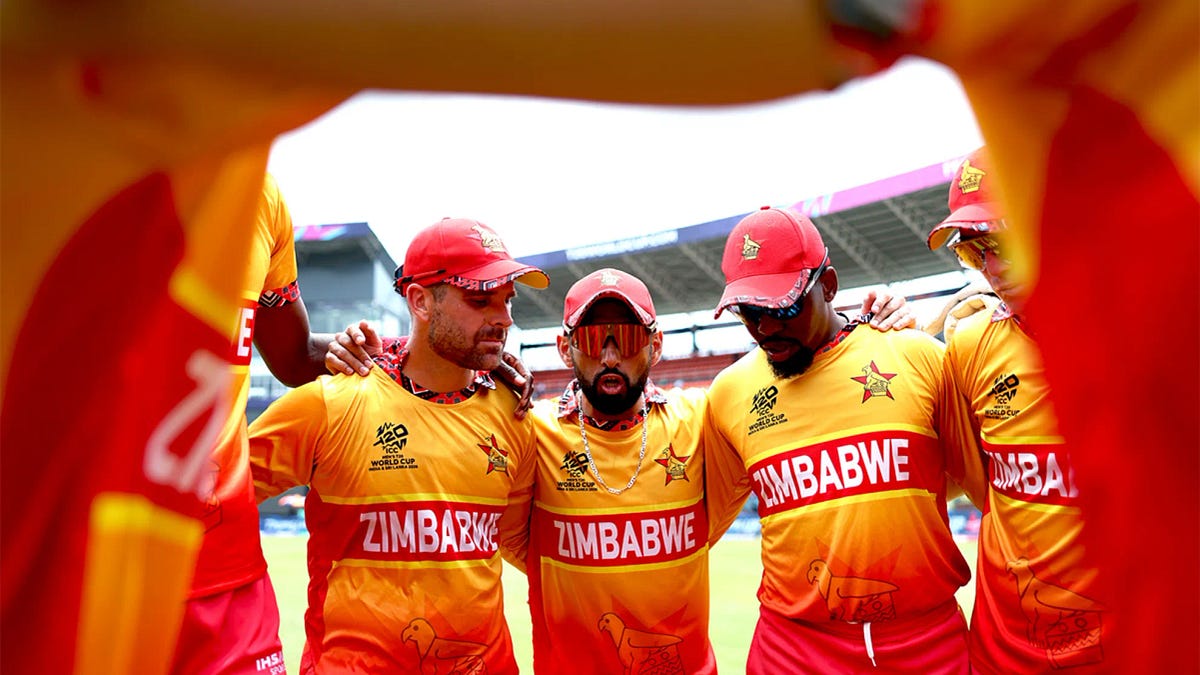
🇮🇪🇿🇼 | Firdose Moonda on what Super 8 qualification means for ZIM after missing the last T20 WC, & IRE Media Manager Craig Easdown reflects on the suddenness of going home from a WC.
-
🇳🇵🏴 | Vijay Tagore on Dipendra Singh Airee scoring 50* (23) to send the vociferous NEP support home with a victory.
📚 Best Features: On Axar’s growth.
-
“The reluctant headliner”
✍️ Aayush Puthran has a fantastic profile of Axar Patel, the small-town all-rounder who’s become a key mainstay of the Indian T20 team.
🗞️ Quick News: A spotlight on Imran, Rawal recalled, & private equity’s interest in the IPL.
-
14 former Test captains from across the globe have signed a petition to ask the PAK government to treat Imran Khan humanely. Mike Atherton writes about why he signed on.
-
BAN have signalled that they want to make up with IND.
-
Pratika Rawal has been recalled to the IND-W ODI side. Sarah Waris details the impossible choice between Shafali Verma & Rawal.
-
Vibhuti Sharma reports on the increased private equity interest in IPL teams.*
-
The BBL is considering playing their opening game in India this year.
-
The CPL sold a new franchise to be hosted by Jamaica.
*I’ve been informed that the Reuters piece is slightly full of holes by an experienced business journalist. There is PE interest in RCB, but most other PE interest comes as part of consortiums with traditional buyers leading them. It’s worth acknowledging.
📺 A/V: TGC on AUS’ elimination.
That’s it for today!
If you enjoy this newsletter, please forward it to a friend, or let them know they can subscribe by email👇 or via WhatsApp for free!
If you read something good that I missed, hit comment and tell me!