
Barcelona is one of those active cities, full of sports and other fun activities and if you’re a tennis player visiting the city, you’re in luck. Barcelona doesn’t just have courts. It has a tennis culture.
Spain, and Catalonia in particular, has produced and developed an big number of elite clay-court players. Carlos Alcaraz trains in the region. The Emilio Sánchez Academy is here, where Andy Murray spent his formative teenage years. And of course, the Real Club de Tenis Barcelona (founded in 1899) is one of the most storied clubs in the world and home to one of the best tournaments on the ATP calendar. For a tennis nerd, walking around the city knowing all this in the background makes every court you step on feel a little more special.
Here are some tips if you’re planning a tennis trip to Barcelona.
The Surface: Get Ready for Clay
A lot of the courts in Barcelona is clay, specifically, the slow red stuff you see at Roland Garros. If you’re coming from a country where hard courts are the norm, be prepared for a different experience.
The ball bounces higher, the rallies are longer and your legs will take a beating if you’re not used to sliding. Clay is however, easier on your body over time and forces you to develop better footwork and consistency.
A few practical tips: bring dedicated clay court shoes with a herringbone sole, running shoes or hard court shoes might ruin the surface and possibly get you asked to leave. And pack something to wipe your shoes with, because the clay builds up.
Where to Play? The Top Options for Visiting Tennis Players
Real Club de Tenis Barcelona-1899 (RCTB)
Carrer de Bosch i Gimpera, 5-13, Les Corts
This is the big one. Spain’s oldest tennis club, founded in 1899, and home to the Barcelona Open – the famous “Godó” tournament. Rafael Nadal won here 12 times.
The club itself is a private members’ club, so casual visitors can’t just rock up and book a court. However, if you’re in the city during the Barcelona Open (April 11–19, 2026) you can watch world-class tennis on those same courts. The tournament atmosphere is fantastic and quite intimate at times. And the museum inside the club, which houses the Conde de Godó trophies, is worth seeing if you can get access during tournament week.
Vall Parc
Carrer de l’Arrabassada, 107, Horta-Guinardó
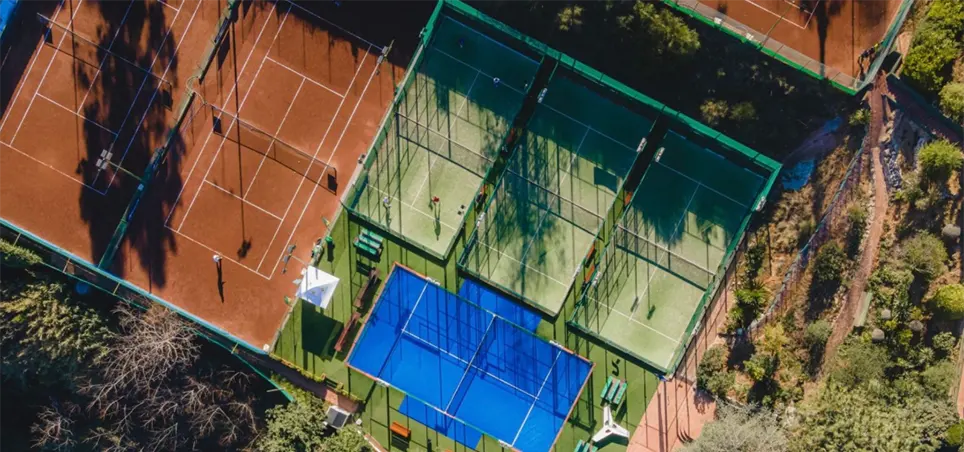
If I had to pick one place to recommend to a visiting tennis player for actually getting on a court, Vall Parc is it (image on top). Situated in the hills above the city at the edge of the Collserola Natural Park, this club has a setting that is genuinely hard to beat – surrounded by pine trees with panoramic views over Barcelona. It’s the kind of place where you finish a match and just want to sit on the terrace with something cold.
The club has 11 clay courts with LED lighting, plus padel courts, a pool, gym and restaurant. You can book a court through their website or via Playtomic. The club welcomes non-members for court hire, though you’ll want to book in advance, courts can fill up, especially on weekday evenings and weekends. The vibe is lively and social, with strong club teams and a coaching school. One note: according to member reviews, court booking opens two days in advance.
Reial Societat de Tennis Pompeia
Carrer de la Foixarda, 2, Montjuïc
Another gem, and one that barely gets mentioned in tourist guides. Pompeia sits on the slopes of Montjuïc — the hill that overlooks the port — and has been going since 1908. It’s got clay courts, padel, a terrace restaurant, and a shaded pool with sweeping views of the city.
Non-members can reserve courts here, though you need to call or book three days in advance. The atmosphere is relaxed and more local — less of a scene, more of a proper club. If you want to feel like a Barcelonan rather than a tourist, this is the spot.
Emilio Sánchez Academy (Academia Sánchez-Casal)
Autovía de Castelldefels (C-31), km. 191, El Prat de Llobregat
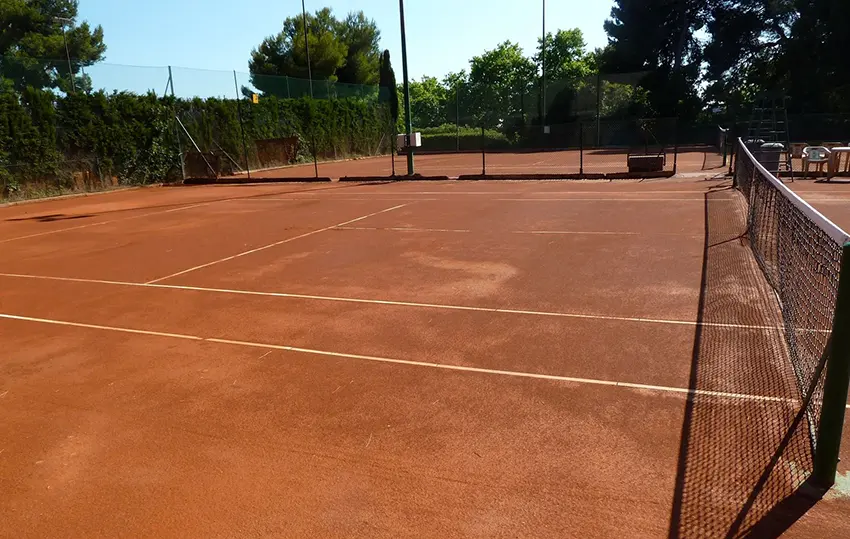
Technically not in central Barcelona, it’s about 20 minutes south of the city center and 10 minutes from the airport, but worth including for anyone serious about their game. Founded in 1998 by former world No. 7 Emilio Sánchez Vicario and his doubles partner Sergio Casal, this is one of the most respected academies in Europe. Andy Murray spent two years here as a teenager. Svetlana Kuznetsova is another famous one.
The academy has over 20 courts across multiple surfaces including clay and hard and also grass. They run adult camps throughout the year and welcome recreational players for clinics and programmes. If you’re spending a week in the Barcelona area and want proper coaching alongside your sightseeing, this is an excellent option. Their website is emiliosanchezacademy.com.
Club Natació de Montjuïc
Avinguda de Miramar, Montjuïc
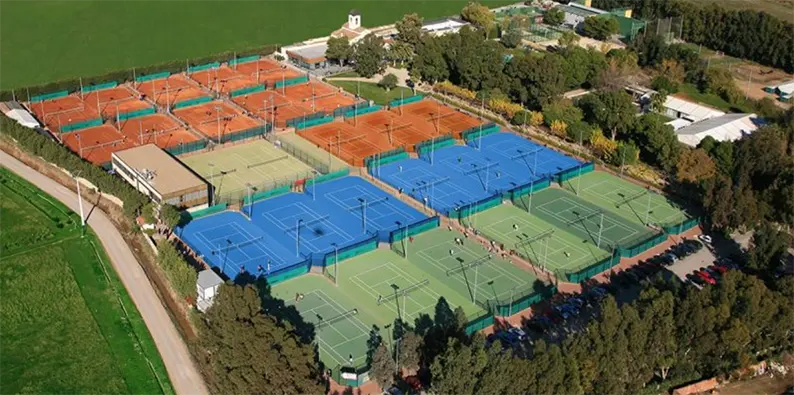
Another Montjuïc option, also open since before the First World War. Nine clay courts, five padel courts, and an Olympic-size swimming pool. Like Pompeia nearby, this club has a relaxed, non-flashy feel – more neighbourhood institution than exclusive club. Non-members can access courts and there’s a pool and frontón (a Basque ball sport) for the curious.
Smaller Tennis Clubs around Barca
Here are a few smaller clubs that might be a great option when playing tennis in Barcelona. Note that nowadays almost all “local” clubs have moved to Playtomic or MATCHi for non-member bookings.
- Club Tennis de La Salut 1902
- Club Tennis Barcino
- Club Esportiu Laietà
- Bonasport Club Esportiu
- Club Esportiu Hispano Francès
- Club de Tennis i Pàdel Olímpia
- Eurofitness Vall d’Hebron – Centre Municipal de Tennis
- Club Natació Barcelona
And just outside central Barcelona (but easy to reach):
- Club de Tenis Andrés Gimeno (Castelldefels)
- Tennis Club Badalona
The Barcelona Open: Can You Get Tickets?
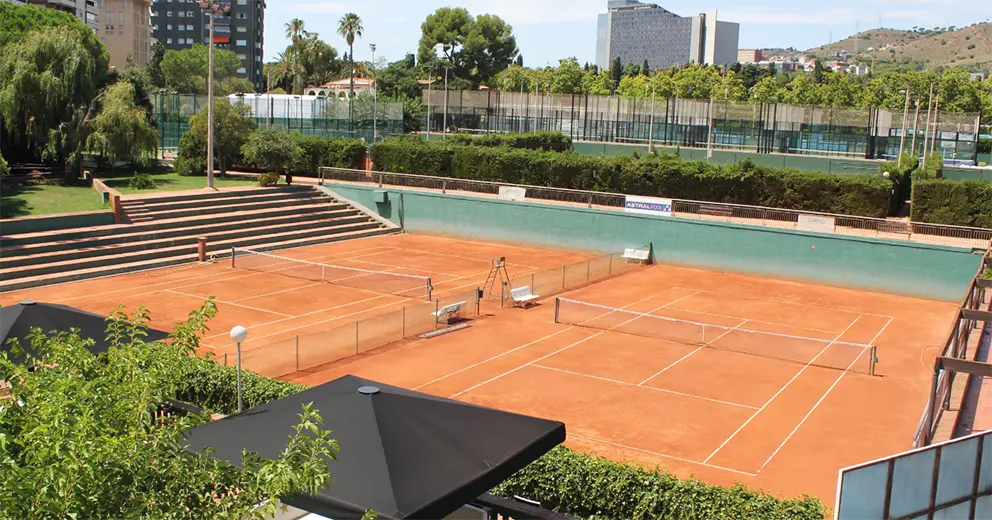
The Barcelona Open takes place every April at the Real Club de Tenis Barcelona-1899. In 2026, it runs April 11–19. It’s an ATP 500 event, which means the world’s best players typically show up, and on clay in Spain, the tennis is usually spectacular.
Tickets are best purchased through the official tournament website. The club’s Centre Court holds about 7,800 people, so it’s intimate compared to a Grand Slam – much better for actually feeling close to the action. There are multiple pricing tiers including premium seats close to the court. Thursday has two sessions in 2026, including a new evening session. Buy early; prices are dynamic and go up as availability drops.
If you’re on a budget, earlier rounds offer plenty of tennis at lower prices, and wandering between the outer courts (where many good matches happen during the first week) costs less and gives you a wonderful up-close view. For the experience, it’s absolutely worth timing a Barcelona trip around the tournament.
A Few Practical Notes
Weather: Barcelona has over 300 days of sun a year. Tennis in October or April is often perfect: warm, but not brutal. July and August can be very hot for intense play; mornings or evenings are the time to book courts in summer.
Language: Spanish and Catalan are the main languages. Most club staff at the places listed above will speak enough English to get you sorted, but having a few words – “una pista de tenis, por favor” – never hurts.
Finding a hitting partner: If you’re travelling solo and want to hit, the Playtomic app is widely used in Barcelona for booking courts and finding players. It’s worth downloading before you arrive.
Gear: If you need to restring or get other tennis gear, Tennis Point has a Barcelona store – it’s worth checking their local stock before you pack a second bag.