
PUBG has entered a bold new chapter with PUBG:
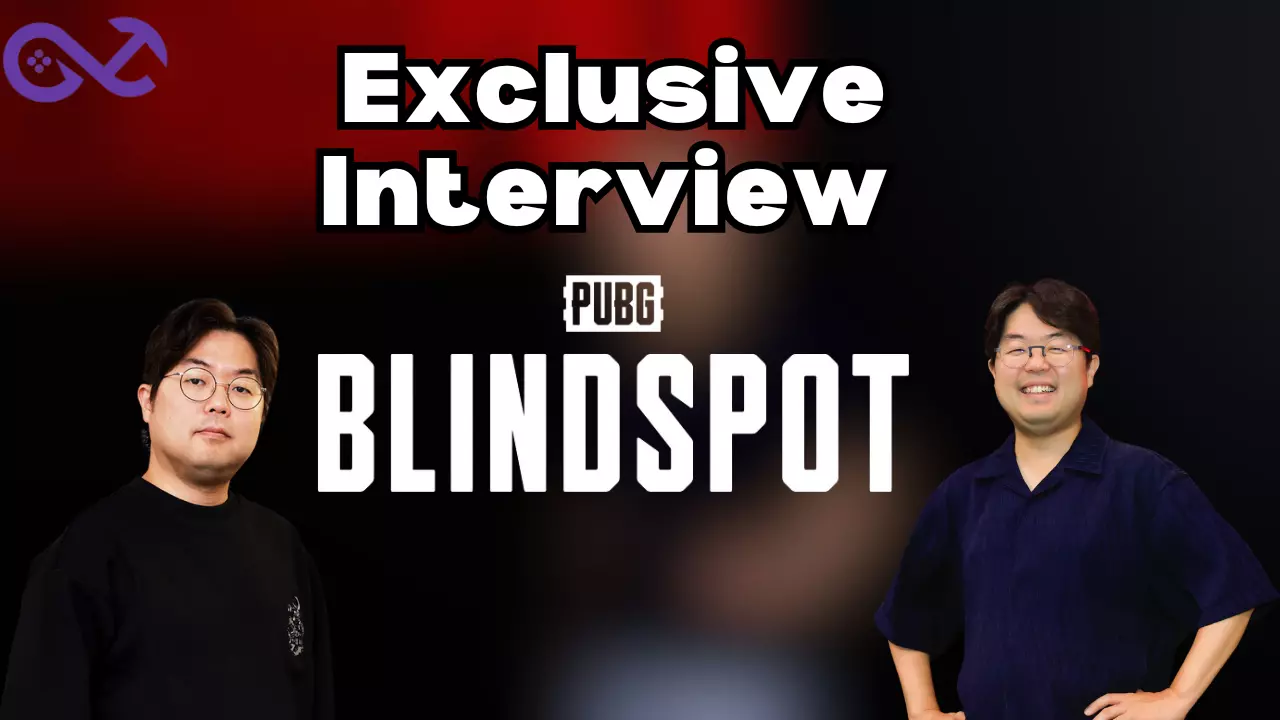
BLINDSPOT. It has officially been two weeks since BLINDSPOT entered Early Access. In 2017, PUBG: Battlegrounds helped define the battle royale genre. Backed with major awards, it left a permanent mark on the gaming industry. Now, things are getting far more experimental. We sat down with Production Director Yang for an exclusive PUBG: Blindspot interview. Not only to discuss the development of BLINDSPOT, but also its bold design choices, the weight of the PUBG legacy, and why the team believes this new take on tactical combat could evolve into something special.
BLINDSPOT Interview with Director Seungmyeong Yang
TGH:
PUBG Battlegrounds, when it was released, popularized the Battle Royale genre to the extent that some gamers even believe it was the first to pioneer the genre. The title even won Best Multiplayer and earned different nominations during the 2017 Game Awards. Does this put any pressure on the team when working on PUBG BLINDSPOT?
Yang:
We approached the development of PUBG: BLINDSPOT with great respect for PUBG: BATTLEGROUNDS. While the genre and presentation are different, we believe we are continuing the intention of bringing realistic military tactics into a game in an engaging way. PUBG: BATTLEGROUNDS achieved a level of success that will remain in gaming history and would be very difficult to replicate. Rather than feeling pressure to reproduce that kind of success, we are focused on delivering gameplay that we genuinely believe is fun and on communicating that experience clearly to players. Of course, the name PUBG carries certain expectations, and those expectations naturally extend to PUBG: BLINDSPOT as well. As an experimental spin-off developed by a small team in a different genre, we are concentrating on building a game that reflects our own vision while honoring the spirit that defined the early days of PUBG.
TGH:
Do you believe that just like with how PUBG Battlegrounds made an impact on the Battle Royale genre, PUBG BLINDSPOT will make an impact on tactical shooters?
Yang:
PUBG: BLINDSPOT is a title that attempts combinations and control systems in a top-down perspective that have not been widely tried in other games. Because it may feel unfamiliar to players at first, it also offers an experience that cannot easily be found elsewhere. If we are able to convince players through this gameplay, then we may see more attempts at military shooters from a top-down perspective. And we are confident that more players will gradually become drawn to the unique fun of PUBG: BLINDSPOT.
TGH:
Most competitive tactical shooters are orchestrated where the point of view is either in first person or second person. Where and how did the idea develop for the game to become a top-down shooter instead? Do you believe that this was a risky course of action?
Yang:
A top-down perspective allows players to intuitively understand terrain structure and the placement of various gameplay elements. It naturally encourages strategic thinking, which is why it is often well-suited for strategy-driven genres such as RTS or AOS. That led us to consider whether we could emphasize the more strategic aspects of military tactics through a top-down approach as well. With that in mind, we began development with the idea of creating a realistic military simulator from a top-down perspective. We implemented a visible vision range system, cover elements of varying heights, and a shooting control system that clearly expresses the distinct characteristics of different firearms. As these elements came together—along with shared vision between teammates—we became confident that they could form a genuinely fun core action experience. Of course, because this is not a mainstream genre, there was some risk involved. However, trying what others have not attempted is part of ARC Team’s philosophy. As a small team, we believed that by developing quickly and focusing on a clear direction, we could effectively deliver a new gameplay experience to players, and that belief allowed us to approach the project with passion.
TGH:
Are there any experiences or features that the team wants players to immediately recognize as “BLINDSPOT,” especially when compared to PUBG Battlegrounds or any other tactical shooter, for that matter?
Yang:
The first things that come to mind are the cone-shaped vision system and real-time shared vision. Because vision is shared among teammates, players can instantly understand where their teammates are looking, which cover is blocking their sight, and which areas remain unseen—without the need for complex communication. Even players who meet for the first time in a random team can naturally execute high-level cooperative tactics. We believe that if players recognize and fully utilize this aspect, they will find the game even more enjoyable. Even something as simple as turning your view to watch a specific angle can significantly help your teammates. That feeling—where a small movement directly supports team coordination—is a kind of fun that is difficult to experience in other games.
TGH:
PUBG BLINDSPOT launched as an early access title, meaning that the game is incomplete. Compared to an Open/Closed Beta or even a full launch, why do you believe that this is the correct course of action for the title?
Yang:
As a title attempting new gameplay within a relatively niche genre, we believed it was most important to present this new experience to as many players as possible and gather broad feedback. Rather than carefully testing only with a specific group of core fans who prefer certain types of games, we believe that even if the game is not yet complete, allowing a wide range of players to try it and share their feedback is the right way to find the proper direction for finishing the game. There is some risk, as Early Access is sometimes perceived almost like a full release. Even so, through free Early Access, we are making an effort to receive feedback from a broader range of players.
TGH:
Is there a part of the game you’re excited to see players enjoy? Could it be the characters, the maps, or something more?
Yang:
Aside from the shared vision system I mentioned earlier, I would point to the variety of Agents, along with their weapons and unique gadgets tailored to the characteristics of attack and defense. At its core, PUBG: BLINDSPOT is about a strategic battle of wits. The defending team reshapes the battlefield and sets up problems, while the attacking team uses gadgets and weapons to solve them. Rather than simply placing barricades to block attackers, defenders approach it as creating layered challenges through the placement of barricades and other gadgets. In turn, attackers must analyze the space constructed by the defense and decide how to break through it using their own tools. If players approach the game with that mindset, they will be able to enjoy PUBG: BLINDSPOT as a deeper and more strategic experience.

TGH:
What is the team’s biggest concern when working towards the launch of PUBG Blindspot?
Yang:
We were confident in the core fun of the game, and through demo sessions and game shows, many players who tried it gave positive feedback. Because of that, we expected that many players would also recognize and enjoy the game’s strengths during Early Access. However, as is often the case, it is difficult to predict real player reactions before fully opening the game to the public. In particular, for a live service title, designing matchmaking logic that allows players to enter matches quickly while still being paired with others of similar skill level—so that everyone can have an enjoyable experience—is a significant challenge. The uncertainty surrounding that aspect was one of our biggest concerns.
TGH:
With a week into launch, has the team been surprised by anything? Whether that’s with player feedback or the overall development process of the game?
Yang:
Since we opened Early Access globally on Steam, we’ve been able to see a wide range of reactions from players around the world. What surprised us was how much responses varied by region, and how often players expressed differing or even conflicting opinions. That has made us realize even more clearly that we need to stay focused and maintain a steady direction as we continue development.
TGH:
What was the biggest hurdle you’ve encountered thus far during the game’s development?
Yang:
Developing unique abilities and special gadgets for multiple Agents on top of the core action was a complex and challenging task, especially in terms of maintaining overall balance and preserving the game’s tactical feel. As a small team, ARC Team has each member play the game for over an hour every day from the perspective of a real player. We don’t just evaluate whether a feature works technically—we discuss whether new abilities or mechanics have a positive impact on the overall fun of the game. Through this process, every team member has developed a deep understanding of what makes the game enjoyable, and that shared understanding has helped us shape PUBG: BLINDSPOT into its current form.
TGH:
What’s the team’s main focus now that early access has begun? Will it be new maps and operators or more polishing on mechanics and features?
Yang:
In the early stages of Early Access, we plan to focus on reflecting a wide range of player feedback while also introducing additional Agents to expand the diversity of tactical combinations. Our goal is to create a structure where players can continue discovering new layers of fun over a longer period of time. While the game’s core mechanics and systems have reached a certain level of maturity, we will continue refining them so that they become more intuitive and easier for players to adapt to.
TGH:
Do you have anything to say to gamers who are on the fence with PUBG BLINDSPOT this early into launch?
Yang:
If you’ve only seen the game through videos or information online, it may feel unfamiliar or part of a genre you don’t usually follow. However, once you become comfortable with the controls, you may discover a kind of team-based PvP experience that you haven’t felt in other games. Even if it seems unfamiliar at first, I would encourage you to give it a try—you might end up finding your next favorite game.
From everyone at The Game Haus, we would like to thank Director Seungmyeong Yang for taking the time to speak with us about PUBG: BLINDSPOT. We wish him and the entire ARC Team the best of luck moving forward with their game.
Stay Connected
You can read more pieces like “PUBG: Blindspot Interview with Director Seungmyeong Yang” and ‘Like’ The Game Haus on Facebook and ‘Follow’ us on Twitter for more sports and esports articles from other great TGH writers, along with Varno!
“From Our Haus to Yours”