
What Can Really Change in Two and a Half Years?
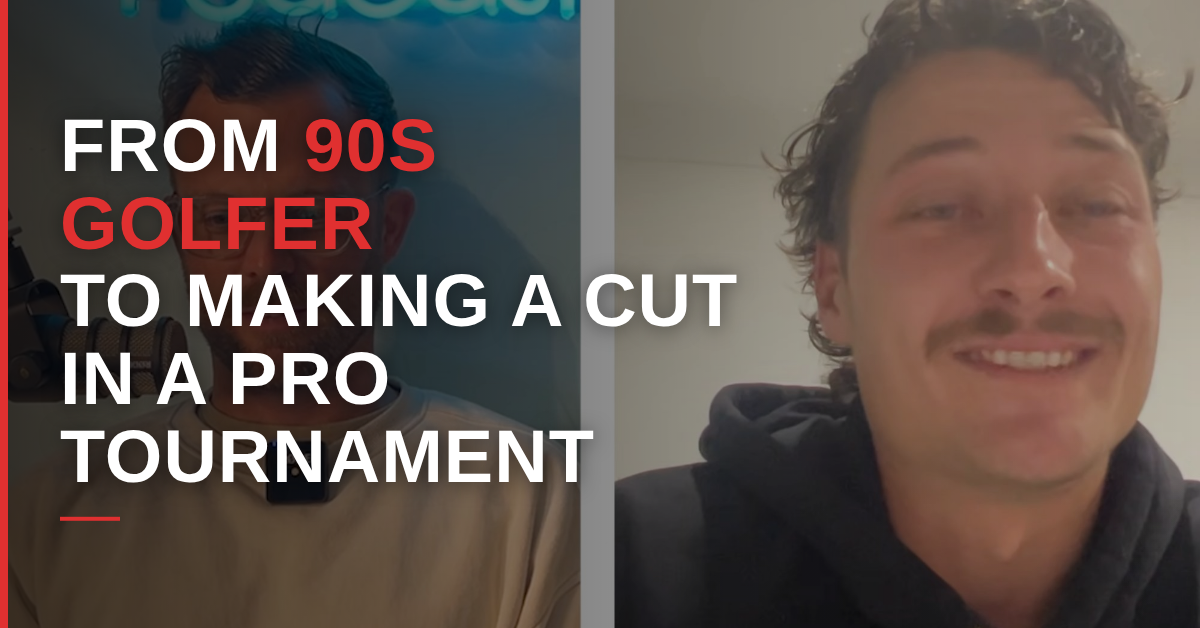
Two and a half years ago, a student of Skillest Coach Toby McGeachie was shooting in the 90s. And when we say shooting in the 90s, we mean actually shooting in the 90s. There were rounds where he hit five greens and shot 100. That was the level.
Two and a half years later, that same player made his first professional cut.
So what actually changes in two and a half years to move a 12 handicap from shooting in the 90s to surviving a cut line in professional golf?
Why Practicing More Wasn’t Working
Effort was never the issue. He practiced often and had real desire. Coming from a competitive AFL background, he understood hard work. What he lacked was direction.
He spent hours on the range hitting balls, smashing drivers, chasing swing feels. Meanwhile, 50 meter wedges, chipping, and putting were not getting the same attention. He would walk off thinking, “We’ve done all this work and I’ve hit five greens and had 100.” That gap between effort and scoring is where many 12 handicaps stay stuck.
Where the Shots Were Actually Being Lost
When he and Toby stepped back and looked honestly at the data and scoring patterns, it was clear the issue was not off the tee. It was inside 150 meters. It was wedge control, up and downs, and minimizing bogeys instead of forcing birdies.
There were also periods during those two and a half years where he hit it worse before it got better. Under pressure, the swing returns to what you have done the longest. New positions take months to hold. Many golfers abandon a plan during that uncomfortable phase. He didn’t. He stayed with it.
The Shift That Changed Everything
The defining change over those two and a half years was structure under Toby’s guidance. Practice stopped being random. Instead of “let’s hit it straight,” sessions focused on specific wedge distances, rehearsed shot shapes, video checkpoints, and pressure-based putting drills.
Driver volume decreased. Scoring zone volume increased. He committed to one coaching voice and trusted the process long enough for it to compound. He also learned what worked for him individually while balancing 30 hours a week working in a golf shop.
As he said, “There’s no instant fix. As much as people want it to be, it’s just working really hard at it and trusting that what you’re doing is right. Results don’t come straight away. You’ve just got to be patient.”
The 25-Foot Bogey That Made the Cut
The breakthrough week was not a week of perfect ball striking. He opened with three over. The projected cut was around eight over. Late in round two, after a couple of bogeys, he was sitting at six over total and feeling the pressure.
On the third last hole, he hit it into the next fairway, tried to take it over trees, clipped branches, and dropped straight down. The thought crept in: “I’ve bottled this.” He chipped out and faced 25 to 30 feet for bogey. Back against the wall. He drained it.
That bogey was the best moment of the week. He finished par birdie and made the cut. What showed up was not magic. It was two and a half years of structured preparation, better damage control, and the ability to respond under pressure.
The Summary
- Two and a half years of structured practice can completely change your competitive ceiling.
- Most 12 handicaps lose strokes inside 150 meters, not off the tee.
- Technical change requires months of repetition to hold under pressure.
- Minimizing bogeys moves you forward faster than chasing birdies.
- Breakthrough moments are built long before they happen.
Find a Coach
If you are shooting in the 90s and wondering what the next two and a half years could look like, the answer is not more random practice. It is structure, clarity, and long term commitment.
Skillest coaches like Toby McGeachie can identify where you are actually losing strokes, build a plan around your schedule, and stay consistent long enough for improvement to compound. Your next two and a half years start with one decision.
Get Coached By Toby McGeachie >>