
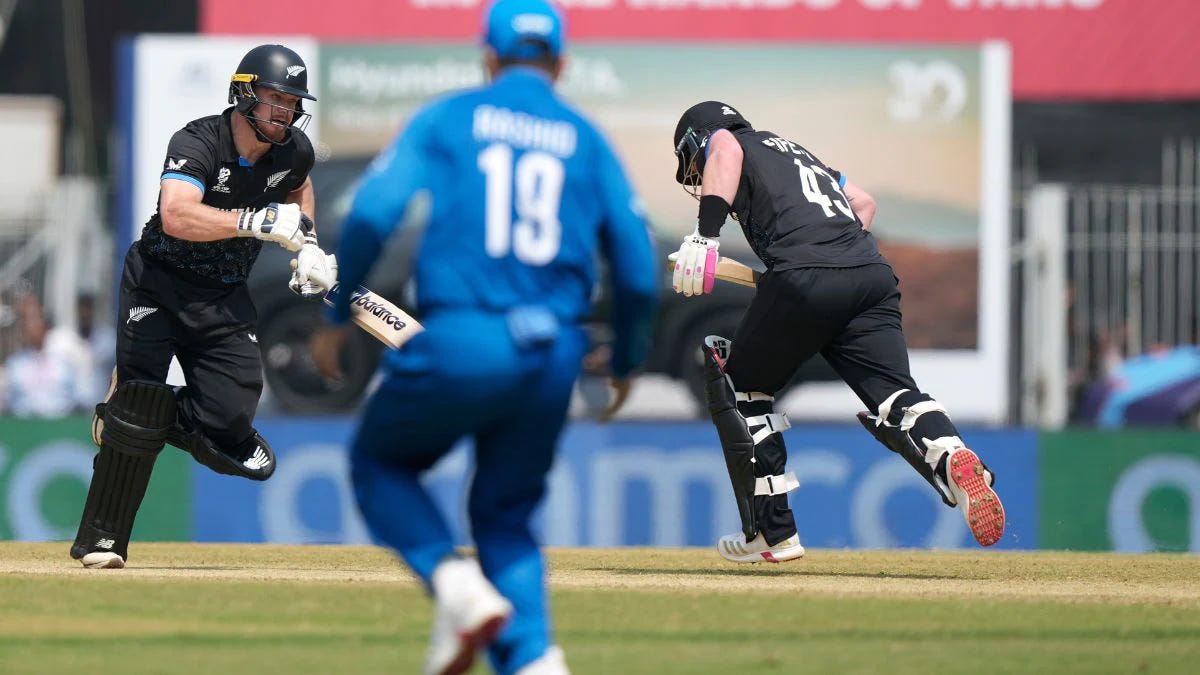
NZ beat AFG by 5 wickets, getting revenge for their 2024 loss and perhaps proving their credentials as legitimate contenders this year. This was a far more comfortable victory than the Kiwis had any right to achieve against the spin threat of AFG on a black soil Chennai pitch.
But, what happened beyond the headlines?
-
📉 AFG have an opener problem, and his name is Zadran.
-
💨 The unveiling of Lockie Ferguson 3.0.
-
😵💫 NZ’s middle over bowling tactics will cost them on another day.
-
🏏 Tim Seifert’s time with Asian franchises is paying off on the biggest stage.
If you’re reading this online, remember: you can get it via WhatsApp or direct to your email👇!
✍️ Written by Arnav Jain, who runs CricBit. You can follow him on X.
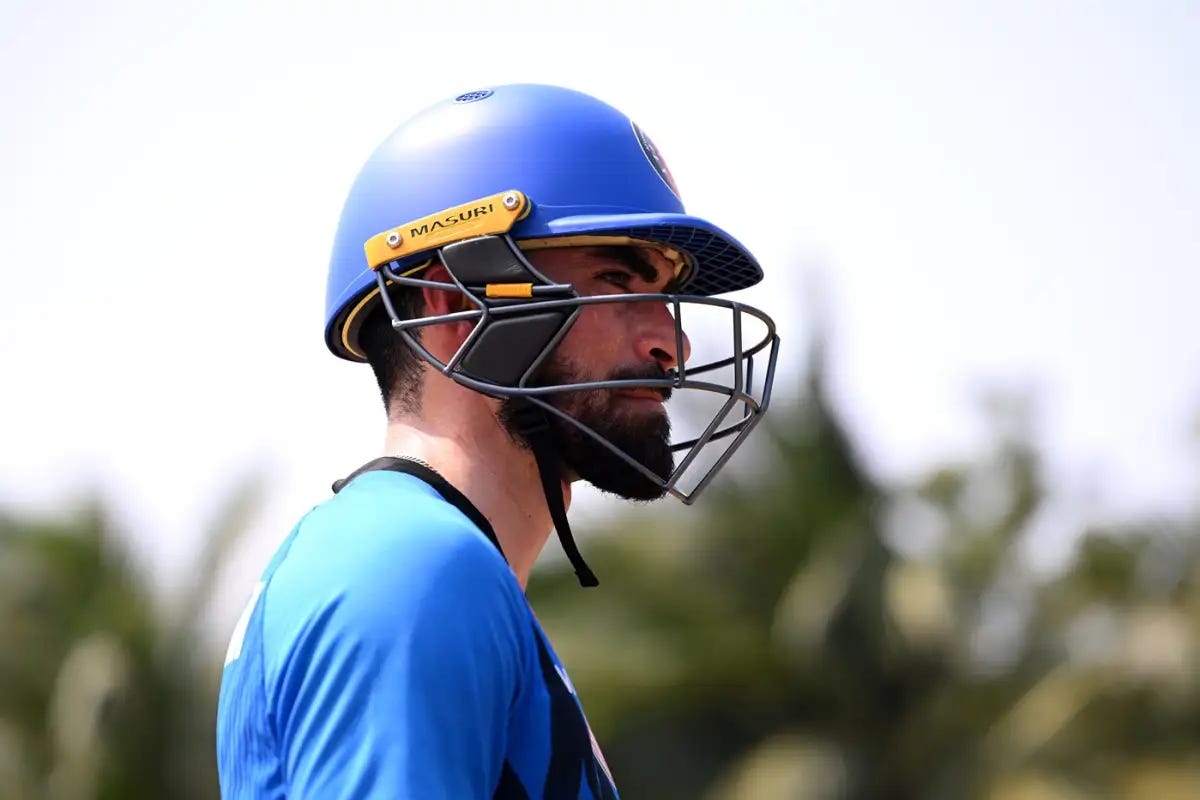
Ibrahim Zadran has a reputation of an innings builder, a batter who might take some time to get going but with the upside that he will stick around. An anchor, in other words. But, is he still Afghanistan’s optimal choice against the top T20 sides of 2026?
The Afghani opener strikes at 112.23 during his career, with a significant difference versus pace (120.6) and spin (96.39). It’s not the best numbers for a modern T20 batter – but concerningly, they’ve not gotten better in the batter friendly period during the last two years. Since the start of 2024, he’s struck at 115.72, with a marginal improvement versus pace (129.61), and regression versus spin (91.52).
These numbers look particularly bad when you compare them against his peers. A good measure of his T20 aggression is “intent impact” – or how many extra runs does his team score by him actively looking for more positive intent shots?
Among all top-10 team openers in this T20 world cup, Zadran’s intent impact in the first 10 balls of his innings is the lowest of the lot. The elite players add huge numbers – Abhishek Sharma adds 5.27 extra runs, Finn Allen adds 4.63 & Phil Salt adds 3.74 – and the median value across all top-10 team openers is 2.15 extra runs.
In contrast, Zadran adds just 0.31 extra runs. This signifies that he goes on the attack so rarely that his 10-ball stay benefits the team by only +0.31 runs.
Again, it’s worth breaking his numbers up between pace and spin. Against pace – his nominal strength according to his SR – he takes 12 balls to start contributing positively to his team’s innings. Today, after playing a series of defensive shots in his first 11 balls, he got on his 12th delivery while slashing at a wide Lockie Ferguson delivery that was begging to be hit to the cover fielder.
Part of the reason for his early struggles against pace is his relative weakness against full and good length balls – i.e. the most common delivery with the new ball. To be clear, most openers have a weakness to these balls, but Zadran is relatively worse than them. It’s not that he can’t play the deliveries – as we saw today, he can defend competently. The problem is that he doesn’t have the ability or intent to attack them sufficiently to keep the run pressure at bay.
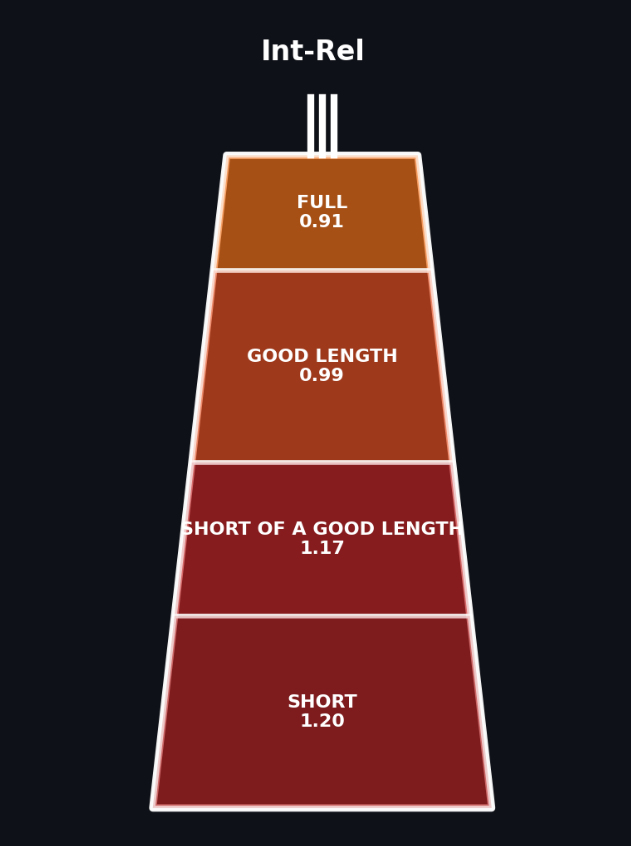
Int-Rel stands for intent-reliability, a combo measure I created by multiplying a player’s strike rate (their “intent”) and their control % (their “reliability”) as compared to other batters in the same innings. Intent (the SRs) is given a 2x weight in the multiplication since T20s call for more positive intent than high control.
The numbers are baselined at 1 – therefore Zadran’s 1.20 rating versus short balls makes him 20% better than his peers, while he is 9% worse against full length balls (0.91). If you bowl Test lengths to Zadran in a T20I, he gets cramped by them – and becomes susceptible to losing his wicket in the first 12 balls.
Against spin – as his SR suggests – he just never gets going. He is somehow a net negative (-0.54) on 10-ball intent impact. I.e. his team scores 0.54 runs fewer because he plays so defensively against powerplay spinners in his first 10 balls.
For contrast, the best openers from the top-10 teams all score at even higher intent impact rates versus spin than pace. Abhishek Sharma (+9.87), Tim Seifert (+9.12) & Finn Allen (+8.44) lead the way, while the median value lies at +4.42. Zadran is much, much worse at targetting both pace and spin than all his peers across the best teams in this World Cup.
The problems? Exactly the same as pace but more aggravated; an Intent-Reliability of 0.66 (that’s 34% below an average batter!) and 0.91 on full and good lengths respectively.
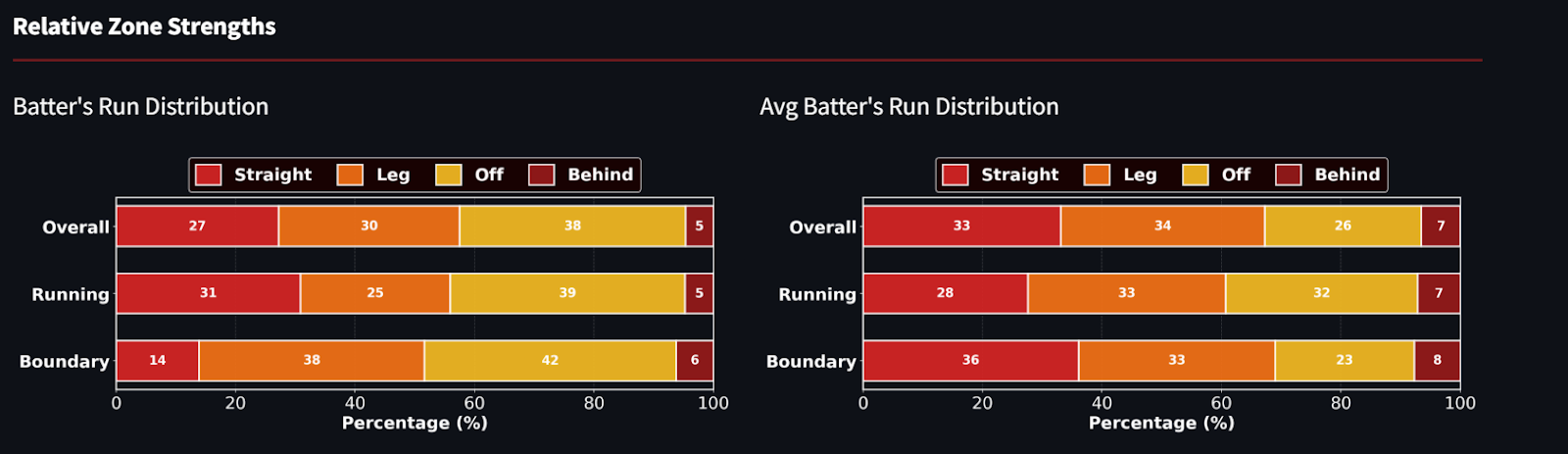
His intent problems can be seen by how he scores boundaries versus singles against spin. He largely scores on the square boundary, and very rarely scores straight down the pitch. Only 14% of his boundaries come straight down versus spin, compared to a 36% average from other batters facing similar deliveries.
However, it’s not the same for running runs – he actually manages more of them straight than average, which again brings us to his reluctance in playing lofted shots. That pretty much explains his poor numbers against full length.
Zadran needs to reinvent. We’ve seen this pattern before with a lot of accumulators in T20s. Kohli had to up his powerplay game to meet current standards. Jos Buttler (the diamond standard of all accumulators) is able to achieve incredible powerplay strike rates, but has not lost the ability to play a crisis knock when required.
The role of anchor cannot by a default template in T20 cricket anymore – it’s a conditional, only-if-required role. Zadran’s particular weaknesses are not easily compensated for within Afghanistan’s squad, but there is an argument that dropping him down the order could help.
Sediqullah Atal in particular could be a better fit. He starts faster than Zadran (a negative period of just 3 balls to Zadran’s 12), and the length profiles look much better (he is below average only versus short of good pace deliveries). Additionally, his left-handedness could help counter some of the similarities in Afghanistan’s two RHB openers.
In what can be termed the World Cup’s only real ‘Group of Death’, Afghanistan are already behind the eight-ball with a game against an even better South Africa looming as an early eliminator. They need to diagnose their starts, and Zadran is patient zero.
Data from Arnav’s data dashboard.
If you’re reading this online, remember: you can get it via WhatsApp or direct to your email👇!
✍️ Written by Dom Murray, who runs Beyond Cow Corner.
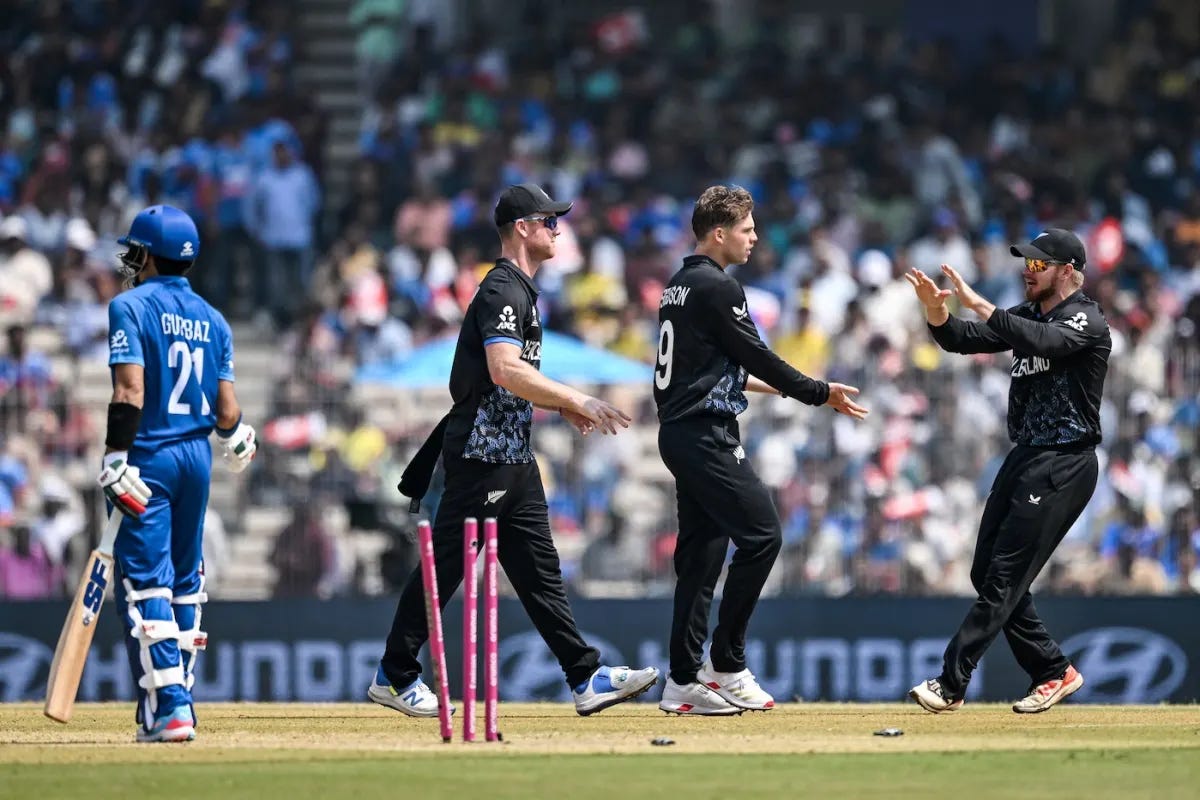
New Zealand vs Afghanistan. T20 World Cup. Before the 2024 tournament, this might have been just another game. This time, there’s no such danger. If you’re a New Zealand fan, you probably don’t want to be reminded. So, let’s look forward, not backwards.
From ball one, it was apparent that New Zealand had taken lessons from the previous World Cup, where they were sharply criticised back home for their lacklustre preparation, and came into the match with clear, defined bowling plans.
Neither Henry nor Duffy bothered to look for any swing in the powerplay, preferring bouncers and back of a length deliveries. On the rare occasions they dared to pitch the ball fuller, they were dismissed by the Afghan batters, like Gurbaz’s beautiful lap for six off Duffy, or Ibrahim’s clip for four over midwicket off Matt Henry.
No, it was clear from the second ball that this pitch was on the slower side and had elements of tennis ball bounce, as Ibrahim popped up a back of a length ball to where short leg would have been, were this a Test. All up, I counted 10 mistimed shots across the first 5 overs, and that’s only including instances where bat was laid on ball.
Back-of-a-length balls angled into the body were very much the order of the day. NZ’s opening pair stuck to this script almost robotically, threatening to become predictable. However, it largely worked, as bouncers – and there were plenty of them – were struck at just 33 in the powerplay.
Then, along came Lockie, T20 World Cup beast. Ferguson played his first T20I in 447 days – he hasn’t run up for NZ since November 10, 2024. Black Cap fans couldn’t be sure what version they were getting today, but luckily he picked up exactly where he left off in the 2024 edition.
Only once has Ferguson failed to take a wicket in a T20 World Cup game, and that record was extended immediately.
Ball one, Ferguson bowls a nominally short and wide delivery, which Ibrahim hits directly to Glenn Philips for a comfortable catch by anyone’s standards, but especially his. But, calling it short and wide would be to look at the delivery through a Test cricket lens.
On a pitch where fuller balls are being met, and the batters are often mishitting balls in the air, there was always a chance of this exact outcome to a ‘short and wide’ ball. It wasn’t a bad ball, it was a calculated risk (or, I’m sure that’s what Lockie said in the huddle).
In this sense, I believe we’re seeing the evolution of Lockie; proof that you’re never too old to learn new tricks. Not only did he observe what was working and what wasn’t for his opening bowlers, he adapted it to his skillset – delivering from wider of the crease than either Henry or Duffy to accentuate the angle back into the batters.
However, that’s not his only new trick, as we saw later in the over.
Where the initial iteration of Lockie Ferguson was all about pure, tearaway pace and aggression, this current version, let’s call him Lockie 3.0, for all the trials he’s been through, mixes that raw pace with the skill and guile accumulated across a nearly 10-year international career.
So, Lockie saw that slower balls into the body were working, and decided to bust out a legcutter. I don’t have the stats to hand, but from the eye test, it feels like legcutters are one of the least fashionable variations in modern T20 cricket.
Who cares about trends, though, as this one spun rather viciously at 122 kph, with a wrist position Ish Sodhi would have been proud of, causing Gurbaz to drag it back on. As Katey Martin observed on commentary, Lockie is able to disguise this variation well, as his natural ball is already an in-swinger, where he rolls his fingers down the side of the ball, making the legcutter a natural extension.
Crucially, it was a more aggressive length than what Henry and Duffy had been delivering, pitched just slightly fuller so as to be hitting the stumps, whereas most of Henry and Duffy’s opening spell was missing the stumps. Cricket can be a complex game, but it’s rarely a bad idea to hone in on a length that will hit the stumps.
I started this piece by saying I’d rather not think about the previous meeting between the sides as a New Zealand fan. As the score crept well past 159 (which we couldn’t chase last time) on a slow wicket that favours spinners and slower balls, the nerves started to settle back in. If Lockie Ferguson is ragging a legcutter, and Rachin Ravindra is picking up death over wickets, what might Mujeeb and Rashid do?
Plenty, but not quite enough as it turns out. Forgive the pun, but Lockie’s legcutter might have turned the game, just as Gurbaz threatened to take it away.
If you’re reading this online, remember: you can get it via WhatsApp or direct to your email👇!
✍️ Written by Tarutr Malhotra, who runs Best of Cricket.
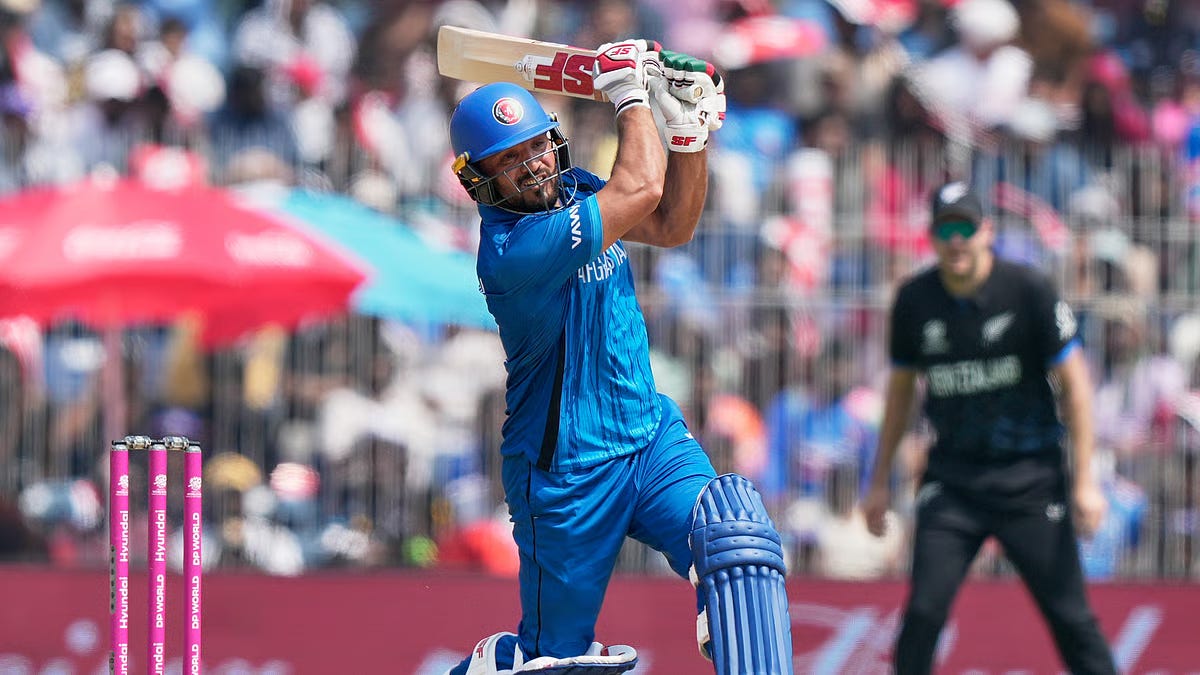
Lockie Ferguson changed the complexion of the game by taking two wickets in the 6th over of Afghanistan’s innings; and then New Zealand let that advantage slip via poor bowling tactics and/or a misunderstanding of their opponents’ weaknesses.
They came into this game having dropped their two change spinners, Ish Sodhi & Michael Bracewell, for extra pacers and batting depth. This, despite playing on a black soil pitch that favours spin. It’s hard to justify the call on the numbers – Afghanistan’s top 7 batters score at 116.2 versus spin cumulatively and 136.1 versus right arm pace.
But, Sodhi’s been in terrible form (and doesn’t seem to have the team’s full trust), while Bracewell may still be injured. Let’s give New Zealand the benefit of the doubt.
However, this selection problem was compounded by New Zealand’s bowling strategy in the middle overs. Gulbadin Naib was playing at No.3 for the first time since 2024, and Sediqullah Atal is the weak link in a good Afghanistan middle order. The wickets of both openers in the 6th over looked like an opportunity to turn the screws and force a collapse, but instead the Black Caps opted for run constriction.
Neither Ferguson nor NZ’s dangerous looking opening pair would get an extended run in the middle overs – Ferguson got one over in the 12th, while Duffy came back for the 15th and immediately picked up the wicket of Atal. Instead, James Neesham and Kiwi captain Mitchell Santner took on 6 of the 9 overs.
The Santner usage in particular may have been where New Zealand lost control of the game. On paper, it looks a smart proposition; Naib only scores at 92.3 versus slow left-arm orthodox bowlers – a number that goes down to 81.8 in 2025.
However, Naib doesn’t get out to them too often, averaging 28 with just 5 outs in 28 innings where he’s faced an SLA. The numbers are even more damning against Atal, who scores at 132.4 versus SLAs, compared to a career strike rate of 116.87 in T20Is.
So, it became a straight shot; would the vastly experienced, 34-year old Naib play sensibly and preserve his wicket against Santner, or would he throw it away on a stupid shot?
We know the answer, but it’s worth digging into just how well Naib and Atal played out the middle overs. In an innings where Afghanistan scored 52.02% of their runs in boundaries (excluding extras), the duo led the way in the middle phase by scoring just 43.68% of their runs via boundaries. Instead, they ran a combined 43 runs from 46 non-boundary balls, with just 8 dots in the entire 51-ball partnership.
They, and especially Naib, milked Santner for easy runs – the SLA was not a threat to take a wicket if they played him out cautiously. Naib scored 10 runs off 11 balls versus Santner (90.91 SR), and 53 off 24 (220.83 SR) versus the rest of the New Zealand bowling lineup.
The final indictment of NZ’s bowling strategy came in the 18th over when Rachin Ravindra was brought on as they looked for something – anything – different from what they’d been throwing at the AFG batters. He picked up the wicket of Naib, but also conceded two 6s. Ravindra and Glenn Phillips – the other off-spinner in the squad – bowled just two overs together, while leg spinner Sodhi watched on from the bench.
In the end, it didn’t matter because NZ had the new and improved Tim Seifert to lean on (as detailed below). But, group mates South Africa – and whomever they meet in the Super 8s (assuming they get there) – will take advantage of uninspired tactics like today’s in the future.
Data from ESPNcricinfo & Cricmetric.
If you’re reading this online, remember: you can get it via WhatsApp or direct to your email👇!
✍️ Written by Dom Murray, who runs Beyond Cow Corner.
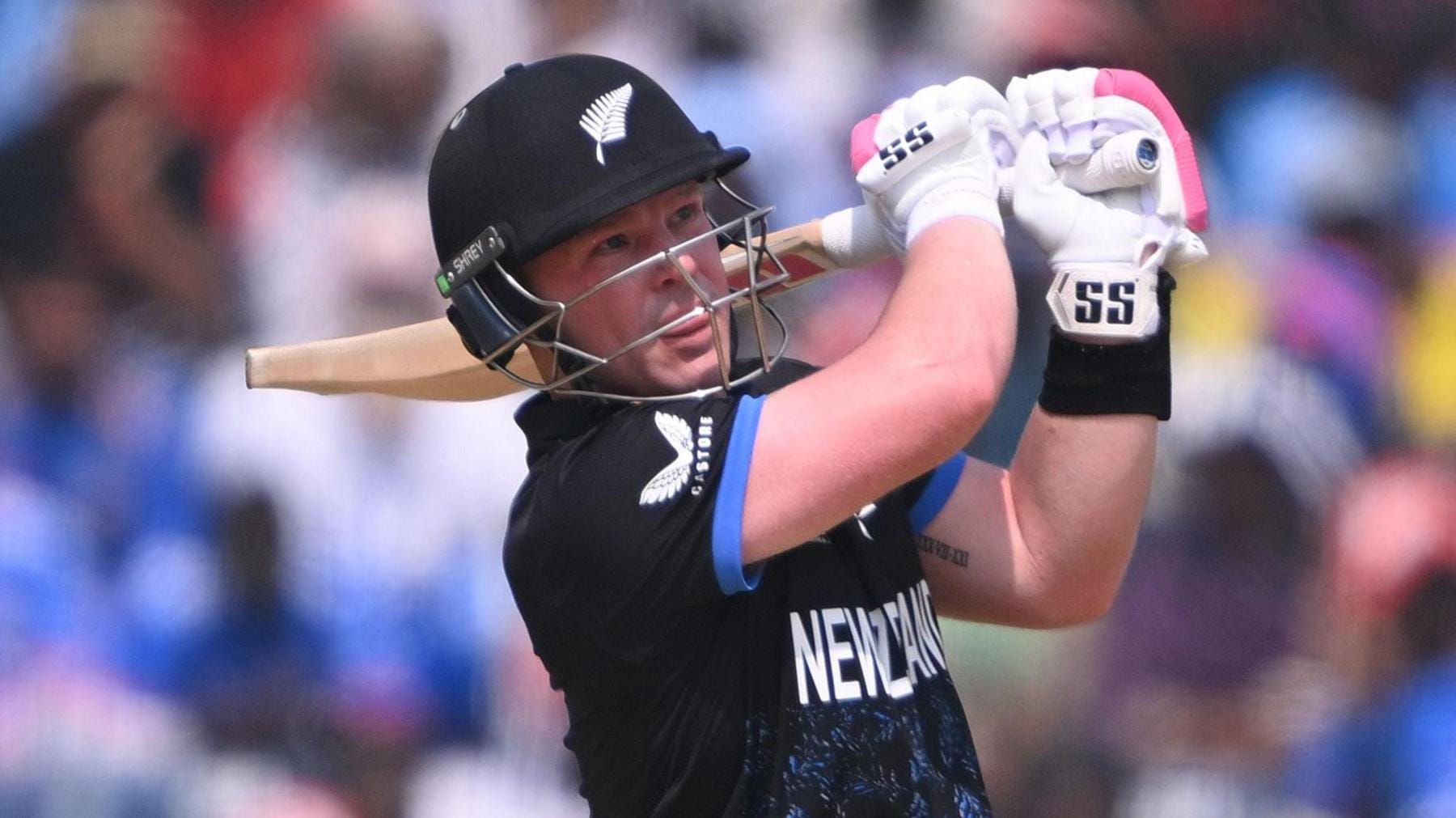
I’ve long had a theory that the single biggest thing holding back New Zealand’s development as a T20 nation is our timezone. The IPL is played in the wee hours of the night, if it’s broadcast at all; the game literally develops in the darkness, and, like many pieces of media and technology, the latest advancements only filter through to little old NZ a few years later. Hell, even BBL games can finish past midnight, particularly those in Perth.
So, when the first round of ‘T20 mercenaries’ came along, the Trent Boults and Colin Munros of the world, they weren’t exactly celebrated, or even well-liked, back home. Well, that first generation has walked so that Tim Seifert could run. Ever since giving up his New Zealand central contract and going on the global T20 circuit, Seifert has gone from strength to strength in the shortest format, looking like a more powerful, well-rounded player with a better understanding of his game.
It certainly doesn’t hurt that Seifert has played a lot of T20 cricket – 307 games to be precise, recently cracking the top 100 for most T20 appearances all-time. And with that experience has come maturity.
Previously, supporting Seifert was a rollercoaster ride: he’d had as many good years as bad ones, up until 2024. In 2018, 2021, and 2024, he averaged just 8, 10, and 19 in T20Is. In 2019, 2022, and 2023, he averaged 23, 50, and 33, at excellent strike rates. You never quite knew which version of Seifert you were going to get, and New Zealand were close to giving up on him.
Since 2025, we’ve seen a significantly upgraded version of Seifert. On raw numbers, Seifert has the 8th best average of batters in this tournament over the past two years of T20Is, while he had scored 150 more runs than the next most successful NZ batter over this period before today’s innings.
This has been built on two key improvements: better six hitting, and better numbers against spin. In all T20s, Tim Seifert hit 91 sixes in 2024 and 2025. Between 2017 and 2023, he hit 90. That’s no coincidence, as looking at him, he seems to be bulkier and more powerful these days, and is clearly hitting from a more stable, solid base. I’d theorise he’s learnt better power-hitting techniques from his time on the T20 circuit.
Largely, these improved six-hitting numbers are because Seifert has improved significantly against spin: last year in T20Is he struck at 172 against spinners, by far his best year, with his previous best being a strike rate of 157 back in 2019. In all T20s, Seifert struck at 152 against spinners in 2025, facing 281 balls, his best strike rate since 2019, when he struck at 160, but faced just 53 balls.
Specifically, I believe Seifert may have ‘cracked it’ against spin during the 2025 PSL. Bear with me for a second here, but in the 2024 LPL, he struck at 126 against spin, facing 162 balls. The next time he’s back in Asia, he strikes at 122 in the ILT20. Then, shortly after, in the 2025 PSL, he struck at 151 against spin, having struck at just 89 the previous season. Then, he goes to the CPL and strikes at 179 against spinners from 124 balls – by far his highest mark against spin in his five seasons in the tournament – and he’s not looked back from there.
Thankfully, all of those skills were on display in Seifert’s match-winning 63 (42) today, particularly as he cracked Nabi for two sixes and a four, and Rashid for a boundary. After Mujeeb took two wickets in his opening over to leave New Zealand reeling at 14/2, bringing back memories of 2024, New Zealand desperately required a steady hand against spin, and they found two in Seifert and Phillips.
Seifert showed all of his experience, as it would have been easy to panic at this point, and perhaps the old Seifert would have. Not this version, though. This is perhaps the biggest change between the New Zealand of 2024 and today’s side: a qualified, experienced, all-conditions spin-hitter at the top of the order, having shed the dual anchors of Williamson and Conway. The 2024 side would have consolidated from 14/2 and likely dug a further hole. Seifert and Phillips fought back.
In his post-match speech, Seifert said it himself: “I think it’s just the experience of playing around the world in some of these franchise leagues and playing with the best players in the world and adapting to every [set of] conditions basically out there.”
Sometimes, it pays to be a mercenary.
Data from Cricmetric.
If you’re reading this online, remember: you can get it via WhatsApp or direct to your email👇!