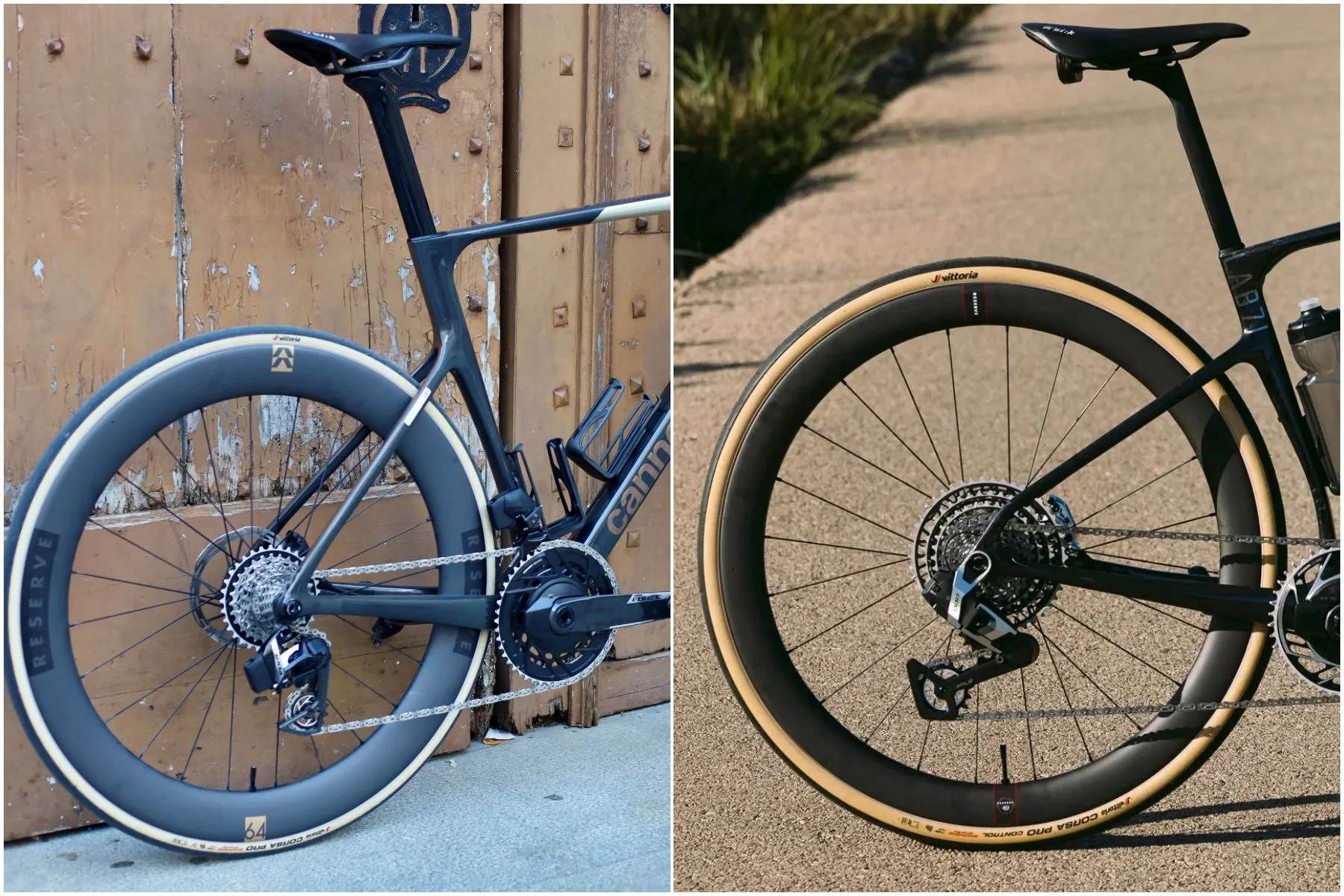
Cannondale has a deserved reputation for the quality of its road race bikes and a history of innovation. It was one of the first brands to switch from steel to aluminium frames and also one of the first to get into gravel bikes.
The original SuperSix was a classic round tubed carbon road bike renowned for its ride quality and low weight and before that Cannondale’s alloy bikes were prominent in the pro peloton. The third generation SuperSix Evo went lightweight-aero though and it’s a formula that Cannondale has left substantially unchanged through to the current fifth generation SuperSix Evo, launched in early 2026.
Along the way, the bike has become progressively more aero, to the point where, with the fifth generation, Cannondale has withdrawn its SystemSix aero bike, which had had no major updates since its launch in 2019.
Cannondale was also an early proponent of the endurance bike class. The Synapse was launched 20 years ago, designed to offer a more comfortable ride for those who were not competing, but also used to good effect by the pros during cobbled races. Its sixth generation was launched in May 2025.
The latest generation Synapse comes in both carbon and aluminium options, with the latter offering the most affordable entry into Cannondale’s disc brake road bike range. Cannondale continues to sell its CAAD alloy bikes too – we’ve more on the CAAD13 and CAAD Optimo.
So how do the current generation Cannondale SuperSix Evo, and Synapse ranges stack up, what specs are available and at what prices?
Read on for a complete breakdown of Cannondale’s UK road bike offering and our recommendations on how to choose the best Cannondale road bike for you.
Cannondale SuperSix Evo vs Synapse: Key features
Cannondale SuperSix Evo
- Aero/lightweight race bike
- Three frame grades: Lab71, Hi-Mod, standard
- BSA threaded bottom bracket
- 34mm tyre clearance
Cannondale Synapse
- Endurance road bike
- Two frame materials: carbon, alloy
- Some carbon bike specs with SmartSense lights and radar powered by a central battery
- Internal cabling from handlebars into frame
- Internal frame storage
- 42mm tyre clearance (carbon)/32mm (alloy)
Cannondale SuperSix Evo vs Synapse: Aerodynamics
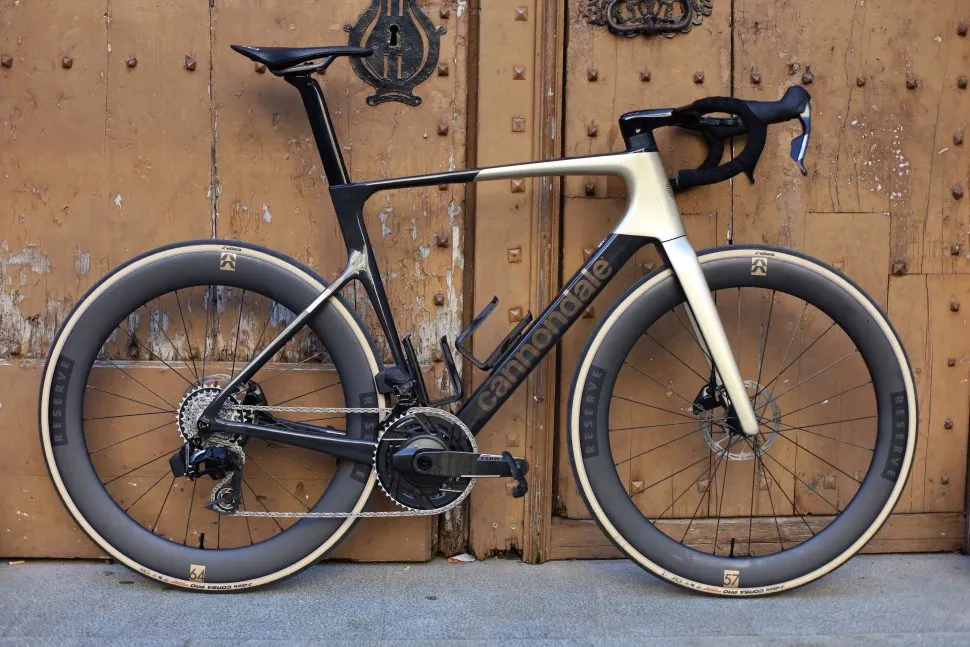
Cannondale says that the current 2026 fifth generation of the SuperSix Evo is 4 watts more efficient than its predecessor at 45kph, despite the visual similarities, and that it’s more aero than many of the best aero bikes, hence the demise of the SystemSix.
The SuperSix Evo has Cannondale’s Delta Steerer design, which allows for internal cable routing and also results in a narrow head tube to reduce drag. The rear of the bike is skinny too, so much so that the Shimano Di2 battery has to be housed inside the down tube as it won’t fit in the seat tube or seatpost. Cannondale offers aero bottles and cages on the bike, which it says actually make the SuperSix Evo more aero, although the cages can also accept a standard round bottle.
The SuperSix Evo has a one piece carbon bar and stem on higher specs, with a choice of lower weight or more aero designs. The latest bike has narrower bar options than before, promoting a more aero ride position when on the hoods.
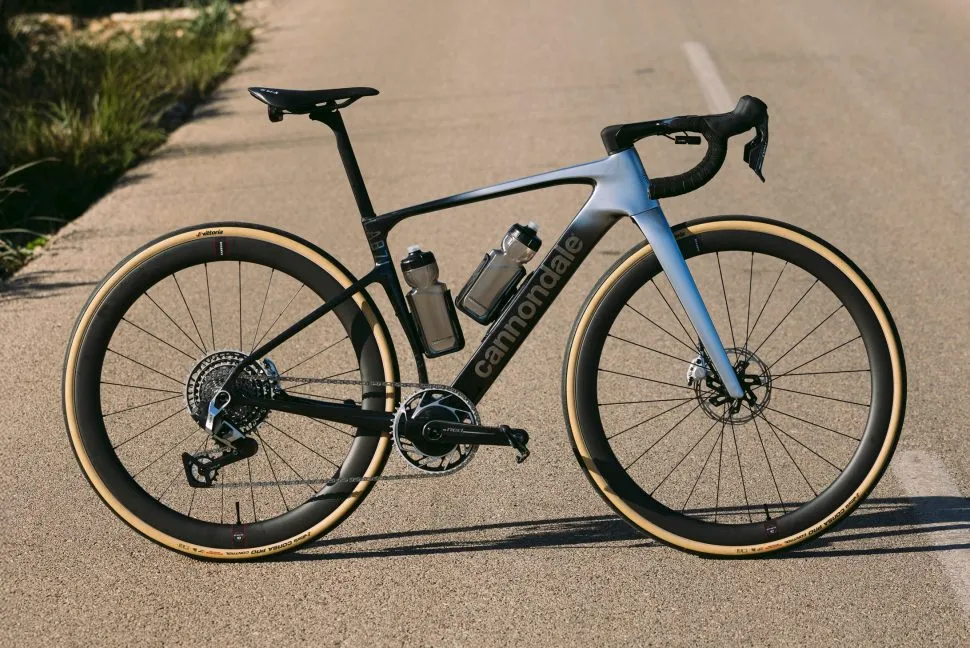
Carbon Synapse bikes have aero tube profiles as well. The top two specs of the Synapse offer a one-piece bar/stem and all carbon bikes use the same Delta steerer tube shape as the SuperSix Evo that allows for internal cabling. Lower specs have a more standard separate alloy bar and stem.
Cannondale SuperSix Evo vs Synapse: Frame grades
Cannondale offers three carbon frame grades, plus alloy.
Both the SuperSix Evo and Synapse can be bought as full bikes with the top Lab71 frame, which can also be bought frameset-only. This uses higher grade carbon fibre and resin to reduce weight. Below that in both ranges sit framesets built of Hi-Mod and standard modulus carbon. Only the SuperSix Evo is offered as a frameset in Hi-Mod carbon too.
The Synapse frame incorporates flex zones in the rear triangle as well as a narrow section at the base of the seat tube, which together increase vertical compliance and vibration damping. The SuperSix Evo has a narrowed seat tube too, but the rear of the bike is more substantial than the Synapse.
Cannondale SuperSix Evo vs Synapse: Weight
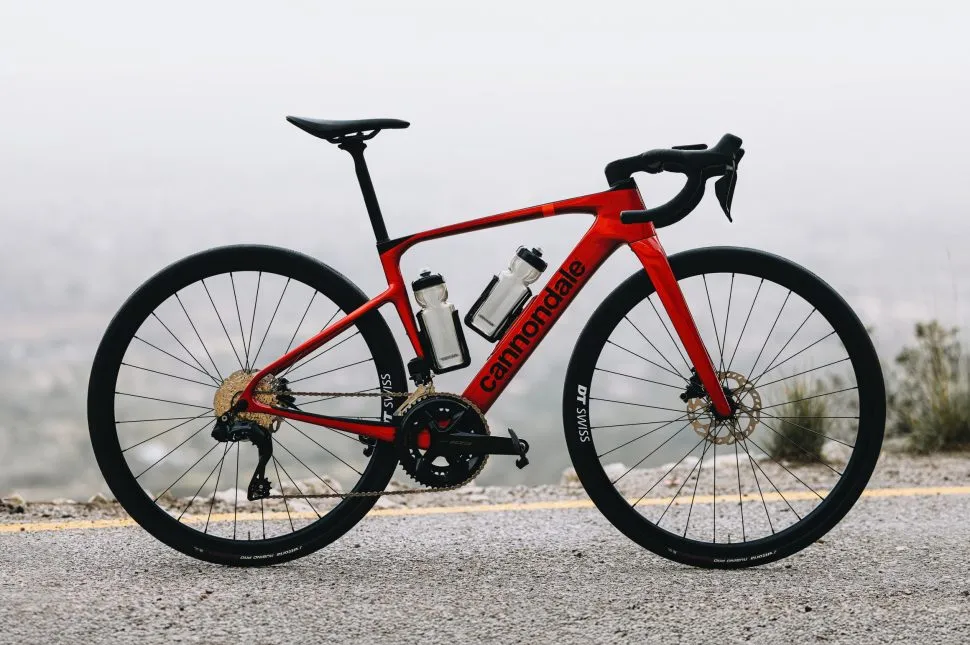
Cannondale claims that the lightest spec of the SuperSix Evo has a 6.35kg weight. This is for the Lab71 SL bike, which comes with 38mm deep DT Swiss ARC 1100 Spline wheels, a SRAM Red AXS groupset, the SystemBar Road SL handlebars and other low weight components. The aero-oriented Lab71 spec with deeper section Reserve 57|64 wheels and the SystemBar Road aero handlebars and a Shimano Dura-Ace groupset has a claimed 6.95kg weight.
The claimed frame weight for a painted SuperSix Evo Lab71 frameset is 728g in size 56, which is a 42g decrease from the fourth generation bike. The fork weight is claimed at 392g. A Hi-Mod frame in the same size weighs a claimed 781g and the fork 414g, while the standard modulus frame has a claimed 910g weight and the fork 427g.
The latest generation Synapse has a claimed sub-kilogram frame weight in the top spec Lab71 carbon fibre, with the standard carbon bikes adding around 150g, giving you an idea of weight saving from the higher spec carbon fibre. The highest spec bike, the only one in Lab71 carbon, includes SmartSense though (see below), which contributes to a full bike weight said to be over 8kg.
Cannondale SuperSix Evo vs Synapse: Geometry
| SuperSix Evo | Synapse | |
|---|---|---|
| Frame size | 56 | 56 |
| Seat tube length | 510 | 520 |
| Seat tube angle | 73.5° | 73.0° |
| Head tube length | 154 | 171 |
| Head tube angle | 73.0° | 71.3° |
| Effective top tube length | 560 | 567 |
| Bottom bracket drop | 72 | 73 |
| Chainstay length | 410 | 430 |
| Frame reach | 393 | 387 |
| Frame stack | 565 | 590 |
| Wheelbase | 995 | 1044 |
| Trail | 58 | 61 |
| Front centre | 595 | 624 |
All linear measurements in mm
With the fifth generation of the SuperSix, Cannondale lowered the frame’s stack by 10mm, at the behest of its pro team riders. Other dimensions remained substantially unchanged and are typical of a modern road race bike, with a short wheelbase (it’s actually shorter on the size 56 bike than the 52 and 54), short chainstays and steep frame angles.
In contrast, the Synapse has a significantly longer wheelbase and more relaxed angles, while the frame stack is significantly higher and the reach shorter – classic endurance bike features. Chainstay length is longer, allowing the Synapse to accommodate 42mm tyres, while the SuperSix Evo has room for 34mm tyres, the same as the previous generation.
The Synapse range is equipped with 32mm tyres throughout and also allows you to fit mudguards. The SuperSix Evo does not have mounts for mudguards, but Cannondale fits 28mm or 29mm tyres across the range.
Cannondale SuperSix Evo vs Synapse: Standards
Cannondale isn’t a brand to stick with the status quo and has over time used a number of proprietary designs in its bikes, from the Ai rear triangle and symmetrically dished rear wheel on its original Topstone gravel bike to the 650b wheels and Lefty suspension fork on the Slate. Both of these are gravel bikes and Cannondale was an early adopter of the gravel genre too.
It developed the BB30 bottom bracket standard and was a big proponent of the advantages of a pressfit bottom bracket, making the BB30 standard openly available to its competitors, to help encourage its take-up.
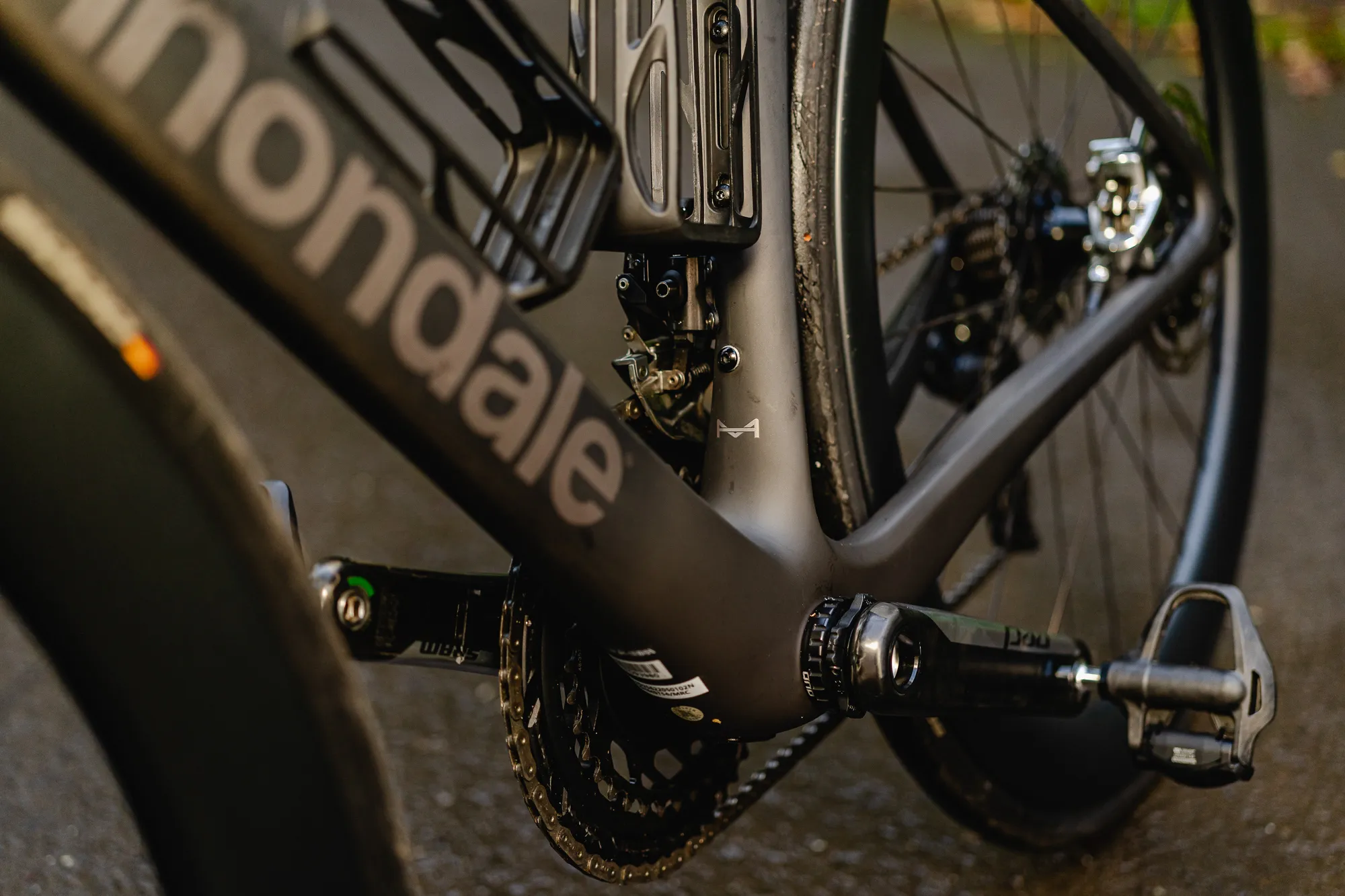
But Cannondale has reverted to a threaded BSA bottom bracket shell in its current range. Cannondale says this is both simple and reliable. It shouldn’t creak either.
Another area where Cannondale has played with a variant then reverted to a more standard design is thru-axles, with both the SuperSix and Synapse using a standard thru-axle design.
It also flirted with an ultra-narrow 25.4mm seatpost on a previous generation of the Synapse, while the current design has a standard width 27.2mm post.
In general, the trend with the current generation of Cannondale bikes is to swap back to established industry standards, which improves interchangeability and increases the number of options if you want to change components, although its Delta steerer is a proprietary design.
Cannondale SuperSix Evo vs Synapse: Sizing
Cannondale has added an additional size to the SuperSix Evo framesets, splitting the previous size 52 into a 50 and 52, so there are now eight options: 44, 48, 50, 52, 54, 56, 58 and 61.
The Synapse Carbon is offered in up to seven sizes: 44, 48, 51, 54, 56, 58 and 61, while the Synapse alloy is available in sizes 44, 48, 51, 54, 56, 58 and 61. The Hi-Mod frame omits the size 44, while the Lab71 frame is available in just sizes 51, 54, 56 and 58.
Cannondale SuperSix Evo vs Synapse: Groupsets
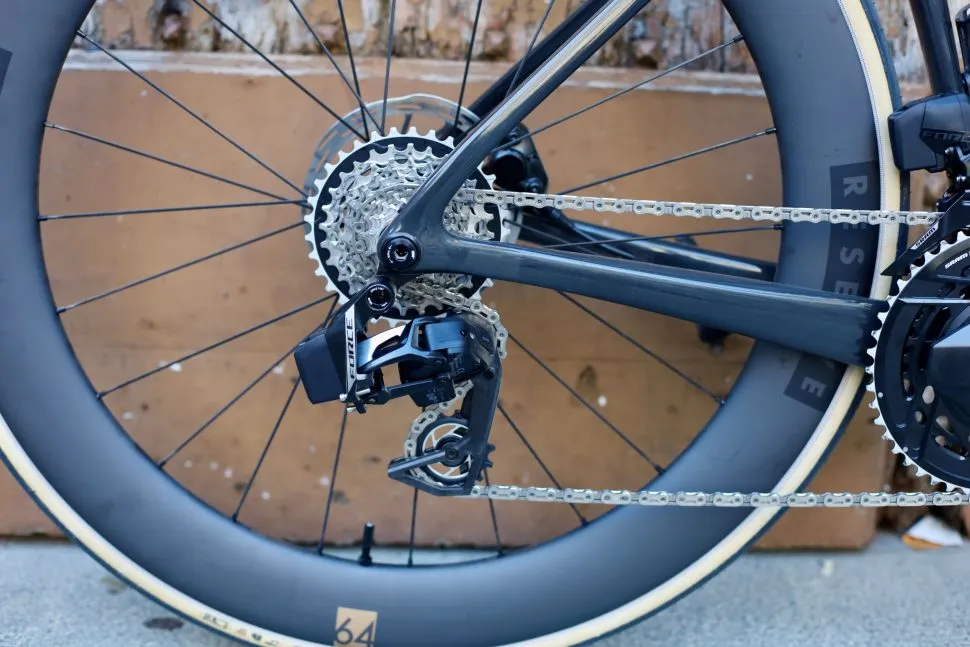
Cannondale offers the full range of SRAM and Shimano electronic groupsets across its range for both bikes. The SuperSix Evo frameset is electronic-only, while the Synapse can accommodate mechanical groupsets, with 105 mechanical fitted to the cheapest spec.
The top spec Synapse has a SRAM Red XPLR AXS 13-speed 1x groupset, making it one of a small number of 1x road bikes available.
Cannondale has followed the trend to fit a power meter on higher specs of the SuperSix Evo. Lab71 and Hi-Mod specs include either SRAM’s power meters or a dual-sided power meter from 4iiii, so four power-equipped specs are available.
The Synapse follows the same pattern, with power meters on the Lab71 and Hi-Mod bikes, although that limits power measurement to just the top two specs.
Cannondale SmartSense system
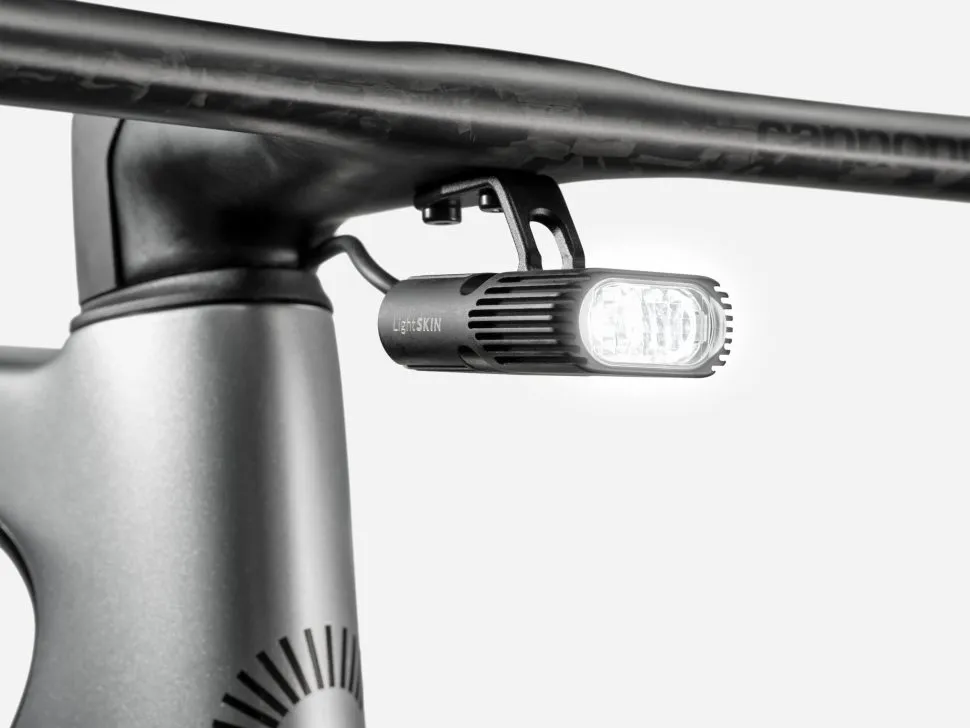
Cannondale has upgraded the SmartSense system in its Synapse Carbon bike and offers it on three specs. SmartSense is Cannondale’s system that includes a front and rear light and a rearview radar developed in association with Garmin. They’re all powered by a single battery, which in the latest generation Synapse is housed within the down tube, rather than bolted onto its top.
It’s fair to say that the jury is still out on SmartSense. On the one hand, it improves riders’ safety by making them more visible and providing an alert when vehicles approach from behind. On the other, it adds around 500g to the bike’s weight. But with many riders choosing to ride with lights and a radar, having an integrated system that’s powered by an in-frame battery may make more sense than multiple units, each of which needs to be powered up separately and bolted onto the bike before riding.
When he reviewed the previous generation Cannondale Synapse Carbon 1 RLE with the older SmartSense, tech editor Sam Challis said, ‘I couldn’t help feeling that the extra half a kilo neutered the bike uphill somewhat, toning down a ride feel that has always before felt pleasantly lively.’
If you like the idea of having an integrated light system, the alloy Synapse frame is also compatible with SmartSense, although it’s not offered as standard. Cannondale appears to have stopped fitting its front wheel sensor to its bikes.
Cannondale CAAD alloy bike range
Don’t discount Cannondale’s alloy CAAD bikes. Before carbon fibre took over as the material of choice for performance road bikes, Cannondale was an early mover from steel to alloy and its CAAD range was one of the foremost pro-level race bikes, with its star rider the sprinter Mario Cipollini.
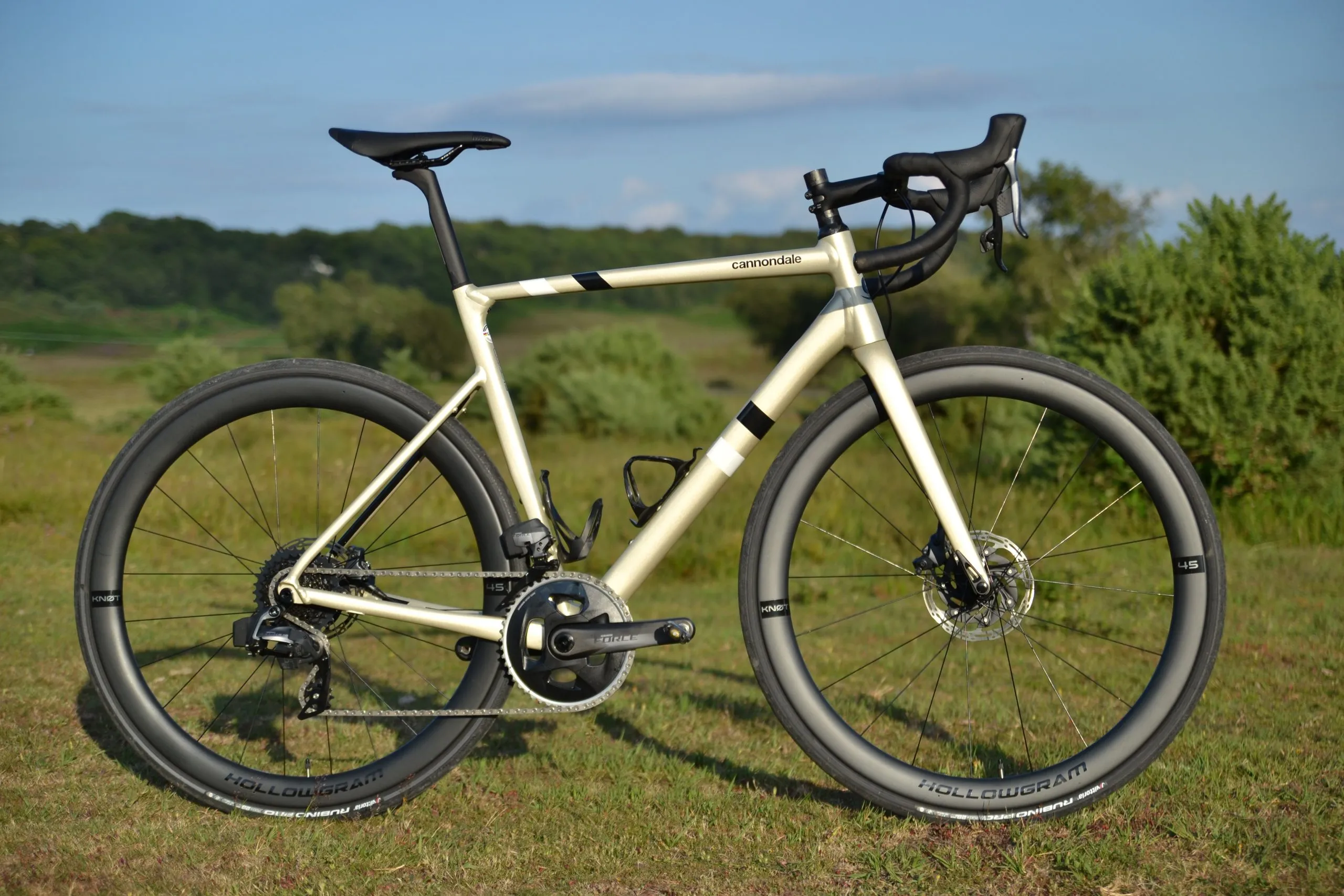
Now incremented to CAAD13, Cannondale’s alloy bikes are still among the best aluminium road bikes available. With two models priced from £3,250 the CAAD13 range has aero profiles and disc brakes and is competing with carbon on price as well as performance. There’s a more affordable rim brake CAAD Optimo that sits below the CAAD13 and is priced at £900 or £1,150.
Cannondale SuperSix Evo vs Synapse: Ranges compared
Cannondale’s road bikes are available in a good spread of specs. While you can pay well over £10,000 for the highest spec bikes, the SuperSix Evo costs £4,495 in its most affordable 5 spec.
The Synapse endurance bike has even more affordable options, with the lowest spec carbon model priced at £2,895 and the alloy Synapse 1 priced at £2,250.
Cannondale SuperSix Evo bike range
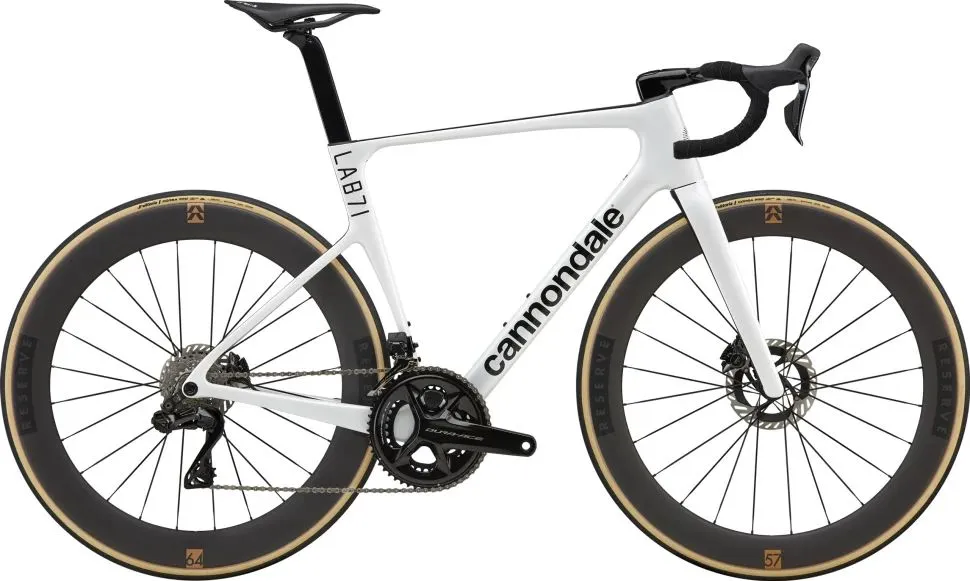
The SuperSix Evo is available with three grades of carbon frame: standard, Hi-Mod and the lightest Lab71.
Cannondale SuperSix Evo Lab71
- Frameset: Lab71 SuperSix Evo Gen 5
- Groupset: Shimano Dura-Ace, 52/36t, 11-30t
- Power meter: Yes
- Wheels: Reserve 57|64 Carbon
- Tyres: Vittoria Corsa Pro TLR, 700x29c
- Bars: Cannondale SystemBar Road
- Seatpost: Cannondale C1 Aero 40 Carbon V2
- Saddle: Fizik Vento Antares 00
- Claimed weight: 6.95kg
- Price: £12,000 / €11,999 / $13,499
Cannondale SuperSix Evo Lab71 SL
- Frameset: Lab71 SuperSix Evo Gen 5
- Groupset: SRAM Red AXS, 48/35t, 10-30t
- Power meter: Yes
- Wheels: DT Swiss ARC 1100 Spline 38 CS
- Tyres: Vittoria Corsa Pro, 700x28c, tube type
- Bars: Cannondale SystemBar Road SL
- Seatpost: Cannondale C1 Aero 40 Carbon V2
- Saddle: Fizik Vento Antares 00
- Claimed weight: 6.35kg
- Price: £12,500 / €12,799 / $13,499
Cannondale SuperSix Evo 1
- Frameset: SuperSix Evo Hi-Mod Carbon Gen 5
- Groupset: SRAM Force AXS, 48/35t, 10-33t
- Power meter: Yes
- Wheels: Reserve 57|64 Carbon
- Tyres: Vittoria Corsa Pro, 700x29c
- Bars: Cannondale SystemBar Road
- Seatpost: Cannondale C1 Aero 40 Carbon V2
- Saddle: Fizik Vento Antares 00
- Claimed weight: 7.3kg
- Price: £8,995 / €8,499 / $9,499
Cannondale SuperSix Evo 1 SL
- Frameset: SuperSix Evo Hi-Mod Carbon Gen 5
- Groupset: Shimano Ultegra, 52/36t, 11-30t
- Power meter: Yes
- Wheels: Reserve 34|37 Carbon
- Tyres: Vittoria Corsa Pro, 700x28c
- Bars: Cannondale SystemBar Road SL
- Seatpost: Cannondale C1 Aero 40 Carbon V2
- Saddle: Fizik Vento Antares R1
- Claimed weight: 6.8kg
- Price: £8,795 / €7,999 / $8,999
Cannondale SuperSix Evo 2
- Frameset: SuperSix Evo Carbon Gen 5
- Groupset: Shimano Ultegra, 52/36t, 11-30t
- Power meter: No
- Wheels: DT Swiss ERC 40
- Tyres: Schwalbe One TLR, 700x28c
- Bars: Vision Trimax Carbon Aero
- Seatpost: Cannondale C1 Aero 40 Carbon V2
- Saddle: Fizik Vento Antares R5
- Claimed weight: 7.6kg
- Price: £5,995 / €6,299 / $6,499
Cannondale SuperSix Evo 3
- Frameset: SuperSix Evo Carbon Gen 5
- Groupset: SRAM Force AXS, 48/35t, 10-33t
- Power meter: No
- Wheels: DT Swiss ERC 45
- Tyres: Schwalbe One TLR, 700x28c
- Bars: Vision Trimax Carbon Aero
- Seatpost: Cannondale C1 Aero 40 Carbon V2
- Saddle: Fizik Vento Antares R5
- Claimed weight: 7.6kg
- Price: £6,995 / €6,499 / $6,999
Cannondale SuperSix Evo 4
- Frameset: SuperSix Evo Carbon Gen 5
- Groupset: SRAM Rival AXS, 48/35t, 10-36t
- Power meter: No
- Wheels: DT Swiss ERC 45
- Tyres: Schwalbe One TLR, 700x28c
- Bars: Vision Trimax Carbon Aero
- Seatpost: Cannondale C1 Aero 40 Carbon V2
- Saddle: Fizik Vento Antares R7
- Claimed weight: 7.9kg
- Price: £5,495 / €4,999 / $5,499
Cannondale SuperSix Evo 5
- Frameset: SuperSix Evo Carbon Gen 5
- Groupset: Shimano 105 Di2 R7150, 50/34t, 11-34t
- Power meter: No
- Wheels: Vision SC45 I23
- Tyres: Schwalbe One TLR, 700x28c
- Bars: Vision Trimax Carbon Aero
- Seatpost: Cannondale C1 Aero 40 Carbon V2
- Saddle: Fizik Vento Antares R7
- Claimed weight: 7.9kg
- Price: £4,495 / €4,499 / $4,999
Cannondale SuperSix Evo Lab71 frameset
Price: £4,995 / €5,999 / $5,999
Cannondale SuperSix Evo Hi-Mod frameset
Price: £3,395 / €4,499 / $4,499
Cannondale Synapse bike range
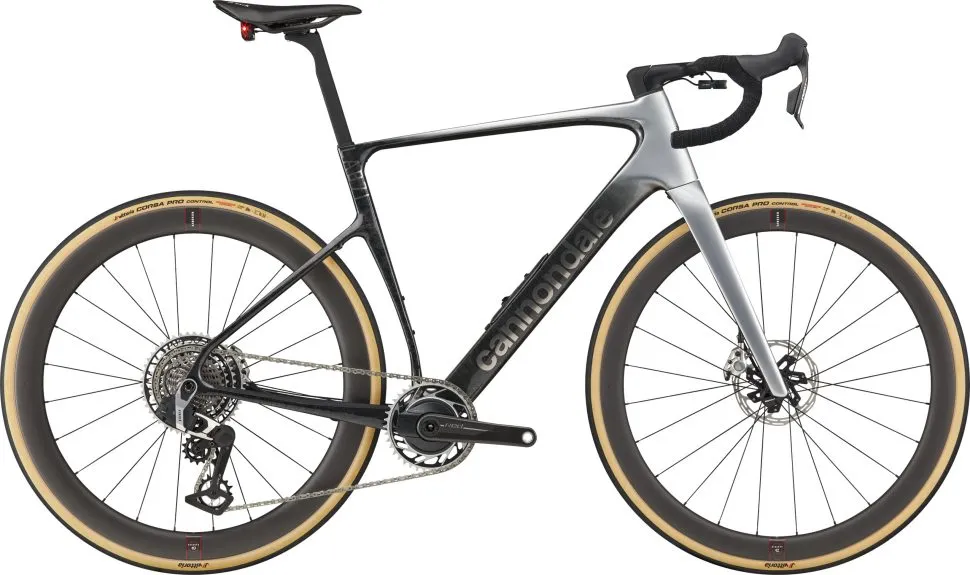
Moving on to the Synapse endurance bike, there are carbon and alloy frame bikes sold. The higher spec Lab71 carbon bike includes SmartSense 2.0, while lower spec bikes are compatible with the system. All provide mounting points for a top tube bag and mudguards.
Cannondale Synapse Carbon LAB71 SmartSense
- Frameset: Synapse LAB71 Carbon
- Groupset: SRAM Red XPLR AXS 13-speed, 40t, 10-46t
- Power meter: Yes
- Wheels: Reserve 42 | 49 Turbulent Aero rims on DT Swiss 180 hubs
- Tyres: Vittoria Corsa Pro Control 700x32c
- Bars: Cannondale SystemBar R-One carbon
- Seatpost: Cannondale C1 Aero 27 Carbon
- Saddle: Fizik Vento Argo 00 Carbon
- Claimed weight: Not specified
- Price: £12,500 / €15,799 / $16,499
Cannondale Synapse Carbon 1
- Frameset: Synapse Hi-Mod Carbon
- Groupset: Shimano Ultegra 12-speed, 50/34t, 11-34t
- Power meter: Yes
- Wheels: Reserve 42 | 49 Turbulent Aero on DT Swiss 350 hubs
- Tyres: Vittoria Corsa Pro Control 700x32c
- Bars: Cannondale SystemBar R-One carbon
- Seatpost: Cannondale C1 Aero 27 Carbon
- Saddle: Fizik Vento Argo R5
- Claimed weight: Not specified
- Price: £7,500 / €6,999 / $8,499
Cannondale Synapse Carbon 2 SmartSense
- Frameset: Synapse Carbon
- Groupset: SRAM Force AXS 12-speed, 46/33t, 10-36t
- Power meter: No
- Wheels: Reserve 42 | 49 Turbulent Aero on DT Swiss 370 hubs
- Tyres: Vittoria Rubino Pro IV, 700x32c
- Bars: Vision Trimax Aero alloy
- Seatpost: Cannondale C1 Aero 27 Carbon
- Saddle: Fizik Vento Argo R5
- Claimed weight: Not specified
- Price: £6,995 / €6,499 / $7,499
Cannondale Synapse Carbon 2
- Frameset: Synapse Carbon
- Groupset: Shimano Ultegra 12-speed, 50/34t, 11-34t
- Power meter: No
- Wheels: DT Swiss ERC LOG 45 carbon on DT Swiss 370 hubs
- Tyres: Vittoria Rubino Pro IV, 700x32c
- Bars: Vision Trimax Aero alloy
- Seatpost: Cannondale C1 Aero 27 Carbon
- Saddle: Fizik Vento Argo X5
- Claimed weight: Not specified
- Price: £5,995 / €5,899 / $6,499
Cannondale Synapse Carbon 3 SmartSense
- Frameset: Synapse Carbon
- Groupset: SRAM Rival AXS 12-speed, 46/33t, 10-36t
- Power meter: No
- Wheels: DT Swiss E1800 alloy on DT Swiss 370 hubs
- Tyres: Vittoria Rubino Pro IV, 700x32c
- Bars: Vision Trimax Aero alloy
- Seatpost: Cannondale C1 Aero 27 Carbon
- Saddle: Fizik Vento Argo X5
- Claimed weight: Not specified
- Price: £4,995 / €4,499 / $4,999
Cannondale Synapse Carbon 4
- Frameset: Synapse Carbon
- Groupset: Shimano 105 Di2 12-speed, 50/34t, 11-34t
- Power meter: No
- Wheels: DT Swiss R470 alloy rims on Shimano RS470 hubs
- Tyres: Vittoria Rubino Pro IV, 700x32c
- Bars: Vision Trimax Aero alloy
- Seatpost: Cannondale C1 Aero 27 Carbon
- Saddle: Fizik Vento Argo X5
- Claimed weight: Not specified
- Price: £3,795 / €3,499 / $4,199
Cannondale Synapse Carbon 5
- Frameset: Synapse Carbon
- Groupset: Shimano 105 12-speed, 50/34t, 11-36t
- Power meter: No
- Wheels: DT Swiss R470 alloy rims on Shimano RS470 hubs
- Tyres: Vittoria Zaffiro Pro V, 700x32c
- Bars: Vision Trimax Aero alloy
- Seatpost: Cannondale Hollowgram 27 alloy
- Saddle: Fizik Terra Argo X7
- Claimed weight: Not specified
- Price: £2,895 / €2,699 / $3,199
Cannondale Synapse 1
- Frameset: SmartForm C2 alloy frame/Synapse Carbon fork
- Groupset: Shimano 105 11-speed, 50/34t, 11-34t
- Power meter: No
- Wheels: DT Swiss R470 DB alloy on Formula hubs
- Tyres: Vittoria Zaffiro Pro 700x30c
- Bars: Cannondale 3 alloy
- Seatpost: Cannondle C3 alloy
- Saddle: Fizik Aliante Delta S-Alloy rail
- Price: £2,250 / €N/A / $2,099
Cannondale Synapse Lab71 frameset
Price: £4,995 / €5,799 / $5,999
Cannondale SuperSix Evo vs Synapse: Which should I choose?

For the majority of riders on UK roads, the Synapse makes a good claim to be the Cannondale bike of choice and Cannondale itself says it’s the best road bike in its range for most riders. It’s smoother and is more likely to suit the average non-racer. The 42mm tyre clearance gives the bike all-road capabilities too, allowing you to fit treaded tyres and venture onto more gentle unpaved trails. The SmartSense system does add weight, but it’s only on the premium bike and if you ride with lights that’s extra mass that you’ll probably be clamping to your bike in any case.
On the other hand, for the racer and wannabe racer, the SuperSix Evo cuts a sportier profile, should be lighter and will offer a more agile ride. The 28mm tyres fitted to the fifth generation bike specs should add a touch more comfort on UK roads and there’s the frame clearance to increase that even further. The semi-compact groupsets specced provide more high-end speed and, if you’re the type of rider to whom the SuperSix Evo appeals, probably won’t slow you down too much on climbs.
Read our full reviews of the Cannondale SuperSix Evo and SystemSix and our 2025 Synapse Carbon launch story to help you choose, and check out the full range at cannondale.com