
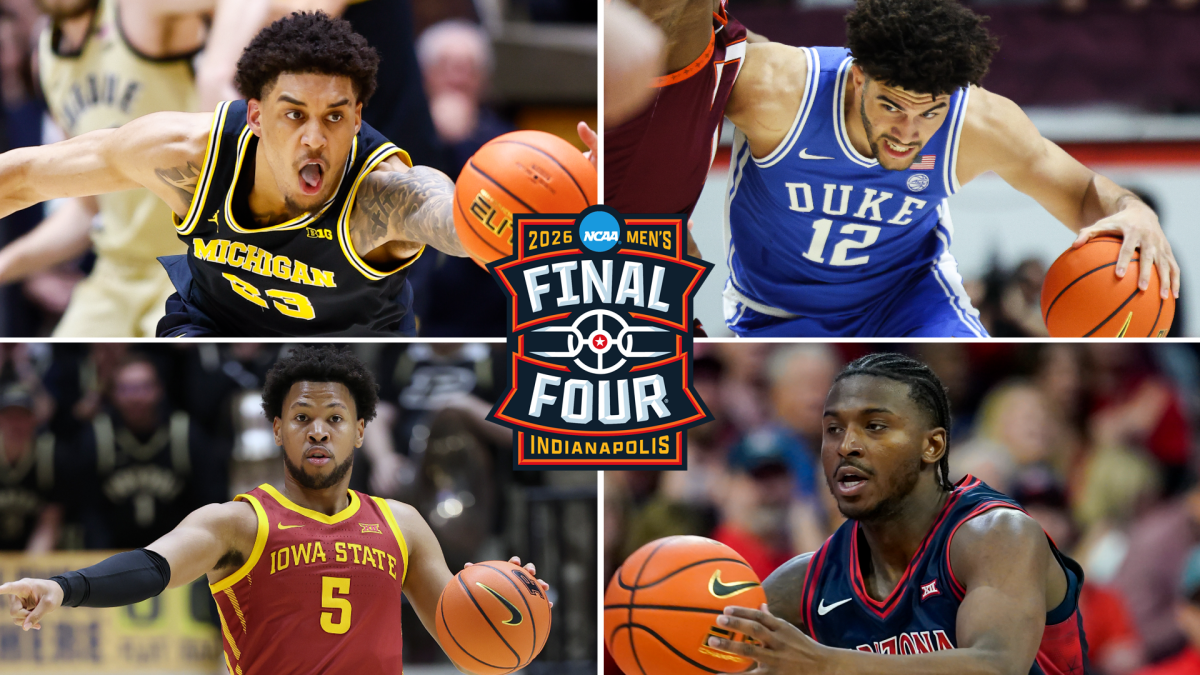
The No. 1 seeds in Saturday’s NCAA March Madness Bracket preview were Michigan, Duke, Arizona and Iowa State. While the first three were largely expected, Iowa State’s inclusion on the top line was anything but a foregone conclusion.
Ultimately, the Cyclones (23-3, 10-3 Big 12) got the nod over UConn and Houston from the NCAA Tournament selection committee ahead of their Saturday trip to play BYU. UConn landed as the top No. 2 seed, despite its unseemly home loss to Creighton on Wednesday. Houston claimed the second No. 2 seed while Illinois and Purdue rounded out the No. 2 seed line.
With just over three weeks to go until Selection Sunday, the picture will change and evolve over the days ahead. In fact, Saturday’s results will almost assuredly impact the picture. But the bracket preview, which covers the top 16 teams, offers an idea of how things are shaping up as the regular season nears its end.
A whopping 10 teams from the Big Ten and Big 12 — five from each league — made the top 16. The ACC and SEC each produced two representatives, while the Big East and WCC each had one team make the top 16.
Here is the full rundown of the top 16 from the bracket preview followed by the big takeaways.
Official NCAA Tournament early seeds
| Seed | Team | Conference | Record | NET |
|---|---|---|---|---|
| 1 | Michigan | Big Ten | 25-1 | 1 |
| 2 | Duke | ACC | 24-2 | 2 |
| 3 | Arizona | Big 12 | 24-2 | 3 |
| 4 | Iowa State | Big 12 | 23-3 | 6 |
| 5 | UConn | Big East | 24-3 | 10 |
| 6 | Houston | Big 12 | 23-3 | 8 |
| 7 | Illinois | Big Ten | 27-5 | 4 |
| 8 | Purdue | Big Ten | 22-5 | 7 |
| 9 | Florida | SEC | 20-6 | 9 |
| 10 | Kansas | Big 12 | 20-6 | 13 |
| 11 | Nebraska | Big Ten | 22-4 | 11 |
| 12 | Gonzaga | WCC | 26-2 | 5 |
| 13 | Texas Tech | Big 12 | 19-7 | 17 |
| 14 | Michigan State | Big Ten | 21-5 | 12 |
| 15 | Vanderbilt | SEC | 21-5 | 15 |
| 16 | Virginia | ACC | 23-3 | 16 |
Iowa State as a No. 1 seed
A theme in the race for the fourth No. 1 seed in the bracket appeared to be high-end victories. Iowa State boasts wins over No. 17 St. John’s, No. 8 Kansas and No. 2 Houston. The Cyclones suffered unflattering road losses against Cincinnati and TCU, but those are classified as Quad 1 defeats and the committee didn’t seem bothered by them.
While our expert panelists believed the nod for the final No. 1 seed should have gone to Houston, which rates slightly better than ISU in both the results-based and predictive metrics that appear on official NCAA team sheets, the Cougars don’t have the same sort of blockbuster wins as Iowa State. Their losses were all in close games against elite opposition (Tennessee, Texas Tech and Iowa State). But again, who you beat seems to be far more important than who beat you.
The “big-time win” methodology would also explain why UConn edged Houston for the top spot on the No. 2 seed line. Despite their ugly fall against Creighton this week, the Huskies boast victories over No. 10 Illinois, No. 8 Kansas and No. 12 Florida, which is an impressive haul of high-end wins.
Texas Tech not penalized yet
Texas Tech landed as a No. 4 seed in the bracket preview, which is right in line with its body of work to this point. However, that decision does not appear to account for a season-ending injury to star forward JT Toppin. The reigning Big 12 Player of the Year suffered an ACL tear in the Red Raiders’ loss at Arizona State on Tuesday.
So why does it seem like the committee didn’t account for the injury? It’s likely because Texas Tech has not played without Toppin yet. Saturday’s home game against Kansas State will be the first post-Toppin data point for the committee to digest. While the Red Raiders are expected to be a lesser team without their leading scorer and rebounder, the committee appears to be making no assumptions.
It stands to reason that if Texas Tech is demonstrably worse without Toppin that the committee will take that into consideration and treat the Red Raiders differently while seeding the actual bracket.
A stacked Midwest
Though it will almost certainly unfold differently on Selection Sunday, the sight of a stacked Midwest region in the bracket preview was jarring. It also underscored the challenge the selection committee faces in adhering to stringent bracketing principles at a time when the majority of at-large bids are going to teams from a small handful of conferences.
If this were the real bracket, fans of Michigan, Houston and Florida would understandably be disgruntled to see such tough competition standing in their path to a Final Four. But the composition of the preview’s top 16 technically met the the committee’s threshold for competitive balance.