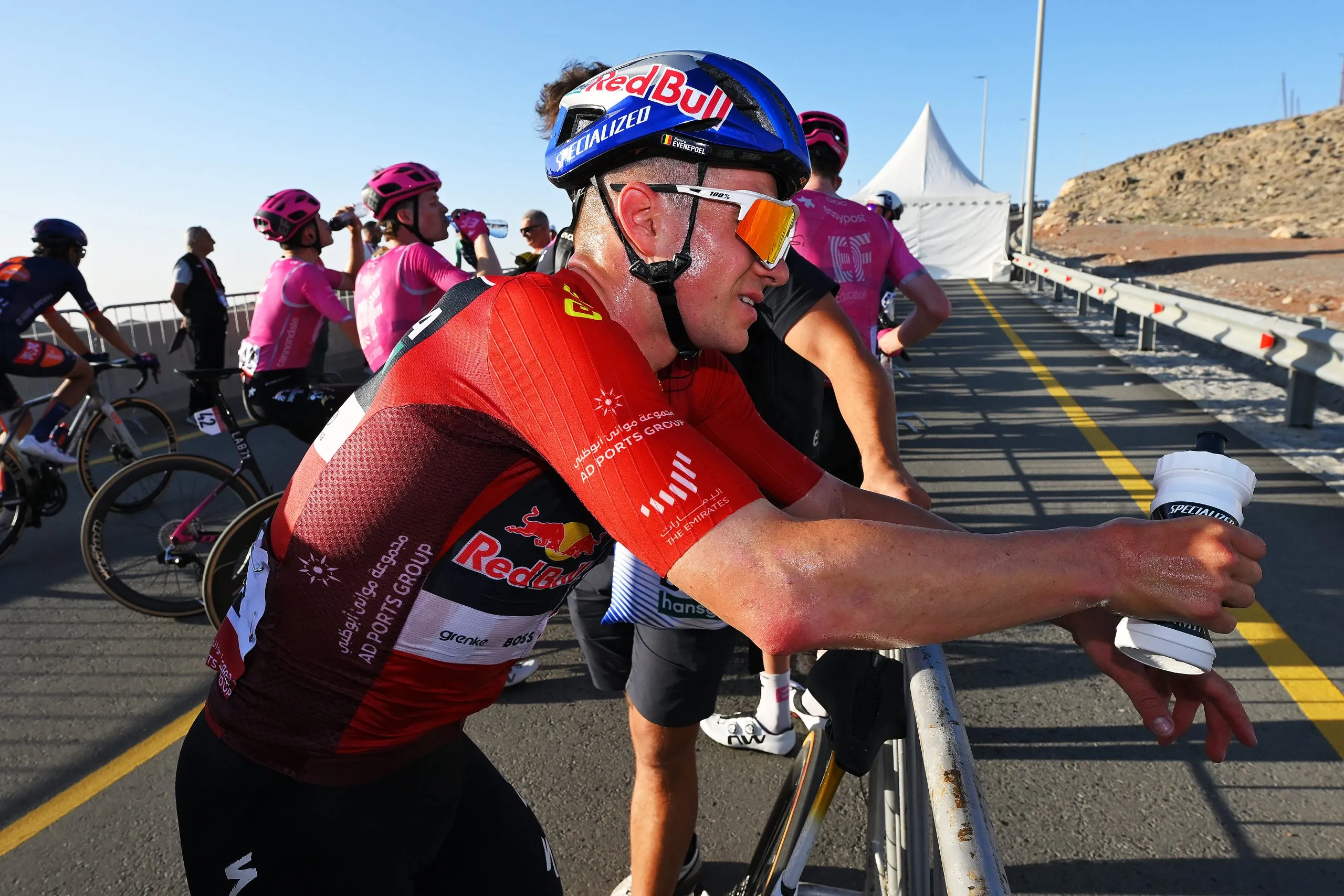
After one of the biggest transfer scoops of 2025, all eyes are on Remco Evenepoel this season. As he prepares for another Tour de France start in the summer, the pressure will be on for the Belgian to justify the rumoured €2 million deal that got him out of his contract at QuickStep.
The Olympic Champion has been in flying form this year so far, picking up six victories already, including a GC win at the Volta a la Comunitat Valenciana. However, on the third stage of the ongoing UAE Tour, Evenepoel struggled on the summit finish of Jebel Mobrah. The Belgian blamed a lack of air conditioning for this result, but the near two-minute time loss highlights a recurring theme in his GC career: inconsistency.
The time-trial World Champ hasn’t won a WorldTour stage race since his tight UAE Tour victory in 2023. In fact, he has only ever won three WorldTour stage races, the 2023 UAE Tour, 2022 Vuelta a España and 2020 Tour de Pologne, despite taking part in 17 multi-day races since 2020. Is this the record of a GC goliath?
Despite his countless time-trial wins, Monument podiums and legitimate star power, is Remco Evenepoel really made for GC racing?
A story of inconsistency
For a long time, Evenepoel was known for his characteristic meltdowns in stage races.
At Grand Tours, these came in spectacular fashion. Just think of his downfall on the Tuscan gravel at the 2021 Giro, his huge bonk at the 2023 Vuelta and the mid-stage abandon at the 2025 Tour de France. While these are the most memorable – or for him, forgettable – wobbles, his inconsistency has been notable over the past few years.
In fact, at every WorldTour stage race he’s competed in since the 2023 Tour de Suisse, Evenepoel has lost at least a minute on one mountain stage to the eventual winner. These have often come on long climbs or steep finishes over 5km in length. In an event where consistency is key across a week, or three weeks, this holds important weight for the overall result.
It’s becoming increasingly clear that this inconsistency isn’t a matter of age and immaturity now that Remco has spent five years at the sport’s top level. Rather, it’s down to his physical capacity and characteristics. That means that races with multiple mountain stages remain sticking points for the Belgian, particularly if he’s even slightly off the boil.
Not close to the competition
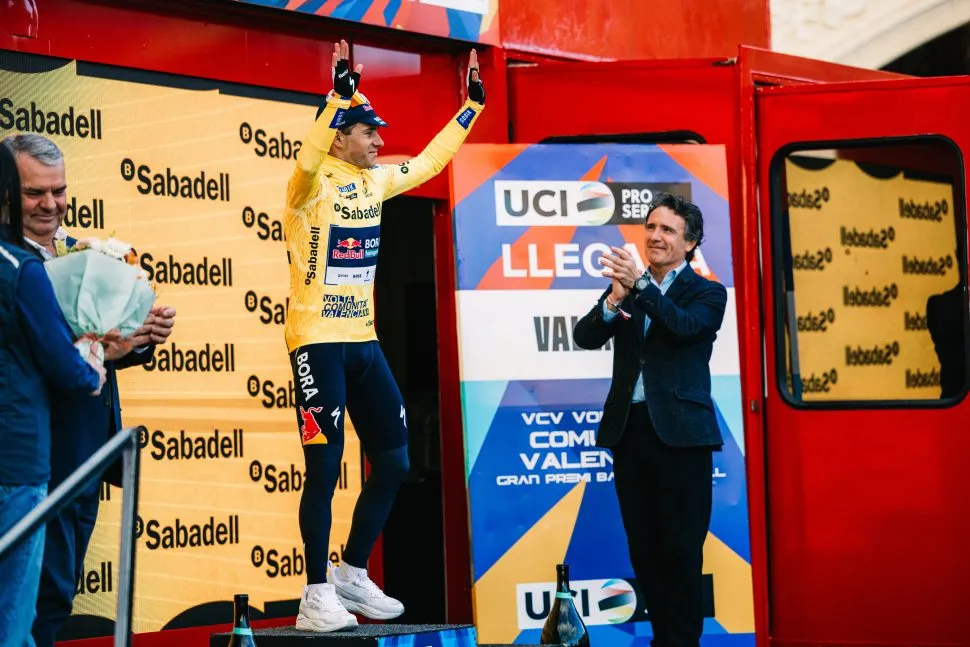
Evenepoel’s conversion rate at WorldTour stage races is poor when compared to his rivals. Out of the big four – Tadej Pogačar, Jonas Vingegaard, Primož Roglič and Evenepoel – the Belgian has the poorest stage racing record. Yes, he is the youngest, but he is still miles behind even Primož Roglič, who many believe has passed his peak.
Let’s compare the quartet’s results since 2022. The chart below isolates the GC results from their WorldTour stage entries.
The ‘Big Four’ WorldTour stage racing record since 2022
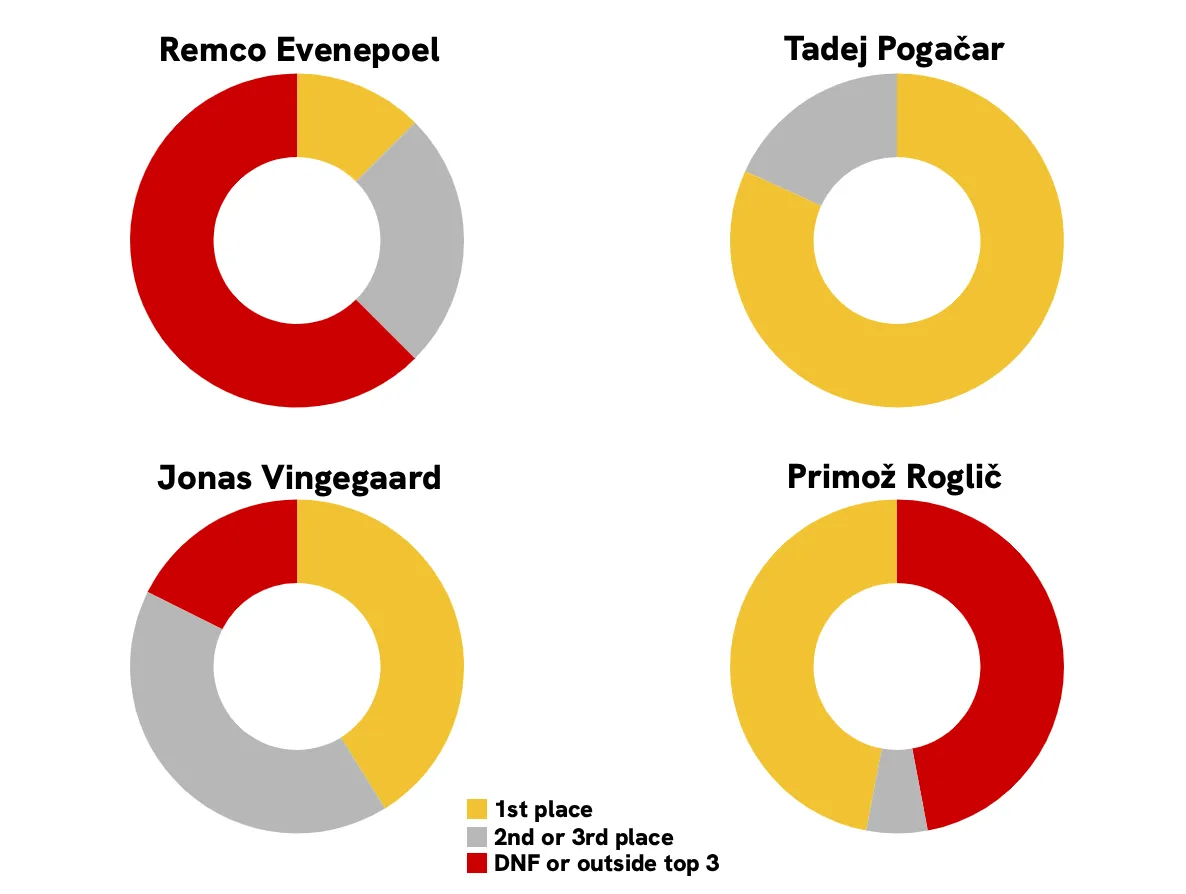
If you take a look at the red slither, which indicates the number of DNFs and non-podium finishes, Evenepoel is the only member of ‘The Big Four’ to not have finished half of his WorldTour stage races on the podium. Based on pure numbers alone, he has only reached the top three of six of these races since 2022, equating to 37.5%. Only 12.5% of his contests have translated into overall victories, on the other hand, meaning he has a non-podium rate of 62%.
This is nowhere near the level of Vingegaard and Pogačar. The Slovenian has finished on the podium of every WorldTour stage race he’s competed in since 2022, while Vingegaard has only missed the podium in three races, all of which were DNFs. Even in comparison to Roglič, his new teammate, Evenepoel’s record is weak. The former ski jumper has reached the podium in 53% of his stage races. Given they’re now housed under the same Red Bull roof, the team bosses should maybe reconsider the team hierarchy if they take this record into account.
This isn’t down to a small sample size either. Pogačar has competed in 11 WorldTour races, Vingegaard 17 and Roglic 16. Evenepoel has competed in 16, so there’s fair footing to draw this underwhelming consensus.
The threats from within
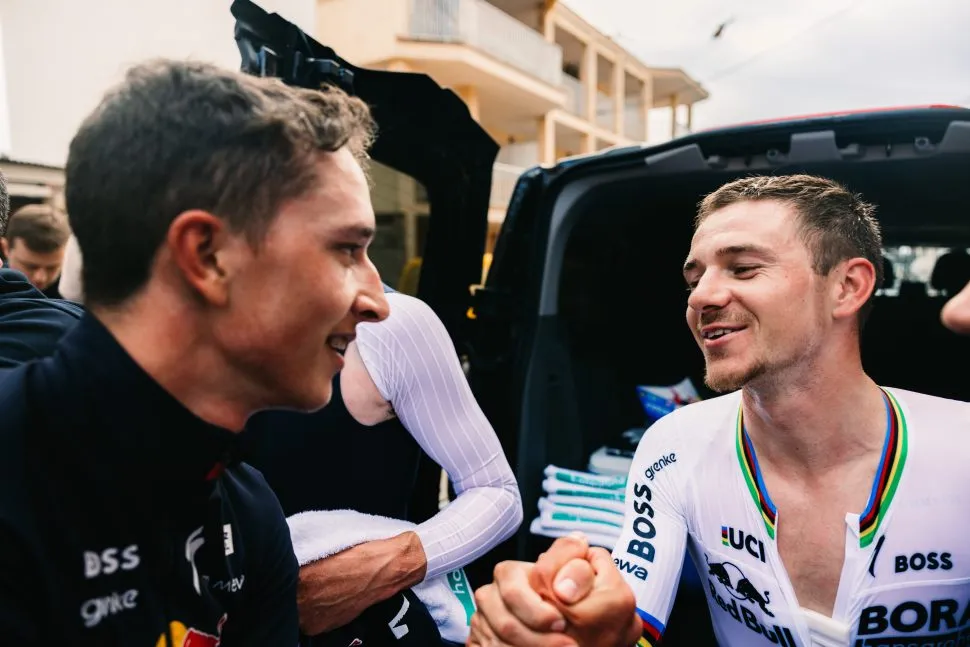
Florian Lipowitz is the immediate threat. He beat Remco Evenepoel at both the Critérium du Dauphiné and Tour de France last year, albeit after Evenepoel abandoned in the second week. The two are set to line up as co-leaders for the Tour de France, but the results of this experiment could prove telling for Evenepoel. If Lipowitz is stronger than his Belgian teammate, Red Bull may decide to prioritise the German instead. While the two rode harmoniously at the Mallorca Challenge, the pressure of a Tour de France could cause rifts in that relationship.
Even removing Lipowitz from the equation, the level of competition in Red Bull-Bora-Hansgrohe is incredibly high. Jai Hindley is a proven Grand Tour rider who will be sent as a leader for the Giro d’Italia, a race he won in 2022. Giulio Pellizzari is another climber to look out for. The young Italian still has some room to grow at his young age of 22, and he finished in the top six at both of the Grand Tours he rode in 2025.
Then there’s Primož Roglič. Although the Slovenian has been handed several opportunities to anchor Red Bull at the Tour de France, his record in week-long stage races is one of the best in the pro peloton. In all honesty, Roglič probably has the best chance of Grand Tour victory with Red Bull this year at the 2026 Vuelta.
Is Red Bull the right destination for him?
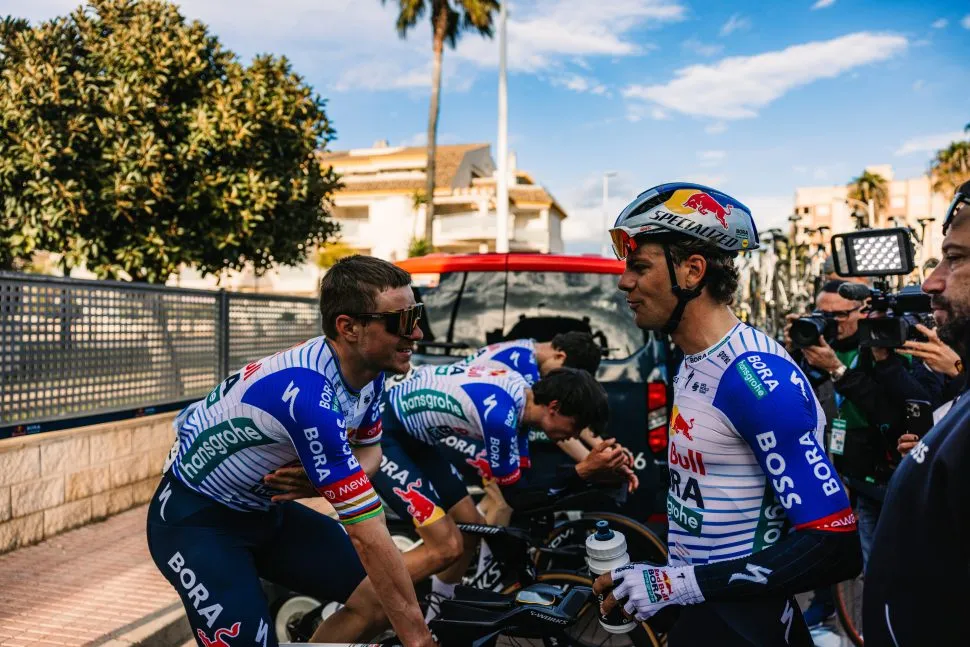
While there’s certainly less pressure placed on Remco at Red Bull than QuickStep, I’m not convinced this is necessarily the best team for him to grow.
Red Bull’s record at nurturing GC talent is slimmer than the likes of Ineos, Visma or UAE. Giulio Pellizzari bucks this trend, following his standout Giro and Vuelta performances last year, but Evenepoel may have bet on the wrong horse if he’s hoping for a reliable GC machine to support him at stage races.
The team have money though, so they will be able to throw that behind extra resources, including staff and support riders. However, that could also manifest itself in a way that threatens Evenepoel’s position within the team. The budget could go towards scooping up someone like João Almeida or Isaac del Toro if they were ever to leave their contracts at UAE. From what we’ve seen from the pair in their careers so far, they appear to be two far more reliable figures on a GC front.
A time-triallist who can climb
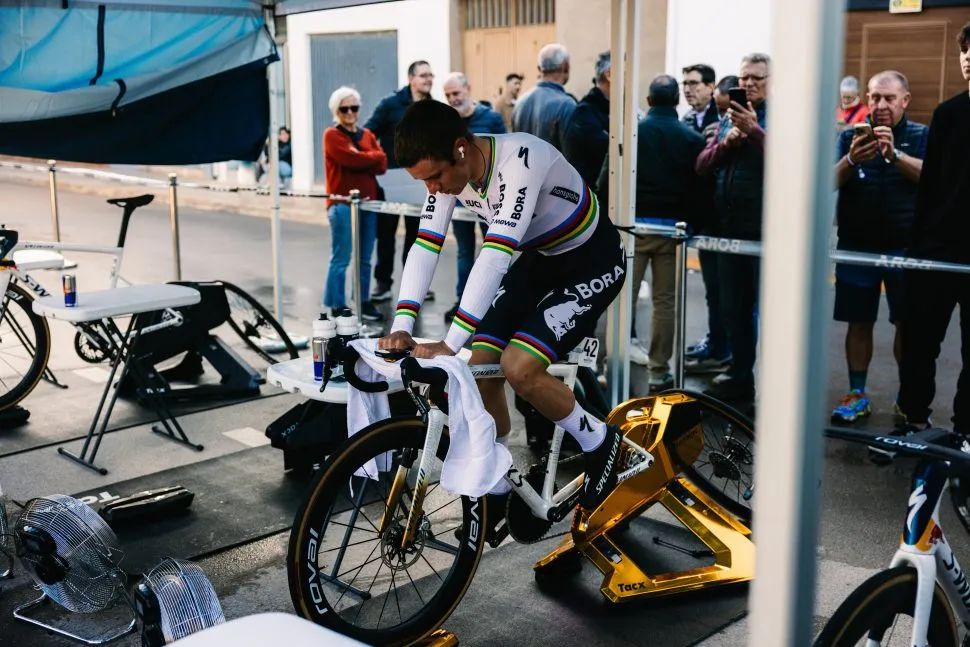
As a three-time world champion in the individual time-trial, Evenepoel is clearly the best rider in the world against the clock. He’s won every title going, and he hasn’t lost a flat time-trial over 10km in length since the spring of 2024. You could even argue that Evenepoel is a time-triallist who can climb rather than a pure GC figurehead.
In stage races, the time-trials are where he accumulates the most time on his rivals. After picking up a nice cushion against the clock, he has to measure his losses in the mountains to stay in the fight for the overall title. Remember, his sticking point is often in the high mountains, where he usually sheds at least a minute on one occasion during key races.
Looking at his stage race results, many of them are carried by his time-trial performances. Yes, that’s part of the GC game, but he requires the full package if he’s to contend a proper Grand Tour. Bradley Wiggins was like this in the 2010s, and it yielded a few GC podiums at Grand Tours, and the same goes for Tom Dumoulin later on, but in the age of Pogačar and Vingegaard, both of whom are more than competent time-trialists, Evenepoel needs more of an edge in the mountains to stand out.
There’s no shame in just being a time-triallist. There are several riders who carved niches in this field. Tony Martin is a good example. He started as a GC project, then morphed into a TT specialist capable of impressive wins from the breakaway. Evenepoel’s legacy may be against the clock more than in the GC, so it may be worth trying to squeeze everything out of him in time-trials instead of trying to fit him into the GC mould.
The Hour Record is an achievable goal for Evenepoel. The current record is held by Filippo Ganna, whom the Belgian hasn’t lost to since the opening stage of the 2022 Tirreno-Adriatico. Given that the previous record holder and Ganna’s former TT coach Dan Bigham is on Red Bull these days, the project is well within reach.
Should he focus on the Classics instead?
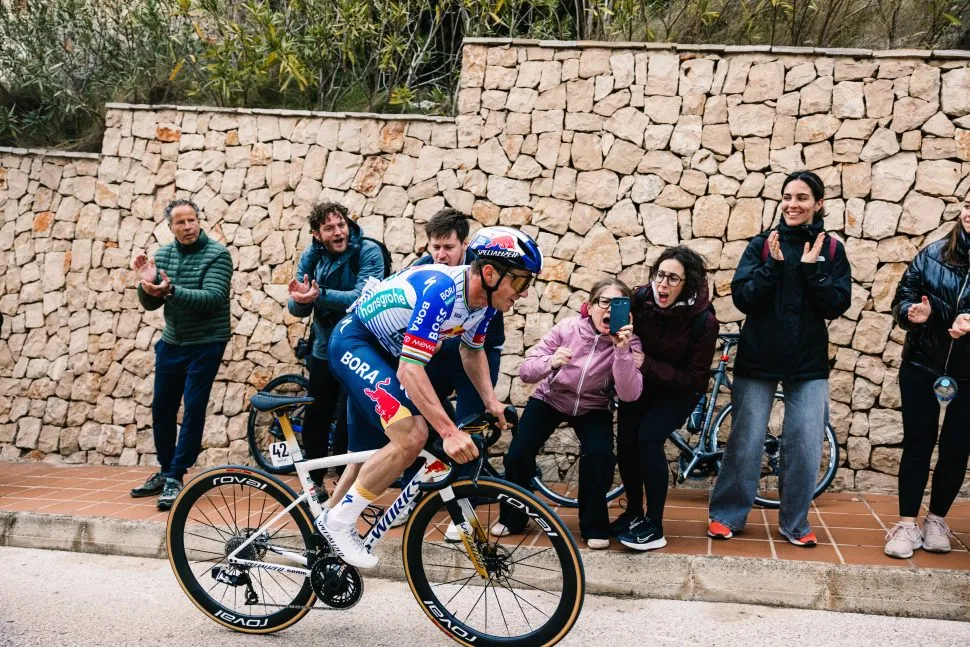
With Grand Tours as the key objectives in Evenepoel’s schedule, Classics have gone down in their priority. This is short-sighted perhaps. The Belgian is a two-time Monument winner, having won Liège-Bastogne-Liège in both 2022 and 2023. This is coupled with a handful of podium finishes at Il Lombardia and three victories at the Basque Clásica de San Sebastián.
This Classics expertise translates to a much better conversion rate than at stage races. Out of the 17 one-day races he’s competed in at WorldTour, Olympic, World and European Championship level since 2022, Evenepoel has won five races (29%). If we add podium finishes to that, his podium conversion rate shoots to 58%. That’s almost double that of his GC record.
There was talk in the off-season of a potential visit to the Tour of Flanders or Milan-San Remo. The former seems like an ideal fit for Evenepoel, who put in a strong performance at Brabantse Pijl last year and at the Rwanda World Championships, which featured a cobbled climb of its own. Red Bull are in need of more leaders in these Flemish one-day races, so it feels like a missed opportunity not to send Remco to those races. That’s not only because of the potential results, but also because of the exposure it would give the team in Evenepoel’s home country.
Knowing his wobbles in stage races, it could be a better use of his time to ride the cobbled Classics over some March-time stage races, like the Volta a Catalunya, for instance. Instead, the team can send one of their many climbers to those races, leaving Evenepoel to test out his legs in a proven Classics setting. This approach has worked well for Tadej Pogačar in recent years, a sthe Slovenian winds down his reliance on stage races to get into Tour de France form.
What should Remco do going forward?
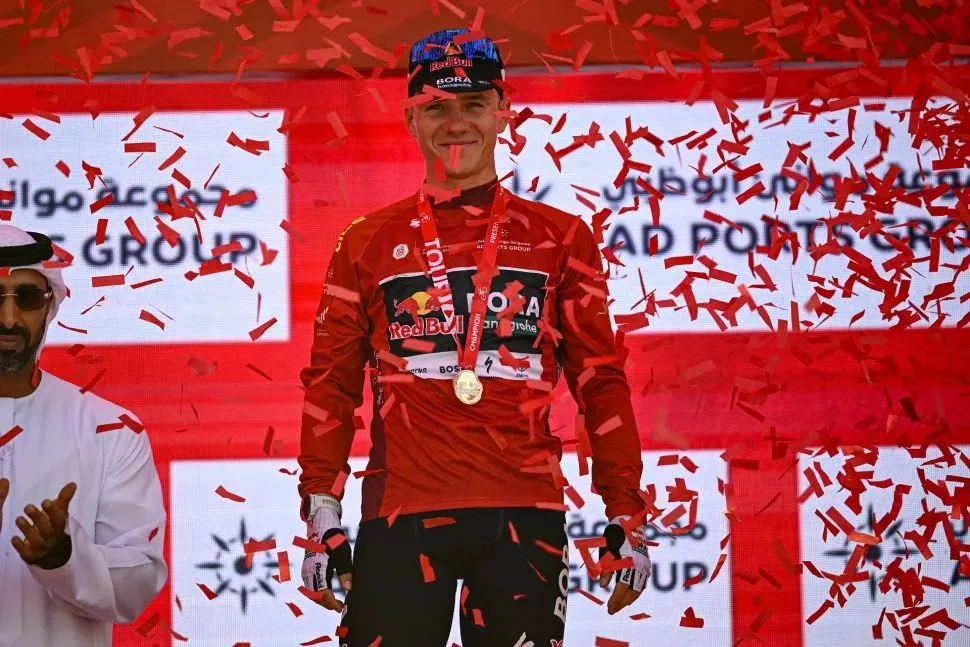
Is Remco Evenepoel a future Tour de France winner?
I’d say no. Yes, he won the Vuelta a España in 2022, but I don’t see him as a rider built for three-week races. In his time as a pro, he’s only finished on the podium of a Grand Tour on two occasions. Both of those came off the back of a mixed set of results in the high mountains, with TT results helping to prop Evenepoel up in the overall standings. I mean, if it weren’t for the time-trial at the 2022 Vuelta, Enric Mas would have only been around ten seconds behind the Belgian. No offence to Enric Mas, but that isn’t a convincing demonstration of GC prowess on Evenepoel’s part.
His stage racing style is wholly inconsistent. He still wobbles in the big mountains, and there have been few results that fill me with confidence that he can compete against the likes of Pogačar and Vingegaard in the high mountains. He rarely wins attritional mountain top finishes these days.
His WorldTour stage race record shows that. He’s more likely to finish off the podium than on it. As younger riders like Paul Seixas and Isaac del Toro shoot up the pecking order, I think it’ll become increasingly unlikely that Evenepoel spots a gap in a Grand Tour startlist to contest for the win at a three-weeker. In other words, he’s no longer the next Eddy Merckx.
That doesn’t mean he should dodge Grand Tours. He could still finish in the top five and fight for stages, either from a breakaway or from a reduced sprint on a tougher profile. However, I think his best shot at carving out a long-lasting legacy is in the time-trials. He’s only two world titles away from becoming the best men’s time-triallist the sport has ever seen. Throw this in with a near-dethronable Hour Record, and he will still go down with the greats, especially if he wins another Olympic gold against the clock at LA 2028.
No men’s cyclist has ever won three Olympic golds on the road. Could Evenepoel be the first?
What do you think?
 Loading …