
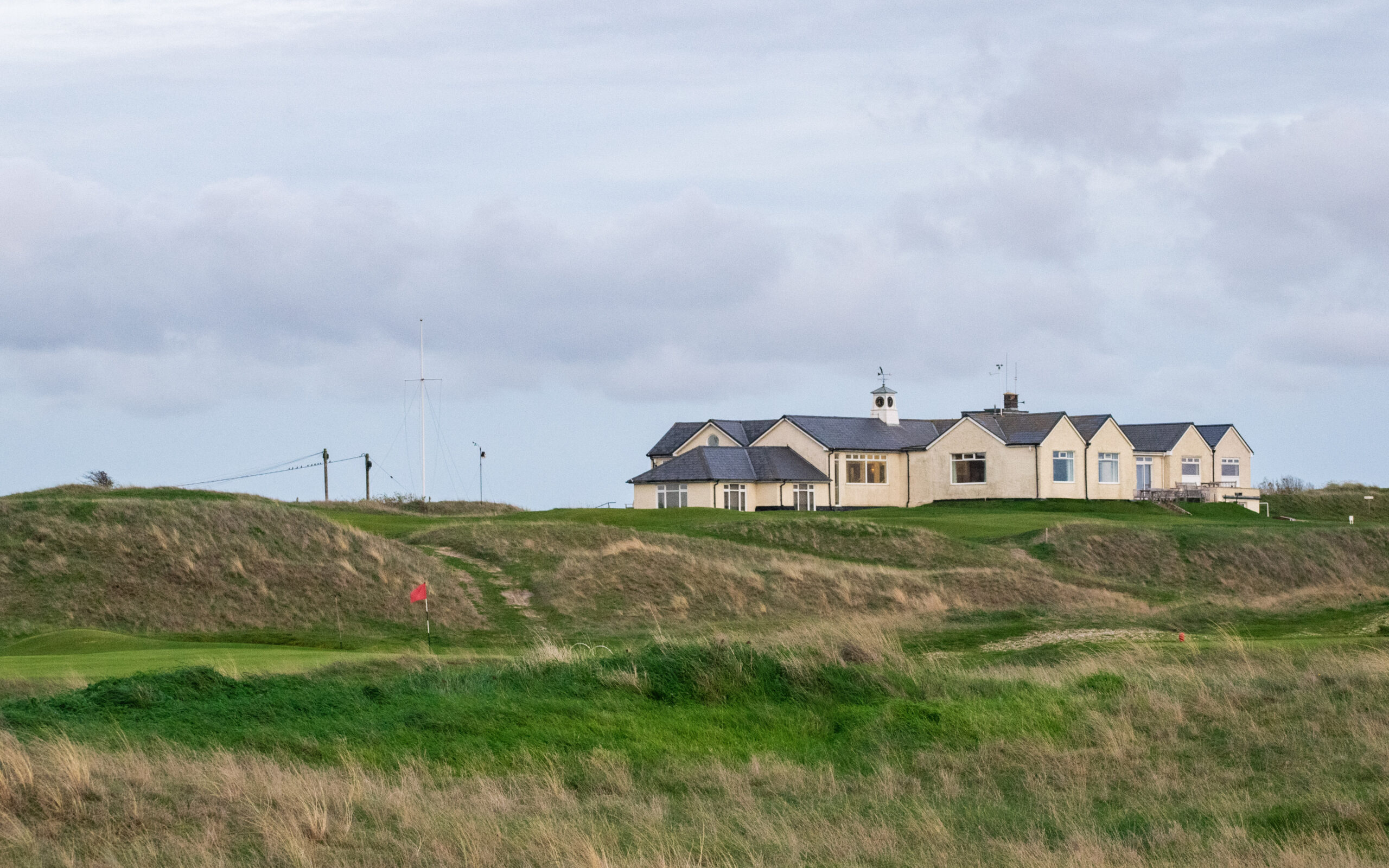
It is safe to say that 2026 marks an unusual start for those former and current golfing Blues of Oxford and Cambridge. By now they would usually have already burnt through holiday to head down to Rye, and had their bragging rights against old friends rearranged for the rest of the year. Instead, January play was cancelled. It did take quite a brave call, but both Mother Nature and the Met Office gave the administrators no choice but to cancel its usual January placing. For the recent graduates in new jobs or with new partners they will need to have another go at explaining ‘knockout matchplay’ with a straight face for being a reason to be away. For the veterans of the event, they can just quietly slip out the door and start the car in the sheer blissful comfort that only old routine can bring. Only once before, since its inception in 1920, has it ever been played in March (in 1922)- but March 2026 will now make that a second time. Outside of the War Years, a snow bomb in 1979 and COVID in 2021 the event has been stoically played ‘come what may’.
The competitors are typically faced with freezing temperatures and sideways rain at some point during the event, which consists of singles matchplay over a four day stretch. Some years they have faced frozen ground in -10℃ to -12℃, watching balls take off from the surface like a Michael Holding bouncer. This historic matchplay tournament is where Gortexgoes to die and many PGA Club Pros across the country wait with bated breath to see if any warranty deals are going to be called in before the week’s end, “what do you mean… just wind-proof?”. Hand warmers are an important commodity too, along with rain gloves, marigolds, spare shoes and underpants. Snoods are adorned with beanies in a combination that would have passers by think they’re observing a Tenzing Norgay cosplay convention.
Below are but a few names of the many incredible amateur golfing heroes that have not only trodden the boards down at Rye, but in Walker Cups, Blackwell Foursomes, Amateur and Open Championships. It would take a lot more cloud storage to cover the many deserving names in detail, but this is a flavour of the character, the talent, and tenacity that the President’s Putter has produced over its long and illustrious history:
E. W. E. Holderness –
Sir Ernest William Elsmie Holderness, five-time winner of the Presidents Putter in 1920, 21, 22, 23 & 1929. He was also runner up twice in 1925 and 1930. Ernest was a two-time winner of the Amateur Championship, winning his first in 1922 at Prestwick 1 up and his second in 1924 at St Andrews winning 3&2 over his fellow Society member and Walker Cup teammate Eustace Storey. Ernest was a prominent member of Walton Heath Golf Club and, along with his friend Sir Hedley Les Bas, helped found the Surrey Golf Union in 1923, which would be the catalyst for the English Golf Union being founded a year later, soon becoming the second President of the E.G.U. Described by Bernard Darwin in Vanity Fair as a “hardworking Civil servant”, he was only able to play on weekends and his holidays, which makes his achievements and the level of golf he played to all the more extraordinary, I couldn’t possibly comment if Stewart Hagestad has kept as strict a working schedule in his amateur career thus far.
R. H. Wethered –
Roger Wethered, five-time winner of the Putter in 1926 (shared, 1927, 1928, 1935 and 1936). In the 21 President’s Putters that he played in he won an impressive 77.14% of his matches. He was known for an incredibly strong iron game and short game, which his somewhat shaky driver was often bailed out by in ‘Mickelsonian’ fashion. Roger was also known for being the brother of one of the greatest female golfers ever to play the game, Joyce Wethered. Roger and his sister were the original Min Woo and Minjee Lee of their day, you could say. Had Roger not trodden on his golf ball during the 1921 Open Championship at St Andrews, incurring a penalty, he may have won it outright and not ended up in a losing 36-hole play-off (which he famously said he couldn’t do due to a cricket match the next day, he was persuaded otherwise). Roger won the Amateur Championship at Deal two years later in 1923, winning convincingly 7&6. He played 5 times in the Walker Cup, on debut he won both his matches, one of which was a 3&2 singles win against the great Bobby Jones. Roger captained the Walker Cup side in 1930 against Jones’ team but sadly ran up a 9&8 loss against Bobby as well as an overall team loss.
C. J. H. Tolley –
Cyril Tolley, winner of the President’s Putter in 1938. He was runner up on three occasions in 1921, 1923 and 1929, each loss coming to Ernest Holderness, thus achieving ‘bunny’ status when facing him. Those losses aside, Tolley had an incredible amateur playing career. He won two Amateur Championships, the first coming in 1920, a close tie at Muirfield winning on the 37th hole and his second in 1929 at Royal St George’s, winning 4&3. Cyril won the French Open twice as an amateur, both times at La Boulie, in 1924 and 1928. He was also a ‘Walker Cupper’ participating 6 times, most famously as playing captain in 1924, an example that Keegan Bradley didn’t look to follow last year at Bethpage. His greatest achievement undoubtedly is outside golf, being awarded the Military Cross for “acts of gallantry during active operations against the enemy” during the intense fighting at Ypres during World War I.
B. Darwin –
Bernard Darwin, winner of the 1924 President’s Putter. ‘Bernardo’ as he was affectionately known, received a C.B.E for “services to literature and sport”, his authorial oeuvre covered Dickens to W.G. Grace, and London Gentleman’s Clubs to children’s books. But it would always be golf at the end of the day that had the heart of Charles Darwin’s grandson. His dispatches in the Times and other publications remain the gold standard of the sport, written with humour, integrity and passion. One of Bernard’s remarkable achievements as a player was a Walker Cup singles point in the 1922 playing at the National Golf Links of America. This point was never meant to be accredited to him, he was originally there in the capacity of a reporter for the match, but a player had been taken ill, and he stepped in for the GB&I side at the age of 45 years old. The U.S. scalp that he claimed in the singles was that of Bill Fownes, the opposition captain, Bernard won 3&1. His other golfing achievements include winning the WorplesdonFoursomes with Joyce Wethered, and a plethora of trophies and medals at his “spiritual home” of Woking Golf Club where he served as Captain in 1908-09, and then as the President from 1937 up until his death.
L. G. Crawley –
Leonard Crawley, winner of the Putter across three decades in 1932, 1947, 1951 and 1952. He represented GB&I in the Walker Cup four times (1932, 1934, 1938 and 1947), he grabbed the only point for his side in the 1932 “smothering” loss at Brookline but did taste sweet victory at the Old Course four years later as part of the winning side. Leonard won the 1931 English Amateur Championship and was also runner up in 1934 and 1937. He was a dab hand at foursomes matchplay, becoming a multiple time winner of the Halford Hewitt as a member of the Old Harrovian Golfing Society. Despite his great success in matchplay knockouts, he was very dismissive of them in general, describing them as “eighteen-hole sprints, where the wrong man may win”. With so many accomplishments Leonard unsurprisingly had a reputation of being a real striker of the ball with his shots packing a particular “fizz”. John Gillum described Crawley’s swing as being “slow, almost lazy, but with perfect control and rhythm”, he might arguably have been the Els or Couples of his day, and one could imagine his swing being played on repeat on Tik-Tok reels should that have existed then.
G. H. Micklem-
Gerlad Micklem, winner of the President’s Putter in 1953. In his 36 trips down to the coast to partake in the event he racked up an impressive 111 matches, winning 76 of those. He was a self-described “moderate 7 handicapper” at the start of his amateur playing career, but that would drop through countless hours of practice under the tutelage of Fred Robson at The Addington. This improvement was all the more remarkable as it came after he had lost the top of his index finger while serving with distinction in the Grenadier Guards in France prior to Dunkirk. One of Gerald’s great wins outside of his Putter triumph was the 1947 English Amateur, winning 1up at Ganton. He would win a total of 4 R&A medals, two Spring and two Autumn, later captaining the Club in 1968. A year later in 1969 he would receive a CBE as well as the Bob Jones Award. On the international scene he played for the England team from 1947-1955 winning 33 of his 35 matches. He played in four Walker Cup’s having little success and was non-playing captain for the 1957 and 1959 matches at The Minikahda Club and Muirfield, both sadly were the fashionably losing efforts of the era for GB&I.
D. M. A. Steel –
Donald Steel, winner of the Putter in three different decades, 1964, 1970 and 1982. All his victories were incredibly close affairs, winning 1up twice against Attenborough and Marsh, while he won down the 19th against Jamie Warman for his last finals win in 1982. Donald played well over 100 matches in the tournament during his playing days, always keeping a respectable win ratio of above 68%. Steel played 85 Hewitt matches for his school Fettes between 1959 and 1997, which included lifting the trophy in 1964 with Donald playing commanding foursomes golf alongside his partner Charles Lawire. Outside of playing golf Steel would go on to be known as a prominent golf course architect. He designed such courses as the Abaco Club, Strathtyrum and Millhide, as well renovating Royal St George’s prior to his understudies in Ebert and Mackenzie making their own changes years later. Alongside his golf playing and course design he also played minor county cricket for Buckinghamshire and wrote for the Sunday Telegraph as their golf correspondent.
E. R. Dexter –
Ted Dexter, winner in 1983 & 1985. The only person to have captained Oxford or Cambridge at cricket and golf. He chose cricket as his career path post university and famously skippered both Sussex and England, but it was often thought that should he have pursued golf he would have been just as successful. Donald Steel described him as playing both with “extreme dash and distinction”. He had an incredibly sound swing and made shot-making look easy, drawing comparisons to Sam Snead. He would spend many late afternoons as it went dark practicing at Mildenhall and always leant on coaches for advice -such as John Jacobs- in pursuit of getting better. Ted possessed incredible power off the tee and had few equals within The Society at the time, famously during a practice round ahead of the 1958 Varsity Match he almost drove the 4th green at Rye (thank goodness 460cc drivers and the ProV1 weren’t about back then). Ted had an incredible record in the Putter winning 75 of his 96 matches in 23 appearances. He was runner up 5 times and reached three finals in a row, 83-85.
C. J. Rotheroe –
Charlie Rotheroe, winner of The Putter in 1996, 1997 and 2008. He was once described by the great golfing journalist and writer John Hopkins as being a “gifted ball striker”, with a golf swing that was “enviably fluid”, two great traits to have when duking it out at Rye in January. Charlie was a county team-mate with Luke Donald, and his golfing ability certainly kept up with that company. Woosnam-like in stature and with hair that competes still to this day with Robert Rock, he has an impeccable vibe. Charlie was elected as Captain of the Moles Golfing Society in 2011 for their centenary year.
T. J. Etridge –
Tom Etridge, the current defending champion. He has won three times in the President’s Putter, his first coming in 2002 followed by wins 2016 and 2025. Tom joins the likes of Steel and Crawley as having won in three different decades after his win last year. Etridge is known for operating constantly with a cool head and an all-round game of pure talent. He won the 2023 Irish Senior Amateur at Hermitage Golf Club in a play-off. Tom shot a record low score of 64 to win the R&A Autumn Medal in 2023, a score that hadn’t been sniffed in the 187 years of playing prior to that. He also goes into 2025 with another title to defend, the Grafton Morrish, as part of the triumphant 6-man Radley team that beat Birkenhead.
A FEW SPECIAL MENTIONS:
- Steve Seman was the youngest to win The Putter, in 1994 as a second year undergrad. Josh Fallows ran him close in 2022, only a month older than Steve when he triumphed over Bruce Fitzpatrick in the final
- Our very own Bruce Fitzpatrick won in 2020, and his brother Harry is also one to follow. Our repeated requests to have the ball hanging from the putter in the clubhouse to be replaced with a Cookie Jar logo’d ProvV1 are repeatedly rebuffed
- Richard Marett deserves special mention as not only a two-time winner (2009, 2010), but would have won three on the spin had he not been beaten by Mark Benka in the 2011 final.
- Mark Benka is also a highly respected putter alum himself, a two time winner and son of Peter Benka, one of the leading amateurs of his generation and Silver Medal winner in the 1967 Open at Royal Liverpool (remarkably… the same year he won The British Youths)!
- Claudio Consul is a three-time winner of The Putter (2015, 2018, 2024), and he also has an Italian and German National Amateur title to his name.
- Ben Keogh & Jamie Warman deserve special mention as two players with exceptional playing records in the event, never to won a final.
It is without doubt, that as another President’s Putter is almost upon us, there is every possibility of more legends being born, claret being downed, lunches swiftly stuffed and fun had by all. We wish them well… but particularly the brothers Fitzpatrick in Bruce and Harry, get after it lads!
’The President’s Putter is the annual meeting of The Oxford & Cambridge Golfing Society. Membership of the society is open to all previous university students who have played in The Varsity Match for either Oxford or Cambridge’.