
In September 2025, Nepal was wracked by violent protests that came to be known as the ‘Gen Z’ protests. The country was torn apart, there were riots and demonstrations, and life as people knew it was turned upside down.
Although the violence died down, anger still simmered through October. Protests and processions were planned for the following month in the Himalayan nation’s capital of Kathmandu. But, one press conference about cricket stopped the unrest.
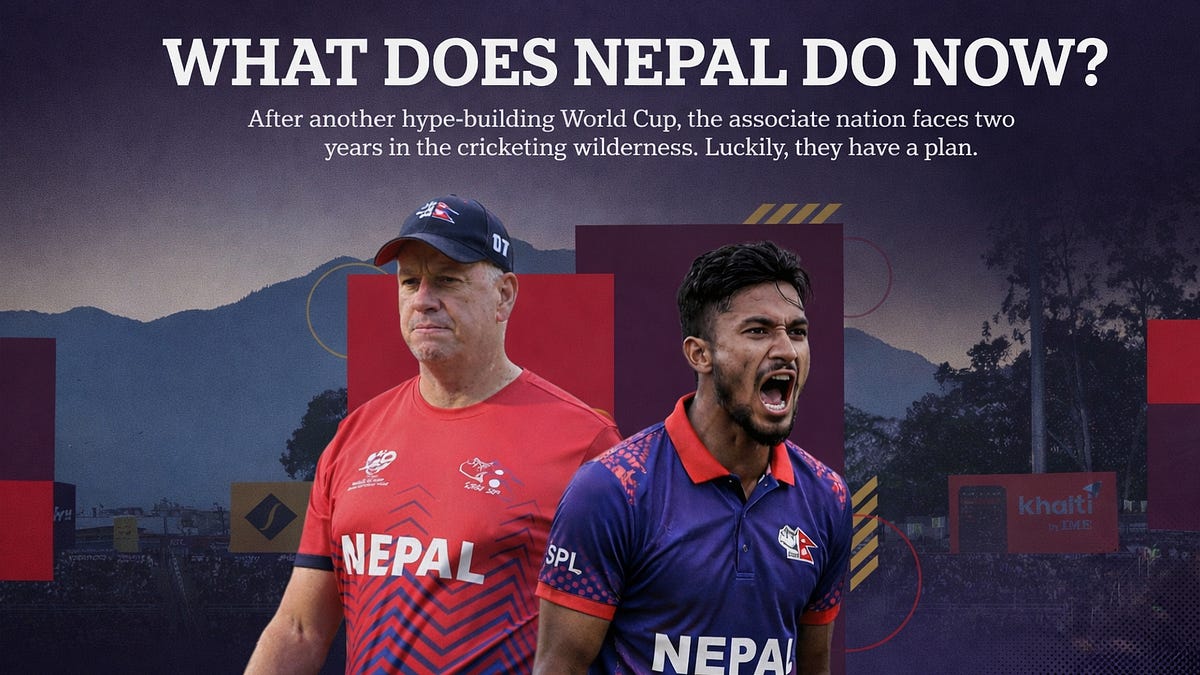
Paras Khadka is Nepal’s most famous cricketer, and the man who runs their cricket administration today. In November 2025, what made Khadka work 20-hour days was staging the second season of the Nepal Premier League.
“There were a lot of protests planned [in November, when the NPL was to start]. But we told those who were planning the protests to please stop, because NPL is not just limited to Nepal,” says Khadka. “It’s a product that the whole world is watching. It meant that for the span of 27 days that the NPL was played, there was no protest in the country. Everything stopped.”
The NPL would be held without a single problem all through November. In Nepal, cricket is a more unifying force than Gen Z fury.
On the first delivery of his first over in his first official Nepal game, Sher Malla induced a thick outside edge to dismiss Phil Salt. The Cardiac Kids weren’t here to just make up the numbers, they were here to win. And, if it weren’t for that darned Sam Curran, they would’ve gotten away with it too.
While the World Cup group stage didn’t deliver on its early promise for Nepal – or Malla, who didn’t play another game – the country made a statement. They are on track to be the next great South Asian side, ready to grab any opportunities to make the step up to Full Member status.
But, that was true 18 months ago too. Although largely forgotten now, Nepal had a very similar campaign in 2024. They pushed one Test nation to the limit – losing to eventual finalists South Africa by one run courtesy a last ball run out – then fell apart against the other teams in their group.
In the intervening period, Nepal have played 24 T20Is and just 3 against a Full Member side – a 2-1 series win vs West Indies. In comparison, 2026 surprise package Zimbabwe have played 41 T20Is since the last World Cup, including 28 against Full Member sides.
More cricket, against quality teams, is a perennial problem for Associate cricketers and teams. How are they supposed to catch up on multiple years of international isolation in four group stage World Cup games?
And, more importantly, what are they supposed to do once those four games are over?
“ODI status means you have immunity for four years,” says Paras Khadka.
Khadka is Nepal’s greatest cricketer. He famously stayed with the sport through the 2000s and 2010s, as he saw teammate after teammate leave to make more money in other fields and other countries. But, he stuck around, and saw Nepal through the wilderness – first as a player, then as captain, and now as secretary of the Cricket Association of Nepal (CAN).
When Khadka started playing in 2004, Nepal was in Division 5 of world cricket. The way to progress through the ranks is to finish in the top two of your division, and earn promotion to Division 4. Repeat that to go one higher, till you reach Division 1. Once you get there, you get ODI status.
Nepal achieved ODI status in 2018 so, as Khadka points out, “we only started getting money from 2018.” And that money is not massive: Nepal gets $1.8 to 2 million per year. For perspective, one IPL game earns $14.5 million from just broadcast revenue. Add in extra revenue like ticketing and sponsorship value, and it is safe to assume a single IPL game earns 10 times the annual budget of a Division 1 Associate nation.
Nepal needs funds to build infrastructure from scratch. They need practice facilities across the nation, coaches and umpires and scorers across age and gender groups, and stadiums with floodlights and hospitality boxes and broadcast booths. And, they need to pay for the association’s rank-and-file employees to run it all.
In October 2025, the Nepalese government approved the expenditure of NPR 10 billion ($68.9 million) to upgrade the Tribhuvan University (TU) Ground, making it the first international quality cricket stadium in the country.
Nepal is lucky that their government was willing to pay for the stadium, and has designated it a ‘National Pride Project’. Without their help, it would’ve taken Nepal 34 years to pay for just those upgrades via their annual ICC income.
Nepal went through a massive political upheaval in September 2025, as the Gen Z protests re-structured the political hierarchy in the Himalayan nation. So, why would a fragile government approve such a big expenditure on cricket?
Because, Nepalis love cricket.
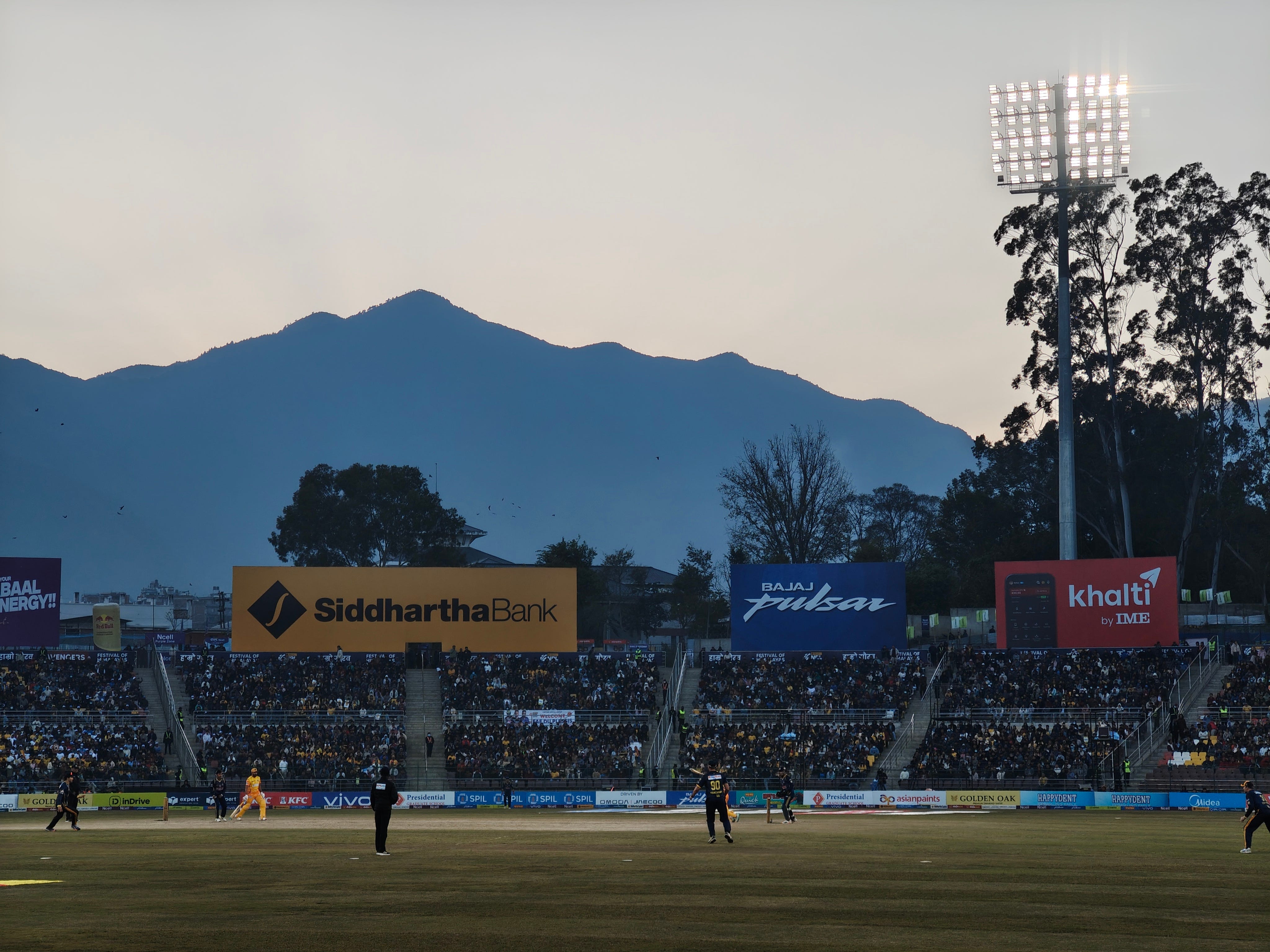
The fandom runs far and wide across the country. The TU Ground seats 12,000, but to attend a match there is to feel like you are in a stadium of 50,000. Every team is cheered. Every great moment is enjoyed. Set against the mountains as a backdrop, it’s a bucket list cricketing experience.
Andrew Leonard, an Irish broadcaster and long-time advocate of Associate cricket, has brought Nepal cricket to the world long before it was fashionable to do so. His love for the country has been reciprocated by the locals, and he has been accepted as one of their own.
“[Cricket] really is such a beacon of national pride for them,” Leonard reflects. “It’s one of the only things that you see Nepal doing on the global stage, outside of its fame for its mountaineering and its peaks and the Himalayas.”
“Huge swathes of Nepali people have had to emigrate to Australia, to America, to Europe, to Japan, and the diaspora are now giving back to the country. They want to see a brighter future for the country. What’s the only thing that they’re seeing really giving them joy and happiness on the global stage? It’s their cricket team. So, yes, the national men’s players in particular, and indeed now some of the women’s players, are becoming absolute heroes.”
This is reflected in their team’s constitution as well. Nepal is among the very few Associate nations who can put out a team of entirely home-grown players. They’ve not needed to rely on expats from other cricket playing nations to put together competitive 15-player squads.
But, those cricketers – even prodigies like the Salt-killing Sher Malla – will only be competitive if they can play regular cricket between World Cups.
When the NPL was born as an idea, Khadka went to every big business he could think of to ask them to buy franchises. The initial plans by CAN were cautious. They thought there would be enough interest for six teams, and it could be expanded later to eight teams.
“I must have met between 50 to 100 people,” Khadka says. “One thing that I have managed to earn is respect, which I am trying to turn into a tangible conversion of people investing into cricket. I met with almost every business house in the country, the who’s who, and tried to convince them that cricket needs investment.”
“When we opened the bid for team ownership, we had 18 interested groups. We finalised that to eight teams. I wanted it to be a six-team structure to start off with, and maybe add two more teams after the third season. But the demand was such that we had to incorporate all eight teams, and especially all seven provinces had to be represented.”
The NPL started with eight franchises, all owned by consortiums. The financial model is that each owner has a 10-year contract with the NPL, which can be renewed if they wish. Each one pays a franchise fee yearly. “Everything that we generate, 50% is given back to the teams. So, whatever CAN makes from tickets to commercial revenues, 50% goes to the eight teams and half of it stays with the cricket association,” explains Khadka.
Including franchise fees, logistics, NPL auction spends, Khadka estimates each franchise spends about NPR 6 Crore ($413K) per year. That is close to NPR 50 Crore ($3.44 million) from all eight franchises combined. Significant money.
However, life can’t be that easy. Not in cricket.
To combat the mushrooming of unstructured, and sometimes ungoverned, leagues that are springing up all over the world, the ICC has a rule which hinders the existence of legitimate, burgeoning leagues like the NPL.
Only 4 current internationals from Test playing countries [who have played for their nation in the last 2 years] can take part in the NPL. There is no limit on the number of retired players. That creates an obvious dilemma because the NPL has 8 teams.
In response, the NPL franchises have come up with a unique long-term agreement. The 4 current internationals will be picked via a lottery system, with each team getting an advantage in different years. What could’ve been a source of frustration and resentment has instead become a point of collaboration.
Meanwhile, CAN has made overtures to the ICC to sanction more current players for the NPL. They have filled in the forms and sent every detail the ICC has asked for. As of publication, the international governing body needs to review their compliance and send an observer before it can grant the NPL the right to sign more than 4 current internationals.
In its first year in 2024, the NPL made NPR 25-27 Crore (~$1.75 million). In season two, that figure jumped to NPR 40-45 Crore (~$3 million). That’s a bottom-line revenue growth of nearly 80% in one year, from an already high base for an Associate nation league.
All of that money is being reinvested into Nepal cricket, after the eight NPL franchises have received their shares. You don’t have to be a math genius to figure out that this could establish a strong parallel stream of income for CAN, which will make them a lot less dependent on the ICC’s handouts.
There are other indicators of the growth of the NPL. “In the first year, we had ticket sales of 4.5 Crore ($311K). This year, we hit 10+ Crore ($689K),” says Khadka.
Additionally, because of the NPL auction, cricket is a much more viable career option for the locals. Earlier, it was sustained only by passion. Now, there’s security too.
There are brackets of NPR 5 Lakh (~$3,500), 10 Lakh (~$7,000), 15 Lakh (~$10,500) and 20 Lakh (~$14,000) for the players in the NPL auction. The lowest brackets are for the emerging players. The international players, who are signed directly, see their salaries go up to NPR 25-30 lakh (~$31,500).
Considering the average salary in the nation’s capital is NPR 10 Lakh, this gives young players a chance to pursue their dream without sacrificing a living. And, the dream is realistic. The NPL has already discovered and promoted one young talent to the national team.
The 23-year-old Sher Malla was always a promising young off spinner, but the 2025 NPL gave him a chance to shine on the biggest stage. He took a league-high 17 wickets for the title-winning Lumbini Lions, including 3/22 in the Eliminator, 1/31 in Qualifier 2 (of Faf du Plessis), and 3/18 in the final.
Two months later, he lined up for Nepal in their biggest game in 18 months and got Phil Salt on his first ball.
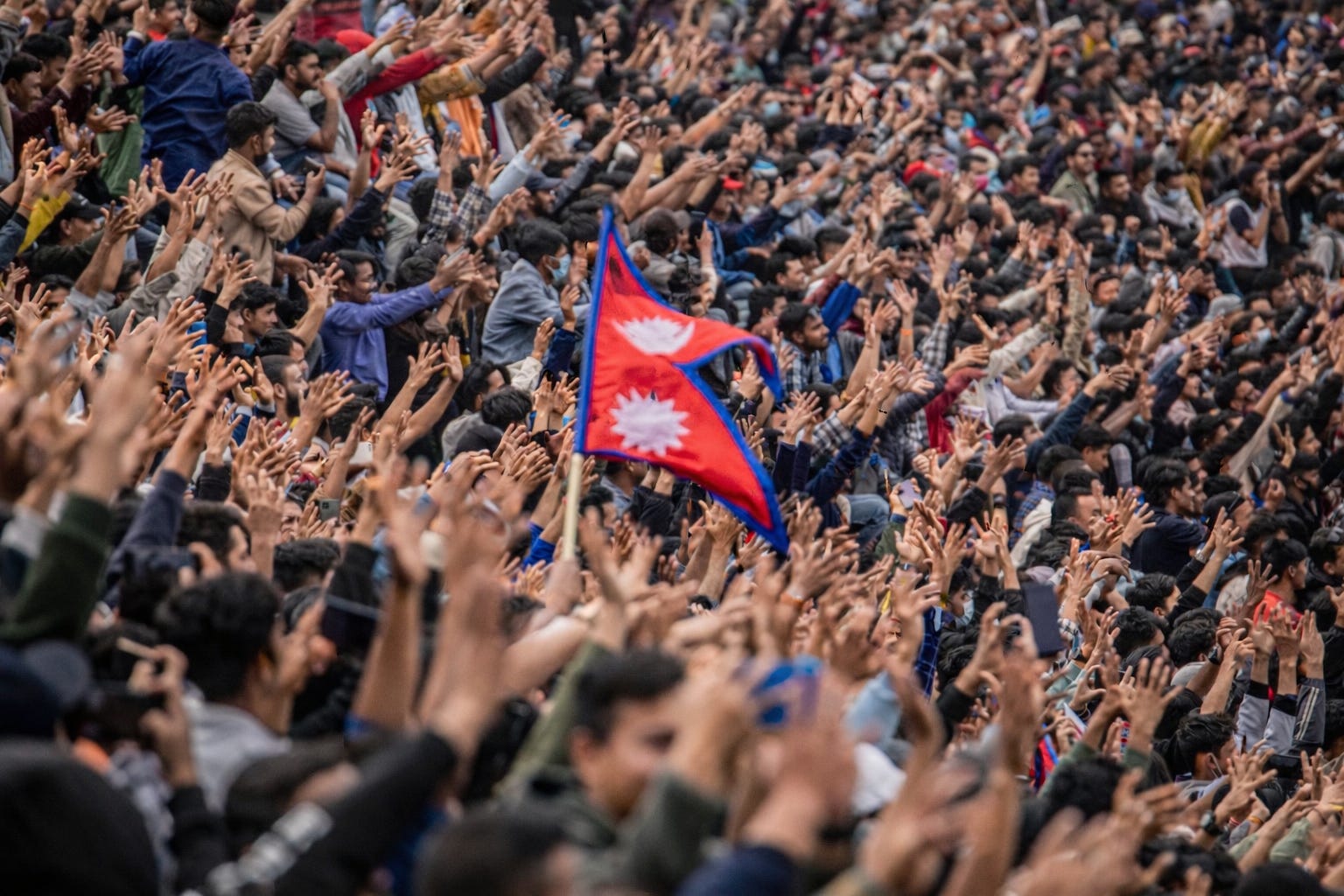
Nepal had all their T20 World Cup games at the Wankhede Stadium in Mumbai, and on match-days, one of the most famous stadiums in the world was unrecognisable. It still looked like the Indian coastline, but felt like the experience of the Nepali mountainside at the TU Ground. The stands were packed with Nepal fans who had come from all over the world to support their team.
And it’s not just because this tournament was in neighbouring India.
Nepal captain Rohit Paudel remembers the reception they got in the USA during the 2024 edition. “It was incredible,” Paudel remembers, of their first game against Netherlands. “I didn’t expect a lot of people to come to the US. It was our first game. If you see that crowd, it was, if 100% were there, 98% were Nepali. Like Logan van Beek said, ‘I don’t know if we are playing in Dallas or in Nepal.’”
With this level of global support, it can be forgotten that Nepal is still a young cricketing country. They only began playing in 1996, just 30 years ago.
“With our fan following it looks like we have a very strong cricketing set up but right now every World Cup is an achievement for us,” says Khadka. “From our structure and potential, we’ve always punched above our weight.”
Proximity to India helps them maintain this interest. There is an open border between the two countries, with no visa restrictions. A lot of Indian television is beamed across Nepal, and cricket has naturally formed a big part of the audience’s diet. Which means Nepali fandom is more comprehensive than just a love of their own stars.
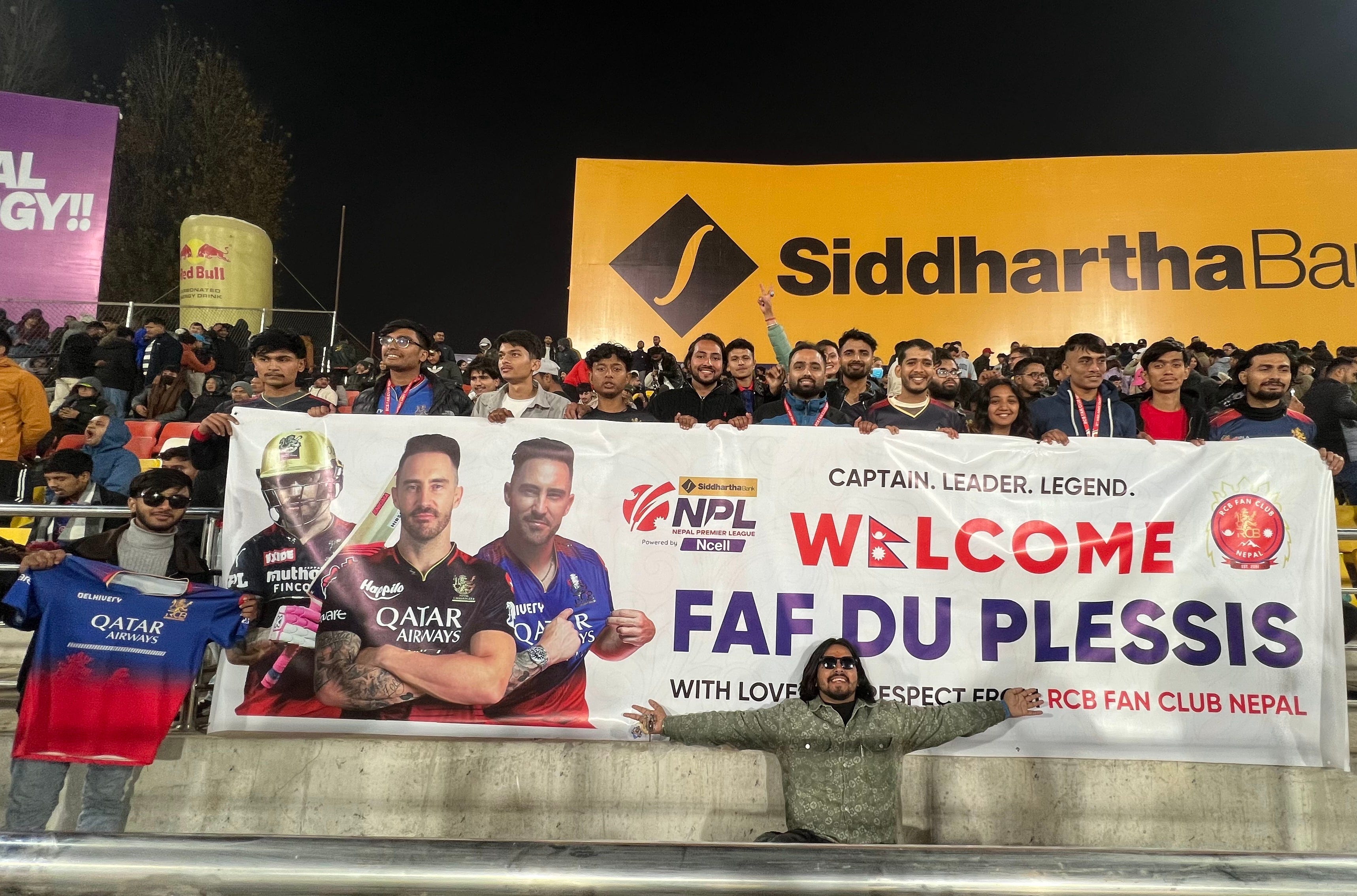
In late 2023, a RCB page for Nepalese fans was set up. Today, it has 44,000-plus followers on Instagram. The fan club has a board with a president, a secretary, media and PR managers, a marketing manager, a community engagement expert, and more.
It’s a professional set-up. Except those running it aren’t paid for it. They do it out of a love for RCB, and around their regular lives at work or at university.
This flow of cricket media is not the only subsidy that India has provided. “They have supported us well over the last two years,” Khadka says. “They helped us with tours to the Centre of Excellence in Bangalore…[and] in terms of training facilities. Before the 2024 World Cup in the US, we were there in Bangalore. Recently our A team was in Assam, playing against state teams.”
While Khadka is grateful for the support given so far, he knows what he wants next: and that is more regular cricket. “Help us with coaching, get more tours, maybe matches against India A,” he says. “All of that has been discussed. Eventually, a match against India would also be of massive significance.”
“The geopolitical relationship that the two countries have and the passion for cricket that our people have… it’s almost like what cricket is in India is what cricket is in Nepal now.”
Nepal has all the ingredients to succeed. A good, young generation that is capturing the imagination. A government that is ready to back cricket. A competent and driven national association. A franchise tournament that is on track to be a success financially as well as in cricketing terms. A neighbour with a history of helping the neighbourhood, who could also do with some friendlier border relations.
And, most importantly, a fanbase that loves cricket so much, they were willing to stop the overthrow of their own government to watch a few games. Or, well, at least pause the revolution until Sher Malla led the Lumbini Lions to the title.
It’s a collection of small steps, through which Nepal is preparing for the day when a giant leap will be possible. It’s an uphill climb, but they’re used to that in the country that lies at the foothills of the Himalayas.