
Warming up from the Northern End is Novak Djokovic. At 38-years-old, and with 24 major titles, his position in the pantheon of sporting legends is secure, and yet, his five-set win over Jannik Sinner in the semifinals was of such class and improbability that he somehow added to his legacy in those 4 hours and 12 minutes: 16 of 18 break points saved — often with clutch serving, a monster forehand performance, and a degree of court generalship that only comes with decades of big match experience.
There’s something of an irony to Djokovic’s greatness; to the casual viewer it’s difficult to appreciate what he does so well because it is buried in the milliseconds of his technically perfect backswings and subtle change-of-direction through the 19.8 degrees a baseline rally affords any one player.
Make no mistake, the man has “fuck you” levels of talent, but he has approached his craft with an obsession to the fundamentals that leaves little room for the kind of flair that can win the hearts and minds with brief exposure. “Relentless” might best describe his style. It rarely seduces at first glance, but ten titles and 21 visits later, to watch that same precision-driven relentlessness go toe-to-toe against younger foes has become the clearest expression of Novak’s greatness, and the easiest to appreciate. Look at the quality of these line drives and serving accuracy when faced with break points in the fifth:
Taking volleys from the Southern end is Carlos Alcaraz. He is 22-years-old. He doesn’t know it yet, but by evening’s end he will be the youngest men’s player ever to achieve the career Grand Slam. He escaped certain defeat in the semifinals, working through cramps to outfox Alexander Zverev in 5 hours and 26 minutes. Whereas Novak is famous for being clutch on big points with “lockdown mode” — an attritional baseline tactic — Alcaraz sees the game differently:
To label him as an all-court player somehow sells it short:
“Well, he’s very good at the drop shot.”
“Ah, so he’s one of those underpowered tricksters, like Moutet!”
“His forehand is the biggest in the game.”
“Huh. A typical modern clay-courter!”
“He’s won Wimbledon twice already.”
“Well, Wimbledon is won from the baseline now.”
“He has the best volleys on tour.”
“…What?”
“His defensive slice backhand is literally a weapon.”
“That doesn’t make sense.”
“I know.”
Nothing makes sense with Alcaraz. You kind of have to invoke Schopenhauer and leave it at that: “talent hits a target no one else can hit. Genius hits a target no one else can see.”
With the warm up complete, Djokovic picked up where he had left off in the semifinals, absolutely melting the down-the-line forehand in a “This is My Court” mood:
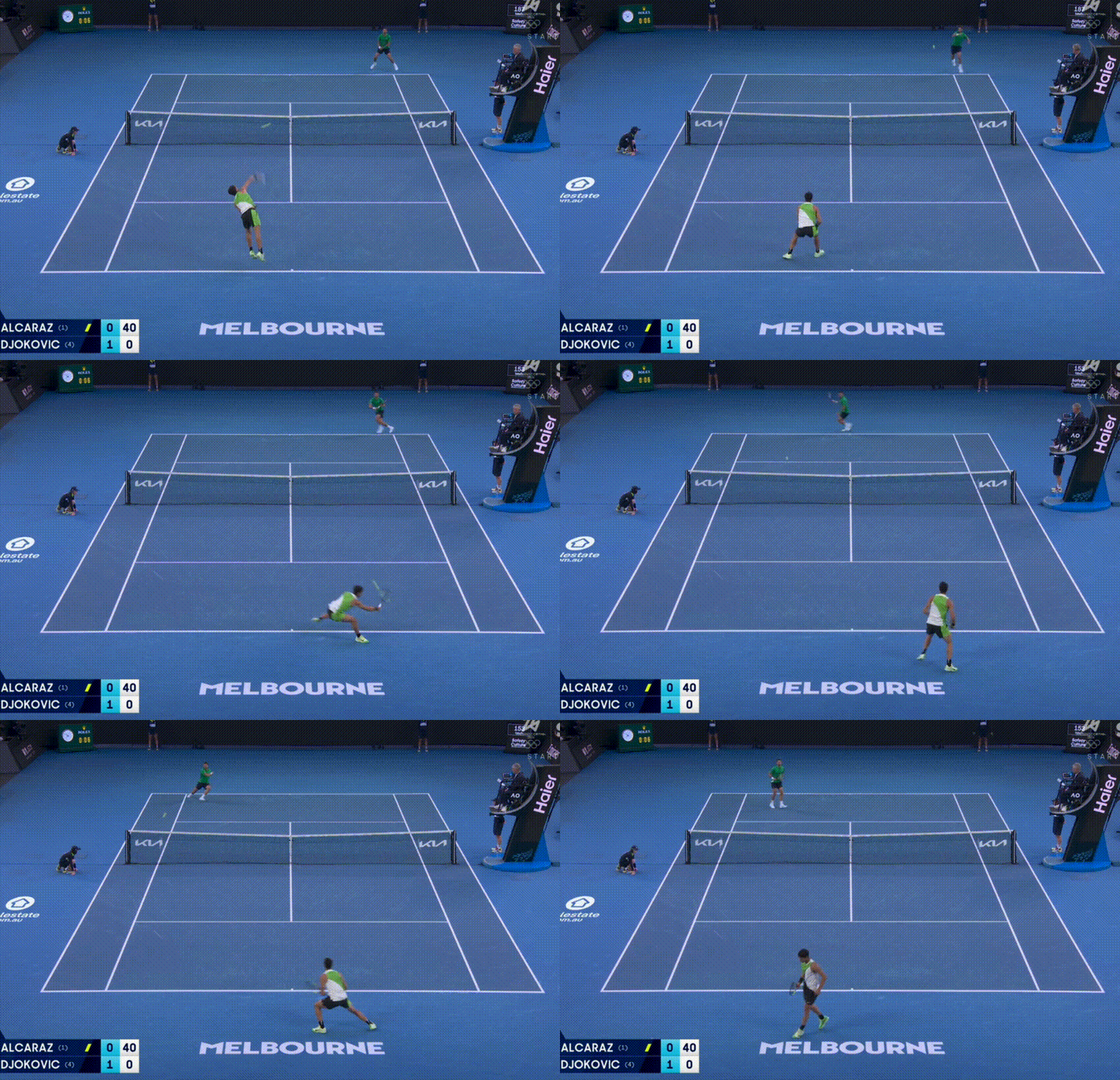
Mark Petchey: “Interestingly enough, Novak’s gone down the line 55% with that forehand throughout the course of this tournament. Down the line more often than cross court.”
And while Alcaraz was timing the ball sweetly, this played right into the Serb’s hands, as he could redirect all that pace with a depth and weight of shot that was impossible to contain, even for the world number 1:
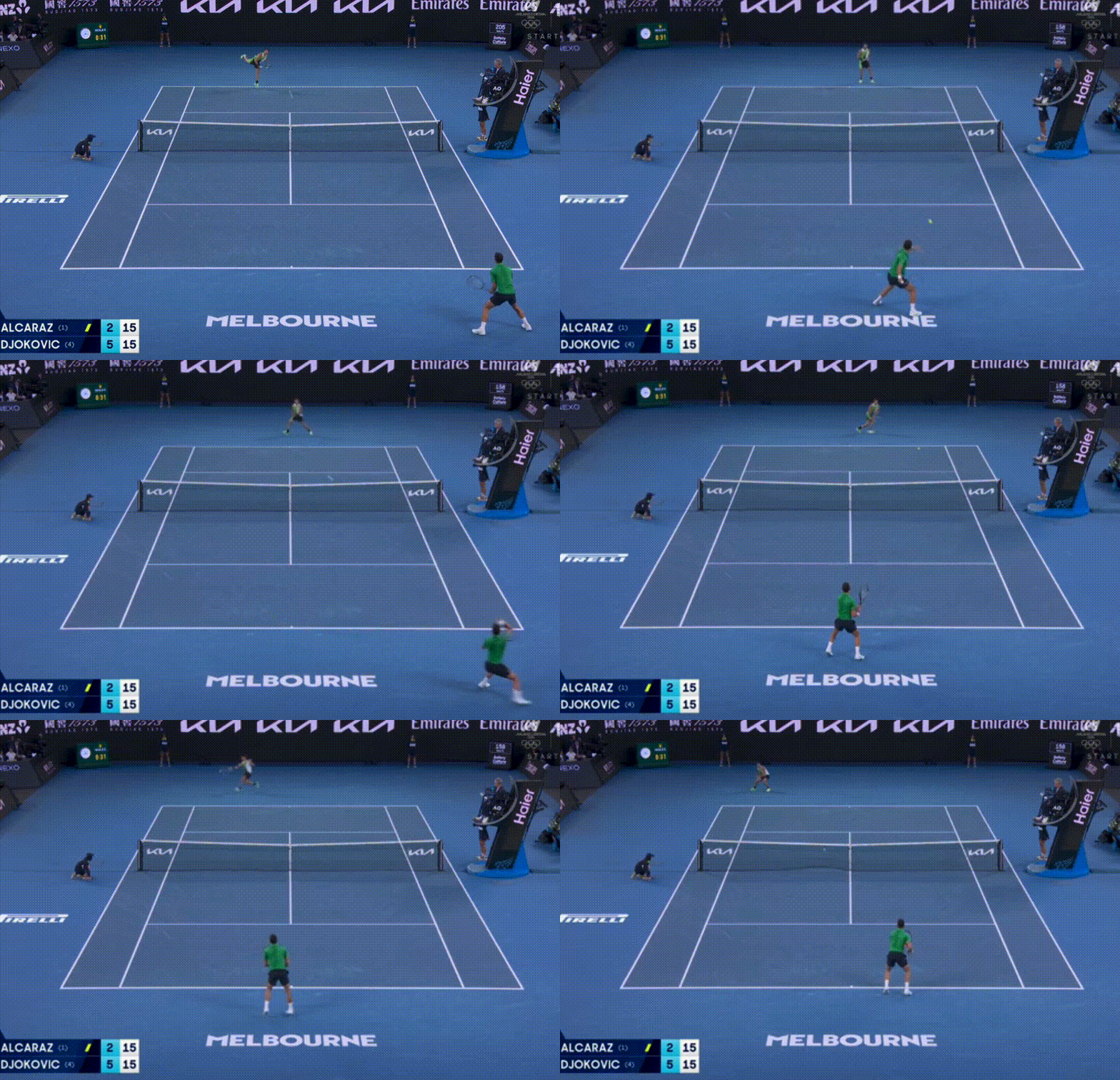
Wally Masur: “Novak is punishing the ball and hitting it so hard and flat that it’s not actually allowing his opponents to change the shape and hit from low-to-high.”
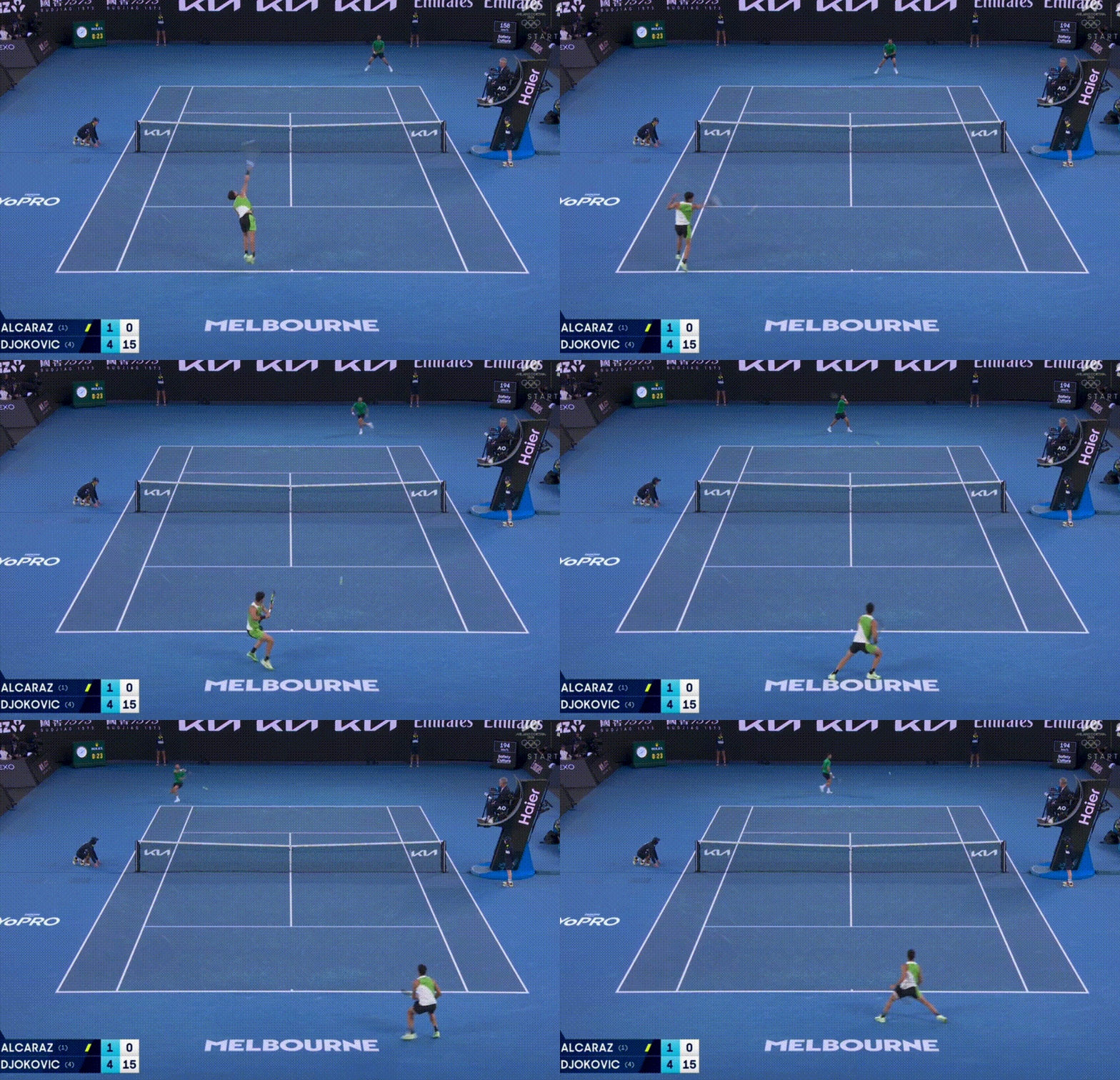
The first set was essentially peak Novak. The cool evening Dunlop ball on Melbourne’s acrylic hard courts puts the ball right in the Serbian’s pocket, granting him a mix of aggression and precision that has been unstoppable in finals until tonight.
But it’s called red-lining for a reason, and Novak’s level dropped off considerably at the start of the second, misfiring on the forehand with poorer footwork, dropping his serve speed by 7 km/h, and falling behind an early break. Six sets of Sincaraz in one weekend was starting to take its toll on his late-thirties body. At the same time, Alcaraz was mixing in some different looks on return, moving back behind the Melbourne sign in a bid to get out of linear duels:
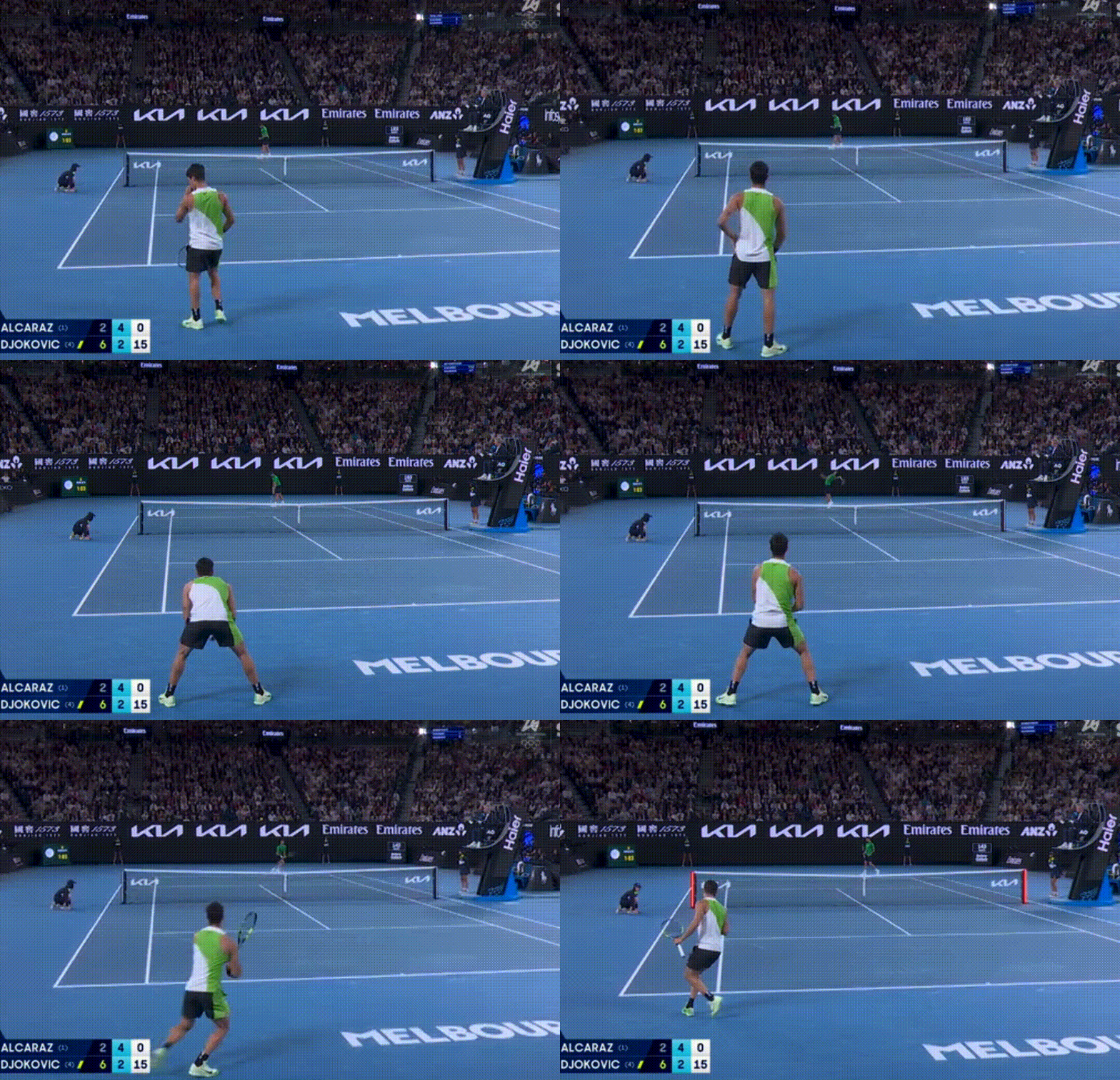
And this backhand battle was an interesting one to highlight, as you can see how much better Novak strikes the ball when he can wrestle his opponent into a flatter, one-speed game by virtue of the depth and speed he hits at:
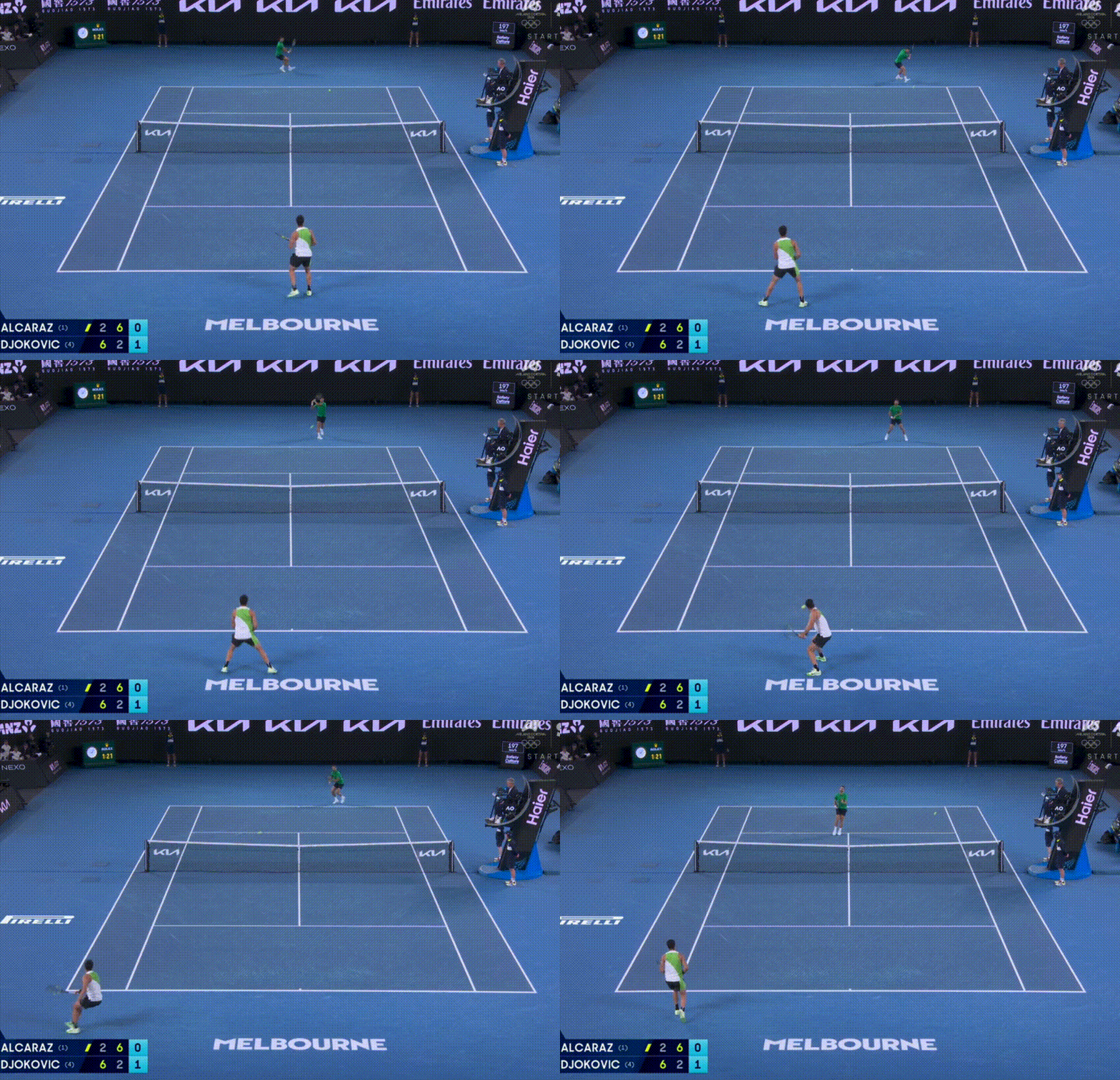
Similar to his semifinal win, Djokovic was picking his moments of when to conserve energy, and when to step on the pedal. At 2-1 30-30 in the third set, he sniffed blood and brought that first set ferocity to the point, smoking a couple of balls into the Alcaraz forehand, but the Spaniard was equal to the task this time, rolling a wicked angle to pull Djokovic way off the court for a forced error:
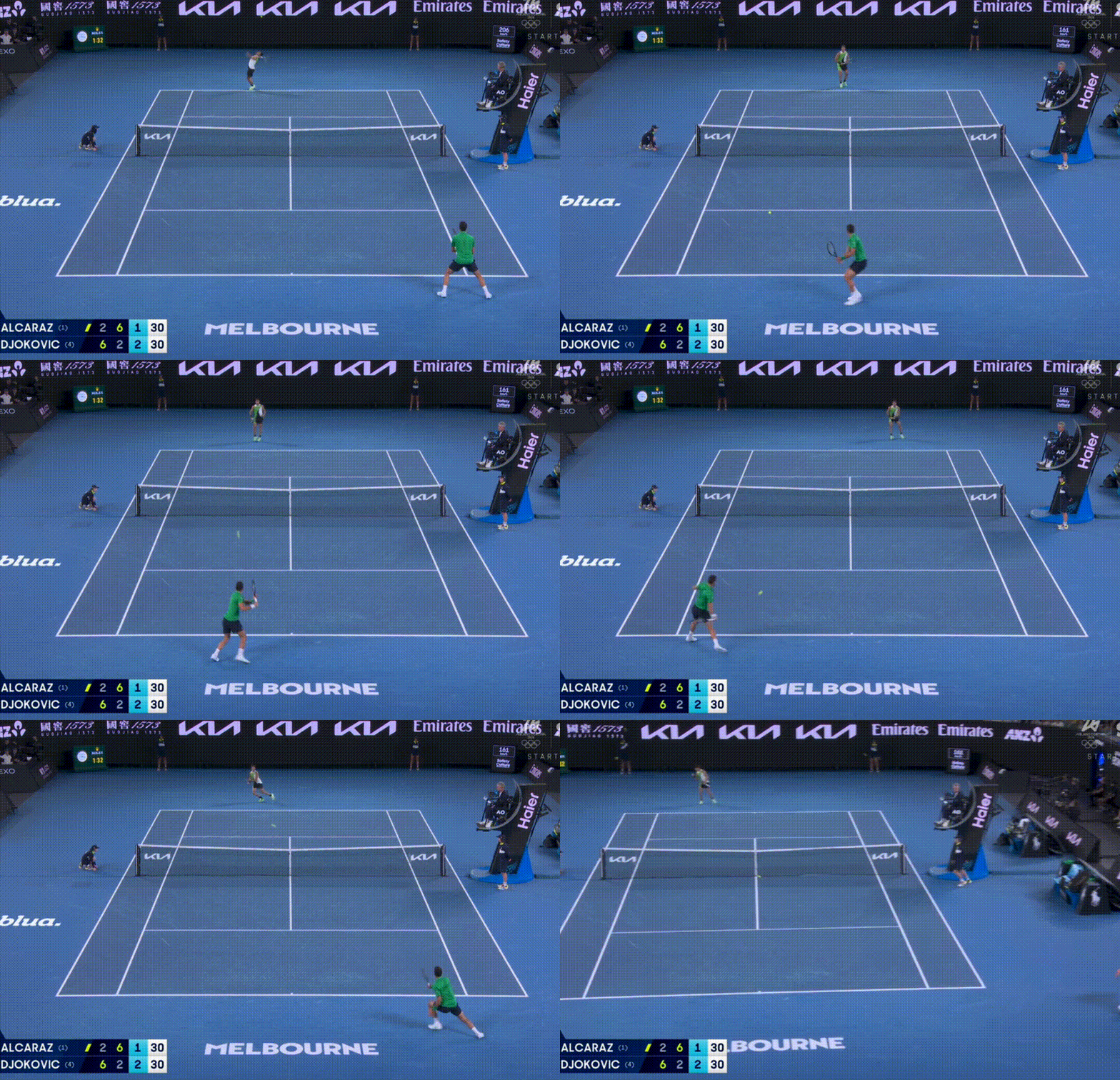
It was a pivotal moment, because Alcaraz held there, and the physicality of these points bled into Djokovic’s service game, where Alcaraz again secured the break with another sideline-breaking forehand angle:
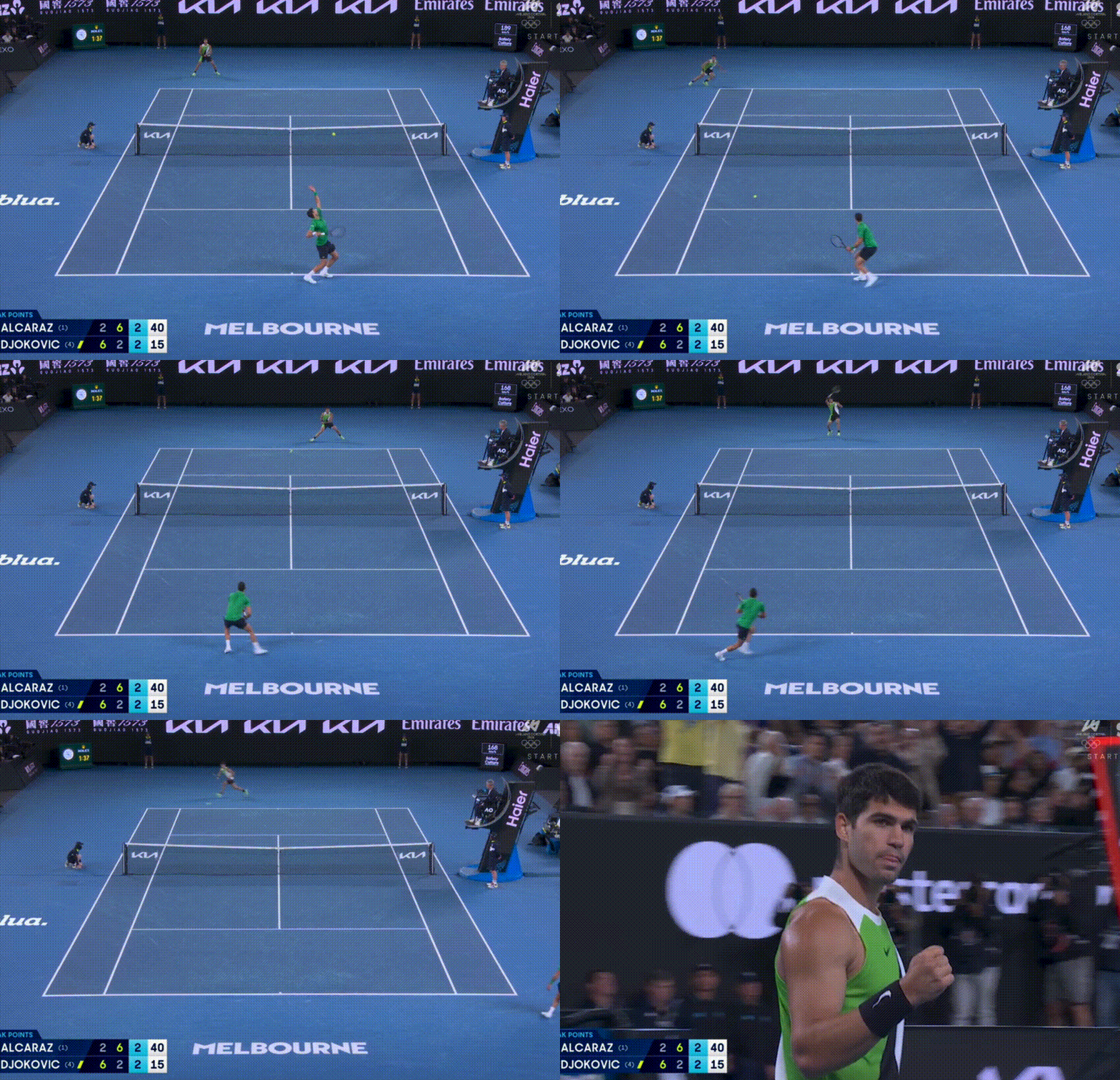
Djokovic was getting to 30 in Alcaraz’s recent service games midway through set three, and the efforts made in the opening points — legs and lungs fresh off the changeover — pushed Alcaraz to defend, absorbing the blows using that Fed05 footwork on the forehand, and a nicely weighted short slice:
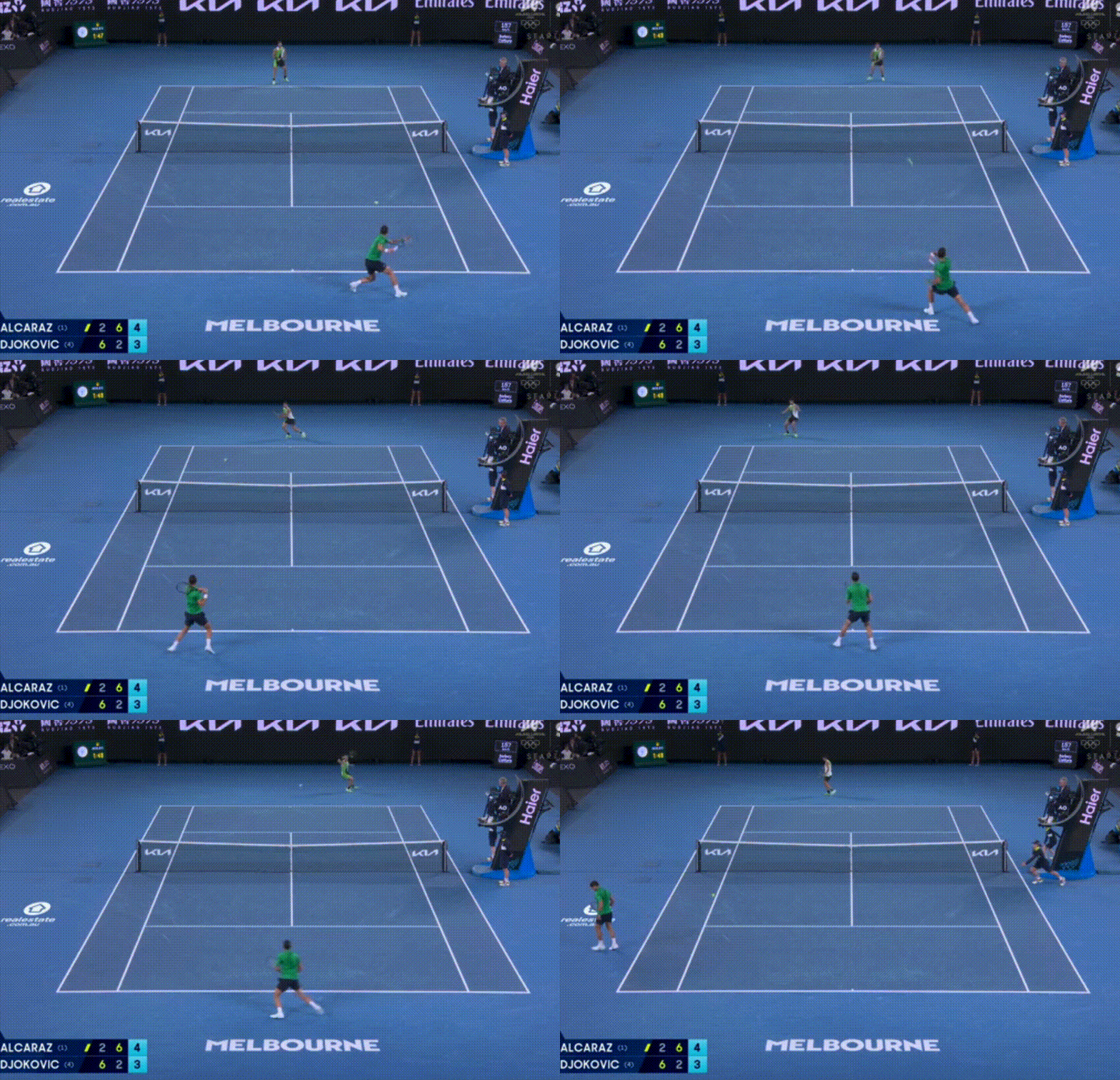
Wally Masur: “Last time Novak was at this end he made a big investment to try and affect the break. This is the end that if you get neutral in the point you’ve got a little bit of breeze at your back and you can get in the ascendency.”
Alcaraz held and broke Djokovic again to take the third set.
The defense and rally tolerance from Carlos in the 1-0 Djokovic service game of the fourth set was seriously good tennis: numerous defensive slices, end-range flighted forehands, Musetti-looped returns and lobs. He earned six break points and Novak found the aggressive answers each time. The highest quality game of the match that earned a roar from the crowd when Djokovic finally held.
And speaking of roars, when Djokovic held for 4-4 and then won the opening point of Alcaraz’s serve, he whipped the crowd into a frenzy, leaning on their energy to manufacture his first break point in over an hour. You started to wonder: could he do it again? It’s probably the biggest regret of the match for Novak, who missed a regulation forehand long on that break point. Two points later and it was Carlos getting the applause for holding.
One of the things Djokovic was so good at in his prime was taking opponents to deep waters physically: side-to-side, the legs getting heavy, opponents drowning in their own errors. But Alcaraz, able to deploy so many tactics and shots, leveraged his 16 years of youth and gave Djokovic a taste of his own lockdown mode in the opening point of 5-6. An epic too long for a GIF:
That was an investment, because the next three points of Novak’s serve would be his last: a second-serve serve-and-volley bailout (but which Djokovic won), a second-serve into a +1 missed forehand, first-serve into a +1 missed forehand, a second serve +1 missed forehand.
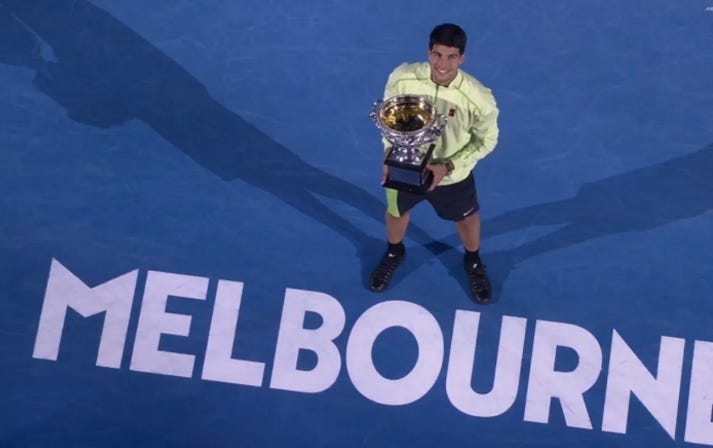
Djokovic’s legs were understandably shot, and Alcaraz was the new Australian Open Champion.
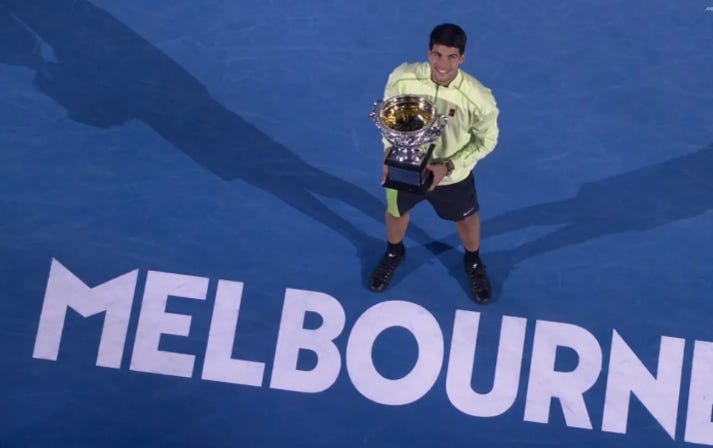
“Nobody knows how hard I’ve been working to get this trophy. I just chased this moment so much. Preseason was a bit of a rollercoaster emotionally.”
The speed with which Alcaraz is mowing down records is hard to grasp. To put some numbers into context: Novak was only on six slams when he turned 27!

Records aside, this match was yet another data point of Alcaraz’s shapeshifting abilities. Tonight he had to play the role of absorber, putting down his preferred attacking toys and just being tough, knowing that Novak was going to run out of legs and take undue risks. That he adjusted so quickly after getting smacked in the first set is hardly surprising at this point.
It seems every opponent, on every surface, is solvable for the Spaniard, especially in this best-of-five format. And perhaps the scariest thing for opponents is the rate of improvement. It’s worth remembering that Djokovic had a kink in his serve for two years before he finally managed to iron it out and slowly develop it into the incredible shot it is today. Alcaraz seemingly makes tweaks like an overnight IOS update: serves, forehands, backhands, footwork, styles. Add in the repeated success in big matches, and the ceiling becomes difficult to locate.