Published February 24, 2026 09:29AM
Pros
Bright and high resolution display
Fast processor
Big without feeling massive
20-hour battery life (60 hours in battery saver mode)
Integrated bell is actually useful
Real speaker that gives nuance to notifications
Garmin Pay
Replaceable mount tabs
WiFi Map Manager
Cons
Lack of colored data fields
You have to think about battery life
Group ride features aren’t useful
Hazard alerts aren’t useful
Garmin Edge 1050 Specs
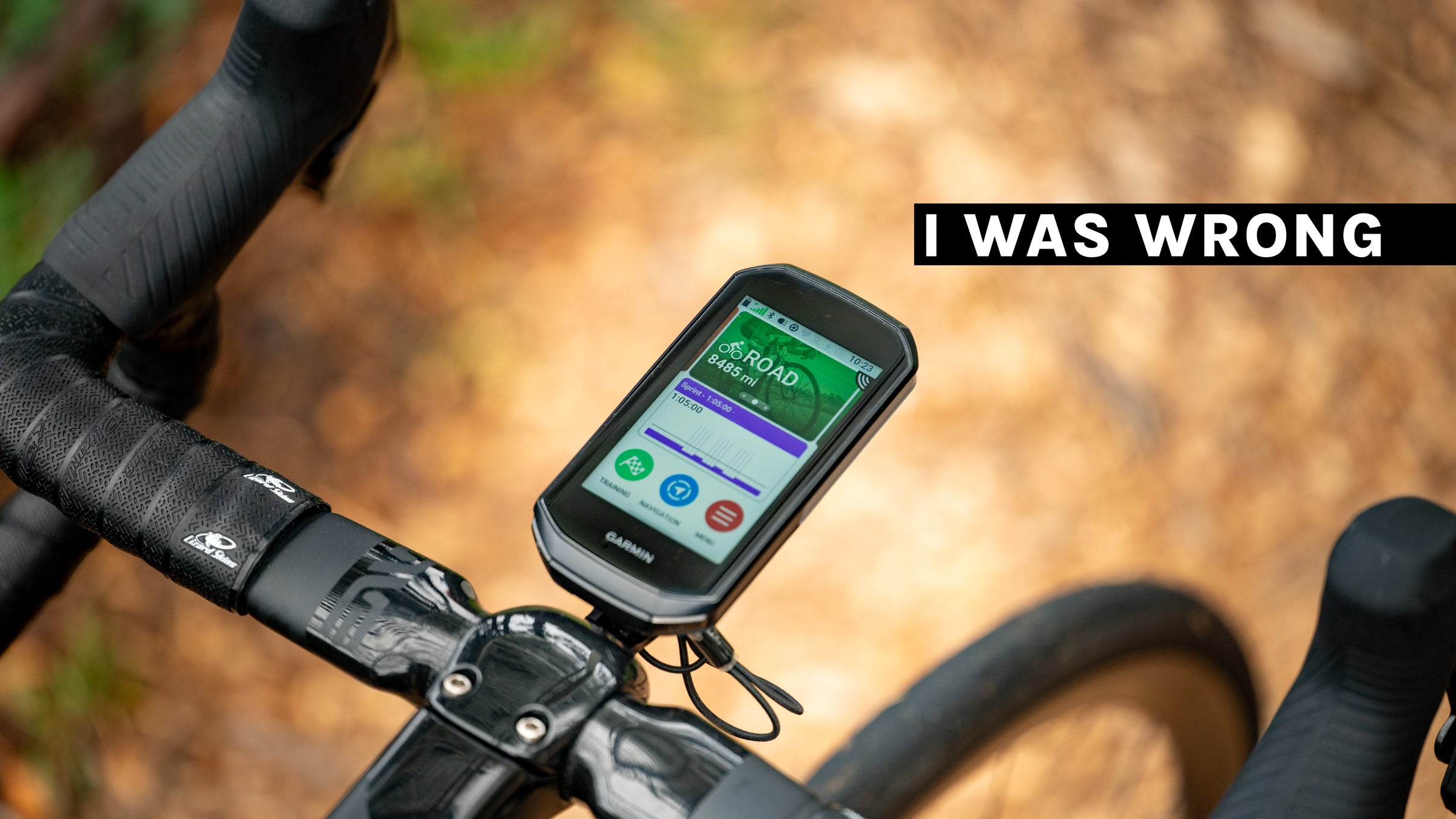
The Garmin Edge 1050 came out in June 2024 and I’ve been using it since the day it launched. After all this time, I am revisiting a device that might be the best bike computer available today. Obviously that will depend on what your specific needs are but let’s look at it again with the benefit of hindsight.
At first glance, the deck is stacked against the Garmin. The big benefit the Edge 1050 brought to market was a brilliant new screen, and back then there wasn’t really anything quite like it. The Edge 840 and 540 were still the current lower-priced options and they were still using the older screen technology. The Edge 1040 Solar, again with the older screen technology, was also a very viable choice even if it was starting to feel a bit slow.
Outside of Garmin, the competitive landscape was also different. Both the Wahoo Ace and the Coros Dura weren’t available until later that year and that meant the 1050 really had no competition.
The biggest feature of the Garmin Edge 1050 was the high-resolution screen. It was the first time a major player challenged the position of the Hammerhead Karoo and the smartphone-quality screen it was known for.
Of course that beautiful screen was also power hungry and that meant the battery life took a nosedive. That wasn’t a problem because at the time you could still choose an Edge 840 or 540 (or solar variants) and, if you really wanted big numbers then the Edge 1040 Solar was your choice.
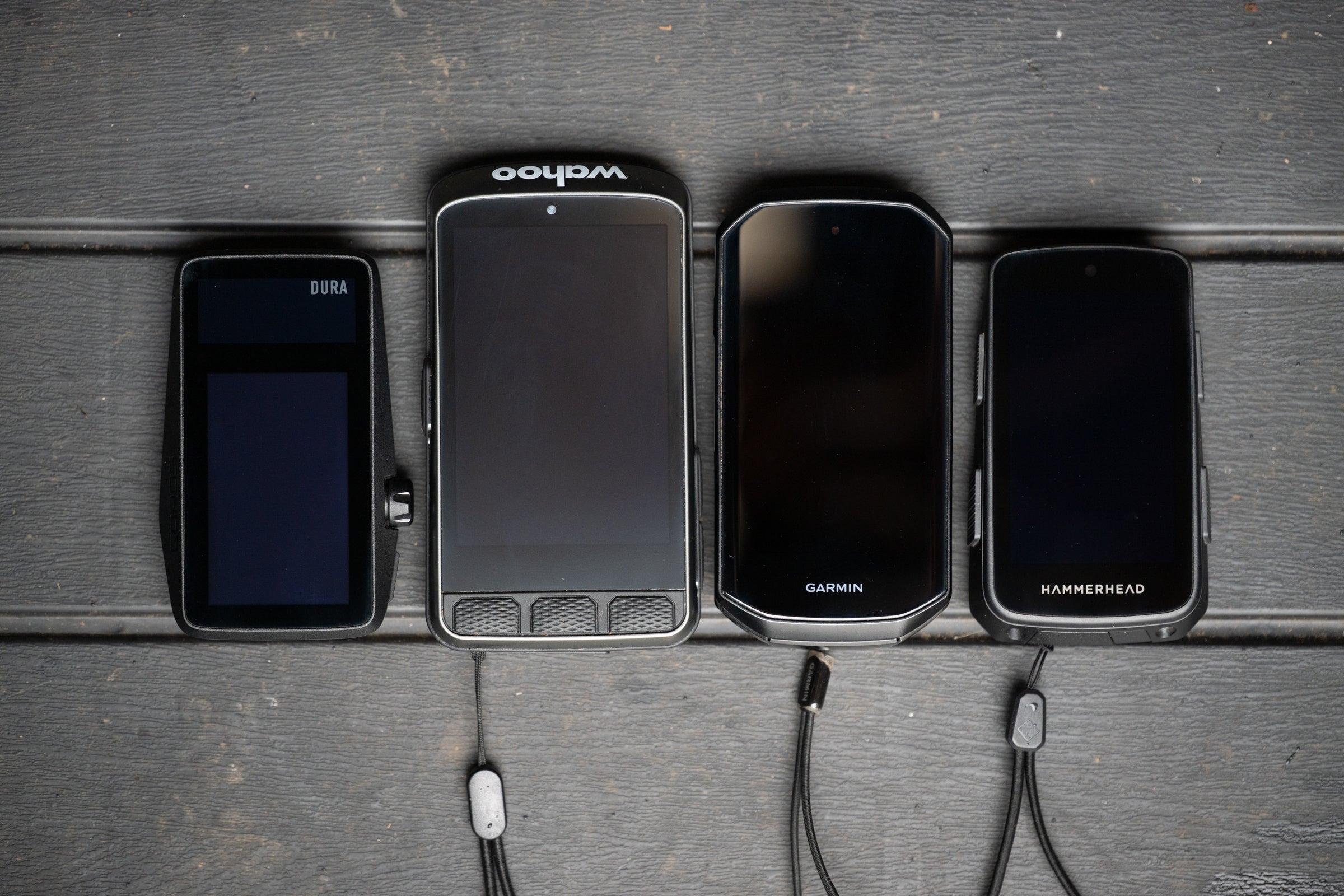
Then the Coros Dura and the Wahoo Ace came to market. The Dura is far and away the king of battery life but it makes some big sacrifices to get there. The Wahoo Ace on the other hand has very few sacrifices, aside from being huge, and still manages a massive 35 hours.
Then, in 2025, the Edge 850 and 550 launched from Garmin. Those units brought the better screen from the 1050 but also the reduced battery life. Now in 2026 you have other choices for big battery life from Garmin competitors and you’ve lost big battery life options from Garmin.
What you’re left with is a flagship product that doesn’t quite stand alone in the way it did at launch. Despite that the Garmin Edge 1050 still has a lot to offer.
What I like: Amazing screen
There’s no way I can honestly make the transition from that intro into a discussion about Garmin being the best hardware in 2026. It might very well not be the best for you. Battery life in the Edge 1050 is half what it was in the 1040 Solar, and while you can turn on battery saver to get 60-hours, that’s a reduced user experience.
Unfortunately Garmin had to make this change. The reality is that as time has gone on, the old processor that the Edge x40 series used just wasn’t able to keep up. If you go back and use those units, they feel incredibly sluggish. When the 1050 came out it was obvious the processor was the real change despite Garmin not saying much about that.
Instead, the gorgeous new screen was the focus but in reality that screen is only part of the equation. Upgrading the processor left the brand with a choice. Was Garmin going to go with good-enough screen quality or go all-in on screen quality?
Clearly the brand did the math and decided a best-in-class screen with good-enough battery life was the direction to go. That meant the battery life dropped but the screen really is incredible.
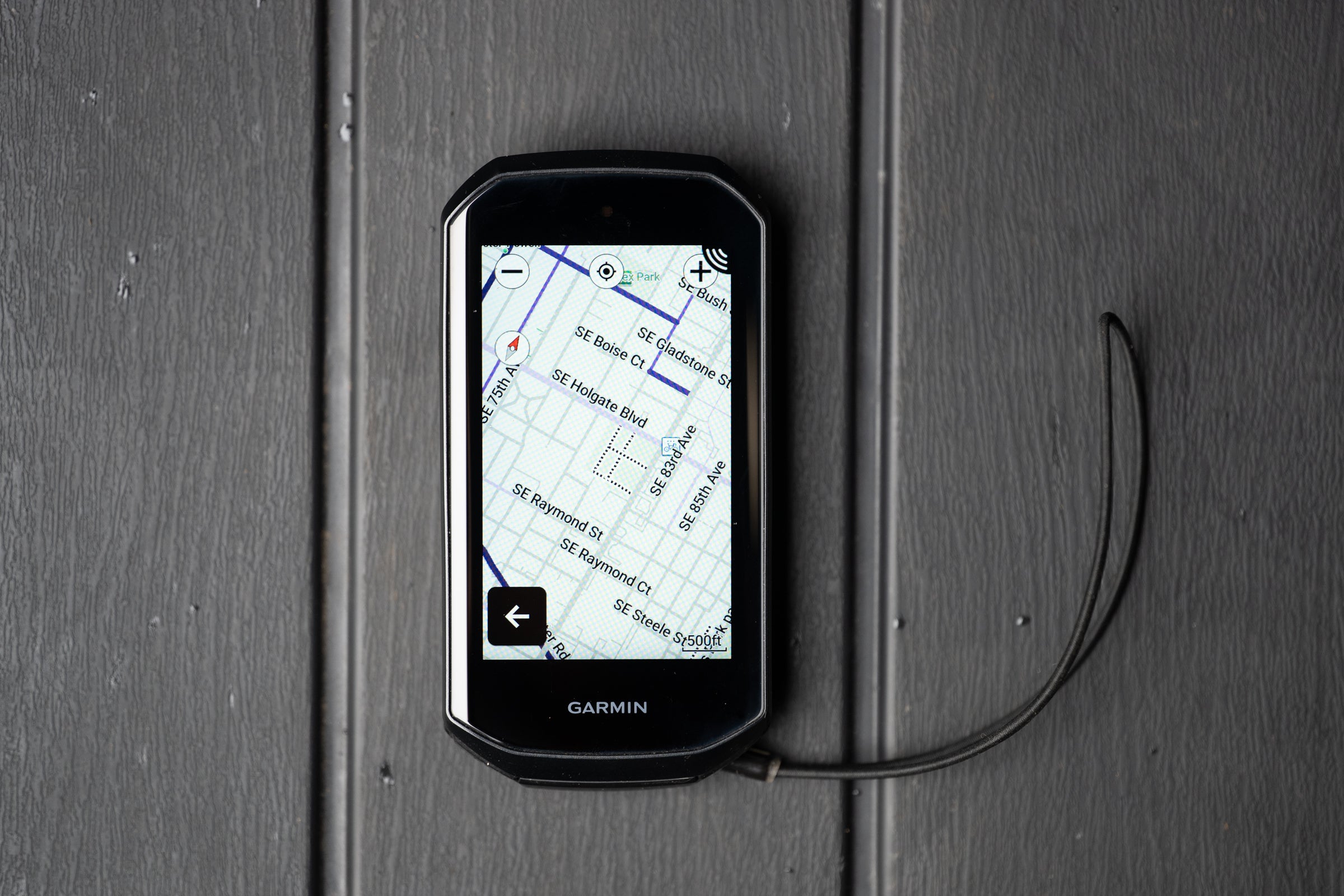
The first thing everyone notices about the Edge 1050 is the screen and it stands out not only on its own but also against the competition. The Wahoo Ace looks very good but if you put the two next to each other, Garmin looks a lot better. Especially on the maps where the Edge 1050 with its 3.5” and screen with 480×800 resolution looks much cleaner than the Ace with a 3.8” screen and lower 480×720 resolution.
The Hammerhead Karoo 3 is closer to matching the Garmin screen quality. That computer actually has 9% better pixel density, but it also uses a matte coating to reduce reflections, which kills the contrast. On top of that, the Garmin also feels faster with a much quicker boot-up. It’s also in this comparison that the battery life actually stands out as a positive. You could argue that Hammerhead is a better choice for the screen but if you need both a great screen and want long life, then the 20 hours on the Garmin looks pretty good.
This isn’t just about the screen though. Yes it’s gorgeous and it comes with enough battery to manage something like the Traka 360 or Unbound 200 but that might not be enough. The Wahoo screen is good enough and it’s got battery life to spare. Garmin still has one more trick though, the ecosystem.
But the ecosystem is what really gets you
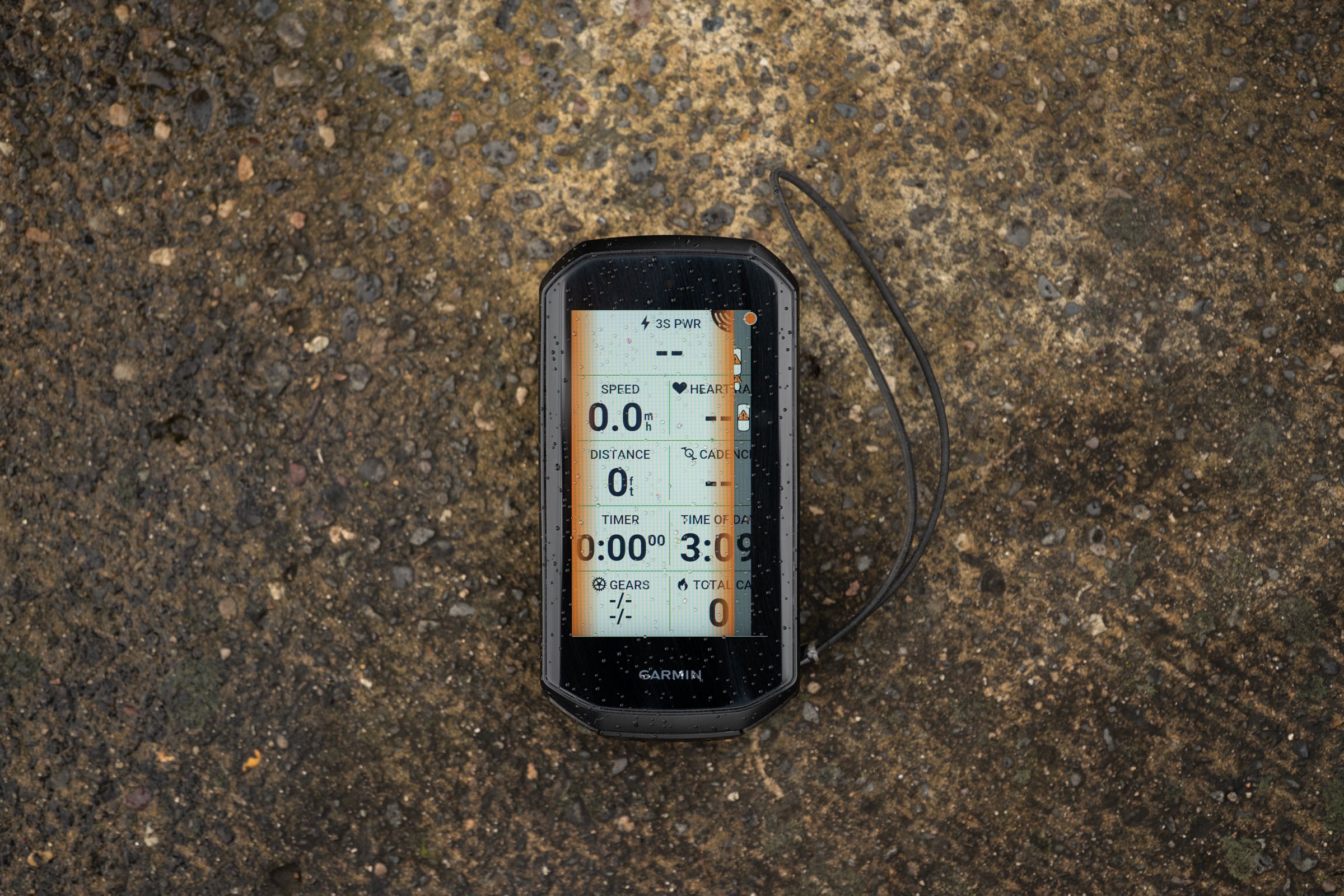
Garmin has never been about hardware only. The hardware is just the entry point but, like Apple, the idea is to provide a beautiful walled garden. Get yourself a Garmin watch also and you’ll have a closed loop ecosystem that updates in real time with Garmin connect seamlessly mixing the data sources.
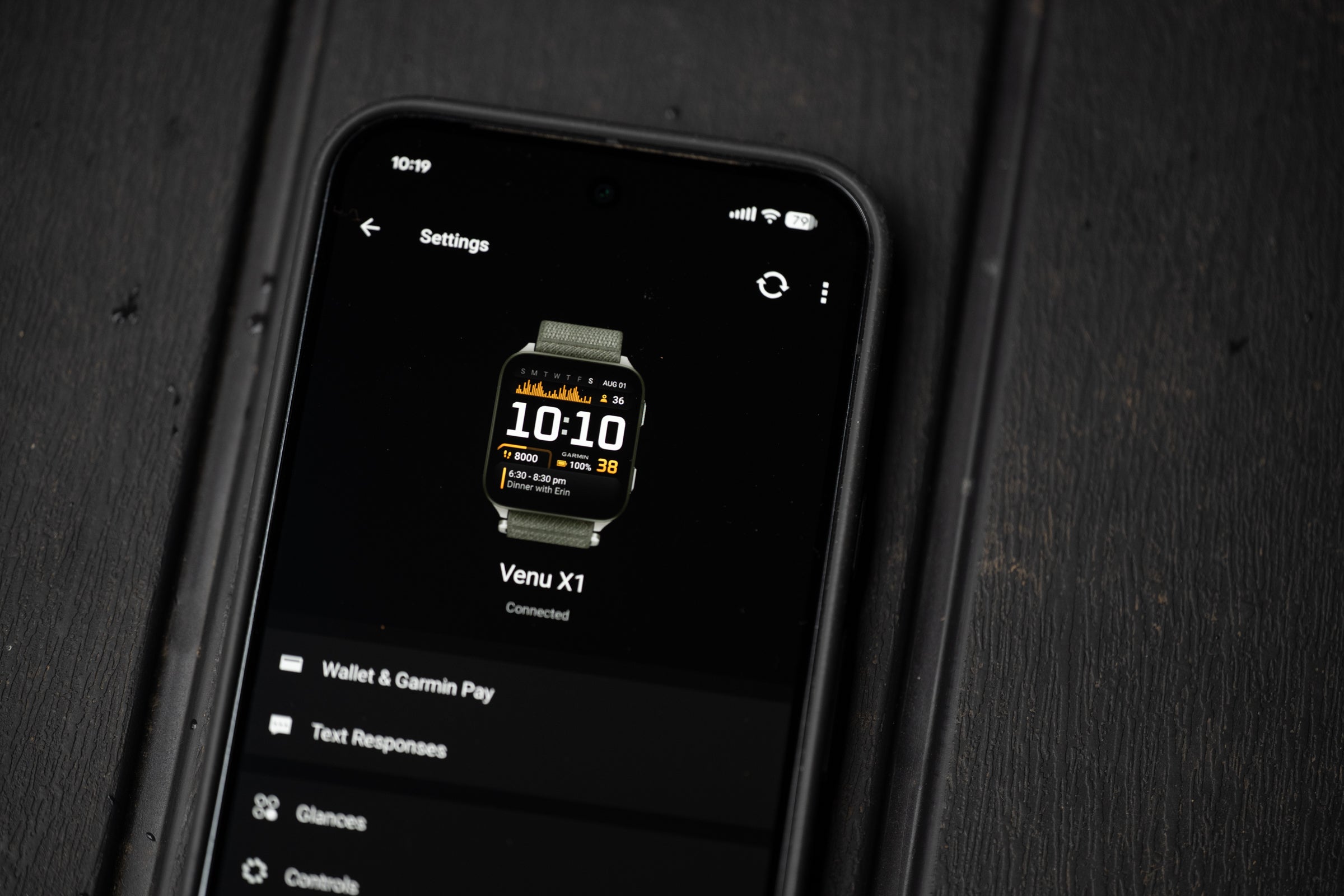
Go to sleep with your watch and it tracks your sleep. In the morning you get a report saying your training status and readiness. If things look good then maybe you go for a run with the watch. That data then heads back to Garmin Connect and updates your status. If you later go for a ride, without the watch, your head unit (along with other Garmin sensors) sends the data it records back to Garmin Connect and there’s no interruption despite moving from watch to head-unit.
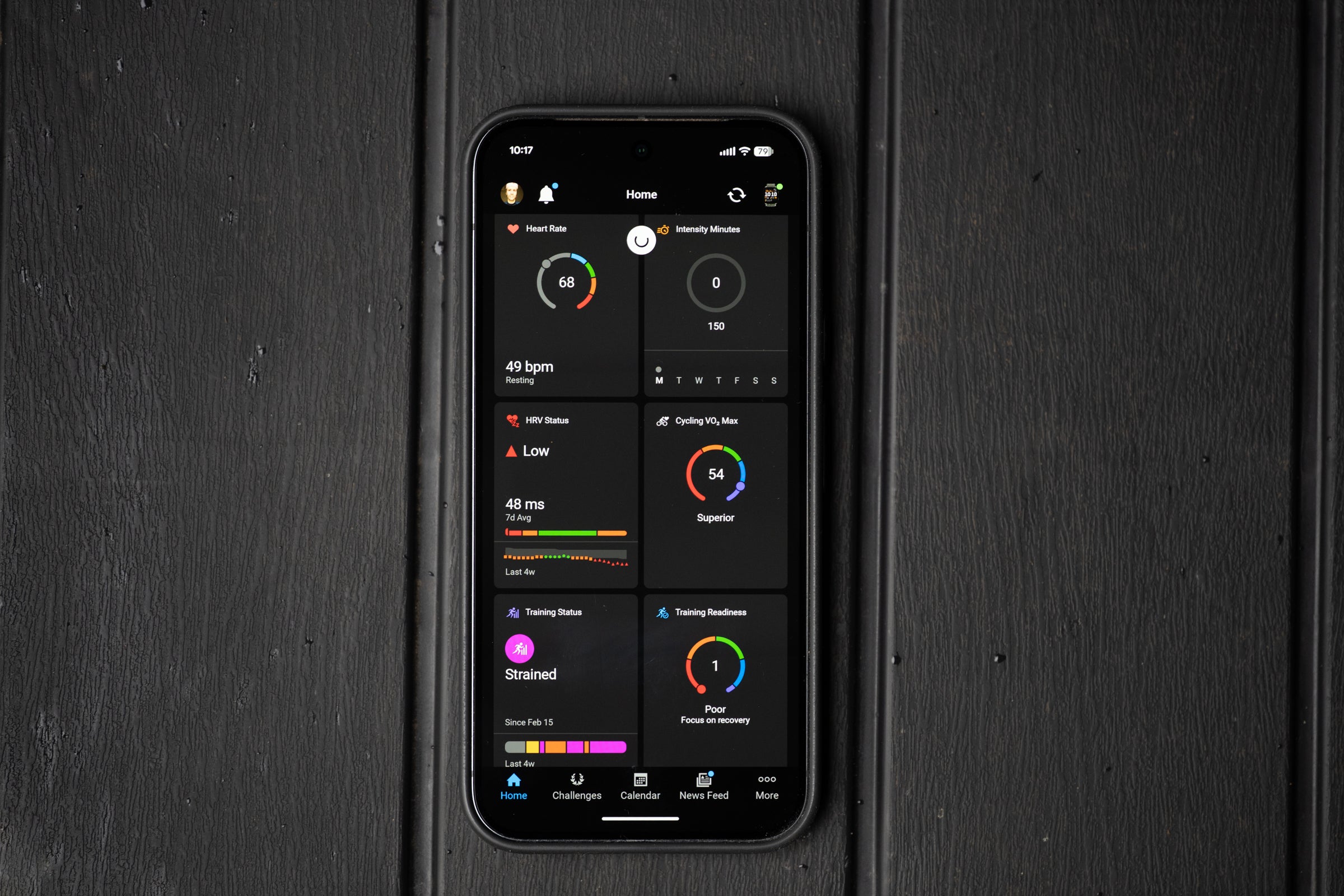
There’s ways to match that system yourself but nothing as polished as Garmin offers. Coros is the closest, and cheaper, but the hardware isn’t as nice. Wahoo and Hammerhead mean using Intervals.icu or the Suunto app. Garmin is simple… It’s a very pretty walled garden.
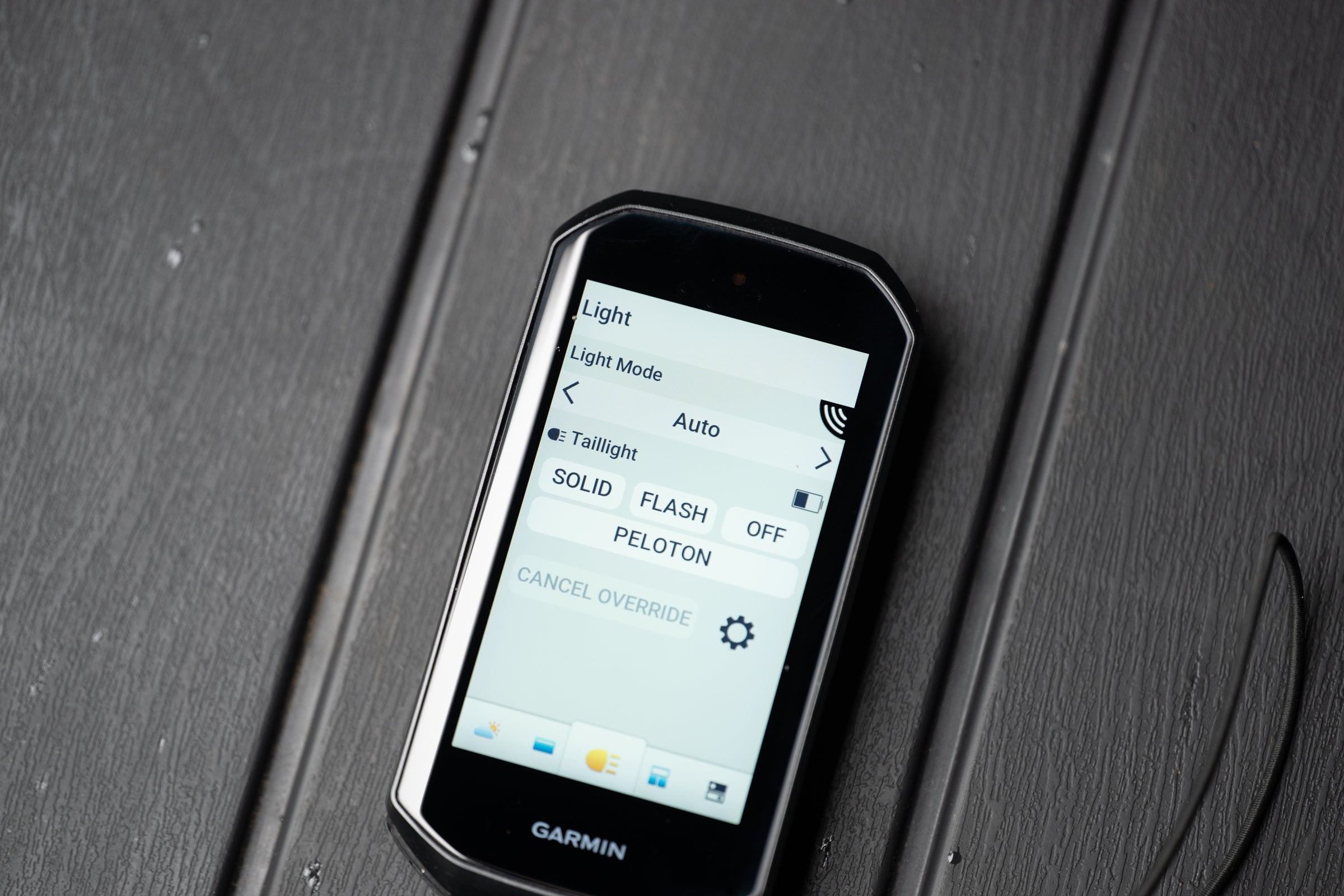
Or maybe you don’t care about that kind of training ecosystem. In that case the recently released RearVue 820 is another sticky point. The coolest features on that unit only work with Garmin head units and they work best with a bigger screen than the 850 or 550 provide.
What I don’t like about the Garmin Edge 1050
I’ve already talked about how I see the battery life as a positive in many ways and a necessity of the screen. I recognize that few people need more than 20 hours of battery life. That said, I personally find that battery life a nuisance.
When the Edge 1040 Solar hit the market with 45 hours burn time in demanding use mode, I stopped having to consider battery life. No matter what I was doing, whether it was a single-day, through-the-night ride or a multi day adventure, I didn’t have to figure out how to keep my head unit powered. No battery, no dynamo, nothing.
Now I have to start doing math. How many sensors do I have? What if I don’t look at the map screen? When did I last charge this unit? If I manage to stretch it to 24 hours, is that enough? I could turn on battery saver, but I despise that mode for the features it limits; If I am riding for 24 hours, I want to be able to stare at my power numbers for at least some of that time.
Still, I recognize that few others will share that issue. Aside from that, I also want to call out marketing fluff when it makes sense to do so.
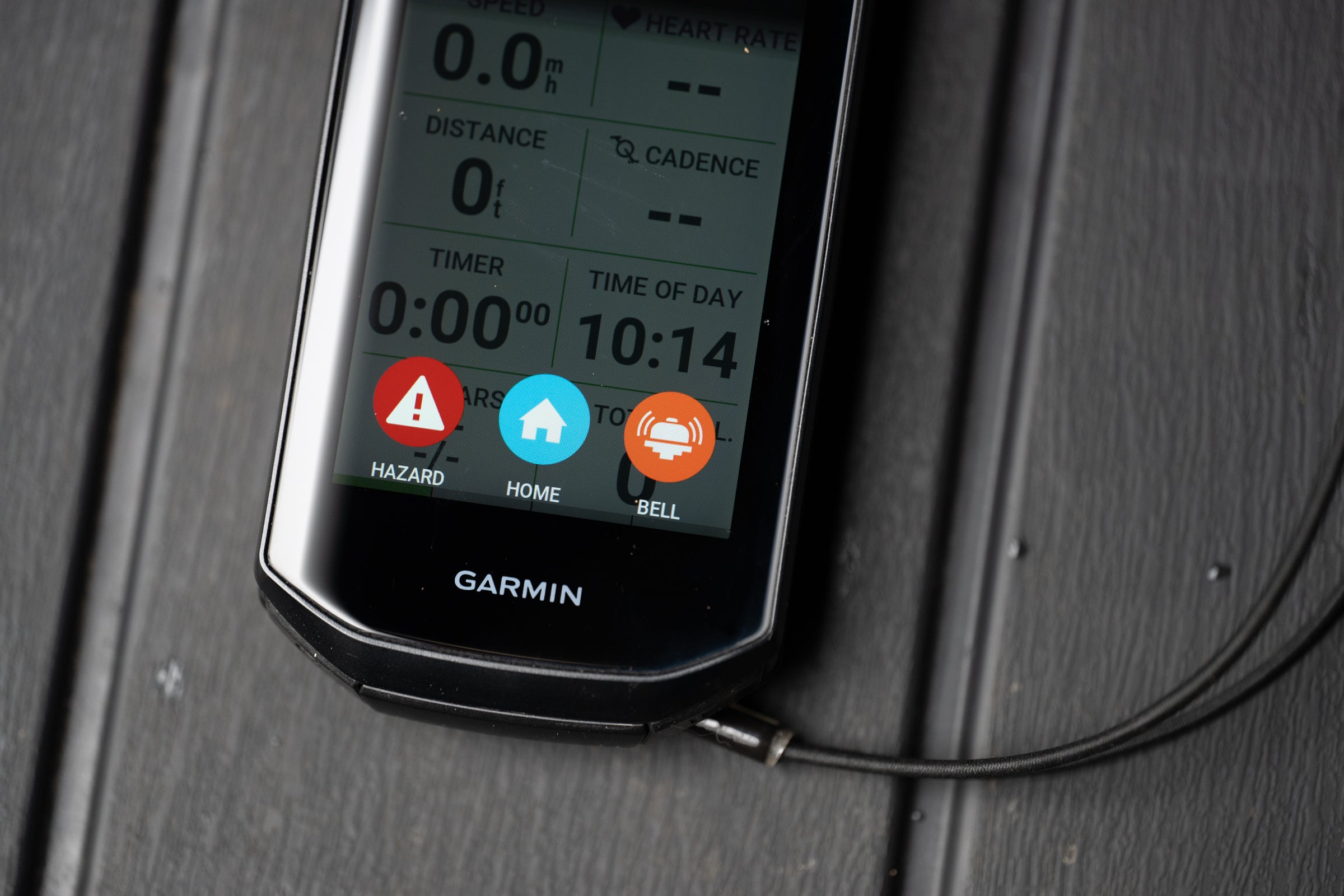
I tried to use the road hazards function, but it is terrible. It alerts you to let you know the same pothole that hasn’t been fixed for years is still there. It also happens to be on the other side of the road half the time, so it’s often not even useful for a new hazard. In theory, this sounds good, but the constant alerts turn it into background noise nearly instantly.
There are also a bunch of group ride features that sound good in theory. GroupRide Challenges, GroupRide Awards, and GroupRide Messages all sound fun, but I’ve never been in a situation where anyone has used any of it. Your group would have to include people who not only have only Garmin head units, but only the most recent models, and are willing to ignore the other ways to do the same things that everyone already uses. Maybe in LA, NYC, or Girona there is some situation where this exists, but I certainly have not experienced it.
Livability
Some of this could be considered things I like, but I wanted to keep that section more streamlined. In day-to-day use, there are some specific features that shine.
The speaker is a big draw. When you are on a bike path, you can slow down and hit the bell on your bike computer. Garmin has even improved the functionality since launch. While you could always program it to a bonus button, now it works with a simple double-tap on the screen. Most of the time loud hubs work better for clearing the way, but it has its uses.
The speaker is also great for being less annoying in groups. Sorry folks, I’m riding with notifications for radar and turns. At least the tones are more pleasant than the old electronic beep.
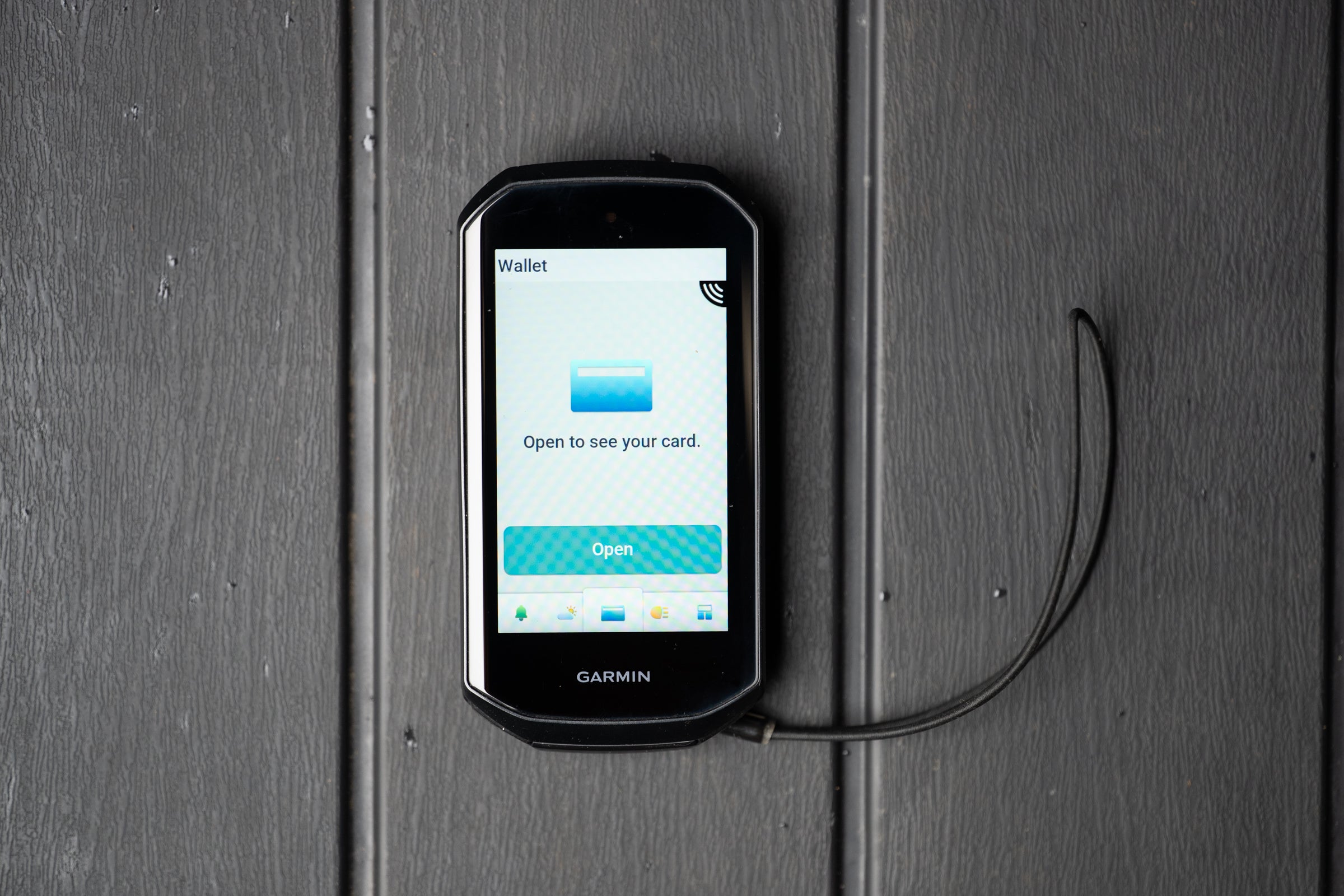
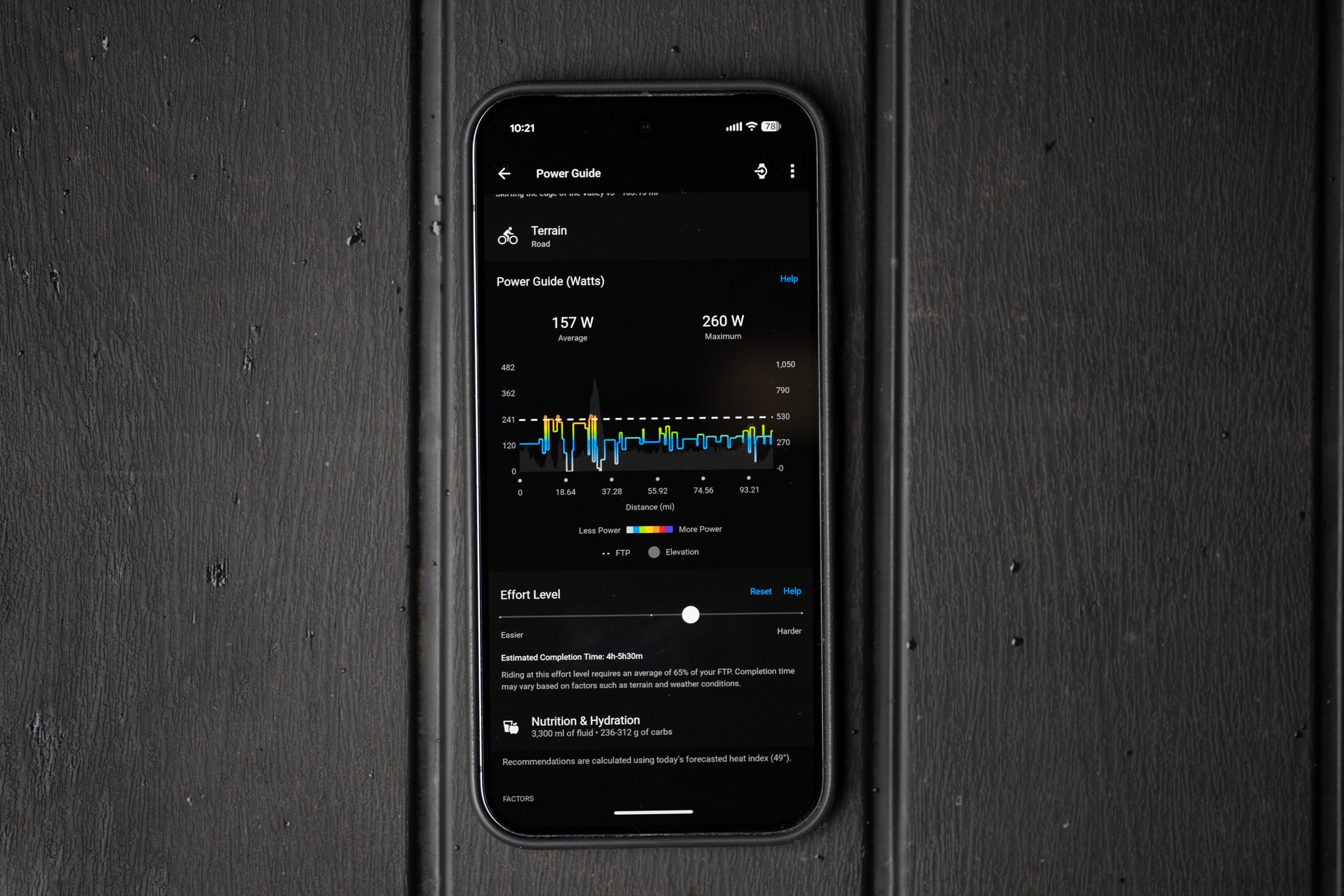
At launch, another feature that got a lot of press was the Garmin Pay integration. I’ll be honest and say I’ve never used this. I’m still happy it’s there, though, because I’ve ridden without a wallet and had my phone die. These days the Pixel 10 Pro XL phone 00I use has more battery life, but I also appreciate a backup. That is exactly what Garmin Pay on the head unit offers.
What you probably expect to see in this section is info about the mount, so let’s talk about that.
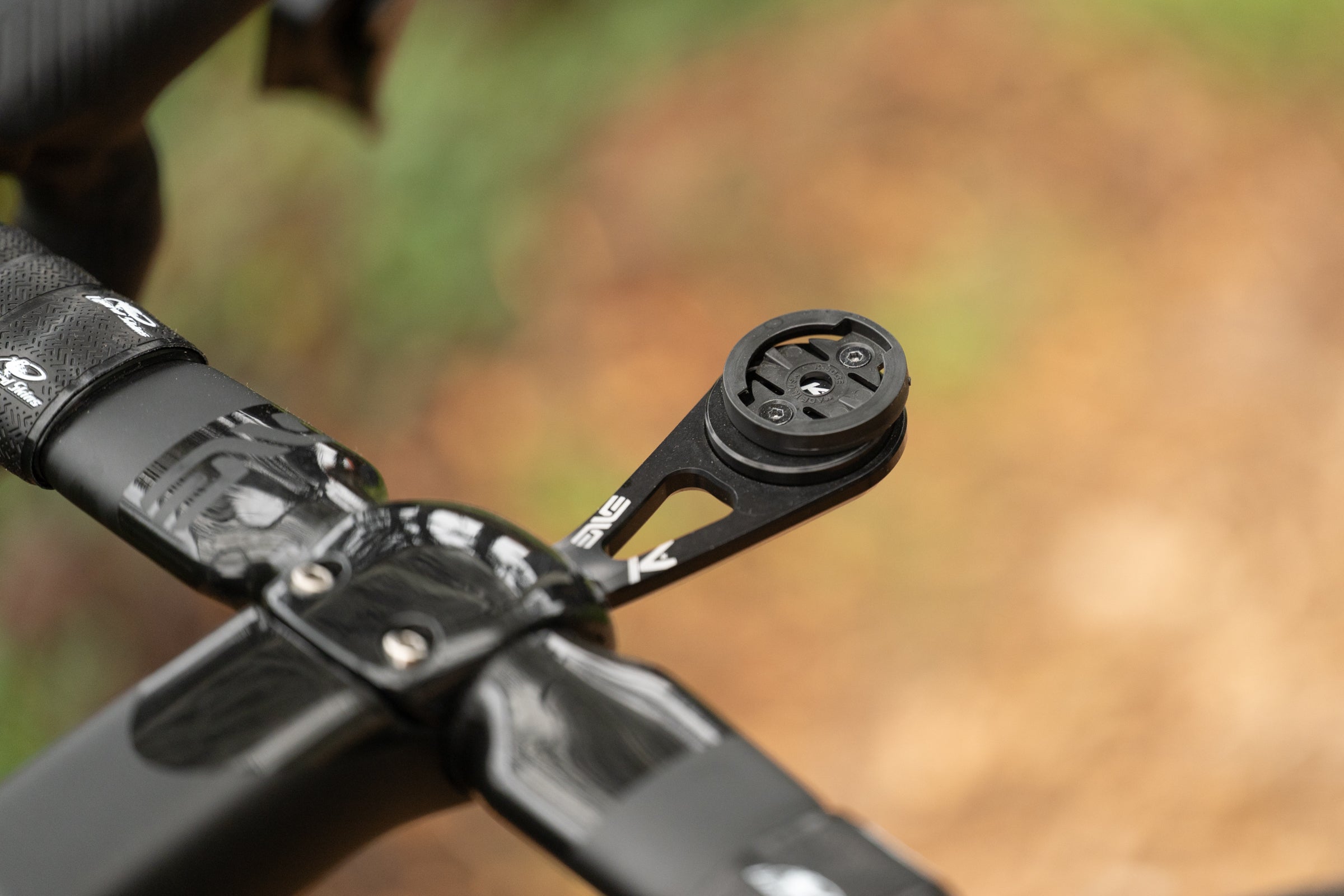
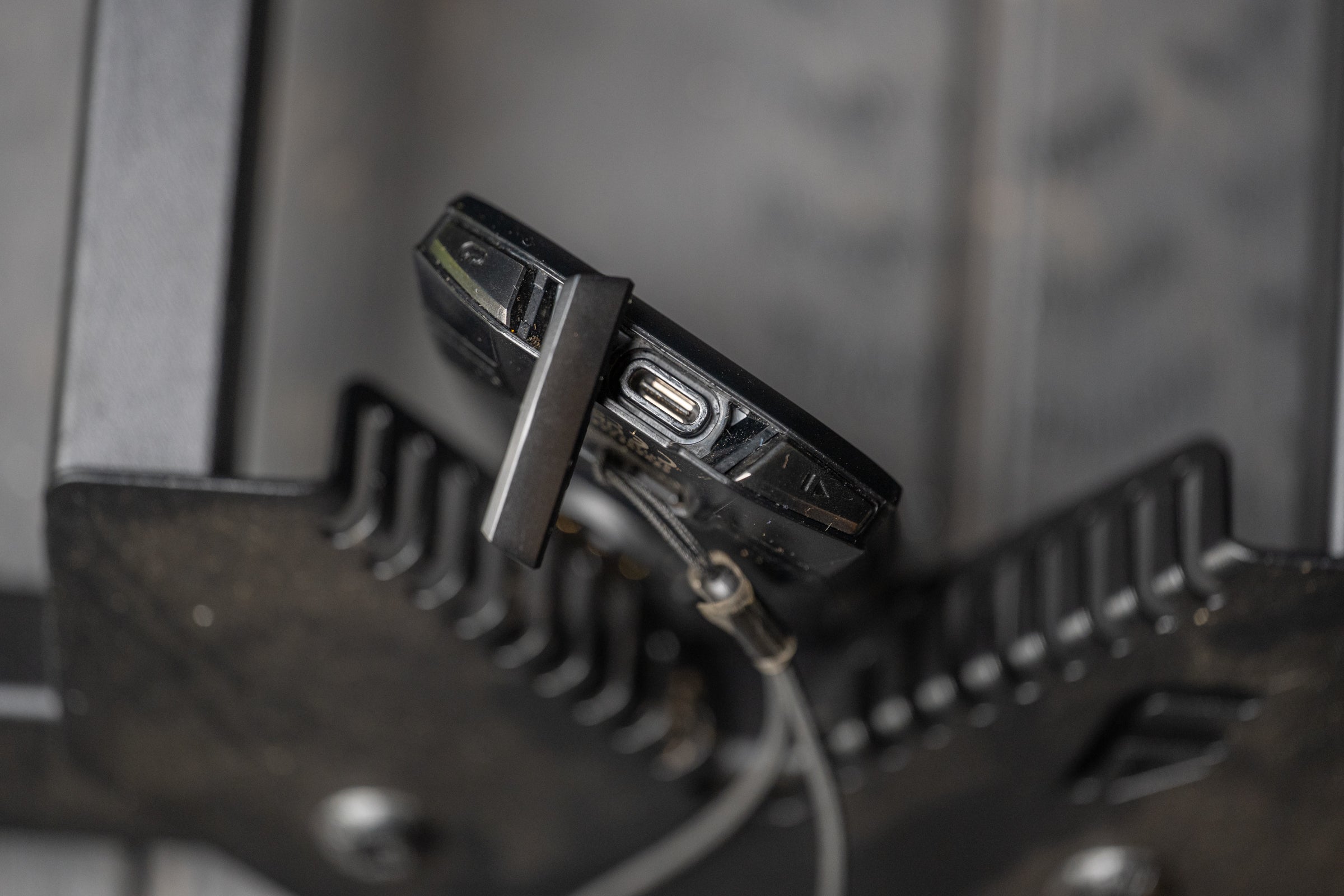
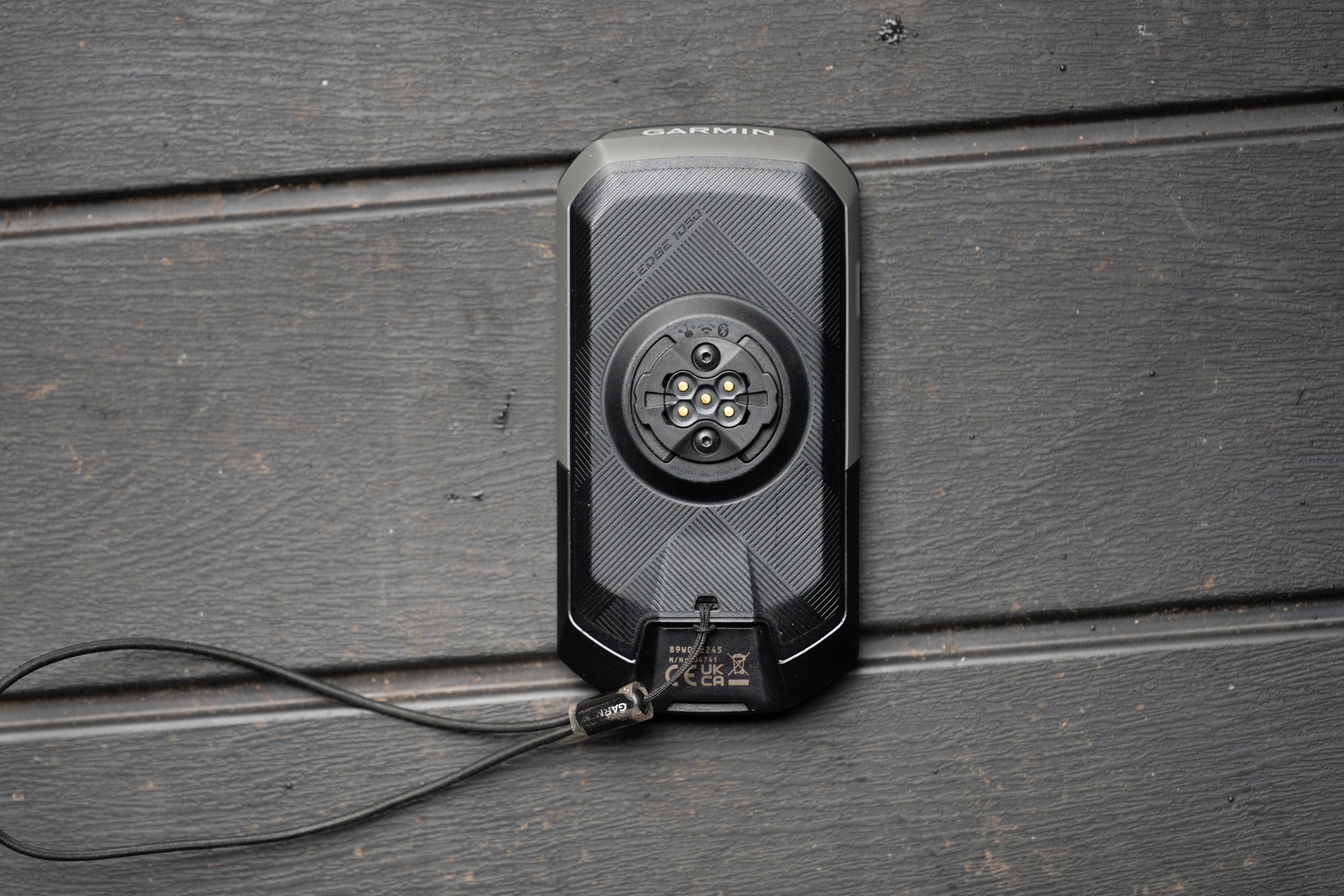
When the Edge 1050 launched, it was a hassle to deal with the increased length. Not every out-front mount fit the new computer. Since then, most now work. Part of that is that although the unit is a bit longer, it doesn’t feel huge and it is not that heavy. You can use a little adapter to move the mount just a tiny bit forward without issue. If the mount ever does break, it is replaceable.
Garmin has also continued its march towards better smartphone integration. There is now a Wi-Fi map manager, so in the rare situation you need to update a map, there is no cable required.
Who is the Garmin Edge 1050 for?
In a lot of ways this is a rehash but it’s good to be clear and concise about it. Here’s the rubric.
- If you want a class-leading screen and good battery life, plus Garmin Connect training features and/or the best rear radar, then you want the Edge 1050.
- If you want that same screen and ecosystem but don’t need 20 hours of battery or the massive display, then you can save money with the Edge 850 or Edge 550.
- If you don’t care about the ecosystem, and don’t need 20 hours of battery life, then the Hammerhead Karoo 3 is your best choice. The metrics gathered while riding are great, the SRAM integration is excellent, the screen is beautiful, and it works well with Suunto or Intervals.icu.
- If you want long battery life and a pretty good screen but don’t care about using a watch to track recovery as part of your training, then the Wahoo Ace is your choice. Wahoo has solid metrics for data gathered while riding, tons of battery life, and a great screen that changes the color of individual metrics. You can also move to a less expensive Wahoo if you don’t need as much battery life and Intervals.icu or the Suunto app can integrate Wahoo and a watch just like Hammerhead.
- If you want the absolute best battery life by a mile, don’t mind a so-so screen, and want a similar level of training and recovery tracking to Garmin, then you want the Coros Dura.