
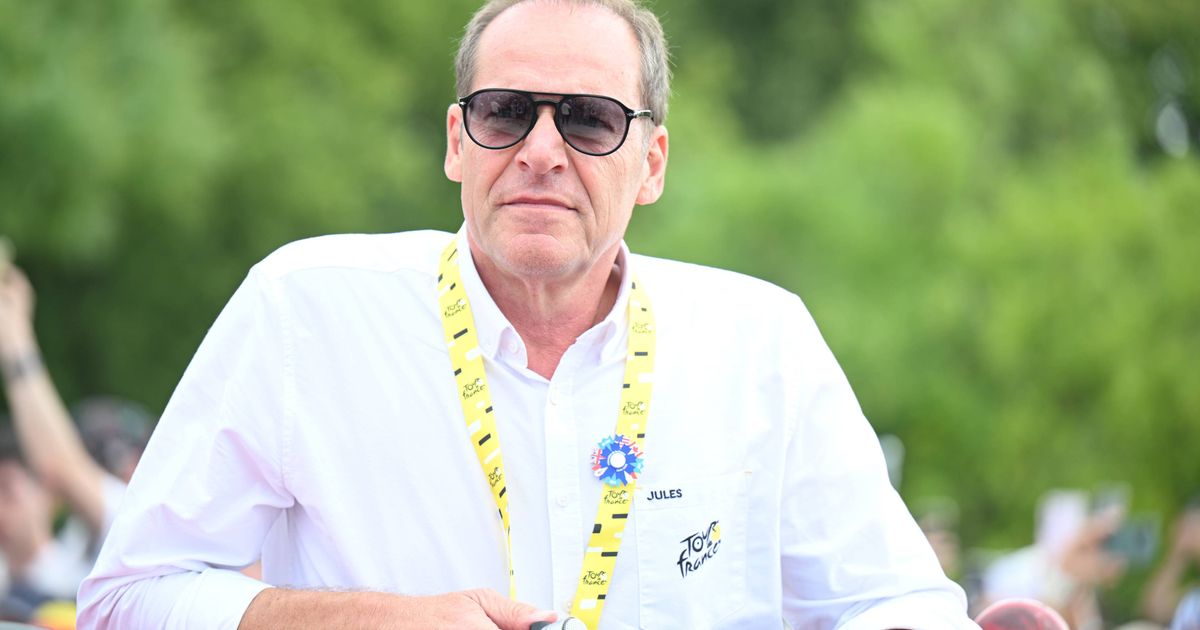
Pay to watch the caravan go by?
He reinforced his position by underlining that the race belongs to the public roads and the people who line them every July.
“We are on roads that do not belong to us and will never belong to us. The Tour de France of my dreams is the Tour de France that passes in front of my house. For me, it would be heresy, absolute heresy, to charge people.”
To illustrate his point, he compared road cycling with cyclocross, a discipline where spectators often pay to attend events.
Another recurring criticism concerns the perceived lack of suspense in recent editions, with the general classification sometimes decided well before the final stage in Paris. Prudhomme admitted that he shares the frustration felt by many fans.
“Do not consider the Tour de France director as someone different from any other fan. I love the Tour viscerally. When there is no suspense, I feel exactly the same as you do. My reactions have not changed since childhood, when I watched Raymond Poulidor attack on Mont Revard.”
Jonas Vingegaard, Tadej Pogacar and Florian Lipowitz at the 2025 Tour de France final Podium at Paris
Suspense and excitement all the way to Paris
He stressed that course design always seeks to encourage battles, while acknowledging that the outcome ultimately depends on the riders themselves.
“Of course we want battles, of course we want suspense. That inevitably plays a role in designing the route. Always. But then it’s the famous formula: the organizers propose, the riders decide.”
The discussion also turned to time trials, especially after Remco Evenepoel expressed disappointment that the 2026 season would not include a long individual time trial. As a specialist capable of gaining significant time on rivals such as Tadej Pogacar and Jonas Vingegaard, Evenepoel sees long TTs as a crucial tactical weapon.
Prudhomme explained the delicate balance between creating suspense and avoiding races being effectively decided too early.
“If there were a dominant Evenepoel, as he can be in time trials, against Pogacar or Vingegaard losing a lot of time, of course we would want to introduce suspense and time trials. Today, it only confirms and sometimes crushes.”
He recalled a specific example from the past to illustrate his concern.
“I remember the 2012 time trial in Besançon with Bradley Wiggins. He had killed the race after ten days. I am certainly not anti-time trial. Simply, today we do not have what makes the strength of a fight, of a duel, an opposition of strengths. The best in the mountains are also almost the best in time trials.”
Financial Issues
Finally, the issue of team finances and revenue distribution was addressed. The disappearance of Arkéa–B&B Hotels and the merger between Lotto Dstny and Intermarché–Wanty have intensified criticism from team managers towards race organisers, including the Amaury Sport Organisation.
Prudhomme acknowledged the financial evolution of the sport but pointed to a structural imbalance.
“We see the development of teams and budgets growing exponentially, and that’s fantastic. Riders are earning more money, and I am almost as happy about that as they are. But race budgets are not increasing exponentially like the budgets of the big teams. For me, the dilemma lies mainly between nation-backed teams and teams with traditional private sponsors who indeed struggle to keep up.”
As he prepares for his 19th Tour de France at the helm, Prudhomme’s message is clear: preserving open access, maintaining competitive suspense and navigating the financial realities of modern cycling remain central challenges for the race’s long-term future.