
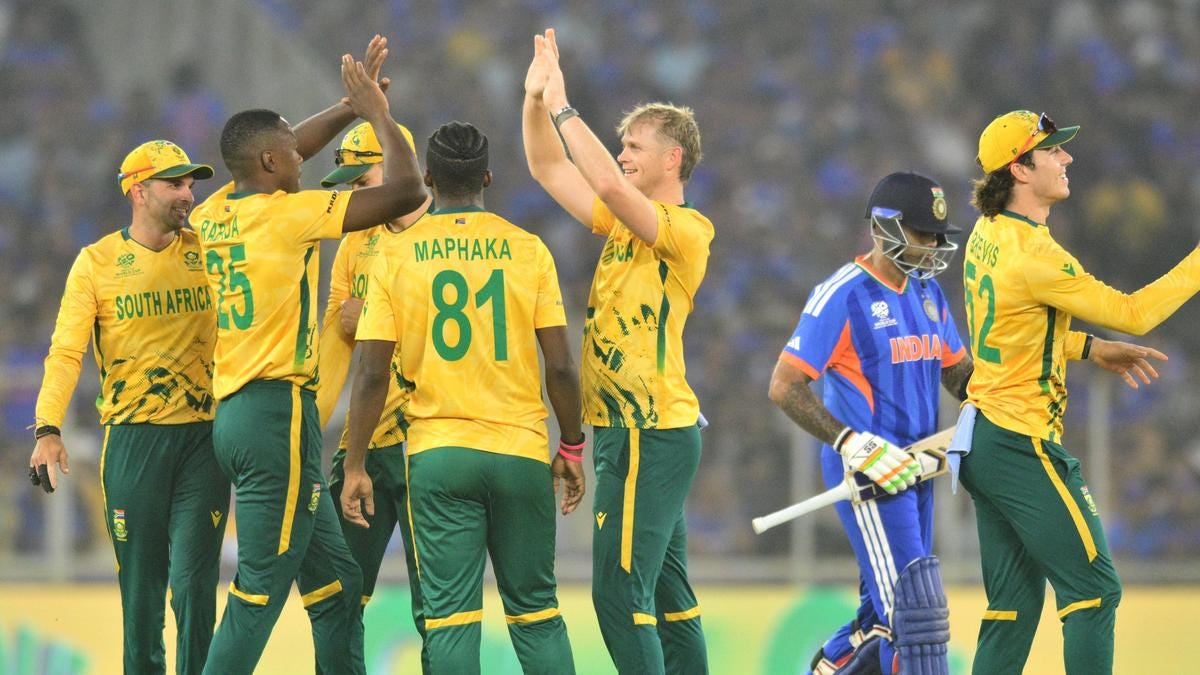
SA beat IND by 76 runs.
It was pretty bad. I blame Jio for that truly tasteless ad from last week. Well, them and pretty much every Indian player but Bumrah today.
But, what happened beyond the headlines?
-
💨 How IND’s pacers decimated SA’s top order.
-
📈 How David Miller 2.0 is near invincible.
-
🎯 How SA nullified Varun Chakravarthy.
If you’re reading this online, remember: you can get it via WhatsApp or direct to your email👇!
✍️ Written by Karan Jain. You can follow him on X.
Among the Super 8 teams, SA had the highest strike rate (164.58) and the second-highest average (59.25) in the powerplay before tonight. They particularly love the quicks, going at 170.83 versus them. And, yet, tonight the IND pacers went for 30-3 in 5 powerplay overs.
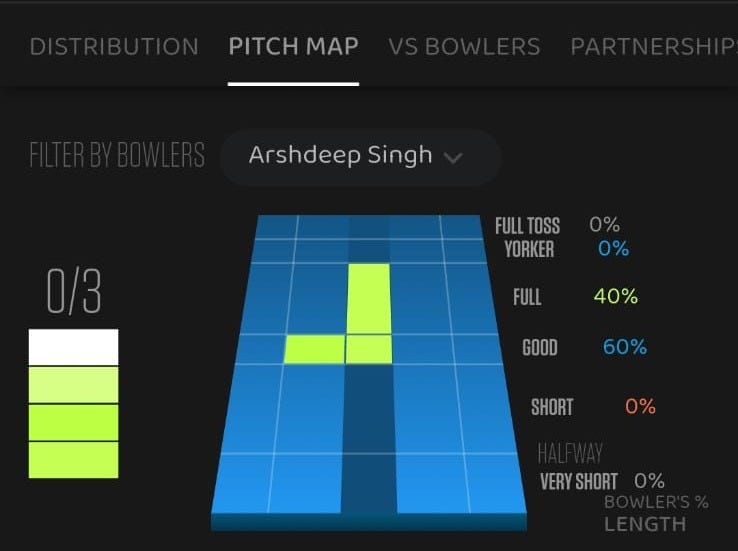
The IND bowlers understood the conditions early and chose their line of attack accordingly. They stuck to back-of-a-length deliveries to lull the SA batters into a sense of safety, and used fuller deliveries as unpredictable wicket-taking options.
From the first over, it was clear that there was pace variability off the bounce, with the ball often coming slower than expected. On the last ball of Arshdeep Singh’s first over, Quinton de Kock attempted to scoop a delivery outside off. He premeditated the line well, but he was too early as the delivery slowed down drastically after pitching.
The IND think tank used this information for the next over. Instead of having a deep backward point fielder against Aiden Markram, as he did in his first over, a deep cover fielder was placed. Having a fielder in front of square gave Singh the option to bowl fuller, getting the batters to drive on a pitch where they couldn’t trust the speed off the surface.
By the third over, Markram and South Africa were desperate for a boundary. The usually fast-scoring SA top order had managed just 12 runs on the tricky pitch, & Markram had yet to break his boundary drought having faced 6 deliveries.
Singh added to the frustration be sticking to back-of-a-length deliveries in the channel that bounced oddly. Finally, he bowled a delivery tad fuller just outside off on the fourth ball of the over. Markram, looking for his release shot, tried to clear mid-off but had no timing and was caught in the circle.
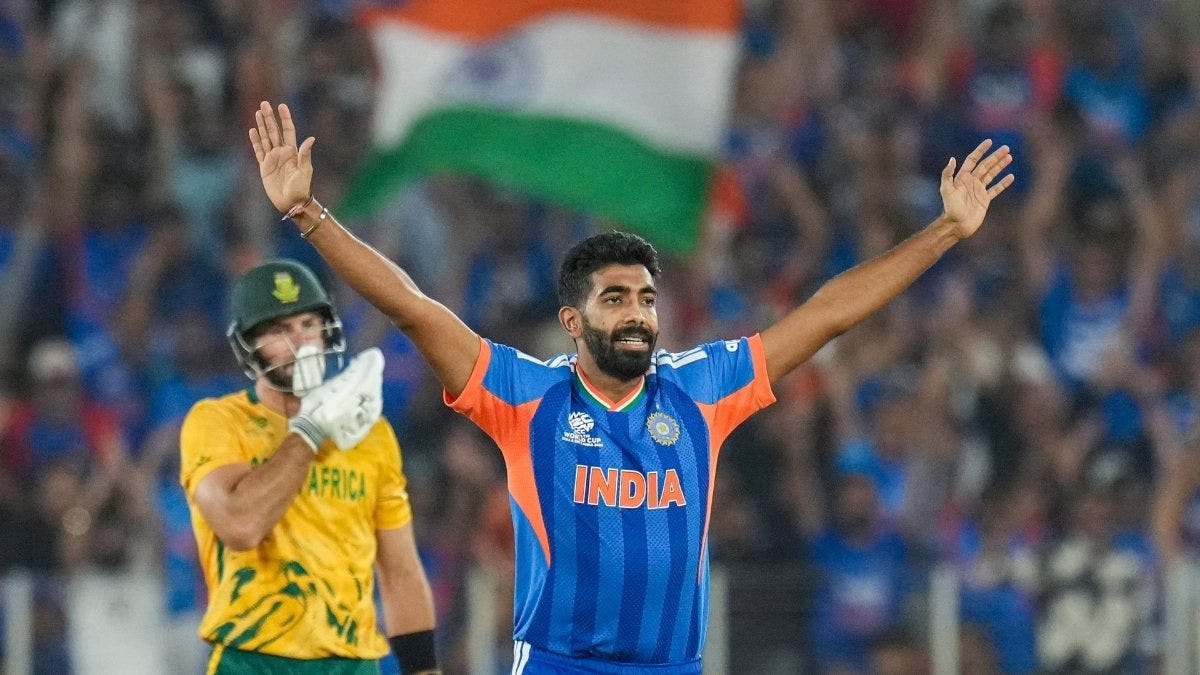
Jasprit Bumrah was bowling from the other end. His first delivery to QdK was full outside off and left the batter late. The second was a full-toss that QdK hit for 4. The third was a back-of-a-length delivery swinging away, tempting the experienced bat into thinking he could punish Bumrah with multiple boundaries.
QdK shaped for a pull outside off-stump, but he was deceived in two different ways. What he expected to be a delivery going above the stumps was actually clipping the bails on a surface where the ball was travelling slower and lower off the surface than usual at times. And while he expected Bumrah’s delivery to move away, it seamed in and hit his leg bail.
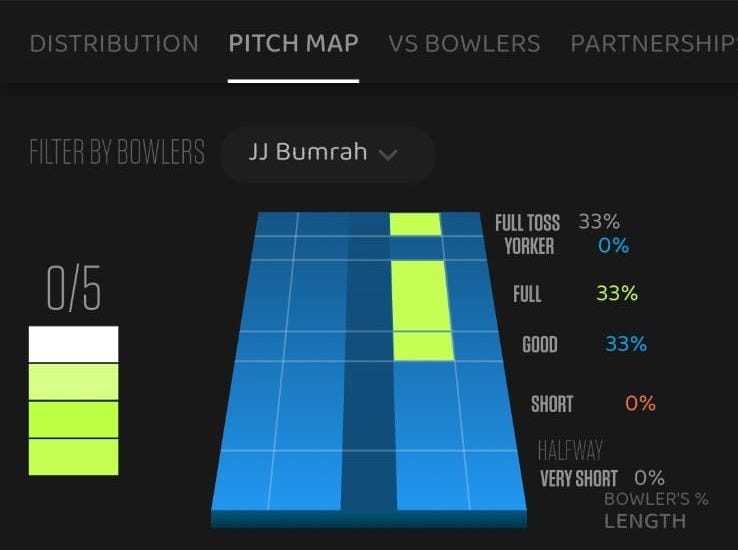
Bumrah would then deliver a masterclass in adaptation, trickery, and execution against Ryan Rickelton. Bumrah greeted the batter with a jaffa that beat him all ends up. In his following over, Bumrah would use his off-cutter to Rickelton on a fuller length that was dabbed to midwicket. He would then use his back of a length on pace delivery, keeping the southpaw on his toes for the next two deliveries.
Rickelton had now played three dot balls in a powerplay where South Africa had scored at just 5.2 RPO. The nerves were settling into a side that had scored 10.3 RPO in the first 6 overs before tonight.
Seeing a fuller delivery on the leg stump line, Rickelton lined up a clipped shot with the hope of ending the run drought. Bumrah knew the situation he was bowling to and executed perfectly.
Instead of bowling another on-pace delivery, he rolled his fingers. Rickelton, who didn’t anticipate the variation and was probably expecting his shot to be clipped in the midwicket or square leg region, lobbed Bumrah’s off-cutter to mid-off for a simple catch.
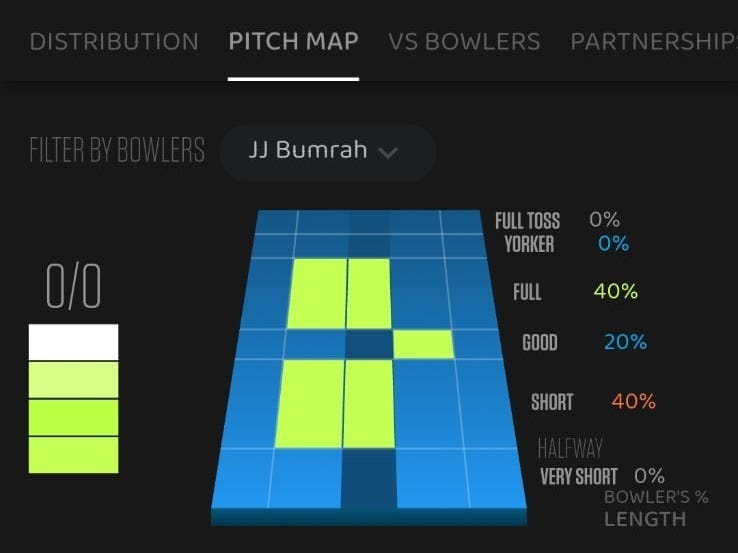
South Africa’s explosive top three were back in the dugout within the first 4 overs of the innings. And, that was the last piece of good work India did all night.
Data from ESPNcricinfo.
If you’re reading this online, remember: you can get it via WhatsApp or direct to your email👇!
✍️ Written by Arnav Jain, who runs CricBit. You can follow him on X.
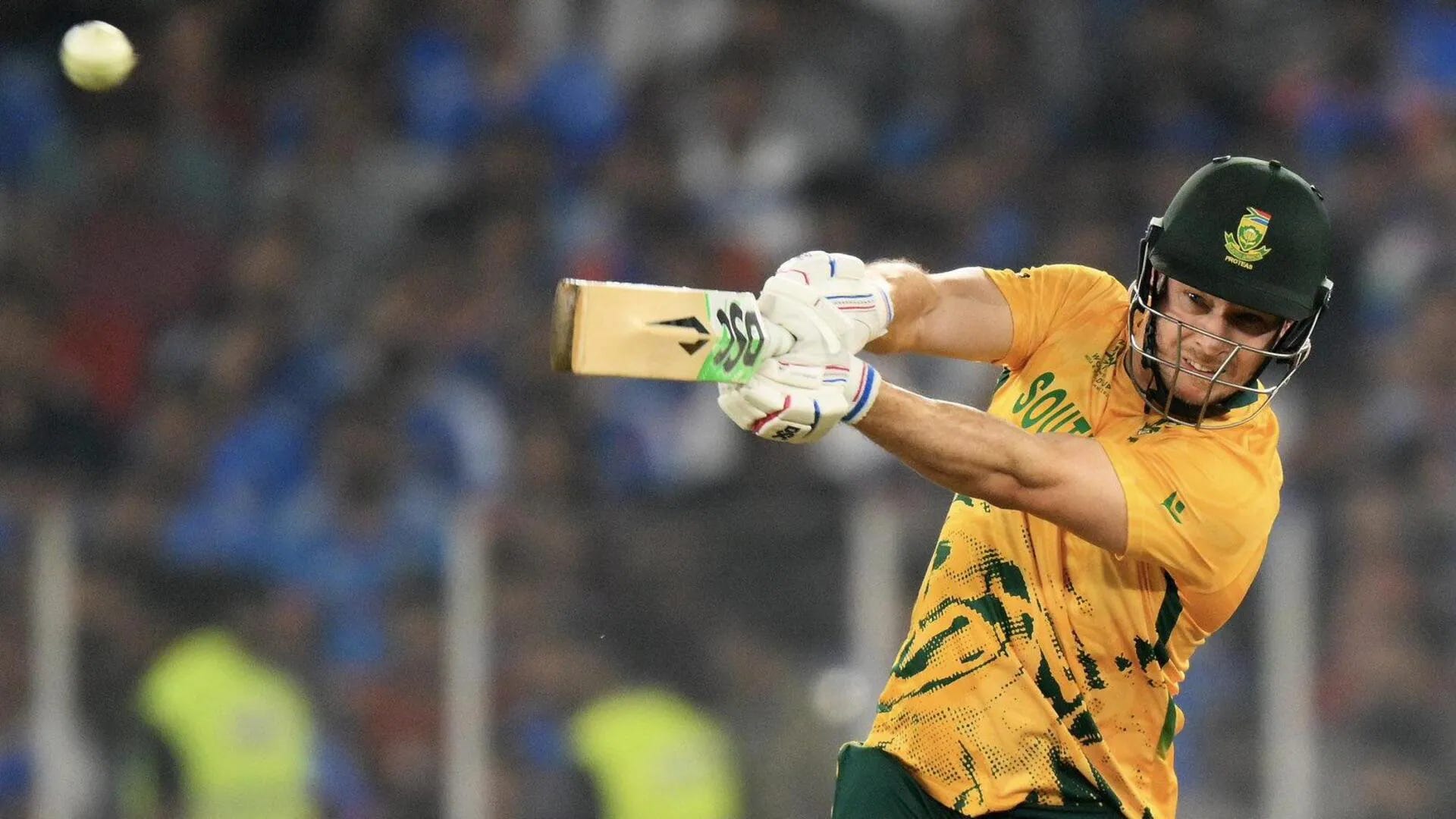
David Miller has a reputation as an excellent finisher in white ball cricket, but he’s never been a batter to smoke it from ball one in T20s. It takes him time to get going. Or, it used to. Today, Miller scored 18 runs and 4 boundaries in his first 10 balls, making up 50% of SA’s powerplay runs from just 27% of their balls faced.
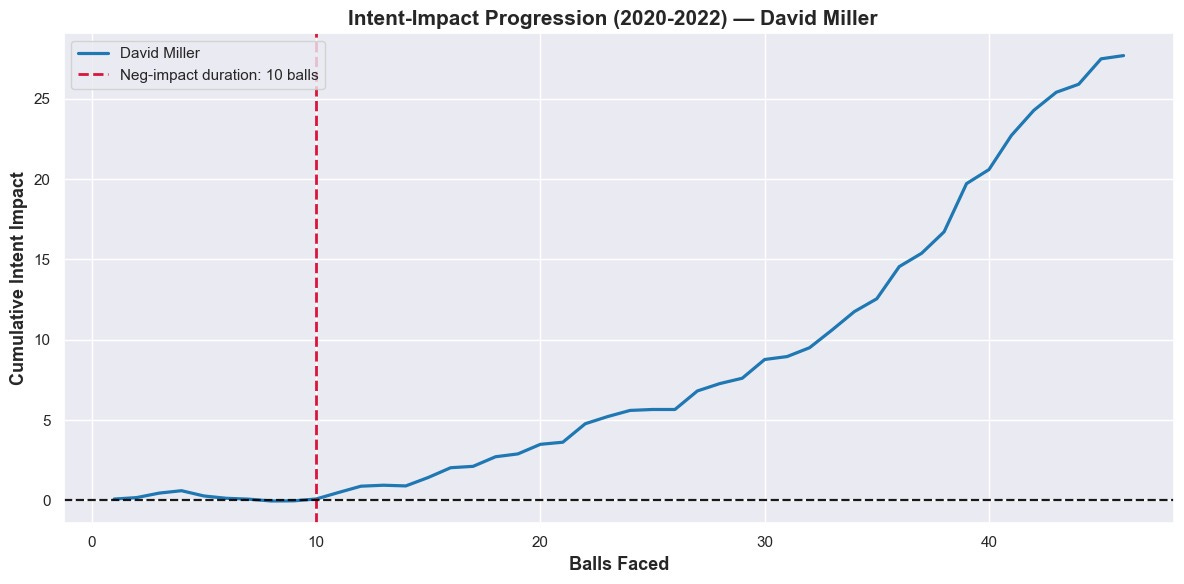
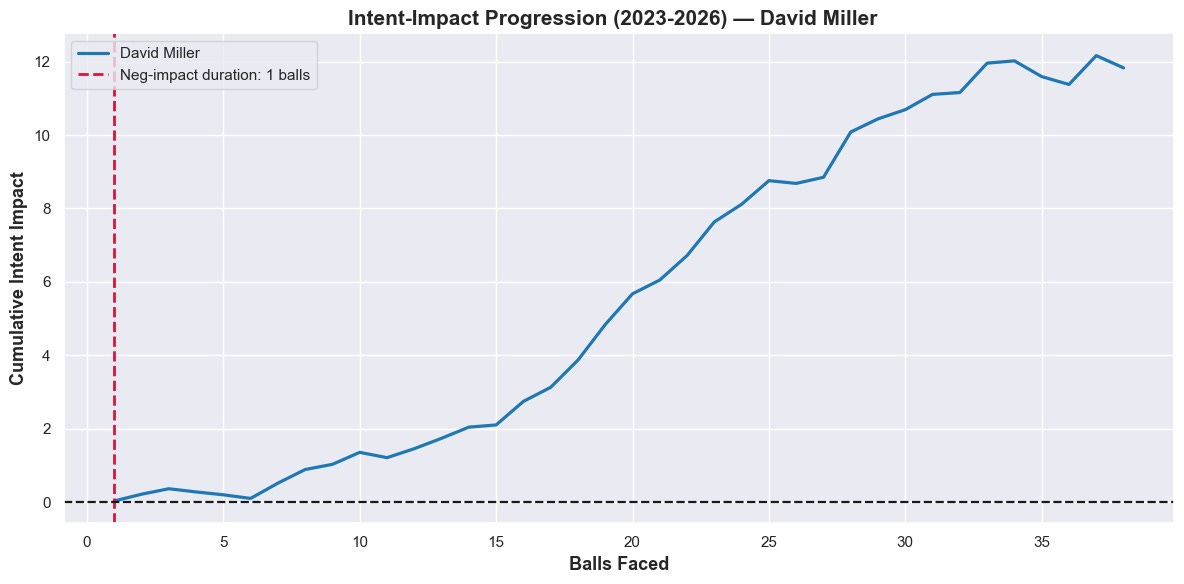
Intent-impact graphs measure the extra runs added by a batter by looking at his strike rate versus those of his peers. A negative number means the batter is actually costing his team runs for the first few balls. For Miller, that number was his 10th ball from 2020 to 2022. Since 2023, he’s been a positive from ball one.
What changed? His performance against specific lengths and bowling types.
In the 2020-2022 phase, Miller faced spin on 43% of his first 10 deliveries. That’s 9% higher than the global number for other batters in the same 3-year period. He faced so much spin because Miller struggled versus short of good length spin deliveries.
His strike rate of 127.8 was 5.6% below what his peers were playing at against the same balls. From 2023 onwards, his strike rate has remained the same but in different – i.e. more difficult -conditions. Others were batting 13% below his strike rate now.
Miller got better by improving his arc of play. He focussed on his square of the wicket scoring on these short of good length spin deliveries. He already had an excellent leg side game. He worked on the off side. So much so that in 2023-2026, he has scored more on the off on this length against spinners.

It helped repeatedly batting on one of the slowest T20 surfaces in the world – Boland Park at Paarl while playing in the SA20. Playing there probably helped him up his reliability number on this spin length.
His control percentages against short of good spin deliveries unsurprisingly went up from 83.2% to 86.48%.

Good length pace was another roadblock in Miller’s first 10 balls of his knocks. Miller’s 101 SR (10% below average) improved to 126.3 (5% above average). He was struggling to access the straight zone in the field.
While lengths like short of good (as we saw vs spin) expect you to score more square, on good length it is more feasible to develop a better 360 game. And that is what Miller did. He now scores a lot more in the straight region in the 2023-2026 period as his run distributions across regions became more equitable.

These fixes against both spin and pace mean that Miller is no longer just an explosive bat who can get it going on his day. Now, everyday can be his day, whether he comes in at the death or in the powerplay. The bowlers play to his tune, not the other way around.
Data from Field Toolkit.
If you’re reading this online, remember: you can get it via WhatsApp or direct to your email👇!
✍️ Written by Raunak Thakur, who runs Dead Pitch’s Society. Follow him on X.
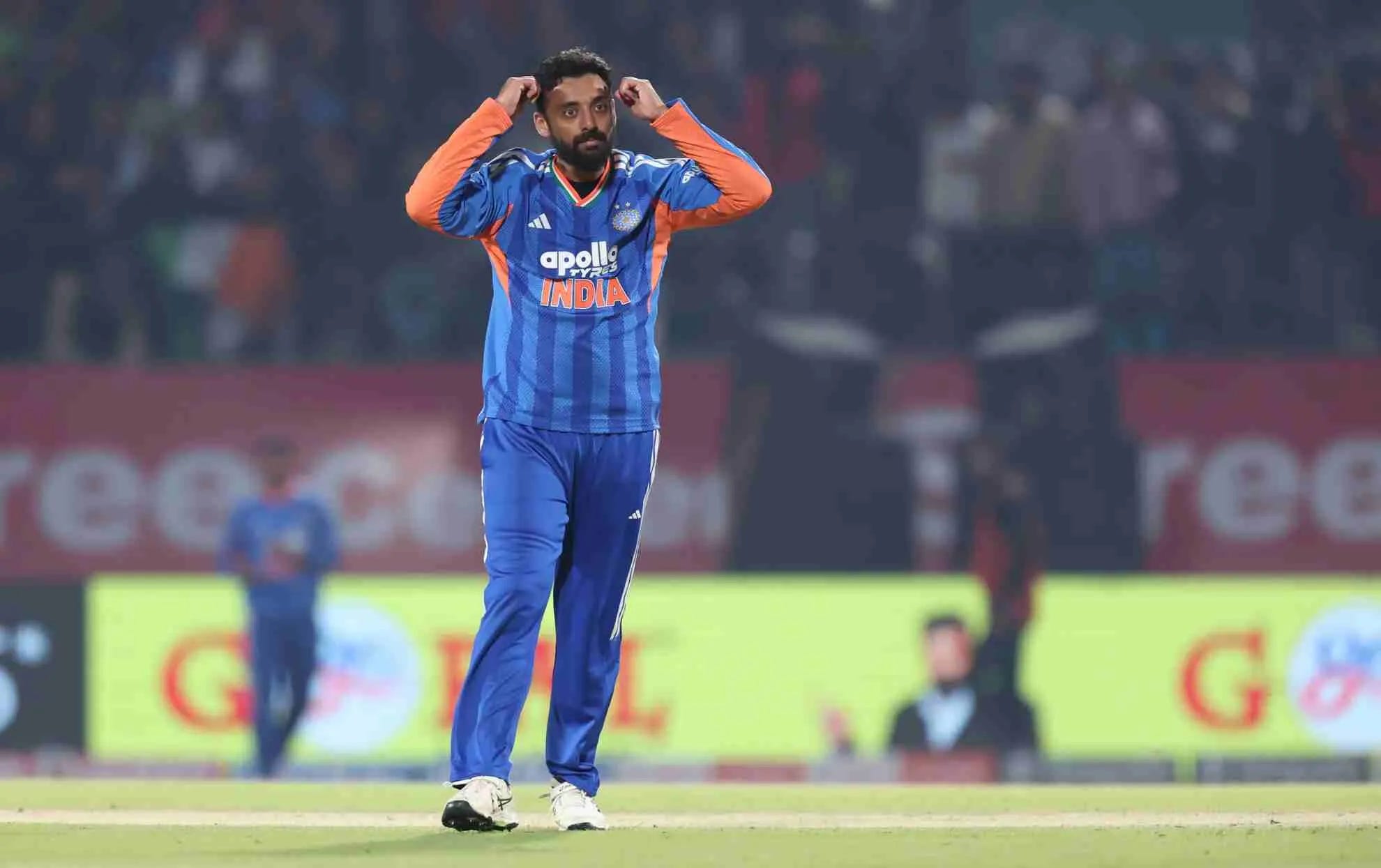
Varun Chakravarthy’s second coming has been built on something deceptively simple: repetition. Post-2024, he lands over half his deliveries on a good length, bowls nearly 70% googlies from the same release point, and gets roughly 80% of his wickets from that one variation.
The economy sits at 7.34, the average at 13.5. He doesn’t trick batters so much as he exhausts them – same length, same loop, same dip, until something gives.
In response, SA went on the offensive. Don’t wait to be exhausted, exhaust Chakravarthy instead. And it worked. The normally dangerous and economical bowler went for 1-47 tonight.
The good-length googly is Chakravarthy’s base because of what overspin does to it. The ball dips a fraction later than expected, bounces steeper than the batter reads, and drifts in before it grips. If you’re planted at the crease trying to read it off the pitch, you’re already a step behind.
SA’s batters went back and across instead. Dewald Brevis took a pronounced stride into the crease, which bought him time and flattened the bounce.
Balls that would have cramped a batter rooted to the front foot became cuttable. Balls tossed up wider became drivable. He wasn’t trying to decode the spin, he was setting his own conditions and manipulating Chakravarthy’s length by taking away the conditions under which Varun becomes dangerous.
Once his good-length balls started leaking runs – twos through the leg side, punches back down the ground – Chakravarthy went slightly fuller. That’s a natural adjustment. But it was the one South Africa had been waiting for.
David Miller reads fuller ball from spinners quickly. When Chakravarthy pushed it up, Miller cleared his front leg and drove straight for six. When it drifted wider, the hands extended through long-off. Brevis did something similar: the moment he sensed the adjustment, the tempo only went up. A short ball cut for 4, a fuller response hit for 6.
Chakravarthy concedes runs at a meaningfully higher rate when he goes full, higher than in the earlier part of his career, before the googly-heavy approach took hold. SA’s batters fully cashed in on it.
What tied the whole thing together was the collective refusal to settle. Tristan Stubbs walked in and immediately hit a fractionally full delivery over long-on. No playing himself in, no watching for the drift.
Chakravarthy’s threat is built on getting batters to hesitate, to respect the dip, to wait on the length, to search for the variation in the air. The moment batters offer that hesitation, he owns the over.
SA didn’t offer it. They scored early in his spells, disrupted his rhythm before he could build it, and forced him into a reactive headspace. A bowler who thrives on setting sequences – length, repeat, drift, mistake was suddenly having to respond to them.
Chakravarthy’s average against South Africa sits around 12.9, roughly in line with his usual numbers. But his economy climbs to 8.49, well above his 7.34 baseline. That gap matters. His whole model depends on wickets and control arriving together with the good-length ball that both suppresses and attacks.
SA’s batters replicated what they had done versus Chakravarthy in their series in December. In the same fixture at the same venue – which has reasonable 72 metre boundaries – Chakravarty conceded 53-4.
Nothing SA did was particularly mysterious. They used the crease, they attacked the fuller ball, they kept the straight boundary in play, and they refused to let a single batter go into their shell. The method was coordinated without being complicated.
Chakravarthy is currently the top-ranked T20I bowler in the world, and that ranking reflects something real. But what SA demonstrated is that his effectiveness isn’t pure mystery but how he structures aggressive bowling around repeatable skill. The controlled aggression they brought made sure he never got to bowl it on his terms tonight.
Data from ESPNcricinfo & Cricmetric.
If you’re reading this online, remember: you can get it via WhatsApp or direct to your email👇!