
Today, Kona launched the LBF, or Legend of Big Fork, a drop-bar 29er hardtail for the masses. John’s been riding one in the rugged 4×4 trails surrounding Santa Fe and naturally, has some thoughts about this platform…
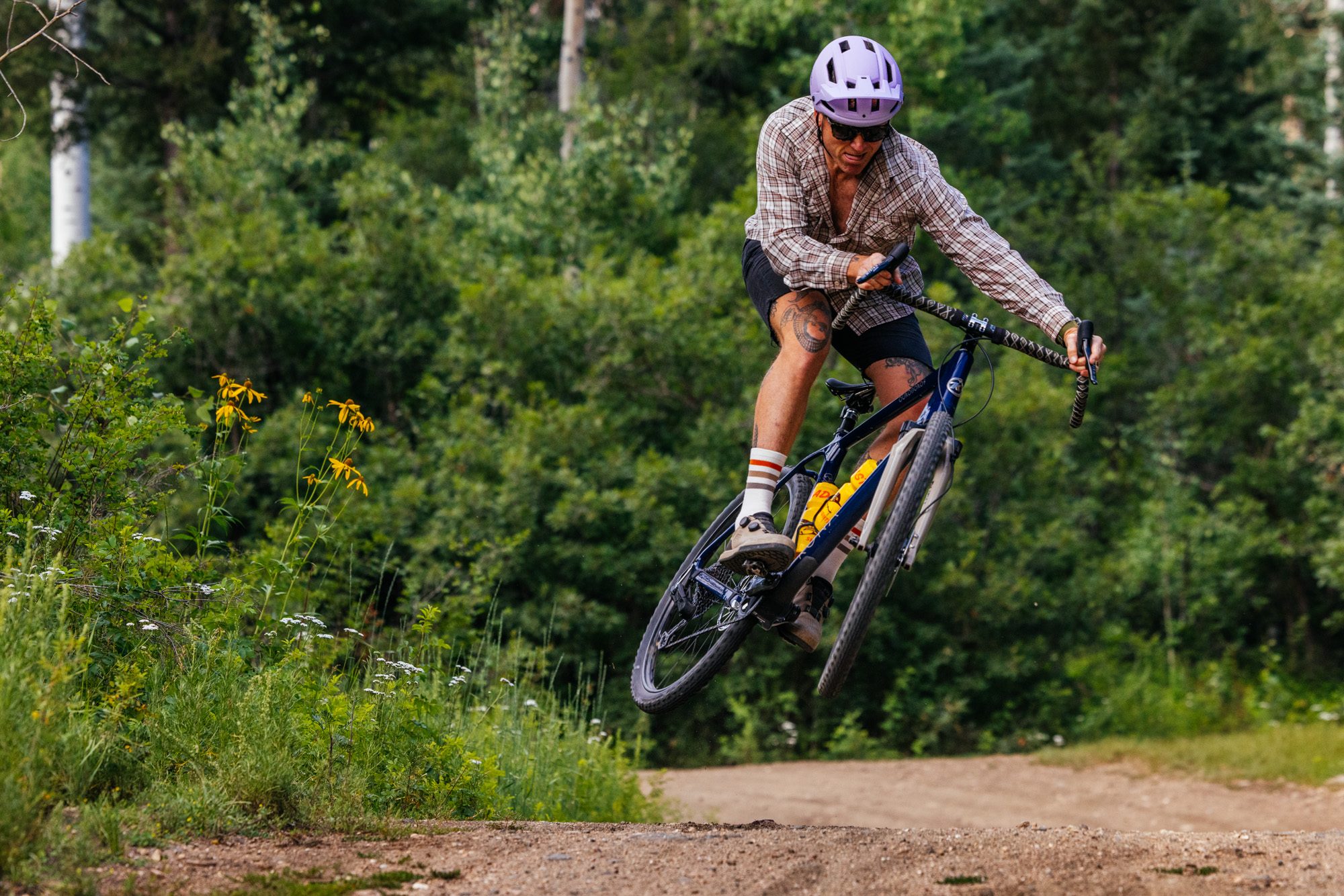
Kona has really leaned into the drop bar adventure category in recent years, most notably when it unveiled the Ouroboros adventure gravel bike. Now I had some issues with that platform, but I can count on one hand the number of brands doing something innovative like the Ouroboros. The TL;DR of the Ouro is I wish it weren’t built on a light-duty (non-boost) chassis and that it had a real suspension fork (not the RockShox Rudy). I didn’t even mind the carbon fiber frame, but I wish it had rack mounts, and the sizing wasn’t up to snuff, either.
Needless to say, I felt seen when my exact, ideal description of what I thought the Ouroboros could be landed in my lap late last year, boxed and ribboned from Kona as the Legend of Big Fork.
The LBF nailed it.
Drop-Bar 29ers
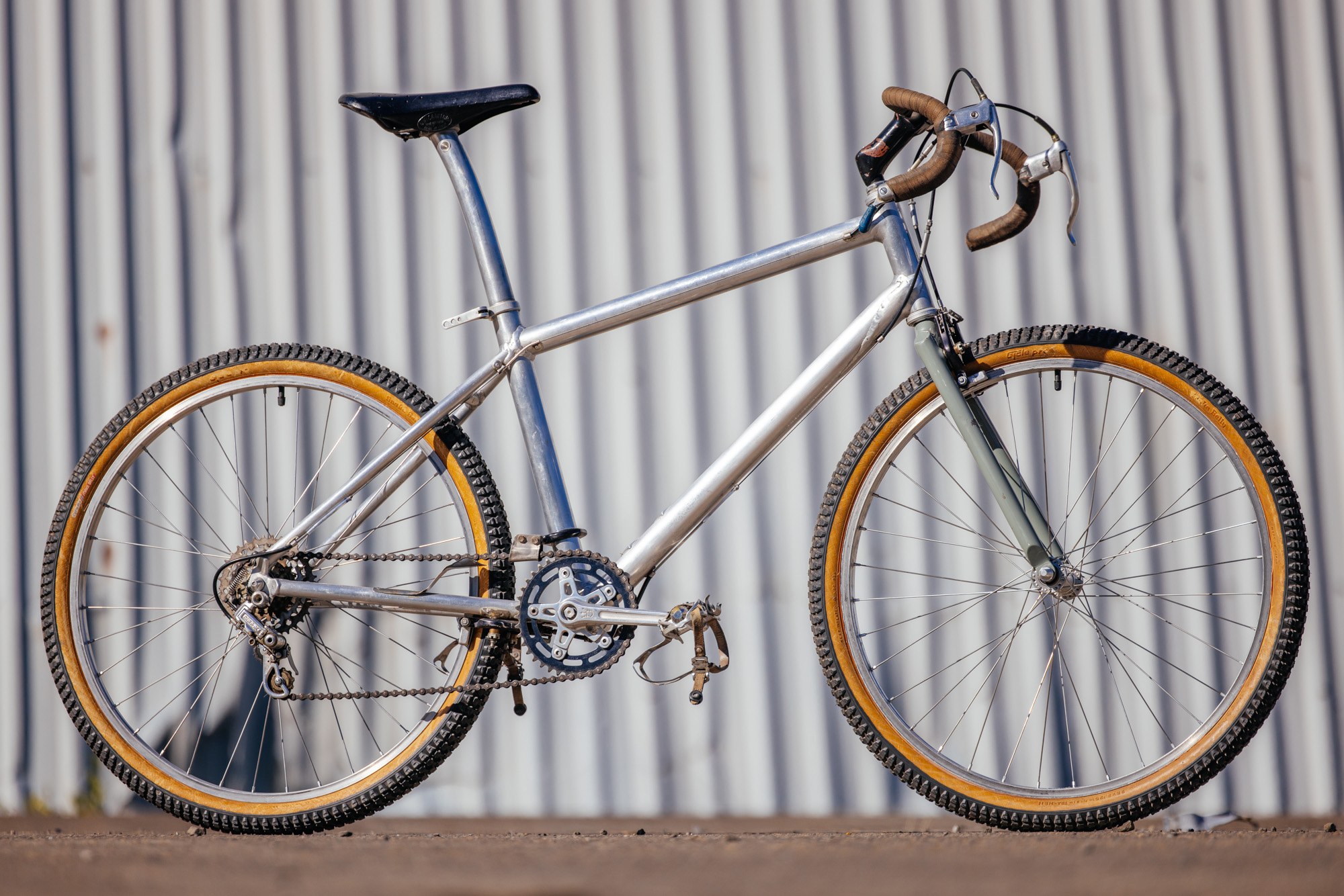
Because we’re in the bicycle taxonomy game over here, we keep track of evolutionary categorizations. Framebuilders like Charlie Cunningham began putting drop bars on “mountain bikes” back in the late 1970s. Then, some builders convinced WTB to make a 29er mountain bike tire. Shortly after, countless brands around the globe put drop bars on these fledgling 29er mountain bikes. Brands like Singular Cycles and Salsa were ahead of other mainstream bike brands with their drop-bar 29ers.
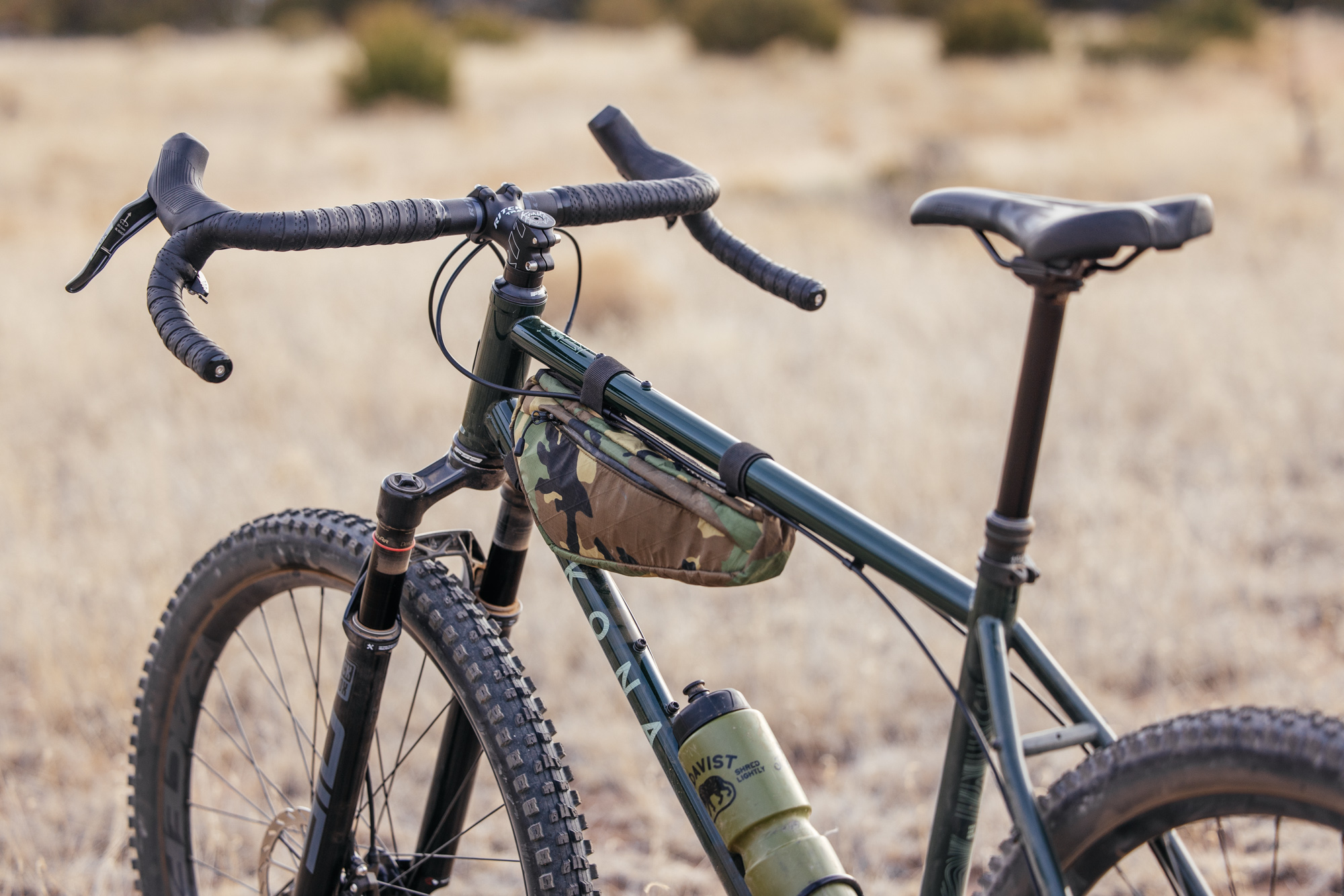
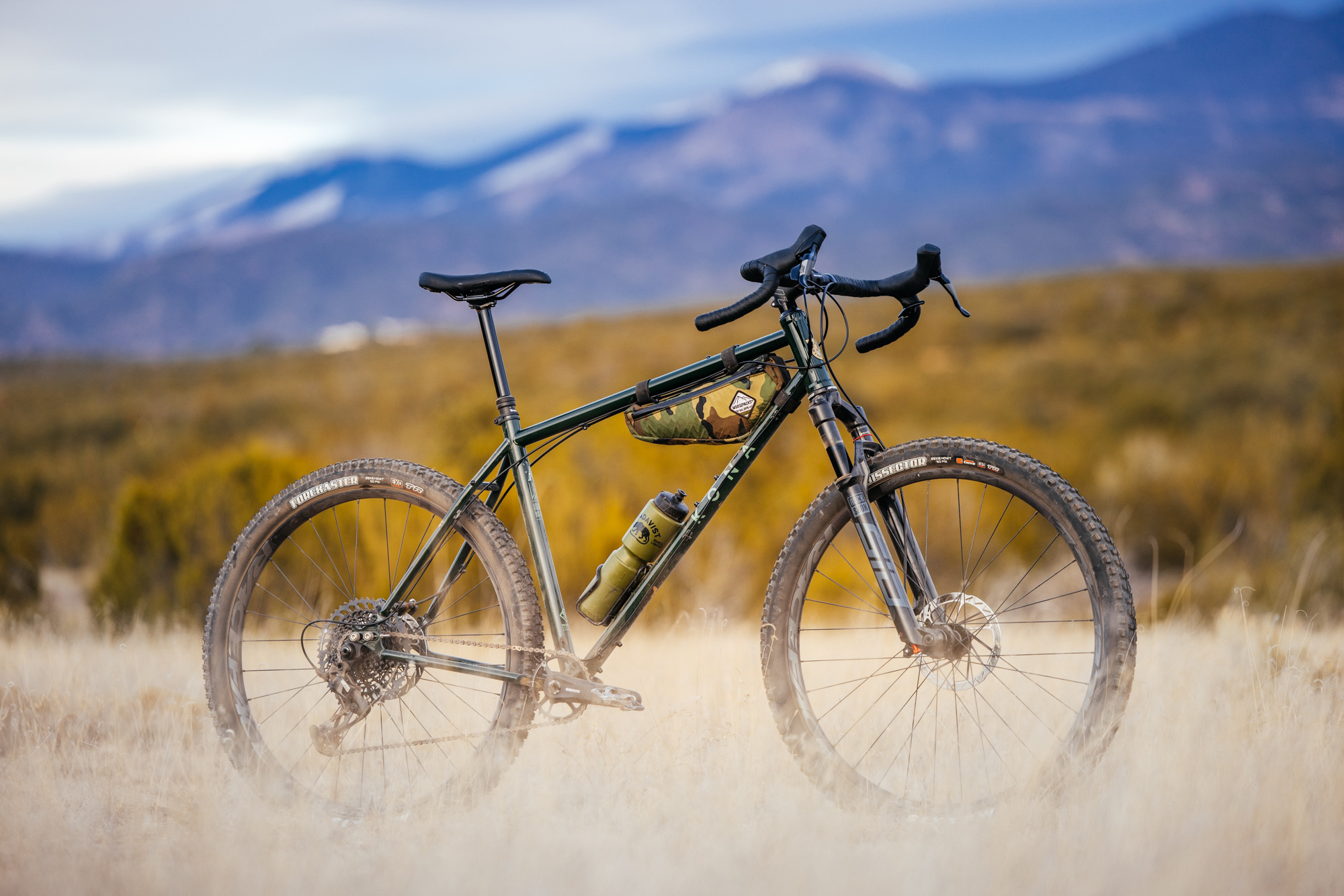
Kona’s LBF is a boost-spaced hardtail mountain bike with drop bars, aka a Drop-Bar 29er. While we’re often the butt of light-hearted jokes for being intrigued by drop bars on mountain bikes, there’s something special about this platform. Drop bars allow for various hand positions; some favor the ergonomics and control. Hell, the pros figured it out after people had been racing ultra-endurance events on them for decades, only to have their flagship race rule them illegal (cue sad violin).
The short of it is: Jacquie and Tomac were onto something.
Kona LBF Quick Hits
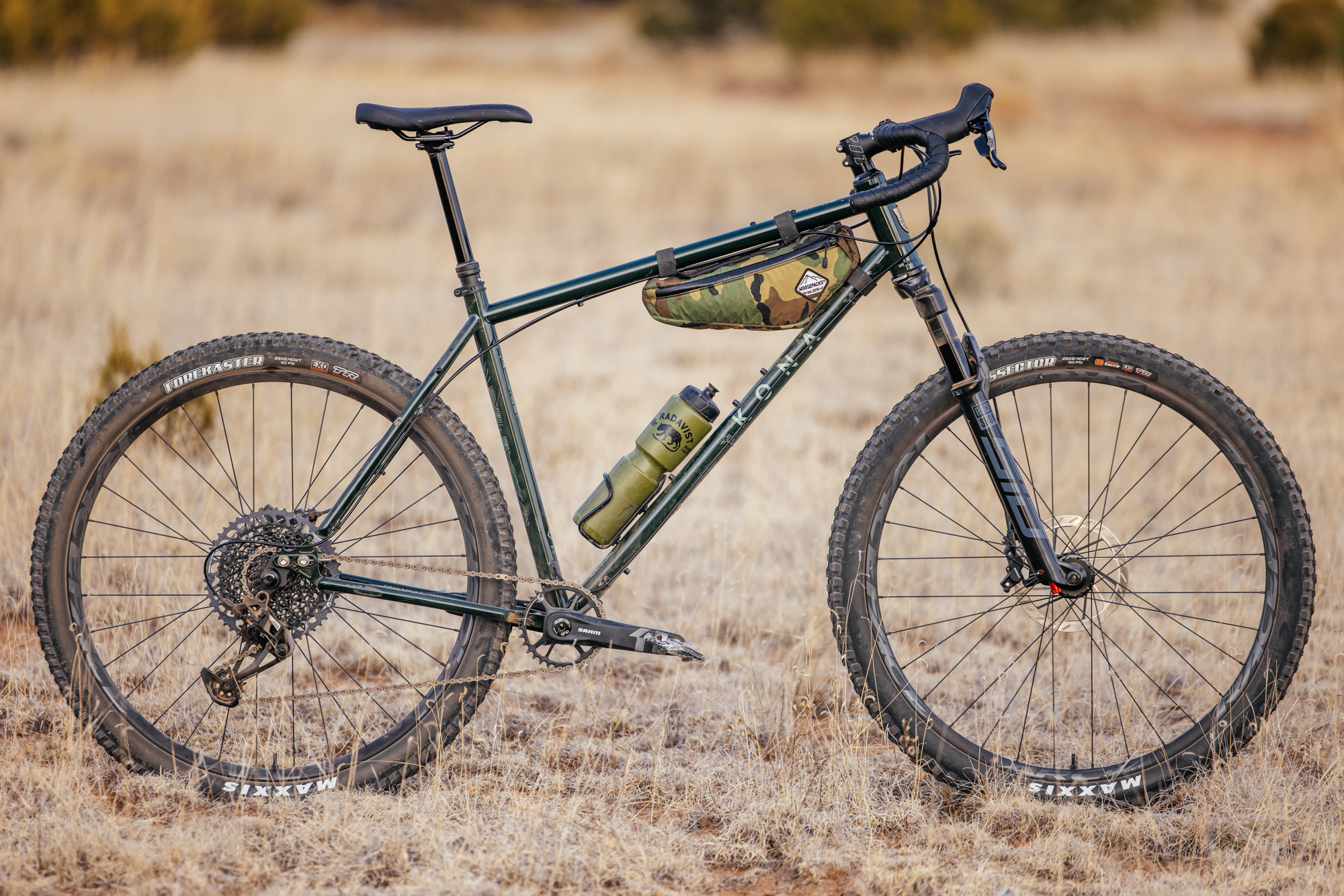
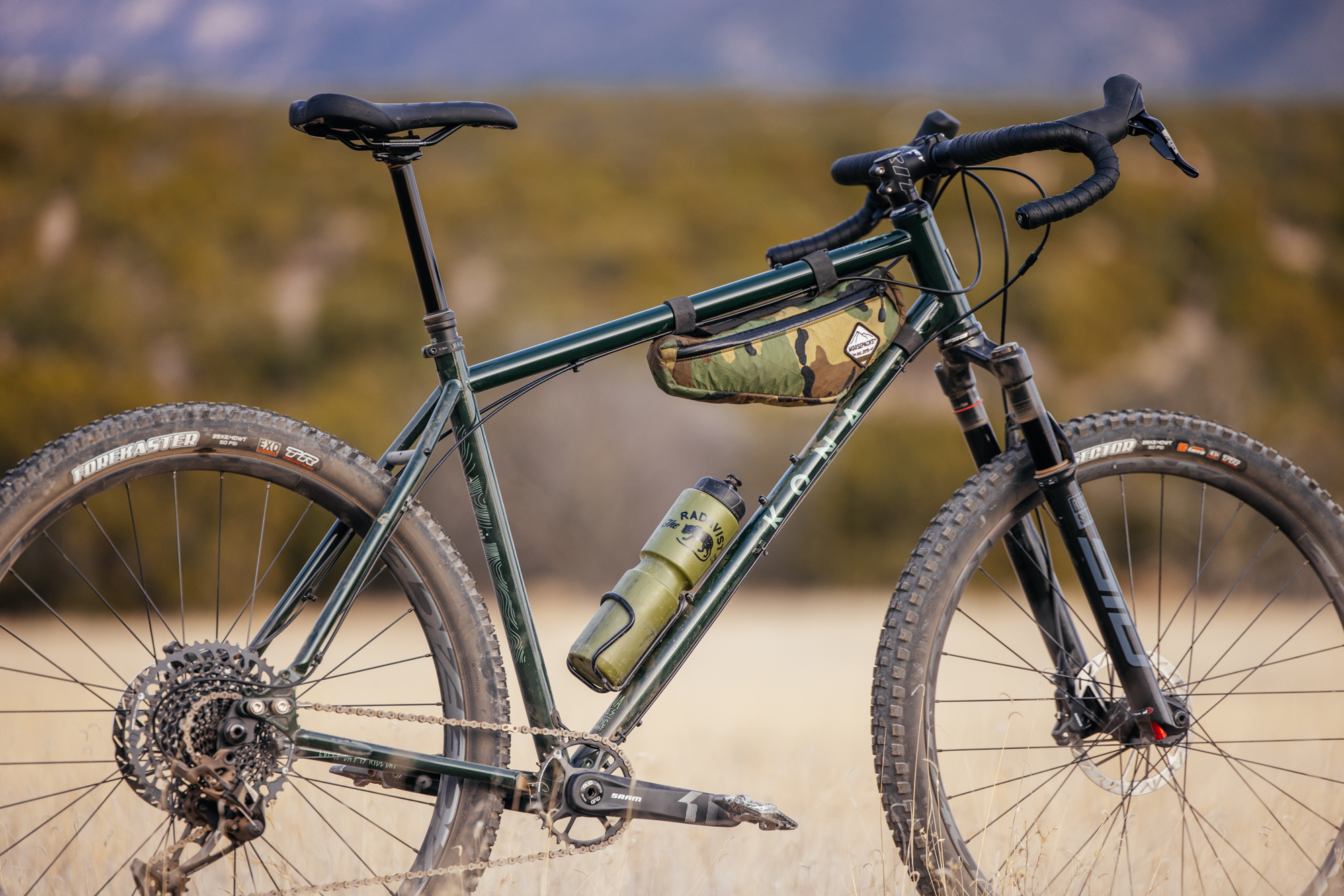
- $3,699 complete as shown
- Size XL weight with pedals 32 lbs
- Reynolds 520 Butted Cromoly frame
- Rockshox SID 3P 100 mm travel
- 31.6 mm dropper (praise Jah)
- SRAM Apex Eagle Gearing
- 2.5″ 29er tire clearance
- Long dropper compatible:
- Small: 275 mm, Medium: 320 mm, Large: 365 mm, XLarge: 410 mm
Frame Details
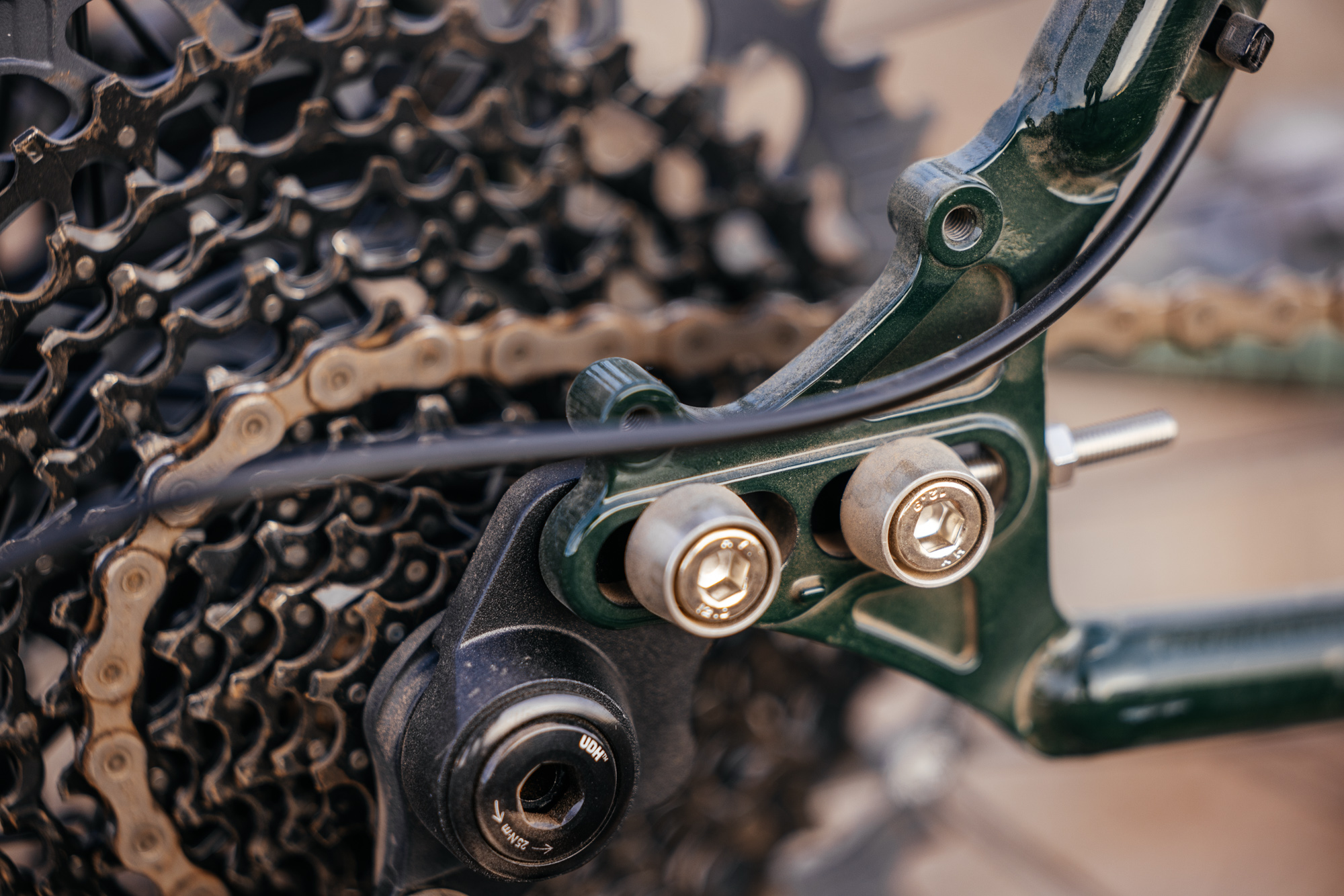
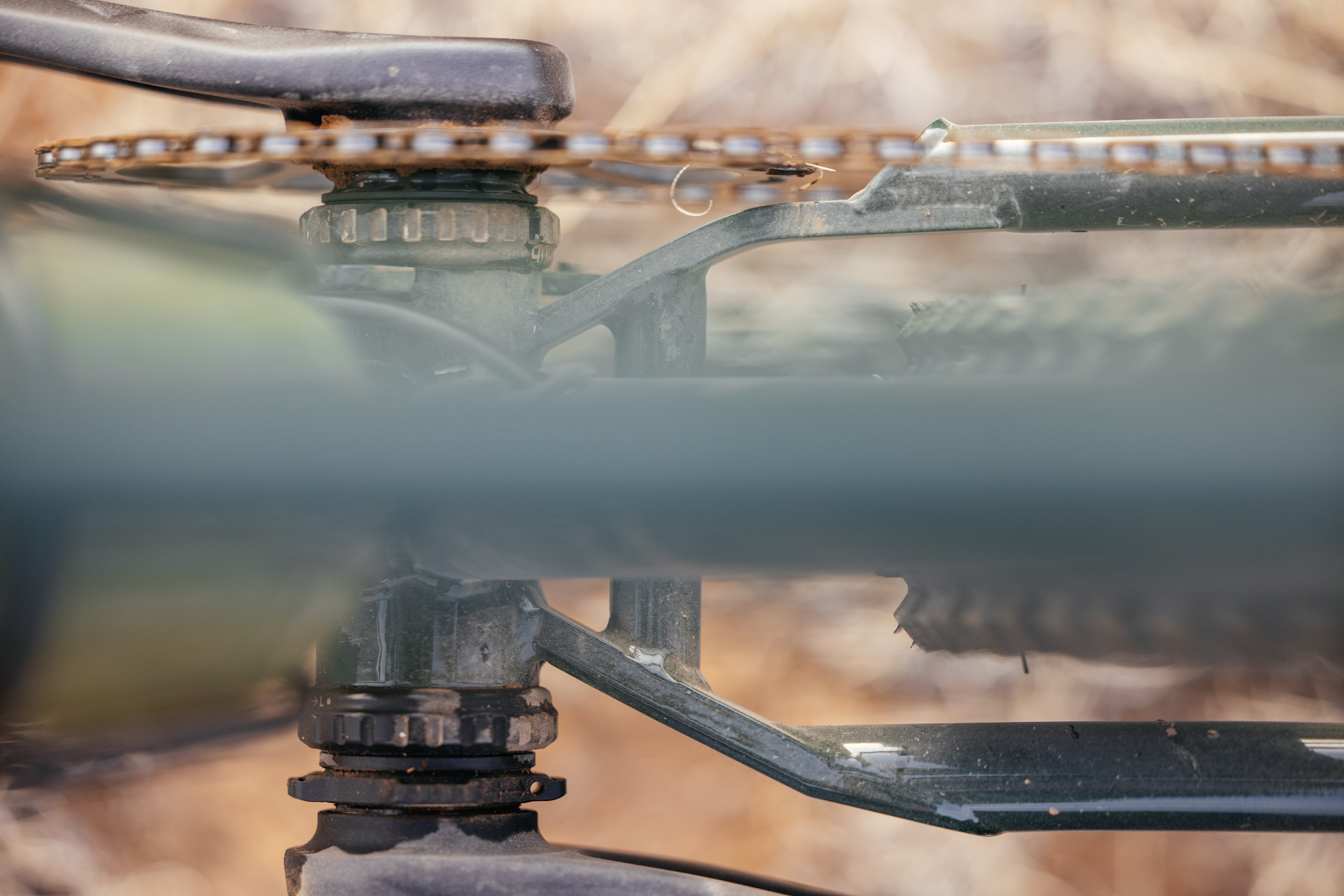
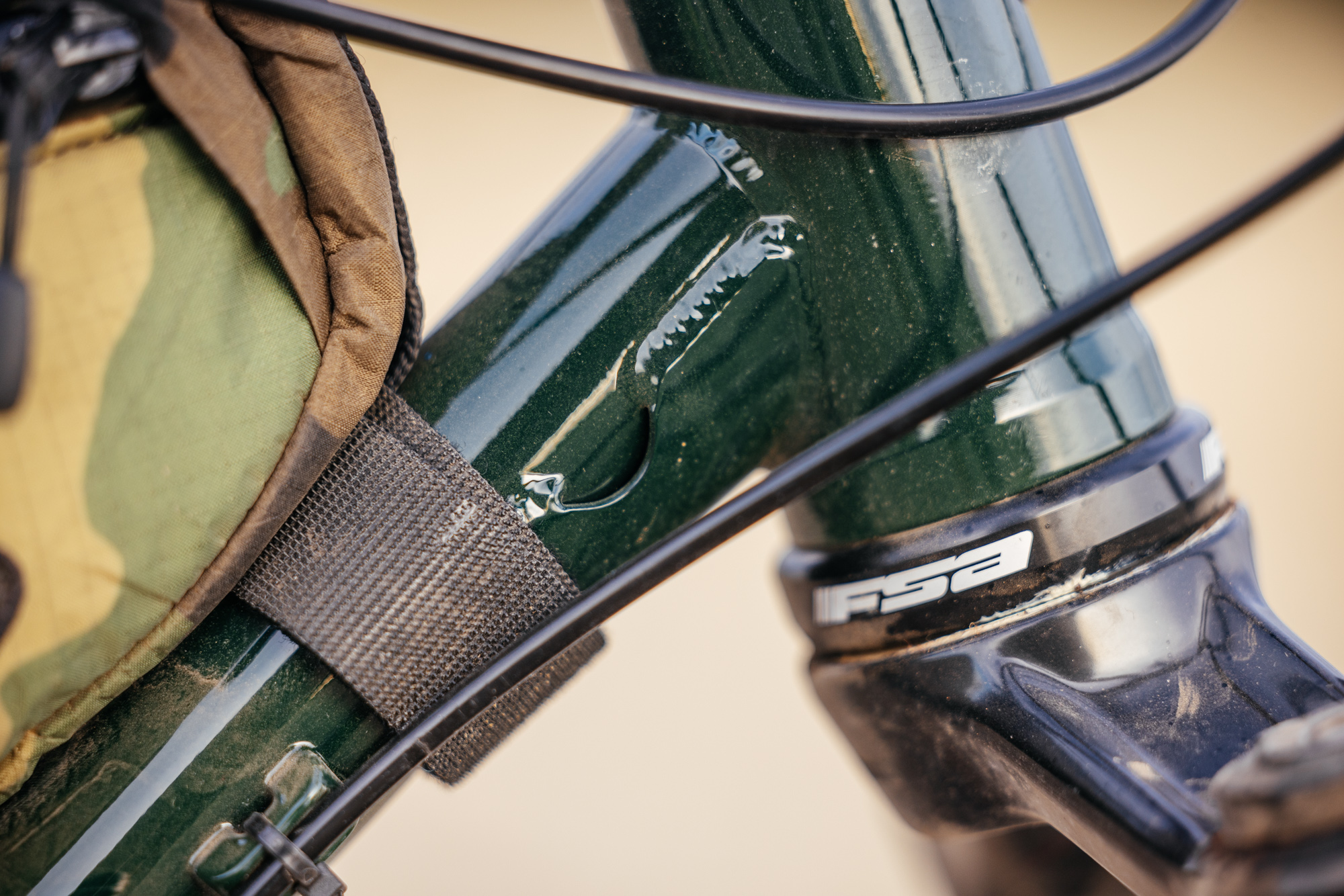
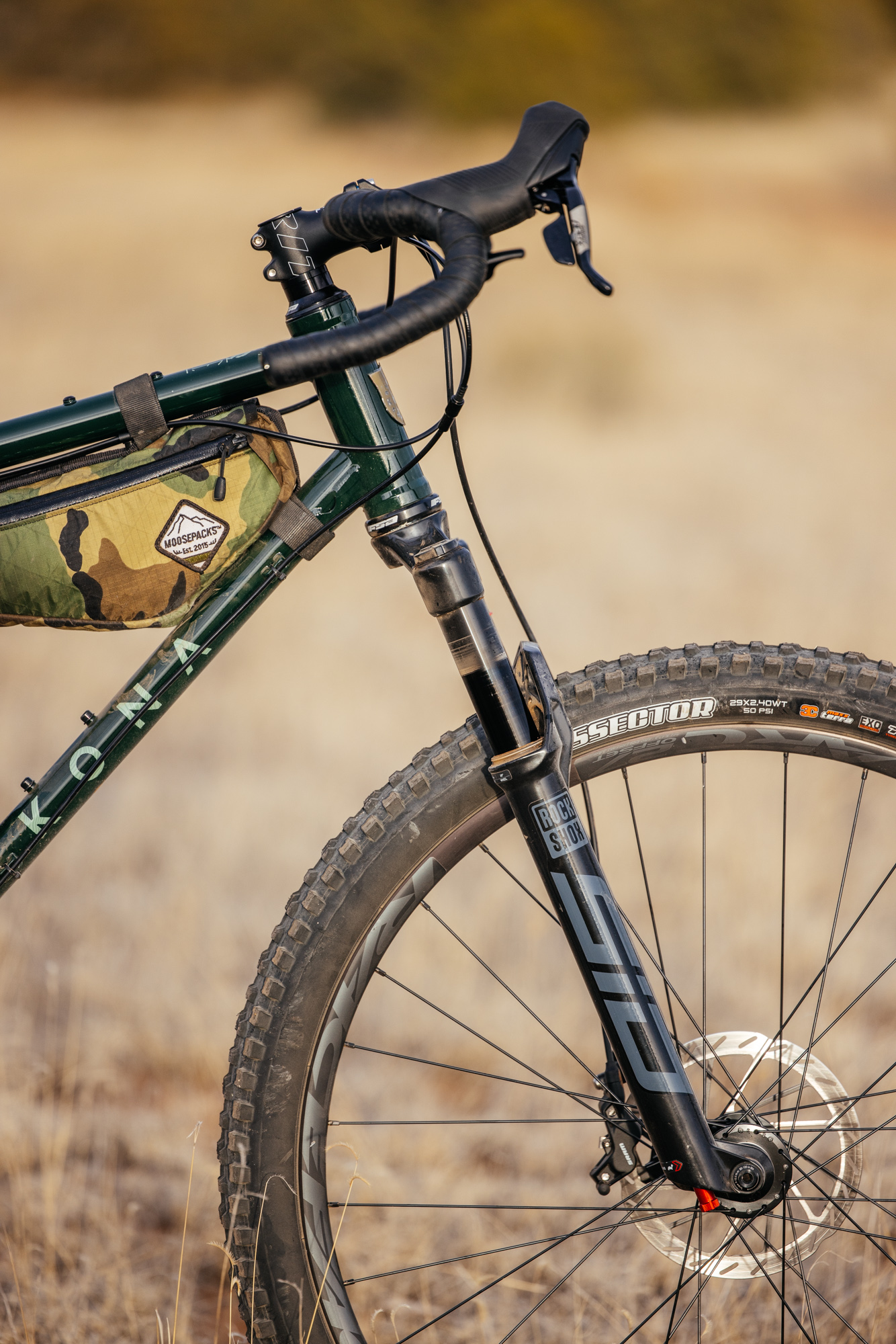
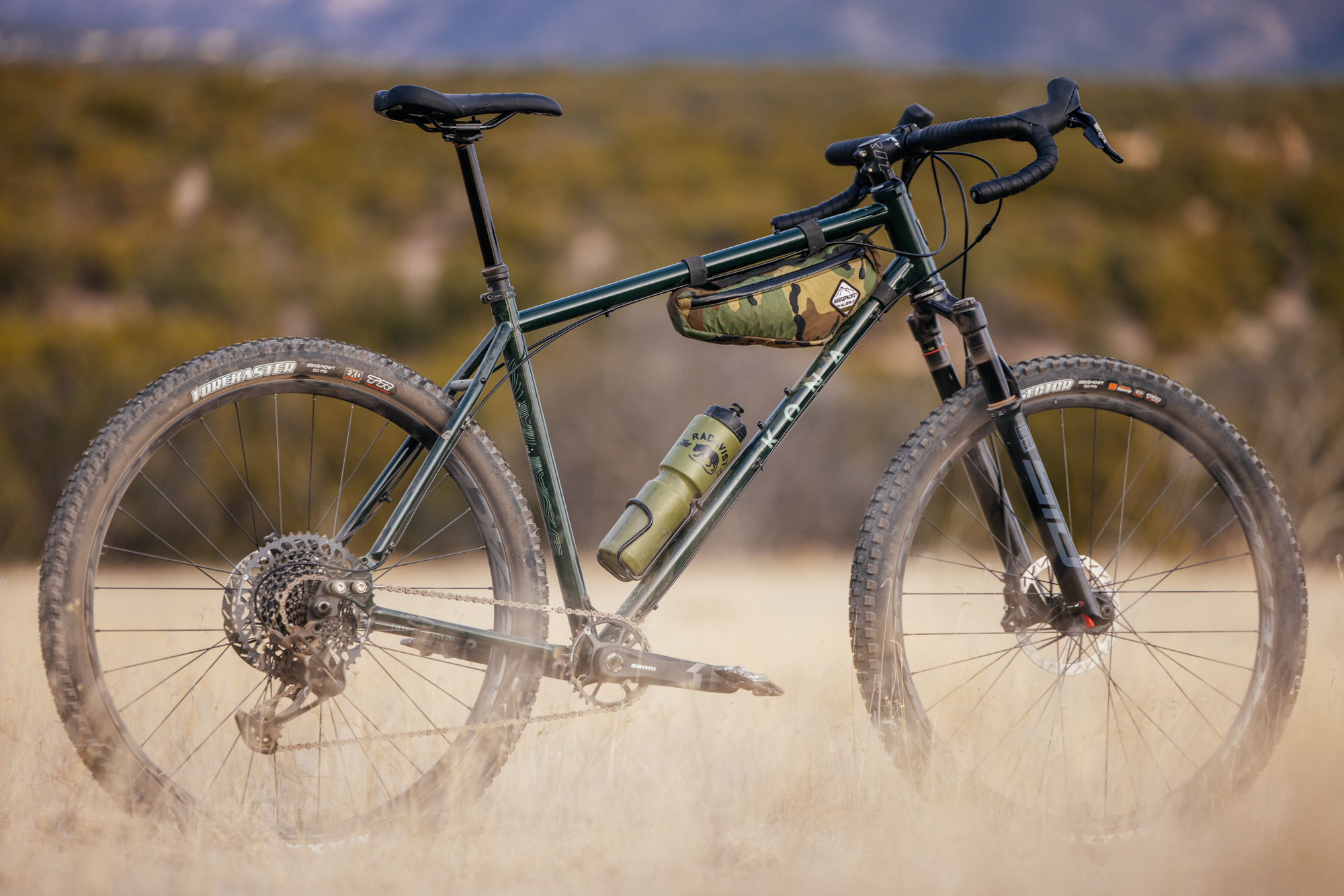
Kona makes exceptional bikes. For being a company larger than say, Crust Bikes, Tumbleweed, and others, they have their heads tuned into a similar frequency. The LBF frame is full of details you’d come to expect from a brand of its pedigree. It’s made from Reynolds 520 butted tubing. There’s a down tube/head tube gusset, so you know it’s designed to take some front-end impacts.
A chainstay yoke provides ample tire and chainring clearance, and the sliding UDH dropouts make it single-speed ready. There are bosses for bottles, cargo cages, and bags a go-go. Everything is dialed. There’s no awkward cable routing or visual chatter. This frame is a clean and concerted effort into the drop-bar 29er foray.
A few times while riding the LBF, friends would ask, “Is that a custom bike?” and I think that’s one of the finest compliments a brand like Kona could receive.
The only bummer is the lack of bottle bosses on the seat tube.
LBF Build Kit
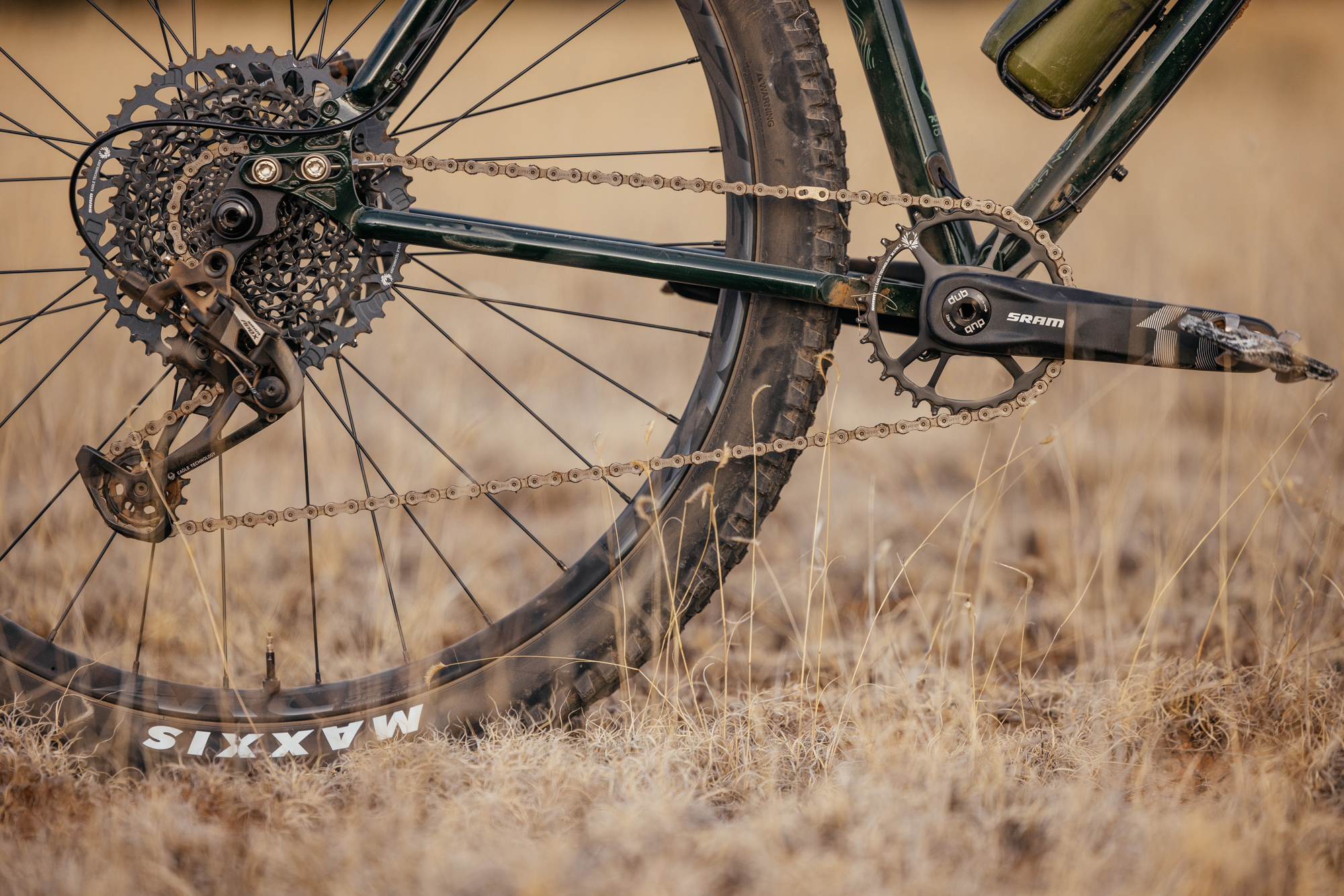
Kona specced the LBF to be reliable and sturdy. There’s nothing lightweight or fragile in the build. Boris the Blade would fuck some shit up with this bike. The components are metal. It has a TranzX dropper and a dropper lever, right under your left brake hood. It enters the ring at 32 lbs, which I’d say is quite damn impressive. Especially since they also specced a RockShox Sid fork with a Rush RL damper, so you can really fine-tune how plush the front end feels without dumping all the air out of your tires, risking snakebite. But the Sid fork isn’t the most exciting part spec of this build kit…
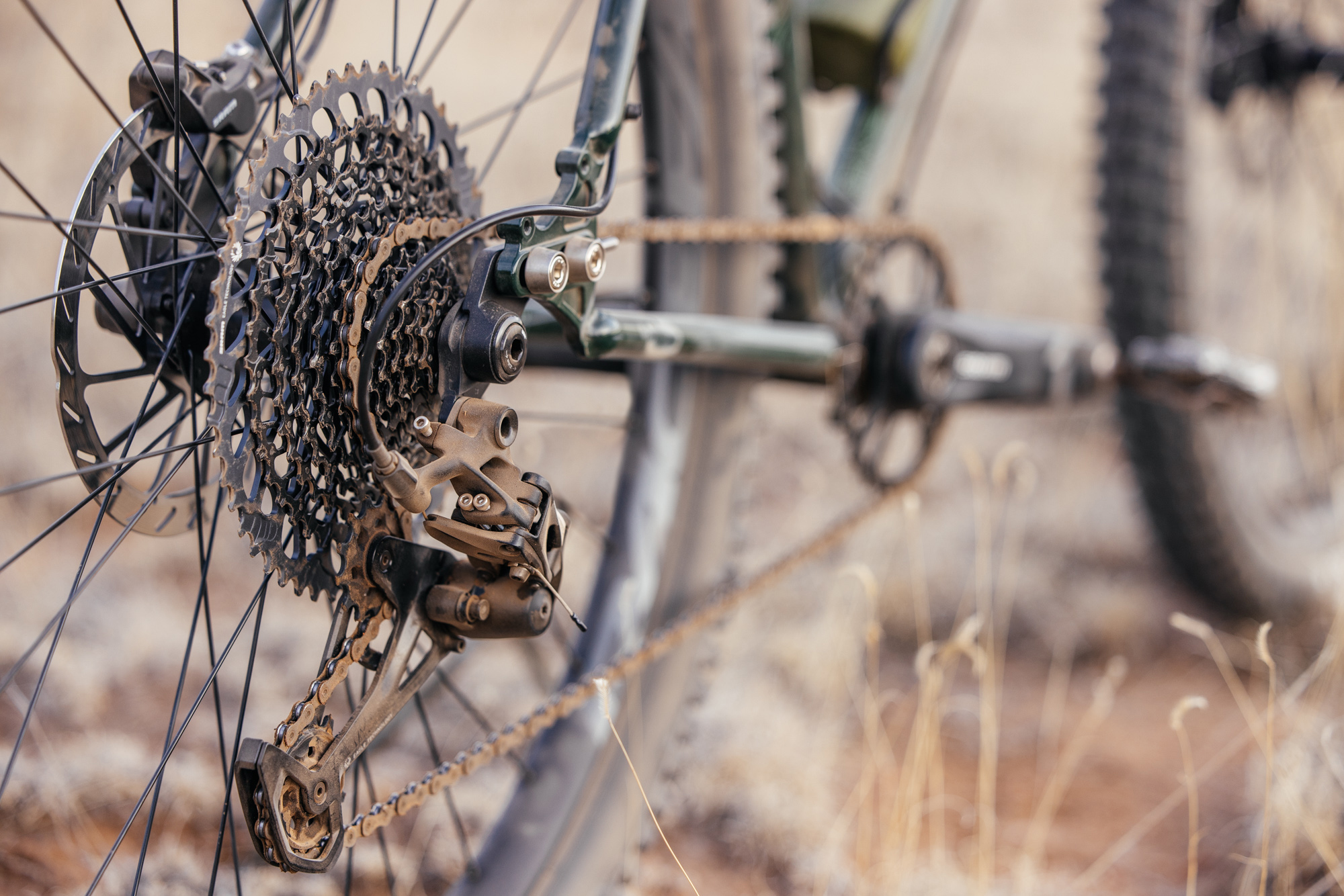
Hell yeah, Kona! More drop-bar 29ers with SRAM Apex Eagle, please! You know what? For all the demands, for all the years, everyone cried to the heavens to have SRAM’s Eagle mountain bike gear range pair with drop bar levers, you’d think a bomb would have gone off once they finally rolled out Apex Eagle. Yet I am totally surprised that people have seemingly forgotten about it.
SRAM had The Radavist’s audience in mind when they released this groupset. Full stop. Just look at the groupset launch photoshoot! It’s got all the vibes in it. As well as some of our homies!
I digress.
The LBF is the perfect vessel to float this cable-actuated dream drivetrain, and I hope you take note! No more disassembling your shifters – huge thanks to SRAM for listening to our cries for drop-bar MTB gearing! And they didn’t even bother releasing it in Rival or Force. Just Apex. The most affordable line.
Kona and SRAM, I tip my tinfoil hat to you. But this leads me to discuss the drop bars on this 29er.
The Drop-Bar Effect
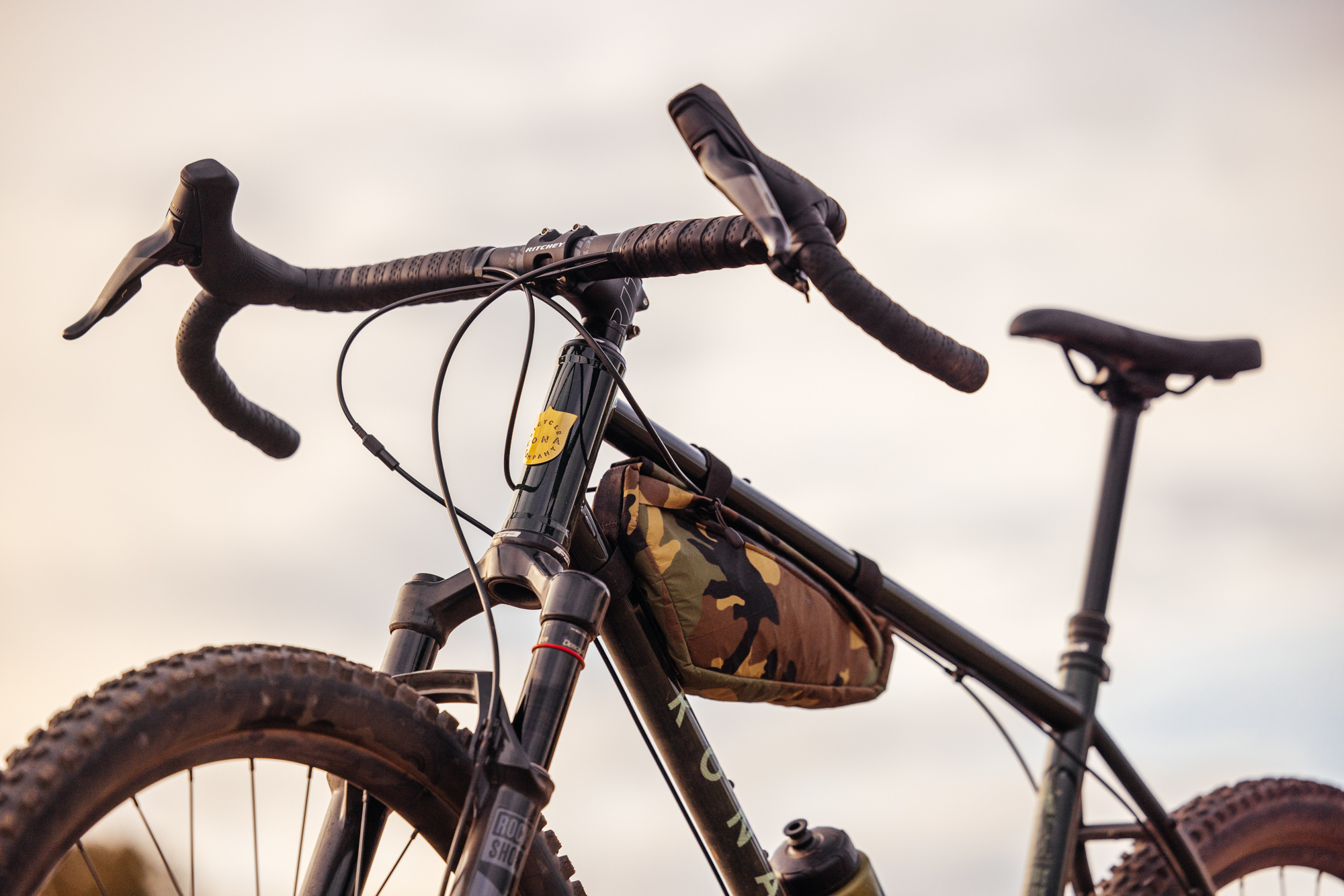
A few of us on staff have a long-running joke that putting flat bars on a drop bar bike just makes it more shreddy. And that you need so many hand positions on drop bar bikes because nothing about them is comfortable. Jokes aside, personally, I think the proliferation of drop bars stems from an unnecessary infatuation with the feeling of perceived speed.
On a serious note: I’m drop-bar agnostic, but drop-bar reviews have always gotten more traction over here. Some of my favorite bikes I’ve reviewed have had drop bars, and I’ve quite enjoyed the review period on them. But then, putting flat bars on those very same bikes means I ride them entirely differently.

So what do I mean that I ride flar bar bikes differently? A good case study here is the Tumbleweed Stargazer drop-bar 29er versus the Tumbleweed Sunliner rigid mountain touring bike. The Stargazer got around four times the traffic as the Sunliner, even though it was arguably the same bike, just with drop bars. Perhaps the redundancy is the reason, but I think it’s the drop-bar effect.
That’s where I’m at on the LBF after riding it for a few months on gravel hardpack, doubletrack, and mountainous singletrack.
If this bike were just a standard-issue hardtail, it might not have lured your eyes into this review. But put drop bars on a mountain bike, and it seemingly appeals to both gravel road cyclists and mountain bikers alike. It scratches an itch. Is it confusion? Curiosity? Carnography?

LBF Geometry
Putting drops on a stock geometry hardtail doesn’t work, in my opinion. It’s the lazy way to bait roadies into buying a mountain bike. But for a drop-bar 29er to work, you’ve got to address the increase in extension by having drop bars and hoods; i.e., from the tip of the saddle to the stem clamp on a flat bar is more or less where you’ll be holding the bars. But add drops to the mix, and your hands will be up to 100 mm further out on the hoods or in the drops most of the time.
So, a proper drop-bar 29er will often have a shorter top tube to accommodate this. The LBF is a proper, legit, all “t”s crossed and “i”s dotted drop-bar 29er. Kona ain’t no suckas.
The LBF geo falls in line with an XC or Downcountry mountain bike. It has a 67° head angle and a 75º seat angle, straddling the line of “racer” and “trail” with some geometric restraint. There’s no need for a hardtail like this, that’s meant for gravely terrain, to have a steep, 77º seat angle.
Riding the LBF: Singletrack
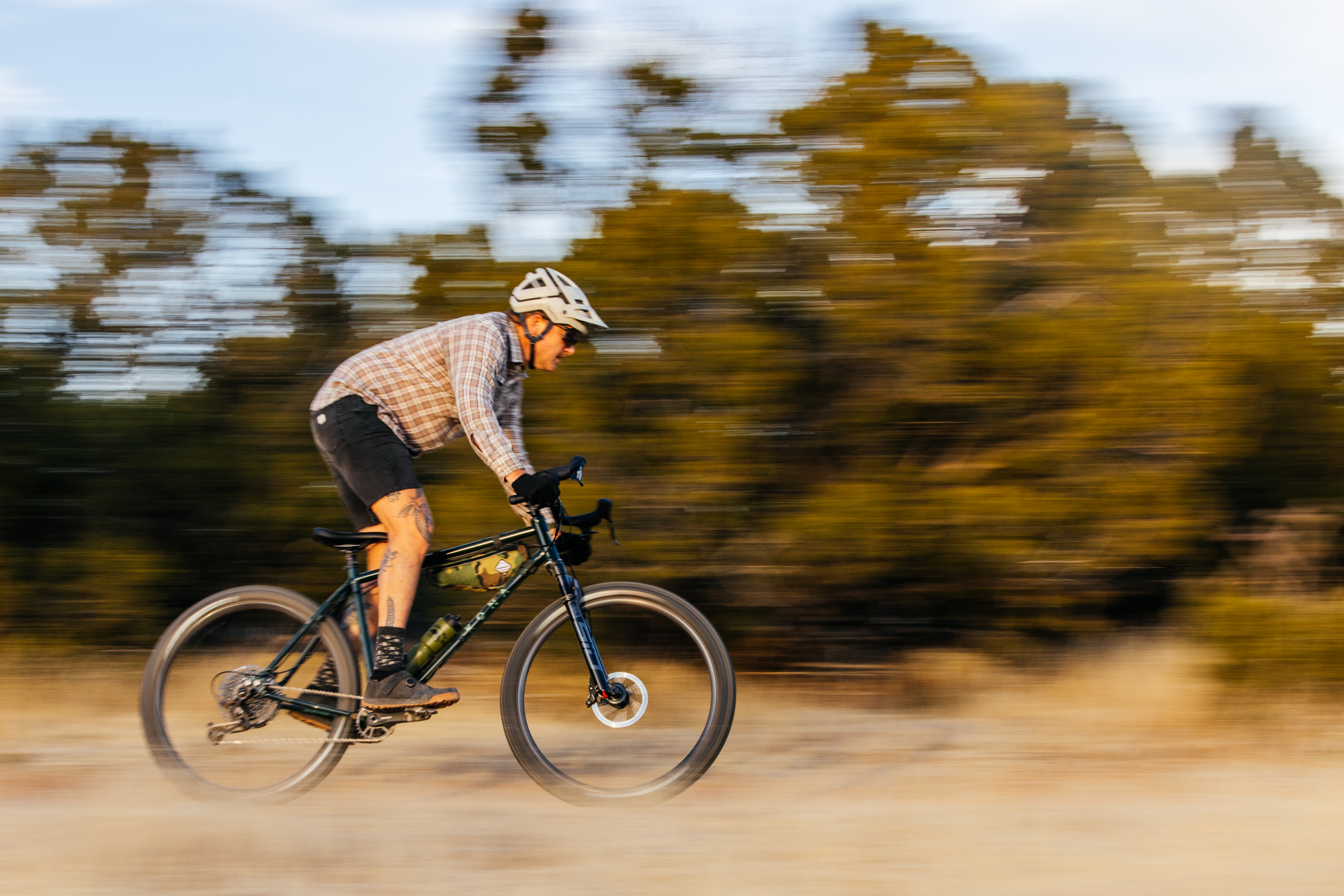
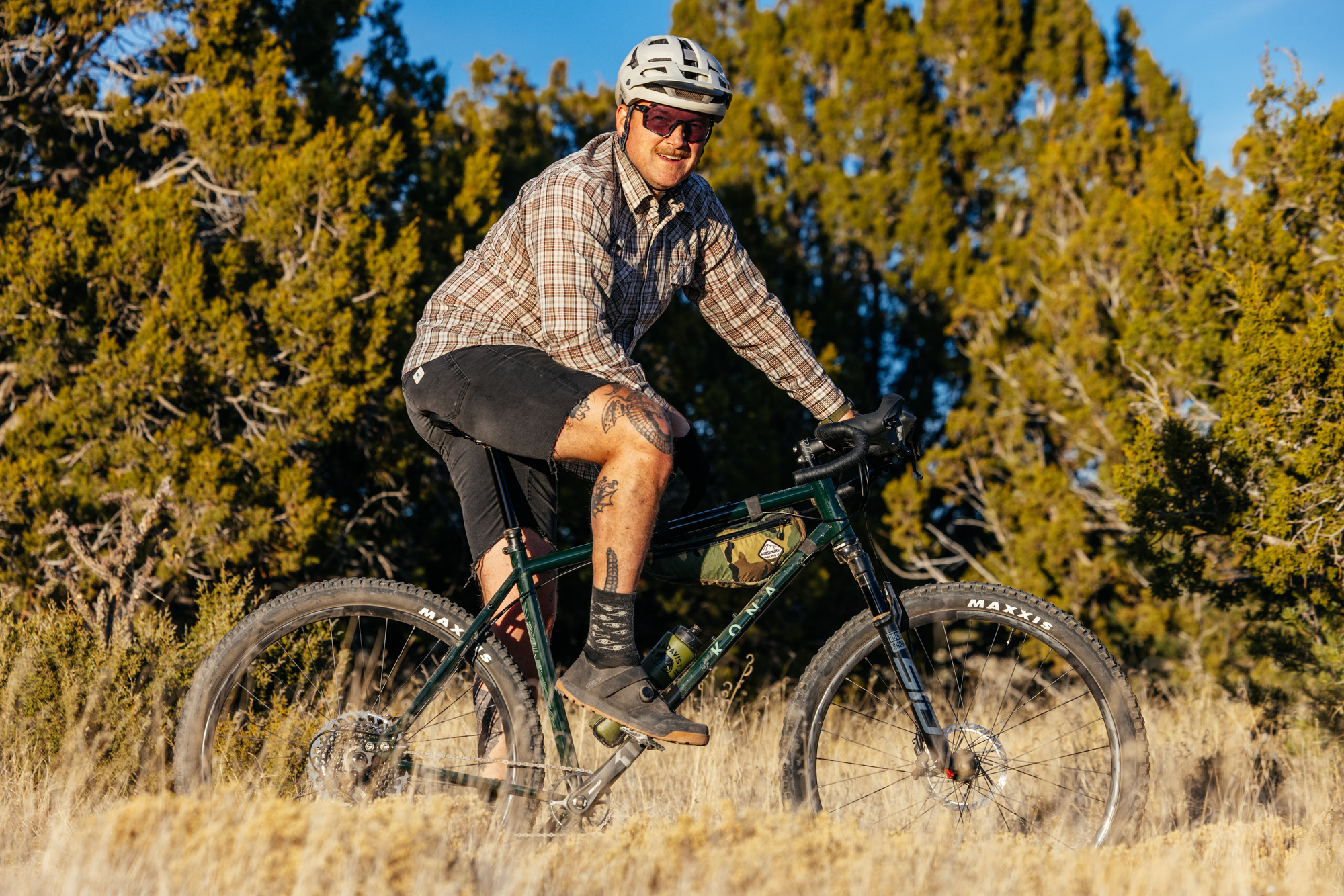
Why on Earth would I take this bike on my normal lunch loop? To prove to myself that even with drops, the LBF is still a mountain bike, I guess? It’s worlds apart from my Meriwether, or that sexy ass Sour Cowboy Cookie, but it’s also not at all like the Tumbleweed Stargazer, either. Your riding position is a bit higher than a normal hardtail. Its 150 mm head tube (in size XL) raises the bars a bit (679 mm stack) so you can comfortably be locked into the drops while you’re flying down singletrack.
I’m a long-legged, short-torso’d, long-armed rider with great flexibility, and I did find I quite liked riding in the drops for more shreddy sections.
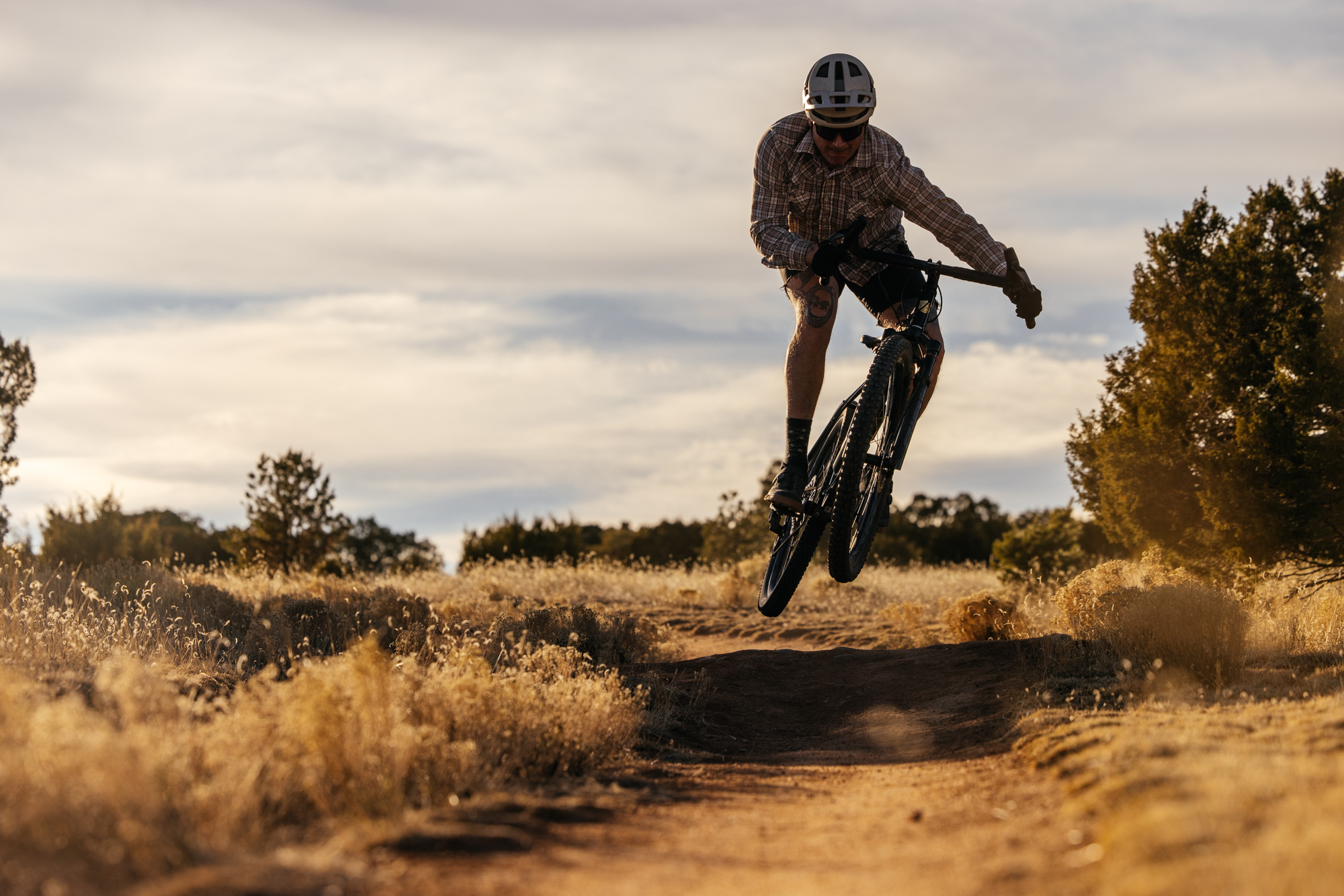
Piloting the LBF through rocky sections was easy, and one of the things I really like about being in the drops while plopping along is how secure your hands are. If you stuff the wheel, your hands are securely hooked in. Ergonomically, it feels more stable to take a hit this way, versus on flat bars, your wrists can easily bear the brunt. Turns out, drop bars really are ergonomic.
There were plenty of moments, though, where even being on the hoods of the LBF’s cockpit felt like I was too pinned to properly wield the bike. I usually ride 800+ mm wide bars, so getting onto a drop-bar 29er and riding the hoods, which measure 51 cm on center and 64 cm at the ends, definitely took some adjustment to my riding style.
At least in my singletrack terrain, the drops here felt like a hindrance, or I should say, not the proper equipment. But elsewhere, they were a true-to-form ally.
Riding the LBF: Gravely Roads and Tracks
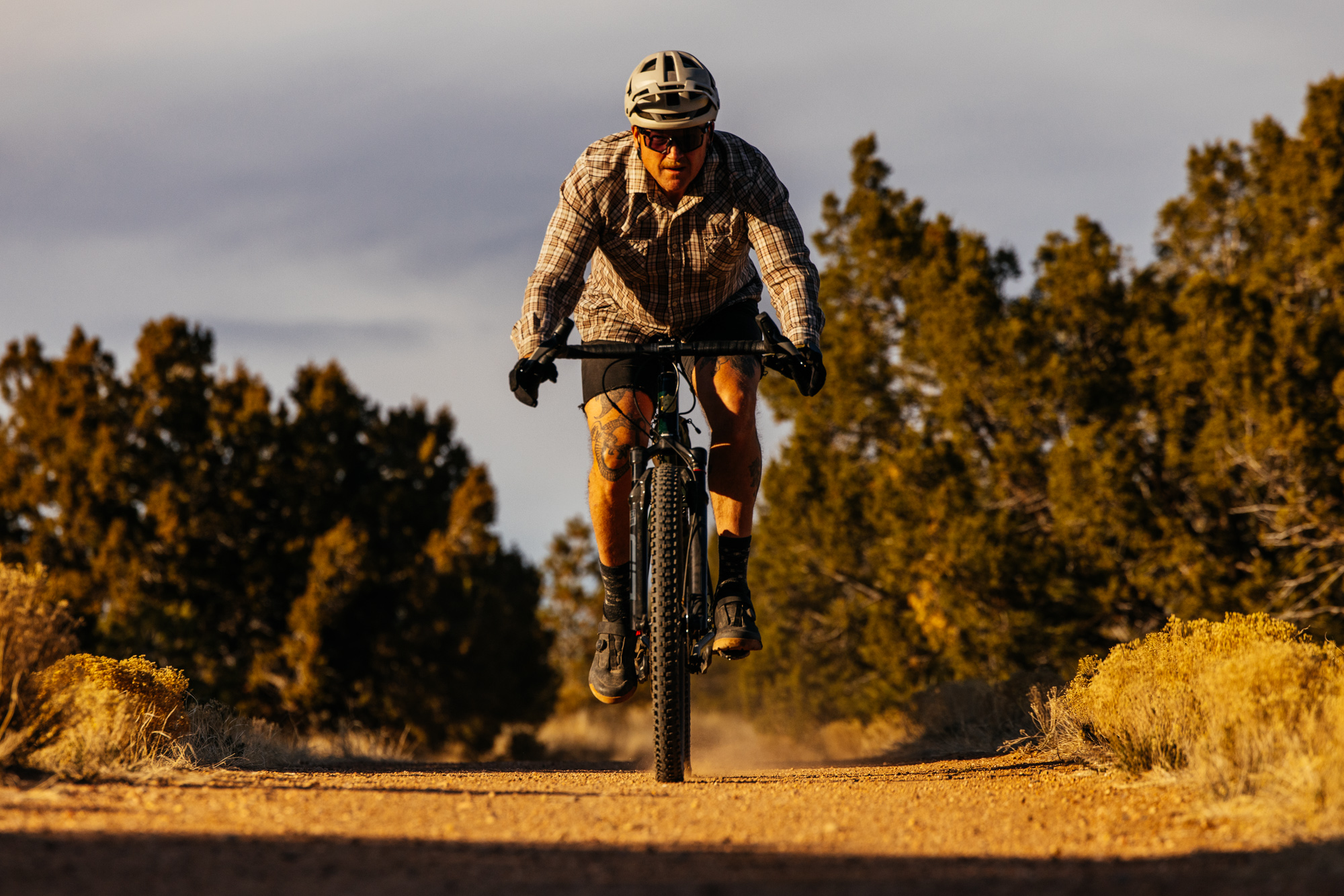
Our Public Lands in New Mexico are grossly underfunded. We don’t get that nice, flat, and fast gravel like Colorado, Nevada, and California get. For the entire Santa Fe National Forest, we have but one full-time Park Ranger, and they ain’t out with a grader making sure my wittle hands aren’t sore from washboard. Nope.
Like much of the West, our dirt roads have been hammered by SxS UTVs and Jeepers who find it necessary to tear up the roads after a rainfall, making for obtuse, hazardous ruts and mud holes. Never – I repeat, never – ride through a mud puddle here unless you can see the bottom of it. It is a portal into hell.
Pardon the explainer here. We’re a state with endless open spaces, and the roads within aren’t for the weak-wristed folk on 40 mm tires. On a ride with Miguel, who was on 50 mm tires, even he was getting tossed like some Cerrillos turquoise in a rock tumbler. Meanwhile, the LBF just bombed down the rocky chutes and careened down the rutted doubletrack.
Miguel didn’t have a dropper either. Or a suspension fork. And remember: the LBF is not a gravel bike. It is a boost-spaced 29er with a heavy-duty chassis, and while it might not feel as light-footed as a gravel bike, I’d rather have a few pounds extra for shreddy comfort.
It’s a Mountain Bike
Yes, it’s not a gravel road bike, which is still a very capable machine for riding dirt. And I’d argue a gravel road bike is probably more efficient when it comes to riding pavement. You can feel rotational mass and rolling resistance from larger, heavier-duty tires while riding a bike like the LBF on pavement. Especially when you’re cracked 15 miles outside of town, pedaling into a 30 mph headwind.
Bonking on a review bike is a wild experience. You really begin to tune in to the minutiae. On this particular ride, the last ten miles back home is up a false flat that gains over 1000′. It’s not uncommon for people to crack on this last stretch, if for no other reason than the ride looks completely flat. But it isn’t, it’s just enough of a grade to stick it to ya. Particularly when you’ve been battling headwinds the whole afternoon.
At one point, I told Miguel to “just leave me… go back to your family…” like I was some wounded character in a zombie flick who’d gotten bit trying to scavenge for a stale-ass donut in a big box store in the suburbs of Ohio.
For the last stretch of our ride, which is all pavement, I could tell I was on a mountain bike.
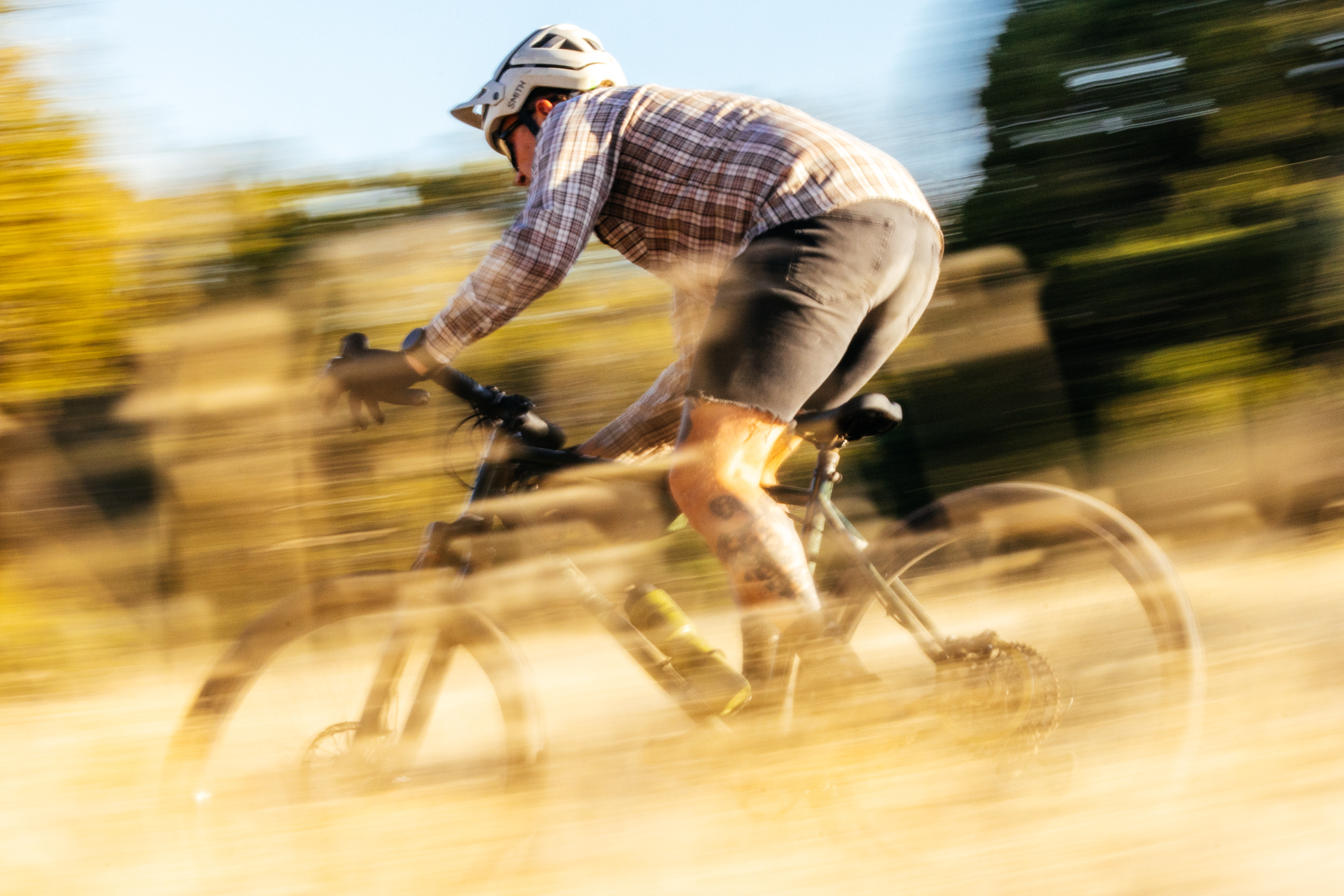
Production steel hardtails can have some heft, particularly once they pass ISO testing. They get over-engineered for the masses, but they also can take 40 lbs of bike camping stuff and not ride like a death noodle, too. 32 lbs is not heavy for a bike like this. At all. Especially in size XL! I’m honestly really impressed by that. But if you’re used to mid-20 lb gravel bikes, you will notice the weight when you throw your legs over LBF.
I returned to that ride and did it again, after putting in some more miles coming off my injury, and can say that riding the route this second time didn’t feel obtuse at all, especially flying down rocky baby-head-filled doubletrack. Or even climbing steep, punchy, and loose volcanic rock.
Speaking of Climbing
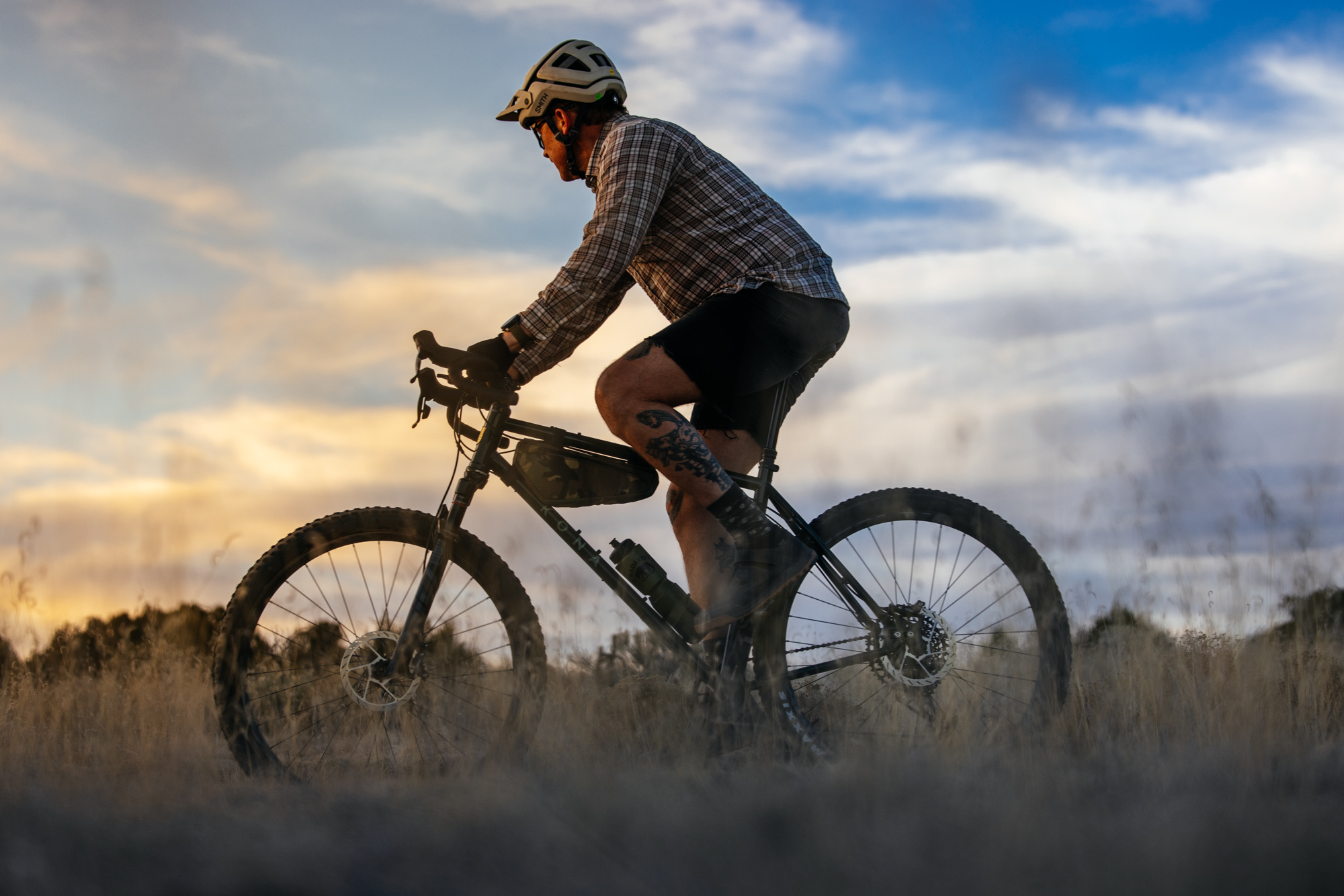
Where Kona nailed it on the LBF is its comfort. Holy hell, I could sit on this La-Z-Boy and just climb for hours. And when I did encounter steep pitches, I only needed to scooch forward on the saddle to dig in. Yet on gradual fire road climbs, it’s cushy. There’s no toe overlap with the slack head tube and suspension fork, even with 2.5″ tires. And when your hands tire of riding on the hoods, you can drop into the drops or hang out on the tops for a while.
While the bike isn’t exactly the most flexy in disposition, it does take some concerted effort to spin up and over techy bits. In fact, the only place I really didn’t enjoy riding the LBF was on techy and tight, twisty, rocky, primitive singletrack climbs. Which, unfortunately, is primarily where I ride my flat bar mountain bikes. Yet, I don’t anticipate people seeking out the LBF for exclusively riding on such terrain. I see them riding a mix of double track and swoopy, XC singletrack.
You never felt it would skip or slide out while climbing steep, undulating, and rutted doubletrack. Rather, it was like a 4×4 crawling up and across everything with ease.
Who’s It For?
I love to ride mountain bikes, and since moving out to the edge of the Colorado Plateau, my interest in road-bike-inspired gravel bikes has unfortunately waned. It’s windy here. It’s dry. There’s very little water in our gravel terrain. Meanwhile, our forested singletrack is lush, cool, protected from wind, and full of springs, streams, and rios. So like most humans, I seek that comfort.
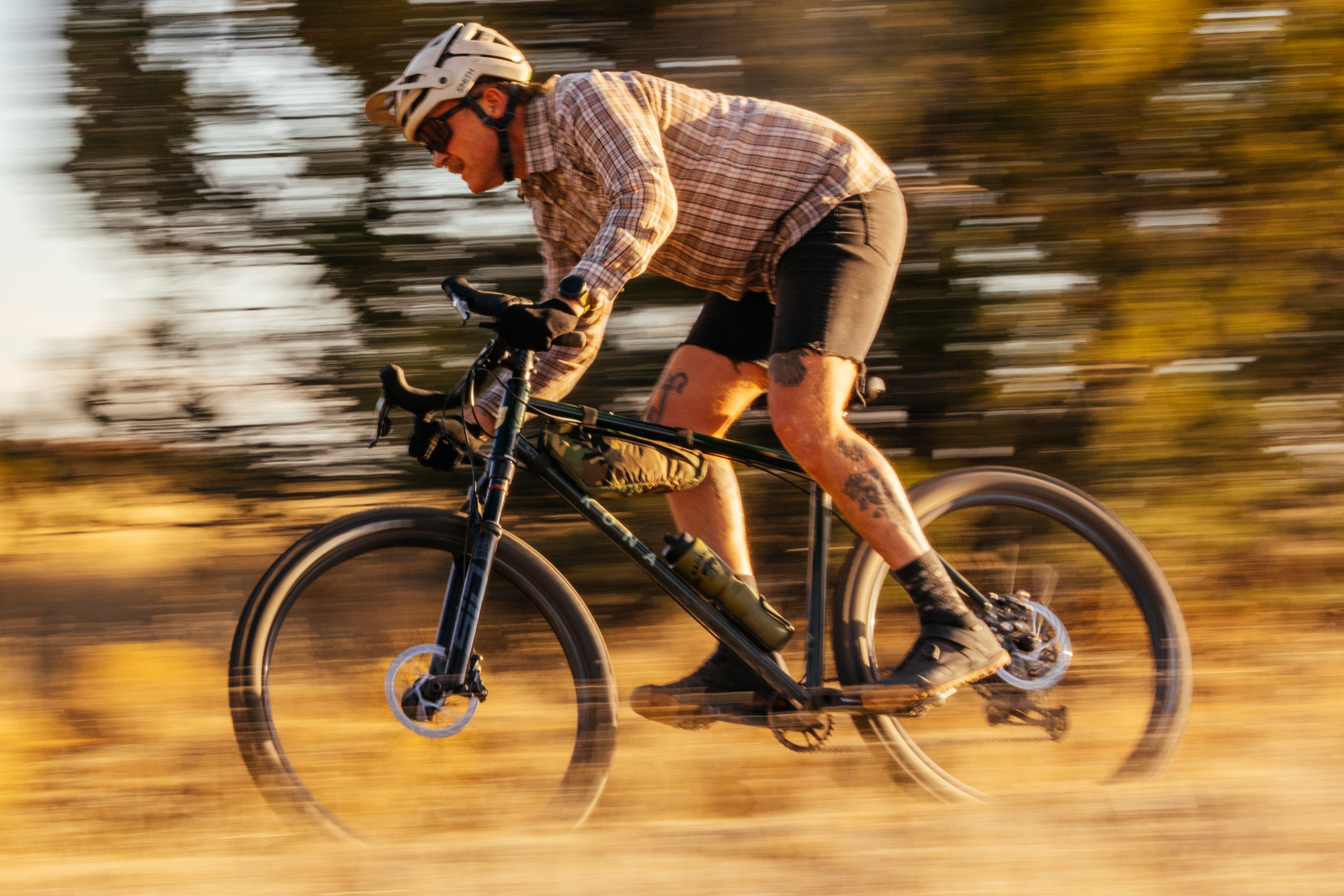
However, that doesn’t mean I don’t love bikes in this category. I find them to excel in the right terrain. Take the Bay Area, for instance – the LBF would be a killer bike for riding in the Marin Headlands. You can crank out dozens of paved miles to get to the mountains, and then climb the fire roads and rip down the California Poppy-lined brown ribbons of singletrack.
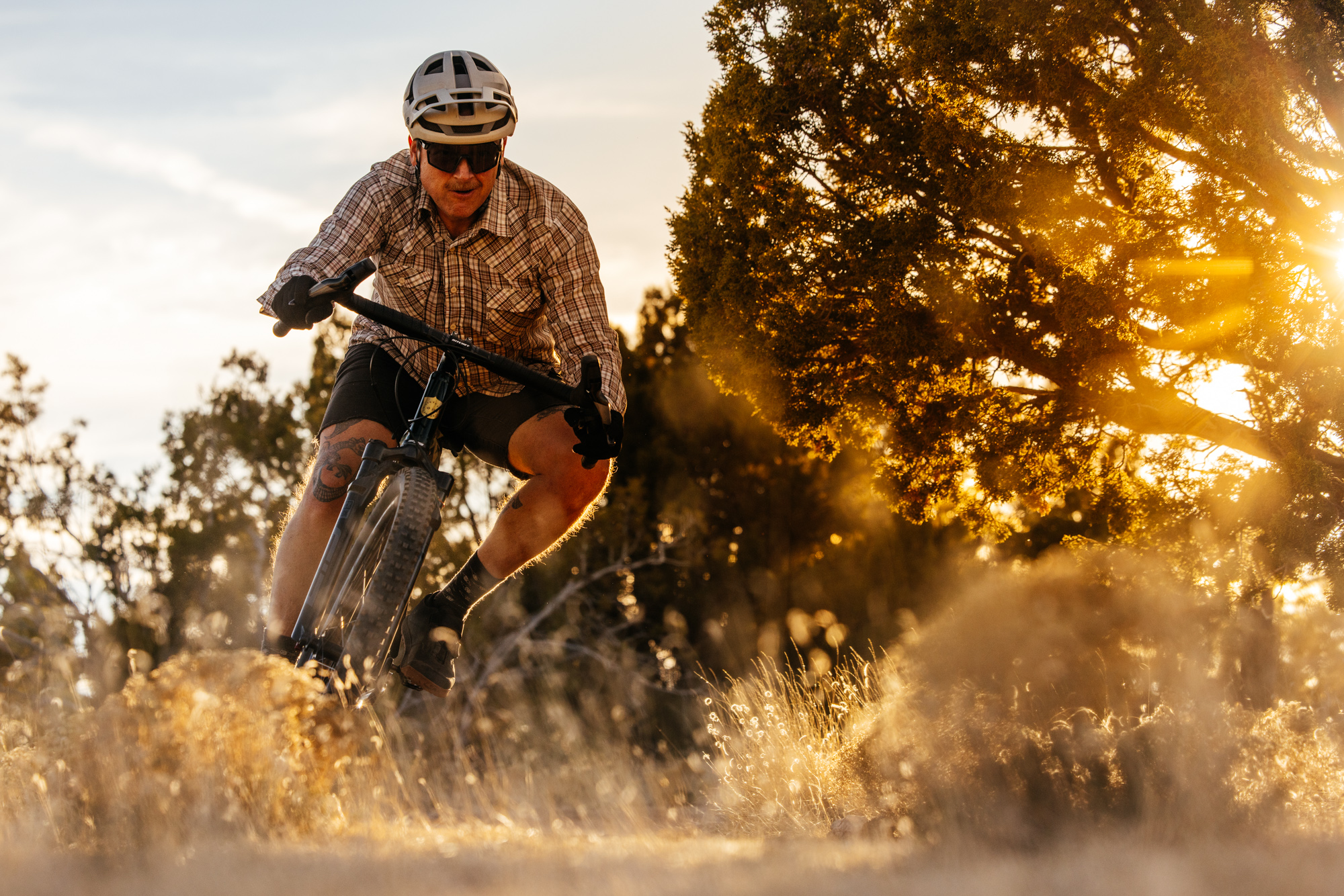
And yes, they are the perfect vessels for our rowdy-ass “gravel” out here in Northern New Mexico. It’d be the perfect bike for our Town to Towers ride, or the CDT on my favorite singletrack tour in the state. Even the Monumental Loop. Drop-bar 29ers make your standard-issue gravel and mixed terrain bicycling routes even more fun because while others are grabbing brakes and picking lines, you can just plow through it all indiscriminately. Big Fork SMASH!
TL;DR
Drop-bar 29ers ain’t for everyone. Some gravel road cyclists might say they’re too stout, mountain bikers ask “what’s up with the bars?” but for some of us, they fill a fun niche, offering the ergonomics of drops and the shredibility of a mountain bike. Since their inception, they’ve perhaps been marketed to ex-road racers who want to get into mountain biking and mountain bikers who want to go greater distances. Jacquie and Tomac were indeed onto something.
The Kona LBF, or Legend of Big Fork, brings the brand’s no-nonsense approach to designing bikes made for touring, bike camping, and adventure riding into its pedigree as a legitimate mountain bike brand. They didn’t just put drops on a hardtail; they massaged its geometry to adopt the new cockpit and selected a bomber build kit to ensure miles of shreddy stoke.
Drop-bar 29ers are more common now than perhaps they’ve ever been, but the LBF shows how they’re done right. Metal. Well-specced. Shreddy. And while still being affordable. That’s where it stands apart from the rest.
Pros
- Impressive weight at 32 lbs for a size XL!
- Boost spacing, MTB chassis
- Affordable for what you are getting
- Ample tire clearance
- Two bottles on the downtube
- Tuned geometry for drops
- Robust enough for fully-loaded touring
- Shreddy AF demeanor for chunky terrain
- You can’t ride it at Leadville 100
Cons
- Heavier than a gravel road racing bike but hey, it’s a mountain bike
- No bottle bosses on the seat tube
- Takes some getting used to while riding singletrack, especially on climbs
- Teraphobic cyclists and MTB bros might lose sleep after seeing it
- You can’t ride it at Leadville 100
See more at Kona.