
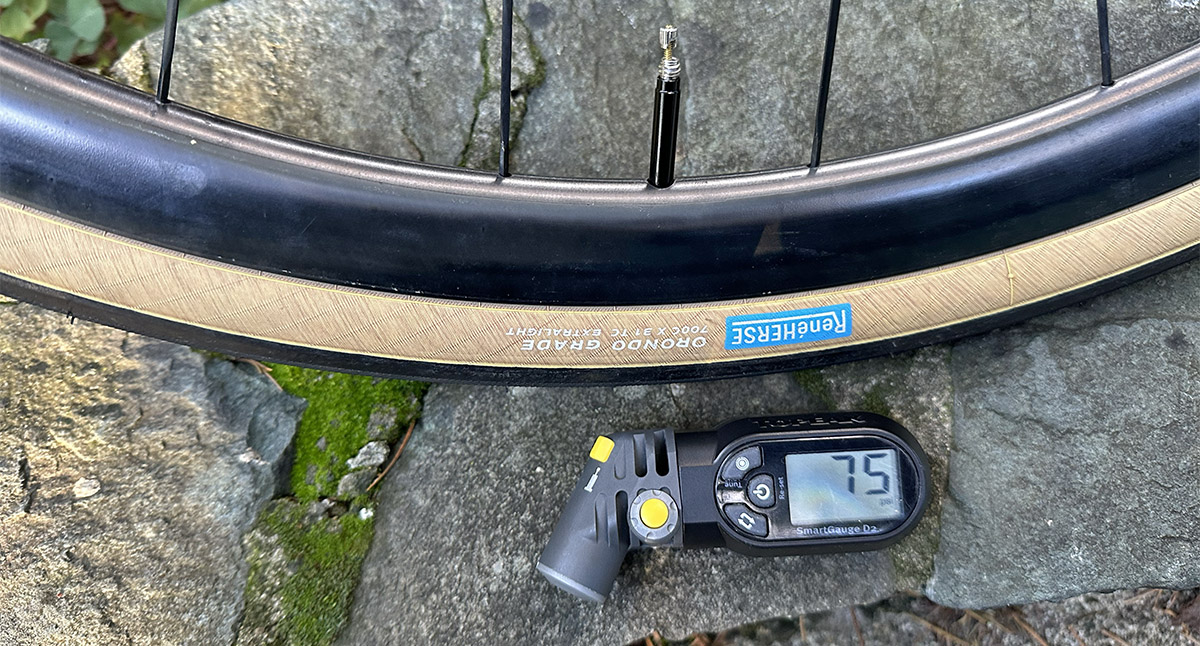
This year marks 20 years of Bicycle Quarterly’s ground-breaking real-road research into tire performance. Back in the spring of 2006, we started testing tires on real roads, with a rider on the bike. The results surprised everybody—us included: High pressure doesn’t make supple high-performance tires roll faster. That went counter to what had been accepted wisdom for over a century. That’s why performance tires were narrow—so they could run at high pressure. Back then, road bikes ran 20 or 23 mm tires, inflated to 110 psi (7.5 bar) or more.
If high pressure isn’t needed, then there’s no need to run narrow tires. Supple casings and wide tires offer the same or better performance—and much more comfort—at lower pressures. That was the start of the wide-tire revolution. Today’s pro racers run tires with 50% more air volume and inflate them to half the pressure. Not just today on the gravel of the Strade Bianche, but also on the smooth pavement of the Tour de France. That’s a profound change. And yet the races are faster than ever.
Science doesn’t consist of studies done in a vacuum. It’s a collaborative effort. Unlike corporate research, science lays everything out in the open. Our original research was peer-reviewed and improved with feedback from outside experts like Jim Papadopoulos, Frank Berto and Andreas Oehler. At the actual tests, we invited independent observers who saw us running the tests and checked the raw data. We published our methodologies. Ever since, we’ve been hoping that others would replicate our tests and add to our knowledge of how tires perform.
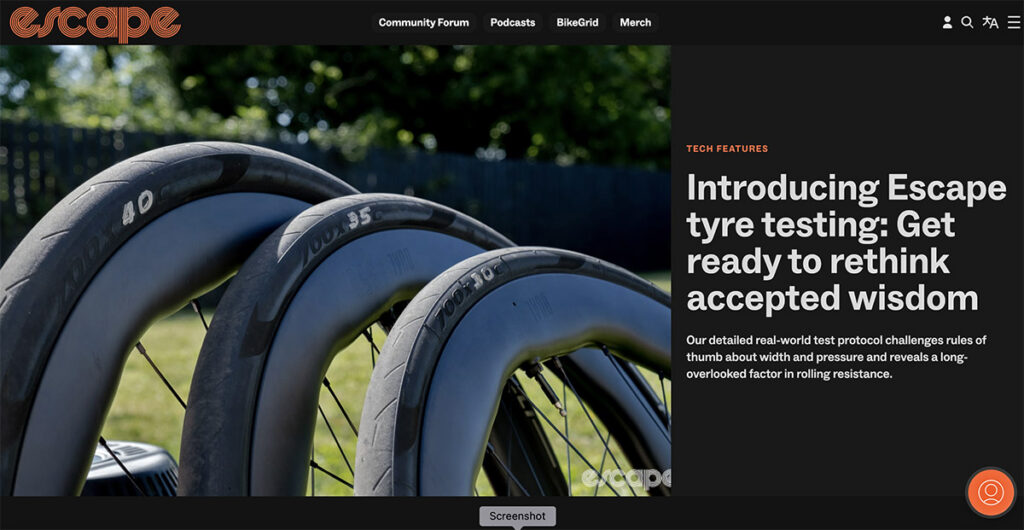
It’s taken a while—almost 20 years… We’re excited that the Escape Collective has used the same techniques for a similar study of real-road tire performance. What they found is surprising, at least at first sight. You may have seen the headline: “Get ready to rethink accepted wisdom.” That’s because the author and tester, Ronan McLaughlin, found that the highest pressure rolled fastest—for all tires he tested.
Does that mean we need to throw out two decades of research? Should we inflate our tires to the max again? Will Tadej Pogačar, who famously runs his 28 mm tires at 55-58 psi (3.8-4.0 bar), now up the pressure by 50% or more—or risk getting beaten on the road by other riders on harder tires?
Despite the catchy headline, it’s more complex than that. The Escape Collective tested one tire model in different widths. They described it as a ‘second-tier tyre,’ and the results apply only to that tire, and similar ones. In fact, their results confirm something we found in our original tire testing with stiffer tires: They behave differently from supple tires. Supple high-performance tires roll at the same speed, no matter the pressure (within reasonable limits). Stiffer tires appear to roll faster at higher pressures. We didn’t pursue that finding at the time. We focused on improving the performance of top-tier tires to make them even faster and stronger.
The author, Ronan, makes it clear that their testing so far is all about validating the methodology, and not about specific results and recommendations. Then why the sensational headlines? I suspect the editors added those—you get more clicks with “rethink accepted wisdom” than with Ronan’s conclusion—buried in the text—that “nobody should rush out to buy anything based on one controlled experiment with one model of tyre.” It makes for slightly disjointed reading, but it’s not uncommon in today’s media landscape.
That aside, it’s encouraging that realistic methods for testing tire performance are making it into cycling’s mainstream. For too long, media and manufacturers have relied on obsolete drum tests. Most people knew that drum tests are not a realistic representation of the real world, but that was all you could get from independent sources.
Why hasn’t anybody else tested tires on real roads under carefully controlled conditions until now? Ronan offers some insight: “What I didn’t appreciate at the start was the scale of the challenge we’d taken on. The project stretched far beyond the original timeline.” Science isn’t easy!
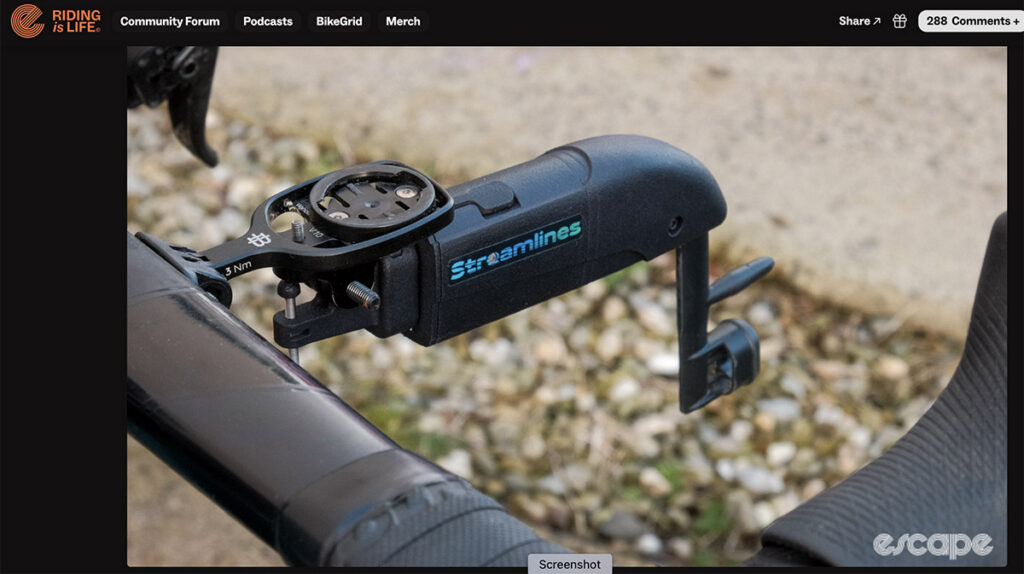
As in Bicycle Quarterly’s testing, the Escape Collective’s study used the same bike, same wheelsets, same tester, and the same test roads. They also did repeat runs with a reference tire, to make sure nothing had changed over the course of their testing. They corrected for wind using Streamlines sensors that measure wind speed, direction, ambient conditions, body position, and elevation. For our Bicycle Quarterly tests, we chose instead to keep those factors constant: testing only on days with no wind and constant temperature, confirming in the wind tunnel that we could maintain the same rider position in test after test, and testing only on flat courses for tests with power meters. Either approach can work. Sensors add a layer of complexity that has to be validated, but they expand the window of acceptable conditions for testing.
Ronan tested at 32 km/h (20 mph), the fastest speed that he found easily repeatable. For our power meter tests, we went slightly faster (35 km/h / 22 mph), for similar reasons: We wanted a speed that is representative of real-world riding, but also easy enough that the rider can maintain the same position and pedal smoothly.
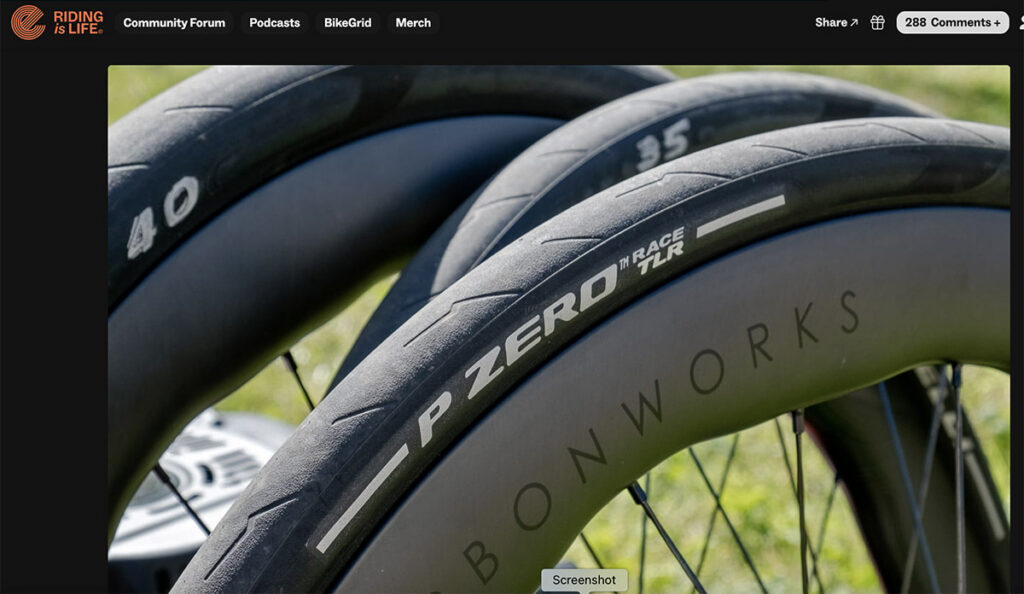
The Escape Collective tested the same tire, the Pirelli P Zero TLR Race, in six different widths, from 26 to 40 mm. They chose what they called “a second-tier tyre” because it was available over this wide range of sizes. One goal was to settle the debate whether wider tires are faster or slower than narrow ones. Ronan tested on three surfaces: “smooth, fair and rough tarmac.” He ran all tires at three different pressures: 40, 60, and 75 psi (2.7, 4.1 and 5.1 bar).
After testing was complete, Pirelli threw a wrench into the carefully designed test protocol: The 35 and 40 mm P Zero TLR Race tires are actually different from the narrower versions. Ronan reports that the wider tires “use a slightly different reinforcement layer and altered casing structure, which makes sense for such a wide tyre that will inevitably see some mixed-surface use. “ That’s no surprise: Most tire companies are not offering their fastest-rolling tires in wide widths. One reason is cost: Wide tires use a lot more casing and rubber. To keep costs down, tire makers often downgrade the spec of their wider offerings. (We don’t, that’s why wider RH tires cost more than narrow ones.)
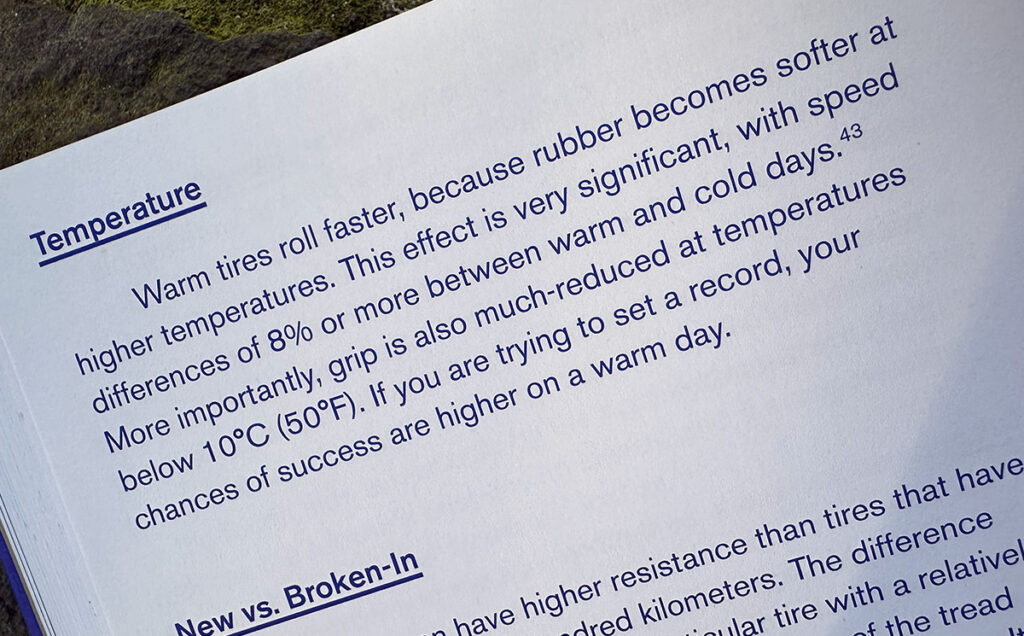
The new study’s “biggest learning” was that “ambient temperature is an even bigger tyre performance variable than any of us had ever thought.” While the Escape Collective presented this as a new discovery, it’s something we’ve also found in our testing, since way back in 2006. We talked about the influence of temperature on tire performance in Bicycle Quarterly back then. We’ve also covered this in our book The All-Road Bike Revolution (above).
The Escape Collective correctly mentions that this is an issue for all tests that don’t correct for temperature effects—especially lab tests on steel drums, where friction heats up the drum as the test progresses.
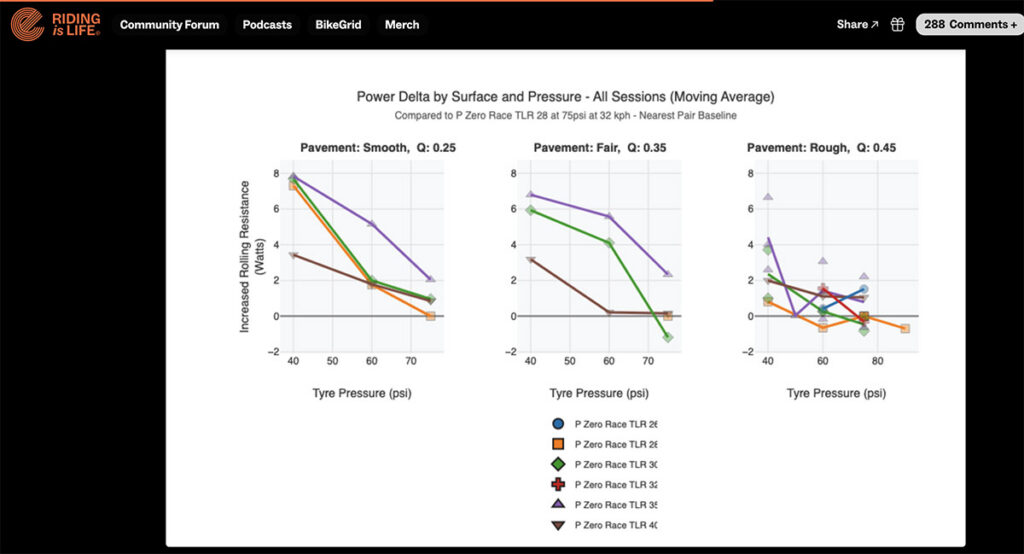
What about the headline? At first sight, the Escape Collective’s results contradict what we’ve found in test after test: that higher pressures don’t make tires roll faster. Their conclusion: “Across almost every width and every surface, the highest pressure we tested (75 psi / 5.1 bar) was the fastest.” They continued: “It challenges much of the accepted wisdom.”
Does it really? Discussing the results, Ronan acknowledged that this “could be specific to this tyre range.”
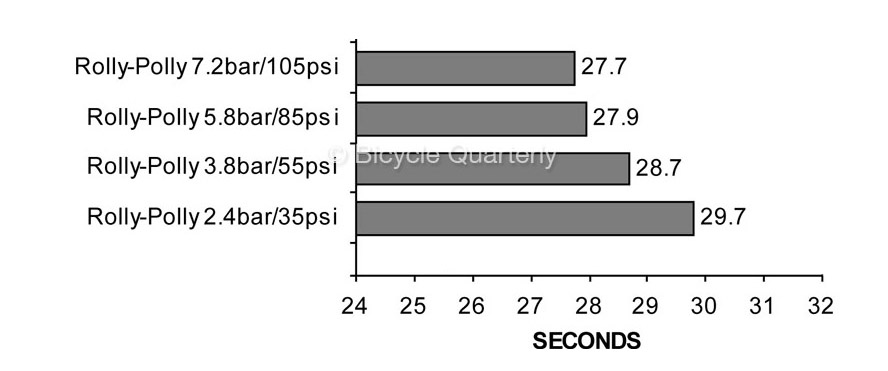
In fact, I think that is what we are seeing here. It matches what we found in our first tire tests, way back in 2006: Second-tier tires do roll faster at higher pressures, at least on pavement, and up to a point. Above is roll-down data for the Rivendell Rolly-Poly 27 mm tire. Lower times means faster rolling. The Rolly-Poly rolls much faster at 85 psi than at 55 or 35 psi—just like the Pirellis tested by the Escape Collective. At ultra-high pressure, the effect tails off: At 105 psi, the Rolly-Poly rolls no faster than at 85 psi. (Unlike the other differences, the 0.2 second faster roll-down time is not statistically significant.)
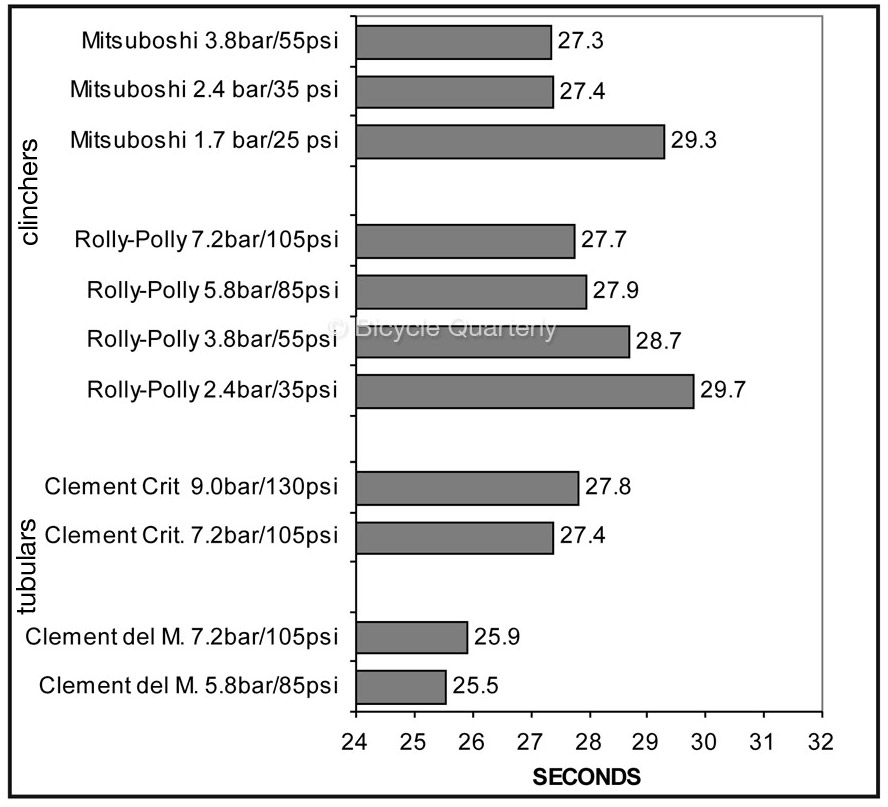
However, if we look the results for other tires, we see that the Rolly-Poly was somewhat of an outlier. The Rolly-Poly was a relatively stiff tire, and it rolled fastest at the highest pressure we tested.
The Mitsuboshi Trimline was a supple 38 mm tire, at least for the time. (This was 2006, before there were tires that were truly supple and wide.) Increasing the pressure from 35 to 55 psi does not make the Mitsuboshi any faster. Decreasing the pressure, the Mitsuboshi got slower at 25 psi, but it was also almost unrideable at that low pressure.
The two ultra-supple tubulars—old Italian hand-made Clements—roll slower at higher pressures. Of course, this being 2006, the pressures we tested were extremely high. When we later tested other high-end tubulars at lower pressures, we found they behaved similar to supple clinchers.
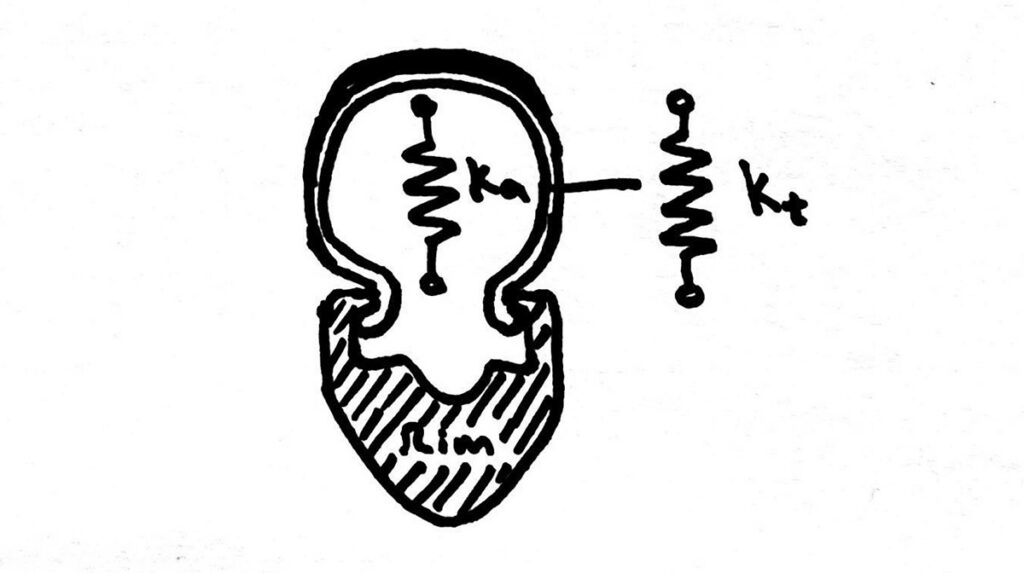
When you think about this, it makes sense. All tires consist of two springs: One is the rubber of the casing and tread (kt in the drawing above). The other is the air inside the tire (ka). Here is how those springs work:
- The rubber spring kt absorbs energy as the tire rotates and flexes where it touches the ground. (Imagine squeezing a tennis ball, where most of the resistance comes from the stiffness of the rubber.) This energy loss is called hysteretic loss. Higher pressure makes the tire flex less. That decreases the hysteretic loss.
- The air spring ka is the main component that reduces vibrations that slow down bike and riders. This is called suspension loss. Lower pressure reduces the suspension loss.
As you can see, the two factors work against each other: As you increase tire pressure, hysteretic loss goes down, but suspension loss goes up. As you inflate the tire harder, which effect is more important—reduced tire deformation (which make the bike faster) or increased vibrations (which make the bike slower)? That depends on how supple the casing is. Let’s look at extreme cases:
- Ultra-supple tire: This tire is easy to flex: Hysteretic loss is always small, no matter the pressure. This tire is fastest at the lowest practical pressure, because you’ll minimize vibrations and suspension loss.
- Ultra-stiff tire: This tire takes a lot of energy to flex. Lowering the pressure won’t lower the suspension loss by a lot, because the stiff casing will always transmit a lot of vibrations. This tire is fastest at the highest practical pressure, where flex and hysteretic loss are lowest.
The Escape Collective test confirms what we’ve suspected ever since our first tests: Stiff tires are always slow, but they are less slow at higher pressures. Only supple tires roll fast at all pressures, whether high or low.
At Bicycle Quarterly, our interest is how to make bikes faster and more comfortable. That’s why we’ve focused our research on supple tires. In other words, our goal is to make fast tires even faster—not to make slow tires less slow. That’s why we didn’t pursue our findings about stiffer tires any further, but left them as an interesting observation that might warrant more research in the future. It’s only by coincidence—because the Pirelli P Zero TLR Race is available over a greater range of widths than most high-end models—that the Escape Collective added to the body of evidence that stiffer tires behave differently from supple tires.
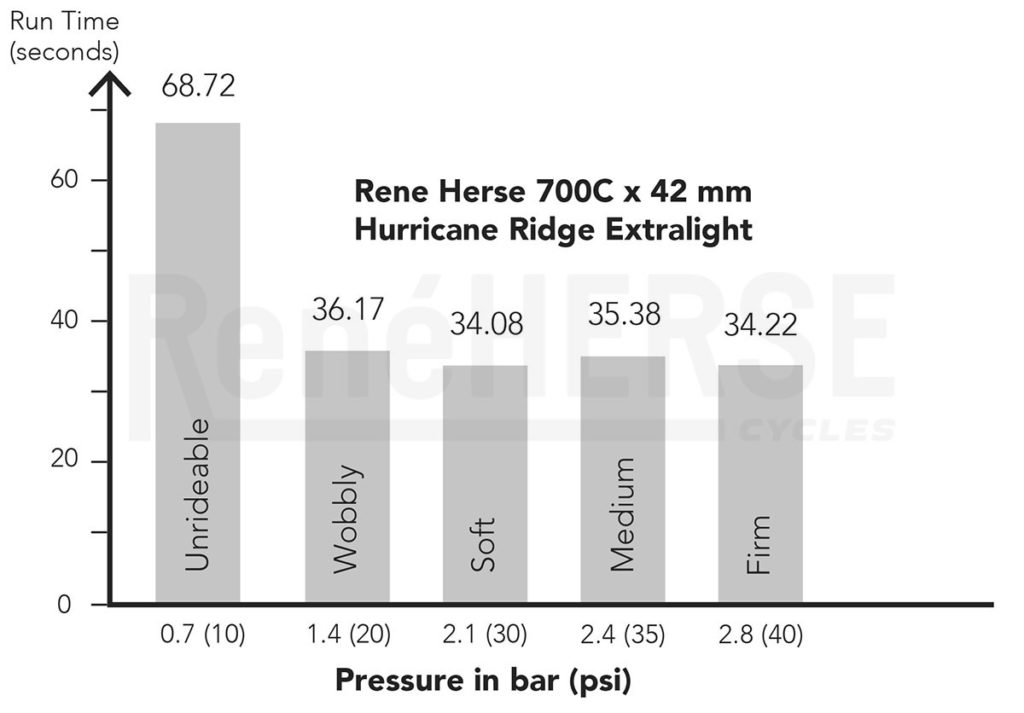
For supple clincher tires, the evidence that high pressure does not roll faster is overwhelming. Above you see a roll-down test that shows no difference in speed between 30 and 40 psi for 42 mm Rene Herse Extralight tires. There is nothing to suggest that the Rene Herse Extralights roll faster at higher pressure.
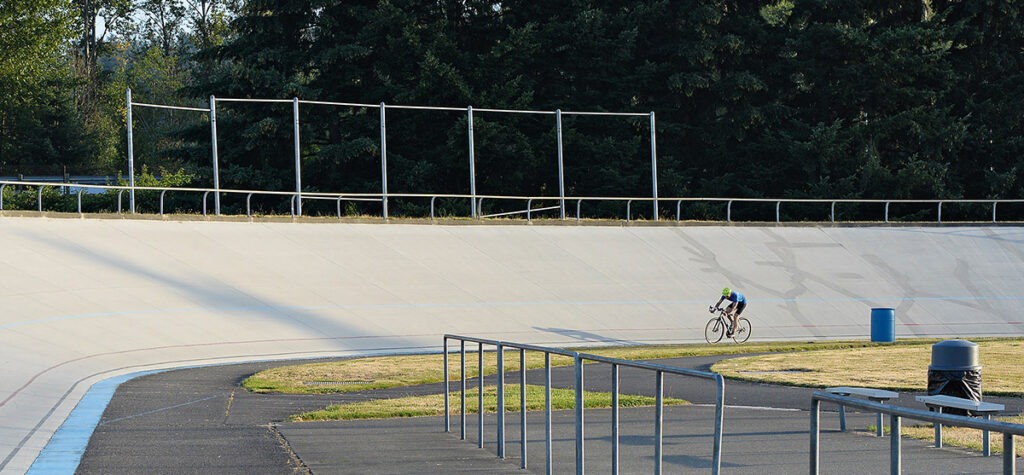
We’ve also tested this with a power meter on the apron of the local velodrome. That test is almost identical to the Escape Collective’s, making it easy to compare the results.
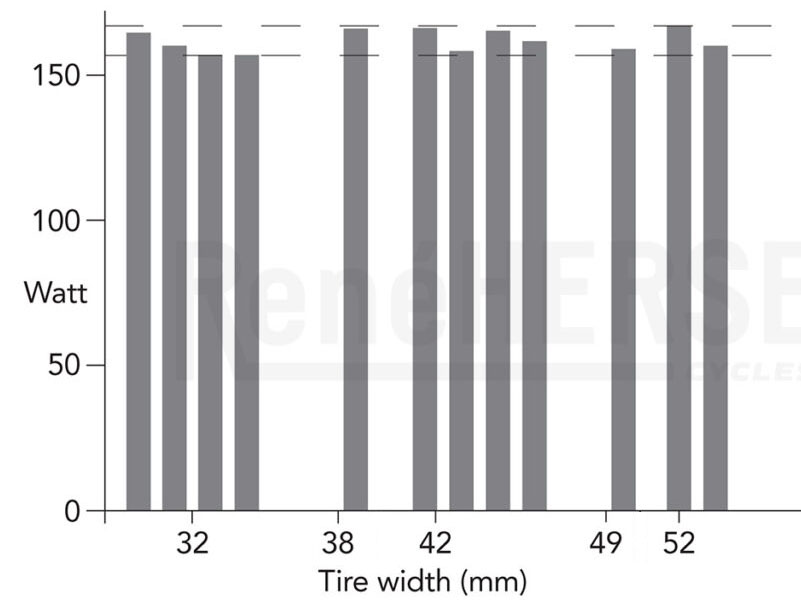
Here are the results for Rene Herse Extralight tires between 32 and 52 mm wide. Each bar represents a test run over 3 laps.
If the results of the Escape Collective test applied to supple tires, too, you’d expect the 32 mm tires, which we ran at 61 psi, to roll faster than the 52 mm tires at 39 psi. Instead, they roll at same speed. So do all the tire widths (and pressures) in between.
As with the Escape Collective’s results, there is a little (inevitable) noise in the data, but nothing suggests that tire pressure (or width) affects speed in a meaningful way. These tests were run at 22 mph / 35 km/h, so they are comparable to the Escape Collective’s testing, except that we used supple tires.
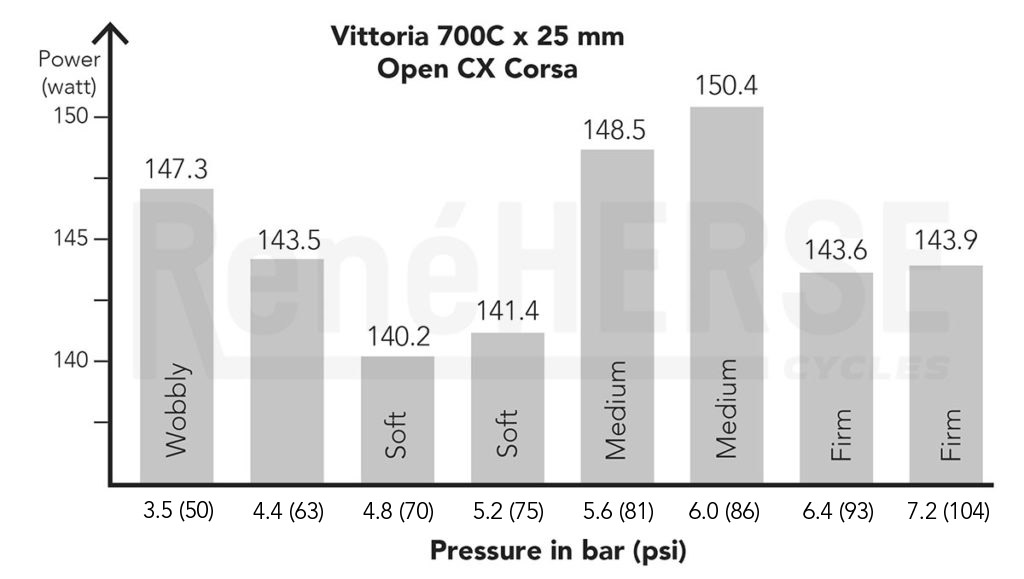
Of course, testing one tire model isn’t enough to make broad assumptions. That’s why we also tested the Mitsuboshi mentioned above, plus other supple tires. One example is the Vittoria Open Corsa CX. The results are similar: The Corsa CX doesn’t roll faster at higher pressures. In fact, like the Rene Herse tires, the Corsa CX shows two distinct pressures where rolling resistance is lowest. Mid-range pressures require more power. That’s a topic for another post…
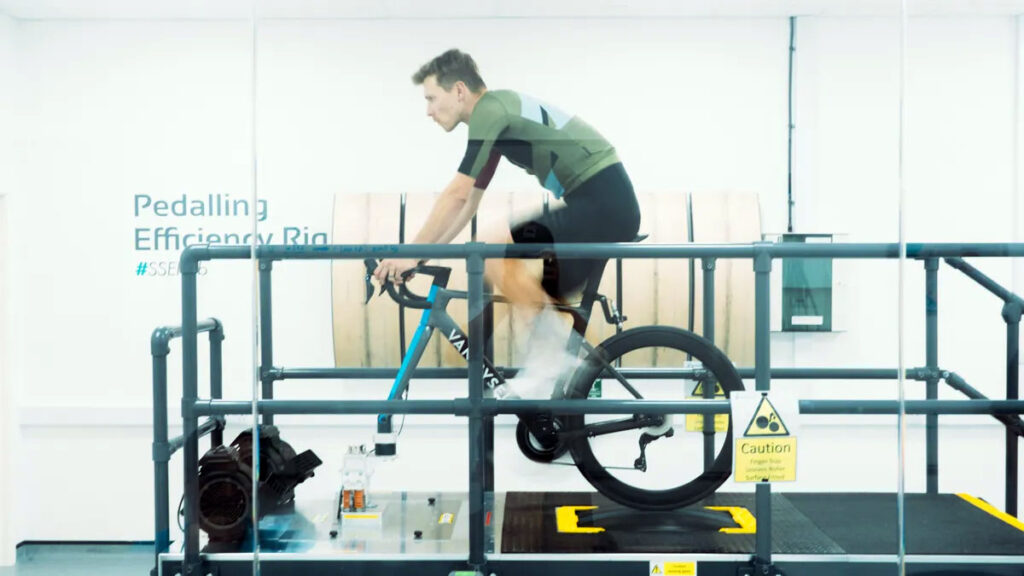
It’s not just our testing that shows this. When www.cyclingnews.com tested 24 mainstream race tires on the Pedalling Efficiency Rig at the Silverstone Sports Engineering Hub (with a rider on the bike), they concluded: “Changing tyre pressure within a relatively wide margin had no tangible impact on performance.”
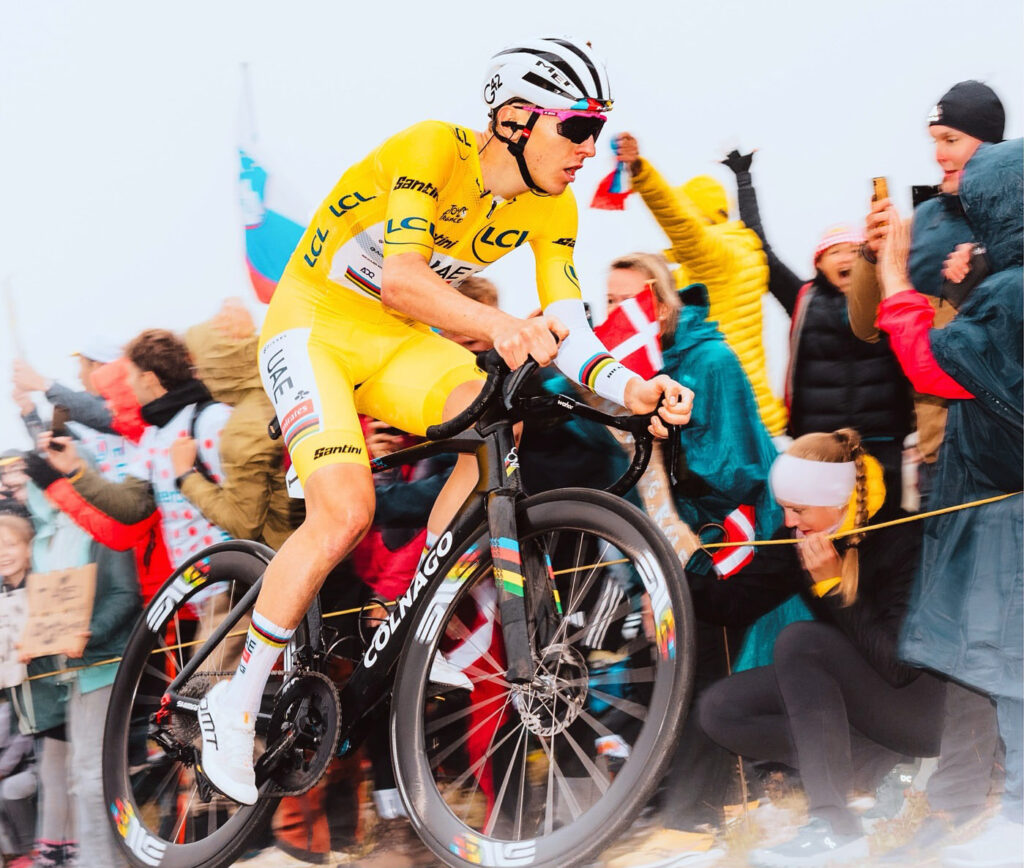
Time and again, real-world tests found the same result: High pressure doesn’t make supple tires faster. There’s really no doubt any longer. Tadej Pogačar probably won’t increase his tire pressure from the 55-58 psi (3.8-4.0 bar) he’s been running—even though 75 psi (5.2 bar) was faster in the Escape Collective testing. Supple high-performance tires behave differently from stiffer rubber—and Pogačar isn’t going to win races on ‘second-tier tyres.’
Ronan and I have known each other for years. We’ve communicated about tires and testing, like when he contacted me to ask about hookless rims. That was after Thomas De Gendt’s crash in the 2024 UAE Tour, when there was suddenly a lot of interest in our research on hookless rims. I had presented our findings at the ASTM meeting of the American working group on tubeless rim and tire standards for the ISO (International Standards Organization). Right now, we’re discussing the implications of the Escape Collective tests.
It’ll be interesting to see future results of the Escape Collective’s tire tests. Hopefully, they’ll test supple tires next, and also a wider range of tire pressures. In fact, I’ve offered Ronan a quiver of Rene Herse tires. That way, he can repeat their testing with supple tires—and confirm how they behave differently from the stiffer tires he has tested so far. Unlike the Pirellis, all Rene Herse tires feature the same casing and construction, no matter their width.
I’ve also offered to send a copy of our book The All-Road Revolution that includes our research. In fact, many Escape Collective contributors already have a copy on their bookshelves, since we sent review copies to most of them when they still worked for various mainstream cycling publications.
In the end, we agree with the new study’s main conclusion: “We’ve shown that it’s possible to accurately compare tyres, on real roads, while controlling for the messy variables that can bury field testing in noise.” By confirming the methodology we’ve used for two decades, we can hope that the Escape Collective’s tests mark the start of a new era, when tire performance will be assessed in realistic scenarios, on real roads, with a rider. Science is a lot of work, but it’s also the only way to get meaningful results. Every new study helps flesh out what we know about tire performance. The new tests confirm that temperature is an important factor, and that ‘second-tier’ tires with stiffer casings behave differently from supple tires. The Escape Collective’s testing has made it even more clear: You need supple tires to benefit fully from the wide-tire revolution.
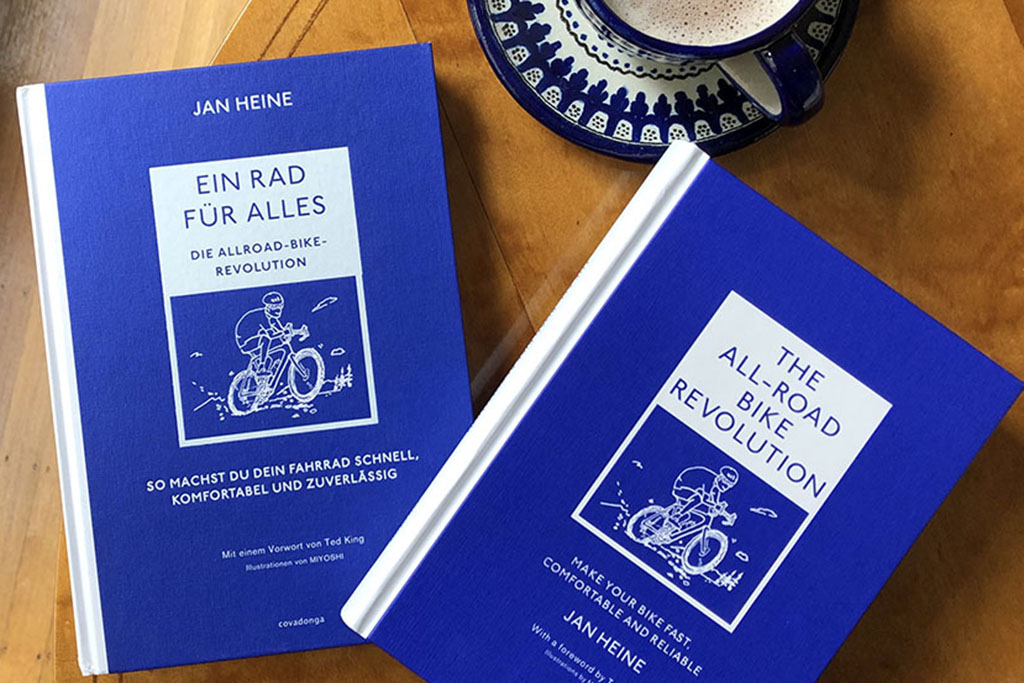
To get the full story of the science that has revolutionized bicycles, check out our book The All-Road Bike Revolution. It presents all the findings in a fun, easy-to-read format. (It’s also been translated to German and Japanese.)
Further Reading:
Image credits: Jered Gruber (Tadej Pogačar), Nolan Tsuchiya/Cal Poly Pomona (tire spring drawing); used with permission