
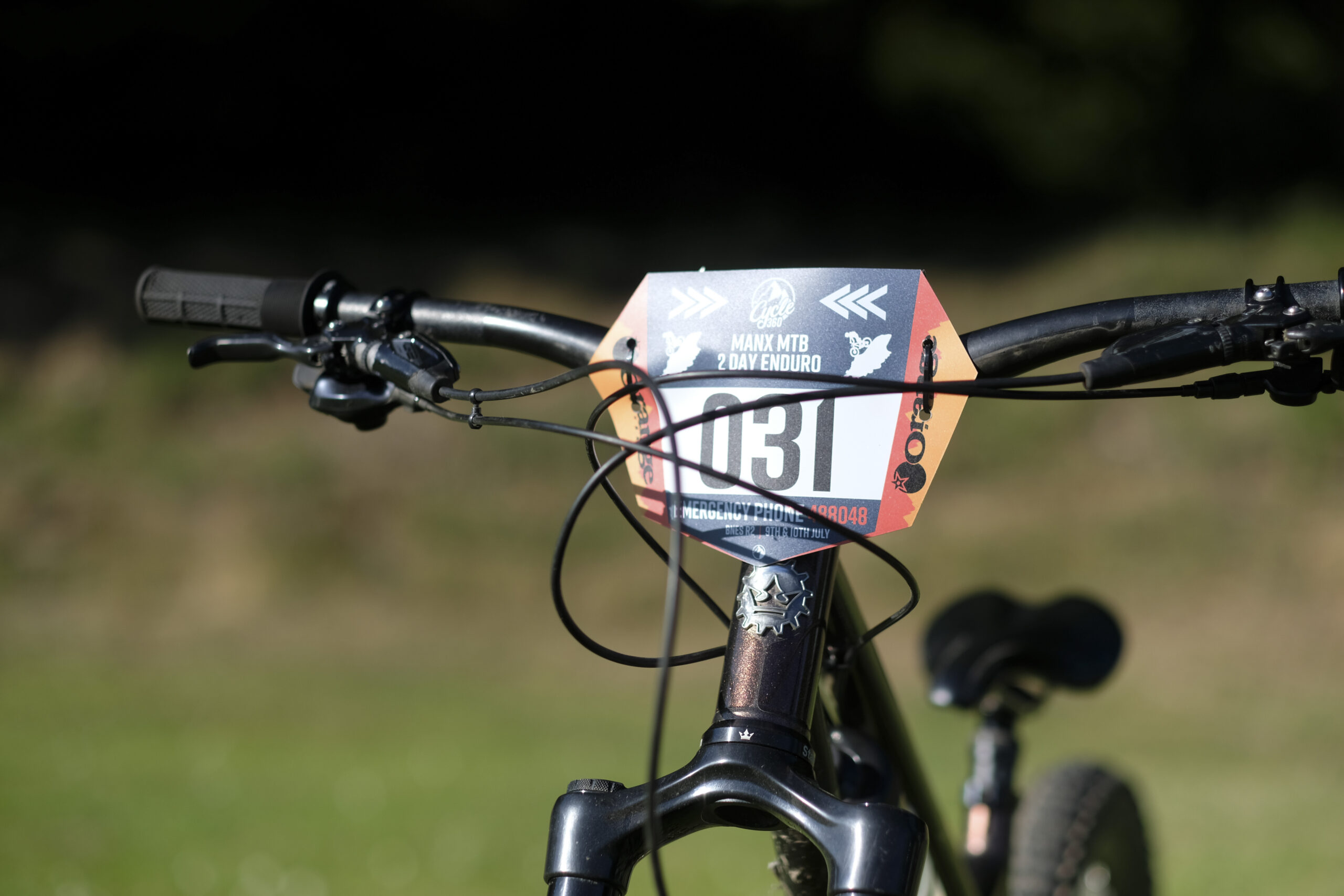
We ask a race organiser to explain the situation and discuss the future of the UK Enduro scene.
From the outside looking in, Enduro seems to be struggling. Each season we seem to lose another series. As an avid racer myself – and huge fan of the format – it is really sad to see. But is it all doom and gloom? Or has UK Enduro got an exciting future?
I spoke to Kev Smith from Focus Rides (organiser of the new Peaks Enduro Series) to get his perspective on everything from the issues facing event organisers, e-bike racing, livestreaming races to the potential return of enduro racing to North Wales.
Focus rides and Peaks Enduro
Focus Rides began as a coaching and guiding business based in Lincolnshire with its beginnings rooted in riding as a tool for maintaining good mental health to help others with mental health. Kev made the transition to hosting races in 2019.
Organising cross-country events, he soon realised that this type of racing was more about location than anything else. Recognising that riders weren’t massively hyped about riding in the flatlands of the east of England, Kev shifted focus to the Peak District.
This was a decision made by running two test events at Belvoir castle, one XC and one Enduro. Kev soon realised that XC was a hard sell and Enduro was probably the way forward. Having raced Enduro himself for a good number of years, he felt he had the experience to build the stages to suit everyone from grassroots to pros.
Last season, the Peaks Enduro was a success. This year, it returns with the 4th round of the Series being hosted as one of the British National rounds. Since the loss of PMBA a couple years back, the north of England has been missing a series of Enduro events, so it’s great to have the Peaks Enduro series as an option.
Costs
Race entries are expensive. Hosting a race is expensive. And the costs for hosting an Enduro race have also especially increased since the Covid era. Enduro itself feels to be especially expensive when compared to a lot of Downhill and XC racing. With Kev organising both XC and enduro events he was able to give a first hand account into why this is the case.
Simply put, there is more to sort out with Enduro.
Not only do five stages mean five times the amount of tape, more martials, increased land-owner costs, a bigger medic team (with a 4×4 to access more remote parts of the course). The timing system is also a bigger cost. Hosting multiple stages requires a more expensive chip timing system which can get as high as £3,000 per event.
The running cost is not quite as simplistic as saying that an Enduro race is like putting on five races all on one day, but you get the idea.
Then there’s the insurance costs. Not to mention loads of miscellaneous costs for things like chainsaw repairs.
I don’t think anyone is under the impression that a desire to make money is a key motivation for race organisers. If you need an example of dedication to UK Enduro racing: Kev lives in his van full time to ensure he can afford to host races.
BEMBA and BC
The British National Enduro Series is now run by BEMBA (British Enduro Mountain Bike Association) rather than British Cycling. Talking to Kev highlights that BEMBA is one of the main positive aspects of the UK Enduro scene.
Organising an official British Cycling event incurs a great deal more cost. From BC commissaires dictating too much in the way of stage design and race logistics, Kev feels that there is simply no real benefit provided from hosting events with British Cycling.
Kev explained that BEMBA is really helpful when it comes to advice and support for organising races. BEMBA allows enough freedom to allow race organisers to put on the event that is best for their venue yet still provides guidelines and a rule book to ensure events run safely and fairly.
E-bikes
The E bike side of mountain bike racing is an interesting one, whilst Kev cites the COVID bike boom as the main saviour of Enduro, he reckons that e-bikes are a close second.
Simply put, e-bikes “get people on the race track”. People who “wouldn’t have even thought about doing an event on a normal bike”. Expanding the categories and allowing access to more riders than ever before has had a huge impact in keeping Enduro racing healthier.
However, e-bikes are also one of the biggest challenges to race organising. Chipped e-bikes (ie. fiddled to go past the 15.5 mph assist limit) pose a significant threat to the future of e-bike racing. This threat not only pertains to race fairness, but also has serious legal implications to race organisers.
De-restricting your e-bike is a really daft thing to do. There isn’t any pride in winning a race through cheating. However, those that decide to cheat regardless are spoiling it for the rest of in more ways than they might think.
Kev explained that if someone rides a modified e-bike, then crashes, and causes a serious injury, the insurance company may refuse to pay out, arguing that the bike should not have been allowed to race. Without spending thousands of pounds on equipment, it’s near enough impossible to police this. Thus race organisers can be put in a position of uncertainty in regards to whether their series is covered by insurance for e-bike incidents.
It just takes a small number of selfish/deluded/cheating racers that can cause huge issues for the organisers and even shut down a whole race series.
Enduro as a spectator sport
One aspect where Enduro really struggles is viewership and fan experience. Even at a World Cup level, coverage is difficult to manage. I spoke to Kev about how he factors spectator experience into race organising and he has some exciting ideas.
Planning events with stages close together for easy on-site viewing is one thing that organisers do consider. Kev also mentioned implementing video footage into some of his events. The current plans for this year’s national round at Buxton involve using live cams and drone footage to stream racing into a trackside bar hosted by Buxton Brewery. Whilst this is a costly idea for race organisers, I think it is one that has the potential to significantly elevate the UK Enduro spectator experience.
Racing in Wales and Northern England
After completing a full season of the Welsh Enduro Series (WES) in 2025 I was especially sad to see it cancelled for 2026. With so much great riding in Wales, having no Welsh racing whatsoever for 2026 was a disappointing prospect.
However, after talking with the guys behind the WES, Kev revealed that he has organised an Enduro event in Llangollen in August, with another race planned at Llanfyllin in September.
There will also be an Enduro Series in Wales planned for 2027.
As for Northern England, the expansion of the Peaks Enduro Series into a wider Northern series begins to fill the gap left behind by PMBA and WES.
Kev also speaks of his interest in hosting a ‘Des Nations’ style event for UK Enduro. Inspired by motocross, this would be an event with teams from England, Wales, Scotland and Ireland competing against each other. We saw something similar in the Enduro World Series not too long ago.
Running a series
One trend you will have noticed in the UK Enduro landscape, is the rise of one-off events. ‘Ard Rock, ‘Ard Moors, Naughty Northumbrian, The EX Enduro and Bolly Skyline have risen to equal levels of popularity as national/series events. These one-off events do a good job at building excitement and buzz for racing.
Kev chose not to go down the one-off route. He believes that the benefits of running a Series outweigh the potential profit margin of a one-off event. A series can build a much stronger community.
I have experienced this community side of series style racing first hand and getting to know my competitors across a season is one of the things I love most about this sport. I’ve had conversations with riders at events and had the realisation that we both knew each other’s names because we were next to each other in the series rankings. A few of my good mates that I hang out with on race weekends I only know from racing a Series.
From Kev’s perspective, familiar faces that pop across a series are not just a nice friendly thing, but can also help his job. Knowing riders, and having riders invested in a series encourages people to share their point of view. If you have bought into a season, it’s in your interest to pass on constructive criticism. Kev says he is always happy to take on advice. “After all it’s not my race, it’s their race.”
By running a series across an area like the Peaks, Kev explains that you get to know the land and landowners better, allowing for better stages and as a result a better race.
Final thoughts
It was refreshing to talk to Kev and hear some positive messages about UK Enduro. Cost will always be an issue and the issue of chipped e-bikes are going to continue to pose a problem but on the whole there is room for growth. With passionate organisers like Kev, UK enduro should have an exciting future ahead. You just need to go out and race it.
Peaks Enduro Series 2026 dates
Round 1 – March 29th – Barlow – Entry Details
Round 2 – April 25th – Ladies & Kids – Barlow – Entry Details
Round 2 – April 26th – Mens – Barlow – Entry Details
Round 3 – May 23rd & 24th – Barlow – Entry Details
Round 4 – June 20th & 21st – BNES Round – Hope Valley – Entry Details
Round 5 – July 19th – Horseleygate Estate – Entry Details