
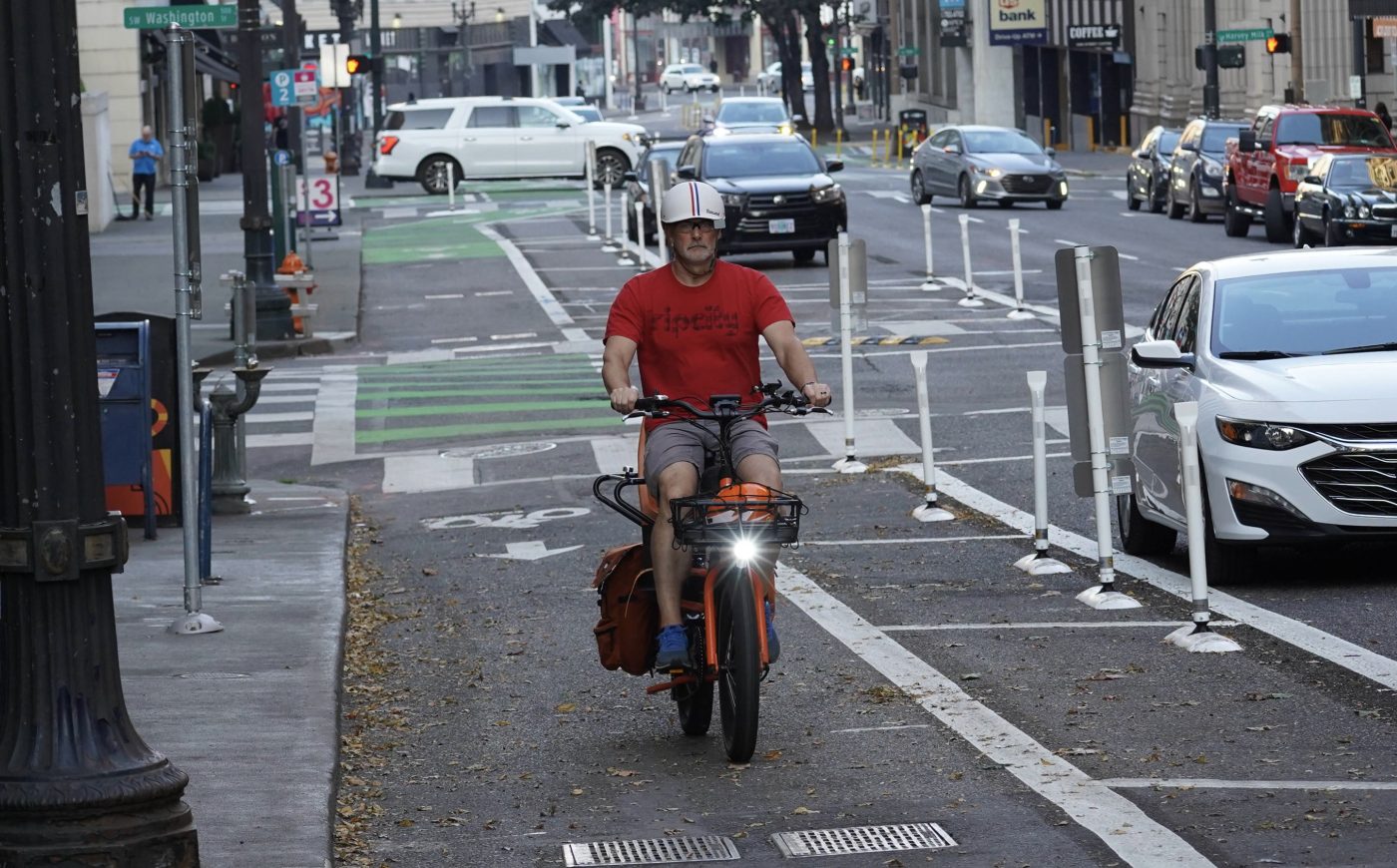
The last three years have been a roller coaster for the bikeway on Broadway that runs through Old Town and Southwest Portland. In September 2023 we learned the city hatched a secret plan to remove the bike lane protection and revert the design to an older version. Three days later, after widespread community outcry, those plans changed and the bike lane was ultimately saved.
In 2024, the Portland Bureau of Transportation completed upgrades to SW Broadway that included better signals and loading platforms. And then yesterday, PBOT announced even more upgrades they say will make Broadway safer to use and to nicer to look at (see design below).
Starting tomorrow, PBOT crews will install dozens of planters and concrete traffic separators (a.k.a. curbs) in the buffer zone between the existing bike lane and car parking spaces. According to a statement from PBOT, “The improvements will reduce ongoing maintenance and improve aesthetics on the highly visible downtown corridor.”

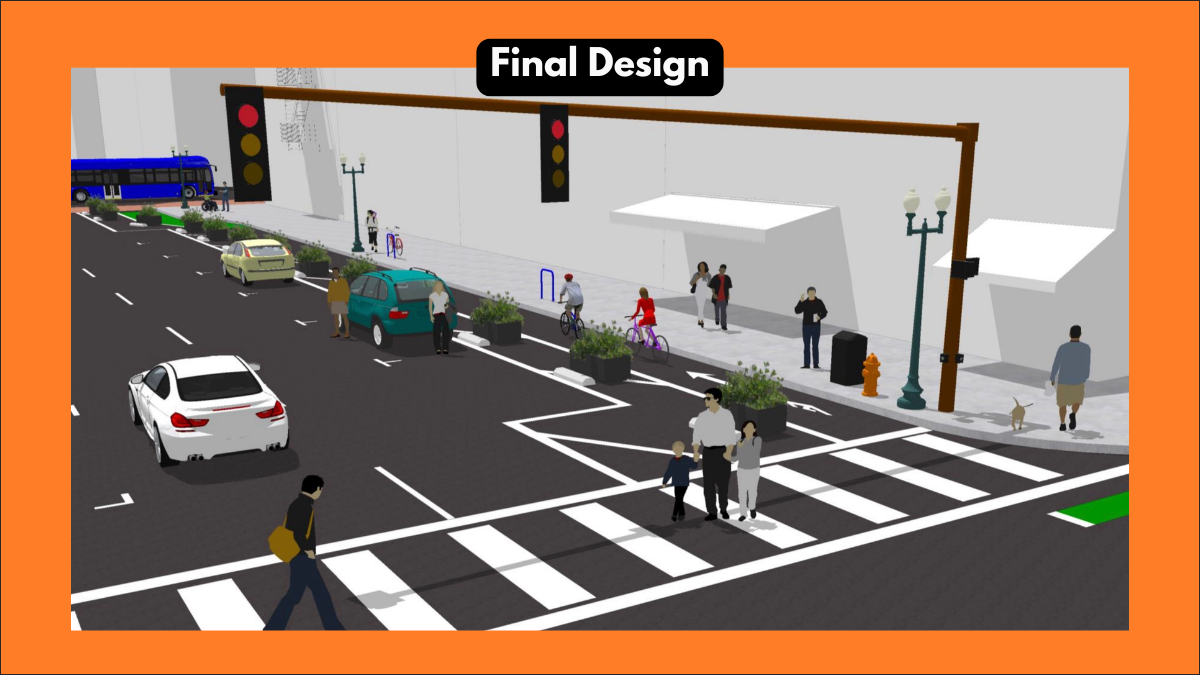
The first phase of work will will focus on SW Broadway between Oak and Yamhill. PBOT wants to get this section done by mid-May so the street can be part of the 2026 Bloom Tour, an annual event where creative flower displays take over the central city (think of it like the Winter Light Festival, but flowers instead of lights). Later this year, the new planters and curbs will extend north from Burnside to NW Glisan and south from Yamhill to SW Clay.
When PBOT first shared the plans for this project, it looked a bit different (see comparison of initial and final design above). Initially they were going to install one larger median “end cap” at the beginning and end of each block. The end caps would have one planter each and there would be nothing added to the buffer zone along the bike lane — even the existing plastic wands would be removed (likely because they look terrible). The final design cancels the end caps and replaces them with short concrete curbs and planters lining the entire length of the bike lane.
When PBOT brought this project to the Bicycle Advisory Committee last month, one member scoffed at the planters and relatively small curbs, saying drivers hit and push them out of place (the large planters on NE Multnomah are regularly hit and moved around by incompetent, reckless drivers). PBOT staff said their engineers are confident the planters will stay put thanks to input form Maintenance Operations staff who said each one will be installed with a concrete curb right next to it.
I reached out to PBOT to better understand their decision to switch from the larger end caps to the planter/curb design.
PBOT Communications Director Hannah Schafer explained that they opted for the curbs/planters option for a few reasons. First, members of the Central City in Motion Working Group expressed concern that the initial design would have no protection in the buffer zone. PBOT also heard from “stakeholders on the corridor” (which I always hear as “business owners”) that planters would be considered an upgrade from an aesthetic standpoint and that, in general, folks wanted to see more planters in general. Schafer also added that if they had a larger budget for the $550,000 project (which is being paid for with General Transportation Revenue made up of state Highway Fund and local parking , they’d keep the larger concrete end caps and do the planters and curbs.
Other than these changes to the bike lane and a small change in parking availability between NW Glisan and Burnside (which will move from a “No Parking” zone from 6:00 to 9:00 am to all-day parking) this project won’t impact the way the street operates.
For more on this project, visit PBOT’s website.