
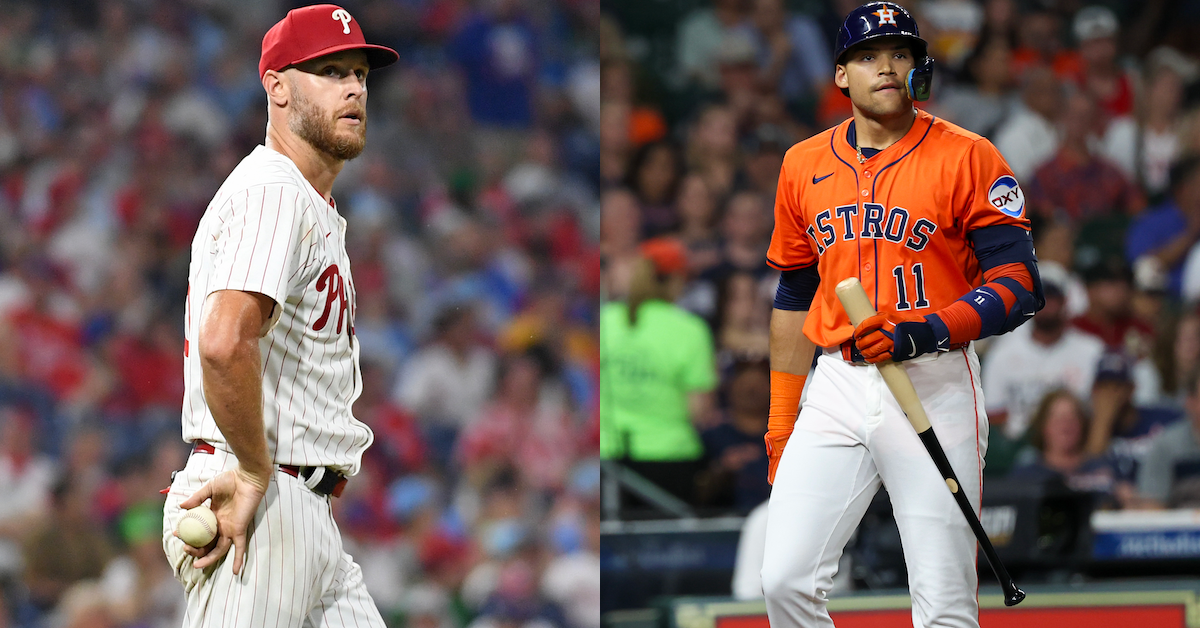
I’ve now spent nearly a quarter of a century working with baseball projections, and in that time, I’ve always been struck by the certainty with which so many people view them. People are far more certain than they should be that great teams will be great, star players will be stars, and so on. However, one of the things that comes from working with projections for a big chunk of your life is that you develop a painful awareness of how much of the future cannot be known until it actually happens.
As in most seasons, we enter without a general conception of which teams will be the best. We may pretend everyone starts off with a clean slate, but absolutely nobody expects the Rockies to be better than the Dodgers. But even if that particular scenario is extremely unlikely, every one of the top teams has a scenario in which things fall apart. These clubs have a vested interest in protecting against that potential downside, as much as possible, so I thought it would be interesting to look at the doomsday scenario for some of the best teams in baseball.
To get an idea, I did a full seasonal simulation of the ZiPS projected standings, and instead of looking at the standings overall, I looked at the bottom 20% of outcomes to see what we could glean from the results. According to ZiPS, every team except the Dodgers misses the playoffs when it performs no better than its 20th-percentile win total.
Philadelphia Phillies: Rotation Depth
This almost seems counterintuitive given just how good the rotation projections are for the Phillies, but the projections are not enthusiastic about their depth here. And what makes that especially worrisome is that with so much uncertainty around the health of Zack Wheeler and the performance of Aaron Nola, Philadelphia is probably going to need that depth more than it did last year. This time around, the Phillies are missing Ranger Suarez, who signed with the Red Sox during the offseason. Andrew Painter was healthy in 2025, but one cannot ignore that he was rather middling against Triple-A hitting. The outfield looks like a problem, as well, but it generally has been, and ZiPS is a fan of Justin Crawford.
If Philadelphia adds one of the innings-eaters still available in free agency, ZiPS sees the team’s outlook improve, much more than I expected. Just having someone like Lucas Giolito, Tyler Anderson, or even Patrick Corbin around did a lot to alleviate the rotational downside. It may come down to which of these pitchers is open to a swing role or a minor league deal with an opt-out date. And yes, I do think it feels weird to suggest Corbin as an upgrade for a team in 2026.
You Aren’t a FanGraphs Member
It looks like you aren’t yet a FanGraphs Member (or aren’t logged in). We aren’t mad, just disappointed.
We get it. You want to read this article. But before we let you get back to it, we’d like to point out a few of the good reasons why you should become a Member.
1. Ad Free viewing! We won’t bug you with this ad, or any other.
2. Unlimited articles! Non-Members only get to read 10 free articles a month. Members never get cut off.
3. Dark mode and Classic mode!
4. Custom player page dashboards! Choose the player cards you want, in the order you want them.
5. One-click data exports! Export our projections and leaderboards for your personal projects.
6. Remove the photos on the home page! (Honestly, this doesn’t sound so great to us, but some people wanted it, and we like to give our Members what they want.)
7. Even more Steamer projections! We have handedness, percentile, and context neutral projections available for Members only.
8. Get FanGraphs Walk-Off, a customized year end review! Find out exactly how you used FanGraphs this year, and how that compares to other Members. Don’t be a victim of FOMO.
9. A weekly mailbag column, exclusively for Members.
10. Help support FanGraphs and our entire staff! Our Members provide us with critical resources to improve the site and deliver new features!
We hope you’ll consider a Membership today, for yourself or as a gift! And we realize this has been an awfully long sales pitch, so we’ve also removed all the other ads in this article. We didn’t want to overdo it.
New York Mets: Right Field
The Mets certainly don’t dominate in either the rotation or bullpen projections, but ZiPS is fairly confident that both of these units will hold up over the course of the season. Despite a solid projection for Carson Benge in right field, the range of outcomes is quite high, and in the simulations where Benge struggles, ZiPS has trouble competently filling in right field. Tyrone Taylor is an underwhelming option, and ZiPS thinks Brett Baty would have a tough time defensively in the outfield. With no particularly interesting outfielders available in free agency, the best solution might simply be making sure Jacob Reimer gets some time in the outfield. New York’s roster just isn’t really set up to get him time at third base, where he probably is most valuable. But he also represents the most tantalizing 2026 upside of any player the Mets have in the minors, so they ought to try and be open to promoting him aggressively, and getting a little weird with it, if need be.
New York Yankees: Injuries
The Yankees’ outcomes are weird, in that their bad seasons were mostly ones in which Aaron Judge, for whatever reason, ended up with fewer than 300 plate appearances, and only occasionally something else. Getting limited innings from Gerrit Cole and Carlos Rodón was already baked into the cake, and ZiPS thinks there are enough fourth-starter types to patch up any rotation holes that might pop up. The problem is, just how do you replace Judge? I’m not sure there’s a scenario where the Yankees can do much to mitigate any risk there, for the simple reality that in a tightly projected division, suddenly losing six wins is likely to drop them out of the AL East divisional race. At the very least, the Yankees should hold off on shopping Spencer Jones for help elsewhere, but it wouldn’t fix a Judge loss.
Baltimore Orioles: Rotation Quality
Baltimore has potential aces in both Trevor Rogers and Kyle Bradish, but that word potential is an unpleasant adjective. Adding Pete Alonso and Taylor Ward really stabilizes the offense, which was a concern last year, but the rotation is an issue. The Orioles finished with a bottom five rotation in the ZiPS simulations more often than all other AL East teams combined. There’s nothing on the farm that helps this, and I think that with the Orioles increasingly pushing their chips in, they ought to be aggressive at taking the opportunity to loot struggling teams of their top pitching, even if the prospect hit would be tremendous. I think there are even scenarios, though not many, in which it might make sense for the O’s to trade either Adley Rutschman, assuming he has a bounce-back season, or Samuel Basallo.
Boston Red Sox: First Base
The good news is that ZiPS sees the Red Sox as the most stable of AL contenders, with the lowest percentage of sub-.500 seasons of any AL team. The rotation isn’t the best in baseball, but it may be the most bulletproof one, and that isn’t even counting on getting lots of innings from pitchers like Payton Tolle and Connelly Early, who would be Plan As in most rotations in baseball. In fact, when the Red Sox had their worst performance, it was almost entirely the offense that fell short, and not necessarily from the position you might expect.
Most people have focused on third base because of the loss of Alex Bregman, but Caleb Durbin is actually a decent option. Plus, if Durbin struggles, Marcelo Mayer could very likely provide what the former isn’t. Where there is real downside risk is at first base. I liked the Willson Contreras acquisition, too, and he’s probably going to be at least solidly average in 2026, but he’s also going to be 34 in May. It’s an age where you look at the long left tails of the outcome distribution for non-elite first basemen, and there’s always a real risk of a very sudden plummet off a cliff. Triston Casas hasn’t played in a game since last May — and won’t even play in any spring training games this year — and he has a real mixed history.
What to do? That’s a lot trickier. Boston obviously isn’t going to replace Contreras before he has that downside year. But this team should be ready for that possibility, and if the surplus of pitching turns out to be real, the Sox will have a position of depth from which to trade.
Chicago Cubs: Rotation Quality
The outlook improved with the addition of Edward Cabrera, but ZiPS still has the Cubs with the weakest rotation of the 10 teams listed here. In the ZiPS simulations, the rotation was largely the source of the Cubs’ worst seasons. There aren’t really any exciting starters left out there in free agency, but I think I’d do what I suspect the Cubs are already thinking of doing: giving Ben Brown’s upside as a starting pitcher more serious consideration. He allowed too many home runs and had a high BABIP on a really good defensive team, but it’s guys like that who tend to come out of nowhere quickly (see Corbin Burnes in 2019). Brown has swing-and-miss stuff, and I think given the potential, I’d rather see him starting at Triple-A than pitching in relief in the majors.
Houston Astros: Outfield Corners
Not counting 2020, for obvious reasons, the 686 runs the Astros scored in 2025 represented their fewest since 2014. A full, healthy season of Yordan Alvarez would be incredibly helpful, but the team’s also not likely to wring another 135 wRC+ out of Jeremy Peña. Not helping matters is that Joey Loperfido and Cam Smith project as one of the weakest corner outfield tandems in the majors in 2026. Smith surprised many, including me, in the early months last year, but an OPS that fell shy of .500 in the second half is highly concerning. There’s a chance that the Astros get little from their outfield corners, which is a problem for a team with a middling offense that just lost ace Framber Valdez in free agency. In some 30% of simulations, the Astros got a sub-90 wRC+ out of their corner outfielders, and in those runs, they had a .475 winning percentage. If there’s a team that should aggressively go after either Jarren Duran or Wilyer Abreu, it’s Houston.
Toronto Blue Jays: Rotation Depth
Even with the loss of Anthony Santander to shoulder surgery, ZiPS still sees the Blue Jays’ rotation as their biggest pain point. There are simply a lot of question marks once you get past Dylan Cease and Kevin Gausman, something I mentioned a bit in Toronto’s ZiPS rundown in January. In a lot of the sims, the team got next to nothing out of any of Cody Ponce, José Berríos, Shane Bieber, and Max Scherzer, whether because of injury, decline, or general performance issues. If Sandy Alcantara looks anywhere near his old self with the Marlins in the early months, I think the Jays ought to be one of his suitors. At the very least, Alcantara would do well with an infield that has Andrés Giménez and Ernie Clement.
Seattle Mariners: Outfield Corners
As with the Astros, ZiPS sees Seattle’s corner outfield spots as having the most downside. Unlike the Astros, ZiPS doesn’t view it as truly a doomsday scenario. After the Red Sox and Dodgers, ZiPS considers the Mariners to be the contender with the least downside. Randy Arozarena’s projection distribution is pretty interesting, with the bottom falling out of him once you get under the 15th-percentile projection or so; while his 20th-percentile OPS+ is a non-disastrous 94, it drops to 70 for the 10th-percentile level. As for Victor Robles, he’s been all over the place in his career, and the Plan Bs in the organization are unimpressive. I think Seattle’s strong enough that it doesn’t necessarily have the same need to be aggressive as Houston does, but this is still a potential point of weakness that could pose an issue.
Los Angeles Dodgers: Black Swans
It’s really hard to kill the Dodgers. I argued after the 2024-2025 offseason, a very busy one, that the Dodgers weren’t really improving their average outcome so much as drastically raising their floor. I stand by it; they’ve added Kyle Tucker and Edwin Díaz while losing nobody who was crucial to the 2025 team. That doesn’t mean they’re going to be projected to win 105 games or anything, but it does mean that in most of their worst projected outcomes, they’re still a playoff contender. Their 10th-percentile projection, for example, is 86 wins. Their 2% chance of finishing below .500 is the smallest percentage I’ve ever projected, a record that now goes back more than 20 years. Doomsday for the Dodgers may require an actual doomsday scenario like societal collapse, nuclear war, or a vacuum metastability event. Since I do not know how to prevent any of those, there’s nothing more I can add.