
The Athletics continue to lock up their core their long-term extensions, but there’s a short-term focus as well, as the A’s seem to be aiming to return to contention this year.
Major League Signings
2026 spending: $10.85MM
Total spending: $10.85MM
Trades And Claims
Option Decisions
Notable Minor League Signings
- Nick Anderson, Joey Meneses, Wander Suero, Joel Kuhnel, Michael Stefanic, Geoff Hartlieb, Nick Hernandez, Chad Wallach, Brian Serven, Cade Marlowe, Brooks Kriske, Matt Krook, Ben Bowden, Bryan Lavastida
Extensions
Notable Losses
After the 2024 A’s went 69-93 in their final season in Oakland, the 2025 squad improved to 76-86 in the first season of its temporary residency in West Sacramento. While the cities and ballparks were drastically different, both editions of the Athletics were much better in the second half of the season than in the first. Last year’s Athletics even got off to a 20-16 start before a brutal 3-24 stretch in May and June torpedoed their season, though the club then recovered to go 53-46 the rest of the way.
Obviously any team would seem a lot better if you erased their worst month from the ledger, but the evidence is growing that the A’s may have (once again) put together the pieces of a contender after a lengthy rebuild. The common belief was that the A’s were going to wait until they moved to Las Vegas before truly committing to winning, except the roster might be ahead of schedule.
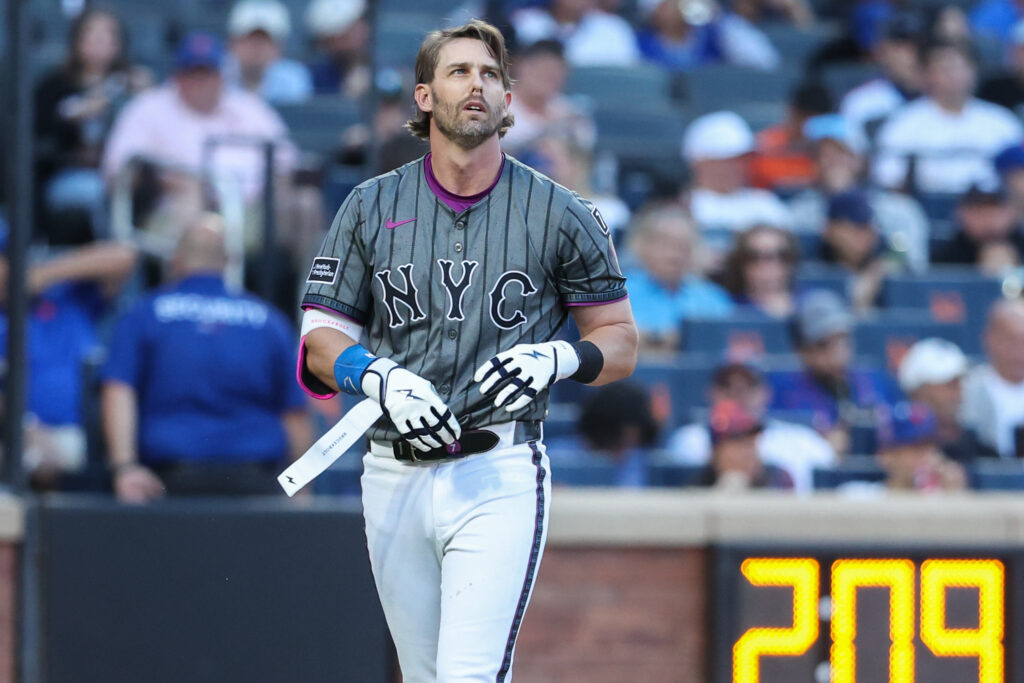
A team planning to just tread water, after all, doesn’t try to land two former All-Star infielders at (by the Athletics’ standards) fairly substantial prices. The A’s obtained Jeff McNeil from the Mets before the club made its rather surprising bid to trade for Nolan Arenado, and the Athletics’ offer involved eating more of Arenado’s remaining salary than the $11MM taken on by the Diamondbacks once Arenado was ultimately dealt to Arizona.
Whatever the specifics of the Athletics offer were in terms of cash and prospects, it was reportedly enough to meet the Cardinals’ approval….but not Arenado’s. The third baseman’s no-trade protection gave him full approval over his next team, and while Arenado apparently didn’t expressly reject going to the A’s, moving to the D’Backs held more appeal. While the Diamondbacks were only 80-82 in 2025, they won the NL pennant in 2023, a good core of talent is still in place, and (perhaps more importantly) the Snakes aren’t spending the next two years in a minor league ballpark.
The four-year, $50MM extension McNeil signed with the Mets in January 2023 didn’t contain any no-trade language, so New York was able to freely move the veteran to West Sacramento. The cost to the Athletics was a lottery-ticket type of prospect in 18-year-old righty Yordan Rodriguez, and the Athletics’ willingness to pay $10MM of the $15.75MM McNeil is set to earn in the last guaranteed year of his contract. The Mets will also kick in $2MM to cover the buyout of McNeil’s $15.75MM club option for 2027 if the A’s decide against bringing McNeil back for his age-35 season.
As to what McNeill can do at age 34, the two-time All-Star should provide some needed help at second base. McNeil hit .243/.335/.411 with 12 home runs over 462 plate appearances in 2025, translating to a 111 wRC+. That’s a solid step up from his 98 wRC+ over the 2023-24 seasons, though not in the realm of the 140 wRC+ McNeil posted in his All-Star 2022 campaign. McNeil had a surgery to address thoracic outlet syndrome after last season, though questions about his health status have seemingly been answered by the fact that he is playing regularly in Spring Training.
The A’s received only 0.3 bWAR from its second basemen in 2025, as well as -0.3 bWAR from the third base position. The two infield slots were therefore the obvious target areas for the Athletics this winter, and McNeil could possibly help at both positions since he has played some third base in the past (though not since 2022). The likelier scenario is that McNeil primarily stays at the keystone, with some part-time usage in center field platooning for Denzel Clarke.
Since the reports of the Arenado trade talks only surfaced after the Diamondbacks trade, it is fair to wonder what other infield options the A’s quietly pursued over the offseason. There wasn’t much public buzz in terms of specific free names linked to the A’s, apart from their interest in reuniting with Miguel Andujar (before he signed with the Padres) and a much more prominent offer to Ha-Seong Kim. The Athletics were reportedly willing to give Kim a four-year, $48MM pact before Kim chose a shorter-term commitment in the form of a one-year, $20MM to return to the Braves.
Maybe Kim has some regrets over his decision since he’ll miss at least the first month of the season recovering from a torn finger tendon. From the Athletics’ perspective, the offer may have held appeal to Kim if he wanted some security after injuries have dominated the last 18 months of his career, and Kim would’ve fit anywhere around the infield. That includes Kim’s usual shortstop position, if the A’s had moved Jacob Wilson to either second or third.
Had Kim accepted the offer, he would’ve become the second-priciest free agent signing in A’s history, after the club’s three-year, $67MM deal with Luis Severino last offseason. Between the Severino deal and the Athletics’ spate of contract extensions over the last year, it is becoming less unusual (if not entirely “normal”) to see such dollar figures attached to an organization that has long been associated with small payrolls.
To be clear, nobody is confusing the A’s for the Dodgers when it comes to financial might. But, RosterResource estimates the Athletics’ 2026 payroll at $94.6MM, with a $145.8MM luxury tax number. If the Athletics’ spending spree began last offseason as a way to avoid a players’ union grievance, the club has now gotten itself well beyond the $105MM minimum threshold, and also established two more players as roster cornerstones.
Tyler Soderstrom was first up on Christmas Day with an extension that will guarantee the left fielder at least $86MM over the next seven seasons. Wilson then agreed to a seven-year, $70MM in late January, establishing Wilson as a key piece of the Athletics’ infield over the long term. Between these two contracts and the Brent Rooker/Lawrence Butler deals from last offseason, that makes it four extensions in 14 months for a team that signed only one player (Khris Davis) to an extension between May 2014 and December 2024.
Most teams wait until the end of Spring Training to concentrate on extension talks, so more business may be yet to come, given reports of the Athletics’ interest in extending both first baseman Nick Kurtz (the reigning AL Rookie of the Year) and catcher Shea Langeliers. The duo are respectively represented by Excel Sports Management and the Boras Corporation, and both agencies are known for rarely pursuing early-career extensions for their clients. Langeliers may not fit the “early-career” designation since he has four MLB seasons under his belt and was arbitration-eligible for the first time this winter, but locking up Langeliers could be tricky regardless.
Even if no extensions are reached, Langeliers is arb-controlled through 2028 and Kurtz just completed his first MLB season. Between those two, Soderstrom in left field, Rooker at DH, Butler in right field, and Wilson somewhere in the infield, that’s six spots in the lineup already covered for at least the next three seasons. Clarke has already shown himself to be an superb defensive center fielder even if his bat is still a work in progress, and outfield prospect Henry Bolte is expected to make his big league debut at some point in 2026. The same could be true of 19-year-old shortstop prospect Leo De Vries, acclaimed as one of baseball’s top minor leaguers and a huge part of the Athletics’ future.
McNeil is part of the bridge to the De Vries era in the infield, but third base remains a question mark as Opening Day approaches. The A’s could certainly look to the trade market for more third base help before the end of Spring Training, or the hot corner could be a priority at the deadline if the team is in contention. A trade scenario could hinge somewhat on De Vries’ timeline, or if any of the current internal options for third base can step up.
“The Other” Max Muncy is probably the favorite for the starting job if his glovework is up to the task. Utilityman Andy Ibanez was claimed off the Dodgers’ waiver wire to provide some experienced depth at third base and around the infield in general, with Max Schuemann removed from the mix after he was designated for assignment and subsequently dealt to the Yankees. Darell Hernaiz and Brett Harris provide more depth, and at least one if not both will begin the season at Triple-A. Zack Gelof is still in the picture, as the 2023 breakout rookie is trying to rebound from a pair of rough seasons due to under-performance and injury.
Some of this group could also be used at second base, allowing McNeil to play the outfield if circumstances warrant. The A’s non-tendered JJ Bleday and thus created some need for outfield depth, but McNeil, Bolte, Ibanez, rookies Carlos Cortes and Colby Thomas, or even Gelof could all chip in.
Third base notwithstanding, the Athletics look solid enough around the diamond to make some noise in a pennant race. Playing at Sutter Health Park should give the offense an added boost, so if the A’s can get just an adequate amount of production from its pitching staff, that might be enough for the team to slug its way into playoff contention.
That outcome, of course, is a lot easier said than done. Both the Athletics’ rotation and bullpen struggled in 2025, as pitchers (understandably) had difficulty adjusting to the hitter-friendly West Sacramento ballpark. Better pitching is the team’s most obvious path to a winning record in 2026, yet the A’s will go into the new season with a lot of the same staff in place.
Last winter’s big investment in Severino didn’t pay off, as his public complaints over Sutter Health Park generated more of a stir than the 4.54 ERA he posted over 162 2/3 innings. There was some speculation that Severino could be traded in the wake of his comments, though the $42MM owed to the right-hander over the next two seasons was an obstacle to a deal, and Severino’s ability to opt out next offseason is another wrinkle. Moving Severino also would’ve created another hole to fill in the rotation, so the A’s can only hope year two for Severino brings more comfort in his home ballpark.
Severino and Jeffrey Springs account for two rotation slots, and Luis Morales is looking to build off a rookie season that saw the right-hander post a 3.14 ERA over his first 48 2/3 innings in the majors. Jacob Lopez looks to be ahead of J.T. Ginn and Jack Perkins in the battle for the fifth starter’s role, though all of this trio and Joey Estes, Gunnar Hoglund (who has been sidelined by injuries this spring) and top prospect Gage Jump could all make starts at some point in 2026.
The other rotation spot is going to the Athletics’ biggest free agent signing of the winter, as Aaron Civale joined the club for $6MM guaranteed on a one-year deal. Civale posted a 4.85 ERA over 102 combined innings with the Brewers, White Sox, and Cubs, and his last two seasons have seen some more homer-prone tendencies that might not play great in Sacramento. The A’s aren’t asking Civale to be an ace, but rather to eat some innings and provide some more veteran ballast since Lopez and Morales are still establishing themselves as big league pitchers.
Sean Newcomb was arguably the Athletics’ best reliever last season, but the left-hander departed in free agency to sign with the White Sox. The A’s also parted ways with Osvaldo Bido and Mitch Spence, who each struggled in swingman roles in 2025. Filling the gaps in the bullpen are veteran right-handers Mark Leiter Jr. and Scott Barlow, who signed for a combined $4.85MM on one-year deals.
The two will join with Hogan Harris, Justin Sterner, and perhaps others in what the A’s are planning to be a closer committee. Harris might be the favorite for the majority of save opportunities, but as maybe the only left-hander projected to be part of the Athletics’ pen, the team might need him for situational work more than the ninth inning. Luis Medina might be an intriguing name to watch in a closing capacity, as the former starter will be used as a reliever in order to ease him back to action since he missed all of 2025 recovering from Tommy John surgery.
It’s not an imposing group on paper, yet the A’s may have been limited in what they could add to their pitching mix. Bringing a frontline starter wasn’t happening for both salary and ballpark-related reasons, and signing even a mid-tier starter might’ve also been a tough sell for those same reasons. Lucas Giolito is the most prominent starter still on the market in mid-March and could be available at a relative bargain price, yet even if Giolito is feeling some desperation after his long stint in free agency, even he might not want to pitch in Sacramento unless he is out of other alternatives.
On the trade front, the A’s reportedly weren’t willing to shop any of their more prominent hitters for a starter, further hampering their attempts to acquire pitching. If a particularly intriguing offer for a controllable arm was on the table, the Athletics might’ve thought differently, yet swinging such a trade would’ve meant that this hypothetical pitcher was using two of those controllable years at Sutter Health Park.
To again reference the possibility of the A’s adding at the deadline, pitching is certainly the clearest need. It should also be noted that any of the Athletics’ offseason additions could easily become deadline trade chips if the team doesn’t show any progress. Acquiring so many players on just one-year commitments makes it easy for A’s general manager David Forst to pivot if his club is again out of the running by midseason.
Forst’s own employment status isn’t officially known since his last contract expired after the 2025 season, yet he has been running the front office as per usual and it appears to be just a matter of time before he’s officially extended (if a new deal hasn’t already been quietly reached).
After over 25 years in a variety of roles within the A’s front office, Forst has dealt with all manner of challenges. He now faces the tricky decision about how to best proceed with a lineup that seems ready to contend, but a pitching staff that may not be able to seriously progress until the team moves to Las Vegas or until its next wave of prospects (Jump, Jamie Arnold, Wei-En Lin) are ready for the Show. The Athletics may need several things to break their way to score a playoff berth, but at least a winning record certainly seems feasible for 2026.