
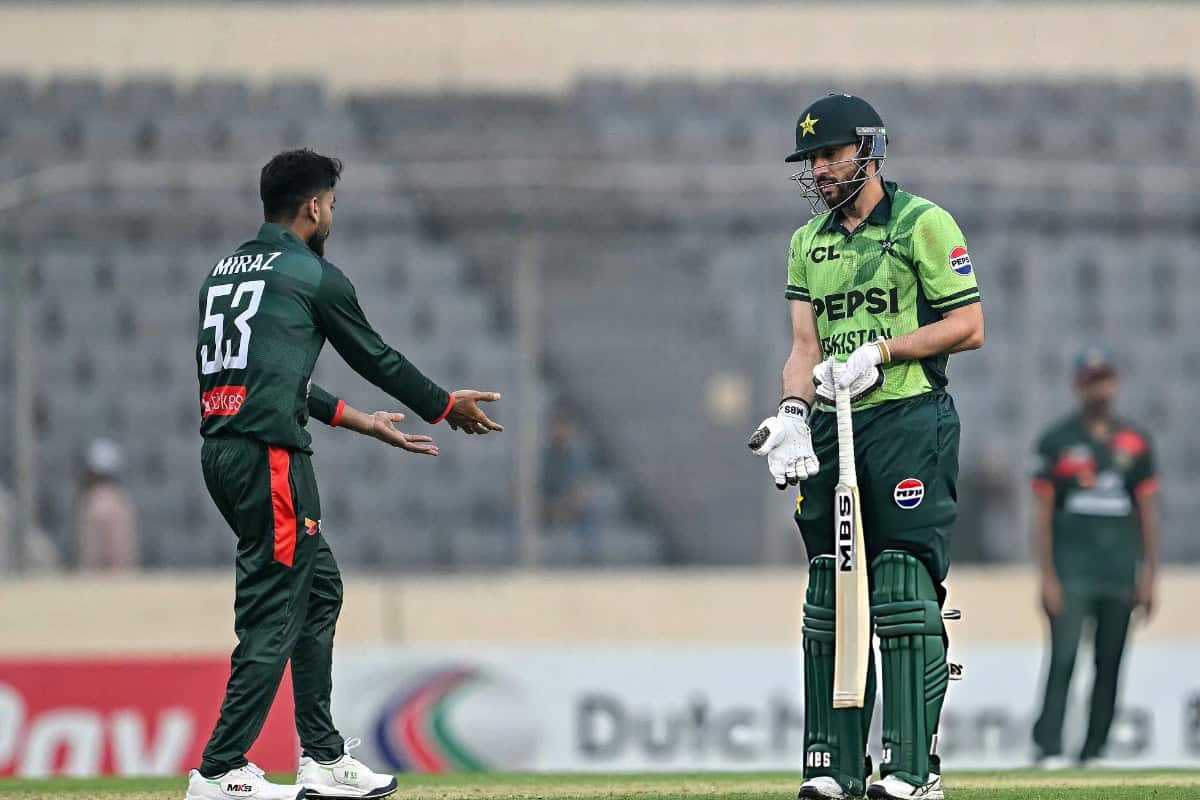
The ICC has officially reprimanded Pakistan’s Salman Ali Agha after an on-field incident during the second ODI against Bangladesh in Dhaka.

The action came after Agha reacted angrily to a controversial run-out at the non-striker’s end during Friday’s match.
The incident happened when Mohammad Rizwan drove the ball back down the pitch. It deflected towards Agha at the non-striker’s end as he stepped out of his crease.
Agha tried to collect the ball but Bangladesh’s Mehidy Hasan Miraz quickly grabbed it and ran him out. The on-field umpires referred the decision to the TV umpire.
After a review, the run-out was ruled legal and Bangladesh’s appeal was upheld.
Agha walked off looking clearly frustrated. His reaction after the dismissal caught attention and later led to disciplinary action from the ICC.
In a statement, the governing body confirmed the punishment.
“Pakistan player Salman Ali Agha has been officially reprimanded for breaching Level 1 of the ICC Code of Conduct during Pakistan’s second ODI against Bangladesh in Dhaka on Friday,” the ICC said.
“Agha was found to have breached Article 2.2 of the ICC Code of Conduct for Players and Player Support Personnel, which relates to ‘abuse of cricket equipment or clothing, ground equipment or fixtures and fittings during an international match.’”
The ICC added that one demerit point has been added to Agha’s record. It is his first offence in a 24-month period.
Level 1 breaches can lead to a reprimand, a fine of up to 50 percent of the match fee, and one or two demerit points.
The dismissal came in the middle of a strong partnership between Rizwan and Agha. The pair had put together a solid 109-run stand before the unusual run-out ended Agha’s innings.
Despite the tense moment, Pakistan dominated the match. They beat Bangladesh by 128 runs through the DLS method to level the three-match ODI series.
With the series now tied, both teams will meet again in the deciding third ODI on Sunday.
The debate around the dismissal continued after the match, but the ICC’s action focused only on Agha’s reaction rather than the legality of the run-out.