
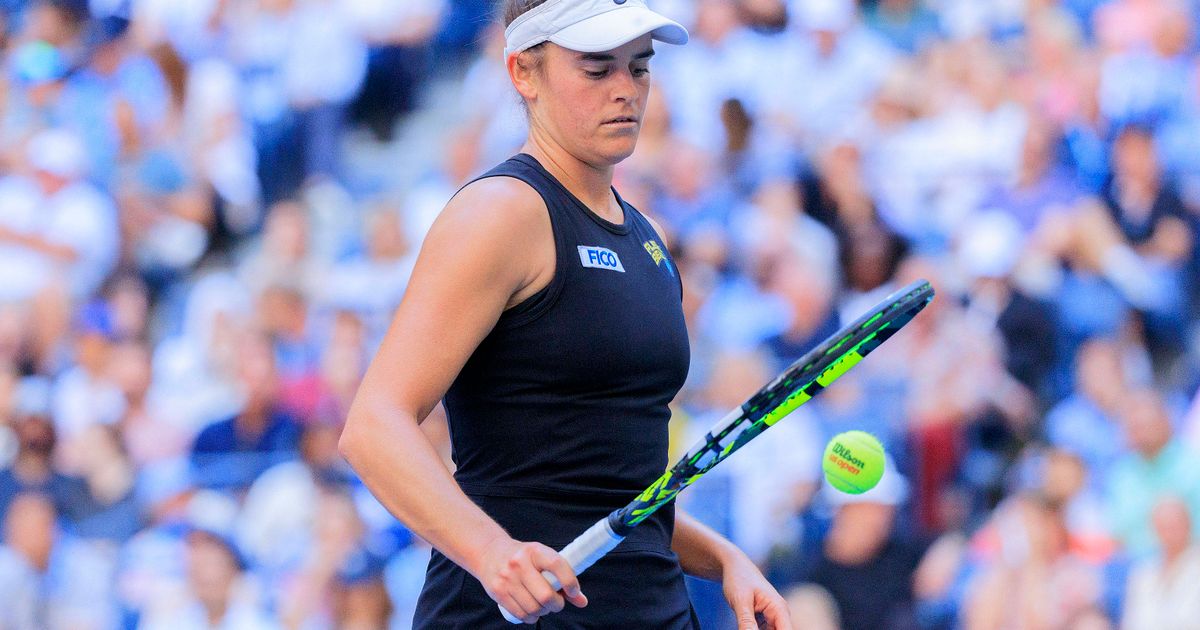
Speaking during media day ahead of the tournament, Brady outlined the psychological challenges of her time away from the sport. She described the uncertainty surrounding her return as “the scariest thing,” highlighting how the unknown proved more difficult than the physical recovery itself and shaped her current perspective as she prepares to compete again.
Brady’s return comes in a competitive environment where many of her rivals have continued to develop during her absence. Acknowledging that reality, she has adjusted her expectations accordingly, prioritising consistency, match fitness, and a gradual rebuilding of her competitive level, taking the process “one day at a time.”
Managing expectations after long absence
Brady made clear that her approach to this comeback is grounded in patience rather than immediate ambition. While she acknowledged that she will always carry internal expectations, she also stressed the importance of realism after such a long period away from competition, focusing instead on “small wins” as she rebuilds her level.
That approach reflects the broader challenge faced by players returning from long-term injuries. Brady emphasised that many of her competitors have maintained rhythm and physical conditioning over the last two and a half years, while she has had to rebuild those elements from scratch.
“A lot of these players that I’m competing against have been playing for that time period — that last 2.5 years — that I’ve been off,” Brady said. “They’ve been competing and playing and getting that match toughness, match fitness, all that. I think just, you know, (I’m) just taking it one day at a time, one match at a time and, you know, just keep trying to improve.”
Motivation and perspective ahead of Miami
Despite the challenges, Brady’s motivation to return remains strong. She emphasised that her connection to the sport continues to drive her comeback, noting that she still “really, really loves this sport” and values both the competition and the opportunity to travel and experience life on tour.
“I really, really love this sport and I love competing,” Brady said. “I love being able to travel to all the places that we get to go and to experience the things that we get to experience, and it’s only such a short part of your life.”
The emotional impact of her time away was also central to her reflections. Brady admitted that not knowing whether she would return to competition represented the most difficult phase of her recovery. “I think the toughest thing was just not knowing when I would compete again — just sort of the unknown,” Brady said. “That was probably the toughest thing, the scariest thing.”
Stephens test offers immediate benchmark
Brady’s opening match against Sloane Stephens provides an immediate test of her current level. Both players are navigating similar situations, returning from injury and attempting to regain rhythm on the tour, which adds an additional layer of context to the encounter.
While the matchup is their first at tour level, Brady acknowledged the difficulty of the challenge ahead. She emphasised that there are no easy matches at this level, particularly given Stephens’ experience and recent return from injury. “It won’t be an easy match,” Brady said. “There never is an easy match at this level. It’ll be a tough one and I know she was out a little bit for injury as well. I hope it’s a good match and I’m excited to play.”
The result of the match will offer an early indication of Brady’s progress, though her broader focus remains on long-term development rather than immediate outcomes. Brady enters Miami with a clear framework for her return — prioritising patience, consistency, and gradual improvement as she works her way back into competition.