

It’s been on the feet of Olympians and world-class triathletes, soon the Enertor Recovery Slide will be available to everyone, Here’s why the technology inside it is worth understanding.
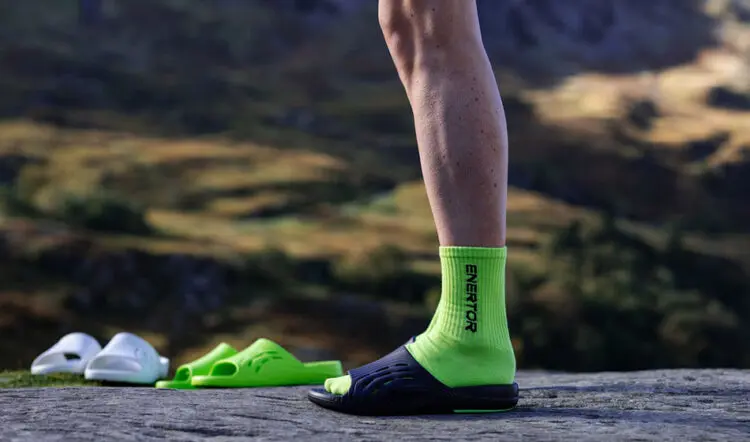
With two sold out drops, both before the public got a look in, the Enertor Recovery Slide has been quietly building a reputation among serious runners. Worn post-training by elite athletes, recommended by physiotherapists and until now, frustratingly hard to get hold of. That changes on March 27.
So what is it actually doing? And is recovery footwear something serious runners should genuinely care about or just another piece of kit to feel good about buying?
The case for taking it seriously starts with what running actually does to your body.
What your lower limbs are dealing with
Every footstrike generates a force of up to three times your bodyweight through your feet, ankles, calves and knees. Over a 10-mile run, that’s an extraordinary cumulative load on the muscles, tendons and joints of the lower limb. By the time you finish, that tissue isn’t just fatigued, it’s sensitised, still processing stress, and in need of genuine relief.
Purpose-built recovery footwear addresses this directly. Not by doing anything dramatic, but by reducing the residual load on tired tissue at exactly the point when it most needs a break. The science is straightforward. The difference in how your legs feel the next day is less so -until you’ve experienced it.
What’s inside the Enertor Recovery Slide
The Enertor Recovery Slide was developed by biomechanics specialists with over 25 years in injury prevention.
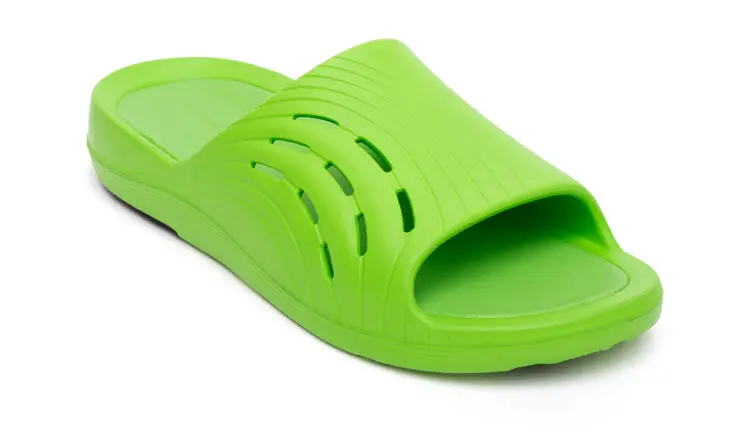
The centrepiece is Enertor’s UltraSole™ technology. Designed specifically for recovery rather than performance, it absorbs 50% of impact with every step, meaning the force transmitted through already-tired tissue with every post-run step is dramatically reduced. This isn’t the vague softness of a standard foam slide. It’s structured, engineered absorption.
The 20mm raised heel is deliberate. After a run, the Achilles tendon and calf complex are under residual stress. The raised heel reduces the load on both by shortening the effective range of motion. It’s the same principle used in Achilles rehabilitation protocols, applied passively just by putting the slides on.
The built-in metatarsal pad redistributes pressure away from the forefoot – one of the areas that takes the heaviest impact loading during running. The subtle arch support addresses the plantar fascia directly. Together, these features create a slide that supports the foot in the specific ways that matter most after a run.
Put them on and the effect is immediate. Cushioned and supported in a way that makes you aware, slightly uncomfortably, of how little support you’ve been giving your feet after training until now.
What the testing showed
Independent consumer trials put numbers behind the feeling. 92% of users felt less pain and soreness after training. 89% reported less fatigue in their legs and feet. 87% felt they recovered faster.
Who’s already wearing them
Usain Bolt described them “like walking on air.” Ben Felton has been seen wearing them as part of his post-session routine. Physiotherapist to the elites, Aidan O’Flaherty has also endorsed them as useful tool for the post-run window.
Recovery footwear isn’t a new concept in elite sport. What’s new is a product engineered specifically for runners, with technology that justifies the conversation.
The Enertor Recovery Slide launches 27th March. Join the waitlist at enertor.com before then and you’ll get 15% off — and given the history of the previous two drops, getting in early is advisable.
Join the waitlist here
