
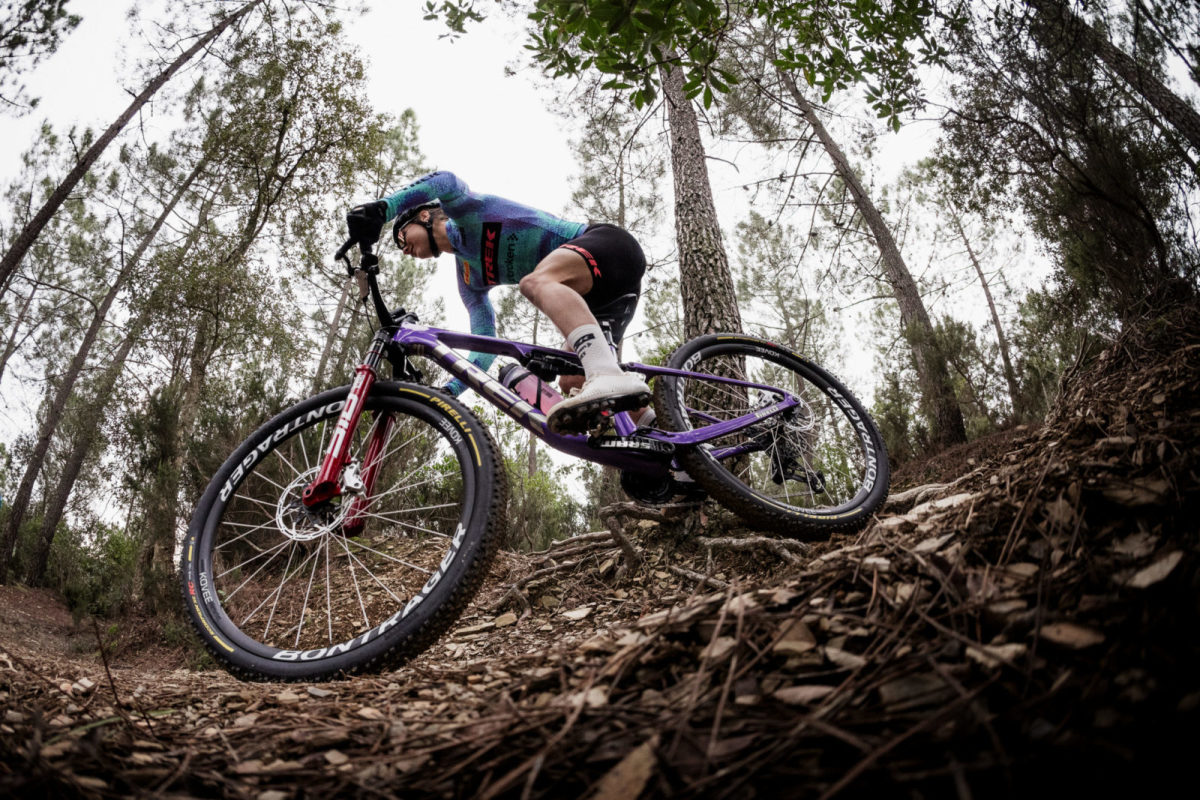
If you’ve been scrolling through the grainy “spy shot” corners of the internet or hawk-eyeing the starting grids of the early-season XC races, you’ve likely seen it: a lithe, purple-hued machine that looks suspiciously unlike anything in Trek’s current catalog.
It’s not a Supercaliber. It’s definitely not a Top Fuel. It’s the Trek-Unbroken prototype, and it’s a clear signal that the “80mm of travel is enough” era of cross-country racing has officially been put to pasture.
Trek Bicycle
For years, the Supercaliber was the benchmark-a lightweight, efficiency-first machine that helped Jolanda Neff and Evie Richards claim Olympic and World Championship gold. But let’s be real: World Cup XC tracks have evolved into something more than the XC courses of old. Rock gardens are getting deeper, the gaps are getting wider, but speed and performance remain key. Last season, we saw the team often ditching the Supercaliber for the 120mm Top Fuel just to survive the increased technicality of the courses. The problem? The Top Fuel, while capable, wasn’t built for the “every gram counts” world of elite XCO.
This is the spark that ignited Trek engineer Alex Martin and a project that feels more like a Formula 1 development cycle than your standard bike R&D process.
The “Goldilocks” Kinematics
The tech nerds at Waterloo didn’t just tweak a frame; they went back to the drawing board with an analytical approach. The result is a 115mm travel platform. Why 115? According to the team, this is the “Goldilocks” zone for modern XC and XCC, offering more support than a short-travel race rig without the weight penalty or the “mushy” pedaling feel of a traditional 120mm trail bike.
“If we want to do a different suspension layout and we want to have competitive weight, we had to have a flex stay bike.“
– Alex Martin
Trek Bicycles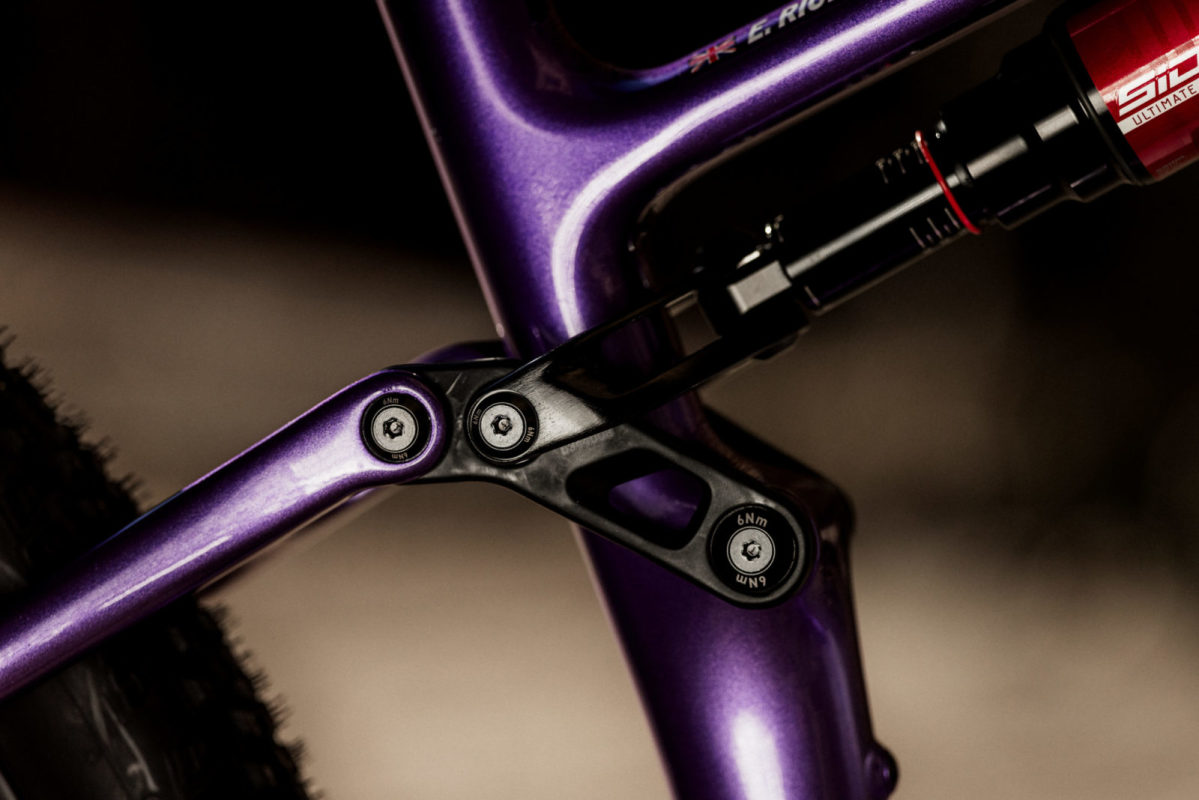
The suspension layout is a departure from Trek’s signature ABP (Active Braking Pivot) found on the Slash or Session. While ABP is a godsend for downhill traction, it’s heavy. For this prototype, Martin and the crew opted for a carbon flex-stay rear triangle. It’s lighter, simpler, and when paired with their new “flapper” linkage, a top-tube-mounted shock driven by a compact rocker link, it provides a leverage ratio that stays predictable and supportive even when you’re gassed and deep in the travel.
We’ve all heard the age-old comment: “It looks like a Session,” but it’s hard to ignore the inspiration behind the design language this bike borrows. It’s looking like a very Specialized approach to a suspension layout.
Trek Bicycles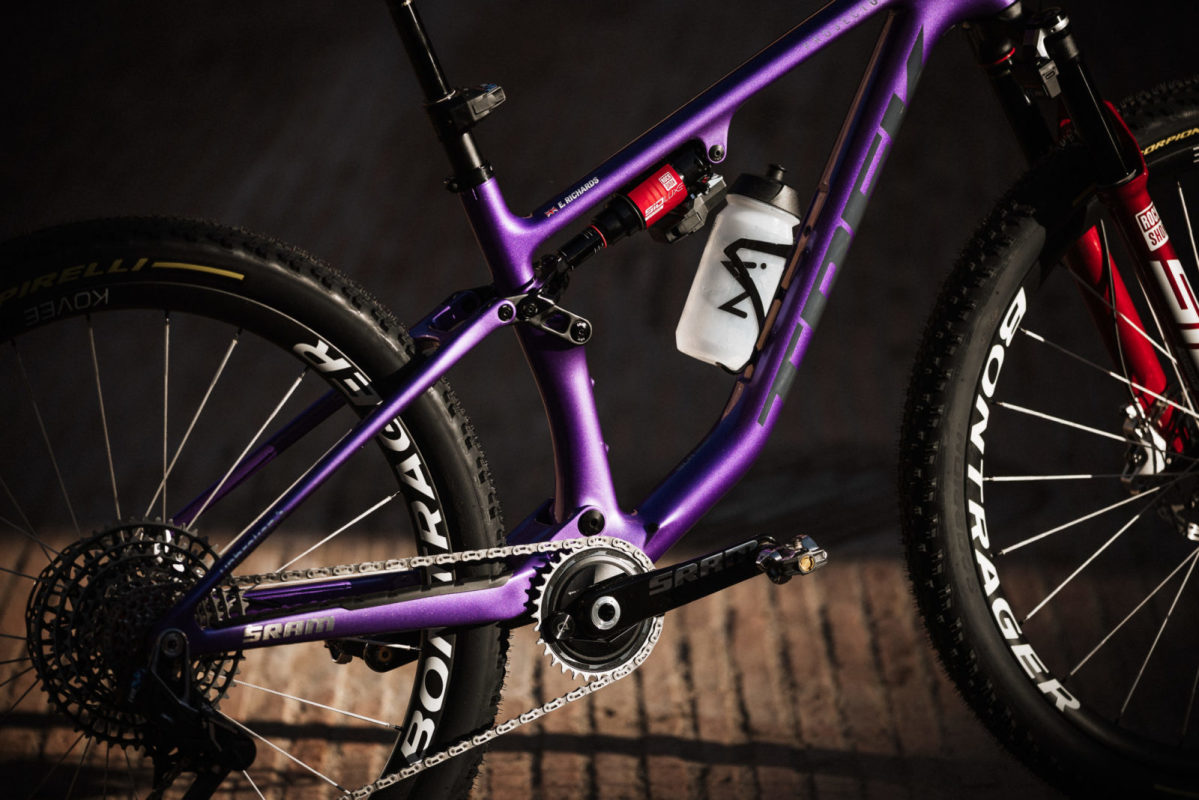
Factory-Built, Factory-Tested
One of the coolest parts of this story is how the riders, Riley Amos, Gwendalyn Gibson, and Evie Richards, were involved from day one. In the modern age, athlete involvement in every step of the prototype process is the best way to develop a winning bike. The riders were testing crude carbon prototypes (literally bonded together from existing frames) in Durango and Wisconsin, A/B testing linkage designs like they were picking out tires, and providing direct feedback on what they liked and didn’t like.
The “flapper” link won out because it gave the riders more confidence. And in a sport where races are won or lost in the balance of technical “B-lines,” and fitness, confidence is the most valuable metric you can’t find on a scale.
Trek Bicycles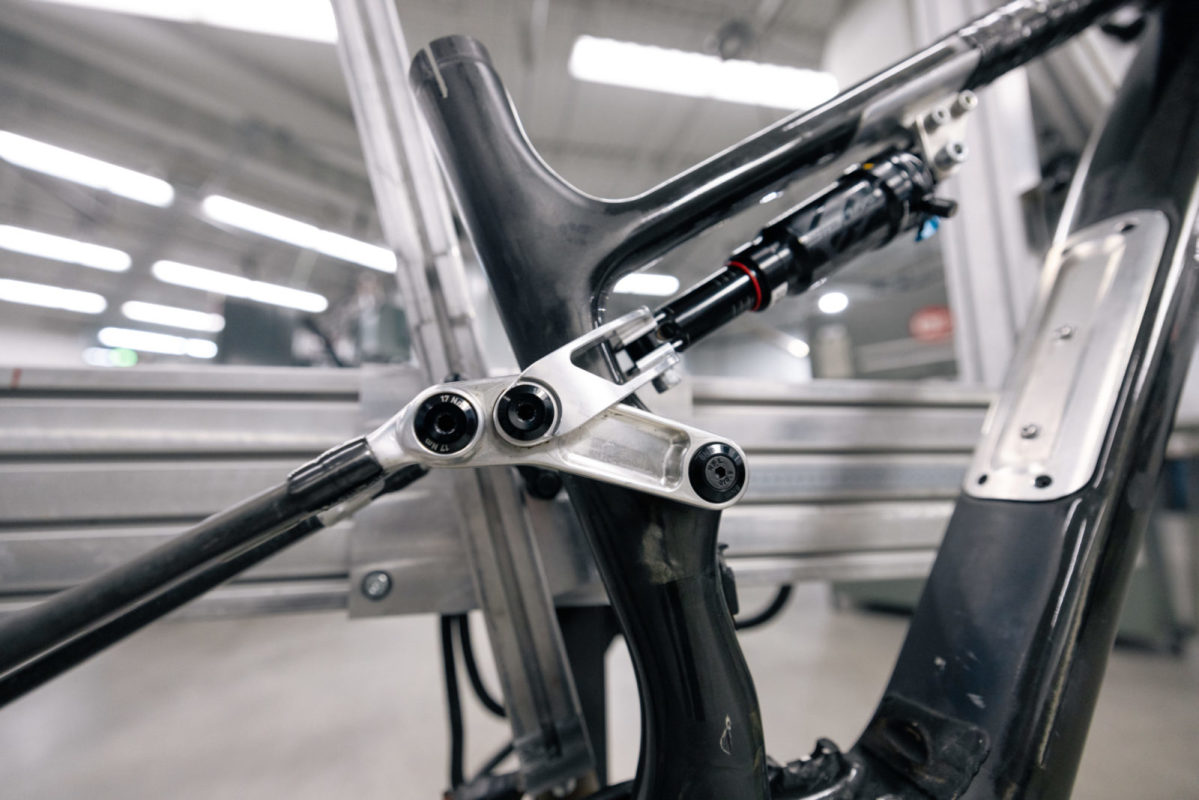
Can You Buy It?
Trek says you can’t buy this bike. At least, not yet. For now, this bike is a “living laboratory.” It’s a tool for the Trek-Unbroken team to chase podiums and tune percentages while the engineers figure out which of these features will trickle down to the next generation of consumer bikes.
Trek Bicycles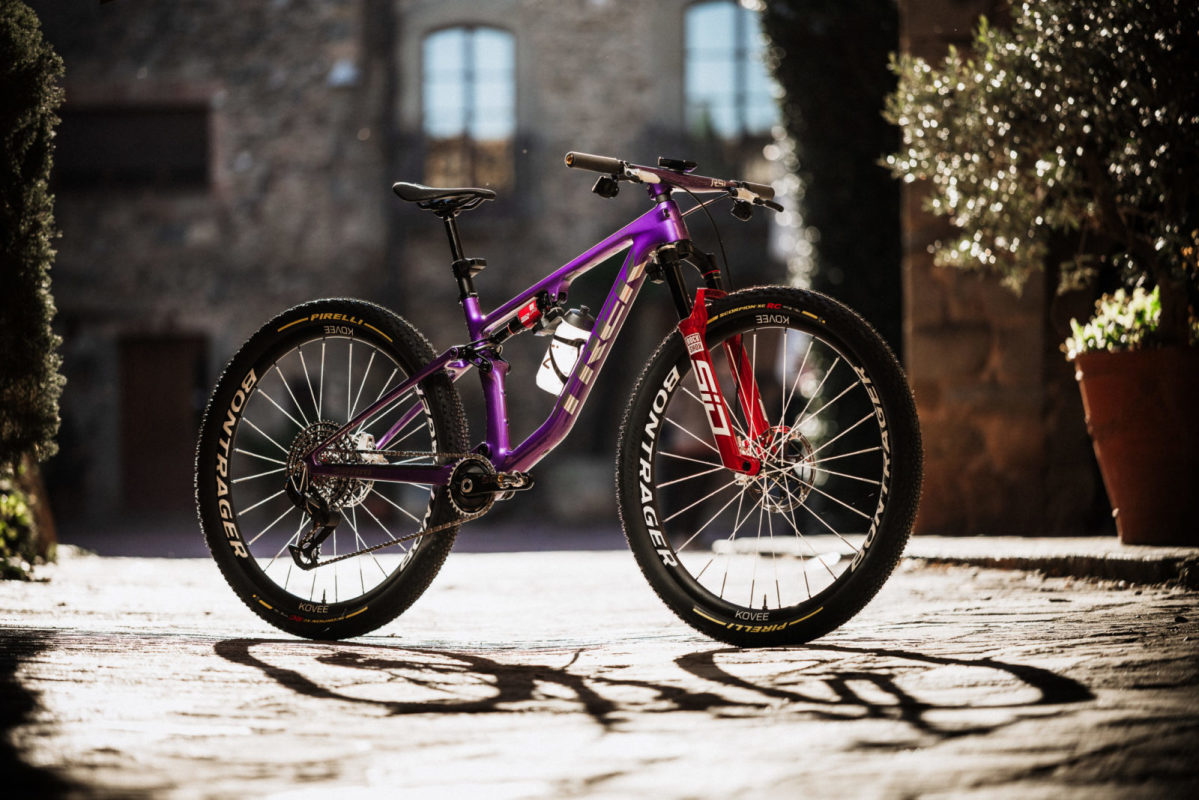
Fading are the days when brands kept their prototypes under a shroud of secrecy until the “Add to Cart” button was live. Now it is more of a marketing play to show us the raw, unfinished reality of modern bike development.
Whether this specific frame ever hits shop floors is almost irrelevant. What matters is that Trek has acknowledged the shift towards more travel, and more capable XC bikes aren’t just a trend – it’s the new baseline. If the Trek-Unbroken team’s early success is any indication, the future of XC is already turning out to be a lot faster, a lot more capable, and a lot more fun.