

The 2026 World Happiness Report is out, and the results are familiar—and revealing. Once again, Finland tops the list, followed closely by Denmark, Iceland, Sweden, and Netherlands. While GDP, life expectancy, and social support play a role, there’s another pattern lurking behind the numbers: these countries invest heavily in urban livability and, crucially, cycling.
We’ve all seen the images—Finnish students pedaling to school in subzero temperatures with smiles that could melt snow, or Copenhagen’s vibrant streets buzzing with bikes at rush hour. The takeaway is simple: more cycling, more happiness.
It’s no surprise, then, that countries like the United States rank much lower, and Canada, while improving, still has a long way to go.
Finland: Leading with People-Centered Design
Finland’s high ranking isn’t just about work-life balance or social safety nets. Cities like Helsinki are actively redesigning urban life around people, not cars. Ambitious plans aim for a car-free city by 2050, supported by an extensive network of bike lanes, pedestrian-first streets, and the innovative Mobility as a Service (MaaS) model, which integrates cycling, public transport, and shared mobility. And with plentiful green spaces threaded throughout the city, residents can mix daily activity with nature—boosting wellbeing while commuting.
There are also three Euro Velo routes crossing Finland offering incredible opportunities for bike travel through the Nordic country.
Finland’s capital Helsinki is the sixth ranked city on the Copenhagenize index.
“In Finland, we don’t really chase happiness – we tend to find it in small, ordinary moments,” says Heli Jimenez, Senior Director, International Marketing at Visit Finland, “When life feels overwhelming, sometimes the best way to feel better is simply to slow down, step outside and chill a little – like a Finn.”
Helsinki, Finland
Denmark: Copenhagen Sets the Global Standard
Copenhagen, the world’s cycling capital and second ranked city on the Copenhagenize index, proves that infrastructure drives behaviour. More than 40% of residents commute by bike, thanks to hundreds of kilometers of dedicated lanes, “super bikeways” linking suburbs to the city center, and traffic systems optimized for cyclists. Car-free zones, waterfront promenades, and urban parks reinforce a culture where movement doubles as social interaction—a daily dose of happiness baked into the city’s design.

The best kind of traffic in Copenhagen, where bike lane design leads the world
Iceland: Small Population, Big Cycling Ambitions
Reykjavik may be better known for its volcanic landscapes than its urban planning, but the city is investing in cycling as a core part of its carbon-neutral future. Protected bike lanes are expanding, e-bike incentives are in place, and pedestrian zones are growing. Even in icy winters, cycling remains viable and enjoyable—proving that climate doesn’t have to limit sustainable mobility.
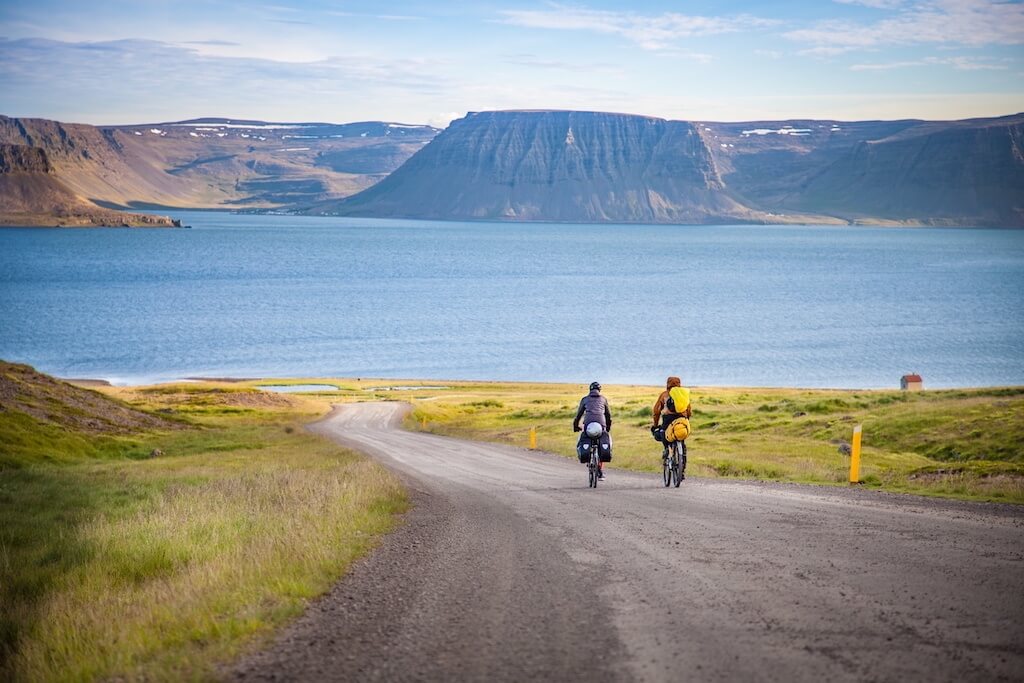
Cycling adventures in Iceland (photo Bjorgvin-Hilmarsson)
Sweden: Safety and Vision Zero
Stockholm and Malmö have long been international leaders in safe, people-first streets. Sweden’s Vision Zero policy, aimed at eliminating traffic fatalities, has driven extensive investments in separated bike lanes, slower city speeds, and pedestrian-focused urban centers. Malmö alone boasts over 500 kilometers of cycling infrastructure and streets where bikes take priority—making active transportation a safe, convenient choice.
Check out our article on Sweden’s epic Kattegattleden coastal cycling route.
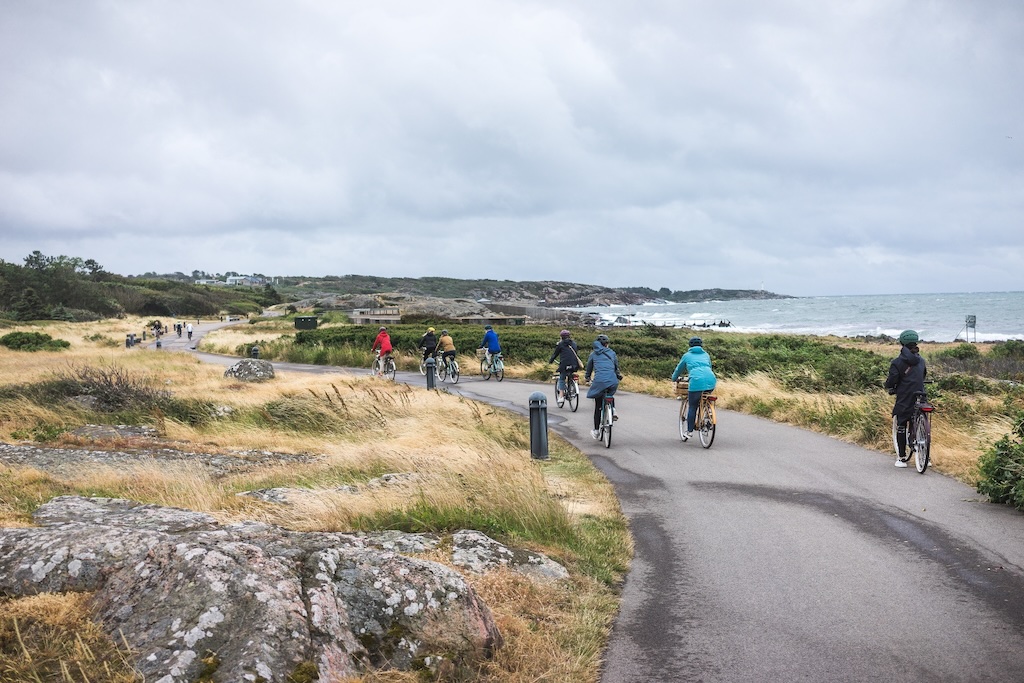
Kattegattleden cyclng route in Sweden
Netherlands: The Ultimate Bike Utopia
No discussion of happy, bike-friendly cities is complete without mentioning the Netherlands. In cities such as Amsterdam and Utrecht—home to Vredenburg one of the busiest cycling routes in the world—cycling isn’t just common. It’s part of the national identity. Nearly 60% of trips in Utrecht are by bike, supported by the world’s largest bike parking facility and streets designed for people rather than cars. Walkable, bikeable, and public-transit ready, Dutch cities are living proof that infrastructure shapes culture—and happiness.
A Blueprint for Happier Cities
The lessons are clear: investing in people-centered urban design, safe and connected cycling networks, and lively public spaces makes societies healthier and happier. As the World Happiness Report shows, wellbeing isn’t just about money or policy—it’s about the design of everyday life.
For cities in North America and beyond, the takeaway is urgent. If we want happier citizens, safer streets, and stronger communities, we should take a page from Finland, Denmark, Iceland, Sweden, and the Netherlands: build for bikes, design for people, and make active, human-scale movement the default, not the exception.