
The Ultimate Fighting Championship (UFC) held Fight Night London on March 21, 2026, at The O2 Arena. As a big UFC fan who watches almost every event and has attended fights in Las Vegas and now London, the sport itself never disappoints. Fight Night delivers exactly what it promises: a full day of action, 13 fights, and a crowd that lives for every moment. But a 1,200 USD VIP ticket raised real questions about premium customer experience, and about how sports organizations use technology to treat their highest-paying fans. This post looks at the event from two angles: an honest fan review and a business perspective on where the premium experience still has a long way to go.
Sports Innovation and the Digital Fan Experience
Sport has always been about moments. The knockout. The comeback. The crowd erupting at once. But what happens around those moments — before, during, and after — is increasingly shaped by technology.
UFC is a good example of how digitalization is changing sports. The organization produces more than 40 live events annually, broadcasting to over 950 million households across more than 170 countries. That scale demands smart infrastructure. And the sport is not just growing in reach. It is growing in ambition when it comes to data and AI.
Other sports have set a high bar. The NFL uses real-time player tracking to deliver Next Gen Stats during broadcasts. The NBA has sensor systems embedded in every arena floor. Premier League clubs use live data feeds to adjust tactics mid-game and give fans instant insight on second screens. Formula 1 has turned telemetry into entertainment. These leagues understand something important: the fan experience does not start when the first whistle blows. It starts the moment someone buys a ticket.
Real-time data is at the heart of this shift. The ability to collect, process, and act on streaming data — from ticket purchases to in-venue movement to live fight statistics — is what separates a good fan experience from a great one. As explored in a previous post on reimagining sports and gaming with real-time data analytics.
Cloud-based real-time analytics is already powering many of these experiences across sports and entertainment. The technology exists. The question is whether organizations choose to use it well, all the way down to the paying fan in the seat.
UFC Fight Night London: The Event Itself
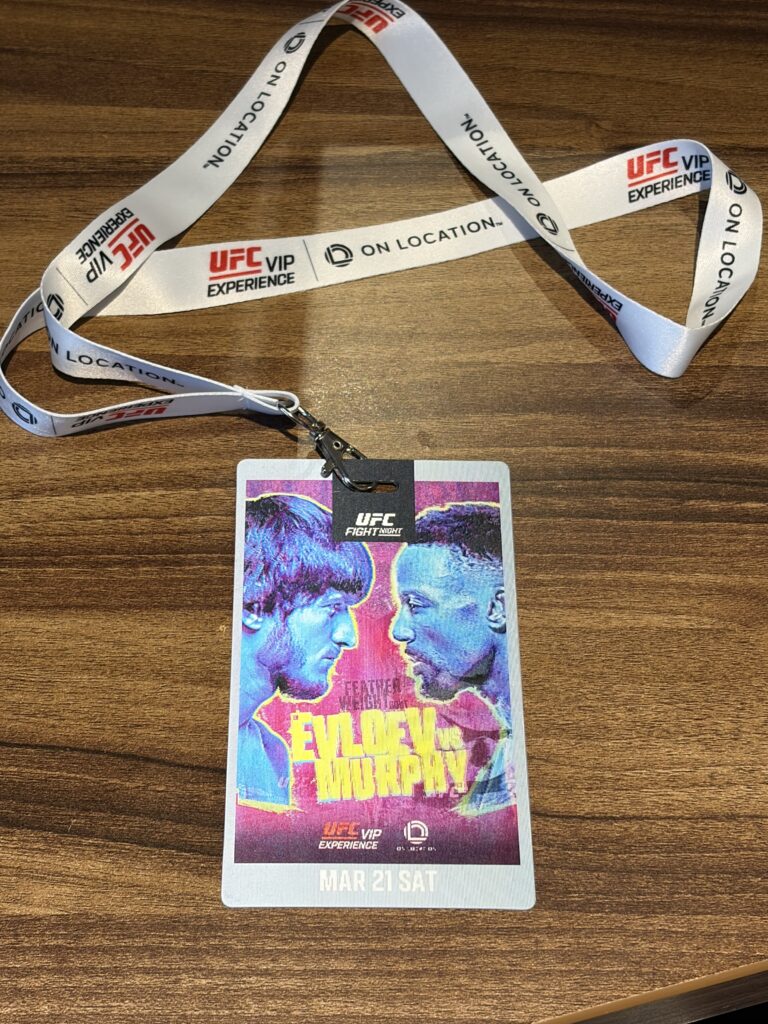
UFC Fight Night: Evloev vs. Murphy took place on March 21, 2026, at The O2 Arena in London. The main event was a featherweight clash between two undefeated contenders — Movsar Evloev and Lerone Murphy — with a title shot effectively on the line.
Fight Night is not a pay-per-view spectacle. There is no hype machine running for weeks beforehand. But that is also what makes it appealing. A full card of 13 fights means the action rarely stops. Something is always happening. For a combat sports fan, that is a good day out.
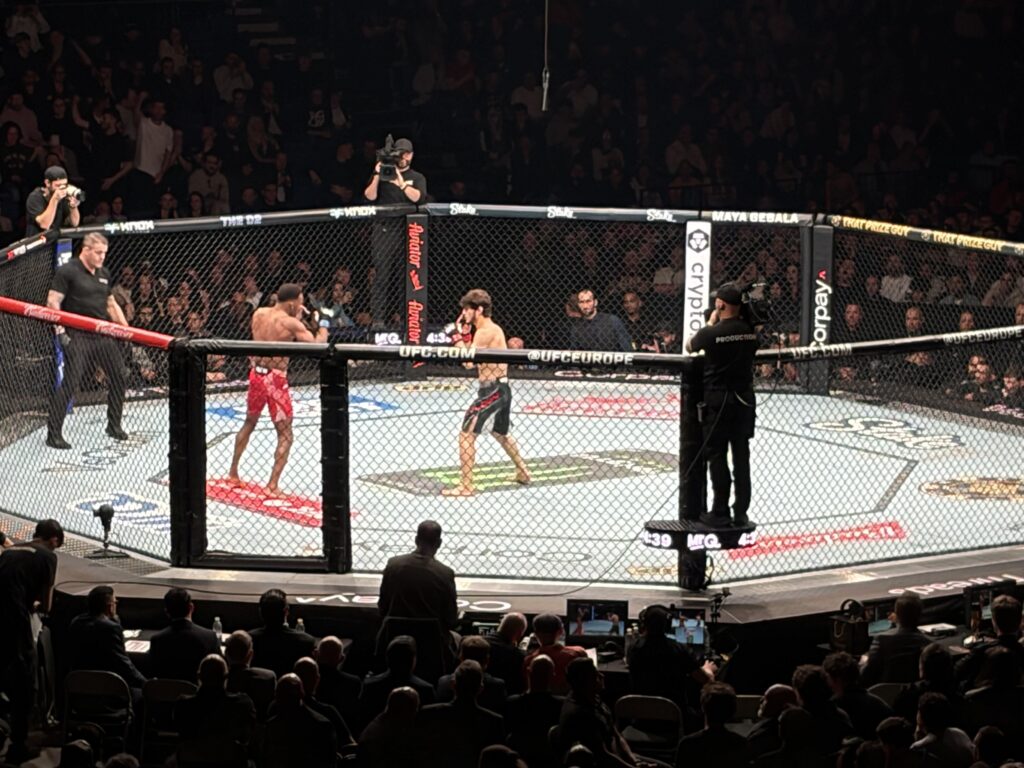
The London crowd was loud, especially during fights involving British fighters. Nathaniel Wood, Mason Jones, and Michael “Venom” Page all performed on the card, and the home crowd delivered. The atmosphere during those bouts was genuinely electric. The main event itself was a close, technical fight. Evloev won by unanimous decision in a bout that divided opinion, but both fighters showed elite-level skill.
From a pure sport perspective, the event delivered. Thirteen fights, strong local representation, and a legitimate featherweight contender fight as the headline. No complaints there.
The Good, the Bad, and the Ugly: A VIP Ticket Reality Check
The VIP ticket for UFC Fight Night London including a lower level seat cost around 1,200 USD. That is a significant amount for a Fight Night event. For context, a solid VIP experience at a Champions League match in London or Munich typically runs 500 to 700 USD and comes with a level of hospitality that matches the price tag. So the bar is not unreasonably high.
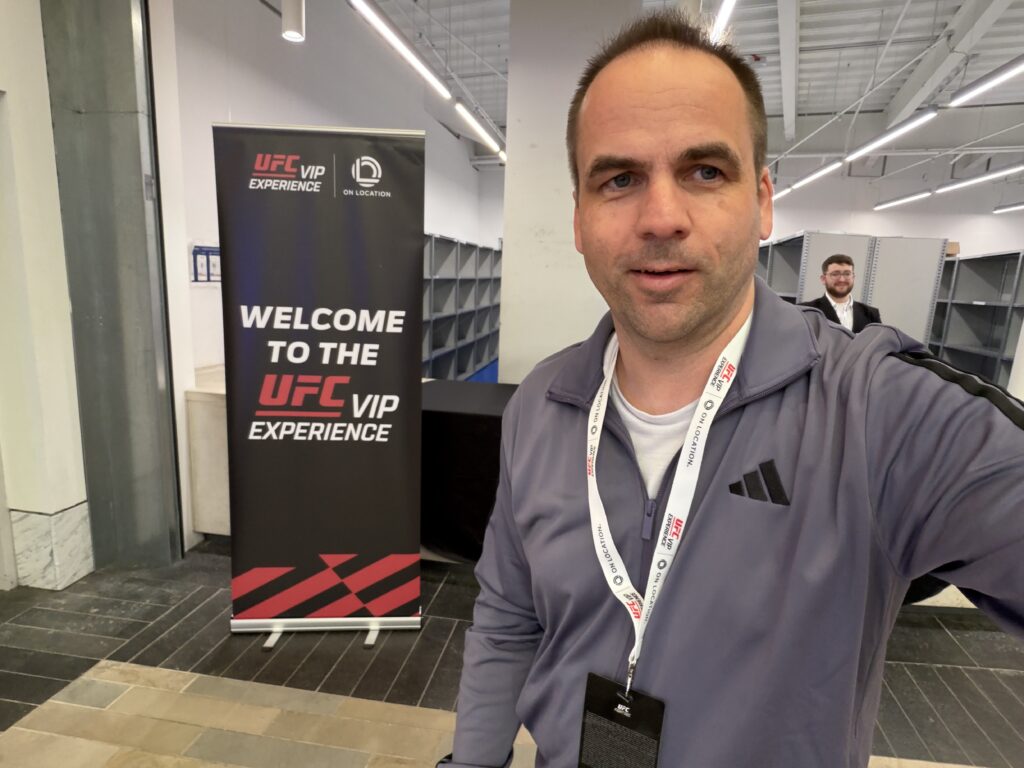
Here is what the UFC London VIP experience actually looked like.
The Positives: A Smooth Digital Journey and a Pleasant Lounge
The digital buying process worked well. As a UFC member, pre-registration and ticket purchase were straightforward. The ticket arrived in the UFC app three days before the event. The app also supports resale. That is how a modern ticketing process should work.
The O2 Arena itself is a well-run venue. The seating categories are sensibly tiered: ringside, lower level, upper level, and VIP boxes and lounges positioned between the lower and upper levels. The arena holds up to 20,000 people. The VIP lounge had a good selection of drinks, both alcoholic and non-alcoholic.
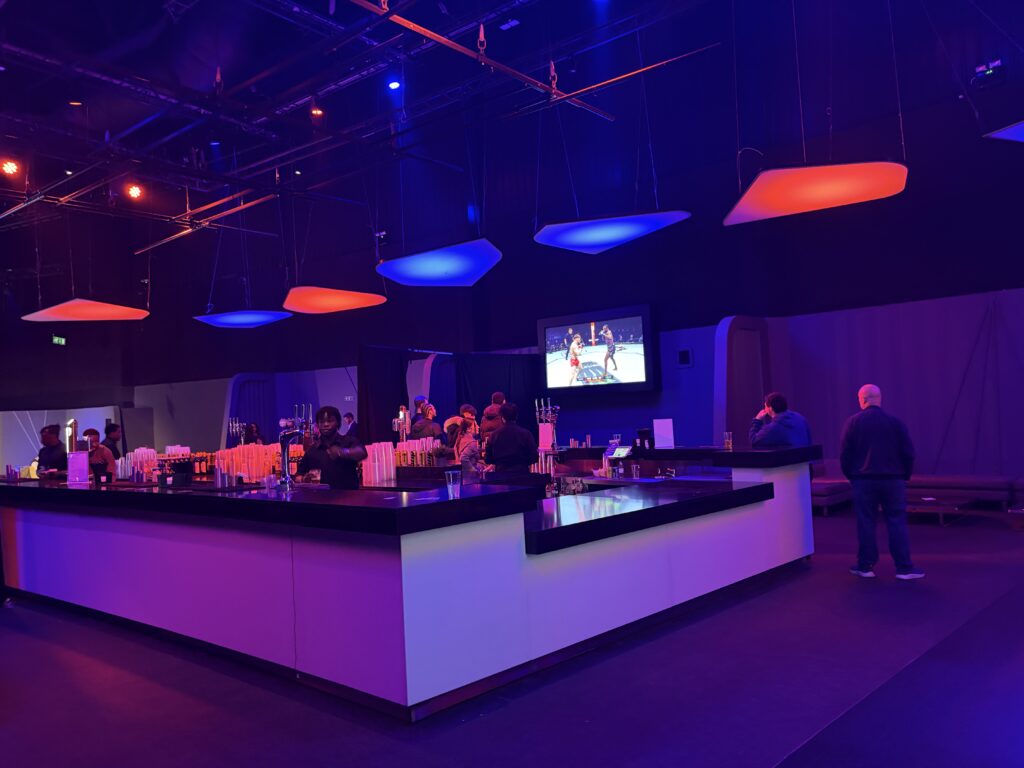
The lounge itself was a pleasant space with a decent view of the octagon. A nice touch: VIP guests had the opportunity to take photos with UFC fighters in the lounge, which is exactly the kind of exclusive access that makes a premium ticket feel worth it.
The Frustrations: Poor Seating, Weak Food, and Visibility Problems
The arena was roughly 75% sold. That is fine and does not kill the atmosphere. But the preliminary card drew a noticeably thin crowd. In UFC, many casual attendees only come for the main card, so the prelim atmosphere felt flat. UFC cannot fully control this. But there are levers available: dynamic pricing similar to airline yield management, promotional tickets, giveaways, or partner allocations to fill seats early. The trade-off is real: discounted or free seats for prelims make the atmosphere better, but they also make it harder to justify premium pricing elsewhere. It is a balancing act, but one worth addressing.
Many VIP guests spent a significant amount of time watching fights on TVs inside the lounge rather than from their seats. The lounge sits between the lower and upper levels, which means it is already at some distance from the action. That is not ideal.
Seat selection was not available at the time of purchase. The assigned seat turned out to have a poor view. Since the arena was not fully sold out, it was possible to move to a better block. But that should not be necessary after paying for a premium ticket. A VIP purchase at that price point should come with a guaranteed good seat, selected in advance.
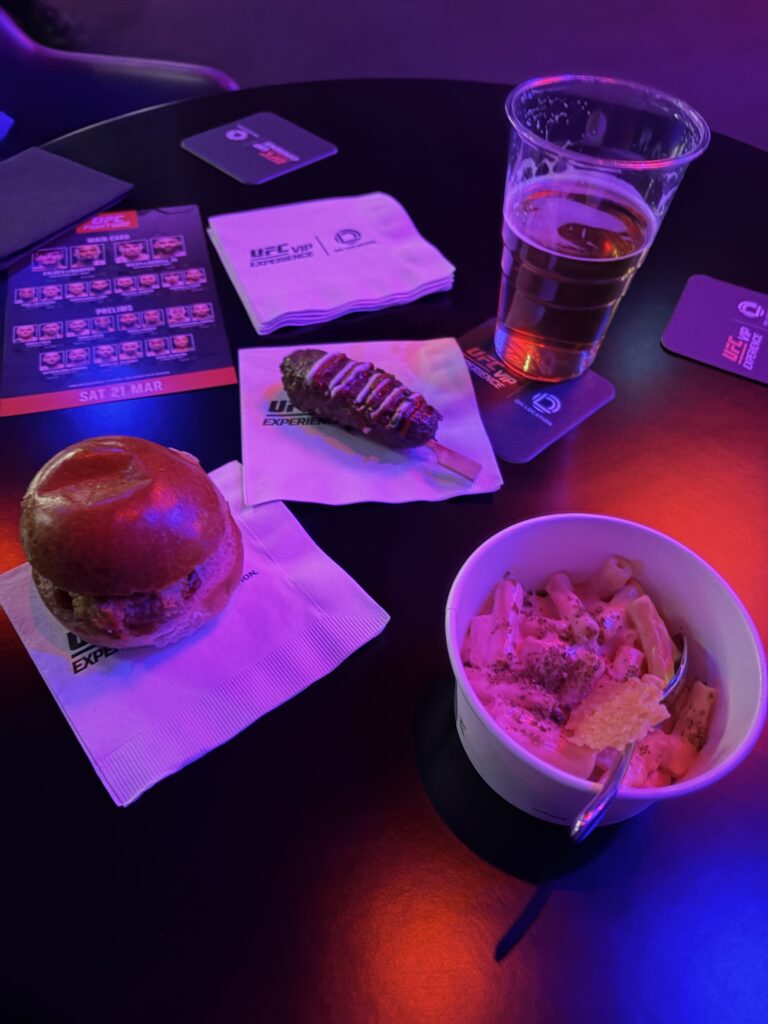
The food did not match the price. Standard fast food options, nothing more. Anyone who attends premium sporting events in Germany or elsewhere in Europe will notice the gap immediately.
The screens inside the arena created a real problem. The O2 was not designed for combat sports. From multiple seating positions, including the VIP lounge, it was difficult or even impossible to see replays and fighter statistics. In Las Vegas and some other UFC arenas, a large central display handles this well. At The O2, people were turning around every few minutes to catch details on a side screen. That is a fundamental infrastructure issue.
The Deal Breaker: No VIP Access for the Main Card
The VIP lounge was located on the opposite side of the arena from the assigned seating block. Getting between the two required a five-minute walk through the general concourse, past food stands, queues, and all the regular foot traffic. That is not a VIP experience. That is just inconvenient.
A small number of lounge seats had a direct view of the octagon. These were first-come, first-served. The people who claimed them early stayed all day. There was no system, no rotation, no management of this at all.
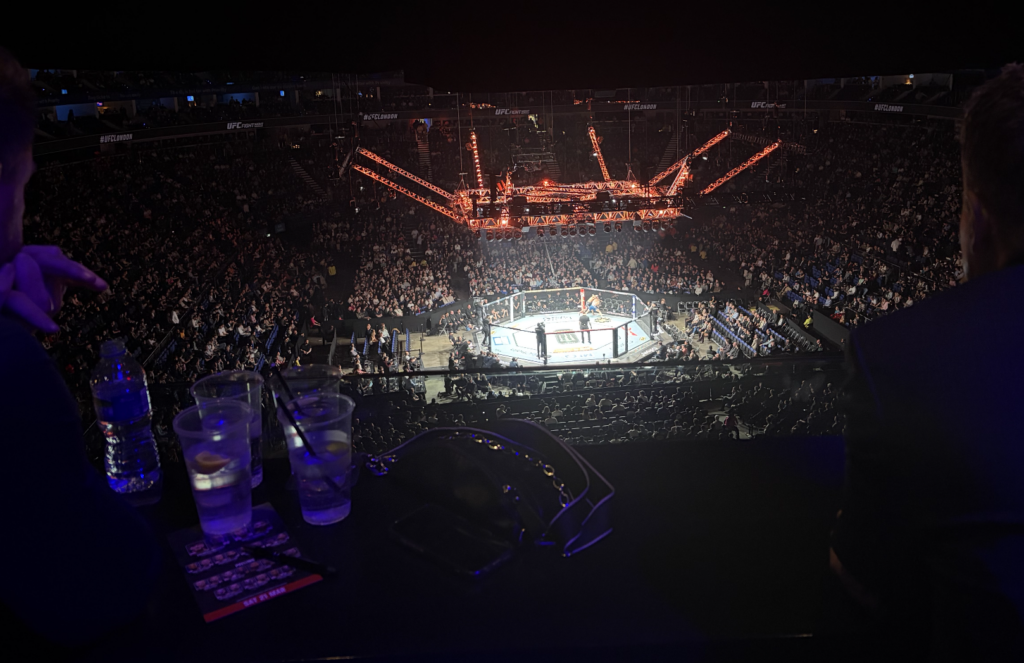
The most significant issue: the VIP experience ended after the preliminary card. At approximately 8pm, VIP guests were asked to leave the lounge for the main card. Guests had paid 1,200 USD and more for access, and that access stopped before the headline fights. Some guests took as many drinks as they could carry back to their regular seats. That says everything about how this was managed.
This is not a minor operational slip. Ending VIP access before the main card is a fundamental misunderstanding of why someone pays a premium price.
To make matters worse, none of this was communicated at the time of purchase. The itinerary with all the relevant details only arrived two weeks before the event. A premium customer deserves to know exactly what they are buying before they pay.
The Business Case UFC Is Missing
UFC is on a significant growth trajectory. The organization has more than 700 million fans and approximately 300 million social media followers worldwide. New markets are opening. The fanbase is younger and more global than ever. The business momentum is real.
But momentum does not automatically translate into a great customer experience. And for premium customers — the ones paying three to five times the standard ticket price — a poor experience is not just a disappointment. It is a missed business opportunity.
The logic of premium pricing is straightforward. A small percentage of customers are willing to pay significantly more for a significantly better experience. Airlines figured this out decades ago. So did luxury hotels, premium sports clubs, and concert promoters. The willingness to spend is there. The question is whether the product justifies it.
At UFC Fight Night London, it did not.
Premium customers are not just buying a seat. They are buying certainty. The certainty that their seat is good, their food is quality, their access is uninterrupted, and their experience is clearly better than the general admission crowd. When any of those elements fail, the value proposition collapses.
There is also a longer-term business dimension here. A premium customer who has a great experience comes back. They recommend the event to others. Buy merchandise. Subscribe to UFC Fight Pass. Become brand advocates. A premium customer who feels shortchanged does the opposite. And in a world where social media amplifies every experience, negative word-of-mouth travels quickly.
UFC has the fanbase, the global scale, and the brand recognition to build a genuinely great premium product. The gap between the current VIP offering and what is possible is wide. And that gap is not primarily a technology problem. It is a strategic one.
The Technology Vision: What Is Already Possible
The technology to deliver a great premium fan experience already exists. It is not experimental. It is running in production in other industries right now.
UFC is already investing in data and AI. Since announcing their tech partnerships with leaders like AWS and IBM, UFC has built the UFC Insights Engine, an AI-powered platform that taps into more than 13.2 million UFC data points from over 20 years of fights and more than 2,400 current and former UFC athletes. The system moved beyond pre- and post-fight applications into real-time moments, identifying and triggering key fight milestones such as record-setting strike totals and significant streaks as they happen (as discussed in an IBM case study). That is impressive work. But it is focused on broadcast and content. The in-venue, in-person fan experience — especially at the premium end — is a different challenge entirely.
Here is what a modern premium fan experience could look like, using technology that is available today.
Ticket purchase and seat selection. Seat maps with real-time availability, clear sightline information, and the ability to choose an exact seat at the time of purchase. This is standard in theatre and concert ticketing. It should be standard in premium UFC ticketing.
Personalization. Know returning customers. A fan who attended two previous UFC events has a history: preferred seating areas, food and drink preferences, favourite fighters. A real-time customer data platform can surface this information and use it to personalise the experience from the moment they arrive. Loyalty platforms built on streaming data already do this in retail, banking, and entertainment, as covered in this post on customer loyalty and rewards platforms.
Location-based services. Once a fan enters the arena, their journey can be guided intelligently. Push notifications for shorter food queues. Alerts when a VIP lounge seat becomes available. Directions to the best route from the lounge to the seating block. Fighter walkout timing so guests know exactly when to leave the lounge and not miss anything. None of this is science fiction. It runs in retail and airport environments already.
Live in-venue data integration. The broadcast already benefits from real-time fight statistics. The same data should be visible inside the arena on well-positioned screens. A fighter approaching a UFC record mid-fight should be visible to the crowd in the arena, not just to viewers at home. Disney+ Hotstar built live gamification into cricket broadcasts — fans could predict outcomes in real time during matches, creating a layer of engagement that went well beyond passive watching, as described in this post on media industry data streaming. A version of this for live UFC events is entirely feasible.
VIP journey management. A simple but important capability: know who the premium customers are, where they are in the venue, and communicate with them in real time. When the main card is about to start, a notification goes to every VIP guest with their seat location, the time until walkout, and the fastest route from the lounge. This requires a real-time event streaming layer connecting ticketing, access control, mobile notifications, and venue operations. The architecture is not complex. The business value is significant.
The gap between UFC’s current in-venue experience and what is technically possible is not a question of available tools. It is a question of investment priority. The broadcast experience is improving. The in-person premium experience has not kept pace.
The technology to deliver a great premium fan experience already exists and is battle-tested across industries. How Industry Leaders Leverage Data Streaming documents exactly how organizations put real-time data to work. And sports is one of the most compelling opportunities still waiting to be fully unlocked.
UFC Has the Momentum. The VIP Experience Has Not Caught Up.
UFC is one of the fastest-growing sports properties in the world. The product inside the octagon is world-class. The global fanbase is expanding rapidly. The business fundamentals are strong.
But the premium fan experience at UFC Fight Night London was, to put it plainly, embarrassing for the price paid. Ending VIP access before the main card. Poor seat assignment. Food that did not justify the ticket price. A lounge on the wrong side of the arena. These are not minor details. They are the core of what a premium experience is supposed to deliver.
There is a useful reference point here. A previous post on life as a Lufthansa HON Circle member explored what a genuinely great premium experience looks like. The investment is substantial, but so is the return in loyalty, advocacy, and repeat business. Lufthansa understands that premium customers are not just buying a service. They are buying a relationship with the brand. That relationship is built through consistent, thoughtful, high-quality treatment at every touchpoint.
UFC has everything it needs to build that kind of relationship with its highest-paying fans. The fanbase is passionate. The sport is compelling. The technology exists. What is missing is the strategic commitment to treat premium customers as premium customers, not just before the preliminary card, but all the way through to the final bell.
For the next event, the sofa at home offers a better experience. Better screens. Better food. No five-minute walk through a crowded concourse. And the main card does not cut off at 8pm.
The potential is there, UFC. Use it.