Stuart Weir is the RBR Senior writer for Europe and the United Kingdom. Stuart Weir is well known by the British Athletics and the European Athletes. Stuart has written over one million words for RunBlogrun and averages 150 columns a year.
Stuart sent me a note this morning that perhaps, someone could do a better piece on the tactics of the 3,000 meters, but he would like to focus on Josh Kerr, the athlete and the man. I am very happy that Stuart wrote this. Josh Kerr is one of our most popular athletes, and I highly recommend his YouTube series.
Thanks, Stuart!
Josh Kerr – not just another win
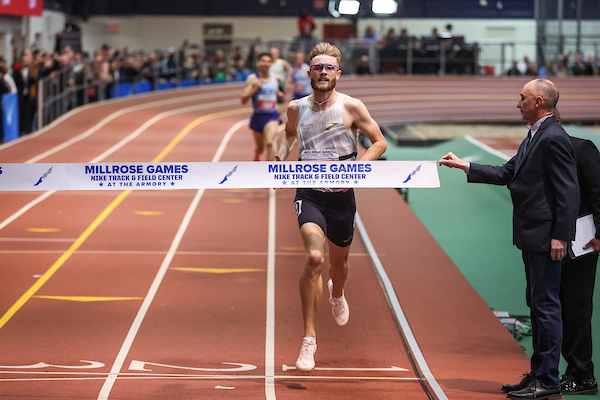
It was “only” a World Indoors, but winning was really important to Josh Kerr, all the more so after having his world outdoors 1500m race last year ruined by the injury which saw him limp home in last place in the final.
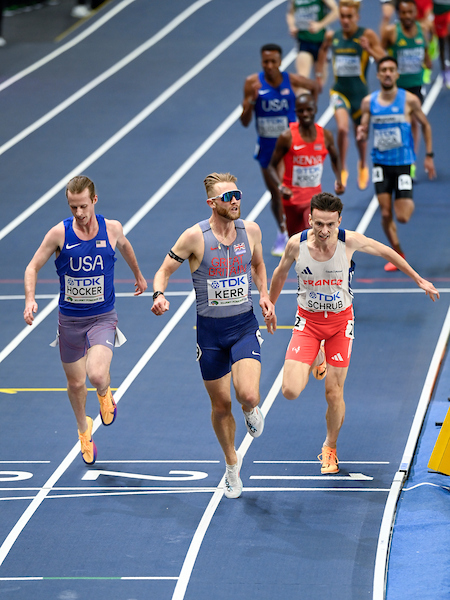
Kerr controlled the race in Torun and made his move at the right time at no one could catch him. The result was:
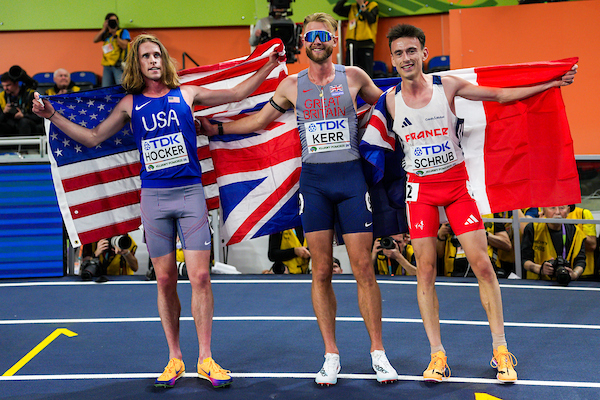
1 Josh Kerr 7:35.56
2 Cole Hocker 7:35.70
3 Yann Schrub 7:35.71
He said afterwards: “It’s nice to be back where I was. This race didn’t go the way I wanted, but racing is all about dealing with the situations you are put in. I shouldn’t worry much about the mistakes in the race, although there were a lot of them today. I didn’t have time to think about them; I had to push. I wanted this gold medal so badly. I had all kinds of scenarios in my head, and I am just pleased it all went in my favour today. I put a lot of pressure on myself before this race, which stressed me out. This is the place where I started my semi-professional career. I always had great vibes from this country. I wanted this gold so badly. I am going to enjoy this medal. I had won world outdoors and world indoors back-to-back (2023-4), and I took it for granted. I thought I would be at the top of the sport for a long time, but after missing a couple of opportunities that I wanted, I am really going to enjoy this gold. It took a lot of work to be standing on the podium today.”
I have been watching Josh throughout most of his career, but my best personal memory comes from a Diamond League in Zurich. I asked if he would speak to me after a race, and he replied, “Sorry, I can’t. I’m about to throw up.” 5 minutes later, I heard a voice call my name. He had thrown up, was feeling better, and had come back to do the interview. Class.
A few days before the World Indoors, he told the British athletics writers several times that he wanted to show people he is the best in the world at his event. He said: “I believe I’m the best athlete in the world in these distances, and there’s no one in the world that can convince me otherwise…go out and try and prove why you’re the best runner in the world…I think over a season, we’re going to see me trying to be the best 1500 meter runner in the world”. He says that without any arrogance just coming from his deep internal belief based on his training, his management, his coaching and his commitment. As he puts it: “it’s a fun challenge for everyone to be battling for that top spot.
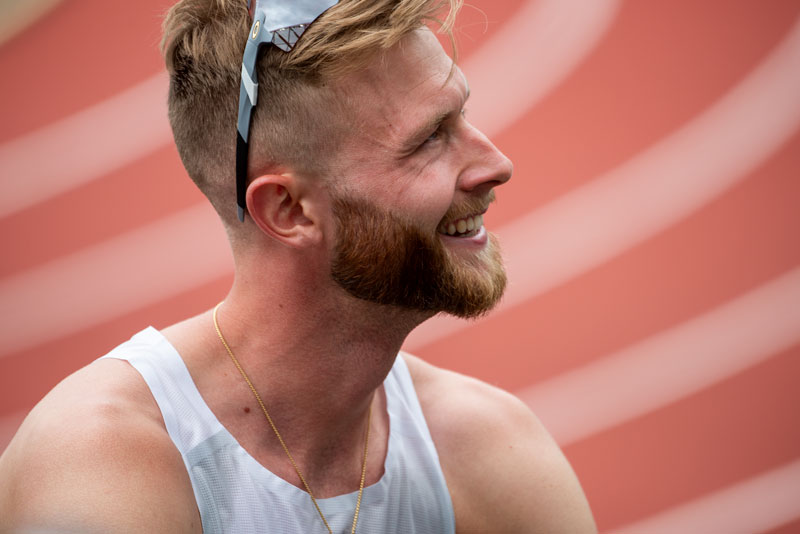
He said that his recovery from the injury in Tokyo to the point where he could win in Torun was a tribute to his medical team and in particular, his physio: “My mom’s my physio, so it’s a fun relationship like that. And I think her first thing in Tokyo was, ‘we have to make sure that this recovers in the way that you want it to move later on’. And the next day, we were in the pool in Tokyo, and we were in Japan for another 10 days after that, and just doing rehab every morning with her, and we were traveling around a bit as a family. So that was when I realized that it was coming back reasonably quickly. After 10 days, I was able to walk without the crutches. And I was like, OK, I think I should be able to run within the next month or so. And then when that came, it was like I was so fit going into those World Championships that I still had some backup fitness probably kicking about in the systems, and then got back into training probably two months later or six weeks later. The turnaround was a lot quicker than you’d expect for a guy who couldn’t even walk himself to breakfast. So yeah, it was a tough scene to start with, but again, it exposed some amazing people in my circle”.
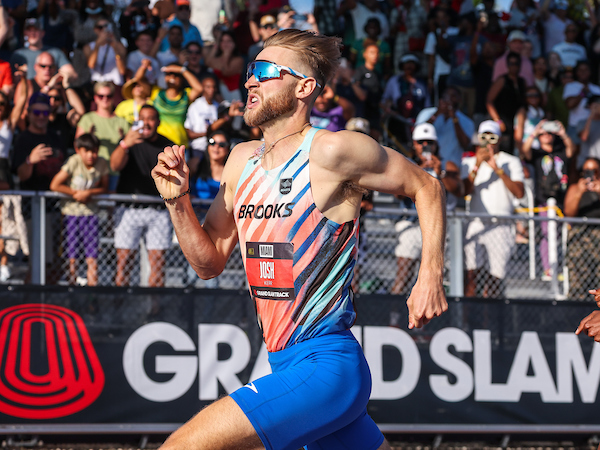
Miramar, Florida, USA
May 2-4, 2025, photo by Kevin Morris
He also talked about the mental side of the sport: “I think I work on that side of things more than most. I have a performance coach who is fully dedicated to the mental aspects of the sport. And I think that’s a big thing. And, at the end of the day, these injuries are going to come. It was always going to be, if you’re in the sport for long, and I’ve been running major championships since 2017. And so these things are going to come up. They’re going to crop up. You’re not going to have the best of luck all the time. It’s not expecting them to happen, but it’s realizing that’s part of the process. And it shouldn’t get in the way of your overall goals and who you are as a person”.

Finally, a question about the money he is owed by Grand Slam Track revealed another side of him. He explained: “Yeah, of course I’m frustrated. I’m owed a lot of money. I don’t think these are bad people. I think this is a horrible situation. And I’m not super worried about myself. I’m worried about some of the other athletes who had their stories exposed of working jobs and not being sponsored. And then they had this life-changing money. That’s what I care about. The people, the top people in the vendor list, are not a priority in my book”.
There is a lot to admire in Josh Kerr, the athlete and the human being.