
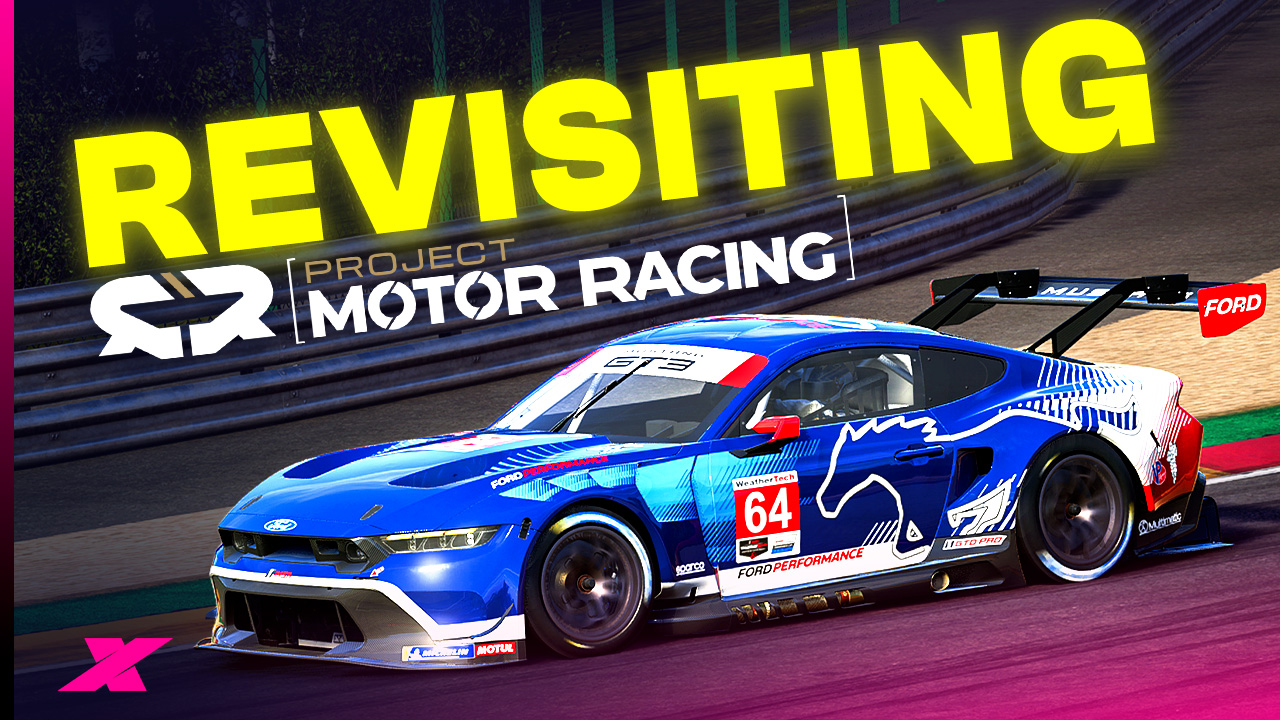
Written by Ross McGregor, with contributions from John Munro and Oasley Beattie
Since our review of Project Motor Racing back in November ‘25, developer Straight4 Studios has released a series of patches to address the game’s numerous shortcomings.
From unoptimised graphics to bizarre physics, PMR was found lacking across several criteria: its AI opponents would rather drive into you than cede road position, career mode was a confusing mess, and to top off an incredibly mediocre package, the game just looked plain bad.
The studio paid the price, with a significant percentage of its staff let go soon afterwards, but Straight4 forged ahead regardless. Co-Founder and Chief Development Officer, Kevin Boland, publicly acknowledged that mistakes were made and that lessons have been learned, with it all leading to this moment: the release of the game’s ‘2.0 Update’.
Find out below whether PMR has completed its redemption arc.
UI and career
The first thing you’ll notice after booting up the game (other than the swanky new intro trailer) is the game’s updated user interface.
Gone is the garage-style setup from before, replaced with a cleaner, more calculated aesthetic, perhaps reflective of Straight4’s change of tack. For many, this will be perceived as a genuine step forward, given the muddled nature of what came before.
Career mode has likewise been tidied up, with players tasked with simply winning races and championships. It’s all quite dry, though, but it should at least provide a more focused experience for those interested in offline racing. The addition of real-world sponsors also adds a nice air of authenticity.
In terms of online play, multiplayer was not part of the early preview build we received.
Straight4 has also implemented new ECU and FFB Widgets, which use telemetry to offer real-time visual feedback on tyre load, power delivery and wheel behaviour, among others.
Feel
Perhaps the most important aspect of 2.0 is the additional improvements to PMR’s tyre model and car handling. These fixes have gradually been rolled out in the game’s myriad updates, with further GT3, GT4, GT, NGT and Porsche Cup (992) tyre fixes in 2.0.
Happily, these cars feel demonstrably better than they did in v1.0.
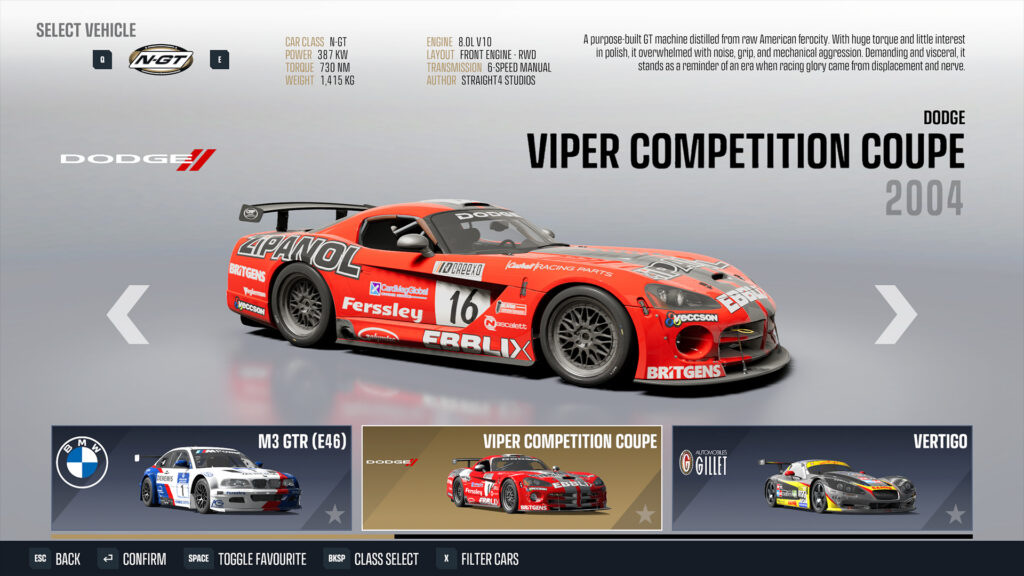
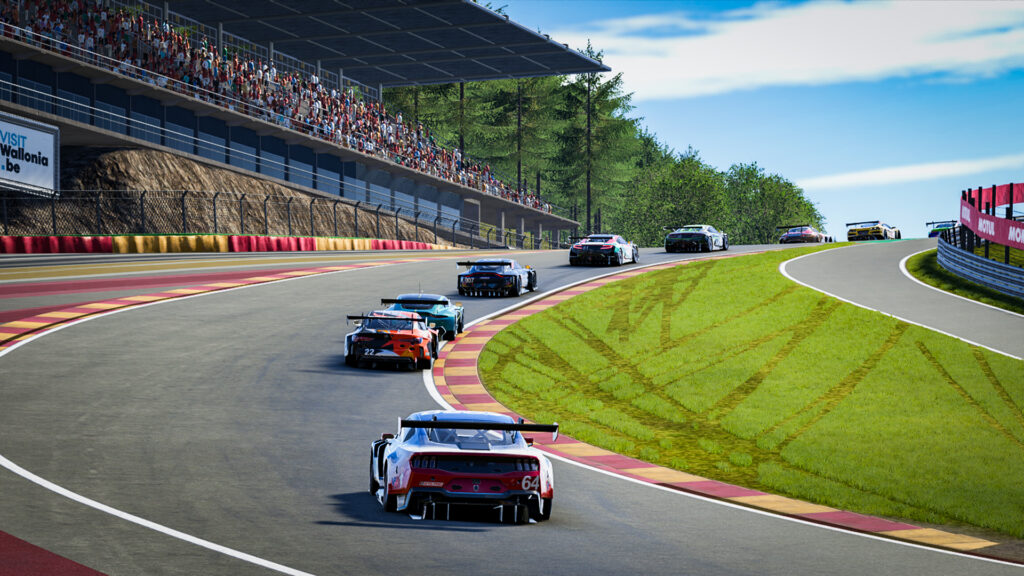
Across these classes, cars feel more reactive, more willing to turn in when requested, and much more stable mid-corner, too. Braking and downshifting confidence is markedly improved as a result, making it far easier to drive these cars on the limit. We still found some low-speed sliding problems, though, especially through Spa-Francorchamps’s Chicane. Seemingly, the kerbs and quick direction changes contribute to this grip loss sensation.
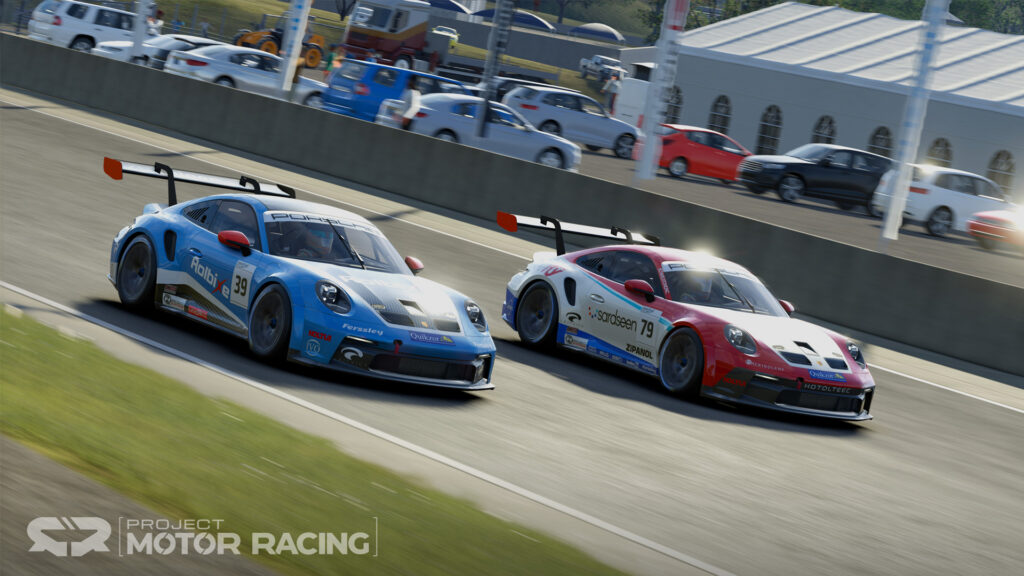
However, NGT cars feel docile, lumpy and predictable, while GT3s are far more agile than before. There are differences within this class too, with the BMW M4 Evo feeling far more understeery (on default set-ups) than the ‘24 Aston Martin AMR Vantage and Ford Mustang, which is odd, considering all are front-engined. They are inherently more engaging to drive, though, with traction control less obtrusive than before.
This will no doubt be a boon to the legions of players who favour online GT3 racing, and could be a real anchor point for PMR’s console future.
On PC, however, there are still several sims that better capture the overall GT3 driving experience, including iRacing, Le Mans Ultimate and RaceRoom, but the progress is real. The game’s other categories will be updated with the latest tyre model in future, too. And they badly need it, considering brief tests of the LMDh class revealed below-par handling characteristics similar to those seen in v1.0.
Elephant in the room
PMR’s handling improvements are all well and good, but only if the game’s performance has improved. Sadly, for the Traxion team, the game is still beset by visual problems.
Not only do the graphics look a generation or two behind the competition, but the game also performs poorly across a variety of machines. This is especially apparent when racing against AI cars, as the action randomly slows down and speeds up based on the demands the game makes upon our systems. It’s borderline unplayable at times, and this is where Straight4 has to focus its efforts if it wants to maintain an audience on PC.
Since we only have early access to the PC version, we can’t say whether the PlayStation 5 and Xbox Series X|S versions fare better, but v1.0 certainly ran better on consoles. This will likely be the case again.
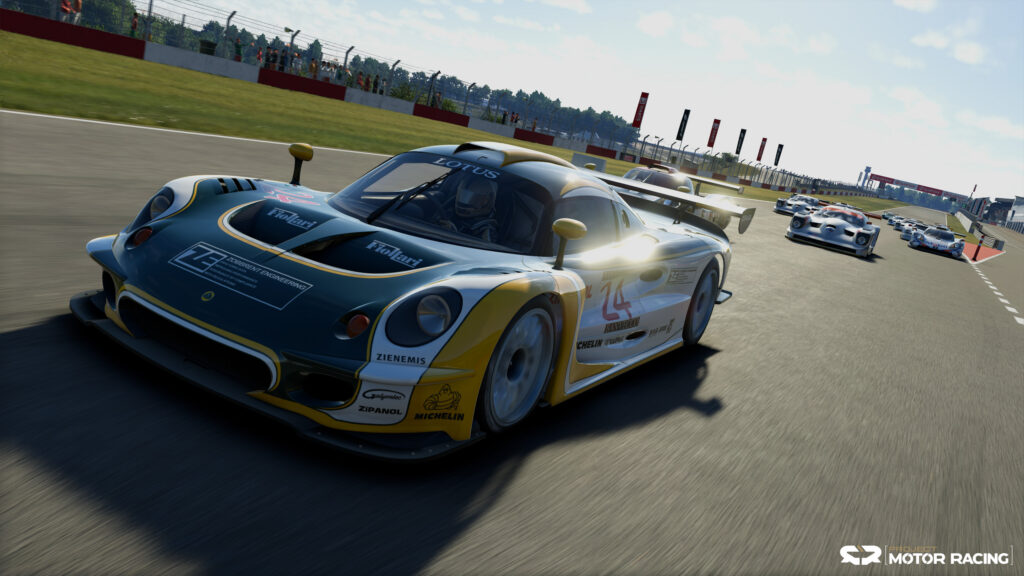
Stuttering and pop-in (especially on trees) were regular occurrences, but bizarre lighting artefacts also cropped up several times. Straight4 reckoned this was due to the Traxion team using the latest Nvidia graphics drivers, but the problems persisted even on older builds, so it’s definitely a major issue.
On the flip side, as a team, we experienced fewer game crashes than in v1.0, so that’s something.
Other issues
But there’s more. The revised track cut system is still wildly inconsistent, punishing you for gaining an advantage despite demonstrably losing time, while also not punishing you enough after skipping large sections of the course.
John still experienced gear shifting issues at race starts, too, with the game failing to recognise a fully engaged clutch. This caused the car to creep forward, resulting in a jump start.
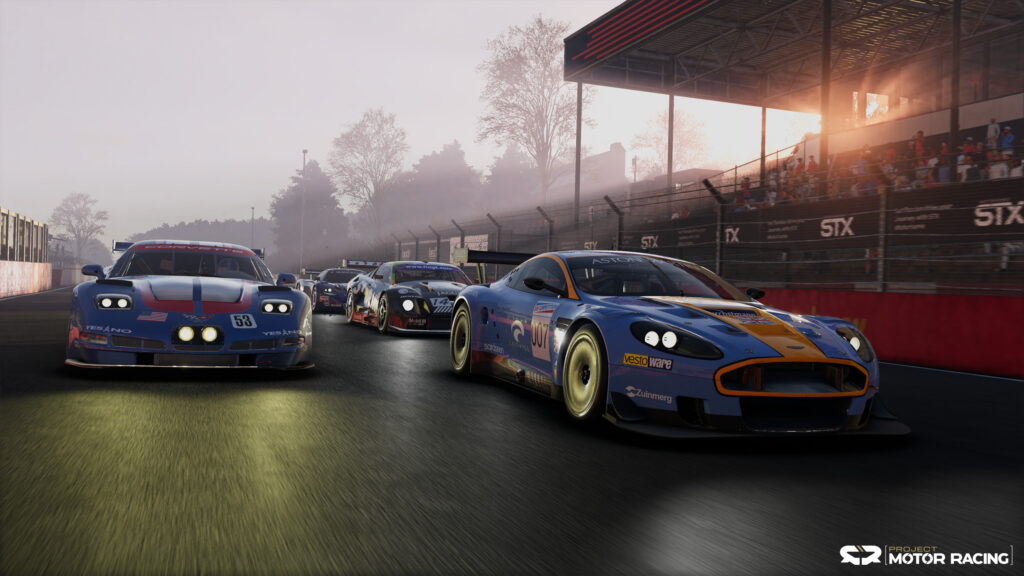
AI performance continues to be scatty. Sometimes they’d race sensibly, but on other occasions they’d be up to their old tricks, driving into your side, braking on straights or having multiple brain farts on lap one.
Although we generally like the game’s informative force feedback, I experienced wild oscillations with my Simagic Alpha Evo Ultra wheelbase. This could happen in pitlane but it was most disconcerting while tackling the banking of Daytona International Speedway.
Straight4 suggested setting ‘Wheel Speed Rotation’ to 0 in SimPro to alleviate this. In fairness, this worked, although it isn’t a step I need to make with other sims.
Verdict
PMR’s 2.0 patch is a cautious step in the right direction. Across a small number of car classes, handling has been improved, and we expect that to be expanded across the whole game in the coming months.
However, old weaknesses still remain, with shoddy visual performance the main barrier to a smooth racing experience. It’s a double-edged sword: not only does PMR run poorly, but it also looks average at best.
It was a bold gamble for Straight4 to bin Unreal Engine in favour of Farming Simulator’s GIANTS Engine, and so far, it unfortunately hasn’t paid off.
PMR’s road to redemption is littered with pretty big potholes, then.