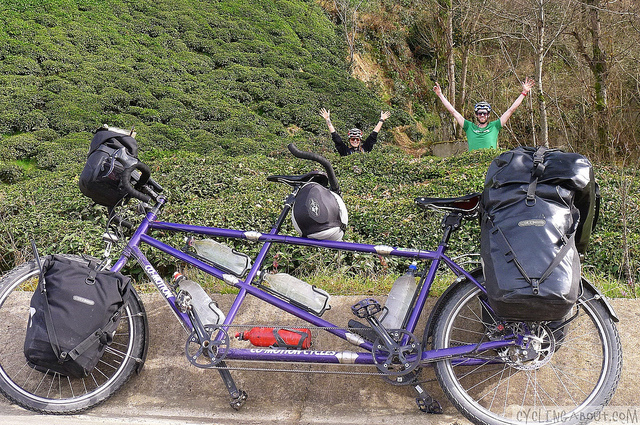
Bike touring is an incredible way to see and experience the world, and it’s shaped much of how I understand both myself and the world around me.
But I’m not alone in learning from these journeys, which made me curious whether common lessons emerge across continent-crossing cyclists.
Fortunately, it’s now easier than ever to identify common lessons from bicycle touring, thanks to the ability to access and analyse large volumes of information. So, I set myself the challenge of using hundreds of hours of bicycle touring podcast interviews as the foundation for uncovering the biggest lessons riders learn on the road.
Before we dive into the specific lessons learned, here’s how I went about collecting this information.
Methodology Behind The Findings
To build a comprehensive dataset, I began by collecting every transcript from the Seek Travel Ride podcast. With more than 200 podcast guests sharing their experiences across hundreds of hours of interviews, I had a rich dataset to uncover the most important lessons from bicycle touring.
I then fed the transcripts into a large language model (LLM) to identify the most commonly mentioned lessons. From there, I extracted the key themes within each one, quantified how frequently they appeared, and identified any actionable advice shared by Seek Travel Ride podcast guests.
In total, 170 cyclists provided detailed insight into at least one lesson they learned while touring, and many shared several.
I’ve written a few hundred words to summarise each commonly mentioned lesson and hand-picked the most practical, actionable steps from the interviews. Hopefully, this will help you refine your approach to bicycle touring and get even more out of it!
What’s interesting is that podcast guests were rarely asked directly about the lessons they learned. Instead, these insights were drawn from what they naturally chose to share throughout their stories, which is perhaps the best way to extract lessons anyway. That’s because it’s difficult for anyone to distil what they’ve learned into a succinct list without time for reflection. In fact, it took me about six months after completing an overland bike journey from Europe to Australia to fully understand what I’d learned along the way (you can read my life lesson list HERE).
Ok, let’s get into the biggest lessons bike touring will teach you, starting with the most frequently mentioned and working down through the list of lessons identified.
The Biggest Lessons Bike Touring Will Teach You
Human Kindness Defines Bike Travel

The most consistent lesson to emerge was this: the memories that truly endure from bike travel are shaped by human kindness – by relationships, generosity, and shared moments along the way.
Simple acts like sharing a meal, offering a place to sleep, giving directions, or exchanging stories carry a deep emotional weight. They resonate because they emerge from trust, empathy, and a sense of shared humanity that forms quickly on the road.
Travelling by bike naturally increases the likelihood of these encounters. You are highly approachable, with few barriers between you and the people around you. At the same time, you exist in a state of visible vulnerability – reliant on food, water, and shelter. These needs are immediately understandable to locals, often prompting them to step in and offer help.
Across cultures and contexts, this dynamic repeats itself. People respond in simple, practical, and deeply human ways – offering rides, sharing meals, and even providing a place to stay.
Over time, these experiences reshape how you see the world. Encounters with kindness shift your perception of risk and replace fear with trust. You gain confidence – not because nothing will go wrong, but because you come to understand that when it does, help is rarely far away.
Importantly, this kindness is reciprocal. It becomes a cycle rather than a one-way exchange. Even when material circumstances differ, bike travellers are able to offer stories and friendship. And after the journey, many go on to return the generosity that was shown to them by hosting others, sharing their knowledge, and paying it forward.
This was a core lesson discussed in 42 out of 170 Seek Travel Ride podcast interviews.
Actionable steps:
- Prioritise interactions with people over “checking off” destinations.
- Smile, greet, and engage with locals.
- Be curious: ask simple questions and listen without rushing to respond.
- Stay in places that naturally encourage interaction (WarmShowers, hostels etc).
- Reciprocate kindness when the opportunity naturally appears.
- Don’t hesitate to ask for help – it often creates connection, not inconvenience.
- Keep notes about meaningful encounters so they aren’t forgotten.
Adaptability Is More Valuable Than Perfect Planning

The most important skill in long-distance cycling isn’t planning – it’s adaptability.
Every rider eventually faces conditions that make their original route, schedule, or goals impossible to follow. Weather, terrain, mechanical issues, illness, fatigue, or border restrictions can quickly disrupt even the most carefully planned journey.
Time and again, Seek Travel Ride podcast guests found that success was not determined by how closely they followed their plan, but by how effectively they responded when conditions changed.
Of course, planning still has value as a flexible framework, but rigidity quickly becomes a limitation. The ability to adjust your route, spend an extra day somewhere, or resolve an issue without the frustration of being “behind schedule” makes a trip significantly more enjoyable.
In addition, flexibility creates space for unexpected experiences that would otherwise be missed – more scenic routes, spontaneous detours, and unplanned encounters that often become highlights of any journey.
Ultimately, adaptability is what allows a trip to remain enjoyable in the face of uncertainty. By responding to change rather than resisting it, the journey unfolds in a way that is far less stressful and often far more rewarding.
This was a core lesson from 37 out of 170 Seek Travel Ride podcast interviews.
Actionable Tips:
- Treat plans as flexible guides rather than fixed commitments.
- Always assume the route, timing, or environmental conditions may change.
- Think of backup options for accommodation, food, and water resupply.
- Stay open to using alternative transport to preserve safety or enjoyment.
- Treat setbacks as opportunities to experiment, learn, and problem-solve.
- Practice staying calm when unexpected changes occur.
- Keep a small toolkit and spare parts – mechanical solutions often require improvisation.
Mental Resilience Outweighs Physical Strength

Another recurring lesson is that mental resilience often matters more than physical strength in long-term bicycle touring. Again and again, Seek Travel Ride podcast guests described that they weren’t in perfect shape when they set off. Instead, they built fitness as they went.
The most important thing was developing mental resilience so they could keep going when things got tough. After all, they could not fully prepare for the steep climbs, extreme heat, storms, altitude, mechanical issues, and long periods of isolation that came on their journeys.
In these moments, mindset made all the difference. Breaking challenges into smaller goals, taking rest days when needed, and maintaining morale through music, food, and conversation all helped sustain forward progress.
Over time, guests on the podcast learned that the mind can extend the limits of the body. What once felt overwhelming became manageable, not because conditions changed, but because their response to them changed.
This was a core lesson from 33 out of 170 Seek Travel Ride podcast interviews.
Actionable steps:
- Break difficult days into short, manageable segments rather than focusing on total distance.
- Use positive self-talk as much as possible: “one step at a time”
- Build a small set of reliable coping tools (food, music, rest stops, routine).
- Normalise discomfort as part of the process instead of resisting it.
- Focus on completing the next small task rather than the whole challenge.
- Use daily reflection to acknowledge progress, even when it feels slow.
The Journey Matters More Than the Destination

While reaching the end of a bike trip often feels like the goal, Seek Travel Ride podcast guests consistently emphasise that the real value of bike travel lies in the journey itself. Yes, this one is certainly a cliché, but it seems to hold true according to our 170 continent-crossing cyclists!
In essence, what people describe is that it’s the experiences along the way that shape the realisations, stories, and memories that remain long after the bike tour is over. It is the people you meet, the landscapes you pass through, and the unexpected detours that define the experience far more than arrival at any destination.
Adopting this mindset allows you to remain present and to treat challenges not as interruptions but as part of the journey itself. It’s much better to think of a bicycle tour as something to experience rather than something to complete.
By embracing everything that comes your way, bike travellers consistently find that the finish line is not the source of meaning. It’s the journey that ultimately shapes your perspective and understanding of the places you’ve been.
This was a core lesson from 30 out of 170 Seek Travel Ride podcast interviews.
Actionable steps:
- Pause to observe surroundings, scenery, and people – don’t rush past.
- Limit screen use during riding hours to stay present in the environment.
- Capture moments through simple notes or photos without over-documenting.
- Prioritise experiences and interactions over strict mileage targets.
Bike Travel Creates Unique Human Connections

On a bicycle, you often pass through places that see very few travellers, creating a rare opportunity for locals to engage with you. You also move at a slower pace, and unlike travelling in a car or bus, there are very few barriers between you and the outside world. People can easily speak to you as you ride past, hand you something from a car window, or even ask you to stop for a conversation!
On top of that, the bicycle itself is a great conversation starter. It tells a story before a word is spoken, lowering the barrier to interaction.
For all of these reasons, travelling by bike regularly leads to spontaneous exchanges with strangers and, in many cases, opens the door to experiences rarely available to conventional travellers – from shared meals to invitations into homes or local gatherings.
Across the Seek Travel Ride interviews, bike travellers consistently described how their form of transport sparked enough curiosity to foster meaningful interactions with locals. And those small exchanges, along with deeper acts of generosity and kindness, often became the most memorable parts of their journeys.
This was a core lesson from 25 out of 170 Seek Travel Ride podcast interviews.
Actionable steps:
- Put a map or sticker on your bike showing where you’re going.
- Fly a small flag from your home country to invite conversation.
- Carry a “magic letter” written in the local language that explains who you are and what you’re doing.
- Accept invitations or shared meals when they feel safe and appropriate.
- Ask questions about local culture and listen actively, as curiosity builds trust.
Sustainable Riding Is More Important Than Speed or Distance

Many journeys described in the Seek Travel Ride podcast showed that riders who pushed too hard, too fast, or for too long often experienced exhaustion, with burnout quickly following. In contrast, those who were able to ride more sustainably, balancing both effort with rest and recovery, tended to make better progress while enjoying themselves more.
The podcast guests described rest days, moderate distances, and managed pacing as strategic tools that preserved their energy, lifted their morale, and made their trips more enjoyable.
This was a core lesson from 23 out of 170 Seek Travel Ride podcast interviews.
Actionable steps:
- Choose a daily distance you could realistically sustain for weeks, not just days.
- Avoid comparing your pace to other riders.
- Try to end the day with energy remaining rather than complete depletion.
- Adjust your daily distance based on how your body and mind actually feel.
- Take rest days before you feel forced to.
Discomfort Is Inevitable, But Reframing Changes Everything

Discomfort is an unavoidable part of long-distance bike travel. There will be harsh weather, long climbs, monotonous roads, mechanical issues, illness, and moments of isolation. Yet the way you interpret and respond to that discomfort has a profound impact on how you ultimately enjoy your journey.
Many Seek Travel Ride stories illustrated that reframing hardship could transform it into something positive. Rather than seeing difficult moments as obstacles, those who surrendered to them as part of the experience often enjoyed their journey much more and developed a deeper appreciation of the places they passed through.
Some podcast guests even explained that discomfort became a lens through which natural beauty felt more vivid and human kindness was more meaningful. Even simple milestones like reaching the next town or cresting a pass became disproportionately rewarding.
Ultimately, embracing discomfort as an inevitable companion turns what feels negative in the moment into some of the most defining parts of a journey. Upon later reflection, when the dust has settled, these moments often become some of your best travel stories.
This was a core lesson from 21 out of 170 Seek Travel Ride podcast interviews.
Actionable steps:
- Expect discomfort as a normal and unavoidable part of long-distance travel.
- In tough times, focus only on what you can control: pacing, mindset, eating, and hydration.
- Reframe difficult moments as part of the experience, not interruptions to it.
- Reflect on past challenges and how overcoming them brought growth.