
Fatigue and fine margins
That effort appeared to linger. “He was still feeling that,” Zonneveld explained. “He was strong, but the very best was gone. And Van Aert didn’t have that.”
The clearest sign came in the final kilometres. When Alec Segaert attacked late, Van der Poel briefly considered responding, but could not make the move stick, underlining the limits he was riding at.
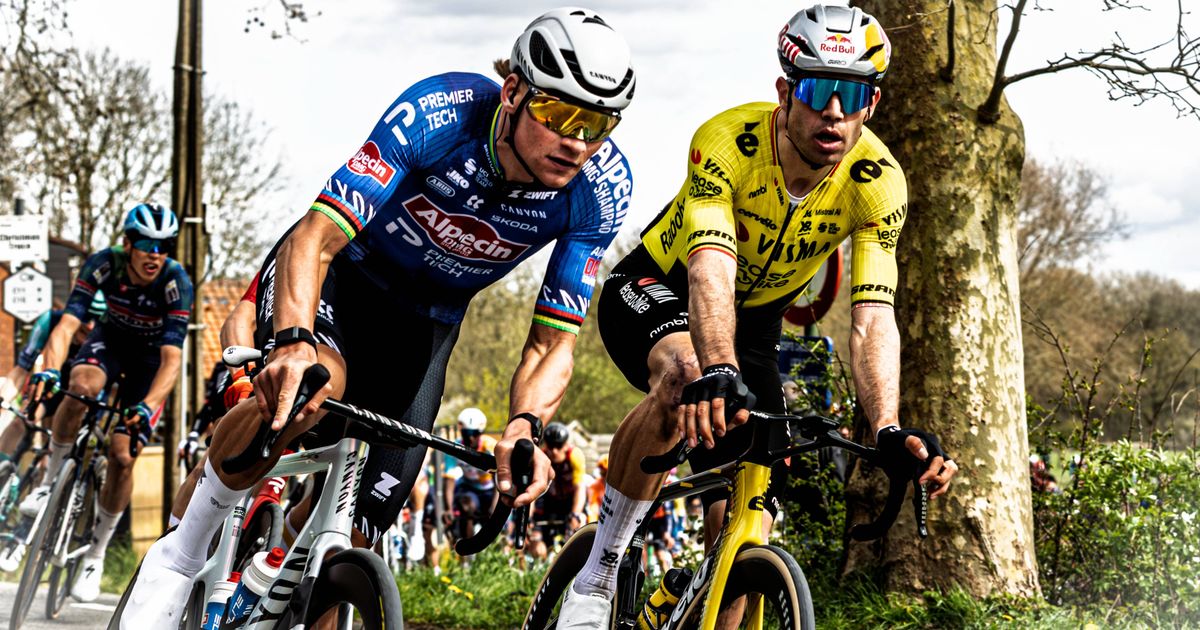
Mathieu van der Poel and Wout van Aert at In Flanders Fields – From Middelkerke to Wevelgem 2026
A duel deferred
In the end, the race produced a winner, but not the moment many had anticipated.
The Kemmelberg move shaped the race and stripped it back to its strongest protagonists, yet the finale unfolded in a different direction. The sprint that had seemed inevitable between Van der Poel and Van Aert never materialised. “What a shame. It didn’t happen. We really wanted to see it. Now we’ll have to wait for the Tour of Flanders,” Zonneveld said.
That sense of what might have been lingers. The decision made sense in the context of the race and the strength of the Alpecin-Premier Tech team, but it left behind a lingering question. When the opportunity presents itself again, will instinct win out over calculation, or will the bigger picture once again take priority?