
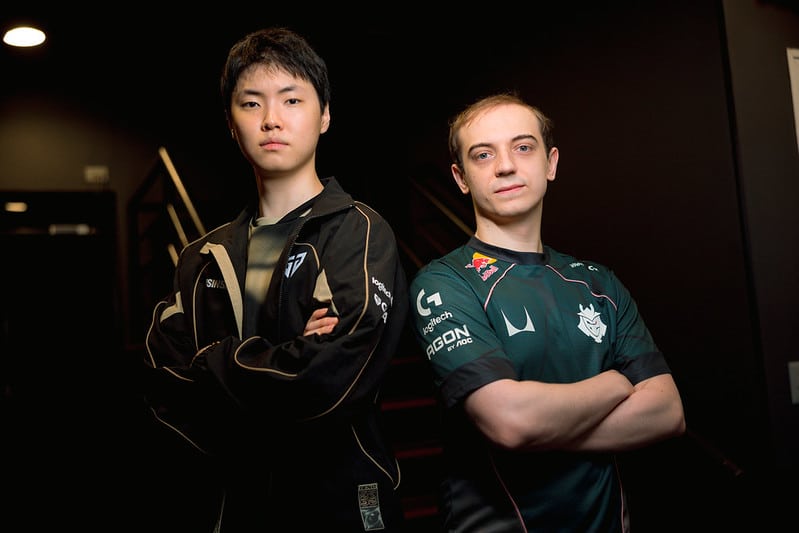
Less than two weeks ago, G2 Esports shocked League of Legends’ fans. At First Stand 2026 semifinals, the European giants didn’t just beat Gen.G, they dismantled the team widely seen as the best in the world with a clean 3-0.
With one match, G2 flipped expectations on their head and brought back a level of hope the West had not felt in years.
The result was shocking to many because of what Gen.G represented at that point, and does still today. The Korean team sat atop Riot Games’ Global Power Rankings before the event, embodying the LCK’s consistency and dominance at internationals. Meanwhile, G2, despite being the powerhouse of the LEC, had spent years dominating domestically without translating that success internationally.
So this was not just an upset; it was a direct challenge to a long-standing belief that Western teams can’t compare to Eastern ones.
For years, the “gap” between Western and Eastern teams has been one of the most discussed topics in the League of Legends esports ecosystem. Runs like Fnatic reaching the 2018 Worlds Final and G2 winning MSI and making the Worlds Final in 2019 gave fans real hope that the West could truly compete. Yet since then, the narrative has only grown stronger, with many claiming the best Western teams are at best comparable to mid-tier Eastern ones.
So is G2’s result at First Stand 2026 a one-off upset, or a sign that something deeper is changing in the global scene?
- League of Legends First Stand 2026: teams, format, schedule and more
- Rev: Can esports work exist without crippling financial anxiety? NLC’s late payments suggest not yet
- “Increased focus on fandom”: Jake Sin on selecting the next VCT Pacific partner teams
What Actually is “the Gap” in LoL Esport?
The “gap” in League of Legends esports is often used as a simple way to describe the difference in performance between Western and Eastern teams, but in reality, it reflects several layers of advantage that go beyond just winning or losing.
Results still matter the most, and over the past decade, teams from the LCK and LPL have consistently taken home international titles, while Western teams have only managed deep runs on rare occasions, which reinforced the idea that the highest level of play is still centered in the East.
However, the gap is not only visible in the final standings, but it also shows in how many teams from each region are truly competitive. Eastern regions regularly send multiple teams that can realistically contend for a title, while the West usually relies on one main representative, sometimes two in stronger years.
This created differences in pressure and probability, where Eastern teams are not only stronger individually but also have more teams at the top level, making it harder for Western teams to break through across an entire tournament.
Why Does This Gap Exist?
The gap between Western and Eastern teams does not stem from a single cause, but from a combination of factors that build on one another over time. It is shaped by who gets to play, how they are trained, and the environments they grow in, which together create very different competitive ecosystems.
But first, it is important to remember that becoming a professional esports player is still a privilege.
Spending thousands of hours playing a game at a high level requires a stable internet connection, access to a capable PC, and the time and support to commit to improvement. For many, this is not easily available, and social expectations around education, career paths, gender, age, and status can limit who is even able to try.
This naturally reduces the pool of potential talent, especially in regions where esports is not fully acknowledged or accepted as a possible job market.
Culture then plays a major role in shaping how that talent is developed. In countries like South Korea and China, esports is widely recognized as a legitimate path, with strong social acceptance and clear structures for progression. Players grow up in environments where competition is encouraged, discipline is expected, and improvement is treated seriously. In the West, while things are improving, esports is still often seen as uncertain, which can affect both commitment and long-term development.
And then infrastructure amplifies all of these differences. Larger player bases — especially in China — create deeper competition and push the level of play higher at every rank. This leads to better practice environments, stronger scrim partners, and more refined regional leagues.
Over time, this constant pressure produces not just more players, but better ones, reinforcing a cycle in which strong competition breeds even stronger competition.
What Does G2’s Run at First Stand 2026 Mean?
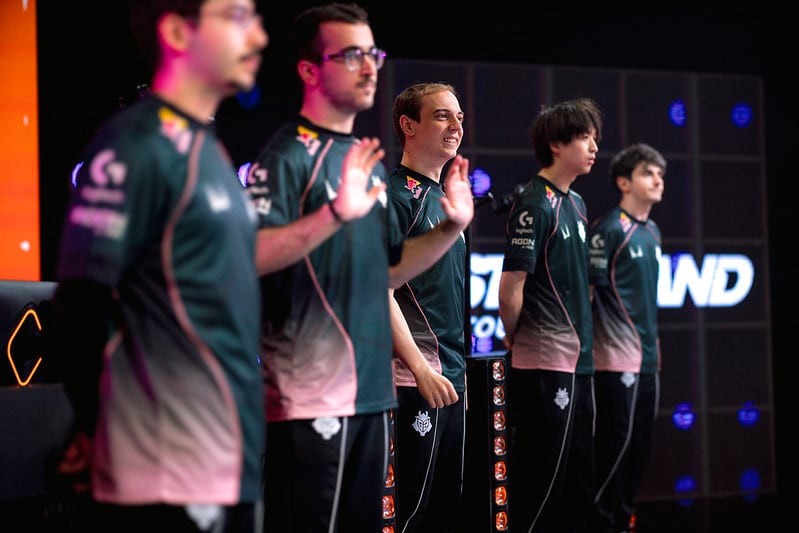
G2’s victory over Gen.G at First Stand feels like a turning point, or at least a strong signal of one. And it’s more about what G2 represents than their result, as this is a team that has invested in continuity, with a core that has stayed together for years, supported by a structured staff.
Many of these elements, from long-term player contracts to the inclusion of psychologists and performance coaches, and regular bootcamps in Korea and China to improve practice quality, are things G2 has leaned heavily into.
In that sense, the win is not only an upset product of the players’ hard work, but a reflection of changes that have been slowly taking place within the Western ecosystem, especially in EMEA. More organizations are beginning to move away from constant rebuilds and toward stability, placing greater value on player development, staff expansion, and higher-quality training environments. The idea of building a team over multiple years, rather than reshaping it every split, is becoming more common, even if it is not yet the norm.
And, for what it’s worth, orgs are finally taking into account whether a player would be friends with their teammates.
However, G2 still stands as something of an exception rather than the rule. While the region is evolving, not every team has the resources to commit to these long-term projects. This makes it difficult to measure how much the overall level has truly improved, as progress is uneven and often limited to a handful of organizations.
And also the broader results have not fully shifted. Teams from the LCK and LPL continue to win international events — like Bilibili Gaming winning First Stand 2026 Final against G2 — relying on their depth, consistency, and well-established systems. Western teams may be improving in preparation and approach, but translating that into repeated success across entire tournaments remains a challenge.
What G2’s run suggests is not that the gap has disappeared, but that the path to closing it is becoming clearer. The West is starting to adopt some of the structures and ideas that have defined Eastern success, and while the results are not immediate, they are beginning to show in moments like this.
Whether this is the start of a lasting shift or simply another peak from a single team will depend on how widely these changes spread and how long they are sustained.
The post Does G2 Esports’ run at First Stand 2026 mean the gap between Western and Eastern teams in LoL Esports is closing? Maybe appeared first on Esports Insider.