
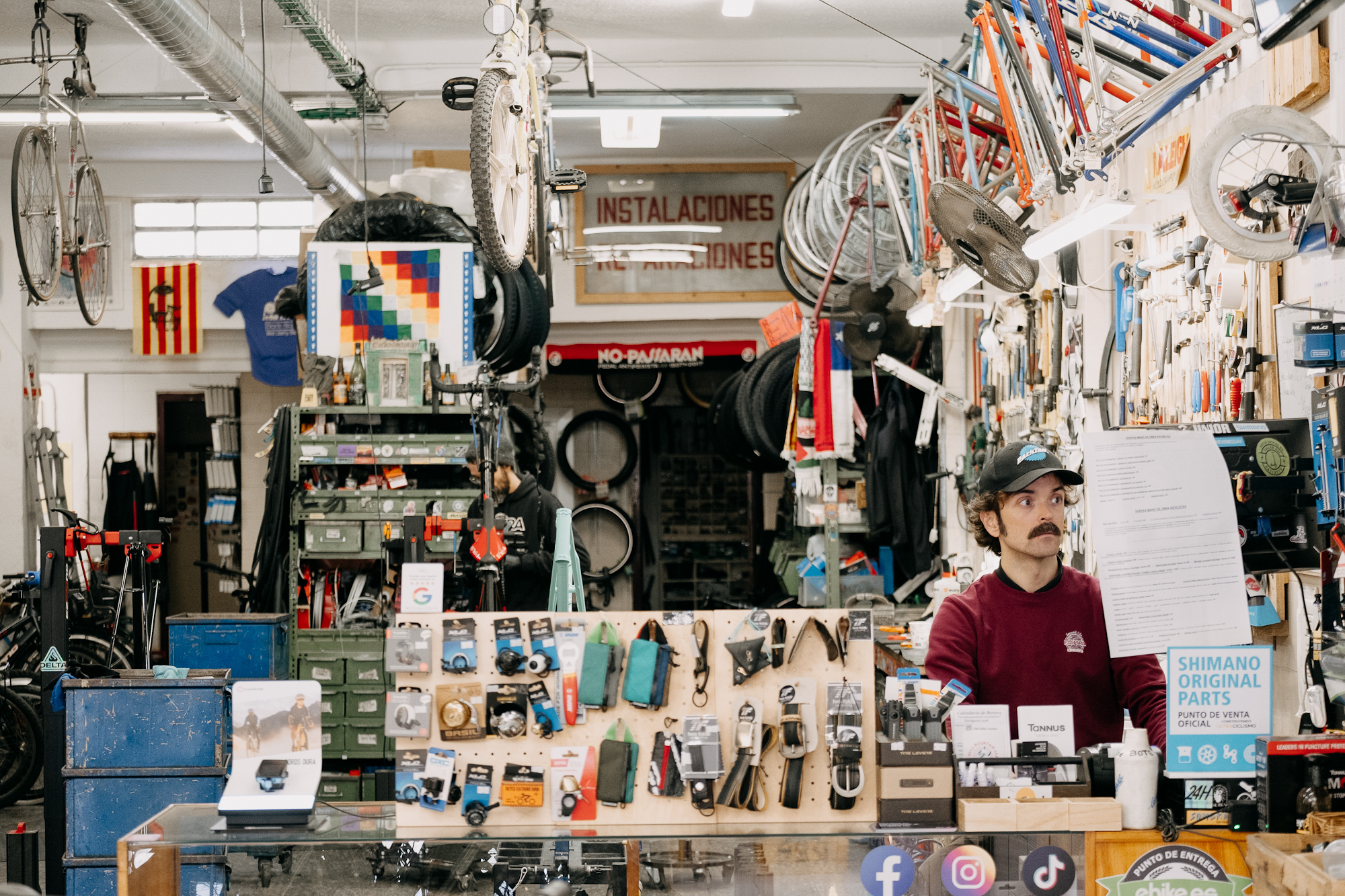
When Tomás Montes finally walked into Ciclofactoría, the workshop felt less like a shop and more like a lived-in argument for what cycling can be: steel frames, good coffee, honest repairs, and two mechanics figuring out how to keep something meaningful alive after change. Enjoy a trip to a very special bike shop in Zaragoza, Spain.
The Sofa at the Door
I’d passed through Zaragoza so many times that it had started to feel like a kind of blank space on the map. It was a city I kept promising I’d stop for, and then didn’t.
Which is strange, because Ciclofactoría had already been in my life for years.
I met Quico Gimeno out in Los Monegros, where the wind doesn’t just blow, it insists. He guided a ride through that flat, harsh beauty for a Strava story – one of those days where you’re never sure if you’re riding into the landscape or being tested by it. Later, I crossed paths with them again while photographing La Monegrina, the classic cycling gathering they’d built into the desert’s calendar: steel frames, wool jerseys, the old languages of the bike spoken with contemporary fluency.
And still, I’d never actually stepped into the workshop.
So this time I stopped.
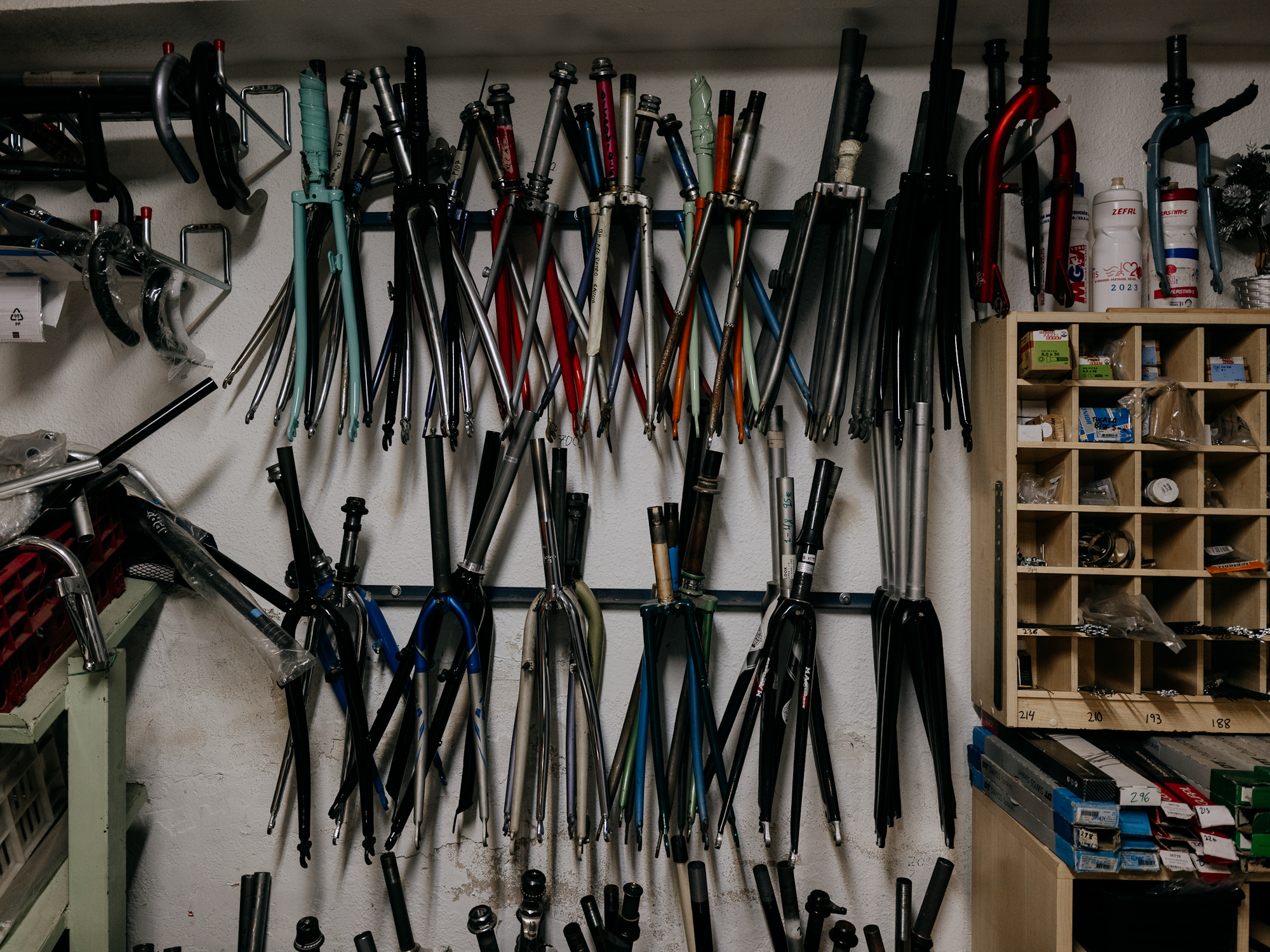
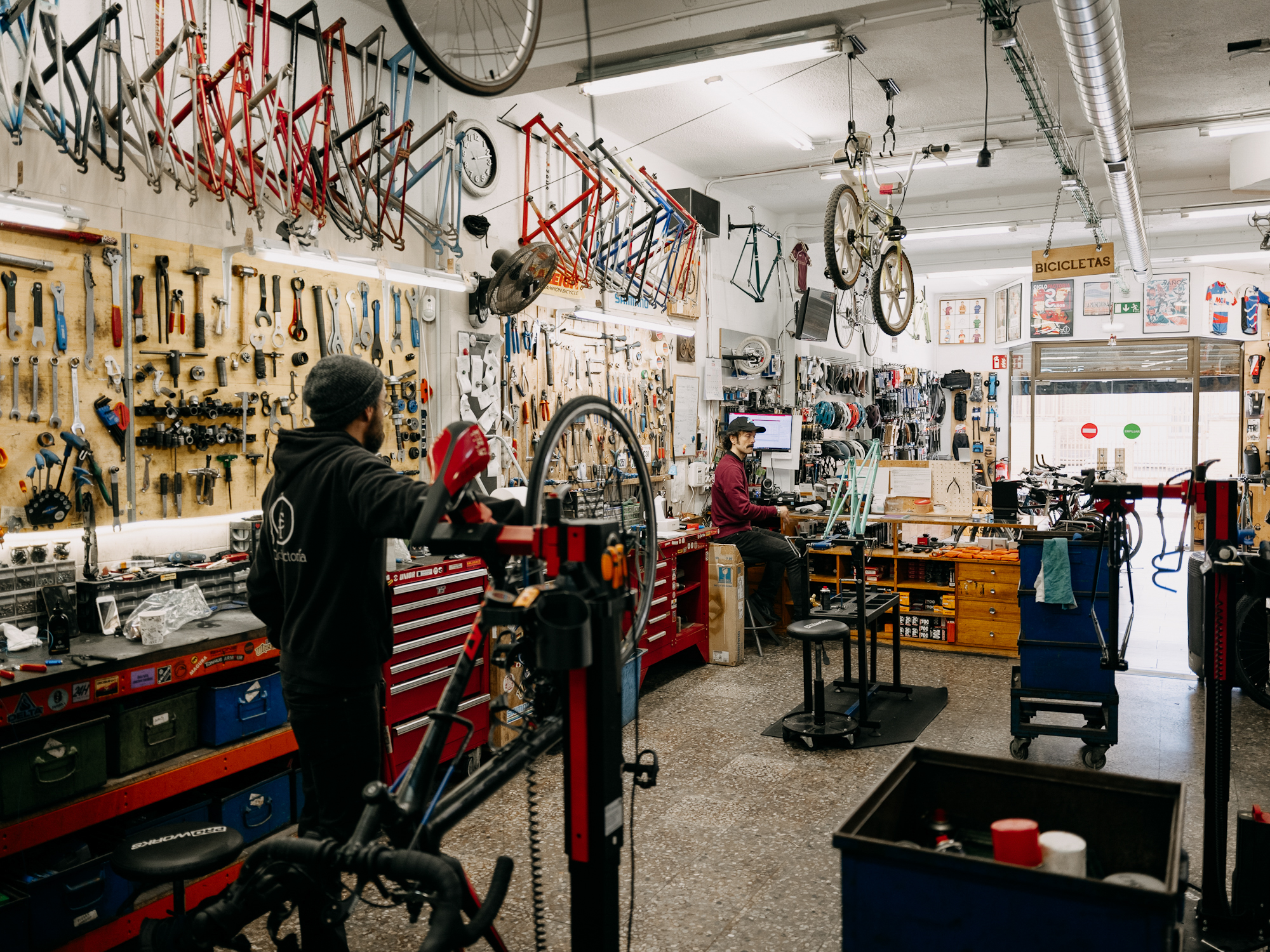
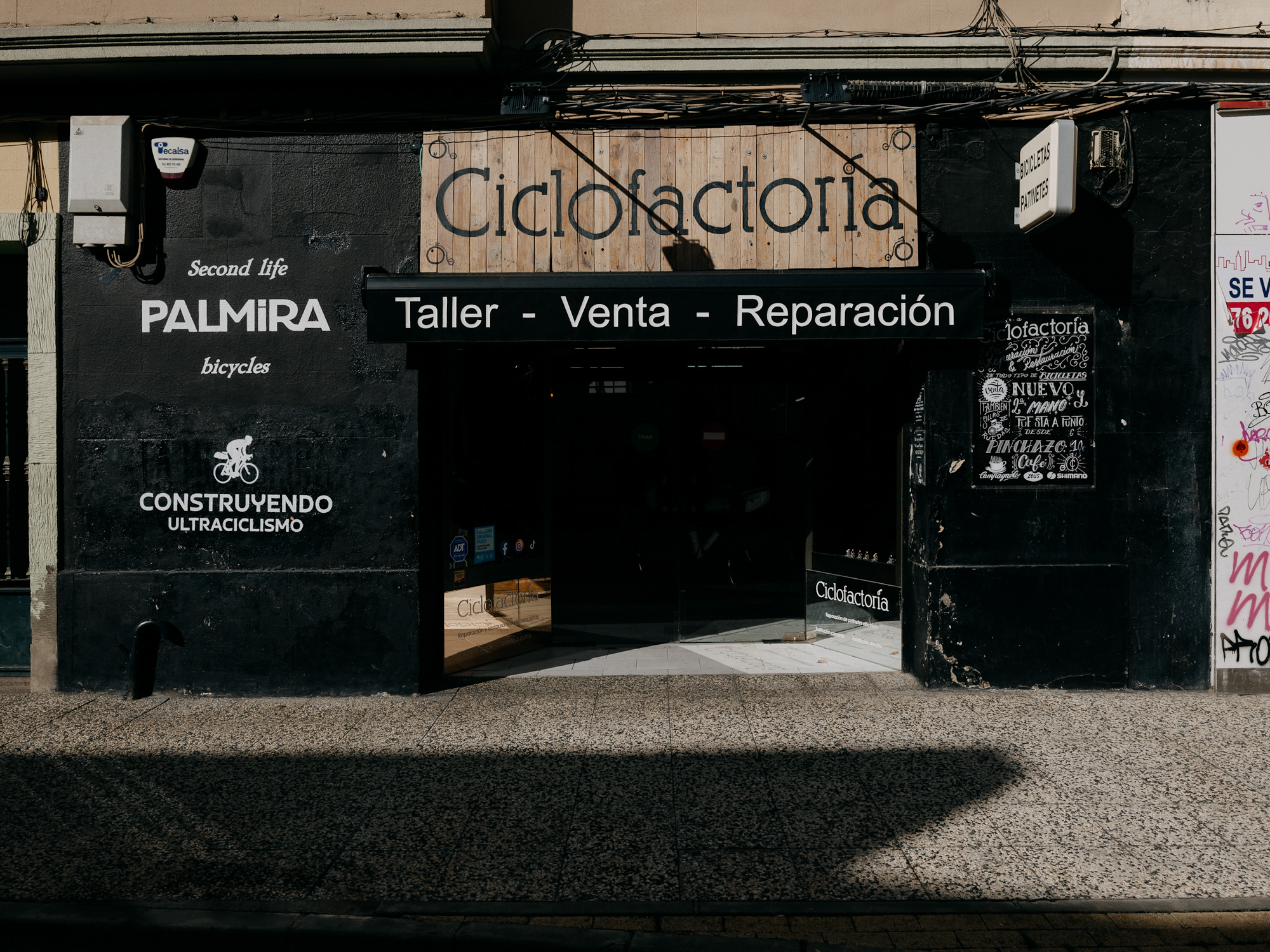
Ciclofactoría is the kind of place you notice before you understand it: bikes suspended above your head like a mobile, tools laid out with the calm confidence of hands that use them every day, a shop that feels lived-in rather than staged. There’s a sofa right at the entrance. It shouldn’t work, but it does. The first thing it tells you is that this isn’t only a business – it’s a room people spend their lives in.
I asked Quico Gimeno and Andrés Samper to work as if I wasn’t there. I wanted the shop as it really is: the clack of a freehub, the sound a chain makes when it finally lands cleanly, the half-sentence conversations mechanics have while their eyes stay on the job.
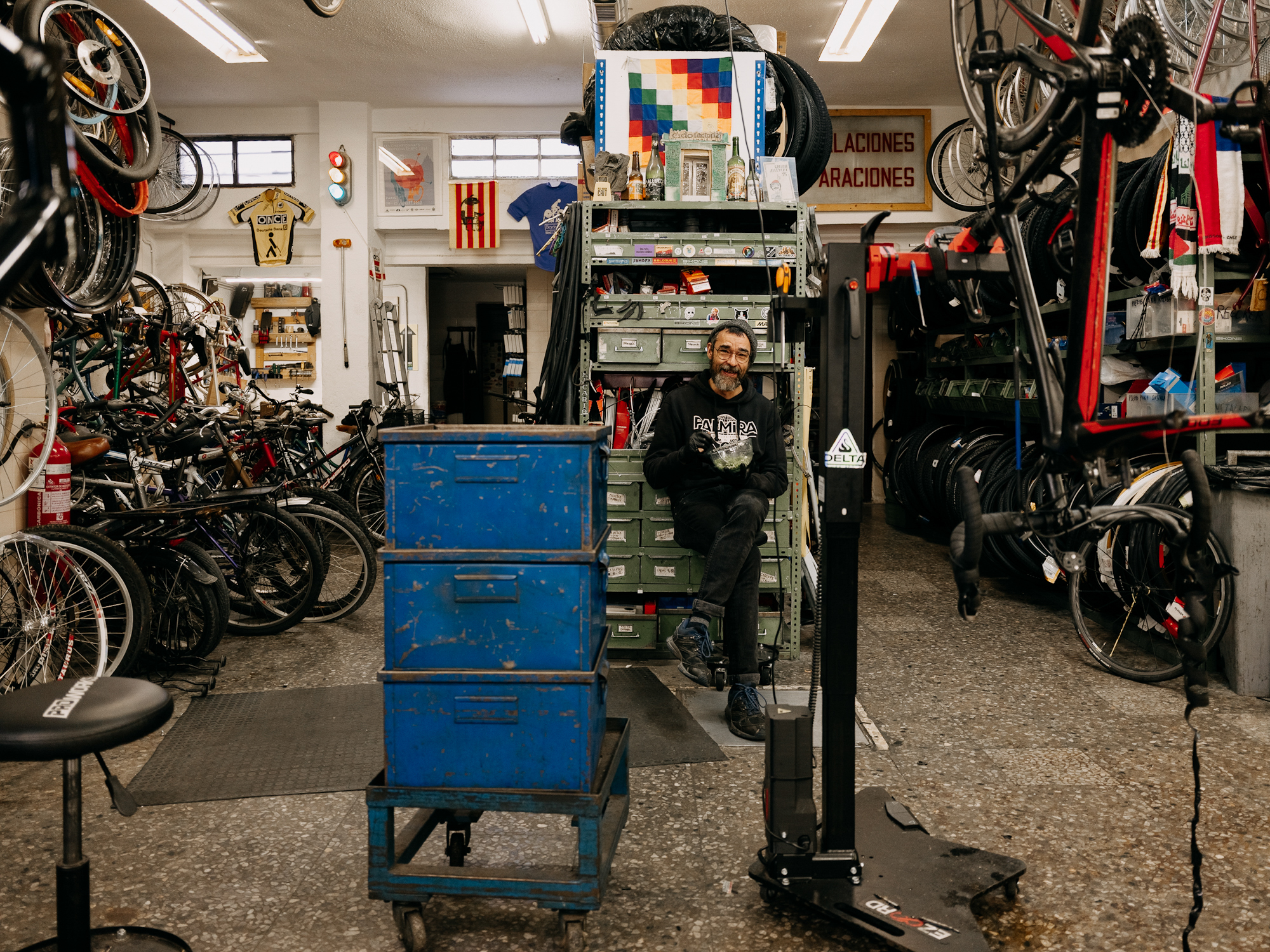
It was lunchtime. They pulled out their tuppers and ate right there in the workshop, surrounded by bikes in various states of disassembly. No performance. Just routine. The kind of routine you can only build by doing the same work, together, over and over again.
Before I left, I asked them to sit on the sofa for a portrait. They dropped into it the way you do when a place belongs to you.
A week later, they were on that same sofa again. This time, it was a video call – early, before opening, because we wanted the day to keep its rhythm. I expected an interview. What I got felt closer to a debrief. Not dramatic, not self-mythologizing. Just two people speaking out loud about a new stage of a shared thing – what they want it to be, what they’re afraid of losing, and what they’re trying to protect.
It sounded, at moments, like therapy.
But maybe that’s what happens when you care about a workshop the way most people care about a family: you don’t only discuss the work. You discuss the relationship that makes the work possible.
Pirates
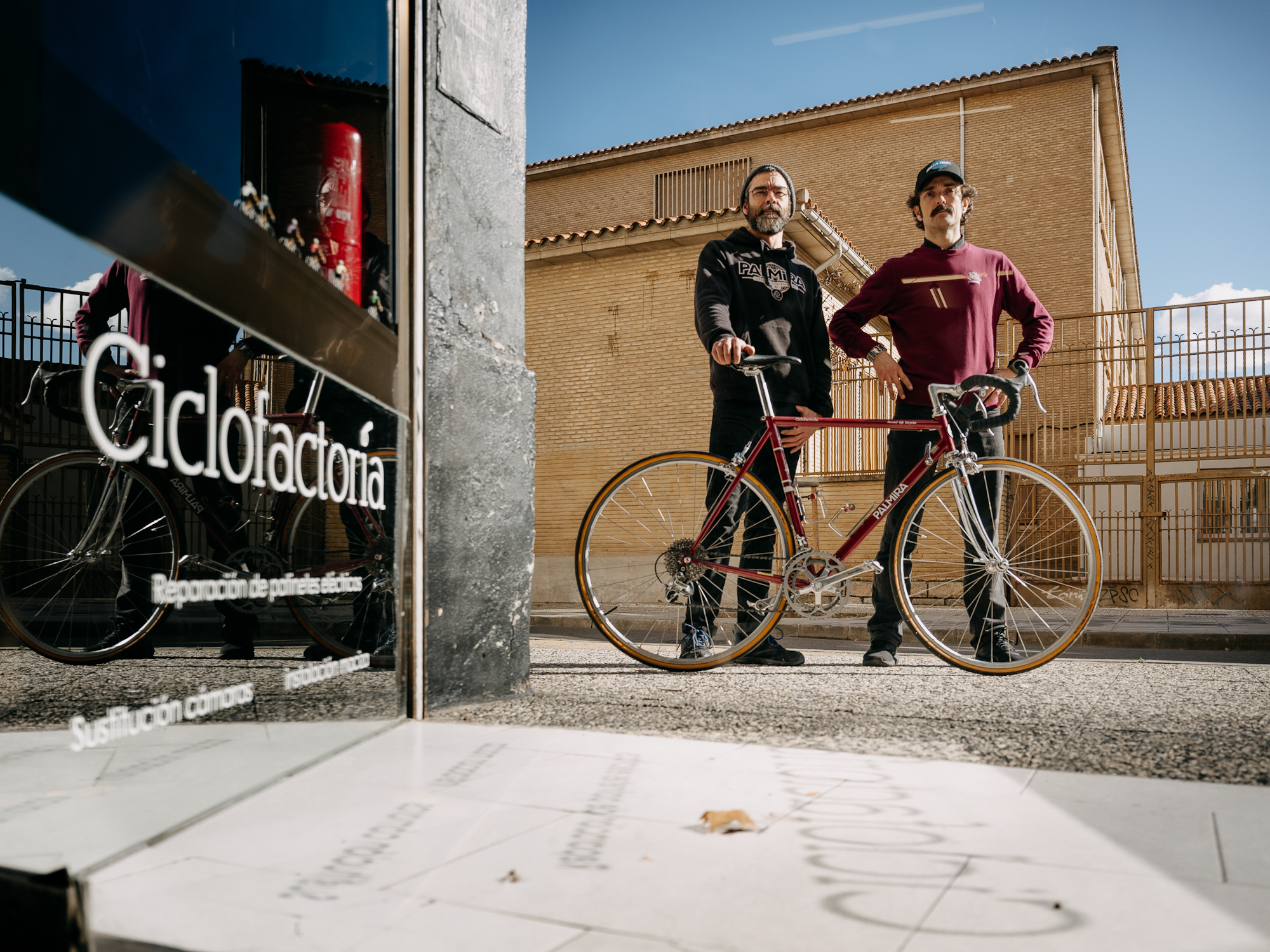
Ciclofactoría, Quico told me, began as a bar conversation on Christmas Eve – an origin story that immediately collapses into laughter because he says the wrong year, then corrects it, then corrects it again. The point survives the numbers: it started as an idea between Quico and his former partner Borja Gascón, back when they were still young enough to believe you could decide a future in a single night.
Quico had been working in his father’s law office. Borja had been wandering – years on the road, then suddenly home for the holidays, wanting to return to Zaragoza but without a plan for what he’d do there. Quico admitted what had been growing in him since working in bike shops in Canada: he wanted to be a mechanic. He wanted to open a shop.
Borja’s response was immediate: we do it together, and we do it soon.
By March 2015, Ciclofactoría opened its doors.
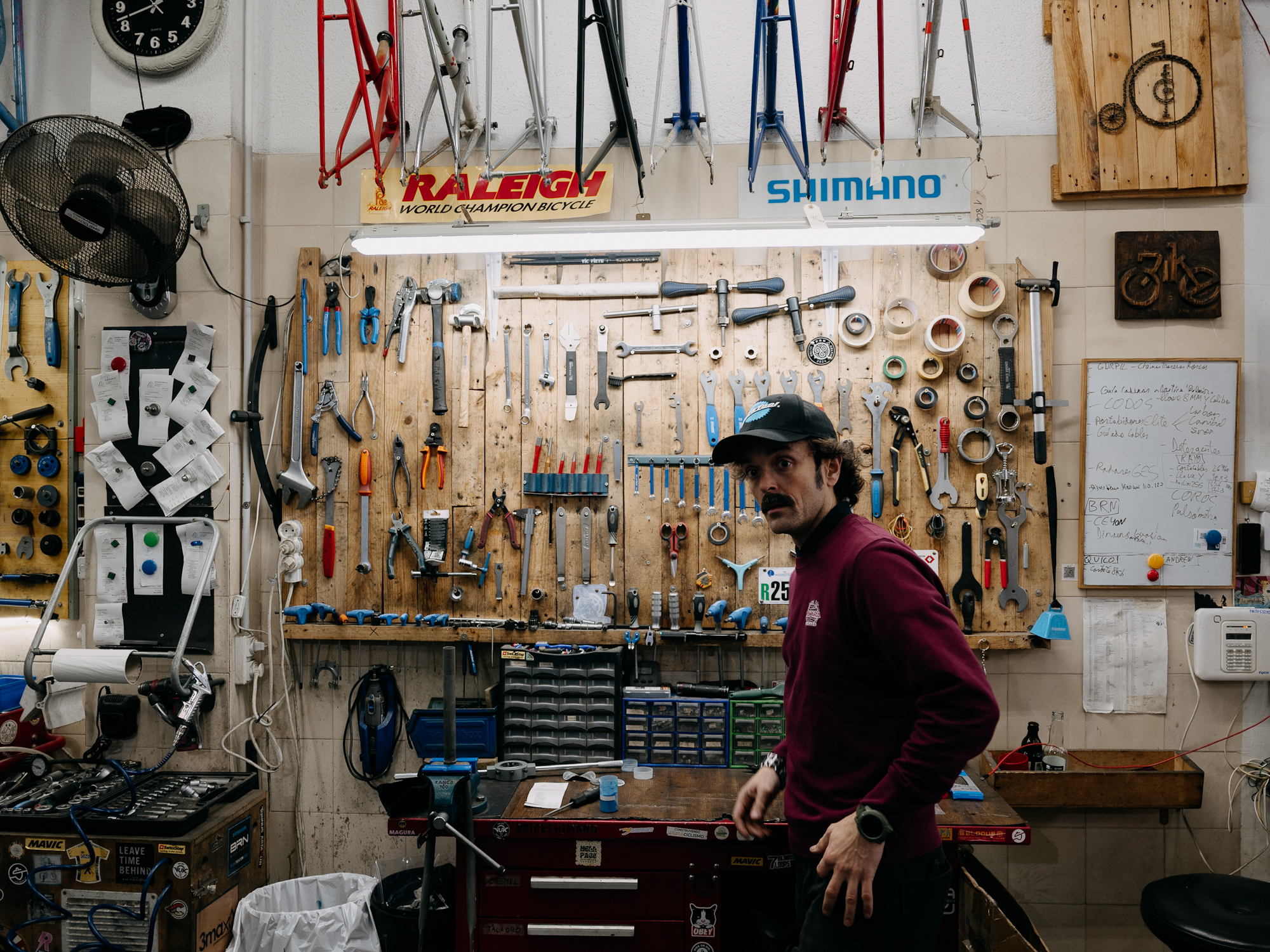
Quico doesn’t romanticize the beginning. He calls themselves “pirates.” Not because they were cheating – he insists they did the paperwork, paid taxes, did the official parts properly – but because they were learning in public. Restorations that lost money. Repairs that only revealed their mistakes later. A workshop so small it felt half empty: one stand, a tool board, not enough stock, and a lot of decoration filling the space where inventory should have been.
They learned the craft the way many mechanics do now: phone calls, YouTube, breaking things, fixing the things they broke, replacing parts they’d damaged without telling the customer because they were embarrassed. There’s a humility to the way Quico tells it – an insistence that competence isn’t a personality trait, it’s repetition.
And then he tells me the detail I can’t stop thinking about: those early years, they ate lunch outside, sitting on the curb in front of the shop, day after day. The neighborhood watched them. People started to trust them – not because they were already masters, but because they were present. Because they were there.
That trust, once earned, becomes a kind of currency.
Andrés
Andrés entered the story differently – older, steadier, less interested in romance and more interested in benches.
He’d worked at Correos (Spanish postal service). He could have gone into teaching history. He didn’t want either life. Bikes were the thing that kept pulling him back, at first as a hobby: fixing friends’ bikes, learning for the pleasure of learning, with no formal path and no one handing him a blueprint.
Barcelona came next: a neighborhood shop, years of work, the daily discipline of fixing bikes that actually matter to the people who ride them. Then a mechanics program whose real value was not the classroom but the hours in a shop – real practice, real repetition.
He’d heard about Ciclofactoría’s project called Palmira – an idea he’d tried to mirror in Barcelona by taking old bikes and putting them back into daily use. He asked if he could do his practice hours there. Ciclofactoría said yes, because of course they did: 400 hours, someone useful, and no extra payroll cost.
He arrived. The previous location was too small for three mechanics to move without colliding, so his early time came in seasons –summer work, winter elsewhere. COVID happened. Then Ciclofactoría moved into the larger workshop. Andrés became a full-time mechanic alongside Quico and Borja for the next five years.
Then Borja decided to leave.
And suddenly Andrés wasn’t an employee; he was a co-owner. A shift in role that sounds simple on paper and feels enormous in the body: different tone, different decisions, different kinds of pressure. The Monopoly board doesn’t stay in the cupboard anymore. You take it out every quarter and play for real.
Andrés says he won’t feel truly calm until he has a full year of steady salary behind him again. Quico laughs. Andrés doesn’t.
The laugh doesn’t erase the anxiety. It just makes room for it.
Palmira, Memory, and the Work of Keeping Things Alive
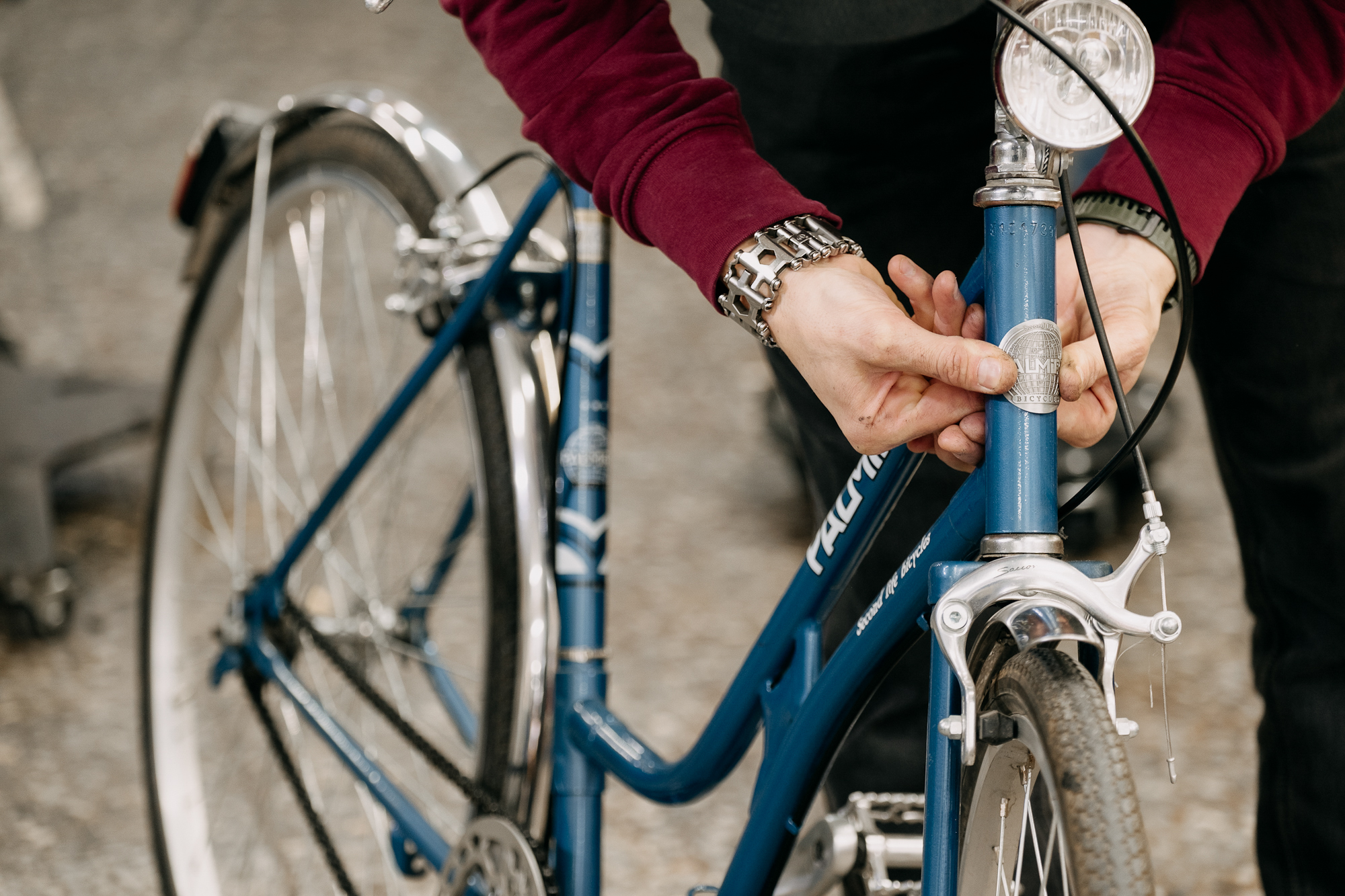
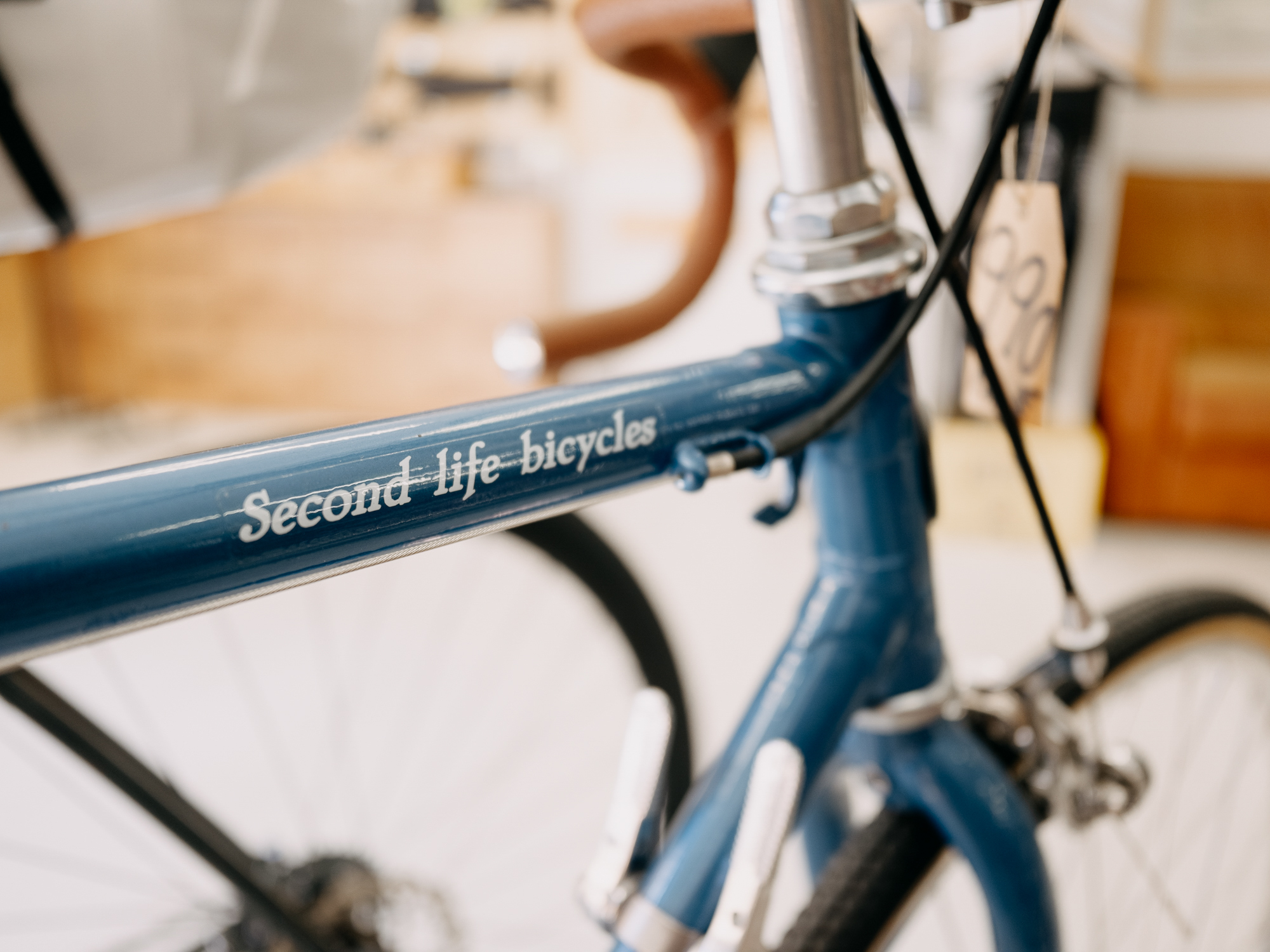
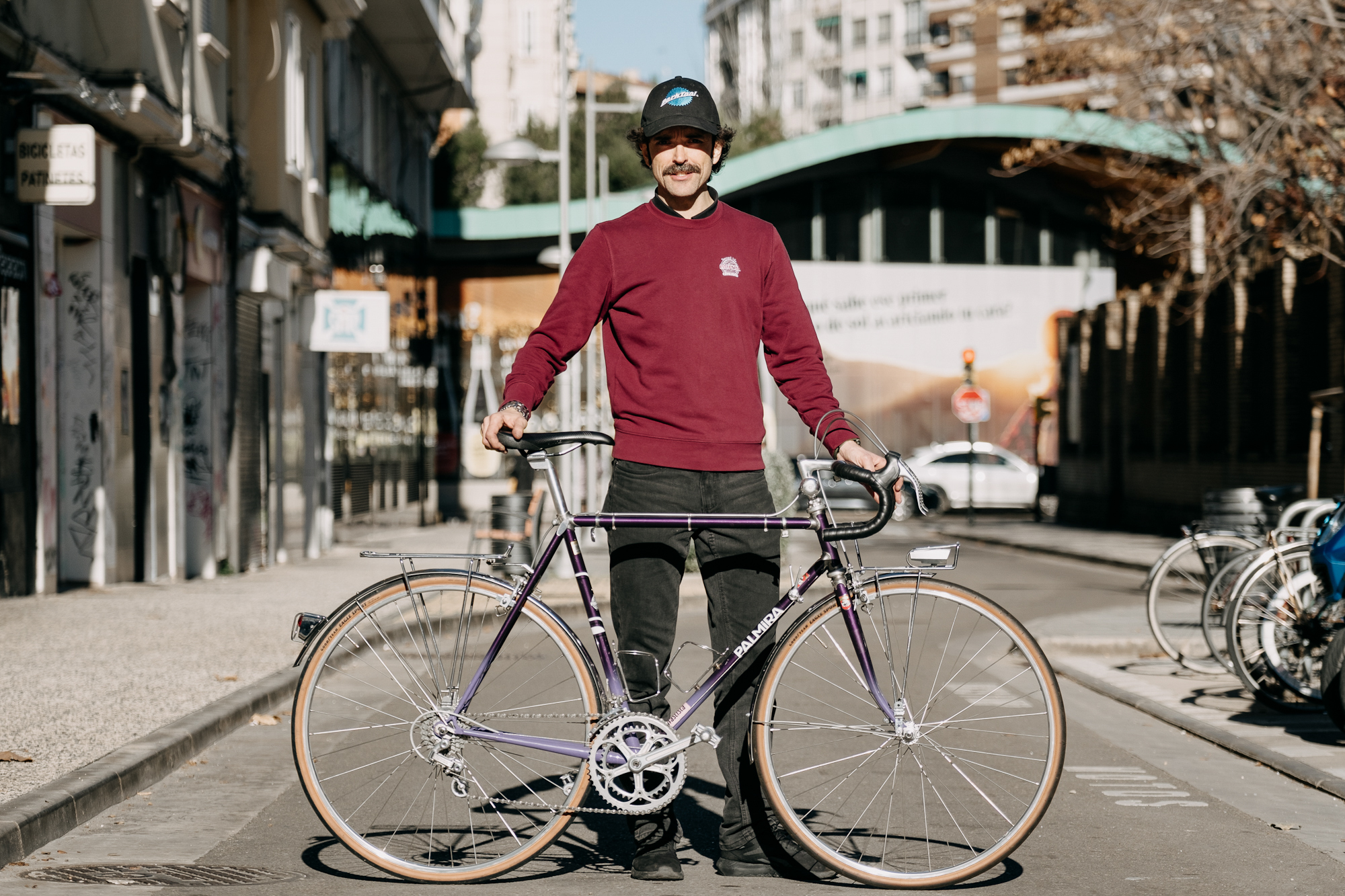
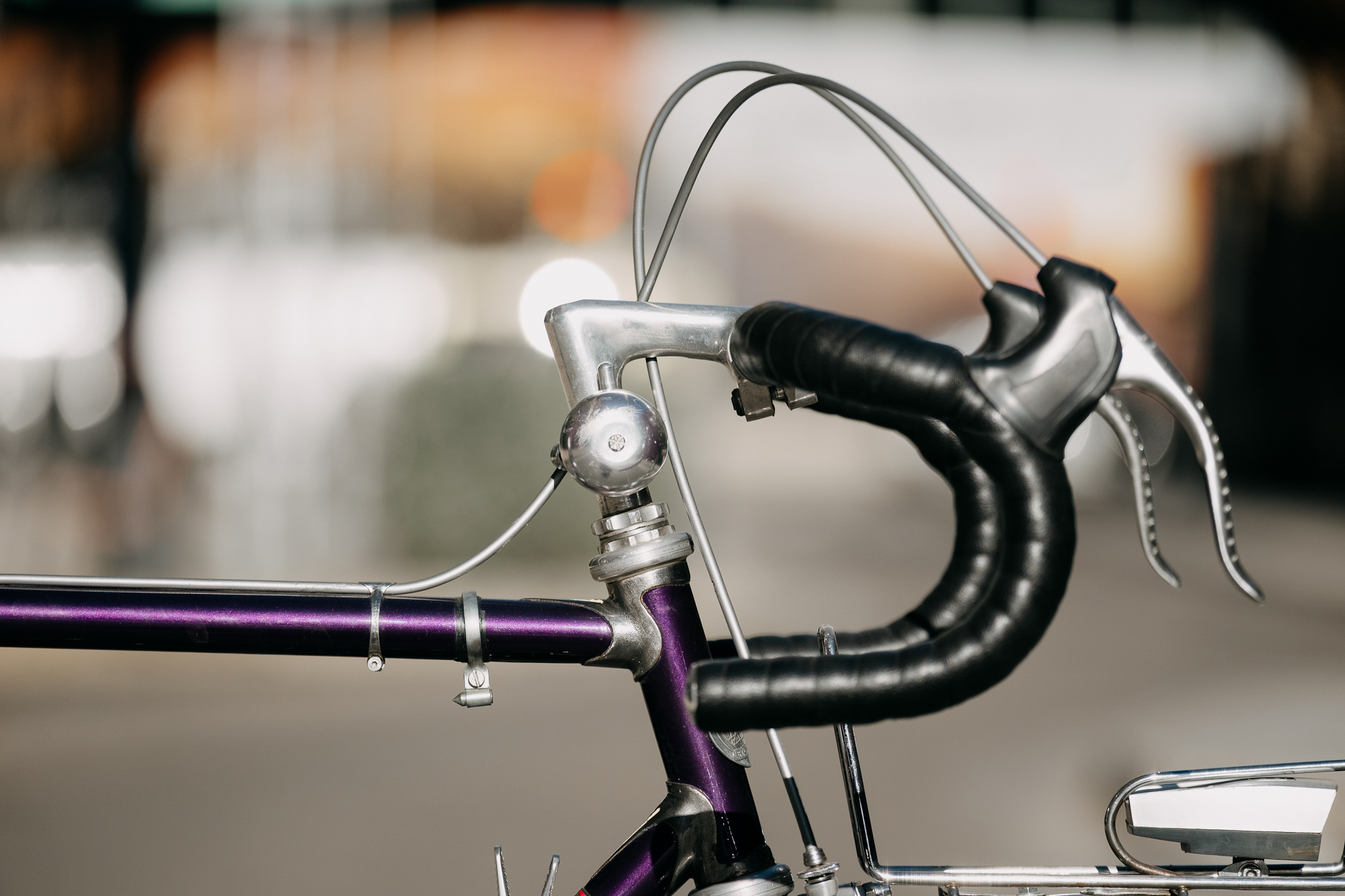
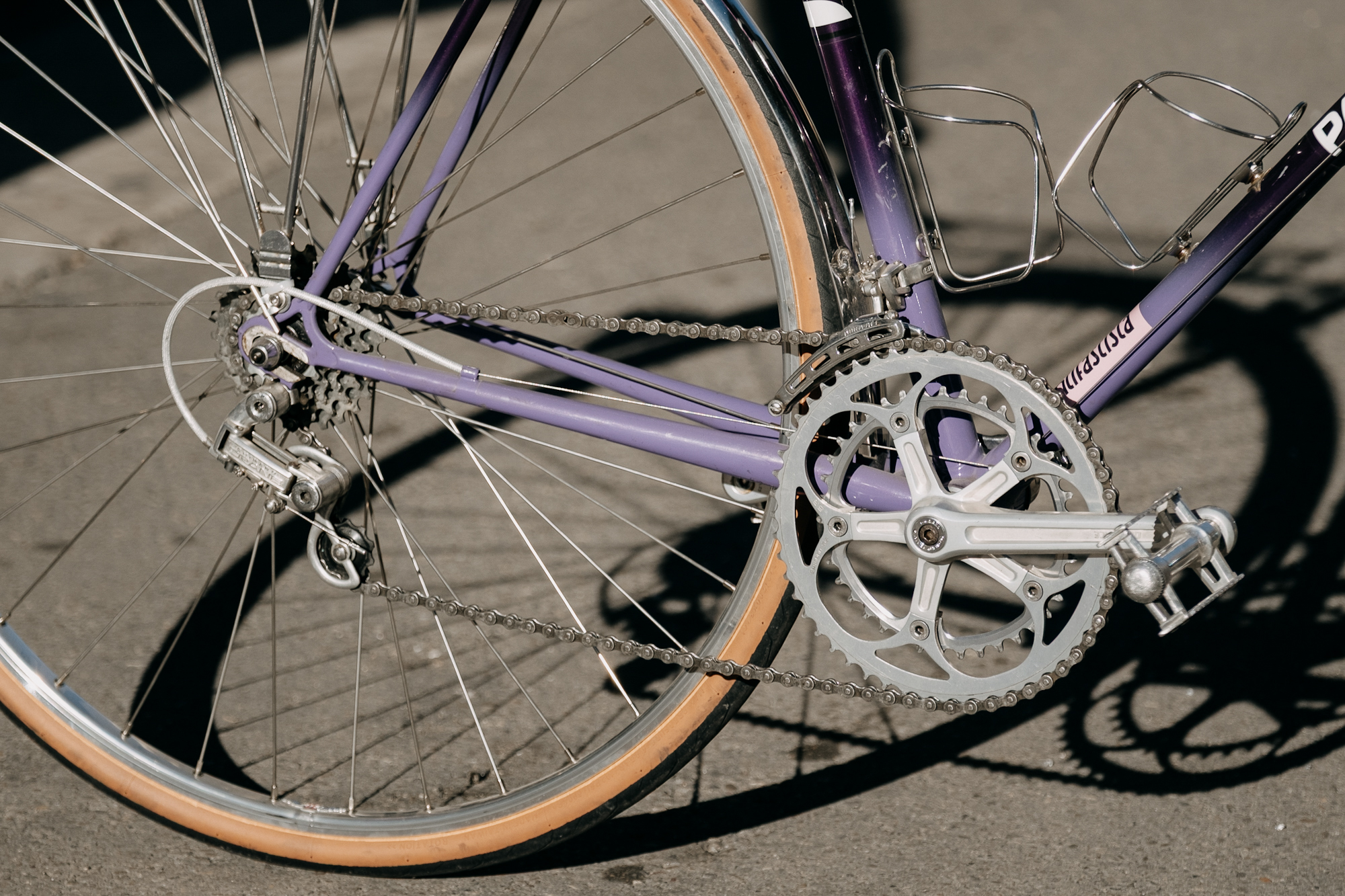
Palmira is Ciclofactoría’s most legible symbol from the outside: the shop’s own line of second life bicycles, assembled from donated steel frames, restored and standardized into everyday machines.
But inside the interview, Palmira is not a product story. It’s a memory story.
Quico first saw the model in Montreal: a program that collected abandoned municipal bikes, painted them the same color, rebuilt them with consistent parts, and used the project to support people rebuilding their lives. It wasn’t charity as spectacle – it was work, structure, repetition, second chances.
As Palmira moved from idea to reality, Borja helped ground it in practice. He traveled to Amsterdam to learn from Roetz Bikes, observing how they transformed discarded frames into standardized, durable city bicycles. That experience sharpened Palmira’s structure, giving the project a framework strong enough to carry its meaning.
Back in Zaragoza, Palmira gained another thread. Borja’s grandmother was living with dementia. Quico’s aunt was deep into Alzheimer’s. Bikes abandoned in storage. People losing their names. The metaphor wasn’t subtle. They leaned into it – not as branding, but as a way to make the work feel connected to the world beyond the workshop door.
Palmira began in 2017. Quico keeps a running count: 160 donations logged, 100 Palmiras sold, “100 bicycles out in the world pedaling.” The shop uses donated components for low-cost repairs, keeping everyday bikes running for riders who can’t always afford new parts. The frames – Orbea, BH, Peugeot, and all the steel ghosts of Spain’s cycling past – become standardized builds. Sometimes that means widening stays for modern tire clearance. Sometimes it means making 650B behave. Standardization as craft: the opposite of disposable.
The donation model evolved, too. At first it supported Alzheimer’s associations. Later it supported a local fundraising ride. Most recently, Palmira’s fixed donation has been redirected toward a Zaragoza group restoring abandoned mountain huts – Refugios Libres Dignos – places riders actually use when a route goes long and the plan becomes whatever shelter we can reach.
It’s the same logic applied to another kind of forgotten infrastructure: keep the commons alive by doing the unglamorous work, repeatedly, with care.
Palmira, in other words, is Ciclofactoría in miniature.
The Pruning
For years, Ciclofactoría was many things at once.
It opened as a neighborhood workshop and a refuge for classic bikes – steel restorations, everyday repairs, the aesthetic of patience. Then Quico and Borja began riding differently: brevets, bikepacking, ultra-distance, racing. Their shop’s identity widened with them. They became a workshop that could make an old Razesa ready for a Pyrenean sportive and also navigate modern carbon bikes with internal routing and electronic shifting.
Their online voice helped. They were early, funny, unafraid of being slightly ridiculous, and still serious about standards. When many shops dismissed social media as superficial, Ciclofactoría used it to tell the story of what a workshop actually does – and what riding can become when you stop treating a bike like a weekend toy.
And then the structure changed. Borja left. The third person vanished from the daily ecosystem. The time that had fed content, events, and constant outreach suddenly had to feed the bench.
So they pruned.
Not as retreat – more like survival with dignity. Andrés explains it as a refusal to build a life around permanent overexertion. “Zone 6,” he calls it – living at peak effort all the time. It’s unsustainable. You can’t ask a business to be an endless sprint and still call it a life.
With two people, the priority becomes brutally clear: repair bikes properly. Treat customers well. Keep the shop’s standards intact. Keep the relationship healthy.
Quico frames the transition with pride. In roughly 100 days, they redistributed tasks that used to belong to one person, learned each other’s roles, and kept the shop running – running hard, in winter, when the season traditionally slows. Andrés agrees: the shift from boss/employee to partner/partner could have gone badly. It didn’t. Not because they got lucky, but because they’d already been working on something most workshops ignore.
Emotional intelligence.
They say it plainly: they’ve done therapy; they’ve learned how to listen. They’ve learned how to fight without destroying. Quico jokes about being “two cis white men” and still having better communication than most. Andrés says he’s grateful because ego was small in this transition, and the shop was bigger than either of them.
The therapy was already in the walls. The interview just made it audible.
No Leaks
Somewhere in the middle of the conversation, the shop’s ethics appear – not as a manifesto, but as a habit.
They don’t do shortcuts. “No roof leaks,” Quico says. They build roofs.
Andrés talks about conflict with customers the way a calm person talks about weather. It happens. People believe they’re always right. Sometimes they arrive with demands that aren’t reasonable. Ciclofactoría’s response isn’t to explode. It’s to explain. To refuse. To recommend a second opinion. To stand behind their standards even when standards cost money.
They also don’t hide when they’re wrong. If something wasn’t tightened, they ask you to bring the bike back. If they used the wrong part, they correct it. If a puncture happens again the next day, they fix it. “We don’t argue warranties,” Andrés says. It’s not always logical in the short term. In the long term, it’s the only thing that makes sense.
They want customers to return – “in a reasonable time,” Andrés adds, smiling – because return is what tells you the repair was meaningful, the relationship real. He talks about “building urban cycling” the way you talk about maintaining a living thing: basic service, small interventions, regular care. A cheap bike, looked after properly, can last. A bike neglected until it collapses reaches a point where no workshop can perform magic.
And then he says the thing that explains why people devote their lives to places like this: most customers walk into a bike shop smiling. Compared to other public-facing work, it’s an astonishing ratio. People show up with objects that carry memory – my father’s bike, twenty-five years in a storage room – and they ask you to make the past ride again.
A workshop becomes a bridge between a person and their own story.
Zaragoza
Quico and Andrés talk about the city the way you talk about someone you love who sometimes sabotages themselves. Infrastructure has existed since the Expo era, bike share has normalized everyday riding, and the logic is obvious: in a city this size, the bicycle is nearly perfect. And yet, they describe zancadillas – small trips and obstacles, policies that feel like discouragement.
Still, Andrés insists the growth is “unstoppable.” If the city throws a punch, riders get angry, show up, and pedal harder. The bike culture here survives because people insist on it, not because anyone makes it easy.
Quico names the deeper reason they take the work seriously: class consciousness. Not as a slogan, but as a framing. The bicycle, for them, is a tool of social change – a way to make cities gentler, life more livable, the public realm more humane.
That’s why repairing bikes feels important. It’s not only commerce. It’s civic maintenance.
The Future, Back on the Sofa
Near the end, I ask about the future. They both interrupt me, almost in unison.
“It’s a workshop.”
Andrés, fifty-one, says he could do this until retirement. Quico says he could, too – until Andrés retires, and then beyond. The condition, Andrés repeats, is the relationship. If the relationship stays healthy, the work is “a candy.” A room full of things you love: tires, tools, bikes, good coffee. A bike in the stand that looks like trouble, and then the satisfaction of making it right.
Quico says he’s only felt genuine dread about coming in two or three days in eleven years.
Maybe that’s the real privilege. Not success. Not trendiness. Not “building” anything that needs a slogan. Just waking up and wanting to go to the place where your hands know what to do.
The sofa at the entrance starts to make sense. It’s where you sit when you arrive. It’s where you sit when you tell the truth. It’s where you sit when a shop becomes a story.
And in Zaragoza, under wind and politics and the daily friction of keeping things rolling, Ciclofactoría keeps being what it is:
A workshop.
A good one.
See more at Ciclofactoría.