
In late March, a cavalcade of flag bearers was unveiled as the first batch of Esports Nations Cup (ENC) partners. The contrast was stark: some countries will be represented by actual government branches, while others will have a single, presumably right person for the job. For the United States, one of the largest and most influential esports territories, the chosen organization was almost unheard of. Yet USA Esports garnered quick support through the pedigree of its leadership and a portfolio of partners that bridge the gap between professional and collegiate spaces.
The non-profit charity makes its aims clear: to unify the fragmented US scene, prioritize the development of standards for participant safety and competitive integrity, and be recognized by the US Olympic & Paralympic Committee (USOPC). While its public unveiling came just before the ENC announcement, USA Esports’ president, CEO, and only full-time employee, Jesse Bodony, told The Esports Advocate that the organization officially started six months ago.
“That discovery process spanned pretty much the entire esports ecosystem in North America, from the leading collegiate programs to basically every single pro organization,” he said, noting that this period of learning actually started in January 2025. It was catalyzed by a coalition of university presidents and chancellors in the wake of the ill-fated announcement of an official esports event by the International Olympic Committee (IOC).
“At the end of the day, for us, it’s just about building a sustainable, trusted institution that serves American gamers for decades to come. It’s not some two year project. This is a 20 or 30 year project.”
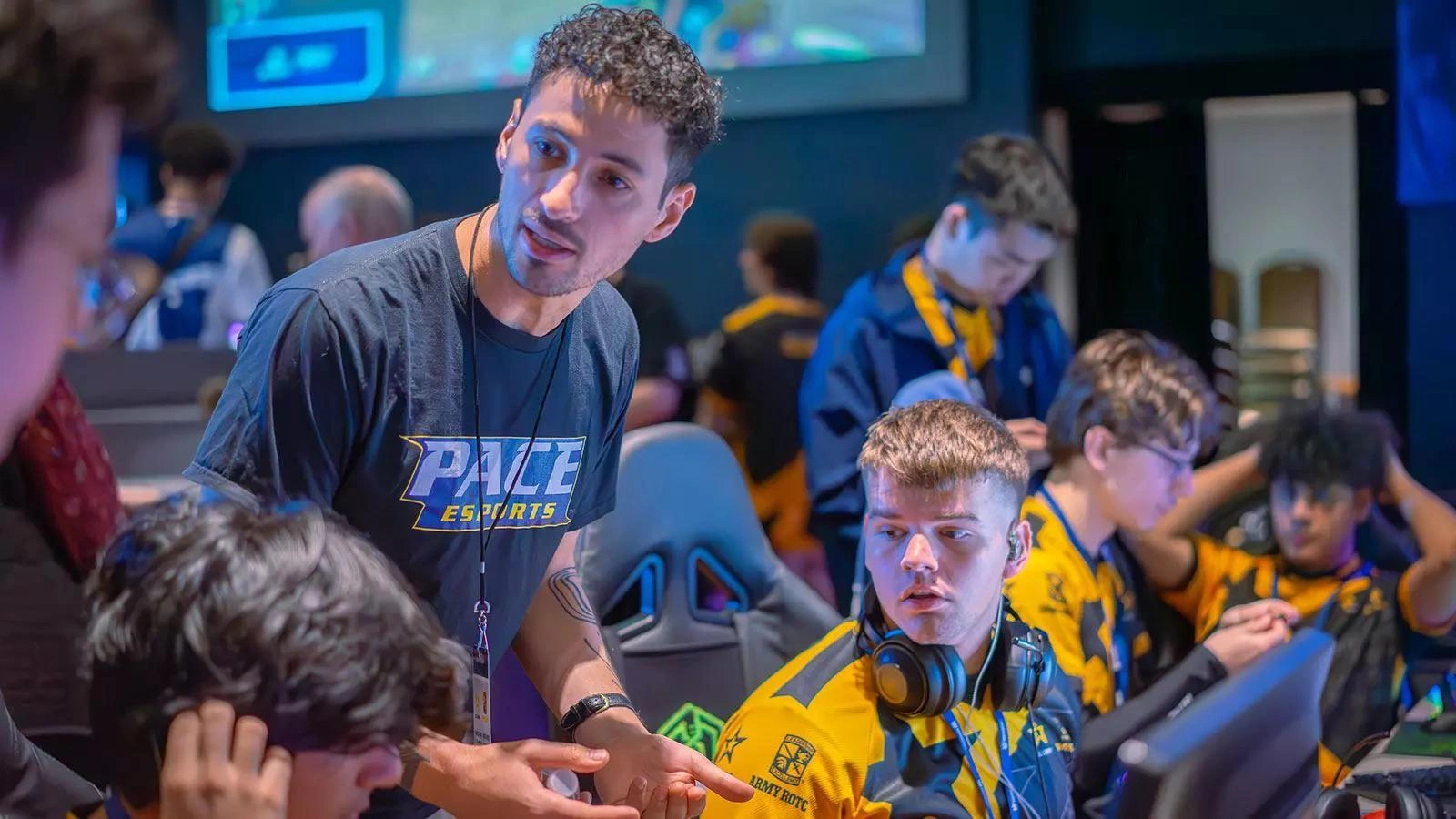
For background, Bodony was previously director of esports at PACE University in New York, and is the executive director for the Voice of Intercollegiate Esports (VOICE) nonprofit. What turned heads upon USA Esports’ reveal was that its ENC team manager would be Dan Clerke, who shaped Maryville University’s esports program. Among its accomplishments, a League of Legends team affiliated with the university won the North American Challengers League (NACL) in 2024.
Clerke’s selection added legitimacy. In addition, seventeen notable universities from VOICE’s advisory council joined USA Esports’ self-described esports alliance. They stood alongside eleven professional esports team organizations, many of whom are synonymous with their country, including Dignitas, TSM, 100 Thieves, Cloud9, Flyquest, NRG, and Team Liquid.
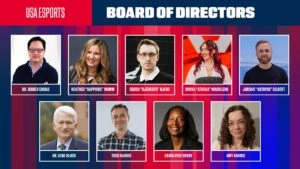
Even more unheard of was the litany of former professional players who make up a portion of USA Esports’ board of directors.
- Søren “Bjergsen” Bjerg: Originally from Denmark, Bjergsen has some of the most titles in the history of North American professional League of Legends.
- Dr. Bowen Chung (Board Chair): a Professor-in-Residence at the UCLA Department of Psychiatry and Fielding School of Public Health. Also serves on the LCS Players Association board and is the team physician for Team Liquid.
- Heather “Sapphire” Mumm: A former professional Counter-Strike player who has gone on to work behind-the-scenes in broadcasts, and founded Radiant; a turnkey tournament organizer for women’s competitions.
- Dr. Gene Block: Chancellor Emeritus and Distinguished Professor at University of California, Los Angeles (UCLA), where he led the university for 17 years from 2007 to 2024.
- Carolayne Henry: Has a career of over three decades in intercollegiate athletics, including the Mountain West Conference. Also served as chair of the Riot Scholastic Association of America.
- Jordan “n0thing” Gilbert: A retired professional Counter-Strike player in North America, who has also worked as a caster, analyst, and educator.
- Mirna “athxna” Noureldin: A competitor in both Counter-Strike and VALORANT, who is currently a caster and desk analyst for the latter’s professional circuit.
- Todd Harris: Co-founder of game company Hi-Rez Studios, who now heads Skillshot Media and Ghost Gaming, and is president of the United States Esports Federation (USEF).
Bodony noted that the inclusion of figures like Bjergsen and n0ting followed half a year of discussion. He’s also keen to emphasize the one-third athlete representation in his organization’s board. Under the Ted Stevens Olympic and Amateur Sports Act, the USOPC has the power to “recognize” one—and only one—NGB for each Olympic or Pan American sport. That 33% athlete rule is non-negotiable.
“Athlete safety, safe sport training, background checks, codes of conduct, conflict of interest, this stuff is really baked into the foundation of the organization in a really kind of central way,” says Bodony, who signifies that joining his country’s national Olympic committee is a “north star” for the organization.
As with many new organizations, the initial board is set up in lieu of a voting body or membership constituency. This also means membership revenue, one of the primary buckets that funds most US sports governing bodies, is lacking for now.
USA Esports has announced partnerships with IT solutions company American Technology Services (ATS), and digital design solutions firm Dorxata. Bodony confirmed his organization secured six figures in unrestricted commitments from both sponsors and donors to support it through its first six months.
Historically, esports federations and associations have avoided the term “governing body”. To do so otherwise would imply that small non-profits can tell billion-dollar game companies how their IP and esports products should be managed.
As alluded to in the intro paragraph, some countries, like South Korea, Indonesia, and Türkiye, have folded their recognized esports body into government organs. For the United States, federal nor state governments rarely take part in sports governance matters. Many of the top esports game publishers are headquartered stateside, including Riot Games, Valve, and Activision Blizzard. Bodony makes it clear that USA Esports is not positioning itself as a national governing body (NGB).
“If I’m in their [the publishers] shoes, why would I want some other entity coming in and making rules and impacting the ecosystem that they have set up?” said Bodony. “I think if we’re being honest, the question of what gives an organization the authority to call themselves a governing body is a real one.”
The fact remains that every recognized sport in the U.S. is responsible for setting safety standards around its ecosystem. They also make and create transparent athletic pathways for kids, so that they can, hopefully, become an Olympian. That requires athlete protections. “The esports community has long gone without that,” says Bodony. “And it’s our feeling that they’re deserving of that entity.”
In the short term, USA Esports intends to develop pilot programs in collaboration with willing states. Therein lies potential to harmonize the current K-12 and collegiate esports systems. However, video gaming in education spaces, player welfare, and representation are all intertwined in a way that differs from how game publishers envision their esports ecosystems. Afterall, the most notable walkout in a publisher-run league was a protest over Riot Games’ 2023 decision to allow franchised teams to abandon their North American Challenger League (NACL) teams.
“I don’t think anybody at these publishers would disagree with the sentiment that the safety and protections of young people engaging with their game, or any game, is also of paramount importance,” he says.
When pressed on how player monetization and retention align with the standard goals of a national sports body, Bodony uses the example of youth esports. He asks us to imagine a young gamer who will follow family dinnertime by going up to their room to be coached by a nameless, faceless, 20-something-year-old on Discord. This is a scenario that would not be possible, let alone tolerated, in any other sport.
“Some conversations won’t be easy. We’re not going to see eye-to-eye with every single person, every publisher. We’re not going to be blind to that reality. But to the extent that we can, we’re going to make it beneficial for everyone.”