
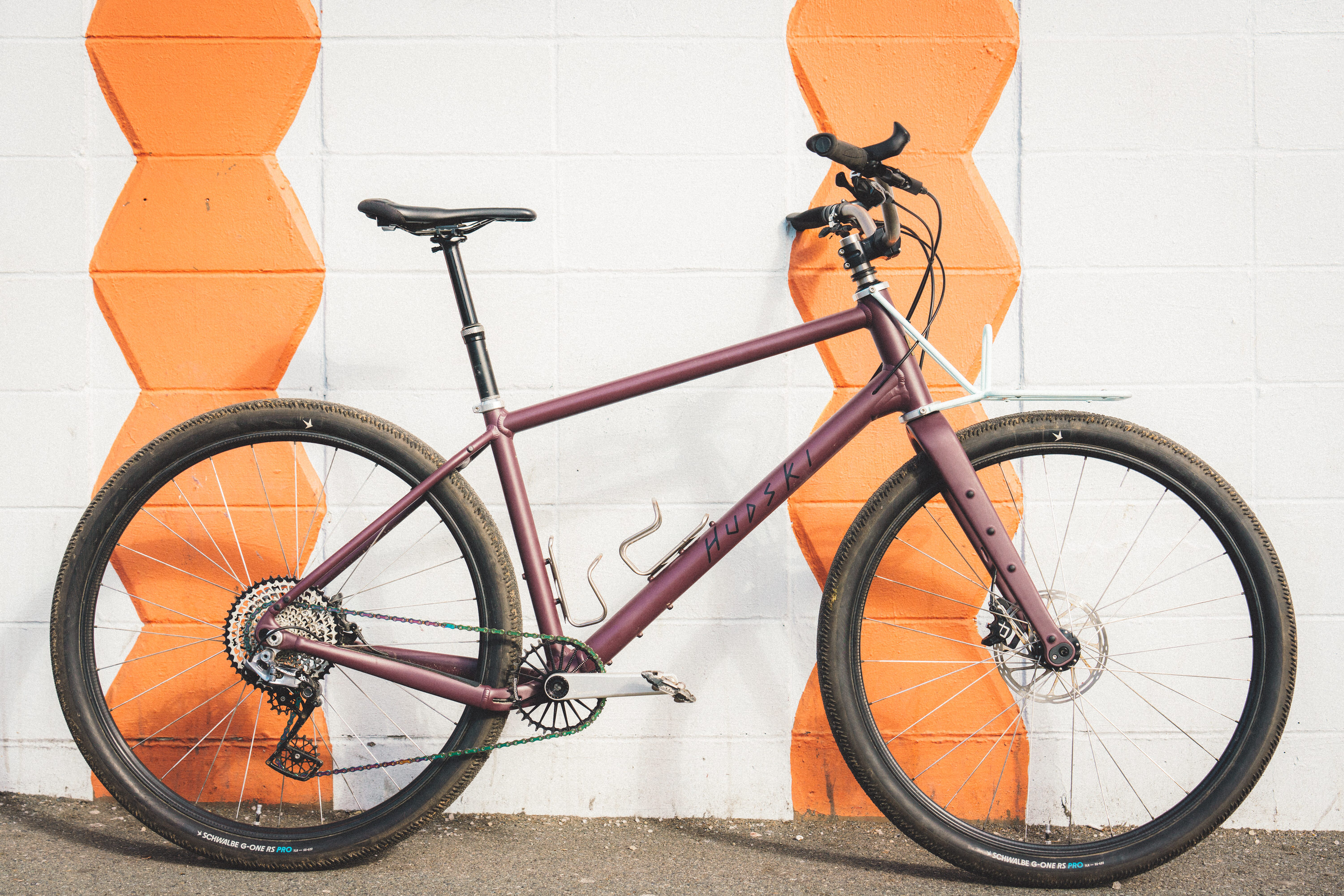
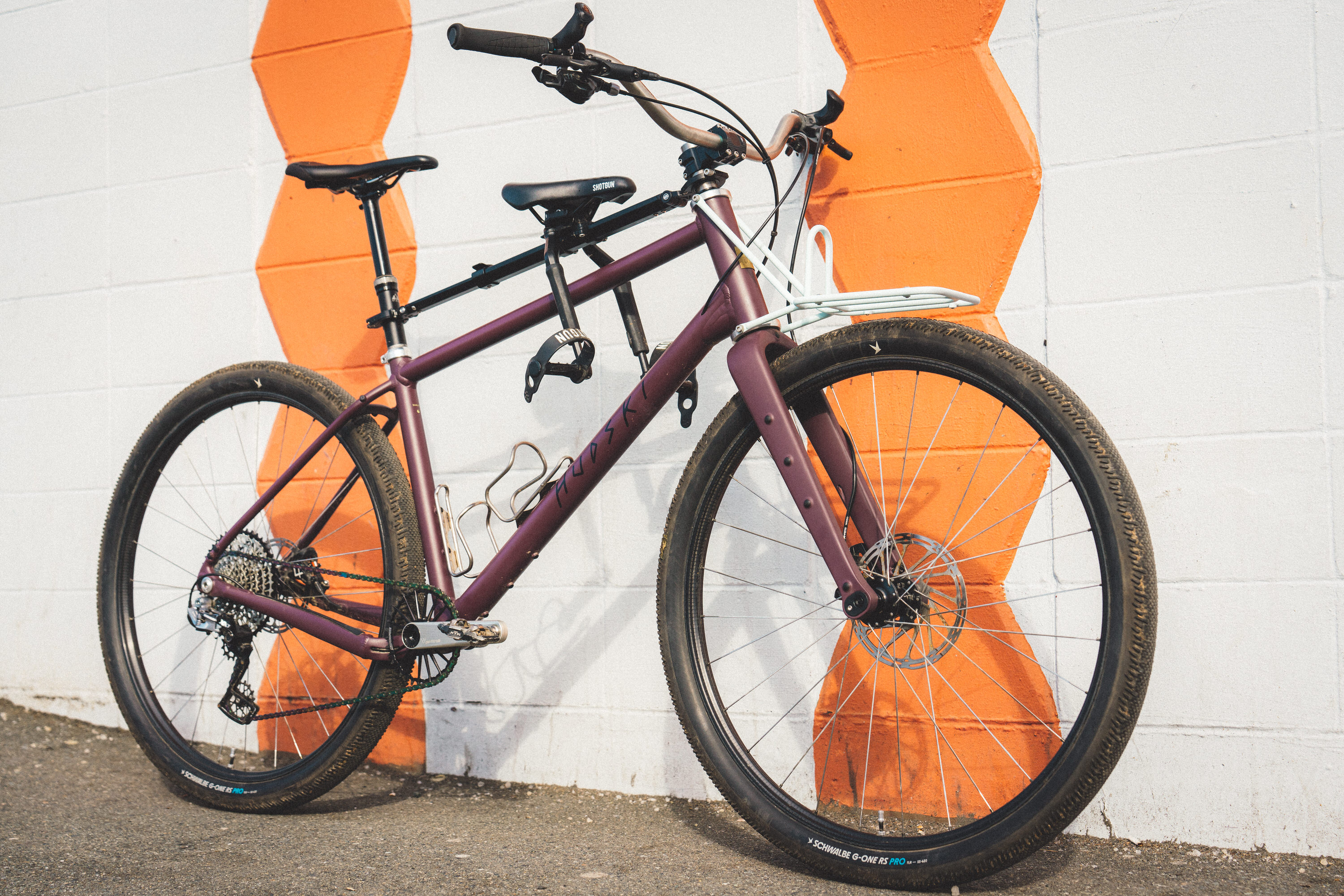
For this week’s Readers’ Rides, Grant of Cowichan Cycles on Vancouver Island in British Columbia, shared his killer Hudski Dualist build with us. Eagle-eyed readers will wonder what’s up with that headset. Read on below with stunning photos by Rob Wilson.
I’ve always struggled with drop-bar bikes. Historically, it’s been easy for me to dismiss road bikes specifically, as they are just so far removed from my comfort place of mountain biking. Gravel, on the other hand, speaks to me much more. I like the idea of getting more access to backroads and hard to reach places, and bikepacking has become something I quite enjoy the few times a year I can find time to get away. On paper, a gravel bike is perfect for me–but at the end of the day–I just don’t feel at home on drop bars. While I can technically ride a dropbar bike, I’ve spent so much time developing the muscle memory of a flat bar setup / geometry that I always feel like something is missing when I’m hanging on to curly bars.
While simply putting a flat bar on a dropbar-optimised frame is possible, it does come with some geometry sacrifices that I’m not happy making. Dropbar bikes are much shorter in the top tube, so to make a flat bar feel at home on one of these setups, you would need a very long stem to correct for this, which comes with its own handling challenges. As it turns out, I‘ve discovered that I like a slacker headtube angle than is common on drop bar bikes, and prefer slightly bigger tires than most gravel bikes can accommodate. All this is to say that converting an off-the-shelf dropbar to a flat bar is not my ideal setup.
The next most logical option is a cross country mountain bike with smoother tires. This is a closer fit, but I’ve still struggled to find the perfect balance here. Race bikes are often tuned for stiffness and power transfer, and therefore can become quite rough when riding all day long. They typically also have a low stack height, which pulls your weight quite low down for more efficient climbing and aerodynamics. Again, with my history of more gravity-focused mountain biking, and my desire to be comfortable all day long, I’ve found I prefer a much taller front end than the average XC race bike provides. There are certainly some steel adventure bikes that would tick these boxes, but I find they often come with a high weight penalty. I really wanted this bike to feel distinctly different from my regular mountain bikes, so getting the weight down was another priority.
As it turns out, I’m looking for something of a unicorn with my list of wants for this bike. I’ve tried a couple different options over the last few years, and the closest thing I’ve found to my ideal platform is the Hudski Dualist. While out-of-the-box this bike essentially did everything that I’d been looking for, I couldn’t help but tear it apart and see how much further I could optimize the build.
Frame: Hudski Dualist, Large
Fork: Hudski Carbon
I tried a Cane Creek invert and enjoyed having a tiny bit of suspension. Unfortunately, this fork only cleared a 50c tire, and I’ve been recently running 55c, so I could make it rub under heavy inputs. I might end up with something like a Rockshox Rudy XL in the future, but I question if I would prefer something stiffer with my MTB bias. I’ve read about some DIY lowered XC forks online which looks like it could be interesting to try…
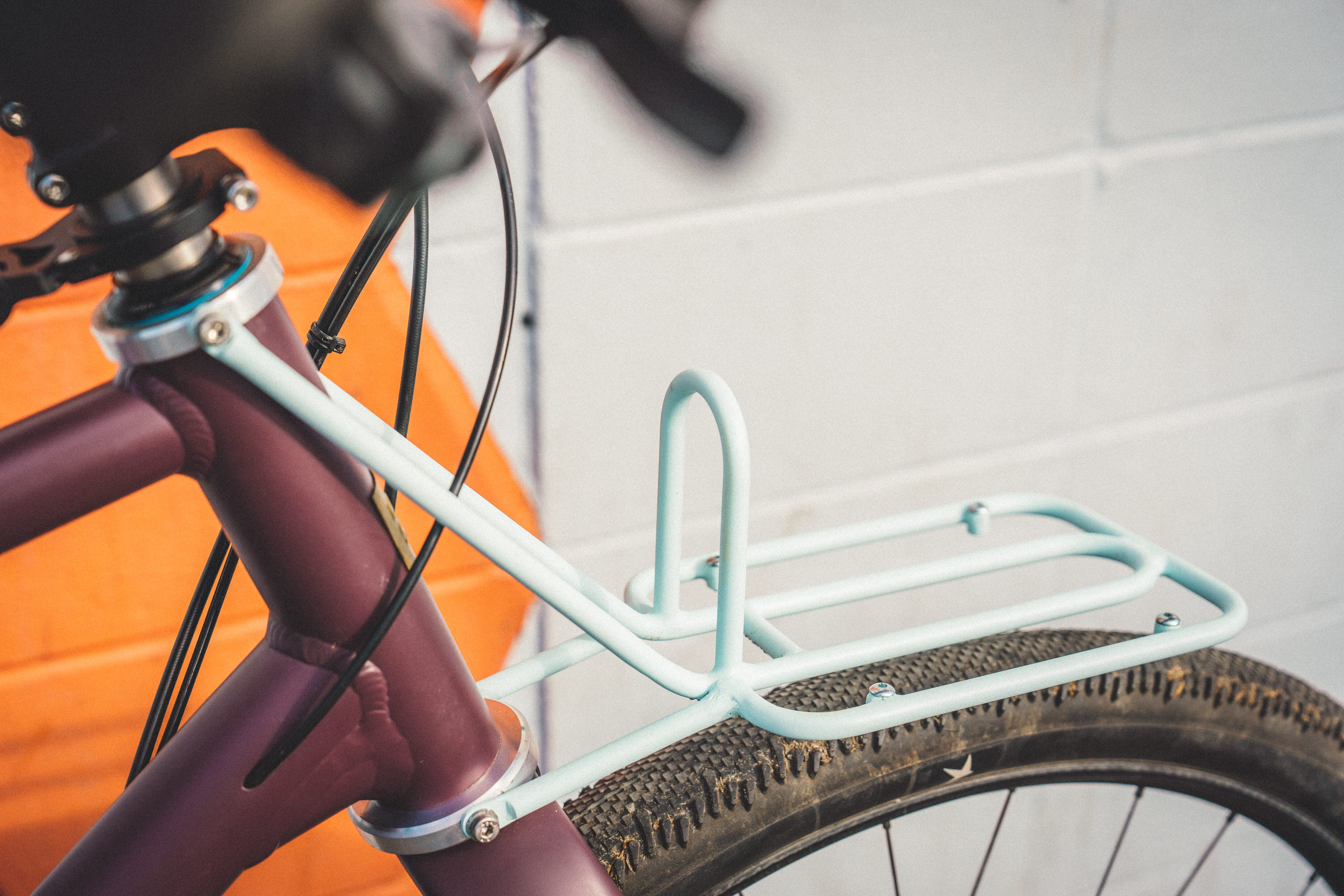
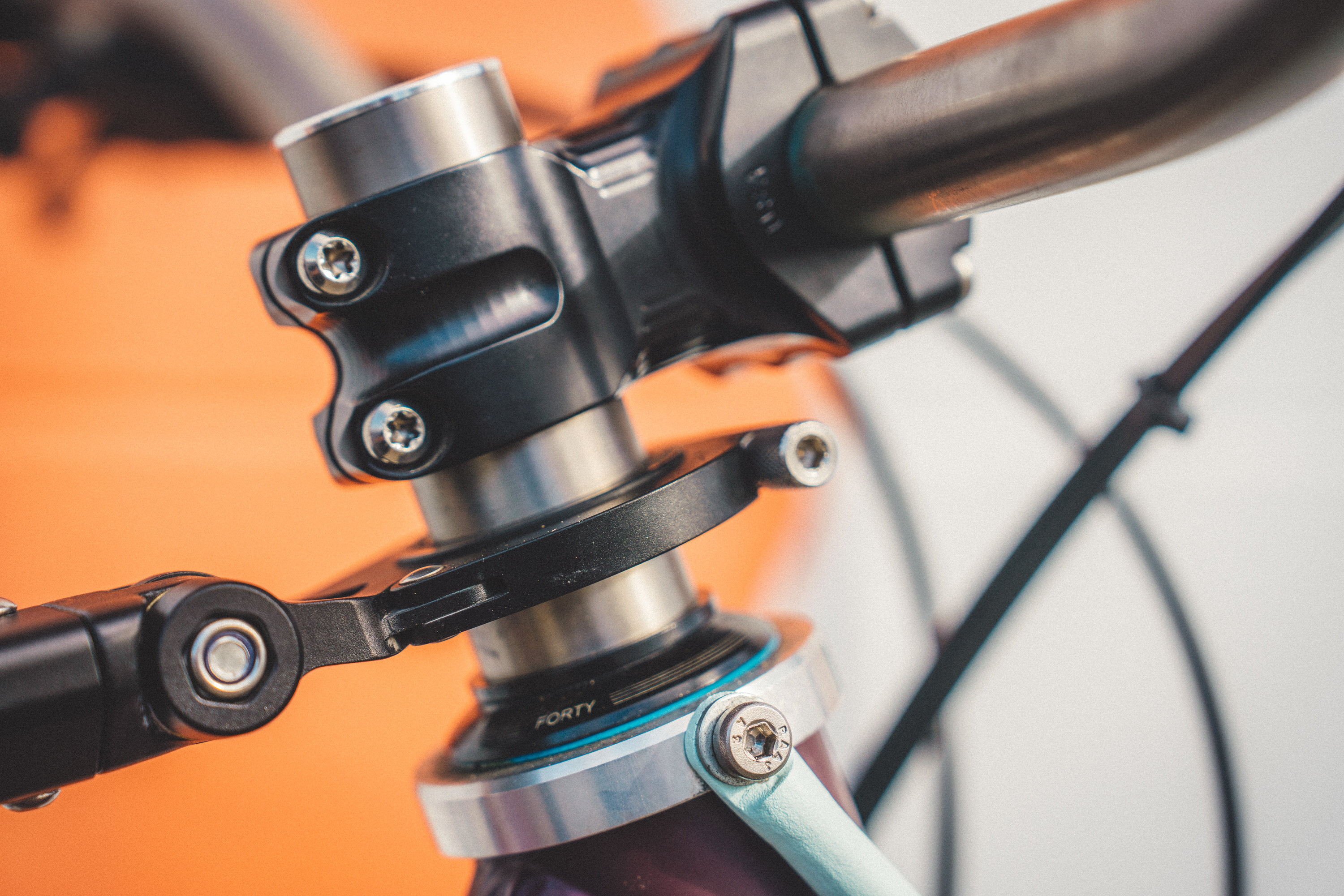
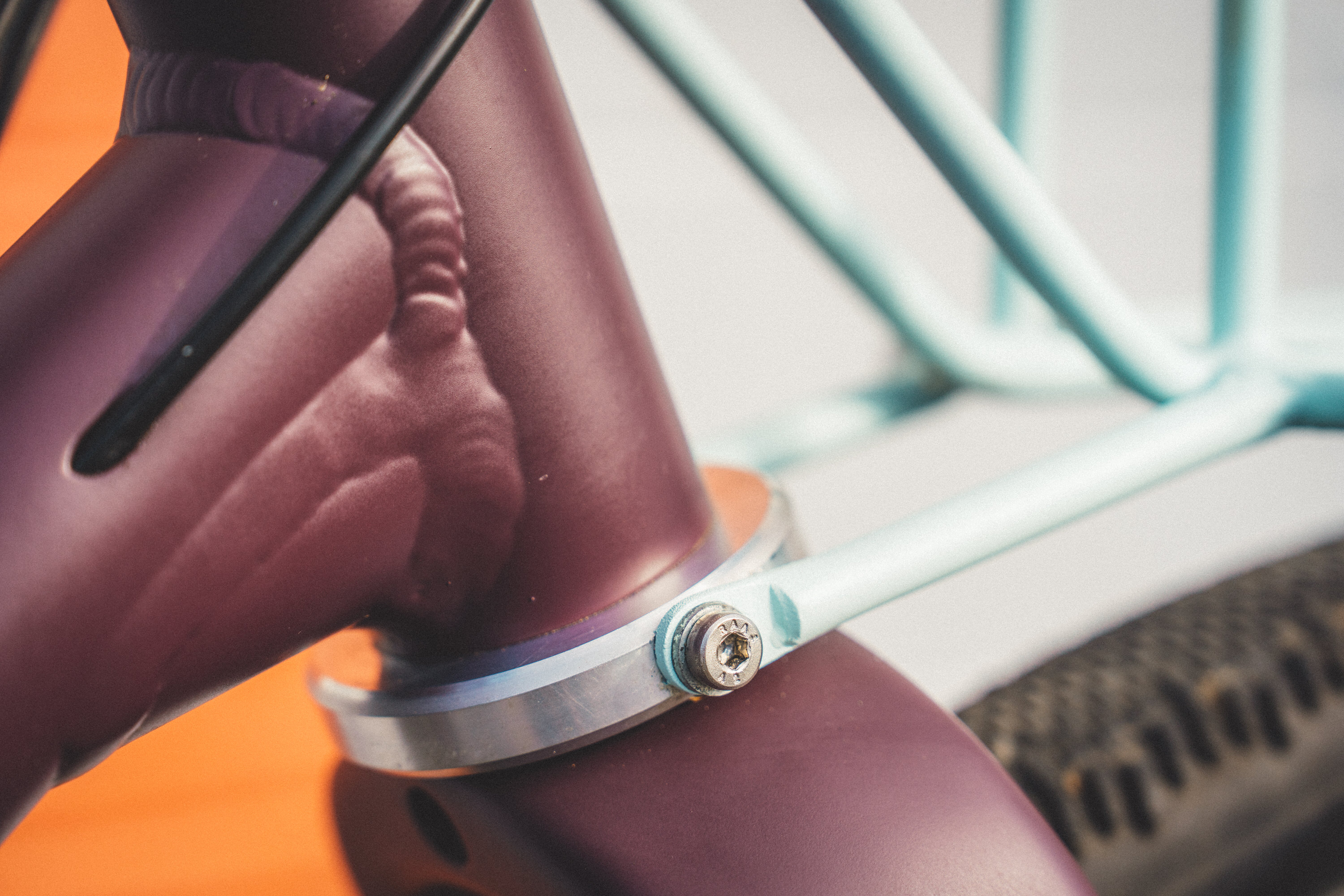
Headset: Custom machined by Pinner Machine Works
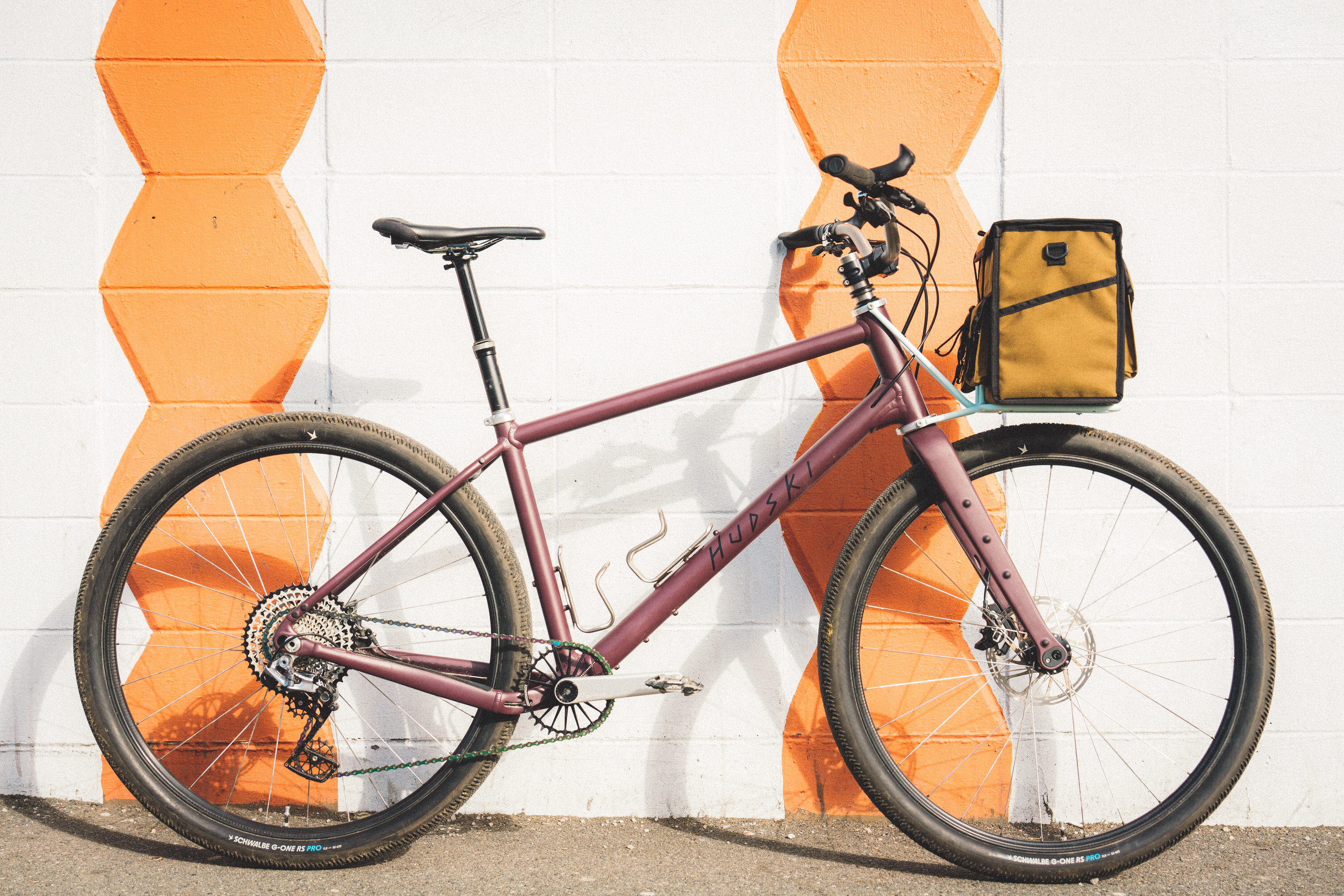
This is a cool modification that I’m excited about. I’ve always been a little disappointed with bar mounted bags as they can have a big effect on steering with the weight moving around as you turn. I’ve been trying to brainstorm a better, more secure mounting system for a few years, and this is my first real shot at a static front rack setup. The Pinner headset I dreamed up has threaded inserts that gave me something fixed to the frame that I could then design a rack around.
Headset spacers: Discontinued Why Cycles Titanium
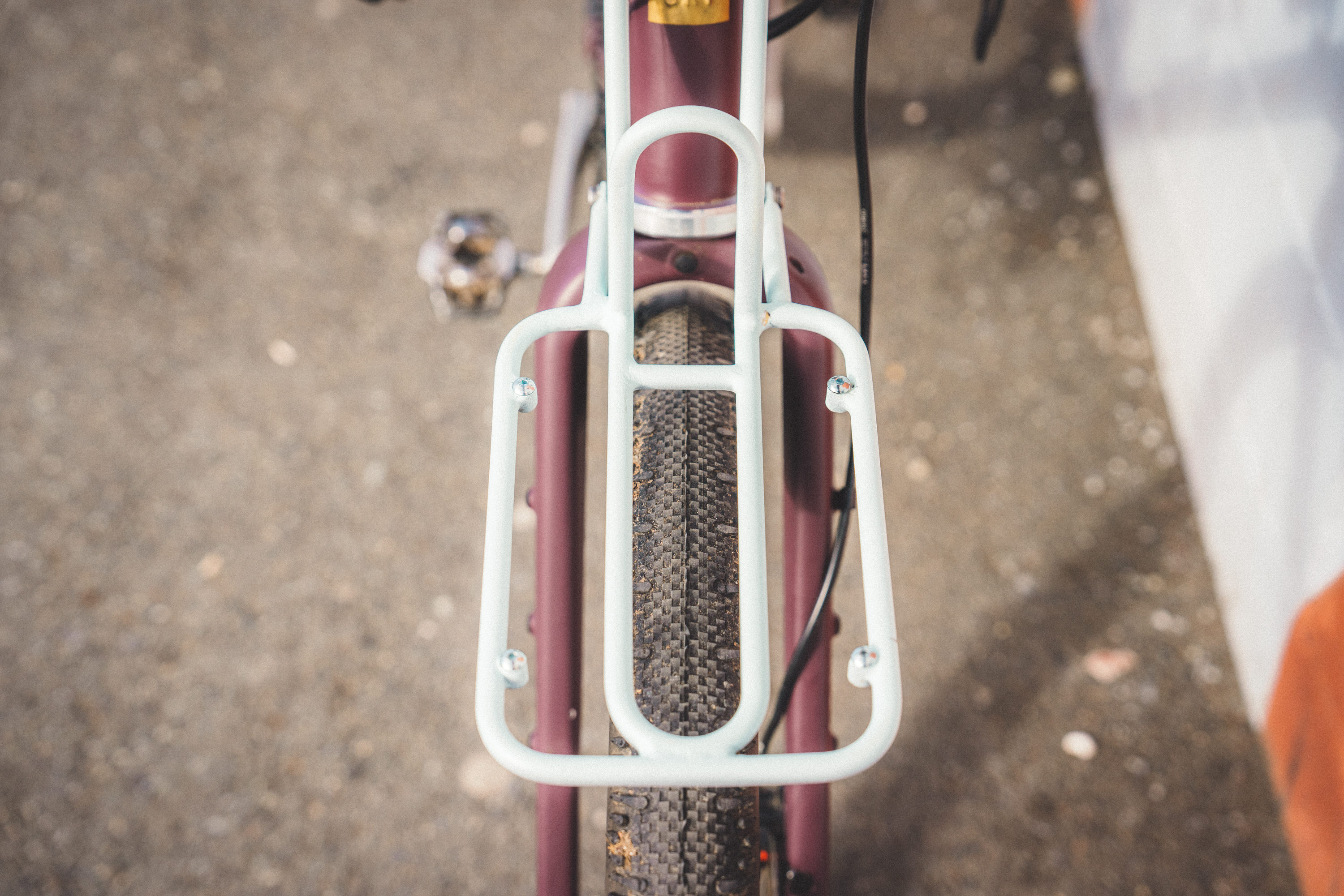
Rack: Home made experiment
Now that I had my mounting points sorted out via the headset cups, I set about making a front rack. I borrowed a tubing bender from a friend (thanks Al!) and set about learning how to build a rack. Pictured is my second attempt, as it’s actually more challenging that it looks to get everything lined up properly once you start factoring in the distance lost for various bends. Though my brazing experience is also extremely limited, I managed to melt enough brass in its general direction to hold everything together [editor’s note: for now]. This was a good challenge for me in allowing myself not to chase perfection. I see a lot of beautiful handbuilt stuff online and dream of one day being able to produce that level of craftsmanship. I had a quote in my head as I was working through this process that goes something like this: “Don’t let perfect get in the way of done”. It’s certainly far from perfect and is currently mounted to my bike so I’m counting that as a win.
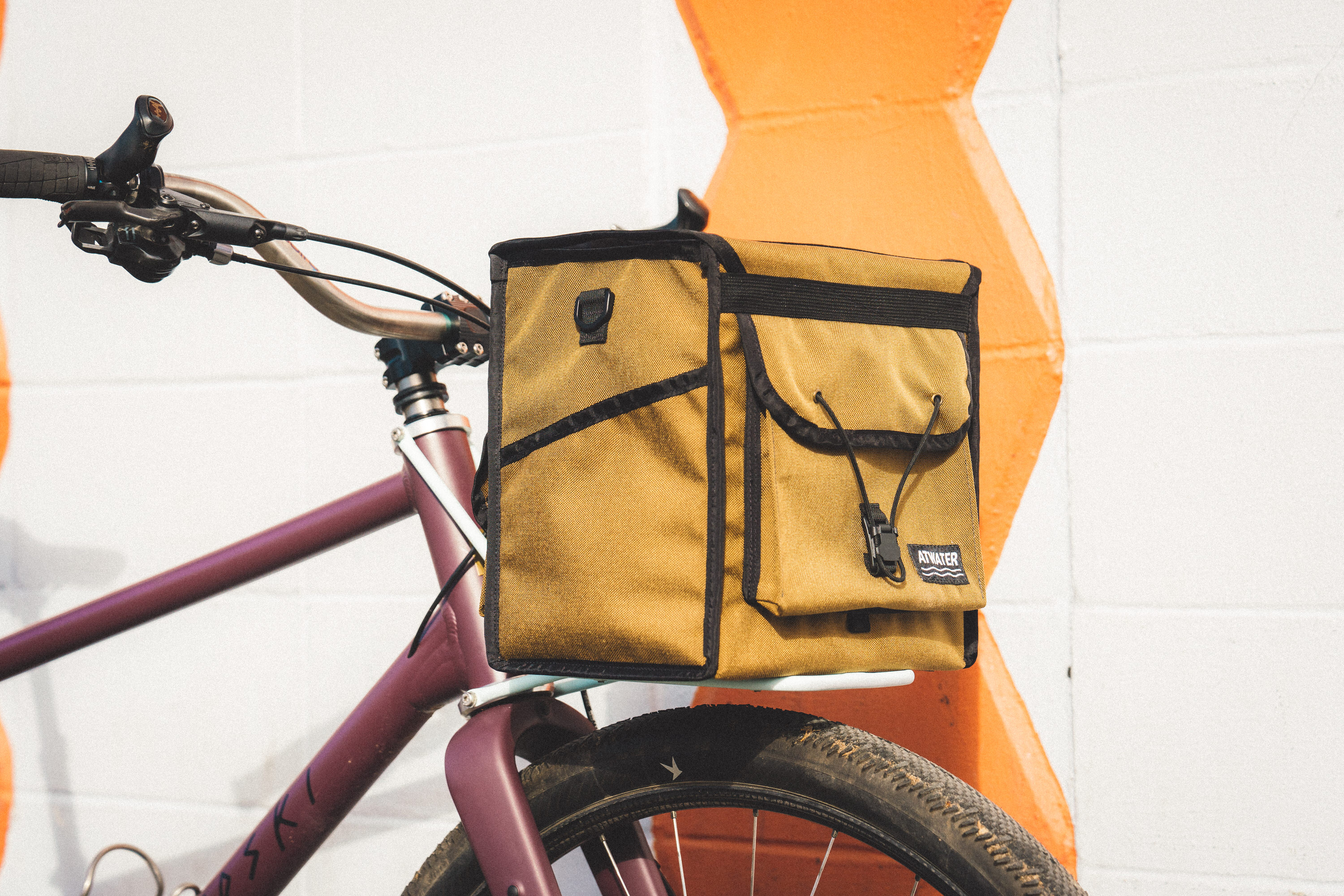
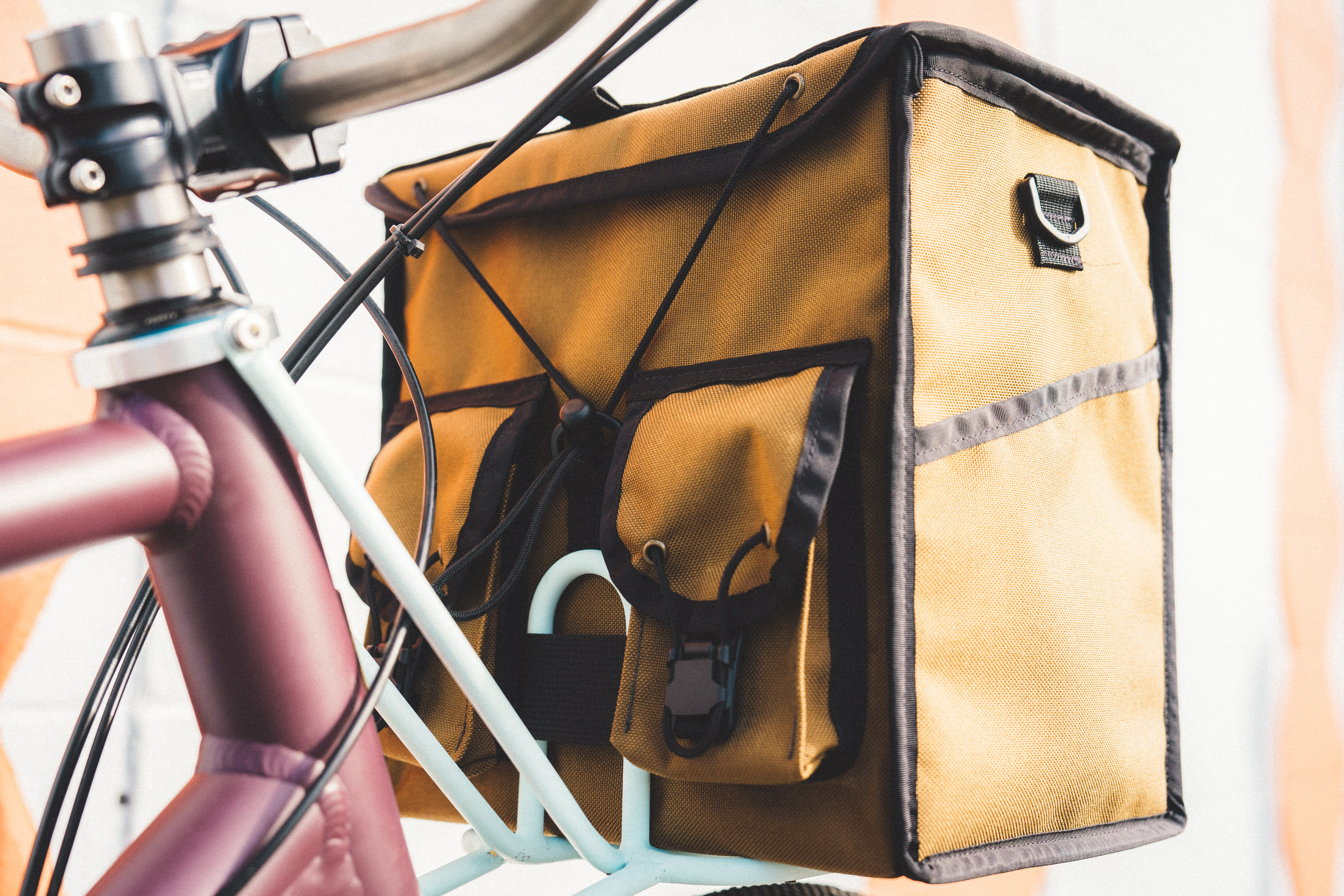
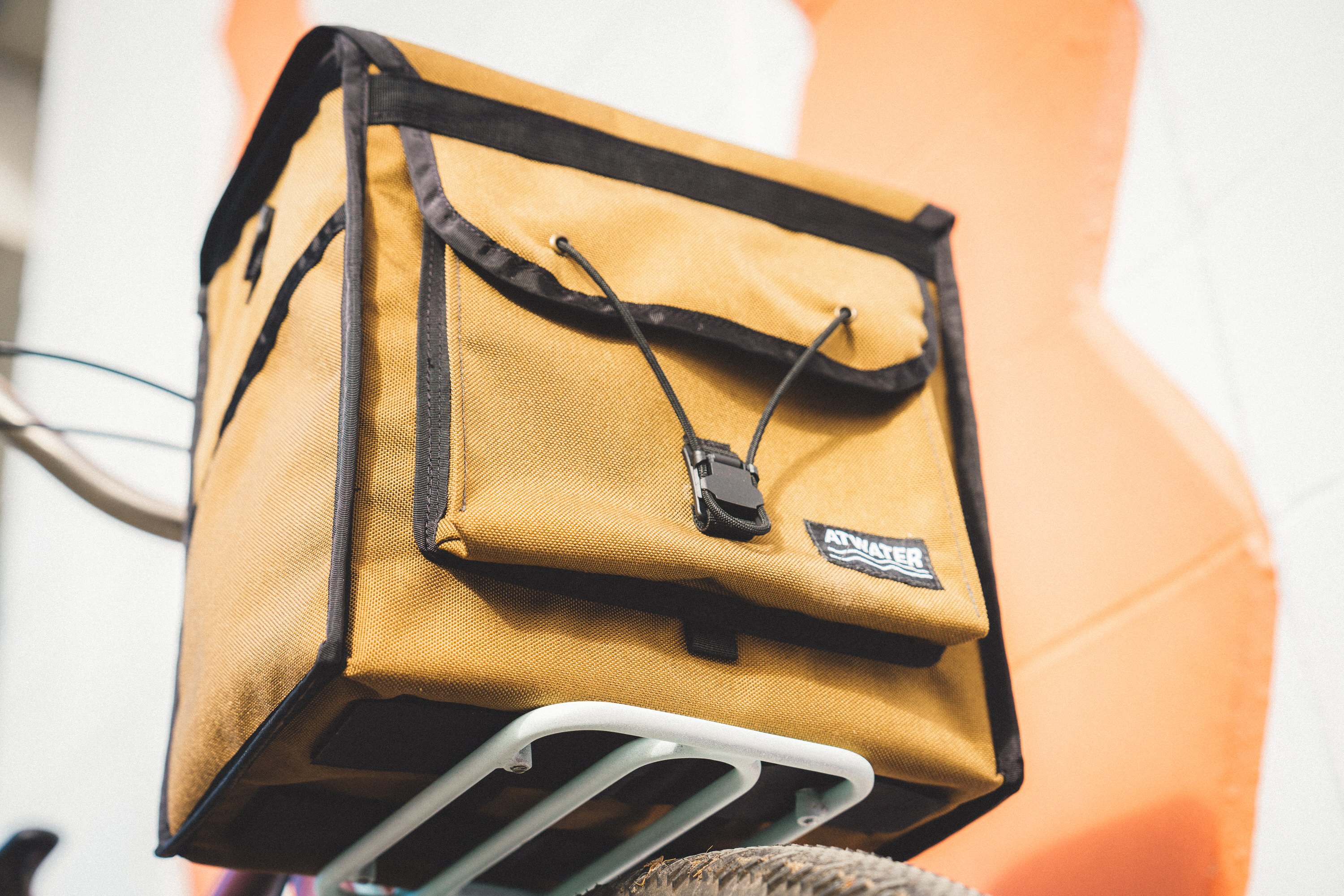
Bag: Atwater Randonneur – Modified to bolt directly to the rack.
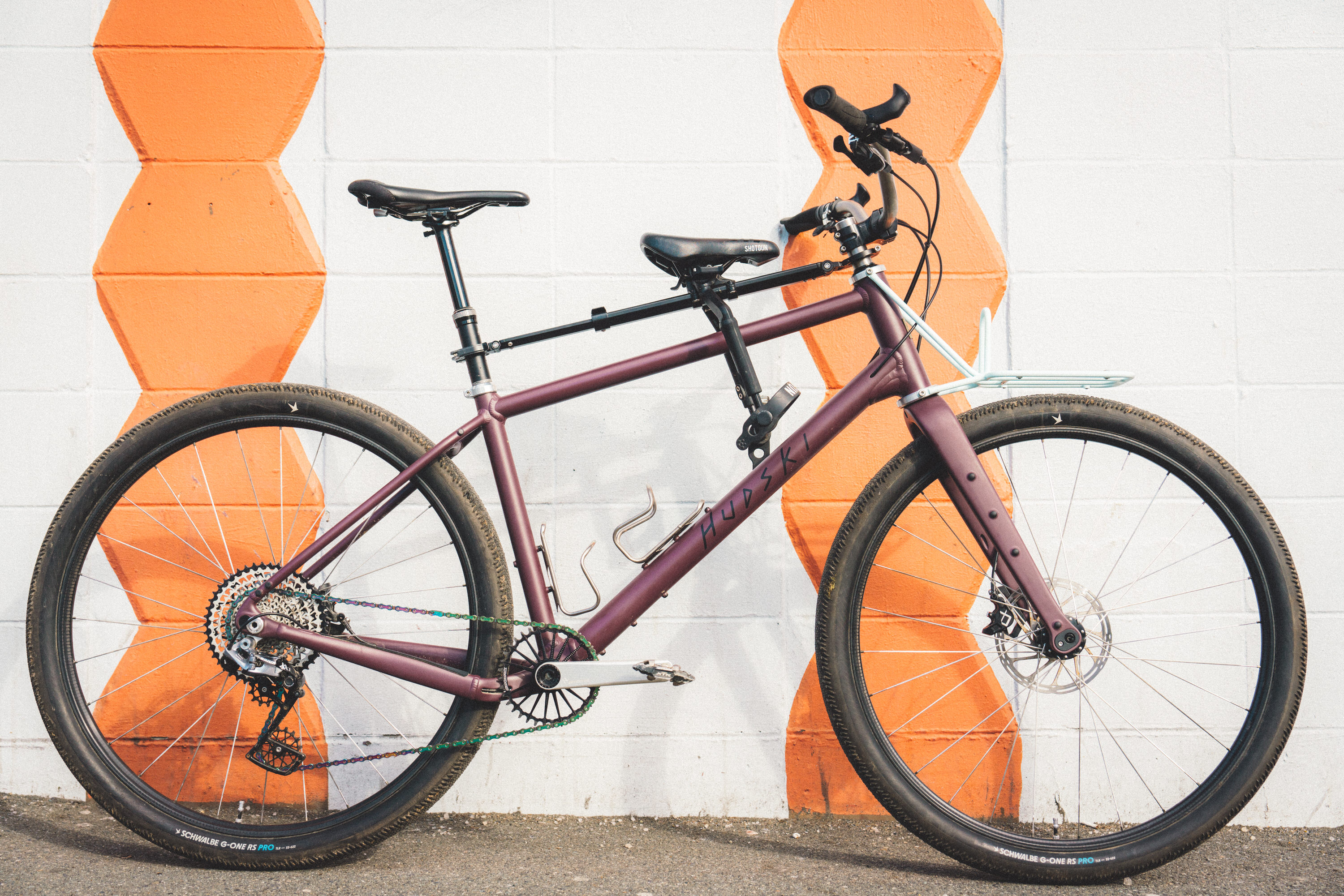
Child seat: Kids Ride Shotgun Pro
Most of my rides these days involve my 3 year old and we both love this setup.
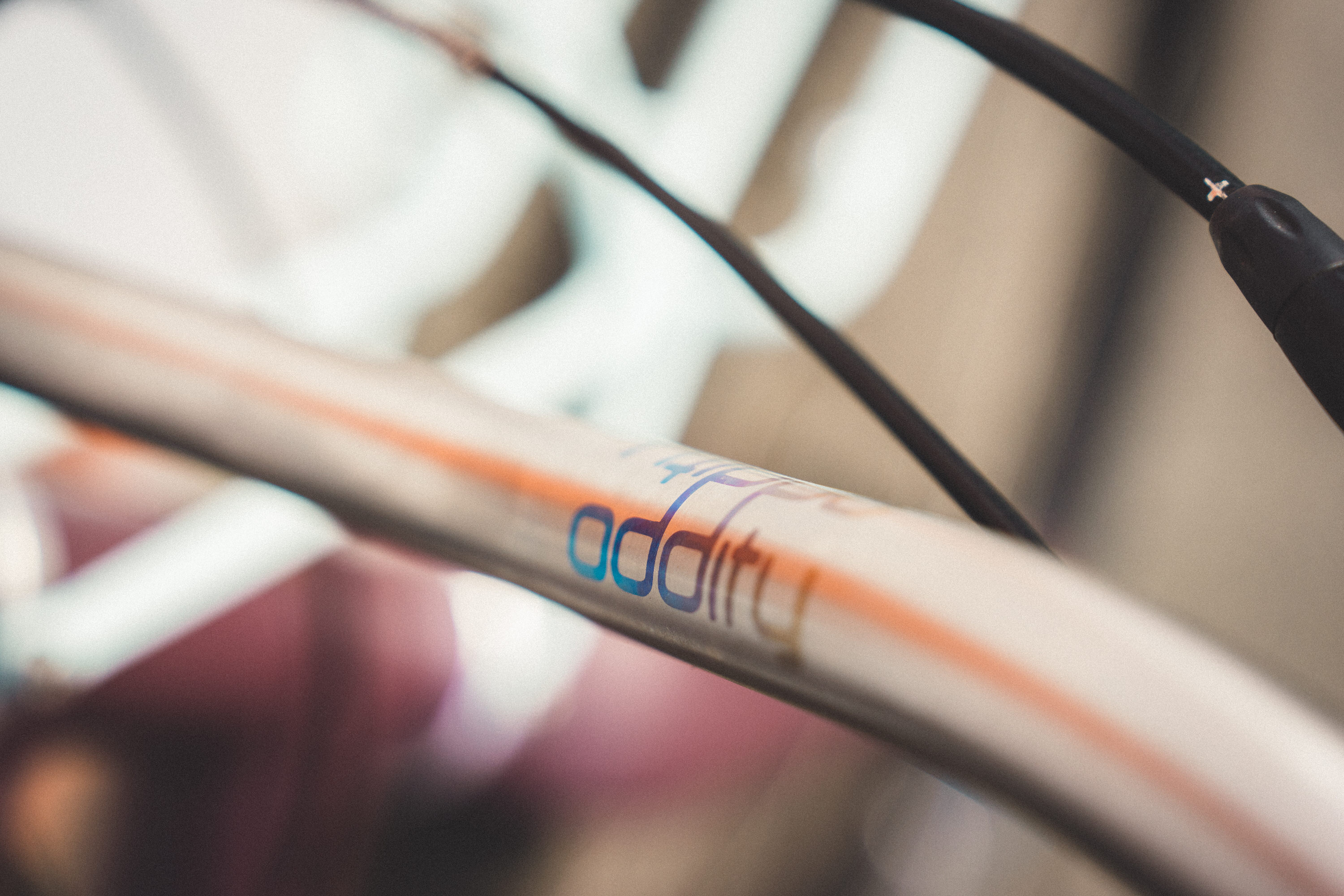
Bar: Oddity custom bent titanium.
65mm rise, 25 degree backsweep, 790mm wide – This is actually my second bar from Oddity. I bought the first one for a hardtail build I did a few years ago but have since discovered I was looking for even more rise and sweep than I asked for the first time around. I also had a styling klunker style crossbar on the first version and opted to leave it out this time around to add a bit more flex / vibration damping to the system. I don’t think I’d do true mountain biking on it, but it feels great for my version of ‘aggressive gravel’ or ‘mtb lite’. Sean (Burnsey) at Oddity was super generous and offered that I could trade in my old bar that was no longer meeting my needs. Super cool brand making cool things and being cool to deal with.
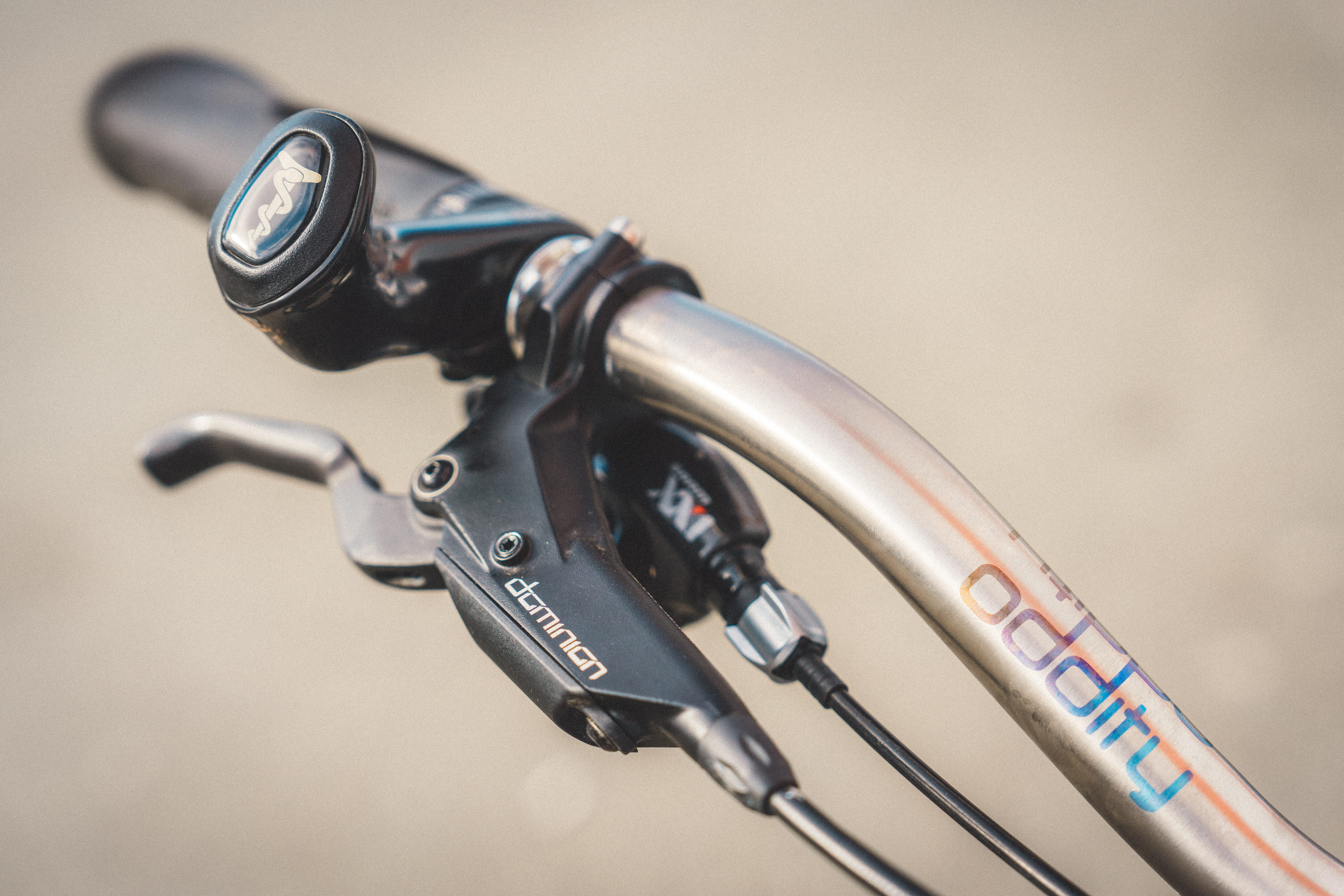
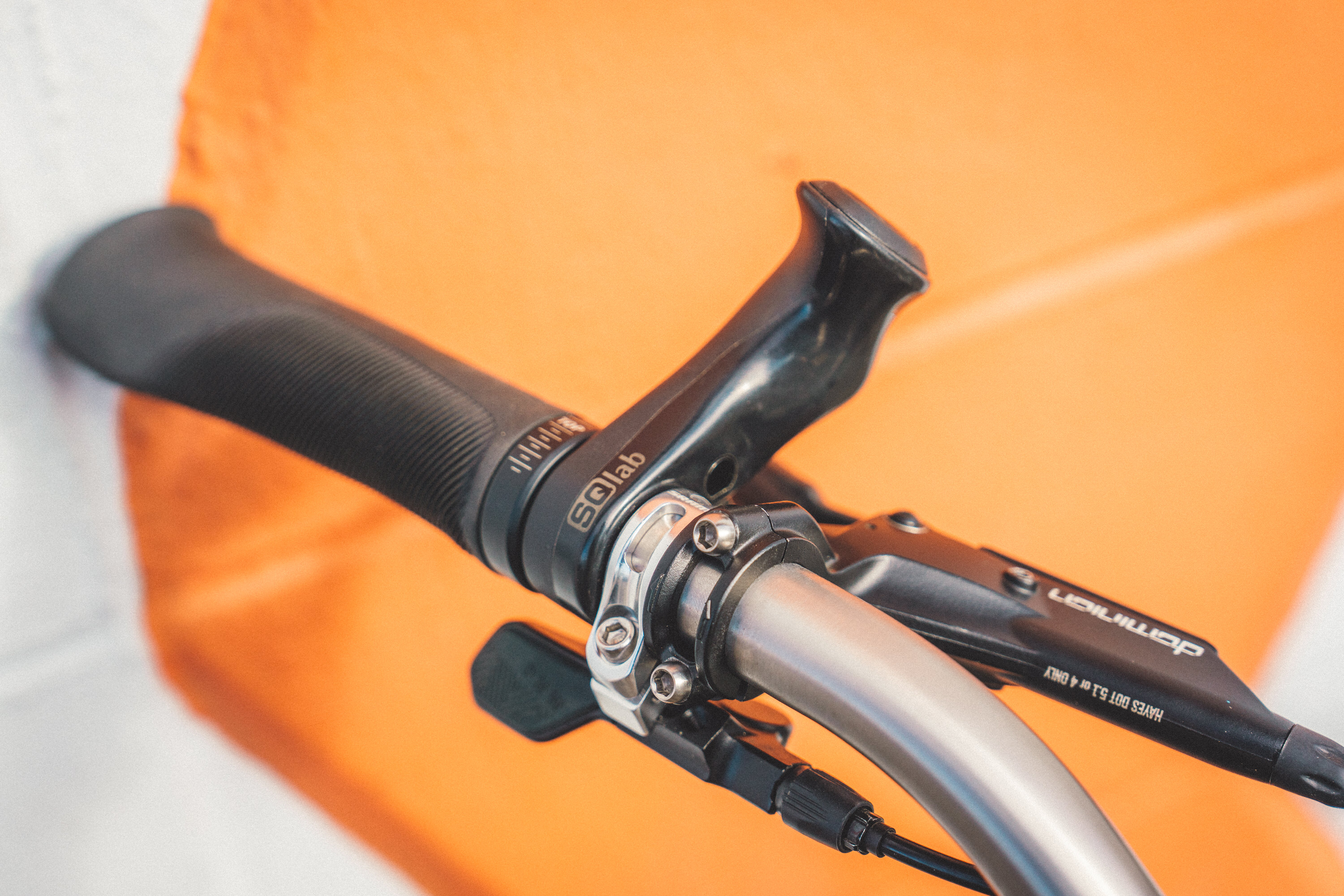
Innerbarends: Sqlab Innerbarends
They look a little goofy but I appreciate the extra hand positions on longer rides. They also happen to be my kid’s preferred riding position and he thinks they were installed for him.
Grips: Sqlab 710 2.0.
Not the most exciting piece of the puzzle but these grips are the best blend of ergonomics / comfort and MTB appropriate control that I’ve found to date.
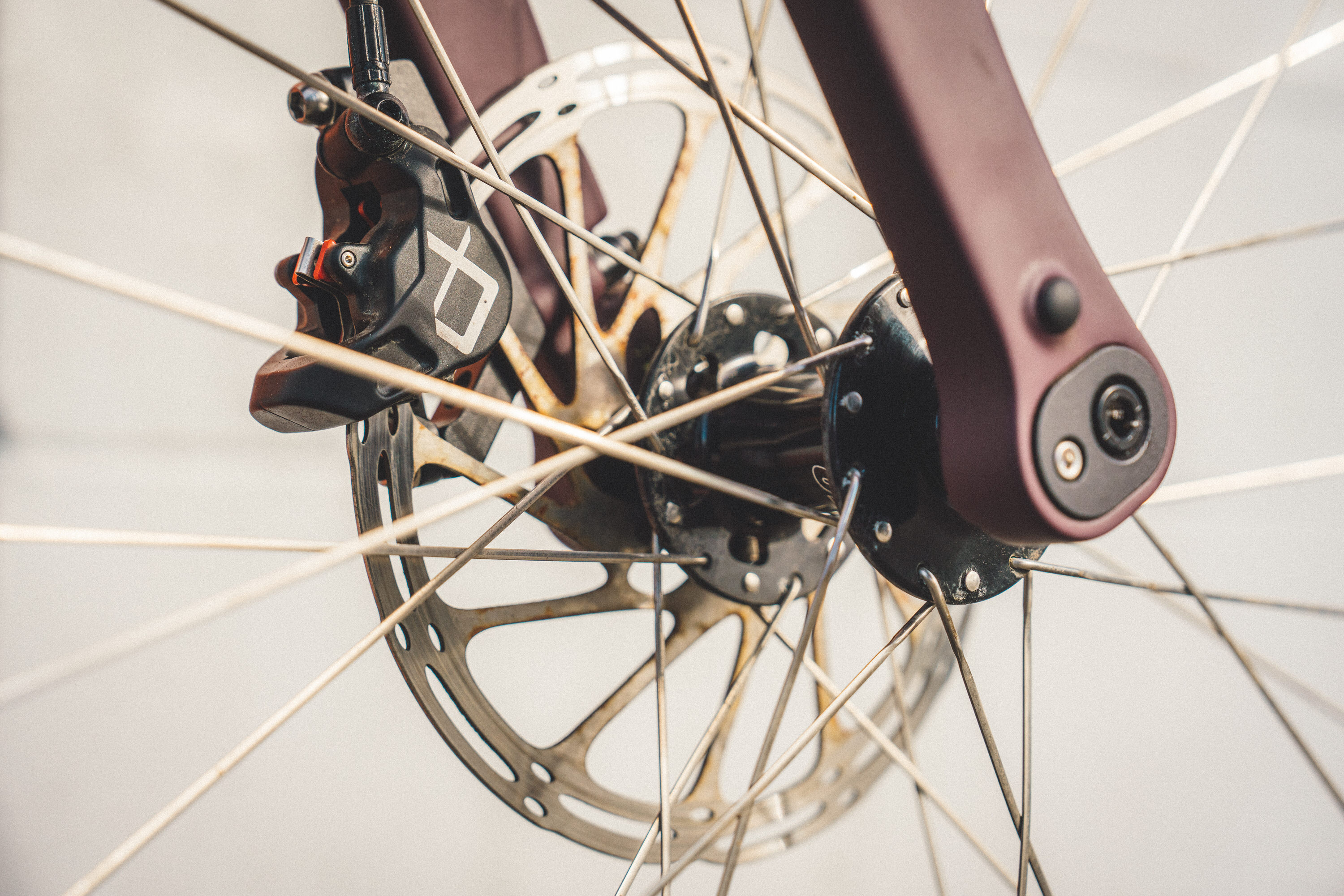
Brakes: Hayes Dominion T2
The Dominion’s have been my favorite brake for years now. The lever action is so light and smooth and their power / performance has been consistent and dependable for me over the years. Historically, I’ve ridden the four piston A4 model but opted for the two piston T2 model here to save weight. The carbon levers have been a really nice touch. I forgot how much warmer carbon levers feel in the winter and they have been a welcome bonus addition to my ever cold fingers.
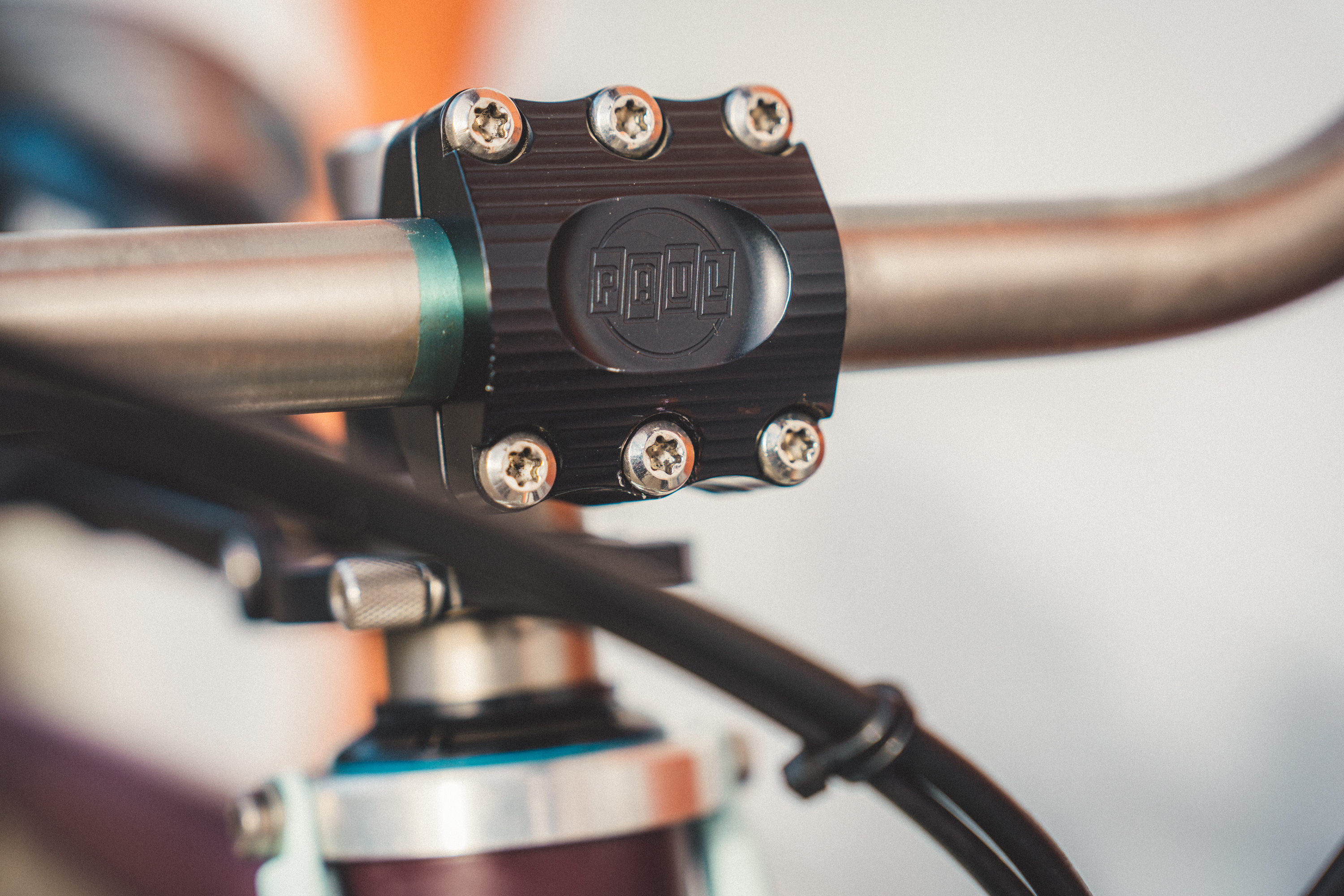
Stem: Paul Components Boxcar.
This is one of the few “nice” stems that comes in the 22.2 size that custom bars regularly use, and also happens to have a rad bonus set of purely aesthetic faceplate bolts that I have a soft spot for.
Shifter: SRAM XX1 11sp.
This is one of the best feeling shifters / drivetrains I’ve used over the years. While I appreciate what modern drivetrains have done to increase range / accessibility, there is something about this generation of 11sp drivetrain where I think it’s probably the most crisp shifting I’ve ridden.
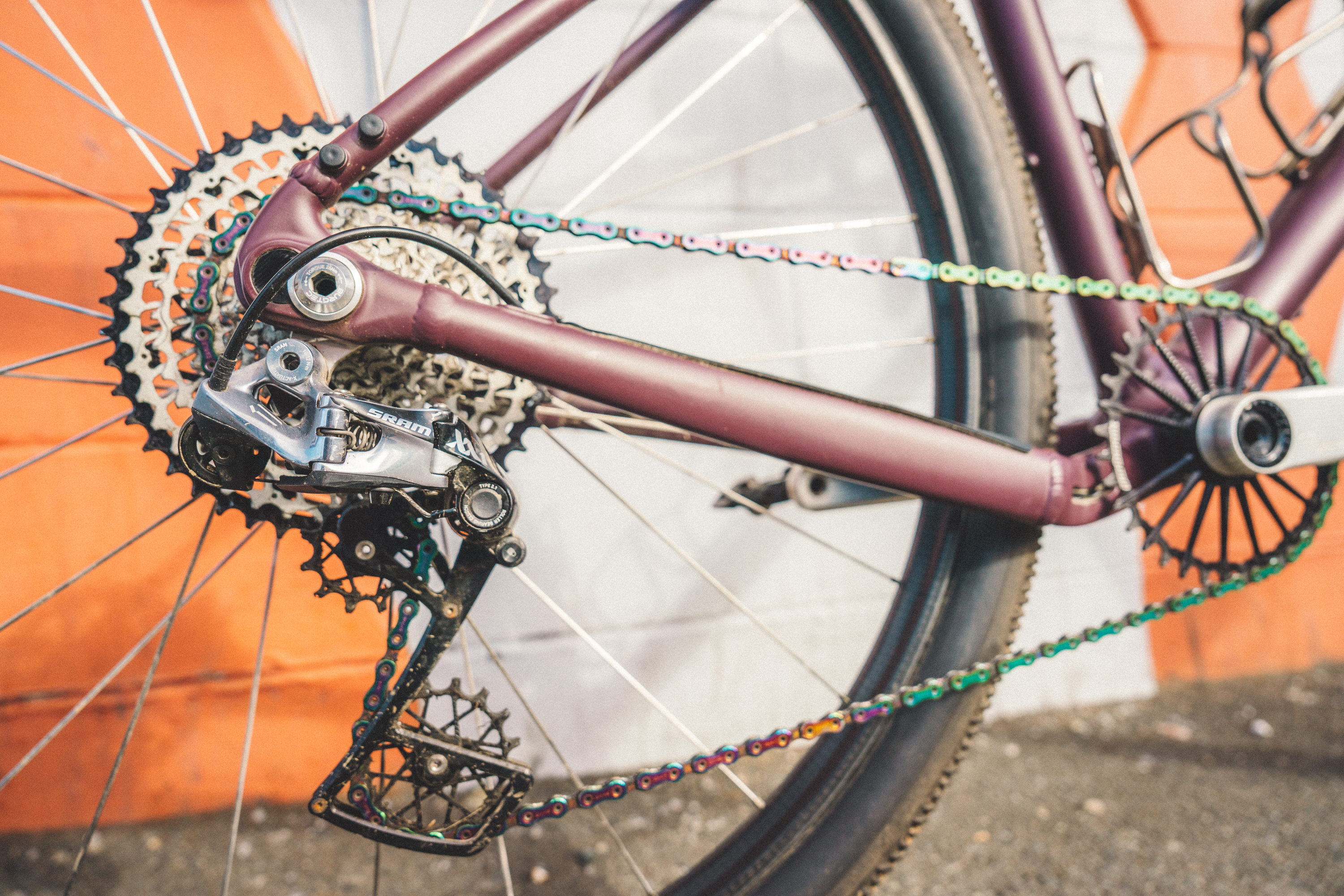
Derailleur: Sram XX1 with Garbaruk cage and pulleys
Looks rad and increases the available capacity of the stock XX1 derailleur.
Cassette: Garbaruk 10-46t
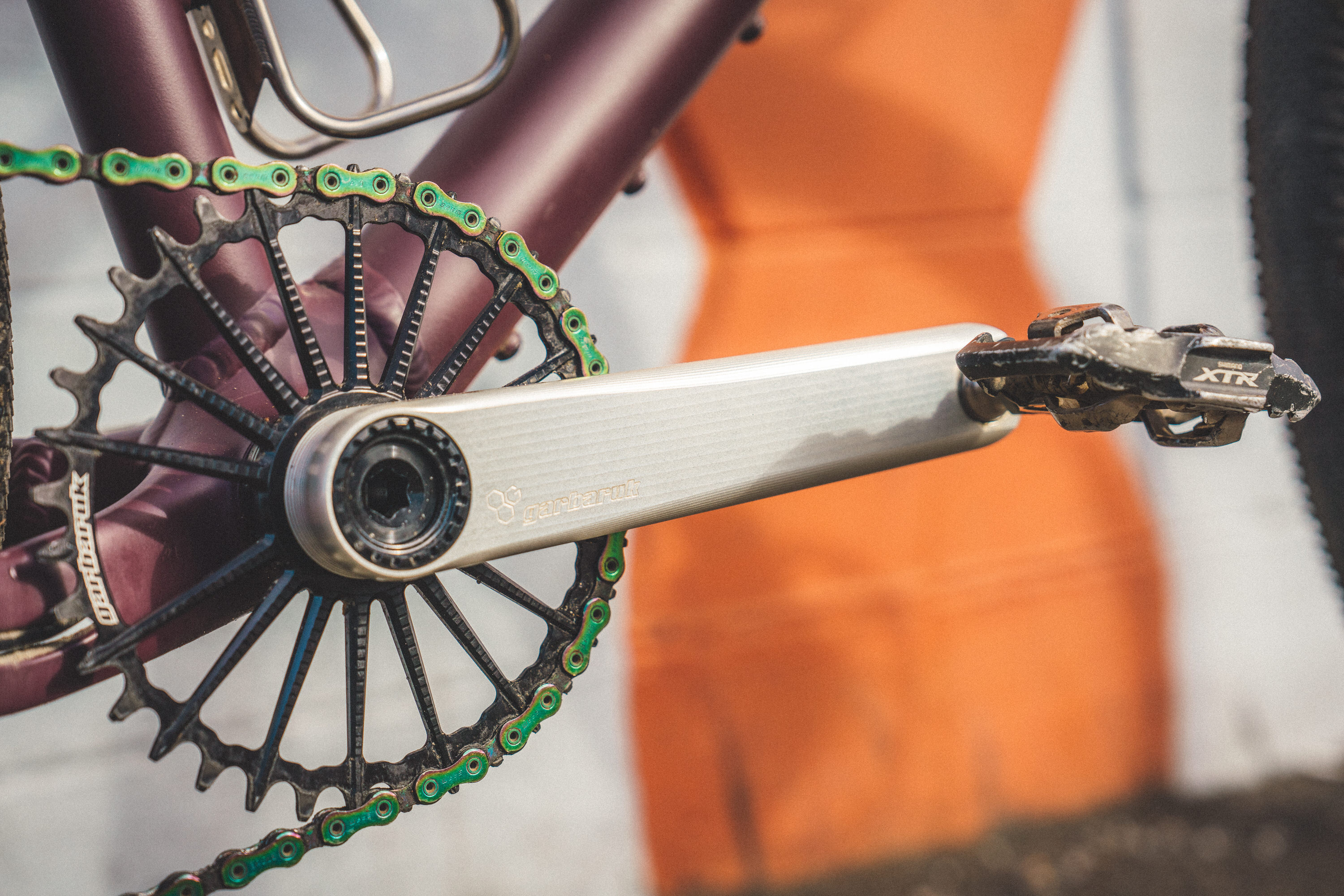
Chain: Sram XX1 Eagle 12sp
This was interesting. The extra capacity of the Garbaruk setup caused the 11sp chain to grind a lot when in the lower gears / more aggressive chainline. We tried a bunch to address this and eventually experimented with a lightly used 12sp chain we had kicking around the shop. The 12sp stuff being slightly narrower eliminated the grinding. While I don’t actually love the look of the oilslick chain on this build, function is beating out form and I can’t bring myself to pull off a perfectly good XX1 chain just because of the colour. I’ll swap it when it wears out.
Derailleur hanger: Burgtec UDH silver.
Cranks / Chainring: Garbaruk XC crank / 36t chainring
I actually had a set of Cane Creek EEwings that I was hoping to use on this build, but they didn’t clear the chainstays. I believe the new model has more clearance for this, but mine was an early generation. I wanted to keep with something light, and was liking the polished metal aesthetic I had going, so I decided to stay away from carbon. The Garbaruk XC crank was available in different spindle lengths so I could make sure they cleared the chainstays on the bike and they look great while being impressively light for aluminum.
Pedals: Shimano XTR.
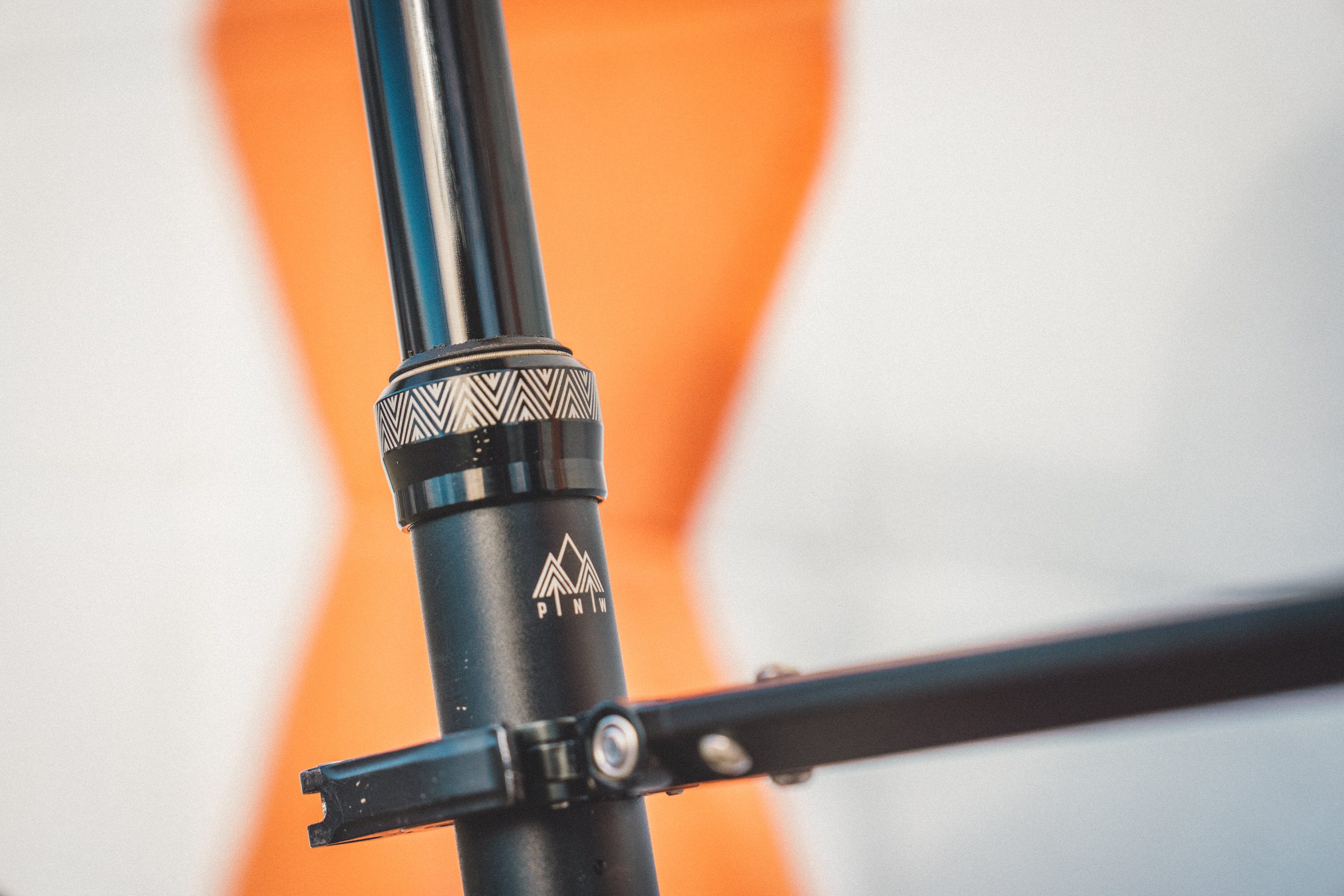
Dropper: PNW Coast
This is one of the only suspension droppers on the market. It’s far from perfect and I find it a little sticky at times and the suspension component takes a good sized hit to activate. That said, it does take the sting out of the odd surprise impact you encounter when seated pedaling. Especially for a guy who spends most of his time on full suspension bikes.
Saddle: Sqlab 60X
I’ve been running Sqlab saddles for years now and am a big fan. I do find they can run a little wide with hard edges for really dynamic mtb riding, but in a longer distance application they work great for me.
Wheels: Lots to unpack here…
Rims: Zipp XPLR
These rims are super interesting. They are single wall and use what Zipp calls “moto technology” which essentially allows the rim to rock from side to side while staying straight. Theoretically, this better conforms to the ground than a traditional double wall system. I’m still not sure how I feel about this product to be honest. I do find the rims come out of round / true easier than I would like and I’m not sure how much I’m feeling the extra compliance. I really need to do a back to back test with a traditional wheelset to test this.
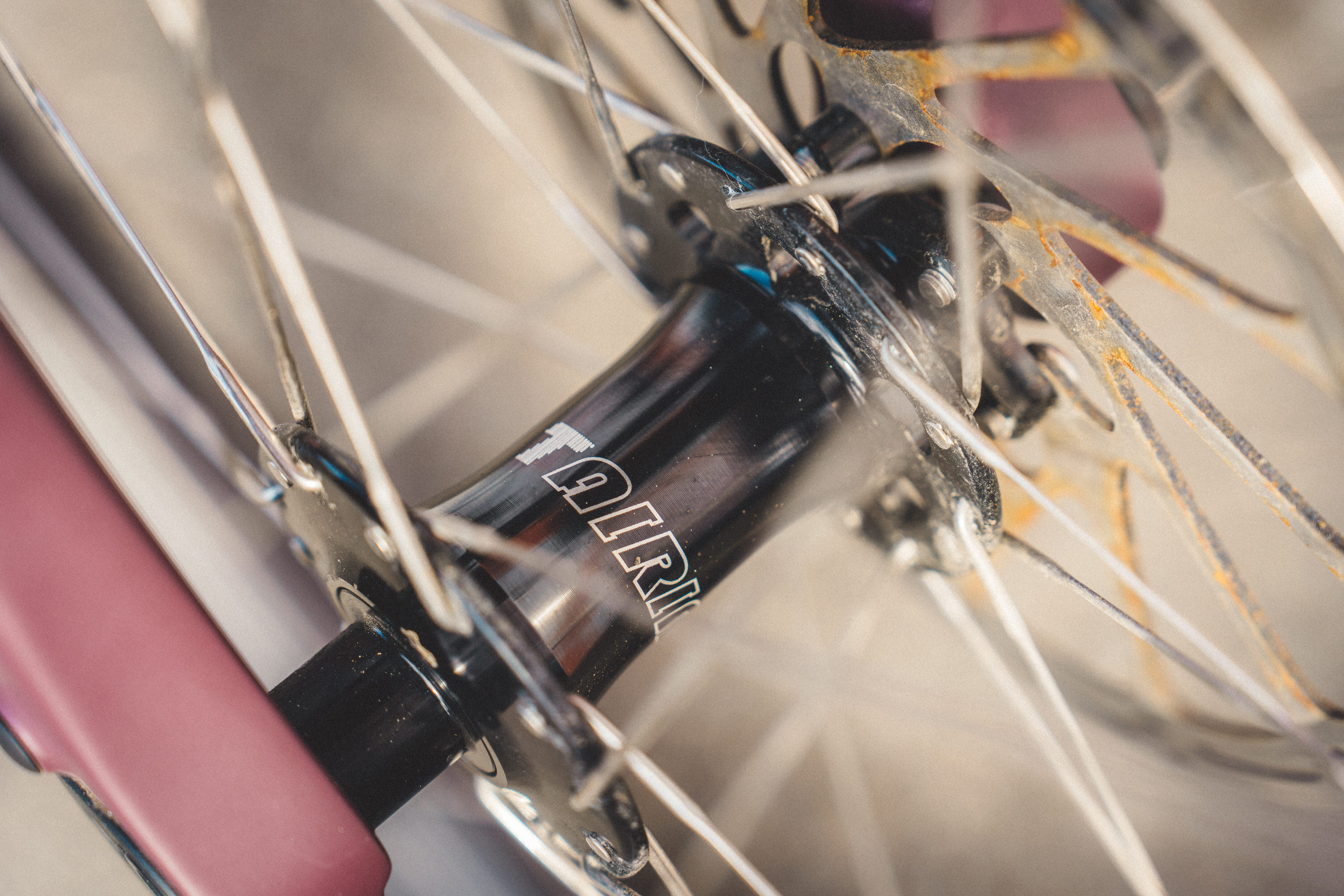
Hubs: Tairin S1
These are another super interesting product. I’ve run Onyx hubs for years and have grown to love the silent coasting with zero drag. Unfortunately we have not had great success with the lighter Vesper model from Onyx and the classic hub was much heavier than I wanted to run for this project. Tairin has a really innovative engagement system where a ratchet (similar to Dt Swiss) extends to engage the drive ring in the hub under pedaling input and retracts / disengages when coasting. So far they have been trouble free and I love the smooth / silent rolling.
Spokes: Sapim CX Ray – Silly light
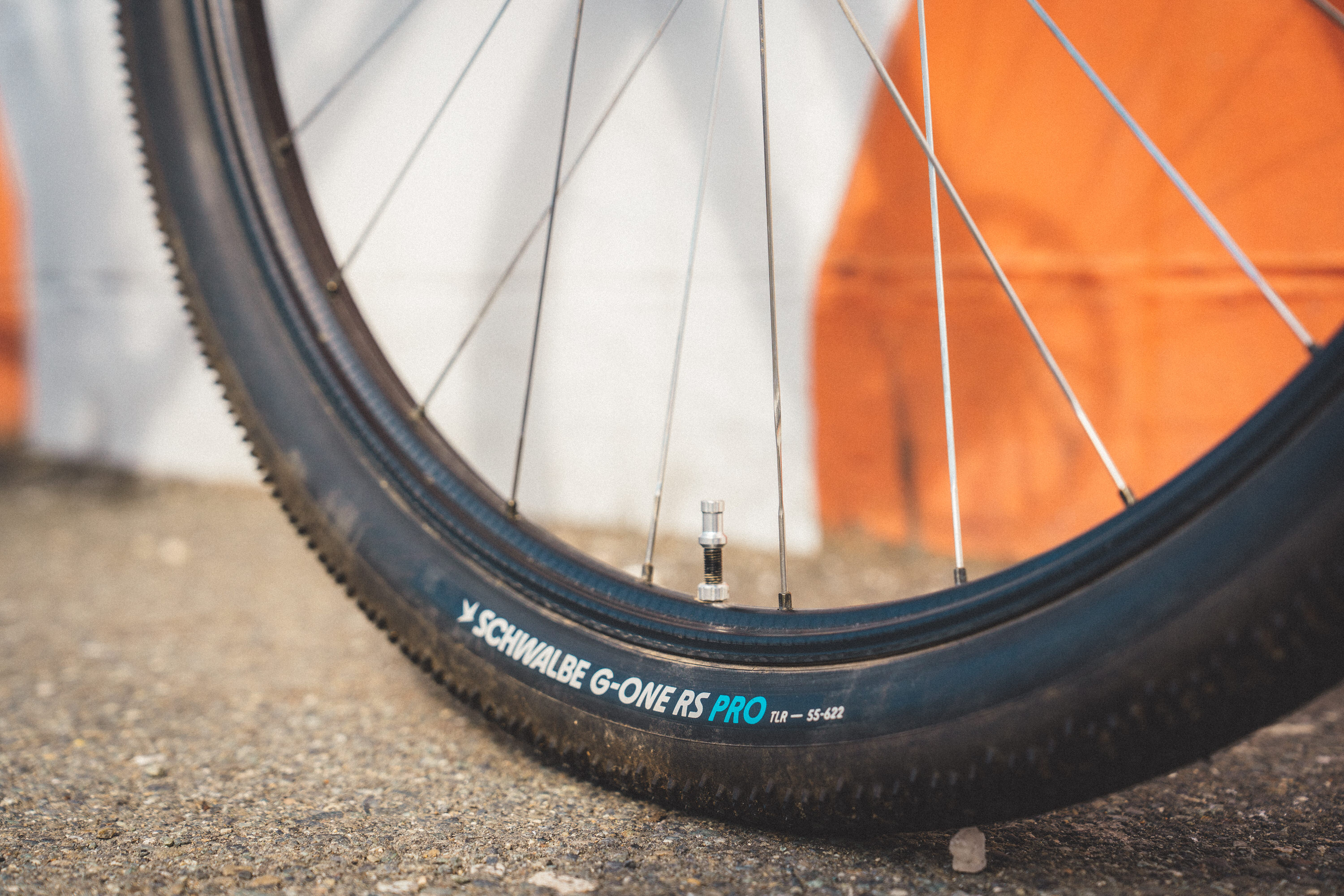
Tires: Schwalbe G-one RS Pro 700×55
Tires are another area where it was starting to feel like I was looking for an unrealistic combination of attributes that didn’t seem to exist. I’ve tried a bunch of options so far and these are near perfect for my needs. I spend a chunk of time on pavement riding to the “duck pond” for toddler stuff, and with everything else on the bike being so quiet and smooth, I wanted my tires to match this vibe. Many gravel options just buzzed a little too much for my liking. At the same time, my mountain bike influence typically rules out a lot of the faster / smoother tires, as I like to ride like a bit of a hooligan and try to slide in the odd corner when I’m bumbling about on my “gravel bike”. These things come nice and wide, are super smooth down the middle where they contact the pavement, yet have surprising grip as the bike leans over. In a perfect world I might look for slightly more cornering knobs, but who knows, maybe I’d find it too much if I actually had something more aggressive.
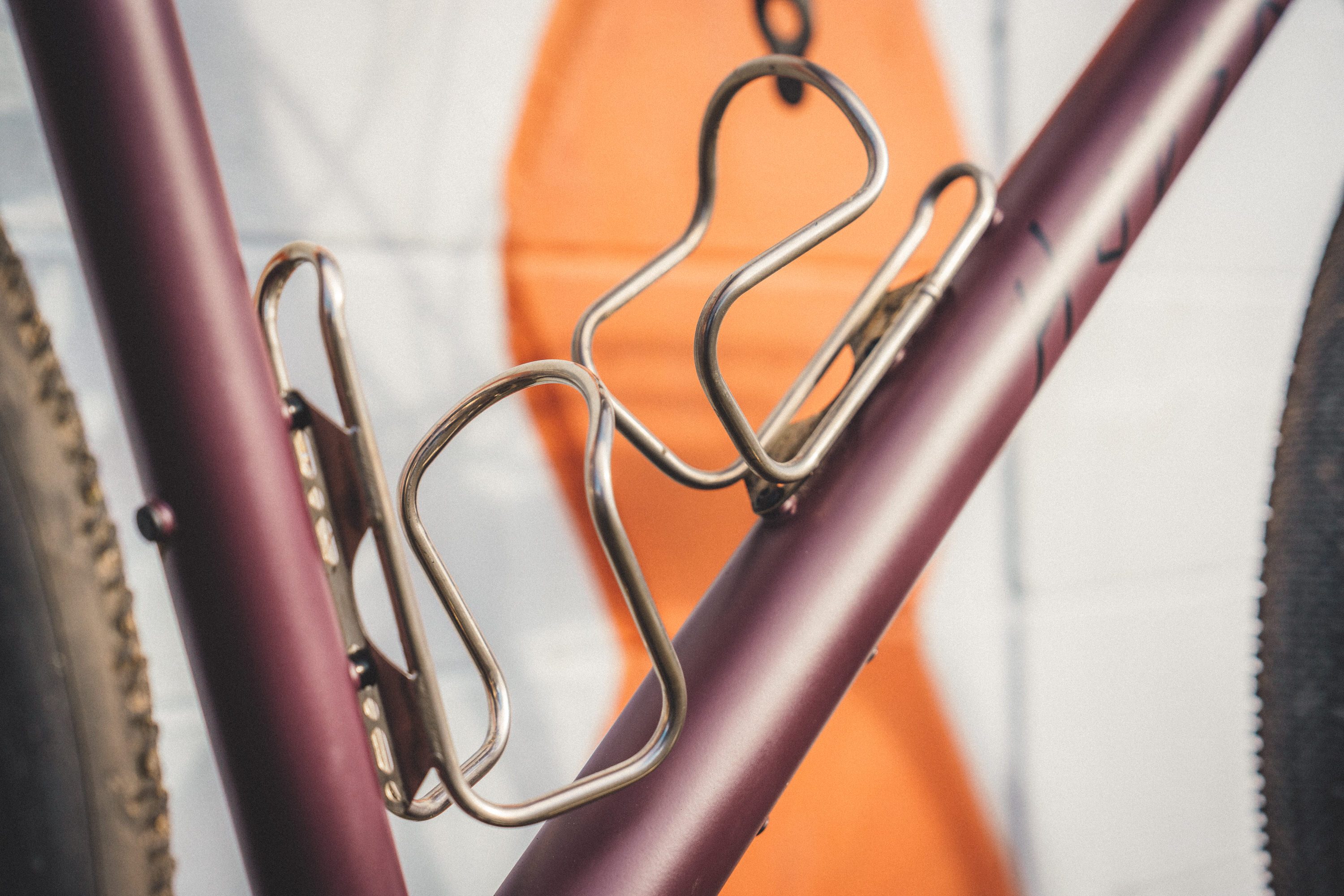
Bottle cages: King Cage Titanium
As described above, this bike has taken a lot of trial and error to get to this point. If I’m honest, I probably still have a little ways to go, but I’d say I’m at least 90% of the way towards my ‘impossible’ bike. I’m really loving it though. This process has certainly been excessive and is well beyond what most people would do to a model of bike that’s already very good stock out of the box. I’ve enjoyed the journey though and do feel a sense of satisfaction as I try and optimise every little thing for my weird list of wants and needs. As a side benefit, I’ve learned a ton through trying various combinations of parts, and have enjoyed chatting with customers about their own frankenbike projects. My next venture to further this research project involves bigger wheels and more time with the brazing torch.
More on that later…
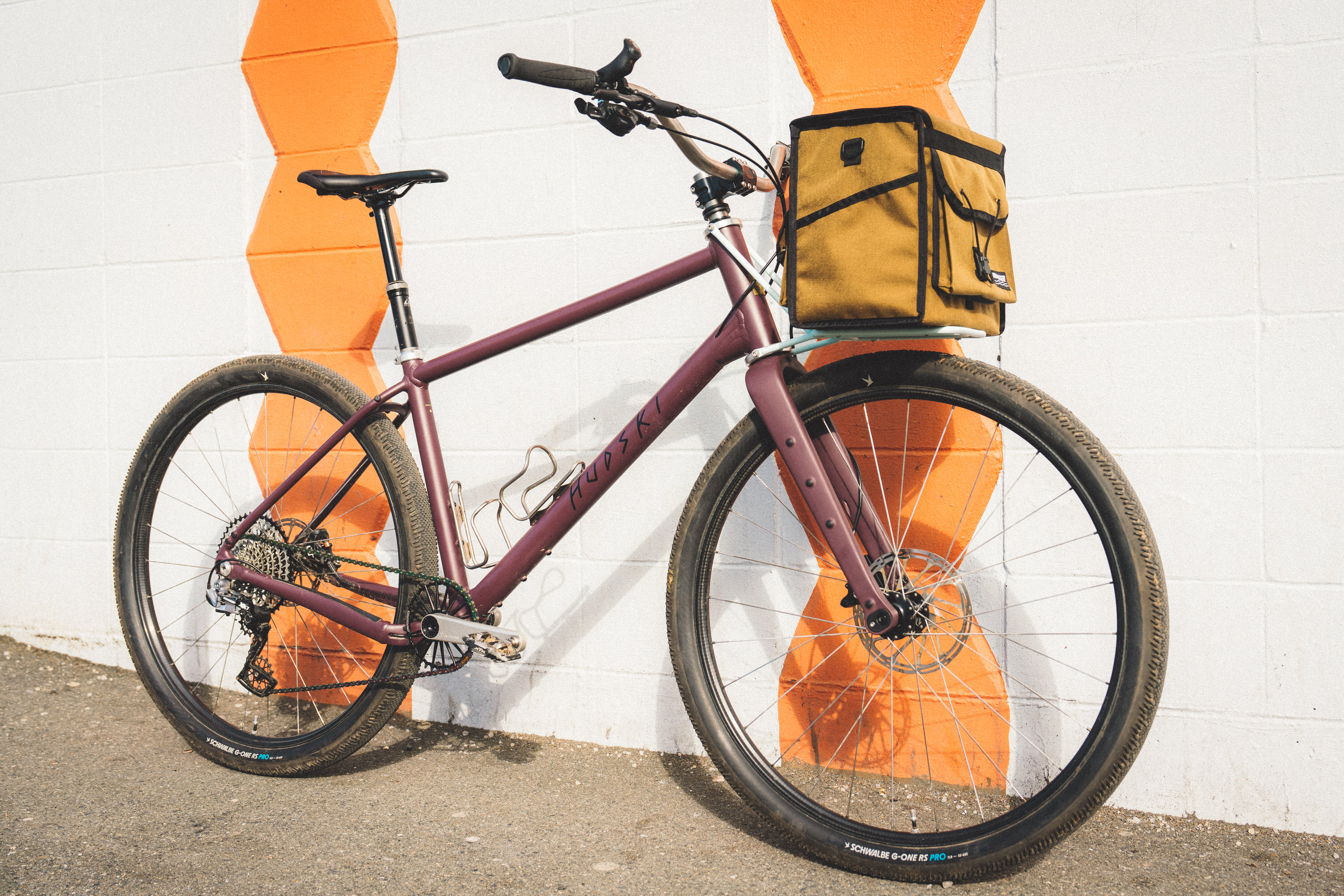
Weight as pictured: 28lbs
We’d like to thank all of you who submitted Readers Rides builds to be shared here at The Radavist. The response has been incredible and we have so many to share over the next few months. Feel free to submit your bike, listing details, components, and other information. You can also include a portrait of yourself with your bike and your Instagram account! Please, shoot landscape-orientation photos, not portrait. Thanks!