
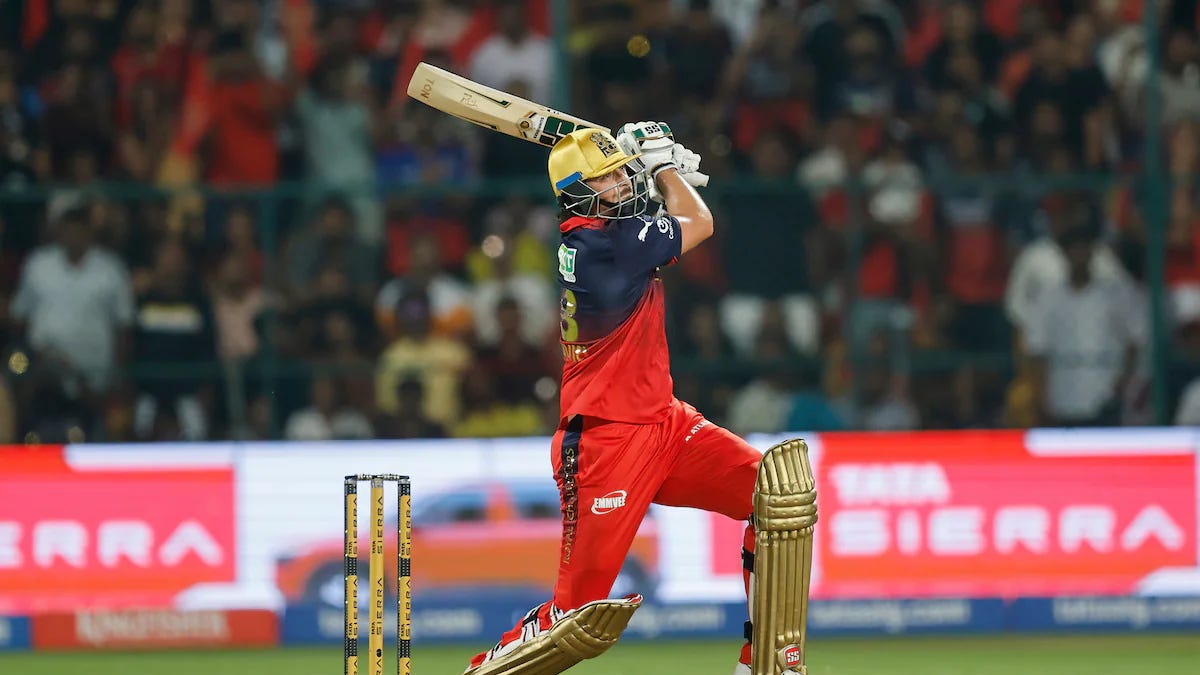
RCB beat CSK by 43 runs, but the game was never close. RCB’s batters won them this game, despite a stodgy outfield and tricky pitch in the powerplay. CSK put up a good fight and got past 200 in their chase, but they were never really in it.
But, what happened beyond the headlines?
✍️ Written by Pri Gulati, who runs Thoughts from Third Man. You can follow her on X.
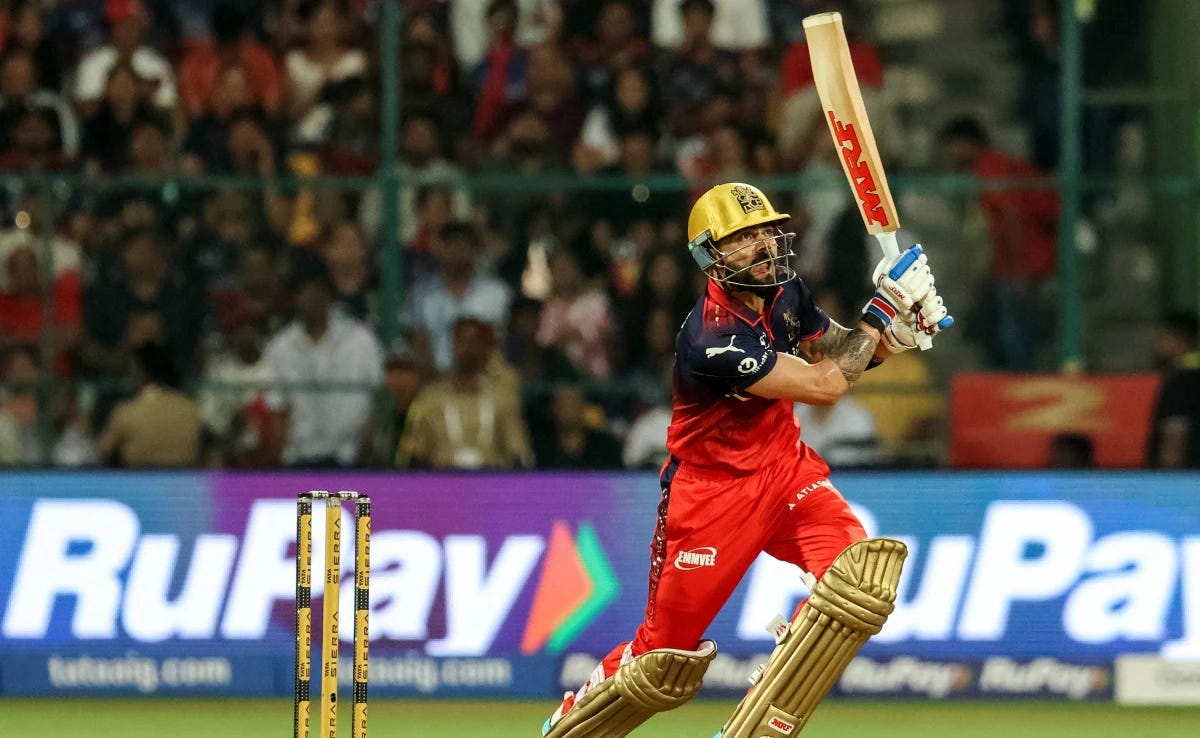
CSK had a clear strategy against Virat Kohli; utilise Khaleel Ahmed’s role as left-armed powerplay specialist to hammer Kohli outside-off. While Kohli has scored 29 (16) versus Ahmed in the powerplay at an SR of 181, the progression of that scoring across three matches illustrates a greater picture.
Many of Ahmed’s deliveries are of shorter length, and 63% on the offside, creating an impact that undercuts the batter’s high SR. 11 of the 16 balls that Kohli has faced have been dots or singles/doubles in the matchup, and often in the first half of the over. The numbers bely the fact that Kohli is often looking for a release shot in the latter half of Ahmed’s overs – a shot he sometimes gets, but one that isn’t as comfortable as the numbers suggest.
Today’s game followed similar lines. On a sticky pitch, Kohli scored just 5 (7) versus Ahmed with 4 dots and 3 uncontrolled shots. The first over of the matchup saw a near-direct hit, followed by a thick leading edge that managed to produce two runs on a mistimed swing.
The outfield added another layer to the problem; sticky as it was, boundaries would need to be lofted over the fielders rather than through the grass. A dropped catch by Shivam Dube gave Kohli a second lease on life, but Matt Henry’s overs from the other end provided a reprieve. Kohli cashed in on the Kiwi pacer’s fuller length and straighter line deliveries. 16 runs off the 4th over, including a no-look 6 and 4, and a classic acceleration seemed to be on the cards.
To counter this and ramp up the pressure, CSK looked to bring back Ahmed from the other end. It would allow him to angle the ball back into Kohli from a wider release point, and potentially cause more havoc with his shorter, offside deliveries.
Anshul Kamboj was asked to come on to help facilitate the end switch, and clearly followed a simple plan; hold the line against Kohli. The first ball was a dot, the second was slightly over pitched onto the stumps and was dispatched for 4.
Chinnaswamy, and the man at the crease, were lulled into a false sense of calm when Anshul Khamboj slammed his next short delivery into the decks. At 133 kph and just a little on the off-side, the ball popped up and Kohli tried to get into a good position but to no avail. It was simply too high on the bat, and Dube redeemed himself, making up for the earlier dropped catch.
The irony was CSK never had to redeploy Ahmed against Kohli. Conditioned by Ahmed’s wide-angle and liberated by Henry’s full length, ultimately Khamboj’s mild variation in length was what caused his downfall. Much like in their past matchups, Ahmed’s numbers will not reflect his impact in causing Kohli’s downfall.
Data from the IPL website & Deep Crease.
✍️ Written by Raunak Thakur & Aarush Adil Khan.
The pitch is still holding enough for Shivam Dube to pick up the ball. He went for just 7 runs in RCB’s 11th over, and picked up the crucial wicket of Phil Salt. The English opener had been hanging around for long enough to convert his sluggish 20 (15) powerplay start into a 25 (12) middle overs acceleration before Dube comes on.
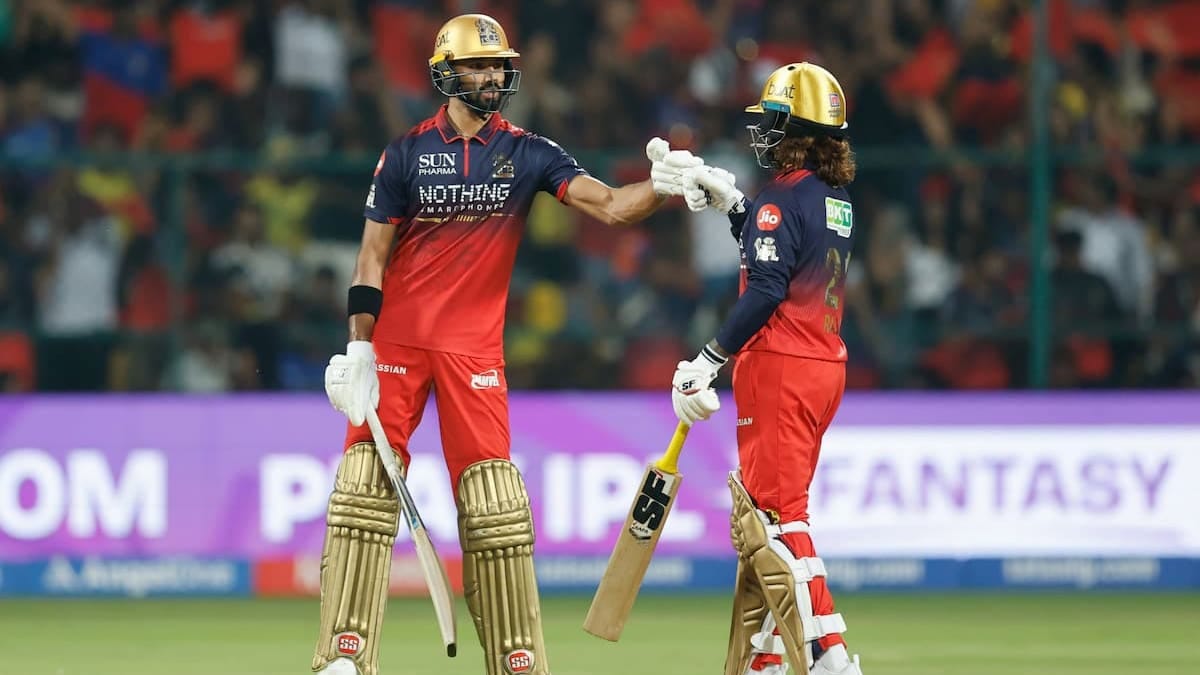
Whether through luck or a masterstroke, CSK have their breakthrough, and it’s a decisive moment. Devdutt Padikkal is struggling on the other end with 17 off 16 when captain Rajat Patidar walks in. DDP’s innings has been hindered by a smart matchup v Khaleel Ahmed – who he’s lost his wicket to twice in the IPL – and backed up by the fear of a slow outfield that caused multiple moments of confusion for Virat Kohli in the powerplay.
And so, after 11 overs, RCB are on 98/2 with a new batter, a tentative batter, and a sticky outfield. What follows is an onslaught of acceleration.
Patidar is infamous as a spin basher, striking at 169.95 versus the bowling type. CSK bowl Noor Ahmed, who conceded just 4 runs in the 10th over before Dube’s arrival. Patidar immediately goes on the attack. He bypasses the stodgy outfield by clearing the ropes on his second delivery. A couple of balls later, Padikkal is inspired by his skipper and launches his own 6 over long on. RCB had their strategy. Keep it aerial, muscle it past the small Chinnaswamy boundaries.
Dube then came back for the 13th over, presumably because his 11th had gone so well. But, he hadn’t learnt his lesson. Despite his slow start, Padikkal is in the form of his life. He struck at 167 with an average of 61.8 in the latest SMAT season (India’s domestic T20 tournament), and was eager to make a mark. Dube had tried to tease out a false shot at the end of the 11th over with a slower delivery, but was easily dispatched to the boundary by Padikkal.
The 13th over saw a repeat of the strategy. A flurry of slower deliveries – paced at 118.8 kph, 116 kph, & 122 kph – were angled away from RCB’s southpaw. But, DDP was ready for the slower ball spam. With patience akin to a monk, he simply waited for the ball to sit up and timed them to perfection for a 6 and two 4s. A powerful loft, a slice, and another smash.
After travelling at 8.9 RPO in the first 11 overs, Padikkal and Patidar had accelerated to 13 an over, and they were just getting started. Matt Henry came on for the 14th, and made the same mistake as Dube. His slower delivery was pitched full to Patidar, who feasts on the length at a strike rate of 167. It went over long-off with ease. On the other end, Padikkal picked out Henry’s other slower ball of the over which was carved over extra cover.
In all, the duo scored 58 off 21, and took RCB from a middling 98/2 in 11 overs to a domineering 151/2 when Padikkal got out attempting a funky sweep-ramp. The RCB batters targetted CSK’s one-trick show of slower balls, scoring 34 runs off the 7 such deliveries thrown at them in the three-and-a-half overs they shared the crease.
They scored at a strike rate of 276.2 together, but RCB were just warming up.
Data from ESPNcricinfo, Cricmetric, & Field Tool Kit.
✍️ Written by Raunak Thakur & Karan Jain .
Padikkal’s dismissal brought on a moment of silence. Almost eerie, as if the bats were packed away for an over, as his careless wicket threatened RCB’s acceleration. Jamie Overton finished out the 15th over, conceding just 2 runs alongside his all-important wicket.
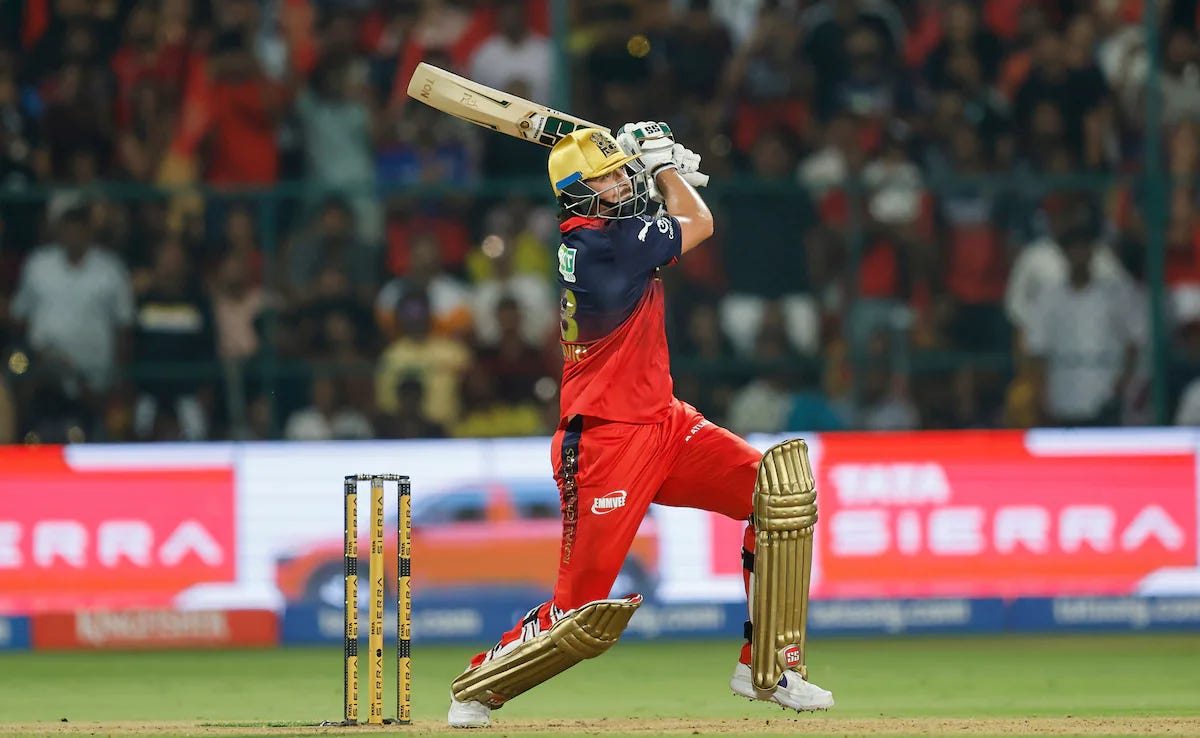
In the 16th over, Patidar went back to his power-hitting ways, knocking a Khaleel Ahmed over for 19 runs, including another two 6s. Patidar’s strategy was simple; aim for the fences because the field wasn’t cooperating. By the end of the 16th, the captain was on 40 (14) having hit five 6s and just the single 4.
Tim David was on strike to Noor Ahmed, as CSK rightly thought that playing pace to the Aussie – who strikes right-arm pace at 205.2 at the death – was a bad idea. However, no one apart from Patidar had taken to the pitch quickly in the RCB lineup. Following David’s tentative 2 (5) start, it looked like the silence from Overton’s spell might carry over.
It wouldn’t last long as a hurricane from Hobart was approaching.
Noor Ahmed attacked David, trying to bait the RCB hitter into the same mistake that had gotten Virat Kohli out earlier in the innings; tossed up balls begging to be hit in the direction of a fielder. The speeds varied drastically – from 95.9 to 101.3 – and so did the angles and the variations.
But, David wasn’t having it as he scored three 6s off the spinners over – and kept strike.
Anshol Kamboj was the next victim. A right arm pacer, he was walking into the matchup at a disadvantage. Both the bowler and batter knew it. Kamboj had bowled hard lengths all evening, but he attempted yorkers outside off and leg, hoping his awkward angle could catch David out. And it nearly did, apart from an unlucky no ball on 17.5.
There would be no respite from there on out. The free hit would be dispatched for a maximum, before Overton’s return showcased the best way not to bowl to Tim David at the death. Five out of six deliveries in the 19th were either in the slot or full tosses, and the Aussie finisher dispatched them with ease. The one ball that wasn’t in the slot? A shorter delivery that David strikes at 204 against at the death.
In all, Overton gave away four 6s, one 4, and 30 runs in the over. David brought up his 50 midway through the over, and ended up with a blistering 70 (25). Meanwhile, the captain missed out on his own half century, but ended up with an acceptable 48 (19) as Kamboj finally nailed his wide yorkers in the last over.
While the scorecard never looked pretty, CSK had actually done a decent job limiting RCB in the first 16 overs. The defending champions had actually scored less than CSK did at that stage in the second innings, with Patidar’s boys scoring 172/3 to the visitors’ 178/7. However, CSK lost their shape at the wrong time, against the wrong person, and lost the game before the second innings even began.
Data from ESPNcricinfo, Cricmetric, & Field Tool Kit.
✍️ Written by Tarun Pratap, who runs Rank Turner. You can follow him on X.
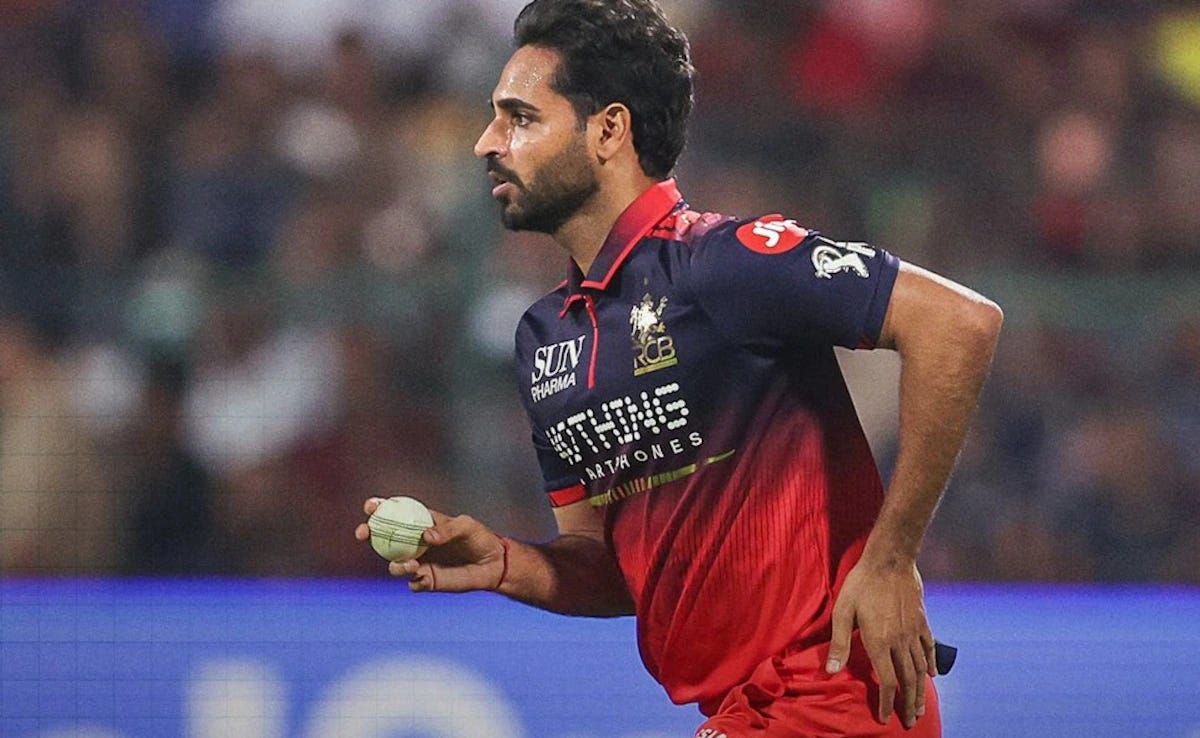
For years, RCB earned a reputation as a team that relied on individual brilliance and batting power. Tonight against CSK, they re-iterated the bowling blueprint that made them champions. At the Chinnaswamy, where full‑length deliveries are punished, RCB have embraced a new template: bowl hard lengths, and if mistakes occur, let them occur on the shorter side.
Cricbuzz’s numbers from last season underline the logic: full‑length balls at Chinnaswamy averaged 34 and leaked at 9.53 runs per over, both worse than good length or short balls. Tonight in the powerplay, they bowled only 5 balls at full length. One was a wide, the other four disappeared for 17 runs, including the very first full ball that was launched for six. The rest of the spell also yielded runs, but with a wicket threat.
This philosophy is now embedded in RCB’s attack. Even when execution falters, the plan remains clear: starve batters of full balls, force them into horizontal strokes, and control the scoring zones. This can be seen in Bhuneshwar Kumar’s wicket of Ayush Mhatre tonight. Bhuvi, a traditional swing bowler, bowled a hard length, which Mhatre tried to pull and failed to connect.
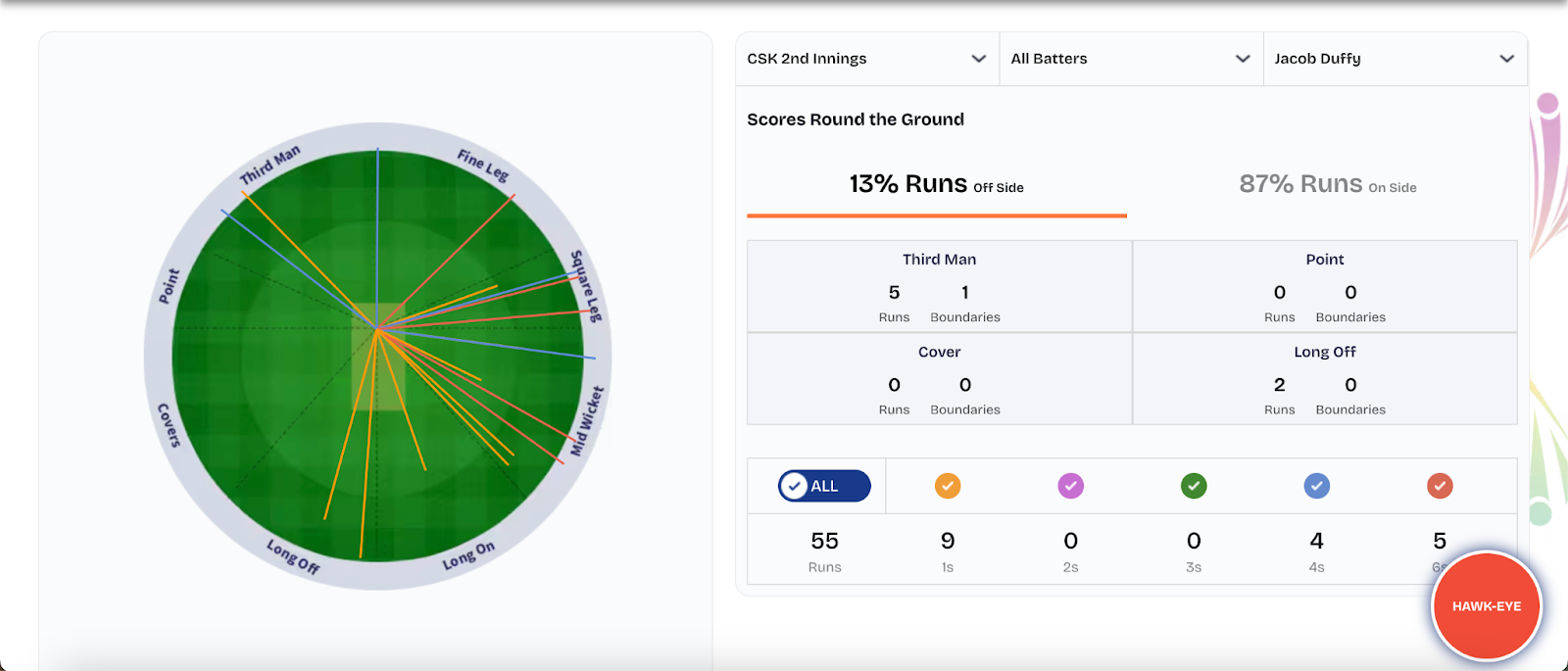
Jacob Duffy’s role is central. He is effectively stepping into Josh Hazlewood’s shoes by attempting to hit the same hard lengths. He isn’t yet as consistent; his final Powerplay over tonight included three full‑length balls that cost 23 runs, but he is bowling to the team’s plan. And his success is largely down to those bowling plans.
CSK’s wagon‑wheel tells the story of RCB’s plans. Against Duffy in the powerplay, CSK’s right-handers scored only 14% runs on the off side, and not a single run was scored between point and cover. This reflects that Duffy neither gave them the line nor the length to drive the ball – which was visible in RCB’s last match v SRH as well.
Ian Bishop, on commentary, revealed that Hazlewood himself has shifted his target. The Aussie pacer told him he altered his plans a couple of years ago when he realised the top of the off-stump ball was becoming too full and getting hit. He switched it bowling to the same line but above off stump. This is not necessarily an attempt to hit the stumps, but to make sure that the ball is not full enough for the batter to get their bat under on the Chinnaswamy pitches.
Chinnaswamy has long been seen as an inherent weakness to RCB’s chances, as bowlers were often reduced to survival. Now though, the defending champions have found a way to turn it into a weapon that creates an imbalance against other sides’ roster construction.
Data from the IPL website & Cricbuzz.
✍️ Written by Aadityan Ganesh & Atharv Tambade, who run Pacers with Pretty Feet.
After finishing at the bottom of the table last year, CSK have opened this season poorly as well. That makes broad criticism of the franchise easy, but the more useful question is where the squad-building process went wrong.
The clearest explanation is that CSK assembled a strong side for a version of Chepauk that no longer existed: low-scoring, spin-friendly surfaces on which batters comfortable against spin would hold an obvious advantage. Except, that is not the version of Chepauk that has turned up for the IPL since the 2025 Mega Auction.
Therefore, any assessment of CSK’s team has to begin from the fact that they are no longer making marginal corrections to a competitive team, but trying to recover from a major error in how the previous one had been built.
True Strike Rate versus spin is a good metric to understand CSK’s perspective last year. True strike rate gives context to the strike rate at which a batter plays. For example, an opener in Chennai has a lower strike than a finisher at the Chinnaswamy. True Strike Rate adjusts the context according to the phase of the game the batter played in, and the typical scoring rates at any given ground – and is measured as a relative number.
Ruturaj Gaikwad, for example, has a True Strike Rate of +17.78 against spin over his career (i.e. he scores at an SR that is 17.78 runs faster than his peers). Shivam Dube, in his best years of 2023-24 when he destroyed spin, had a TSR of +39.87 and +17.93 respectively. Rahul Tripathi, who flopped for CSK last year, had a TSR of around +10 against spin consistently from 2021-24. Devon Conway is also known as a good player of spin, with a TSR of +10.41 in 2023.
However, the lack of turn at Chennai last year clearly undermined CSK’s title hopes. Until last year, Chennai weaved a tight web through the middle overs with their spin. Visiting teams scored at 7.5 runs per over in 2023-24, which jumped to 8.8 RPO in 2025. Unsurprisingly, CSK’s spinners went from an economy of 7.2 RPO in 2023-24 to 8.57 RPO in 2025 as the pitches stopped helping them. (It didn’t help that CSK’s batters scored at just 7.2 RPO on the same pitches in 2025).
Given CSK’s irrelevance, it’s going to be near impossible to improve this squad enough to win a title in this cycle. Their best option may be to load up on promising players in the next two seasons, and get the first bite of the cherry at retaining them in the 2027 Mega Auction.
If you retroactively apply that logic, their actions in the last season and a half are more understandable. They are rebuilding their batting with purchases of Ayush Mhatra (TSR of +49.66), Urvil Patel (+58.59) and Dewald Brevis (+15.24). That upgrade was doubled down upon with the Sanju Samson trade.
Within the same framework, Kartik Sharma and Prashant Veer are good picks. Sharma strikes at 162.9 in the SMAT, while Veer strikes at 160 with the bat and has an economy of 6.45 with the ball across T20 cricket. The combined INR 28 Crore spent on them looks a desperate short term bet. However, it could also be CSK paying a premium for the option to retain them if they hit their marks by 2027. Within that lens, Veer’s 43 (29) tonight is more optimistic for the five-time champions.
However, even if one grants CSK this long-term framing, some of their lower-upside picks remain difficult to defend. Matt Short was transparently a role-based buy, an attempt to recreate the Ajinkya Rahane pace-hitting function from the 2023 title side. But that is a pick a contender makes to complete a near-finished XI, not the pick of a rebuilding side with an eye on 2027.
Zak Foulkes at least offers some upside, but all-rounders usually take longer to mature, which makes his timeline an awkward fit. Sarfaraz Khan, though, might be the exception worth making. He played CSK’s best innings of the night, and unlike the younger project players, he looks less like a bet on the future than a batter arriving at his peak in the present.
Regardless of their intentions going into the 2025 auction, and their actions at the event, CSK should no longer be judged by their ability to win a title today. Instead, they should be judged by their ability to rebuild quick enough to win a title in a couple of years. Which makes the next two seasons interesting for a novel reason; can CSK build their next team from the ashes of their current one?
Data from Cricsheets.