

There are seasons when everything seems to be pointing in one direction, even if nobody wants to say it out loud. For the Vancouver Canucks, this year has been one of those. Not a pretty story, not a simple rebuild, not even a straightforward disappointment. The truth is something more layered. A mix of roster questions, organizational perception, and, strangely enough, a rare opportunity at the very top of the draft board.
Related: NHL Rumors: Hage Trade, Rielly’s Future, Red Wings Summer, Pettersson Questions
So let me break it down into three parts. Because the story isn’t just about where the Canucks are—it’s about how they got here, how they’re perceived, and what might come next.
Item One: The Cost of Chasing “Sure Things”
It’s always tempting, especially in a Canadian market, to try to shortcut the process. The logic is familiar: draft picks—particularly outside the first round—are uncertain. Second-rounders don’t reliably become NHL players, and third-rounders even less so. So why not flip them for something “proven”?
(Photo by Jeff Vinnick/NHLI via Getty Images)
But in hockey, those decisions tend to echo for a long time. The truth is that “proven” players are often available for a reason. Another team has already evaluated them, developed them, and decided to move on. That doesn’t mean those players can’t help. However, it does mean the certainty is often an illusion. And for every trade that looks safe on paper, there’s a counterexample that disappears from the lineup two years later.
What makes this debate harder in Vancouver is that the organization has lived through both sides. There have been draft picks who never made it and acquired players who never quite stabilized anything either. The lesson, if there is one, is that the real goal isn’t simply accumulating NHL bodies. It’s finding impact players, and those don’t always come from the same place.
Related: Every NHL Team’s Most Underrated Prospect
Look around the league, and you see teams like the Montreal Canadiens patiently developing players, letting uncertainty play out in exchange for long-term upside. It’s not quick sometimes, but it’s often how sustained competitiveness is built. For Canucks fans, the hope is for a surprise home run.
Item Two: The League’s Verdict About the Canucks Isn’t Pretty
Then there’s perception. And perception, in this league, travels quickly. A recent anonymous agent poll published by The Athletic didn’t do the Canucks any favours. In fact, it painted a picture that’s hard to ignore. Of 22 responses, Vancouver received the most votes—seven—for the worst-run franchise in the NHL. Given the drama of the past few seasons, it is not difficult to understand.
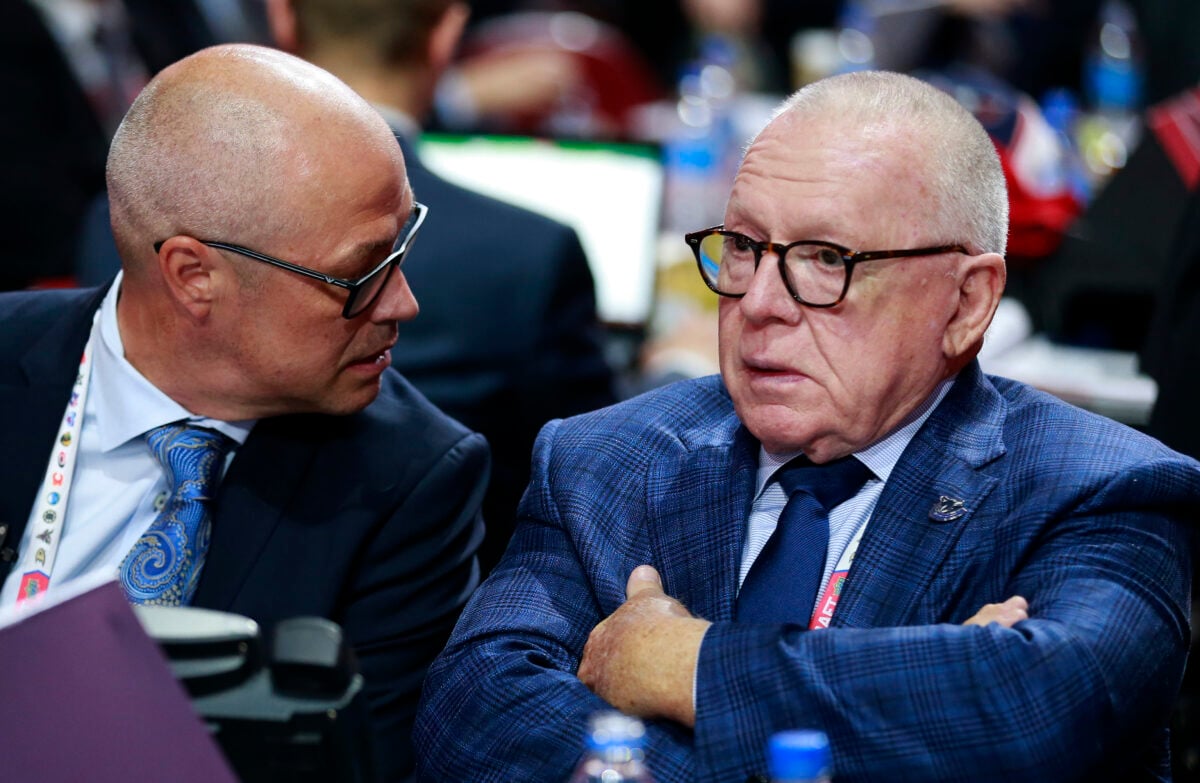
The quotes attached to that result weren’t subtle. One agent called the situation “a mess.” Another questioned whether there was even a clear plan in place. Others pointed to inconsistency, lack of structure, and an environment that doesn’t always help players settle into their roles.
Perhaps the most pointed criticism wasn’t even about talent evaluation but about infrastructure. One agent suggested there aren’t enough internal systems to “remove excuses,” while another described what they called ongoing “soap opera” elements around the organization. Fair or unfair, that kind of language sticks. Some would argue that it stretches back to the treatment of former head coach Bruce Boudreau.
Related: Canucks News & Rumours: Öhgren, Blueger, Douglas, Boeser & Culture
And that’s the uncomfortable part. Because, regardless of what’s happening on the ice, this is now part of the external narrative around the Canucks. Not just whether they win or lose—but whether the environment around the team is stable enough to support winning in the first place. That kind of reputation has to hurt the team’s ability to attract players.
Item Three: A Rare Shot at the Top Pick for the Canucks
For all that, there is still the lottery. Given everything, the Canucks are in a position to enter the NHL Draft Lottery with the best odds at the first overall selection in the 2026 Draft. At worst, they cannot fall below third. That alone changes the conversation, even if only slightly.
It also comes with a strange historical footnote: in 15 top-five selections in franchise history, Vancouver has never picked first overall. Not once. So if this season ultimately leads to that moment, it would be a first in every sense of the word.

And the timing matters, because the top of this draft class looks like it could be special. Gavin McKenna is widely viewed as the premier talent—a winger with franchise-altering upside. Ivar Stenberg brings a different flavour, a highly skilled Swedish forward with one of the more complete offensive profiles in recent memory.
If the Canucks go the defensive route, Keaton Verhoeff is seen as the top blue-line option, projecting as a potential number-one defenceman. In other words, there is no wrong door here—only different versions of the same opportunity.
What’s Next for the Canucks?
So, where does all this leave things? Right now, the Canucks sit in a familiar position: part frustration, part potential, and part waiting game. The roster still needs refinement. The organizational narrative still needs smoothing. And the results still need to catch up with the expectations that have followed this team for years.
Related: Canucks News & Rumours: Sasson, Hughes & Trading Draft Picks
But the draft changes the tone of the conversation. Because for once, Vancouver isn’t trying to patch holes for next season; they’re looking at a chance to add a cornerstone piece. That matters. It doesn’t fix everything, and it doesn’t erase the questions that agents and observers keep raising, but it does offer direction.
And maybe that’s the real theme of the Canucks right now. Not certainty. Not resolution. But direction. A sense that, for all the noise, there is still a path forward—if they choose it carefully.
