
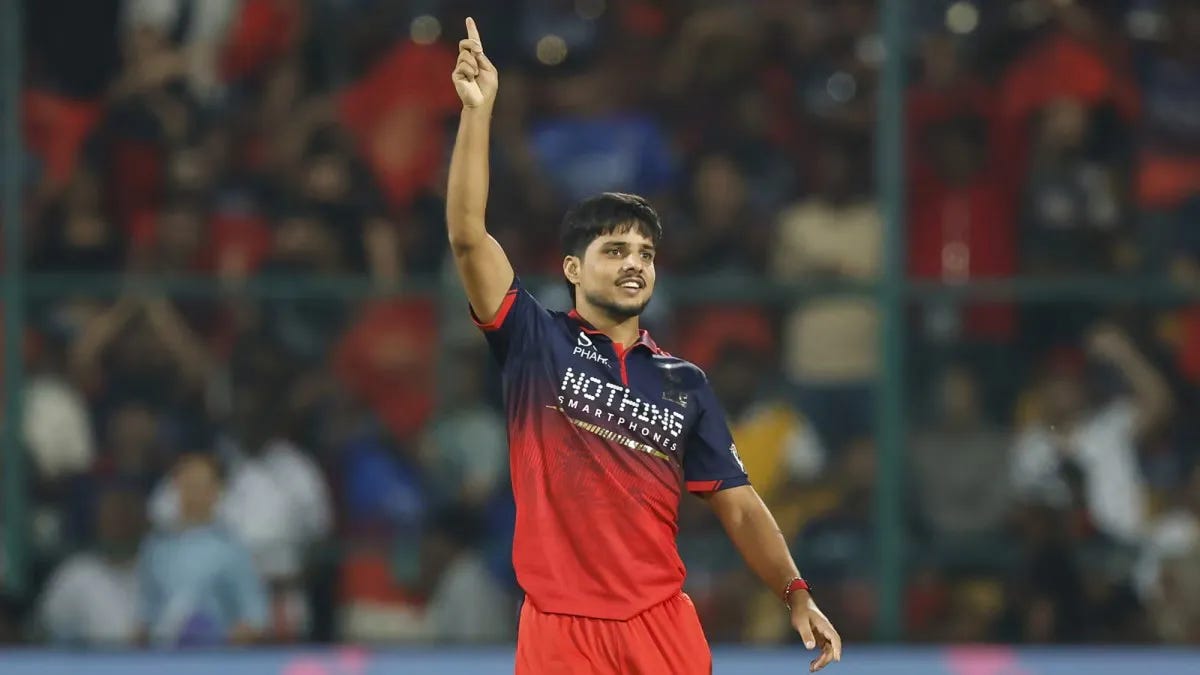
RCB beat LSG by 5 wickets, as the home side’s bowlers provided a masterclass in taking down an adept T20 batting order on a small-boundary pitch that had enough to aid both bat and ball.
But, what happened beyond the headlines?
✍️ Written by Tarutr Malhotra, who runs Best of Cricket.
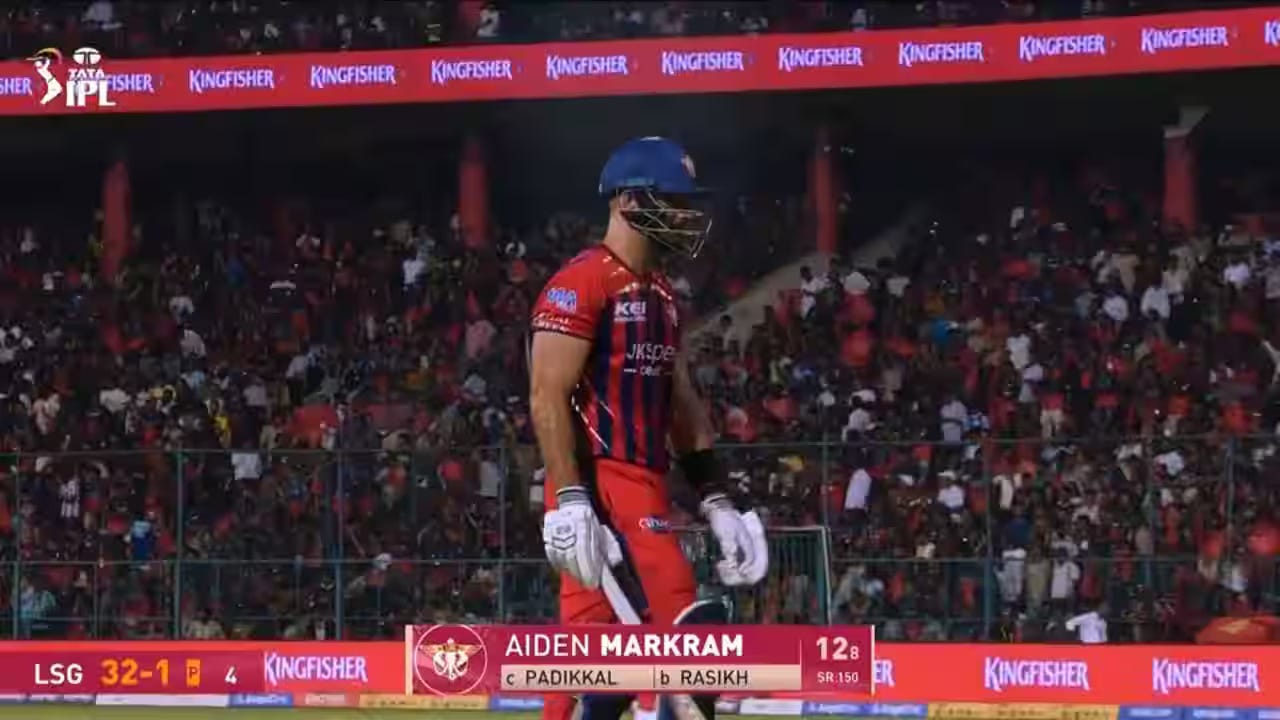
Aiden Markram & Mitch Marsh should be a great combination. They’re both international quality openers, they can both hit maximums with regularity, and they struck up a good understanding during last year’s IPL. However, they both have a singular problem that causes pressure down the LSG batting order – they start slowly.
There are 28 players who have opened at least 5 IPL innings in this Mega Auction cycle (2025-27), and the LSG duo sit comfortably within the middle-to-bottom grouping of the pack. The best players by strike rate are the obvious candidates; Vaibhav Sooryavanshi (228.3), Abhishek Sharma (197.9), Finn Allen, (192.9) and Priyansh Arya (191.7).
Amongst these 28 players, Marsh (160.3) has the 10th best strike rate, and Markram (149.7) has the 19th best numbers. Not great, and digging into the numbers only makes them look worse.
One of the major problems tonight was the LSG duo’s unwillingness to go after RCB’s pacers. They let nearly half the powerplay overs go by without attempting many aggressive shots, with a solitary Marsh first-over four their only boundary until a telegraphed ball on the last delivery of the 3rd over was dispatched for a maximum.
This is a recurring problem. LSG’s openers just don’t hit enough boundaries. Marsh scores 71.2% of his runs via boundaries since 2025, and Markram scores 66.4% of his runs in boundaries. That’s good for the 15th and 20th spots amongst the 28 openers analysed..
For comparison, Allen records 93.8% of his runs in boundaries (he’s having an insane 2026), Sunil Narine scores 87.6%, & Abhishek scores 82%. A modern opener’s job is to push the pace rapidly, but the LSG pair haven’t received the memo.
This is important because average IPL powerplay scores have jumped in recent years. The first hike was after the Impact Player rule was introduced, as the average powerplay run rate went from 7.82 (2022) to 8.71 (2023). But, it has kept creeping up. 2024 saw another major jump to 9.47 RPO as SRH pushed the league in search of the first 300+ score, while 2025 saw a relative stabilisation at 9.62 RPO as everyone else caught up.
This year has seen another major event that is pushing the numbers up again – up to 10.15 RPO before tonight’s game. Simply put, it’s the Sooryavanshi effect. The 15-year old is ridiculous. He scores 87.6% of his runs in boundaries, has the highest strike rate of any opener by 30+ points (228.3 to Abhishek’s 197.9), he starts his innings in sixth gear, & he keeps accelerating.
Sooryavanshi’s first 5-ball SR? 188. His first 10-ball SR? 197.9. His first 15-ball SR? 239.7!
These are unreal numbers that no one can measure up to, but they do provide an insight into what is expected of a modern opener. Abhishek (164.5), Allen (173.9) and Narine (147.5) lead the pack of regular humans in first 5-ball strike rates. All three accelerate appropriately, hitting 15-ball SRs of at least 20 points higher and getting their teams fantastic starts.
In comparison, Marsh scores at 126.3 in his first 5 balls, and Aiden Markram barely crosses a run-a-ball with a 101.3 SR in his first 5 balls. That form was replicated today despite Marsh’s early boundary – the Aussie scored just 19 runs in his first 15 balls (126.67 SR), while his Protea partner managed just 12 off 8 (120 SR) before mishitting a medium pace full toss to covers.
By the time Rishabh Pant walked in to face a vicious Josh Hazlewood over, LSG were 32/1 in 4 overs. That’s 8 RPO, or a mildly above average powerplay score for the pre-Impact Player era. It set the team up for failure – despite a mini-fightback from Ayush Badoni and Mukul Choudhary – and LSG would end with the lowest 20-over total in 2026.
A quick comparison to RCB’s openers is worth noting as well – despite his bad night, Salt got out while trying to push the tempo & Virat Kohli scored 40 runs off 20 balls in the powerplay to set RCB up for a 10 RPO first phase. It gave the defending champions the leeway to survive both a 3-over, 13-run spell at the start of the middle overs, and a 2-wicket over at the end of the phase, without much worry.
Data from our new database.
✍️ Written by Tarutr Malhotra, who runs Best of Cricket.
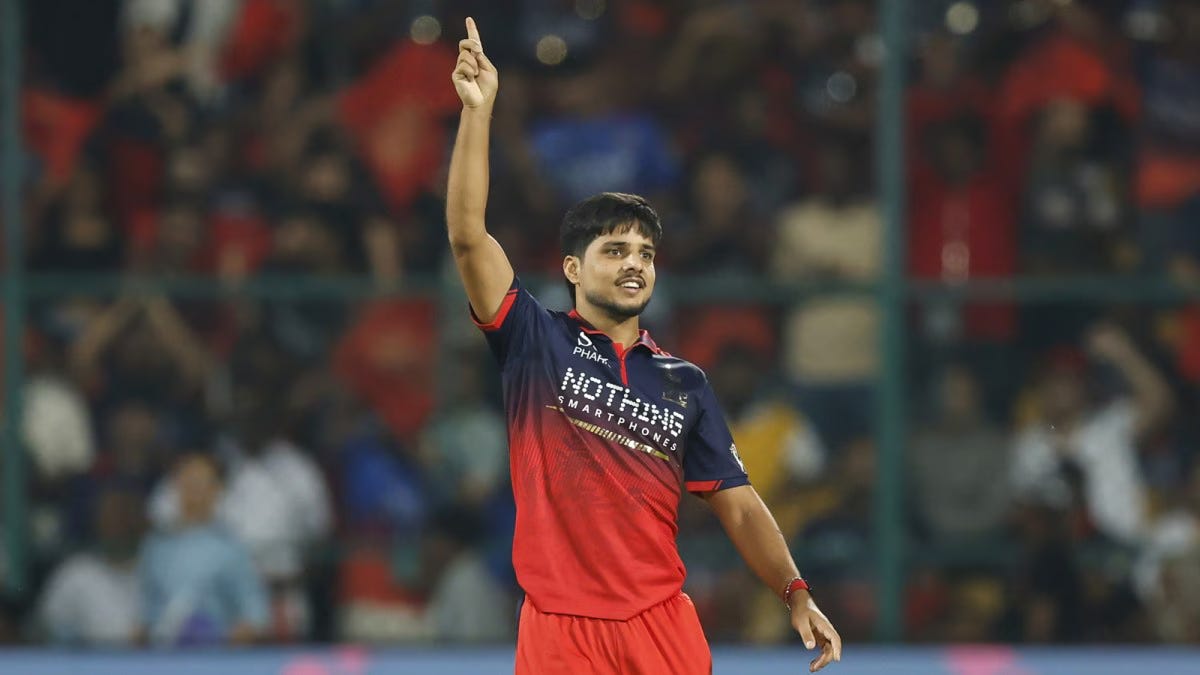
RCB bowled the first 16 balls of the LSG innings with a square leg and square cover boundary fielder. The intent was obvious; Bhuvneshwar Kumar and Josh Hazlewood would swing the ball around, pitching anywhere from outside off to leg, in an attempt to cause havoc as the batters tried to get their team off to a good start.
But, as detailed above, the LSG openers just don’t take chances. It puts pressure on their own batting, but it also makes it hard to get them out. In response, from ball 2.5 onwards, RCB switched their fielding plans. The square cover fielder moved to long-off signalling a new bowling strategy; we’re staying away from that offside channel, and we’re targetting your stumps on a slower pitch.
The risk-reward ratio changed for the LSG batters, and Mitch Marsh responded with a 6 that cleared the stadium on the last ball of the third over. In response, RCB sent on Rasikh Dar’s medium pace for the 4th over. A couple of singles and another 6 – from Aiden Markram this time – loosened the purse strings. The LSG openers were in business, and ready to buy themselves some boundaries.
So, Rasikh started playing with them. For ball 3.4, the long-off fielder went back to square cover. A safe single. For ball 3.5, he came back to long-off, and Rasikh bowled a much slower 108 KPH delivery. Marsh read it well, and LSG got another safe single. Now, the fielder went to join his buddy on the square leg boundary – the entire offside was open.
Rasikh threw in a full toss on leg to Markram, a man who loves himself a good flick – a full 16.58% of his runs have come off that shot in the IPL since the start of 2025. But he blazed in a 135.5 KPH delivery that was nearly 30 KPH faster than the last delivery, and the out of touch LSG opener could only spoon an edged shot to the (offside!) cover fielder. Field manipulation, speed manipulation, batter manipulation, wicket.
But, that wicket was built on the backs of the other RCB pacers’ good work in the first three overs. 12 overs later, Rasikh came back to the crease with Ayush Badoni slowly rebuilding LSG’s innings, having struck back against RCB’s middle overs bowlers. Badoni’s strategy was as simple as it was brilliant; hit the bad balls into the empty parts of the field, and run like your life depended on it.
As such, the batter had a ridiculous control percentage of 91.7% tonight – indicating that 91.7% of his shots were under his complete control. He scored just 5 boundaries and faced just 5 dots – the other 14 balls he faced led to runs between the wicket. Even his boundary hitting was as low risk as possible, with 18 runs scored behind the wicket to regions without a boundary fielder in place.
Rasikh came back with a simple plan in the 16th over. Strangle Badoni’s runs by slowing the ball down drastically. His first two balls barely scraped 105 KPH, but Badoni managed a well-timed flick for 4 and a single. Up came Mukul Choudhary, LSG’s big-hitting saviour from the weekend. Rasikh immediately pulled off a fast, vicious bouncer at 130.9 KPH that he ducked under, then a faster full toss that he could only get away for a single.
[On a side note, that Choudhary bounce was a deliberate tactic by RCB. Everyone bowled bouncers at the rookie to slow him down after he looked uncomfortable against the ball in his breakout 54 (27) v KKR last week].
When Badoni came back for the fifth ball of the over, the scoring zones were obvious. There were no boundary fielders behind the wicket, and Rasikh immediately tried to bounce him. Except, it was an awkward speed – 117.4 KPH – that stood up well to be cut over the keeper, but didn’t have the pace to easily clear the keeper. Rasikh had his man.
His spell ended with the 20th over, where two inch perfect yorkers got rid of LSG’s last two batters. While Hazlewood, Kumar & Krunal Pandya will take home the headlines, spare a thought for Rasikh. The long-time backup medium pacer has been part of various IPL squads since 2019, but tonight was just his 15th game on the pitch. He might just double that tally before the next Mega Auction if he keeps this up.
Data from DeepCrease, & the IPL Match Centre.
✍️ Written by Karan Jain, who runs CricNuance. You can follow him on X.
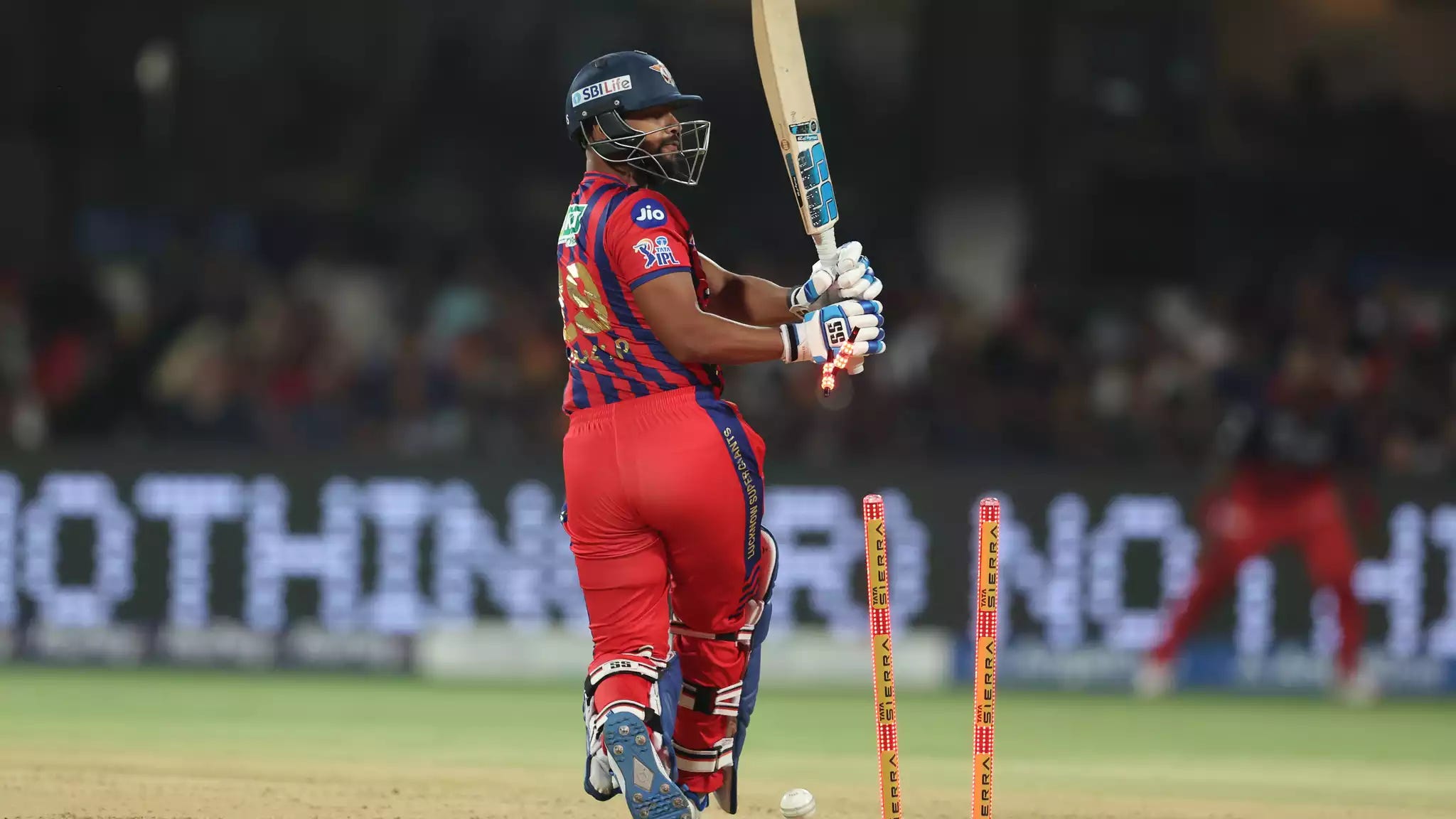
A season after dominating the IPL, Nicolas Pooran has scored just 41 runs in 4 innings at an abysmal 85.42 strike rate. While his demotion down the order to accommodate Rishabh Pant’s promotion is a clear problem, the West Indian has also been unusually bothered by two particular types of pace deliveries.
Pooran has struggled against shorter balls this season. He’s scored just 2 runs off 9 balls against short of a good length deliveries, while the short ball has led to 2 of his 4 dismissals before tonight.
The other issue was a notable struggle against slower deliveries. In LSG’s opening game, Pooran’s downfall was caused by a memorable, slow-dipping yorker from Lungi Ngidi. Against KKR, their pacers on the night stuck to sub-127 KPH balls, with a successful result of limiting Pooran to just 12 (11) and a wicket.
Tonight, Pooran entered the crease at an entry point he had done exceedingly well at a season ago. In Overs 5-6, Pooran scored 63 runs at a strike rate of 210 in 2025. Yet, his lack of intent was evident when he walked in tonight.
This was partly due to Josh Hazlewood making the slower black soil pitch sing along to his swinging deliveries. The variability of a slower pitch combined with a tall bowler made it difficult to play the Aussie’s deliveries across the line, as Rishabh Pant had just found out via three excruciating body blows in 3 balls.
Hazlewood initially stuck to a good length in the stump-to-stump line, which Pooran defended proactively. He also left a ball with a hint of away movement outside his off stump, as the West Indian’s lack of form and touch was hindering his natural attacking instinct. This internal conflict would become even more evident in the next over against Rasikh Dar.
With Pooran yet to open his account, Rasikh started attacking the batter’s weakness. First, the bowler bowled a feisty bouncer on the body. Pooran could only duck under the ball, not expecting it and not having the confidence to take it on. That was followed by a back-of-the-hand slower ball that was about 30 KPH slower than the previous delivery. Pooran could only nudge the ball inside the circle for another dot ball.
At the end of the powerplay, Pooran had scored just 1 (6). Hazlewood’s decision to stick to his own strengths and Rasikh’s tactic of targetting the batter’s weaknesses had amplified the West Indian’s fearful batting and lack of intent. With the fielders spreading out for the 7th over, Pooran had to find a way to not just survive another Hazlewood over, but to attack it and get his innings started.
When Pooran saw Hazlewood load up with an off-cutter grip, he probably thought the Australian was going to use the assistance of the pitch to bowl a slower ball. Needing a release shot, Pooran looked to pre-meditate an attacking response.
Pooran was right, Hazlewood had switched tactics from amplifying his own strengths to attacking the batter’s weaknesses. But, the West Indian had guessed wrong on which weakness the Aussie was targetting.
With his cutter load-up, Hazlewood went short and pace-on. Pooran did not anticipate the delivery and chopped on to his stumps. All season long, the narrative has been that Pant’s promotion has undercut Pooran’s play. But, with a chance to take on the pacers in the powerplay, the LSG middle order bat put on perhaps his worst display of the season yet.
Data from DeepCrease, & the IPL Match Centre.
✍️ Written by Pri Gulati, who runs Thoughts from Third Man. You can follow her on X.
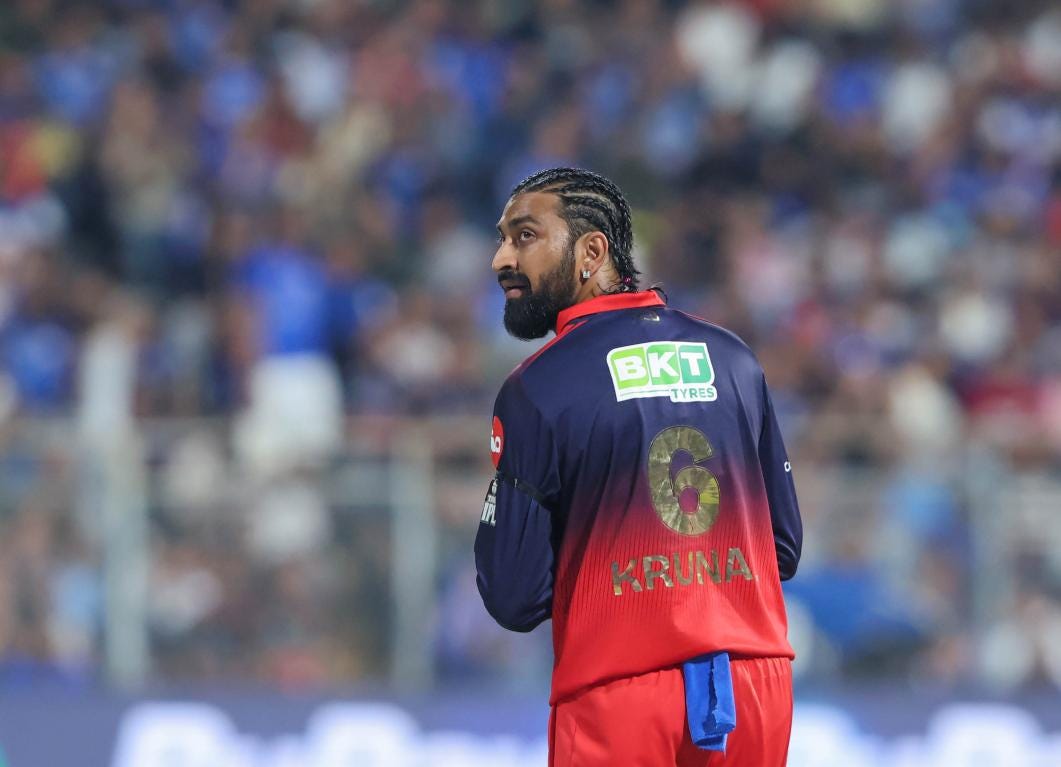
Krunal Pandya’s bowling figures look a mess tonight, conceding 38/2 at an economy of 9.50 in a game where LSG crumbled to 146/10 (or a 7.3 RPO). However, that belies the changes in Krunal’s game that have turned him from efficient defender, to risk-taking weapon.
Between 2016-21, Pandya played 84 matches for the Mumbai Indians, and took 51 wickets. Across one-and-a-bit seasons for RCB, he’s played 20 games and taken 24 wickets already. Halfway to his old stats in a quarter of the time.
The name of this game is reinvention. Krunal is no longer content to contain the runs of a set batsman in the middle overs; instead, he is using the many tools in his arsenal to engage in a psychological tussle with the man at the crease.
His 2020-21 seasons had a longer stride and a release from the corner of the crease, which made for a predictable target at times. These days, Krunal is working with a taller action. His shorter stride allows him to generate more speed, while his oft-deployed bent-knee allows him to mix up his release points. The combination of this new height and deceptive release are how his bouncers get the ball to kick up without being easy to read.
There was a moment in tonight’s game where Mitch Marsh seemed to get the better of him with one boundary through long-on, and a slog sweep for another. But, Pandya trusted his variations, and used one of his new release points to pick up Marsh’s wicket.
Crouching for a low-arm “sidewinder” release allowed him to kill the bounce on the slow surface. The ball, wide on the outside off, seemed ready to sit up for an easy hit. Instead, Marsh cut too far away and sent the ball spinning back onto the stumps. Pandya’s decision to use the low bounce of the pitch was genius, and was replicated when another low drifter against Abdul Samad led to an edged mishit to the covers.
Statistically, Pandya’s numbers are worse than he was during his 2017 heyday, where his economy dipped as low as 6.83. His 2026 value lies in the unpredictability of his deliveries, and the ratcheting speed. For example, in tonight’s game he averaged 95 KPH on his deliveries – with Samad’s wicket paced at 94.9 KPH, and Marsh’s coming at a rollicking 126.3 KPH.
This plays out over time too, as 30% of his deliveries in 2025 were under 90 KPH, while another 12% were about 100 KPH. As a reminder, we’re still talking about a “slow” left-arm orthodox spinner – who regularly bowls deceptively fast and vicious medium pace bouncers!
His ability to create variety, explore dip in flight, to use various release points, and to kill the bounce by dropping the ball into the pitch is what creates the doubt in a batter’s head – and gives Pandya an advantage to exploit on every ball.
While his economy has risen over the years – to a peak of 8.23 in 2025 – it has come with the valuable compensation of rapidly increased wicket-taking options. And, on the day when Pandya joined the rare club of spinners with 100+ IPL wickets, it’s worth remembering that he’s a middle overs fingerspinner in the Impact Player era who’s still finding new ways to scare the hell out of batters.
Data from ESPNcricinfo.