
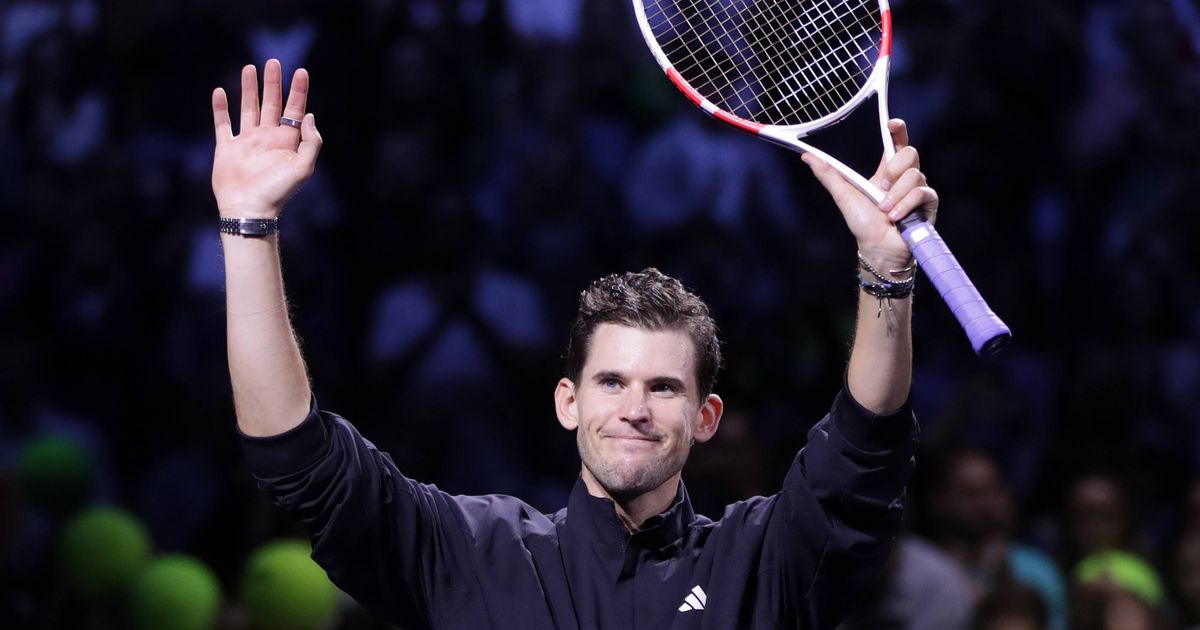
His path to that title was built on sustained contention at the highest level. Thiem reached back-to-back Roland Garros finals in 2018 and 2019, both against Rafael Nadal, before pushing Novak Djokovic to five sets in the 2020 Australian Open final. That sequence positioned him as the leading challenger to the Big Three before his eventual breakthrough in New York later that season.
Yet his recent reflections suggest the story of that title cannot be separated from what came before it, particularly the financial risk assumed within his family during his development years.
Family sacrifice and early pressure
Thiem explained that his progression into professional tennis required significant financial decisions at home, despite coming from what he described as a normal background. The scale of that commitment shaped his awareness of the stakes from an early age.
“Of course I realised it. They never made pressure about it, but every kid is very smart and can feel the situation. There were many talks at dinner about how bad the financial situation looked, that there would be no summer holidays, no skiing holidays. Those were the sacrifices that were made.”
That context places Thiem’s rise within a structure of long-term risk rather than gradual progression. He emphasised that the pressure was not imposed directly, but developed naturally from the environment, making the pursuit of success inseparable from the sacrifices behind it.
US Open breakthrough and the reality after
Thiem’s description of the 2020 US Open final reflects the mental complexity of the moment. Trailing by two sets and a break, he acknowledged that he had already begun to accept the likely outcome before the match shifted.
“I already told myself, if he’s really playing like that for the whole match and he’s going to win, I have to say congrats and that’s it,” the former world No. 3 added. “But then he gave me a little bit. And I knew I needed to stay in the match, I needed to fight, and at one point the door is going to open just a little bit. Then I need to push it open and walk through.”
The comeback ultimately delivered the title that had defined his ambitions for years. However, Thiem said the aftermath did not align with what he had imagined during his rise through the sport. “Before I won it, I thought that if I’m never going to win a Slam I’m going to be unfulfilled for the rest of my life. And if I win one, everything is going to be amazing,” Dominic Thiem said. “But then I crashed to the floor of reality very hard after the US Open. The time after was unbelievably important for me. I see everything now as a big journey, and that journey is worth much more than a single title.”
That reassessment reframes his career beyond the milestone itself. While the US Open remains the defining achievement on paper, Thiem now places greater emphasis on the broader arc: the years of contention, the repeated setbacks in major finals, and the sustained effort required to remain among the top players in the sport.
Thiem’s route to the title – US Open 2020
| Round | Opponent | Score |
| 1R | Jaume Munar | 7–6(6), 6–3, 6–0 |
| 2R | Sumit Nagal | 6–3, 6–3, 6–2 |
| 3R | Marin Čilić | 6–2, 6–2, 3–6, 6–3 |
| 4R | Félix Auger-Aliassime | 7–6(4), 6–1, 6–1 |
| QF | Alex de Minaur | 6–1, 6–2, 6–4 |
| SF | Daniil Medvedev | 6–2, 7–6(7), 7–6(5) |
| Final | Alexander Zverev | 2–6, 4–6, 6–4, 6–3, 7–6(6) |