
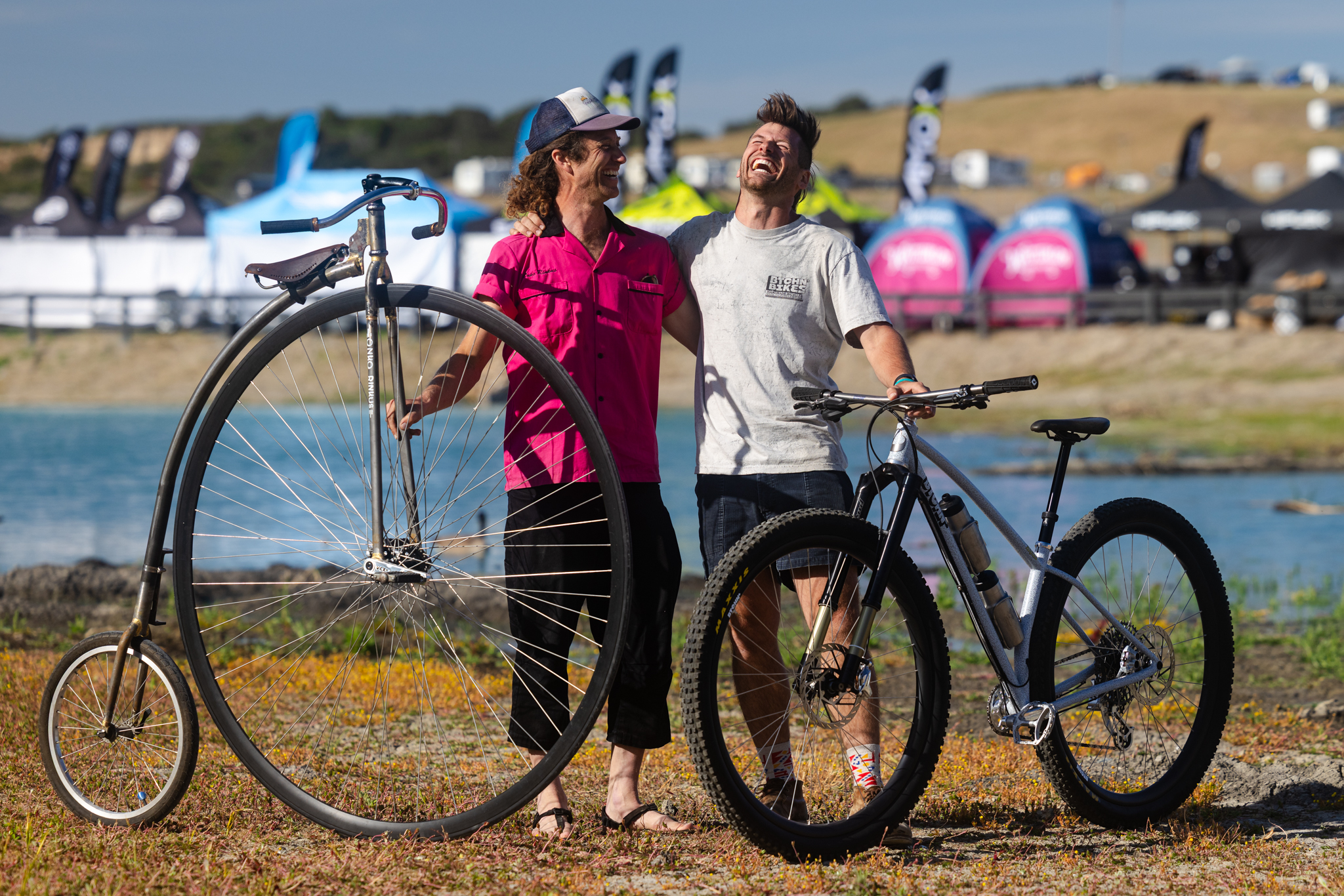
Day Two of the 2026 Sea Otter Classic brought more people, more wind, and more big wheels. But again, we’ve got those on a slow drip. There’s lots of other cool stuff Travis stopped to check out between re-applying sunscreen.
The Radavist thanks 1UP USA for sponsoring our Sea Otter Classic coverage and our independent Reportage!
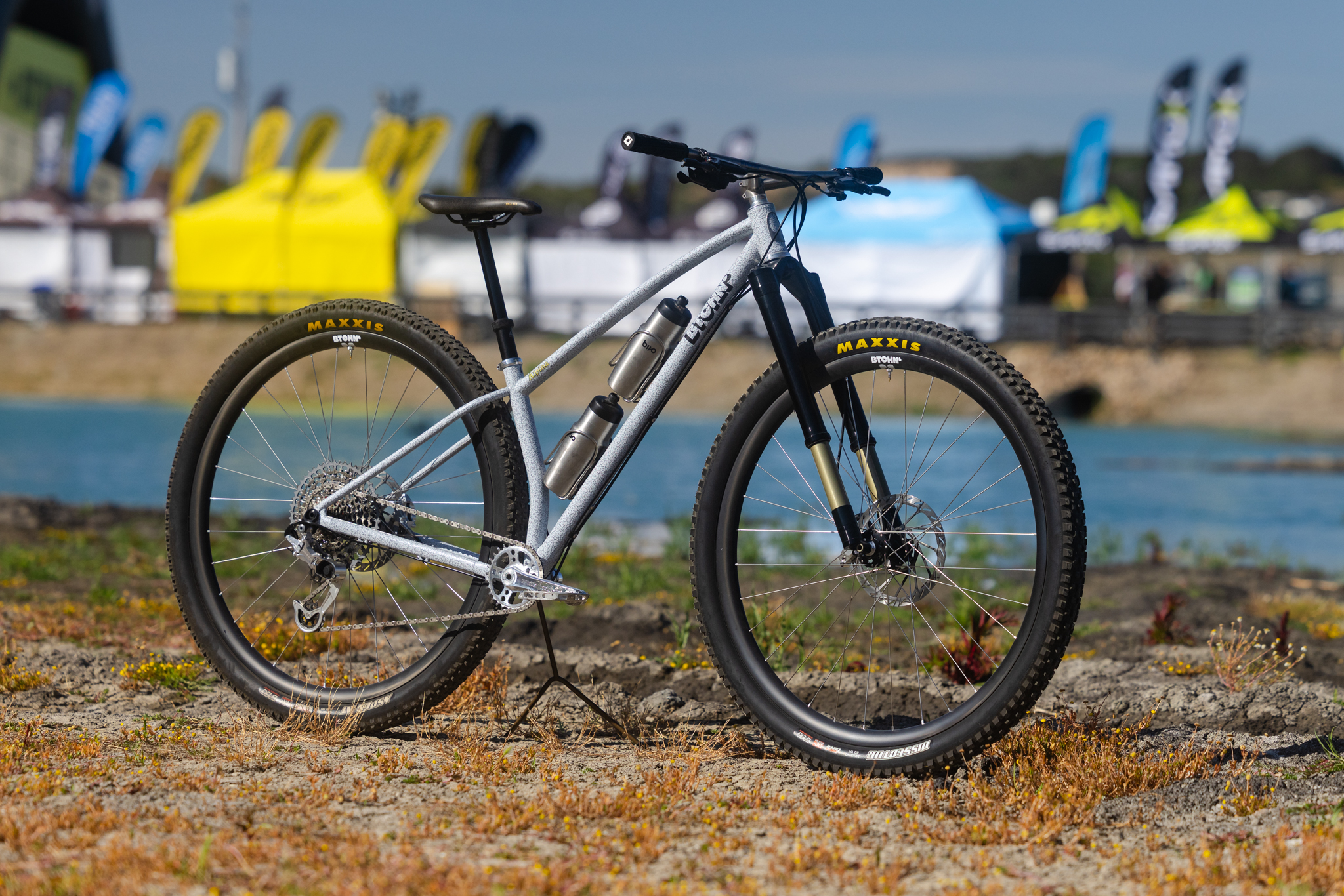
Btchn’ Bikes Alpina
Every conversation about 32” wheels includes some comparison to the early days of the 29er. History is repeating itself. And that might be a good thing, because 29” wheels did eventually make bikes better. But that also may be a bad thing, because it sure took a long damn time for it to happen. The Btchn’ Alpina shows promise that it has avoided the sins of the past.
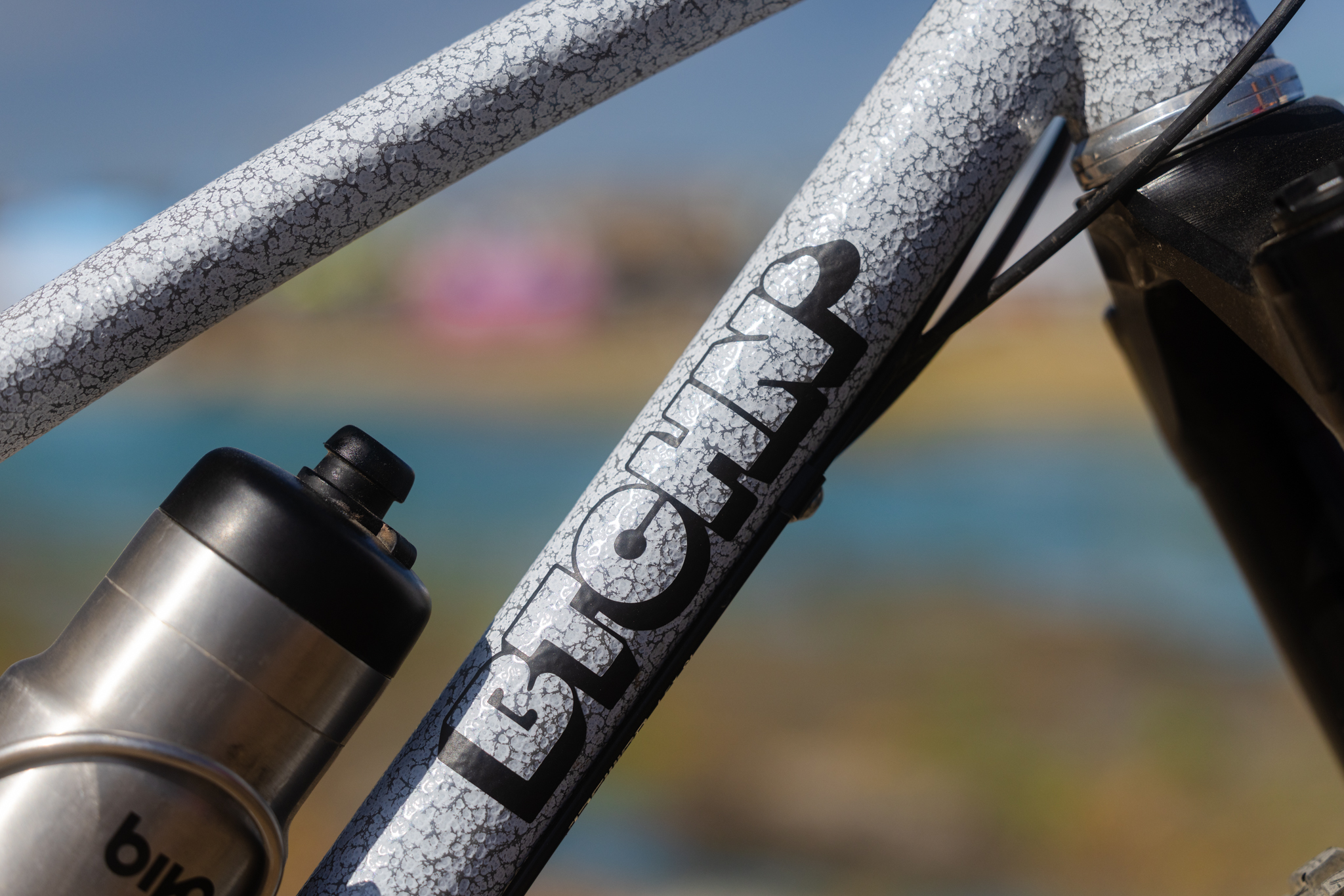
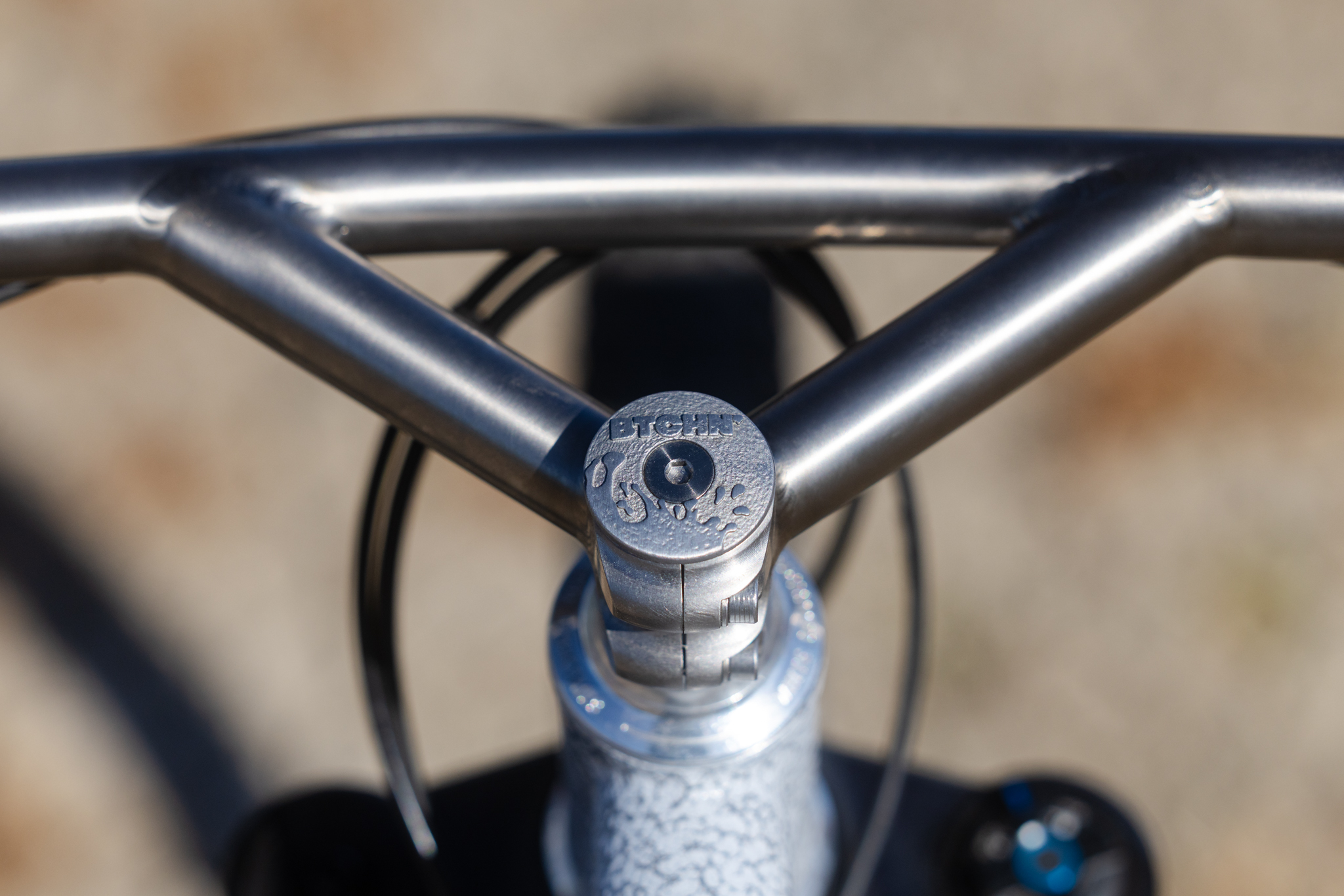
A collaboration between disruptive titanium component brand, Btchn’ Bikes and storied framebuilder Falconer, the 32” Alpina doesn’t make any apologies. It’s not an XC bike, it doesn’t have a negative-rise bar, and praise be, it has 157mm hub spacing. If you’re not up on your dropout standards, 157, or “Super Boost” is 9mm wider than the dominant mountain-bike hub width. It widens the spokes’ bracing angles. I know I’m editorializing with my applause of 157 spacing, but increasing wheel diameter without increasing hub width is the history we don’t want to repeat. And Btchn’ founder, Tyler Reiswig, is determined to get this right the first time.
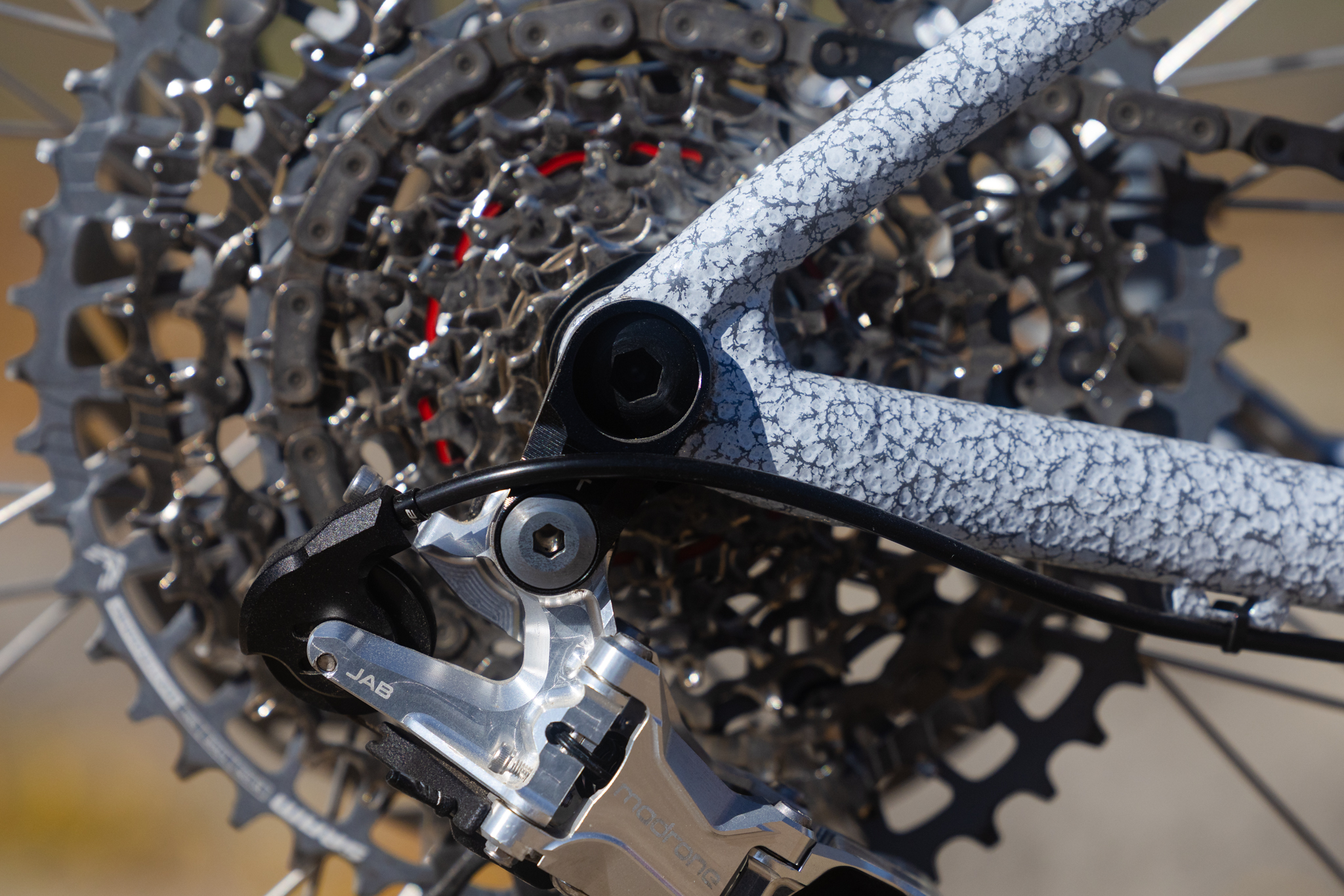
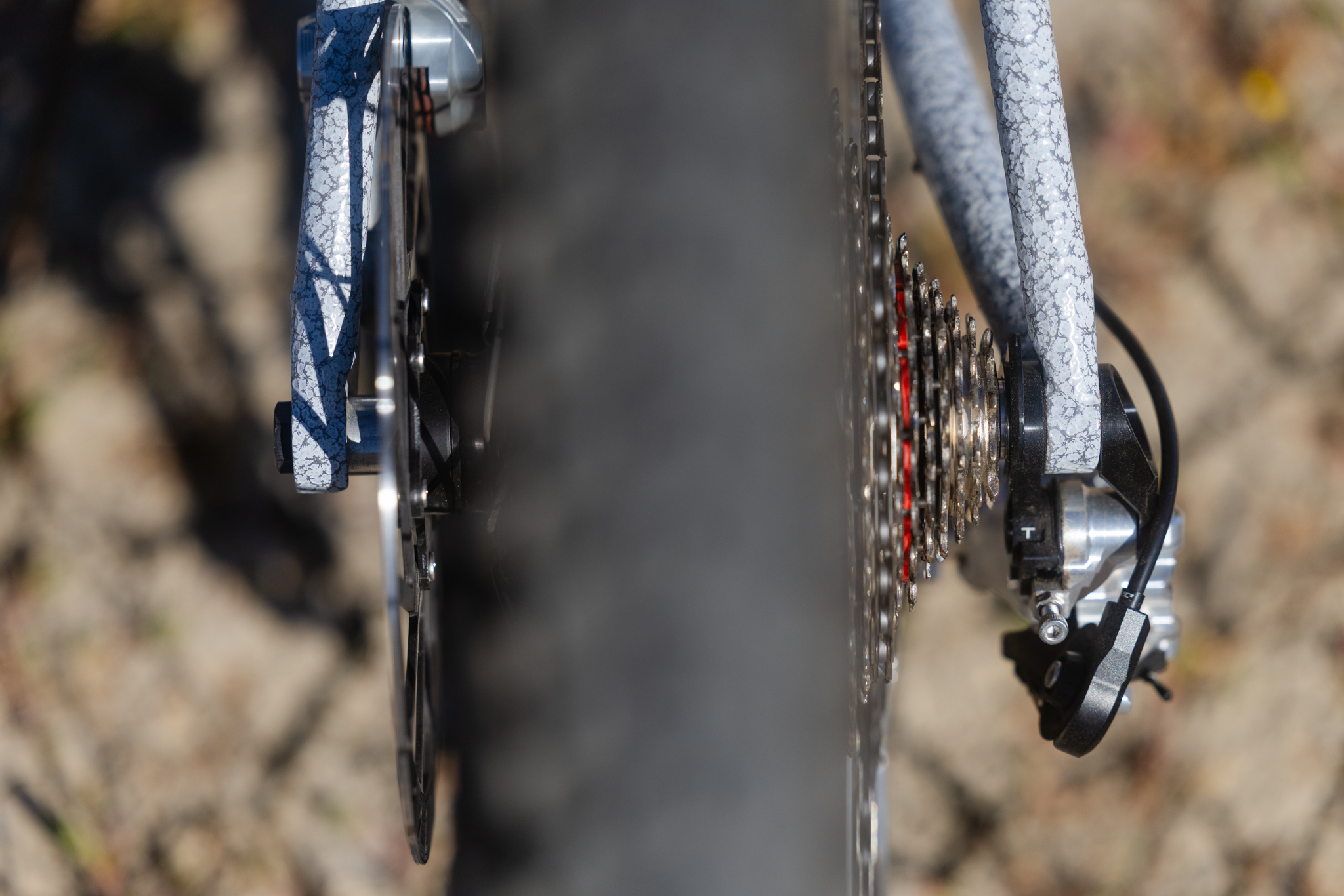
“It just seemed like a no-brainer,” Reiswig says regarding Super Boost. “We have more leverage, so we should make it stiffer.” Super Boost is a bit divisive when medium-large-sized brands like Pivot, Devinci, or even medium-small-sized brands like Evil do it. But Btchn’ can afford to rock the boat a bit. “For me being a small builder, I can take risks like that,” Reiswig explains. “It doesn’t feel brash or inappropriate for my customers.” Especially since he has a good reason. A reason like, for example, increasing the wheel diameter by 10%.
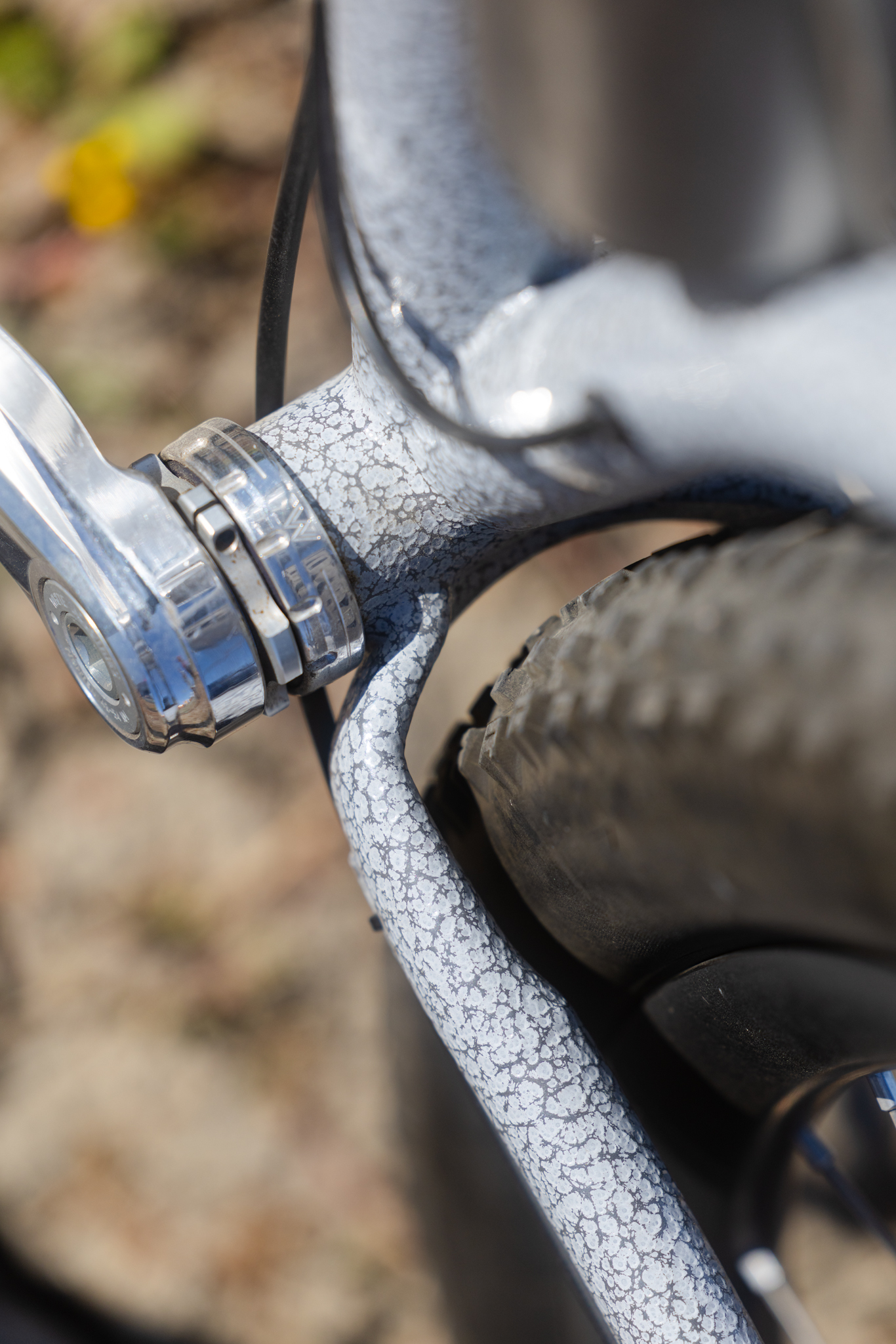
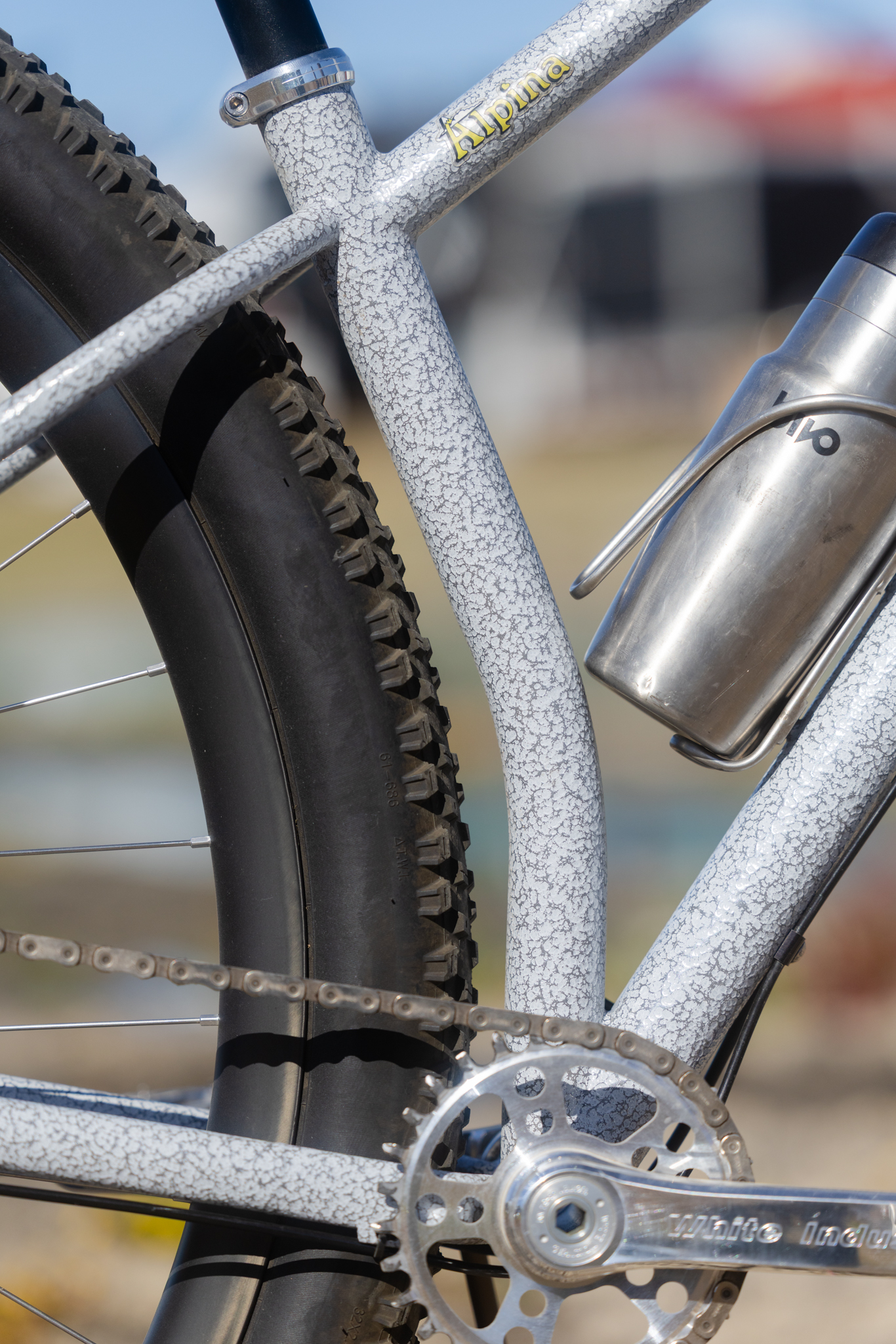
The other reason some brands like 157mm spacing is that the chainring is bumped out to match, leaving more room around the bottom bracket / chainstay yoke for support and tire clearance. But Reiswig already got that part pretty dialed on his earlier bikes. Even if the hub spacing were standard 148mm, his chainstay yoke design still leaves 8mm of clearance on each side of a 2.4” tire, and 12mm up top. 157mm spacing allowed him to make the structures even more stout, and bring the bike up to the stiffness standards he thinks 32” bikes should be at now not in four or five years when they’re finally good.
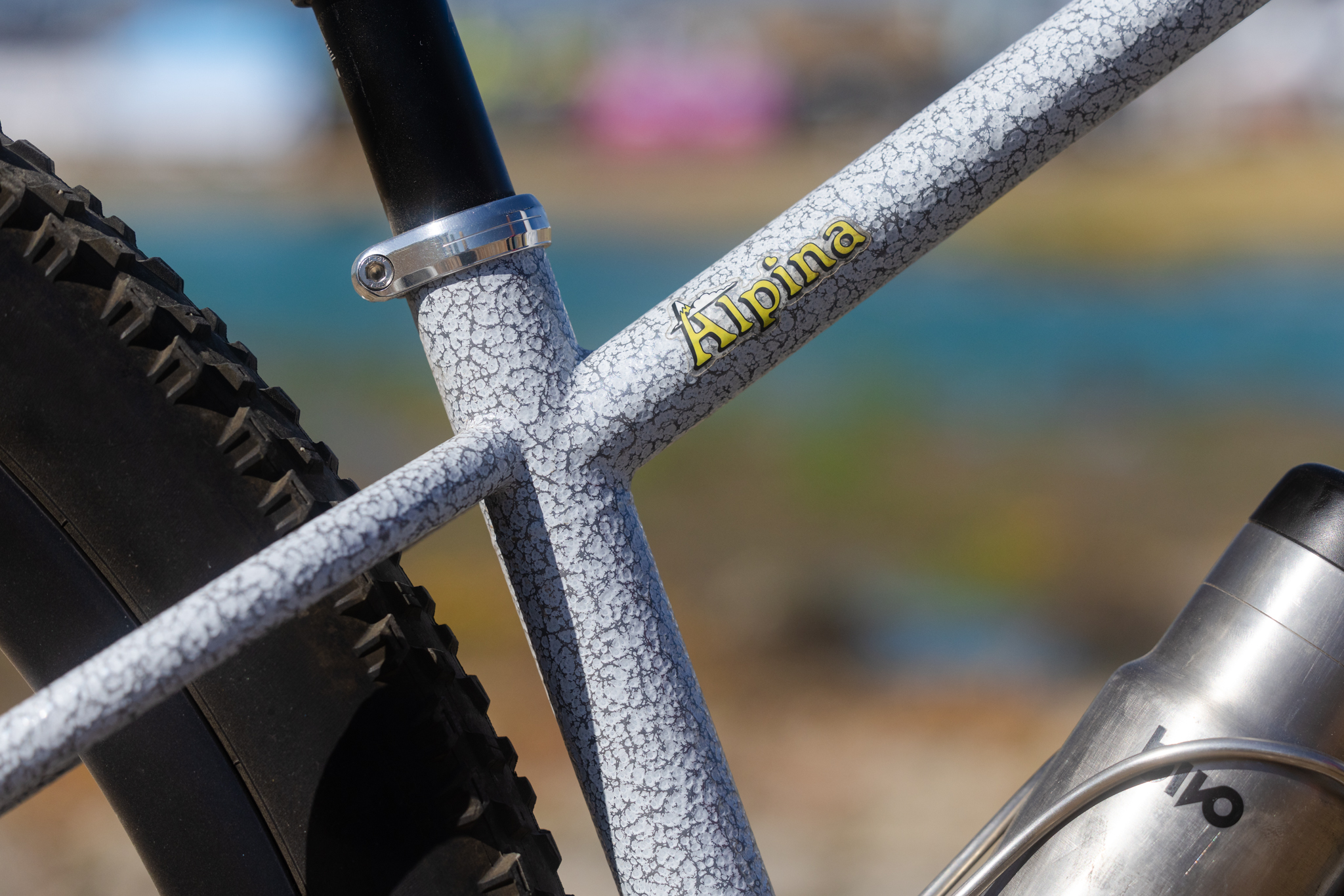
This would have come with many more compromises if it weren’t for 3D printed steel frame parts. The dropouts are 3D printed, which is how they offer a sleekness rarely seen on a steel UDH frame. But the chainstay yoke is the crucial bit. On top of the improved stiffness and clearance, it gave Reiswig the freedom to get pretty short chainstays on the size-medium we pictured here. But the stays increase in length by about 10mm on the large, then another 10mm on the XL. The goal wasn’t to make the stays as short as possible for everyone. That would be apologizing for 32” wheels. Reiswig wanted to embrace them.
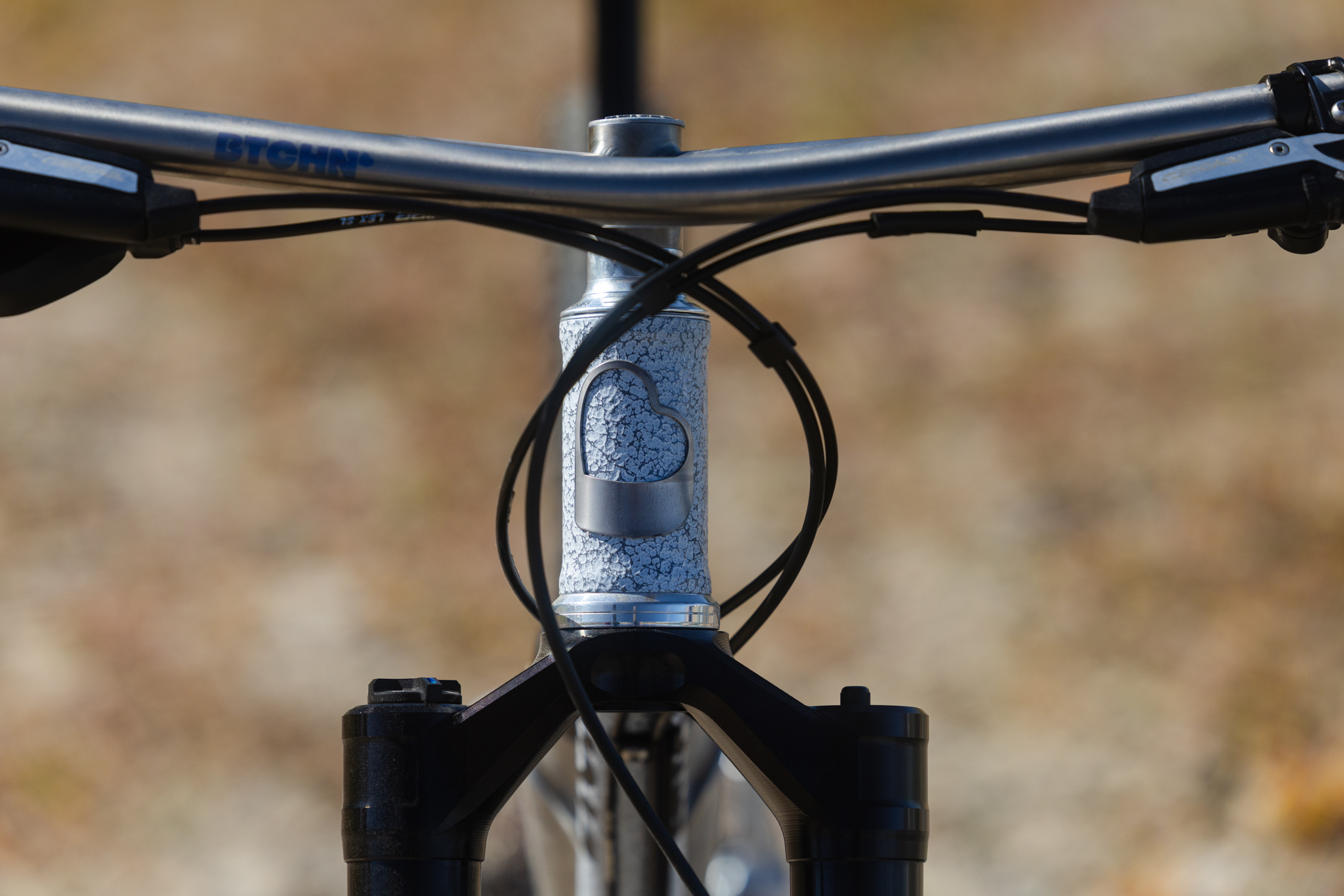
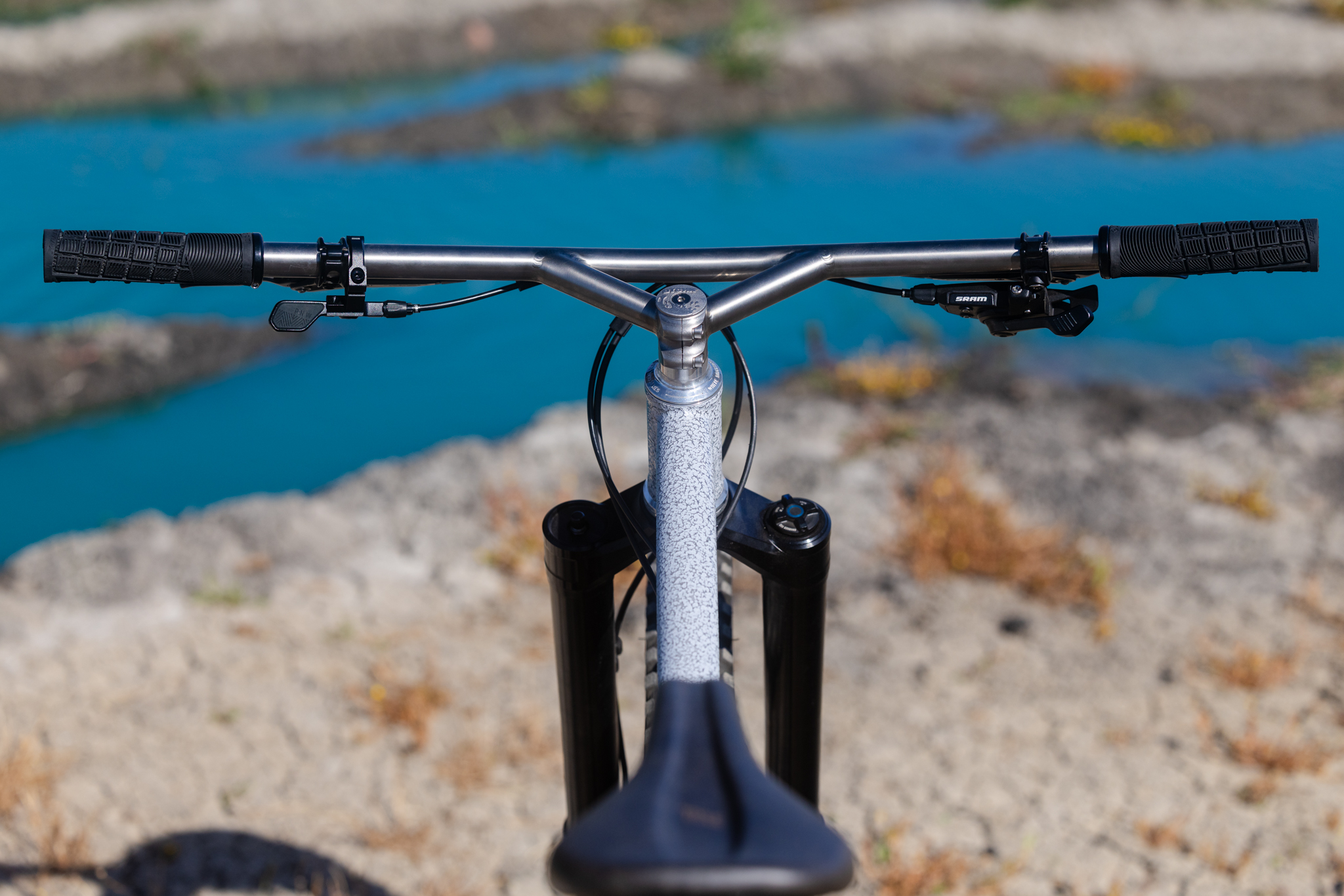
That’s illustrated up front with the 67° head angle. “That seems kinda steep and XC, but if you look at [fork offset, trail, and wheel flop], it reflects a 29er with a 65 degree head angle,” Reiswig explains. “It feels exactly like a 29er with a 65 degree head angle.”
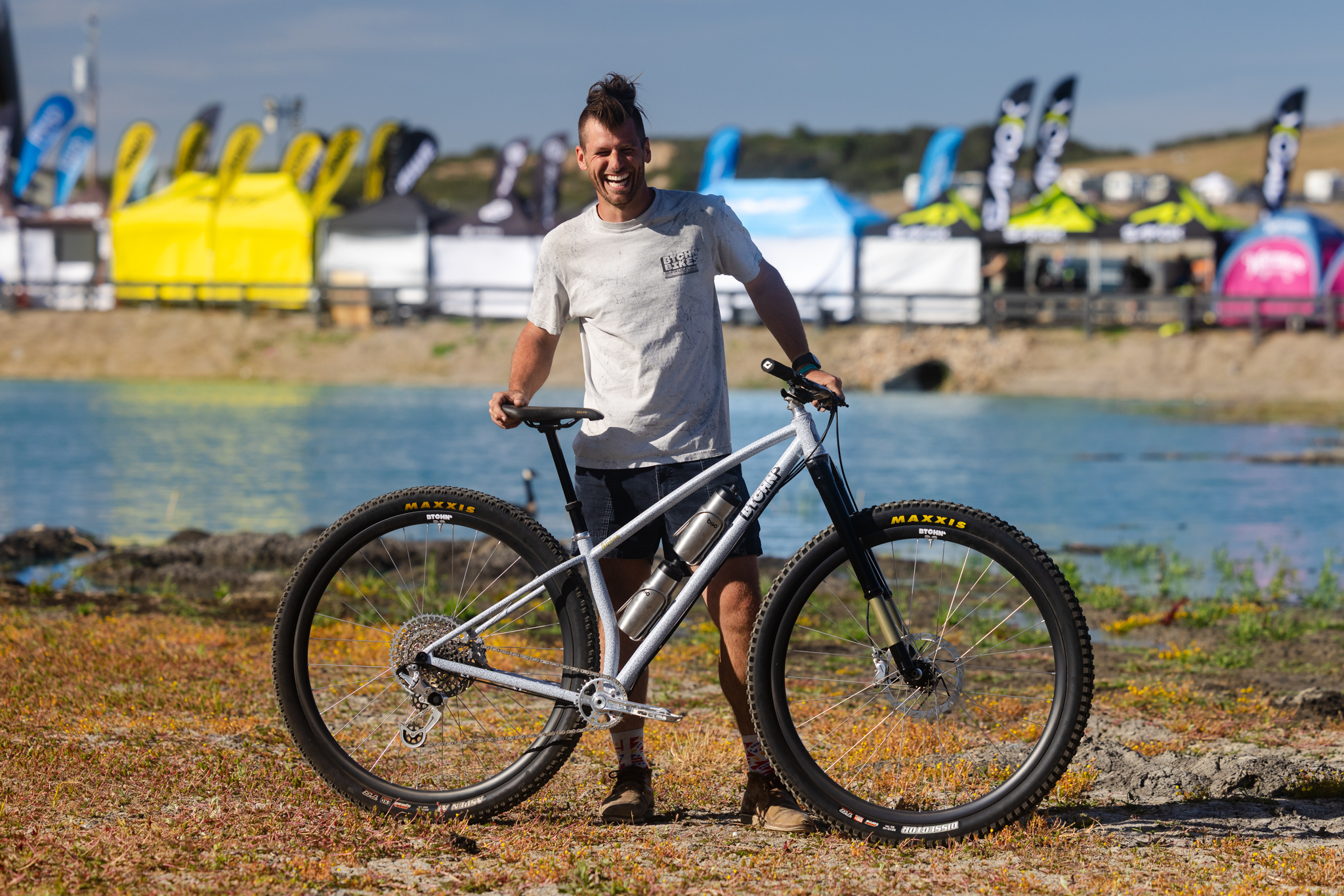
And this bike isn’t just a proof-of-concept prototype like most 32” products floating around Sea Otter. I mean, this exact bike is a prototype. It has a flat-mount rear brake, while the production one will have post-mount 180 (praise be). Those production bikes are imminent. The Btchn’ website is saying frames will be ready in about three weeks after purchasing. It’s a testament to the work that both Reiswig and Falconer have put into this bike. They’re not just gazing into the future. They may already be there.
Mad Monkey Designs
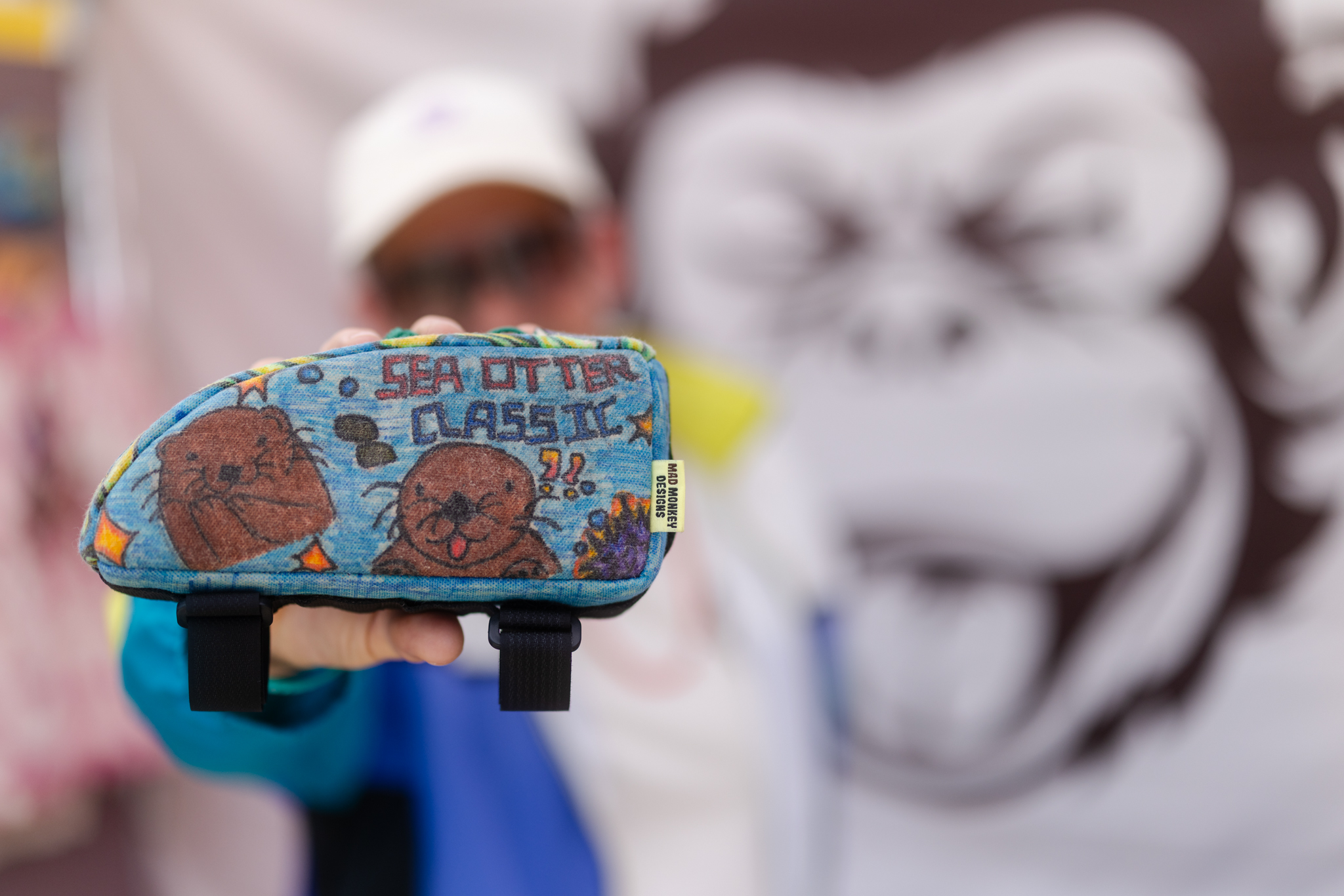
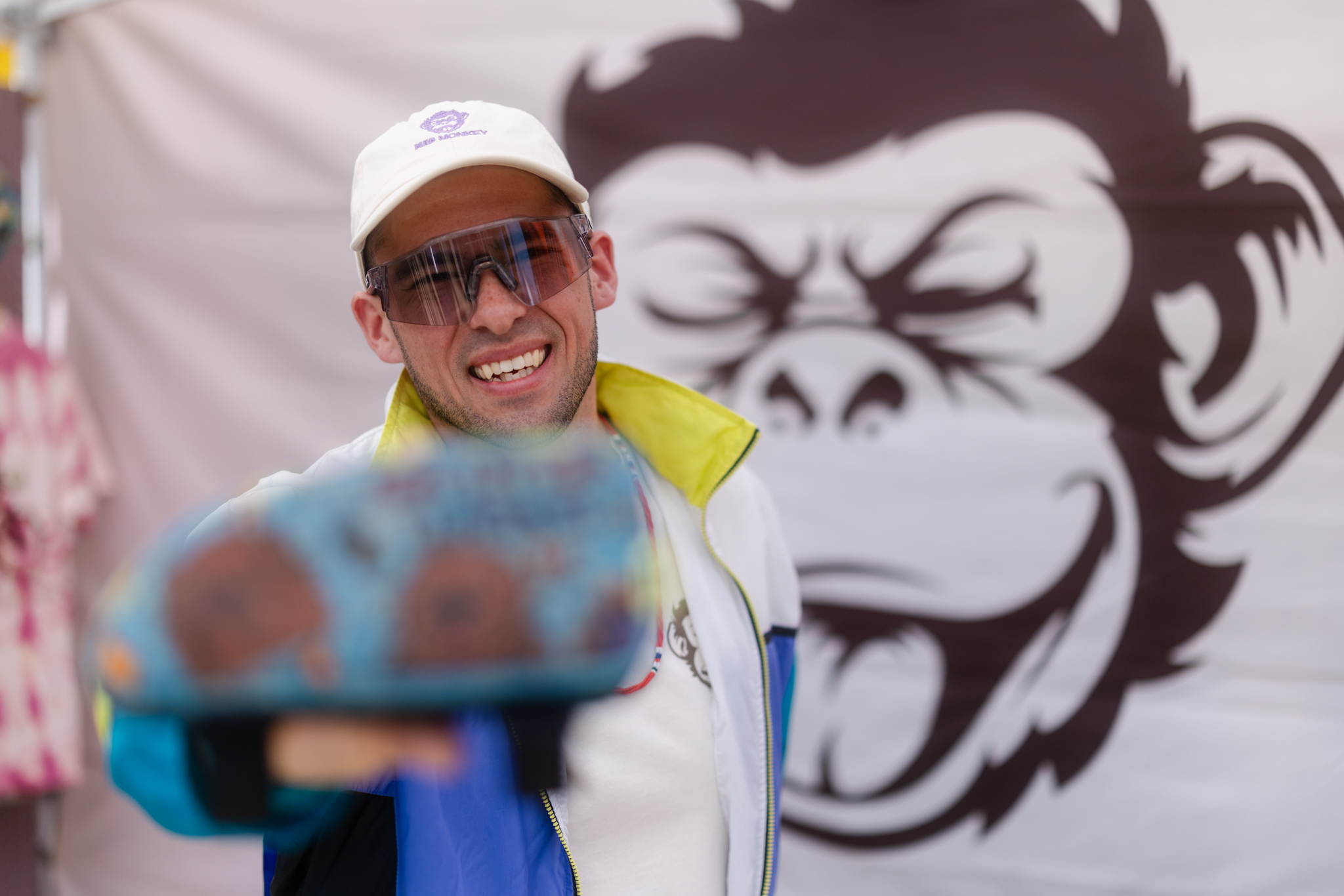
“Where is the Louis Vuitton of the bike industry?” When Anthony Hawksworth, founder of Mad Monkey Designs, asked me this in his booth, I hope a passerby wondered what the hell he was talking about. But after I chatted with Anthony about his vision for breathing more art into our bikes, I knew exactly what the hell he was talking about. Mad Monkey Designs’ most eye-catching product on display here is their top-tube bag, but they don’t do a huge volume of sales. Each of their bags are one of a kind. “We’ve never made the same bag twice,” Hawksworth proudly tells me.
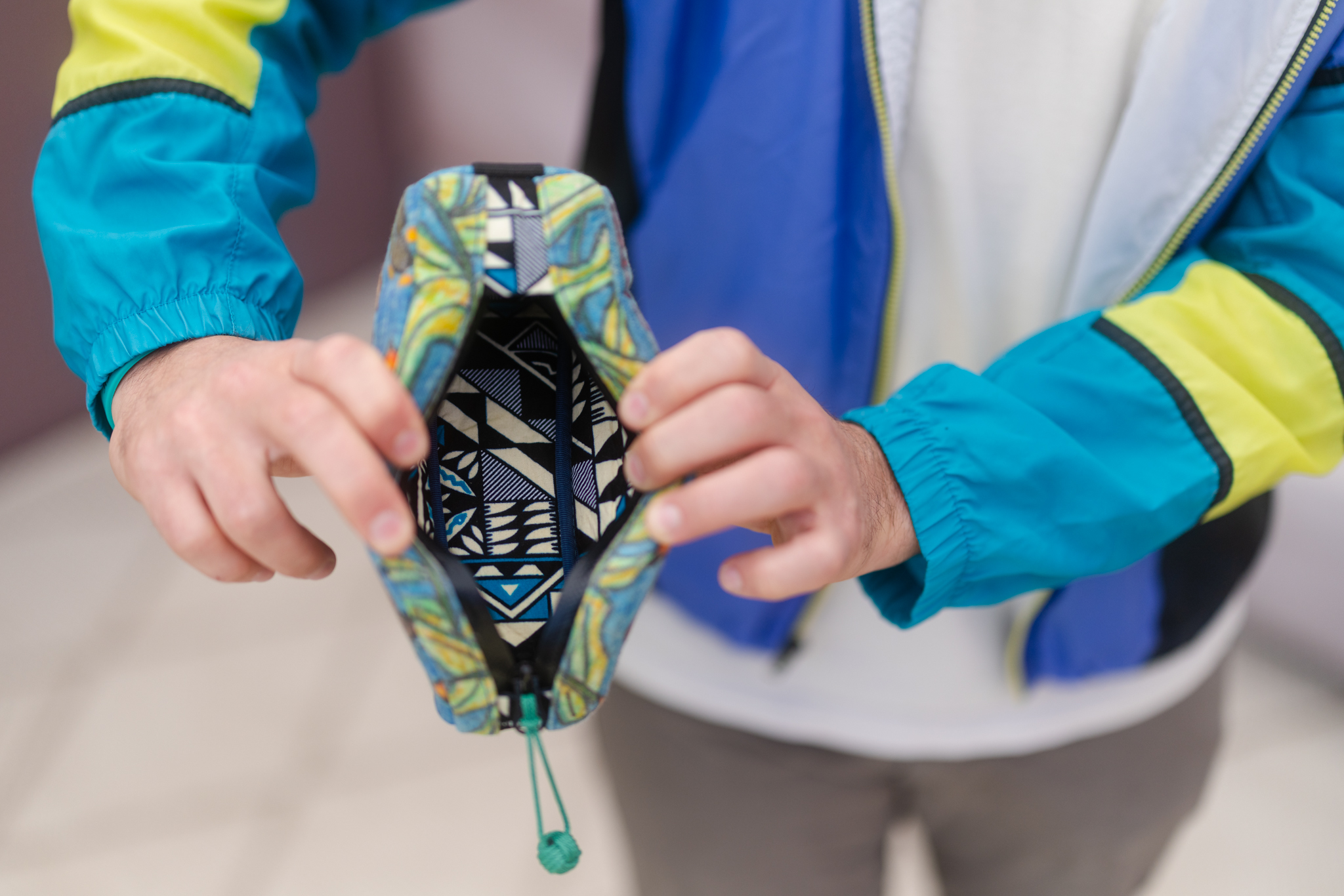
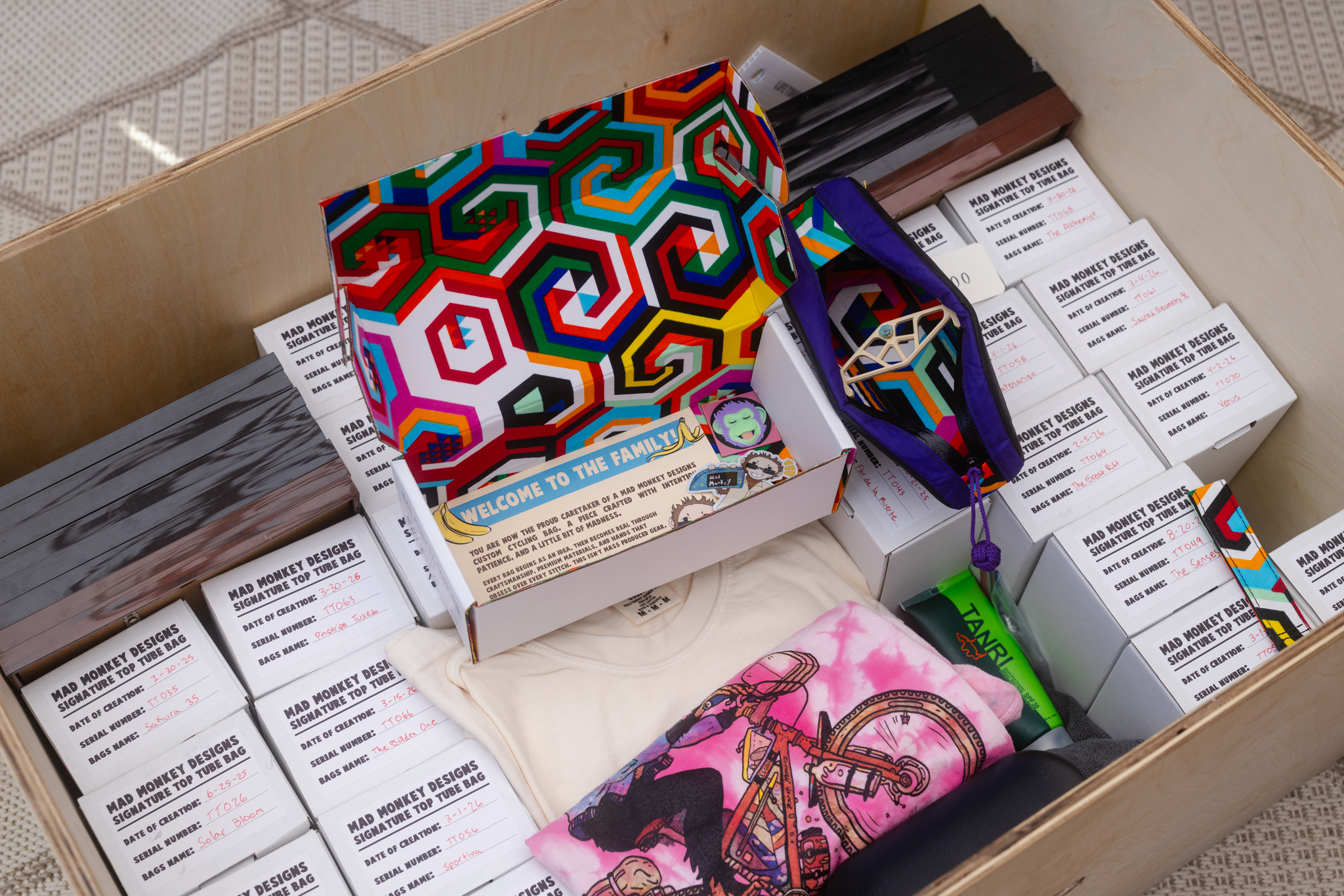
The word that came up most often in our conversation was “art.” Hawksworth is an artist, and he’s surrounded by other artists. He lives in Humboldt County in Northern California, but also travels a fair bit. He collects fabrics and prints and ideas and makes them into one-of-a-kind bags. Though all the top-tube bags on display shared the same shape and the same impeccable craftsmanship, they were unique on a material level. Some were canvas. Some were modern rip-stop nylon. Some were leather, and some felt like an ornate tapestry that should be kept behind glass.
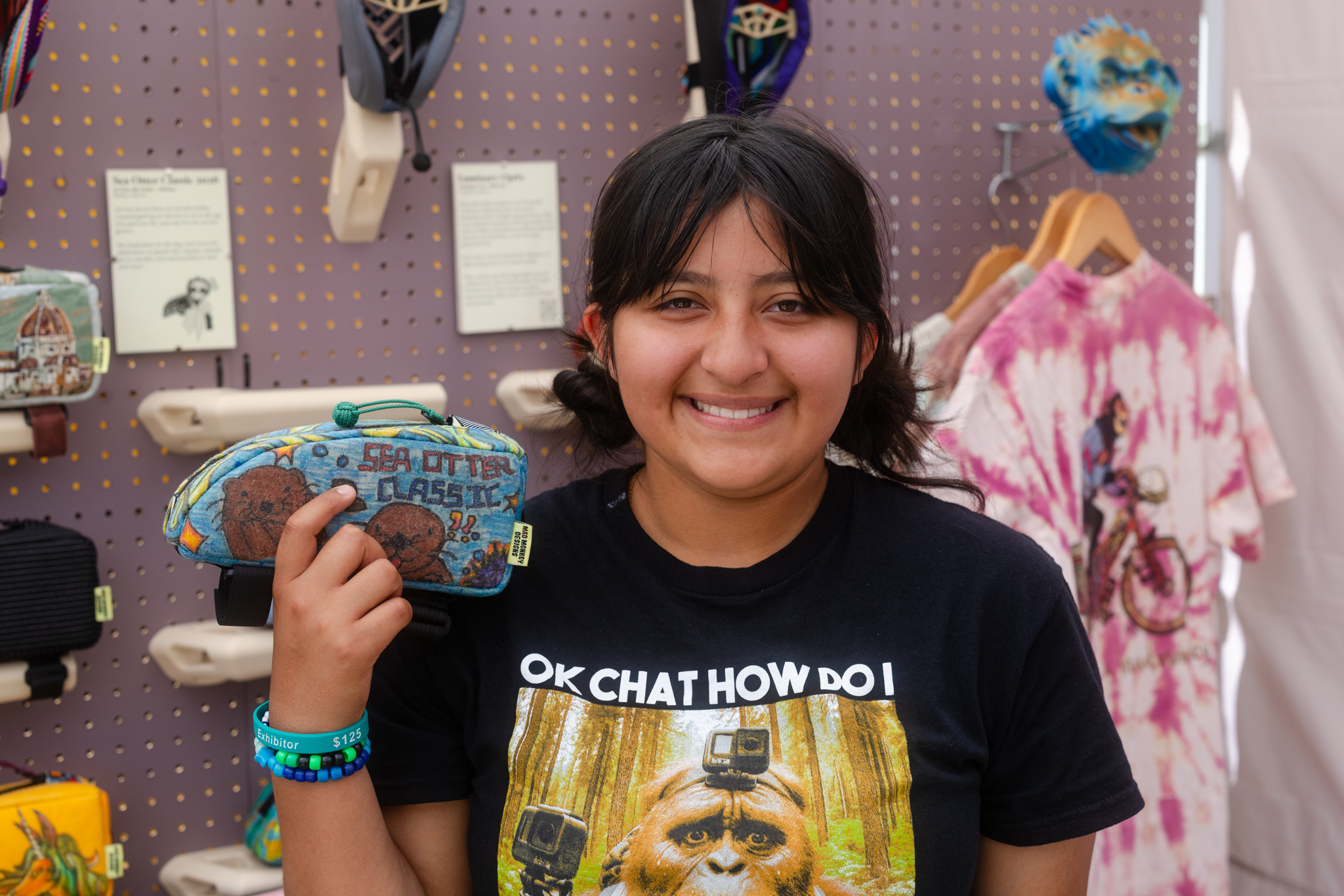
And one had the vibe of the Chuck Taylors I used to doodle on with Crayola Washable Markers. This design was done by a teenager named Adrianna, who was there at the show. She’s just one of many artists who help bring Mad Monkey’s bags to life. Hawksworth seeks them out and provides a channel for them to turn their visions into a commercial product that someone can put on their bike as a fashion statement. A high fashion statement. This is what I took from Hawksworth’s Louis Vuitton comment. He’s not asking where’s the company who can sell us old-world luxury and outdated taste. He’s asking where’s the company who can define what luxury and taste mean in 2026 for cyclists who want their bikes to say something.
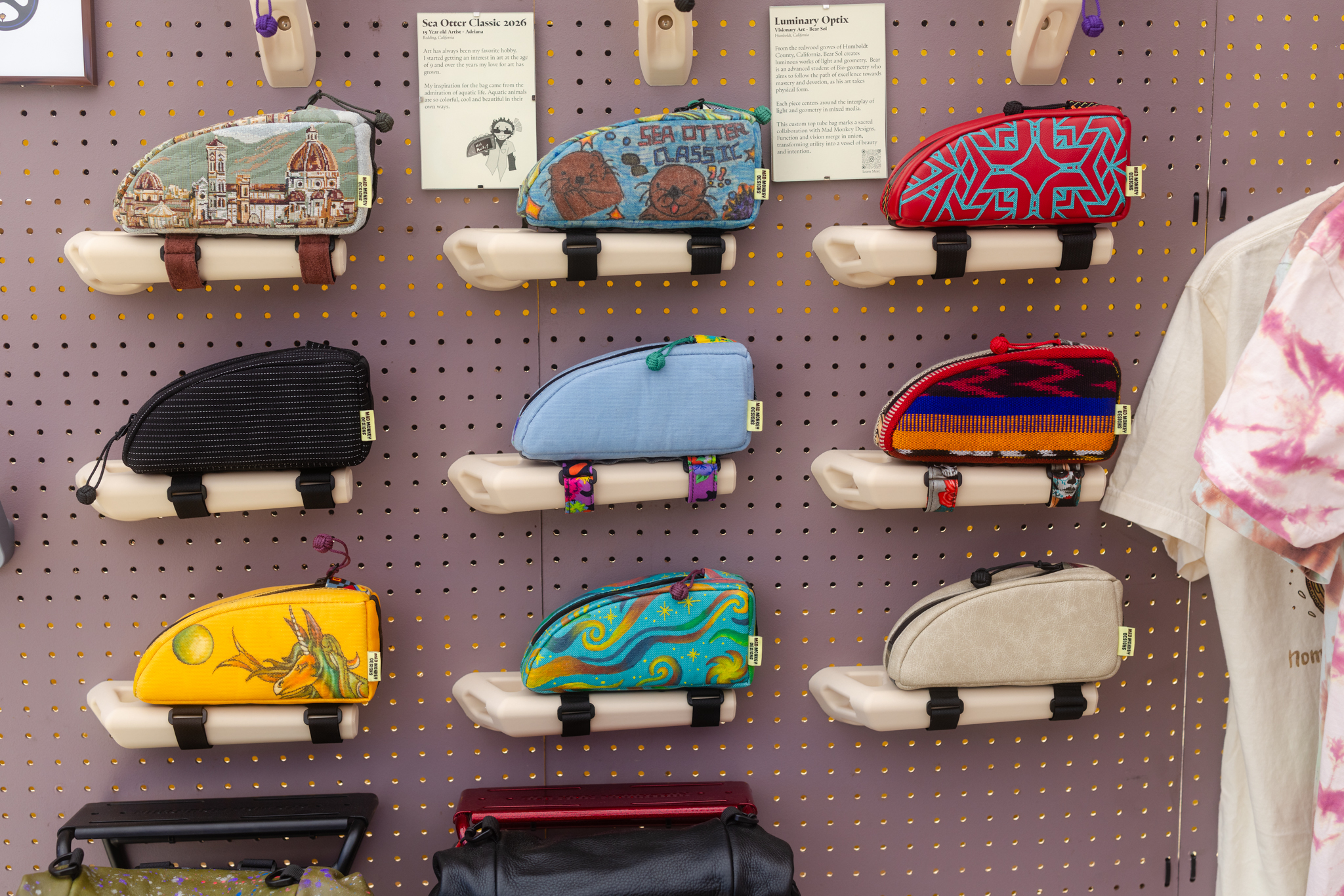
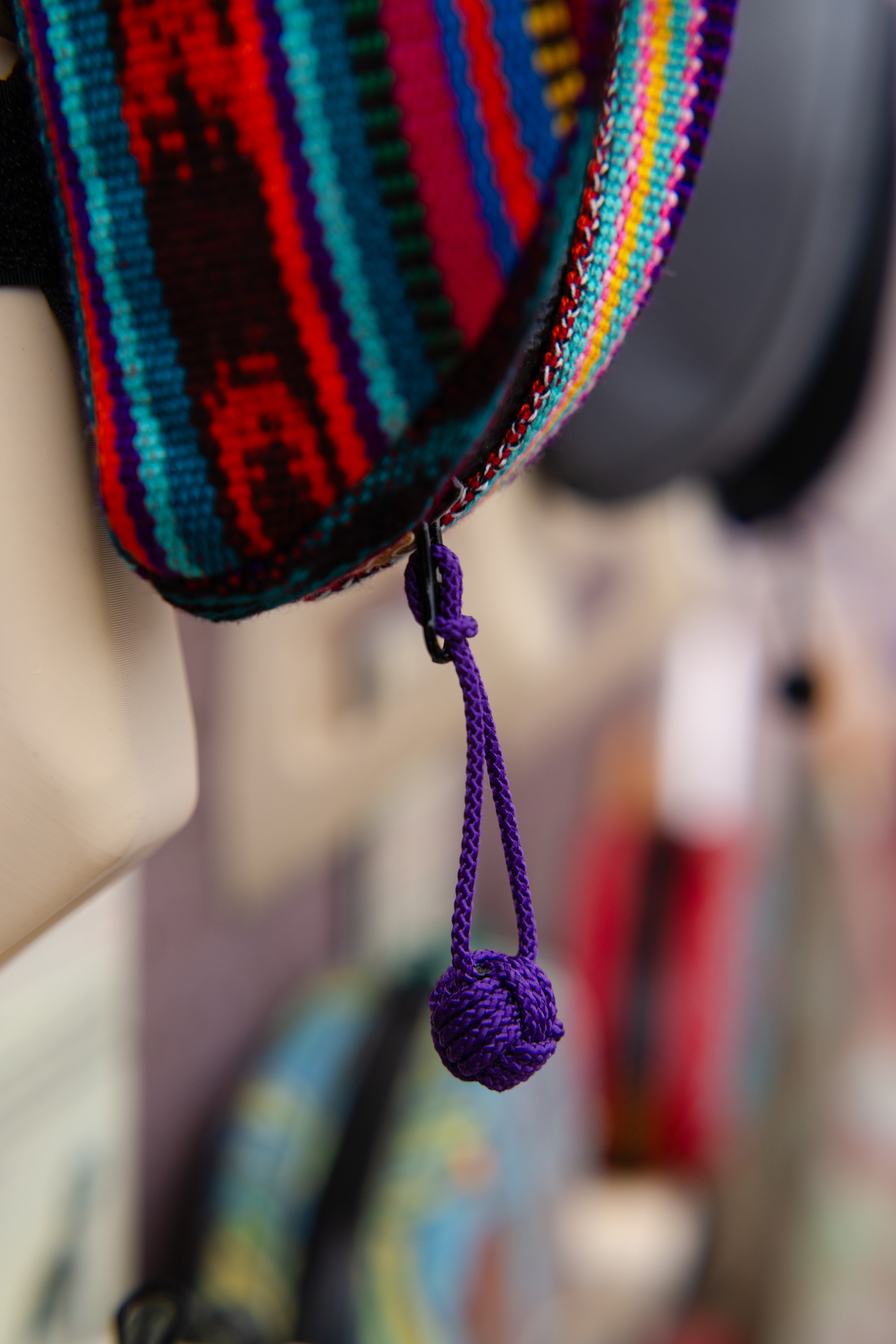
Like Louis Vuitton, Mad Monkey Design top-tube bags aren’t cheap. They range from $150 to $250 each. And their pannier bags go for about $400 each They happen to be extremely well-made, from the multiple layers of support and weather protection, down to the hand-wound “monkey’s fist” zipper pulls. But we should judge the price like we should judge that of a one-of-one painting for sale on a wall in an art gallery. It’s never been done before, and it’ll never be done again. At the time of writing this, you’ll notice all the bags on the Mad Monkey site are “Sold Out.” That’s because they’re all for sale on a wall at Sea Otter. When they’re gone, they’re gone.
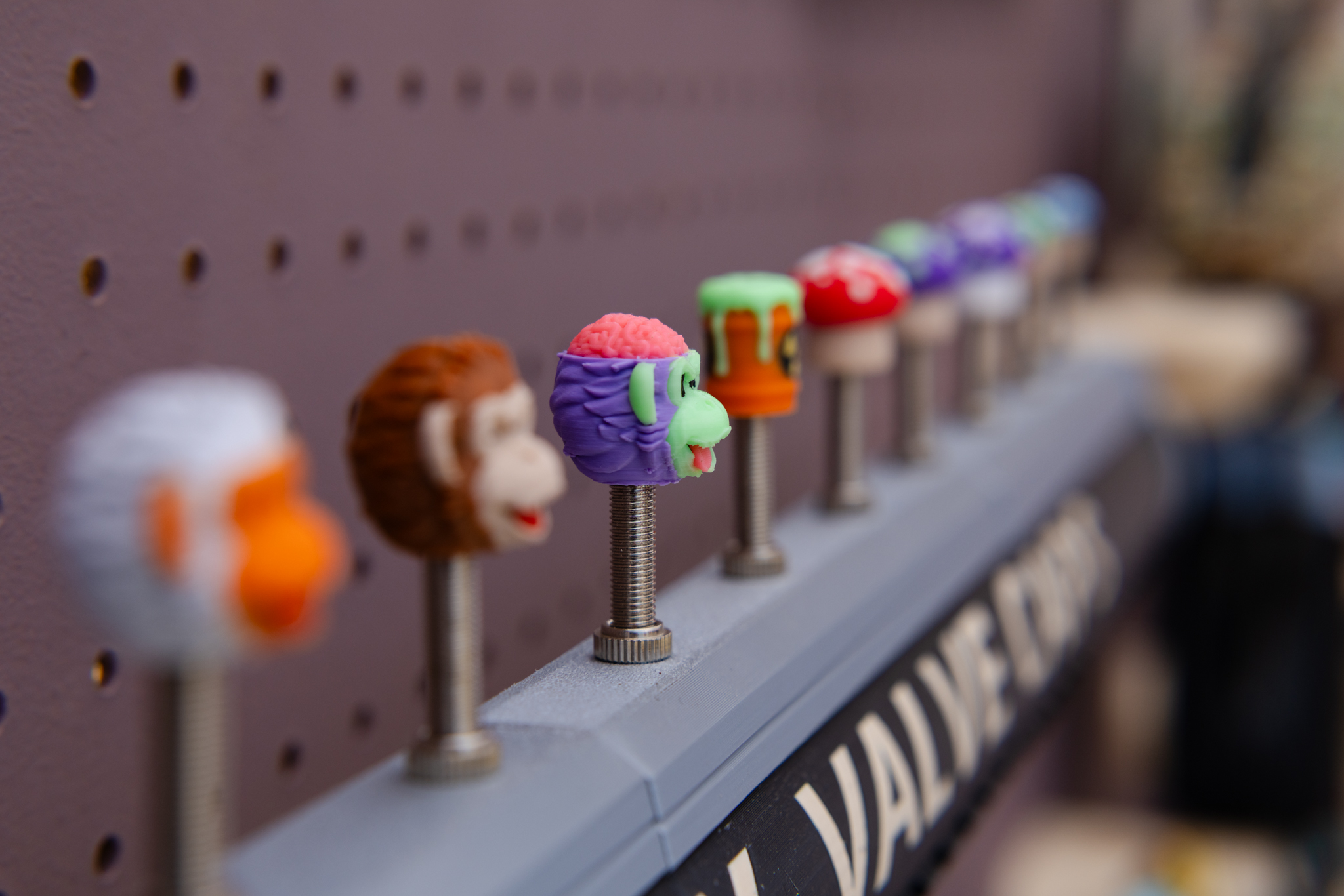
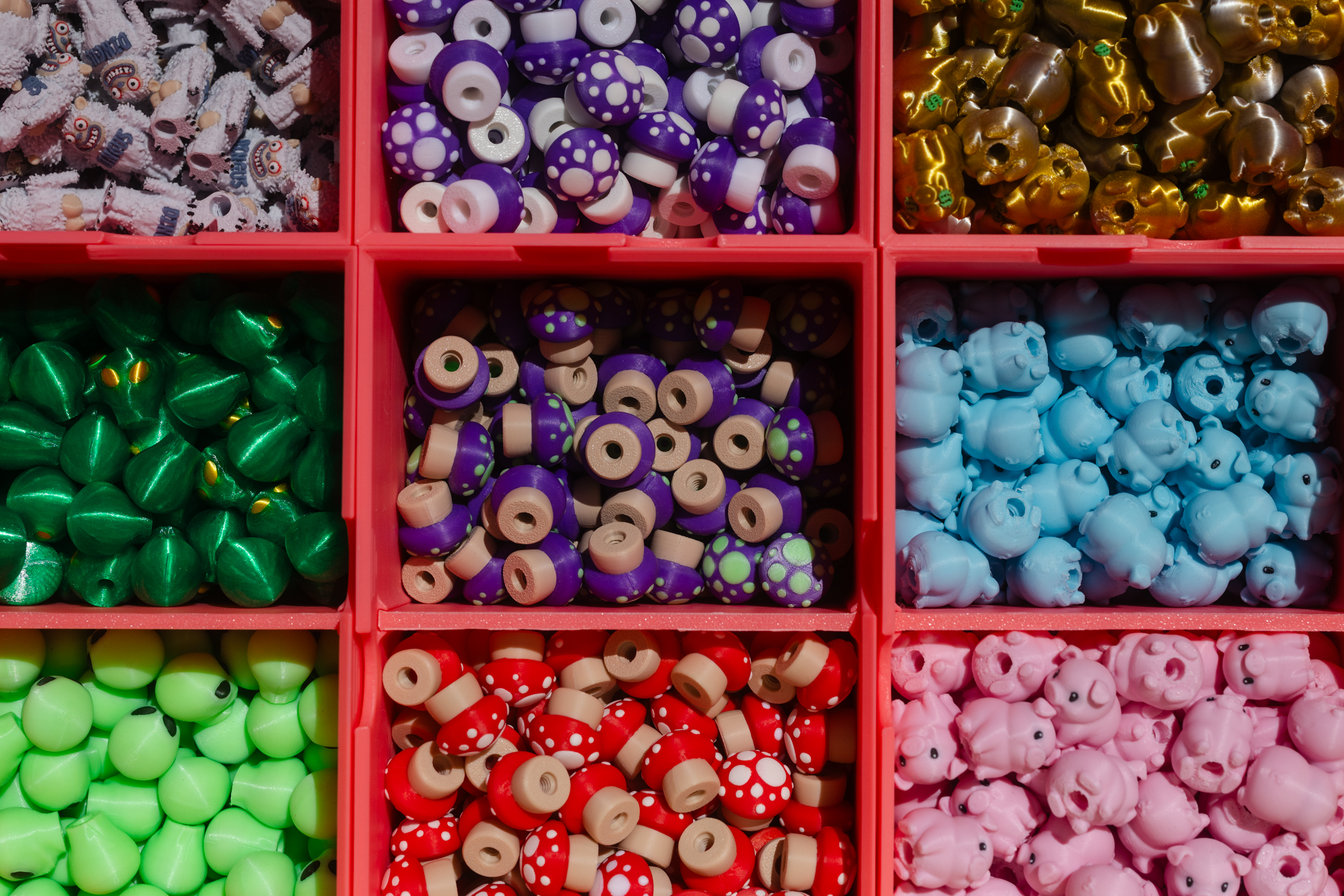
Of course, not everything Mad Monkey makes is so expensive. They also have a lineup of whimsical 3D printed valve caps and tchotchkes that are more whimsical, more readily available, and more like $10 each. They’re still art, though.
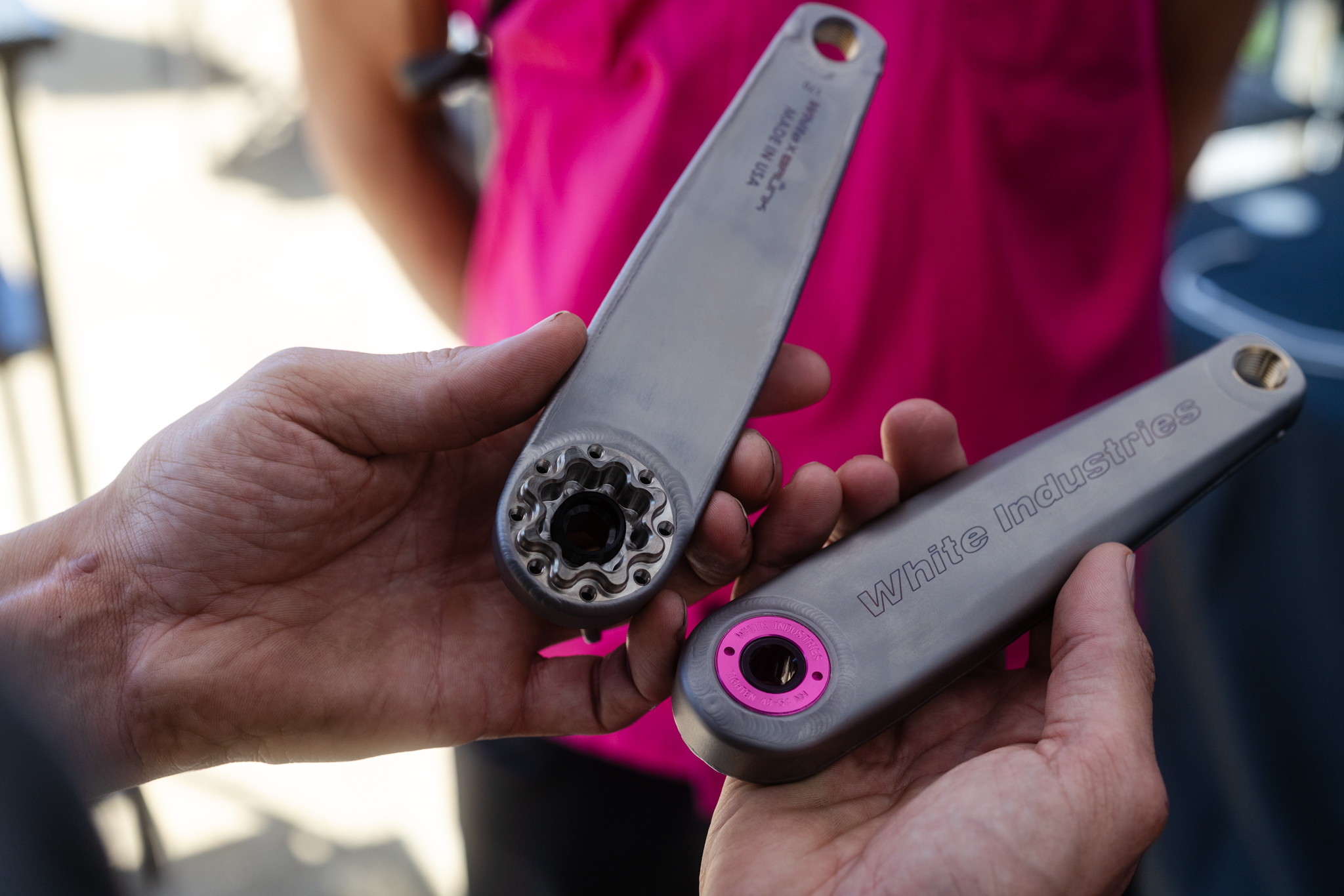
White Industries T30 Titanium Cranks
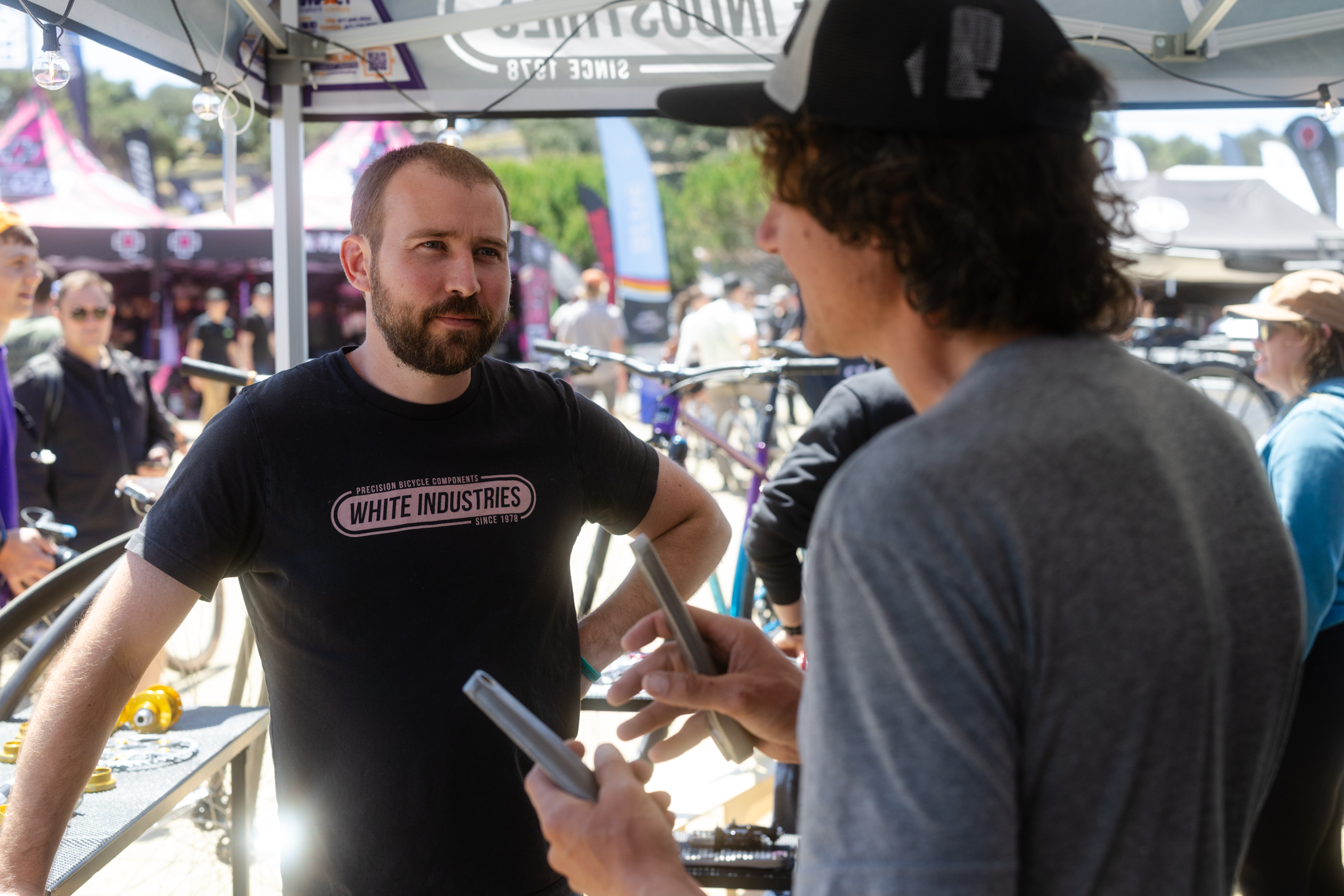
This was my first chance to get my greasy fingerprints all over the White Industries T30 titanium cranks. We covered the specs when they launched a couple days ago, but I got to talk to Alec White himself, White Industries designer, engineer, and CEO. He gushed about the partnership that made the T30 possible, which was a collaboration between White Industries, Moots Cycles, and metal-forming specialist, Bunk Industries. That’s cool and all, but his eyes really lit up when we started talking about bottom-bracket spindles and chainlines
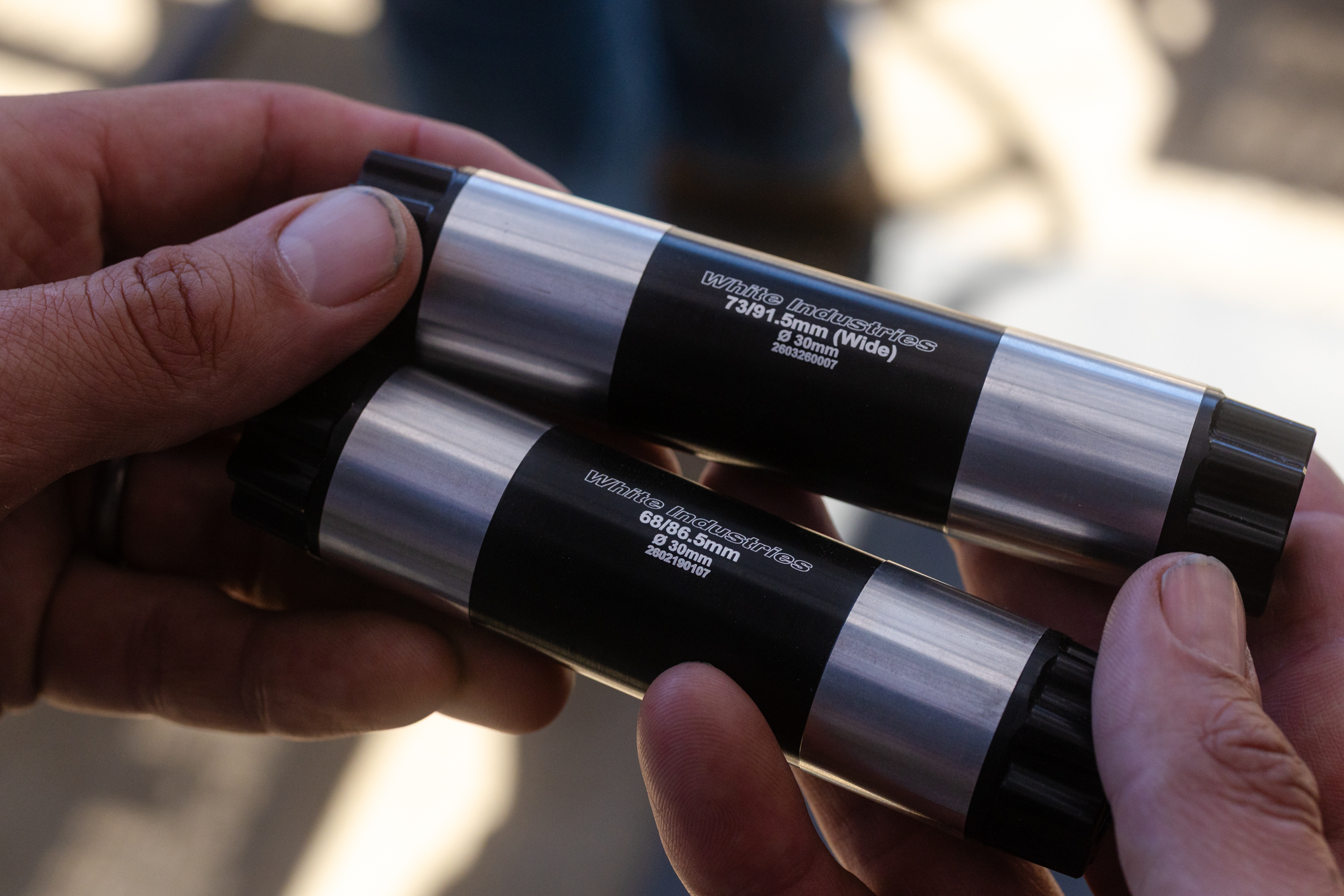
The two-piece cranks that dominate mainstream high-end spec mean fewer bolts and fewer grams. B something got lost when Shimano picked up the torch Bullseye had dropped a decade before. Your cranks are now inescapably linked to a spindle length. The T30 uses a three-piece design, which means White Industries (and Moots) can pair the titanium arms with whichever aluminum spindle a customer needs. Maybe that’s for a road or gravel bike with a 68mm bottom-bracket, or maybe it’s a mountain bike with a 73mm bottom bracket. Maybe someday you want to switch from one to the other. A three-piece design allows you to keep both arms of your $1,350 cranks. It’s a nice perk, no matter how greasy they get.
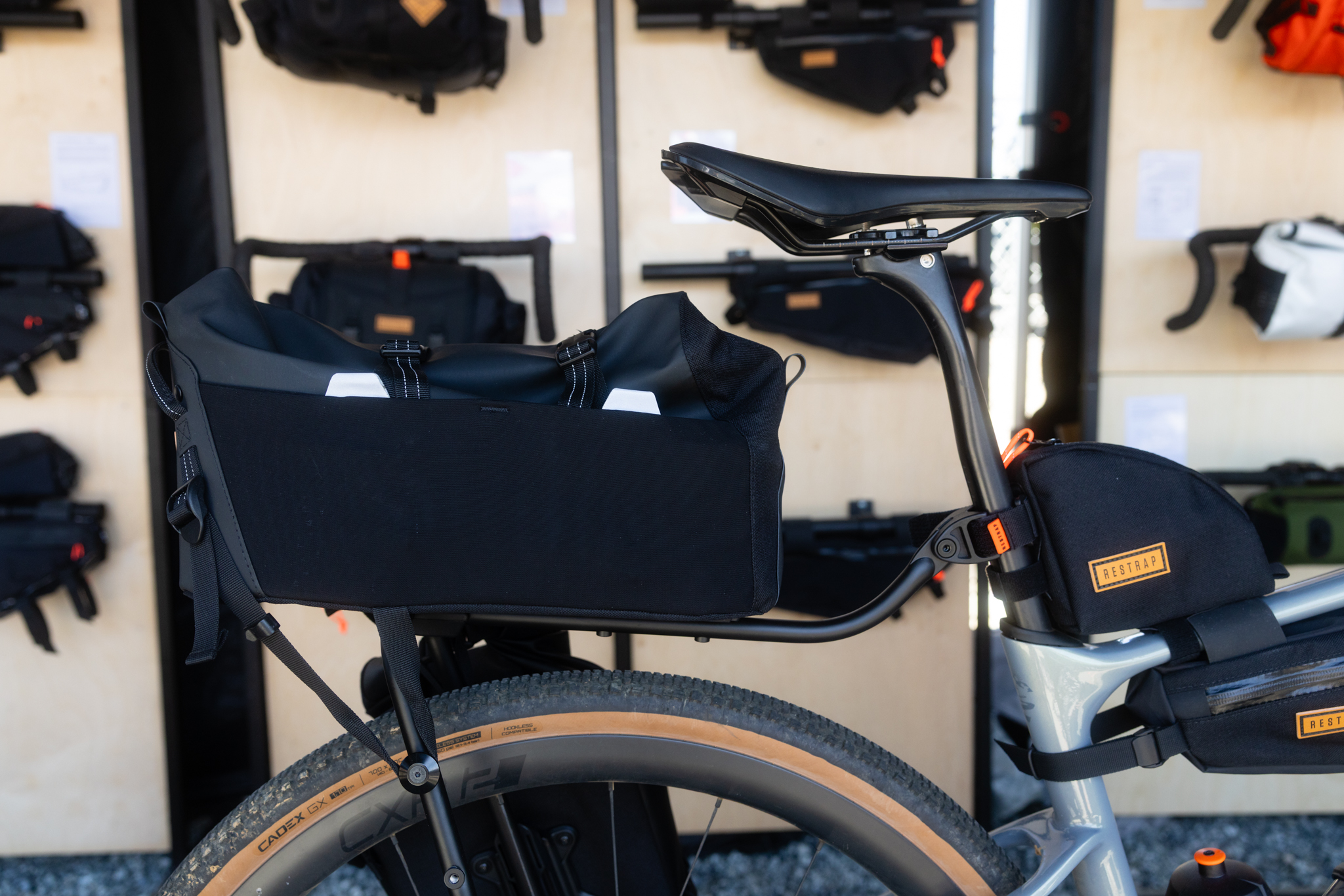
Restrap Switch Rack Bag
If all you want out of a bikepacking bag is durability, capacity, or maybe just minimal weight, there’s no shortage of options. But if you want convenience, that’s kinda tricky. It’s taking the industry a while to evolve past Voile straps and dry-bags. Restrap is at this year’s Sea Otter with several ways to make hard rides a little easier.
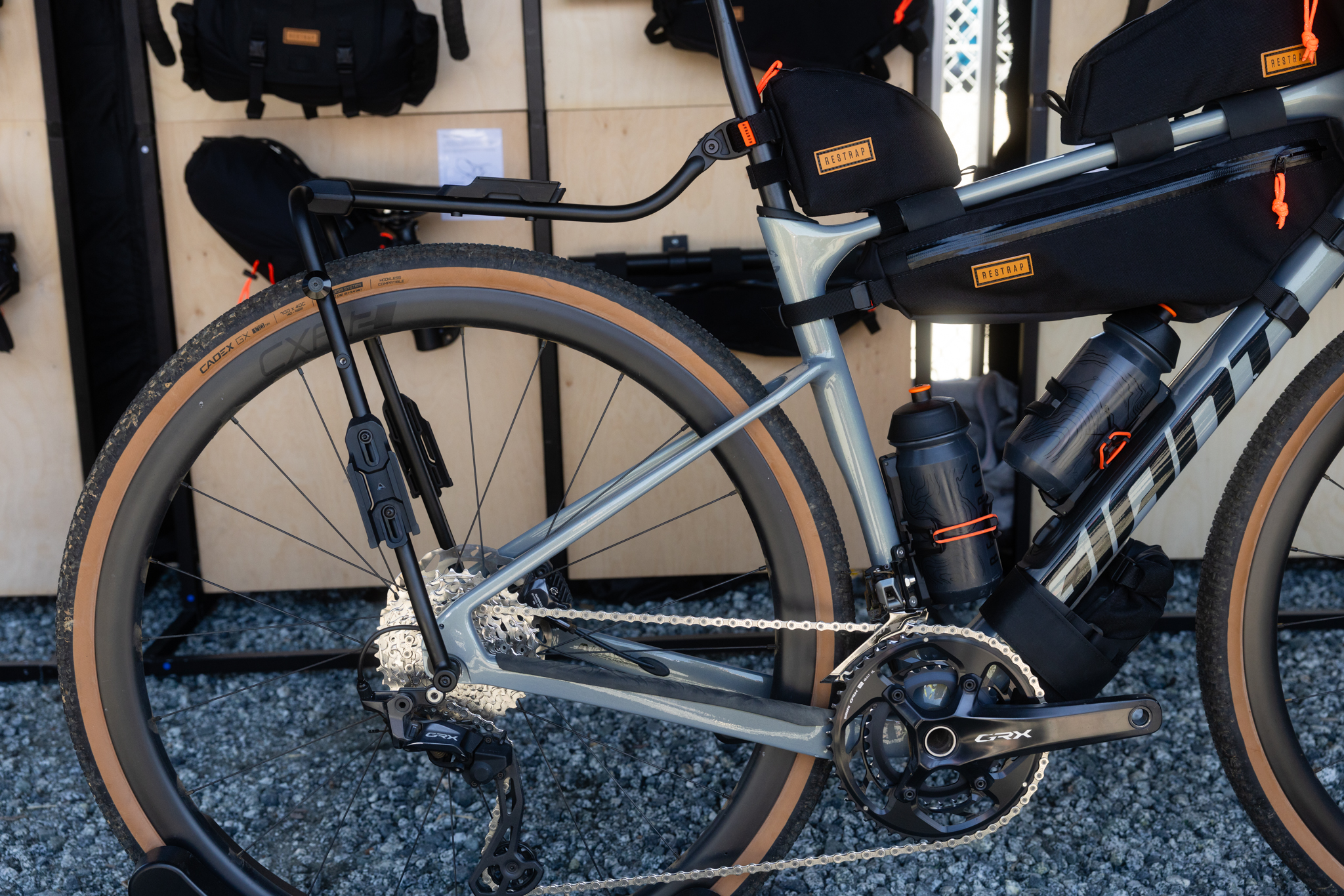
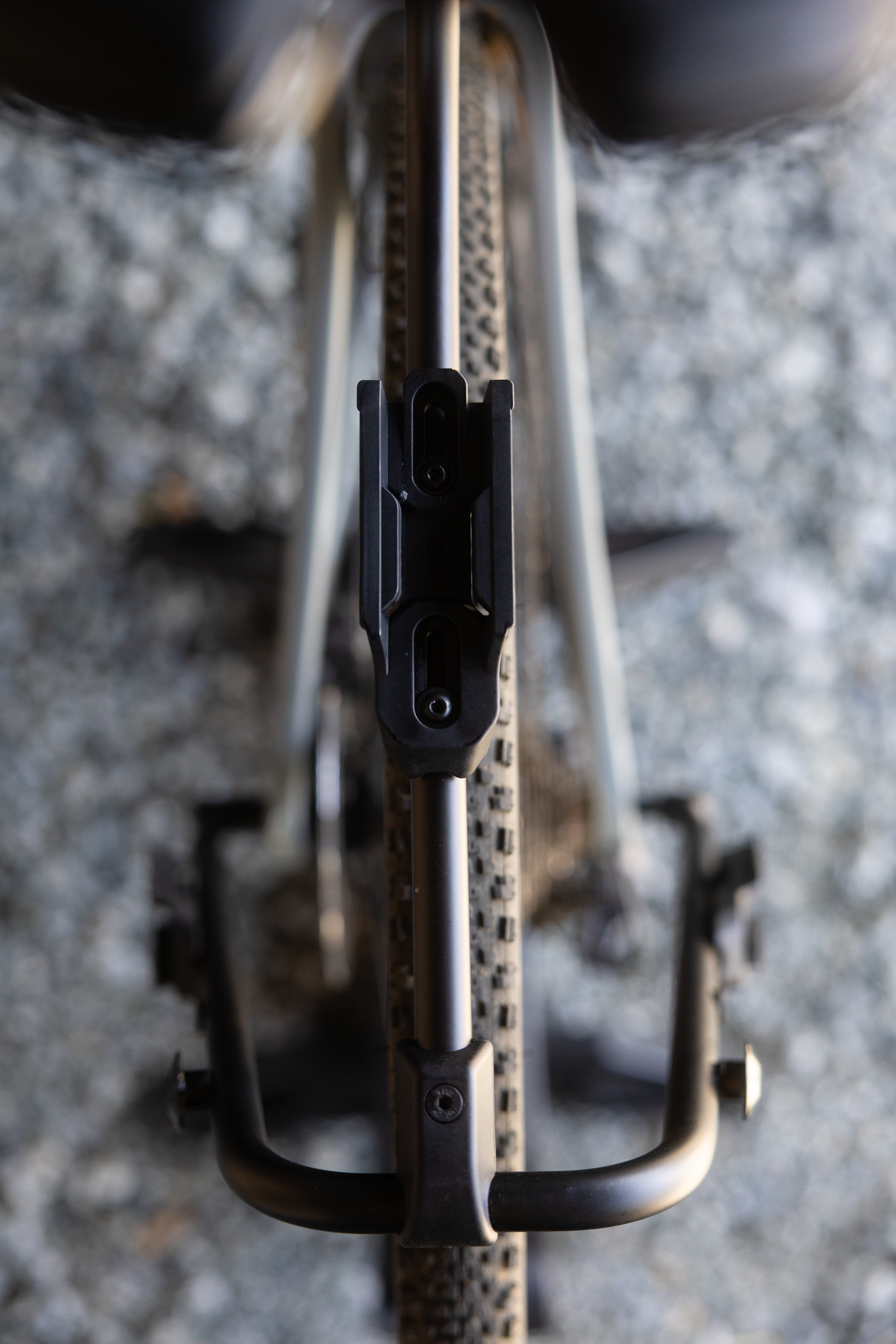
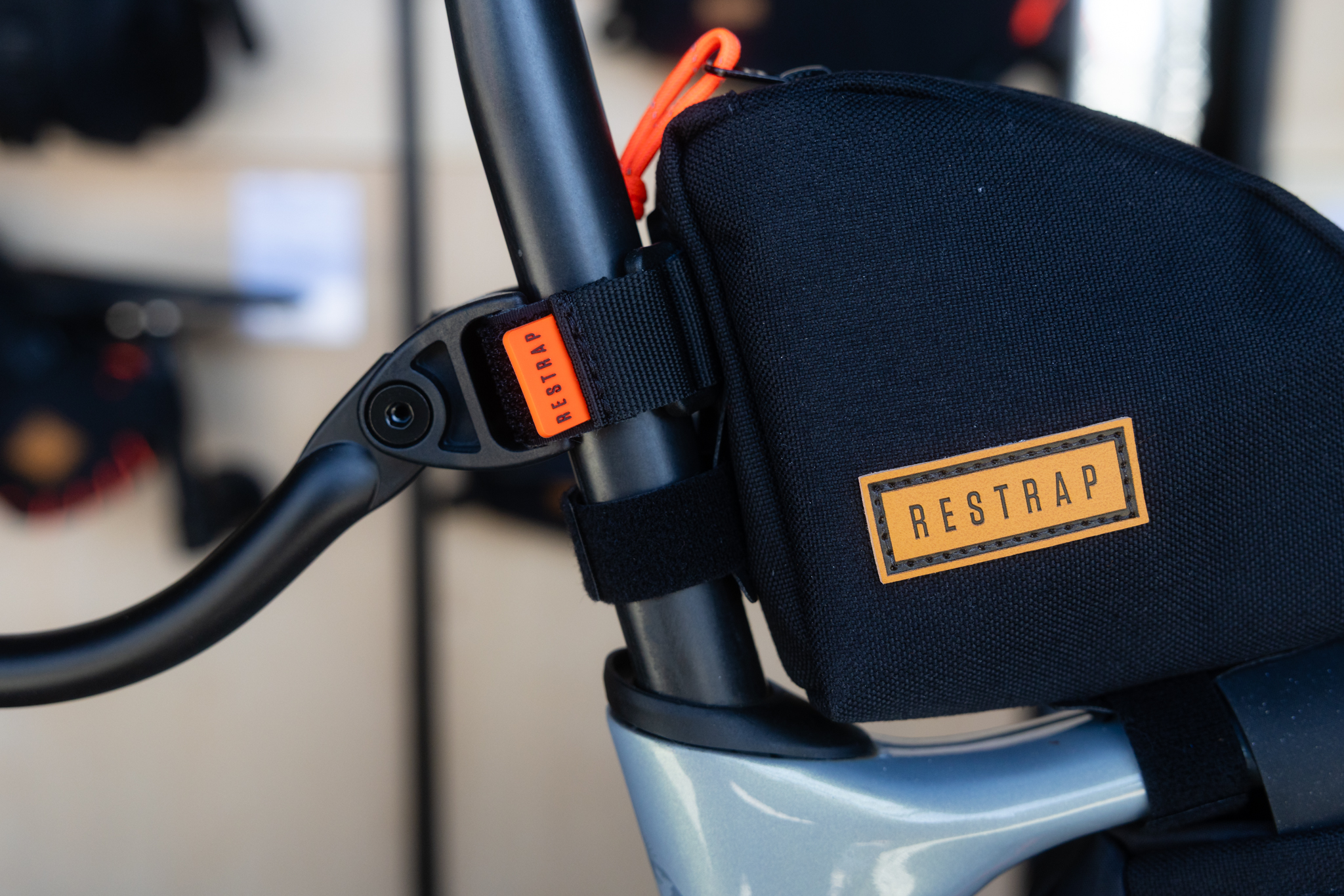
Their Switch Rack launched in February, and is a bit like the minimalist axle-mounted racks made by Tailfin. It clamps to the seat tube and to a special thru-axle. It’s got three bolts on each side and two bolts up top. We got a sneak peak at a new bag system that mounts to those two bolts via a unique slide-lock mechanism called the Switch Multi Mount. Pioneered by fellow UK brand, Hiplok, the Switch Multi Mount is already used on Restrap’s Switch Pannier fork-pack bags. This new concept flips that same interface horizontal and adds some support surfaces that rest on the uprights, cinched down with a couple webbing loops.
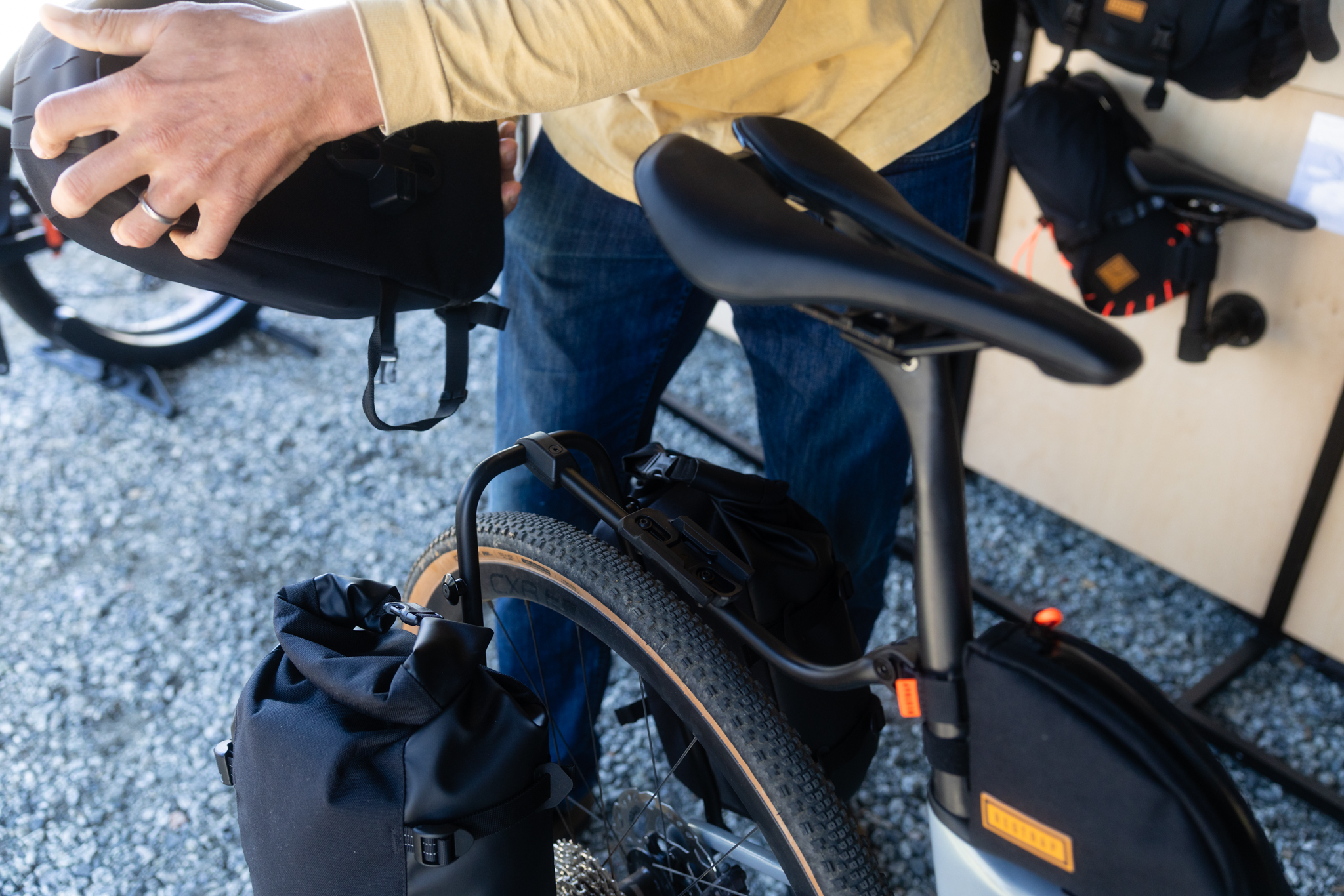
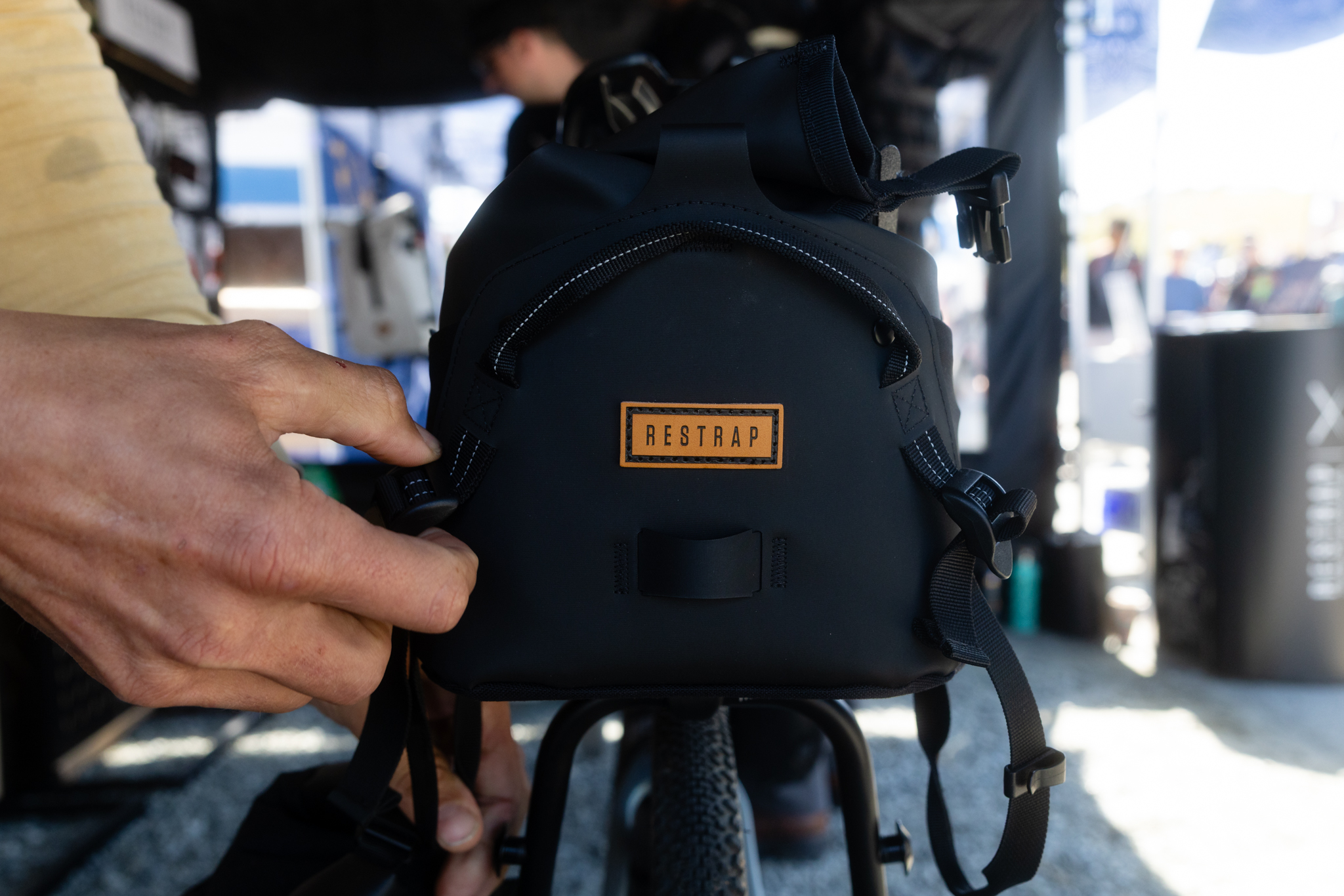
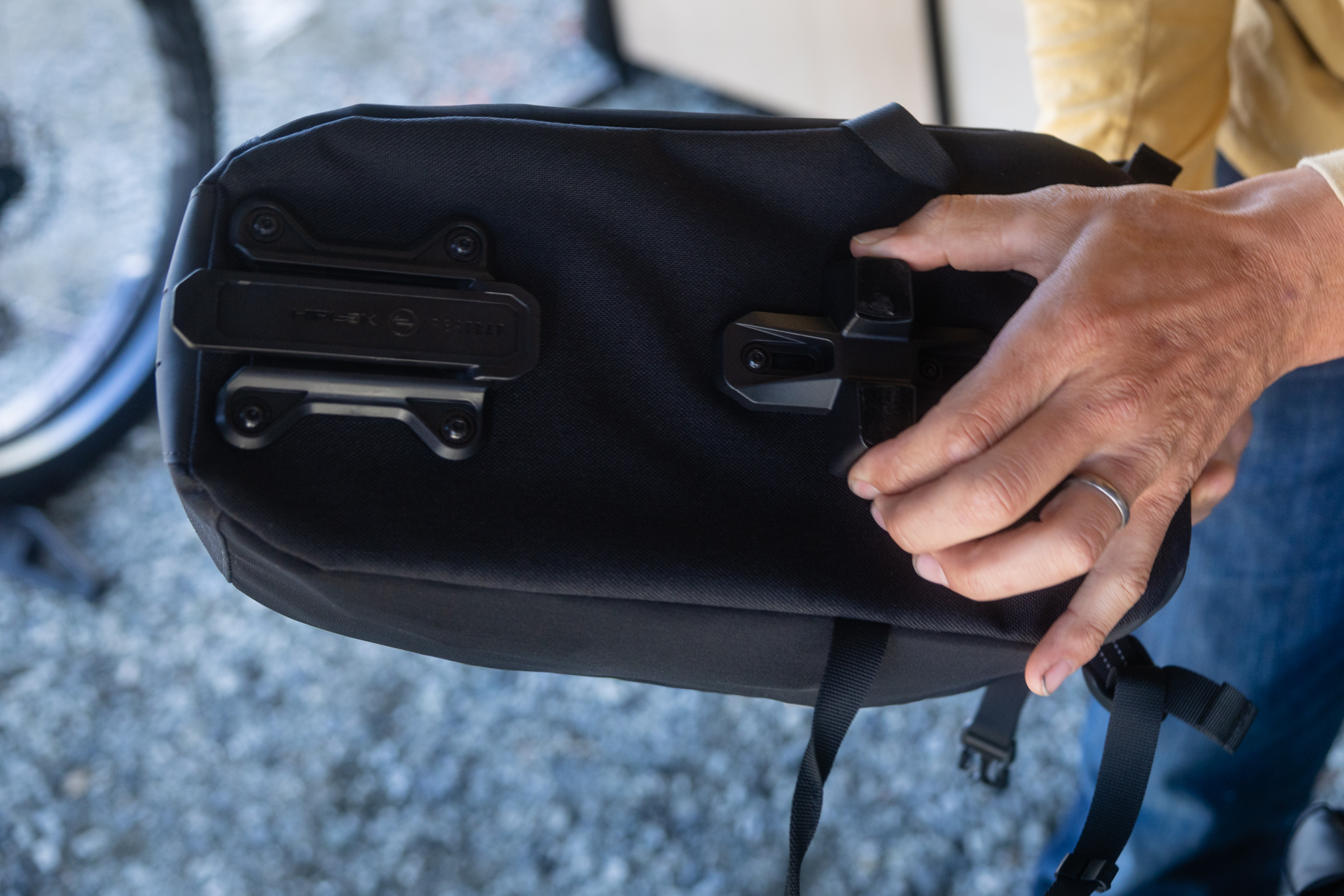
It’s an intuitive system. I had already successfully removed and reinstalled the bag before anyone in the Restrap booth could even ask me about the coolest thing I’d seen at Sea Otter so far. The Switch Multi Mount kinda guides itself in, though there’s not quite as positive a “click” when unlocking it like with the KLICKfix system used by Evoc. But those cinch straps hold the bag’s wide, stiff base firmly against the rack. It makes for a system that’s very stable. And very convenient.
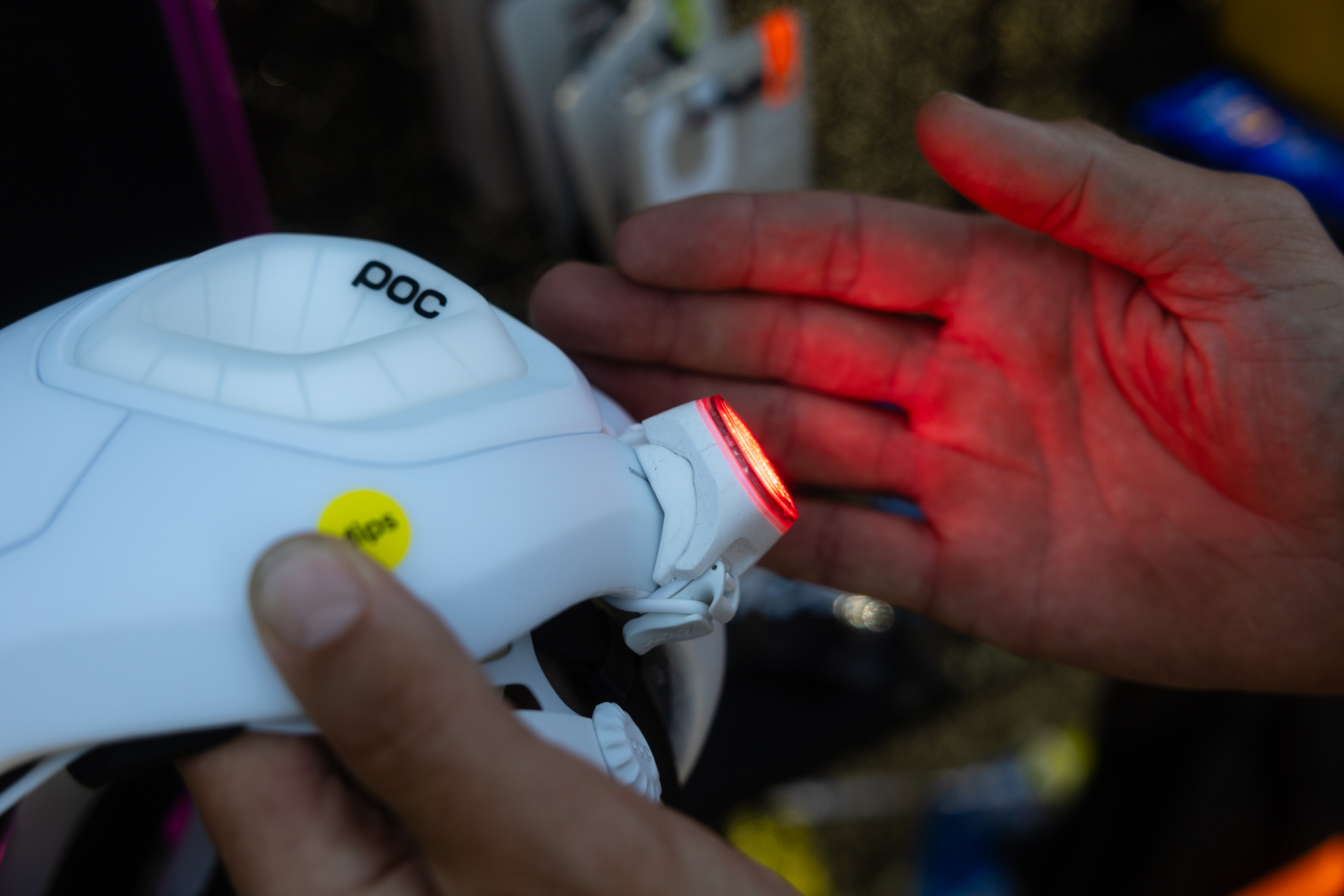
Knog Blinder Mini / POC Amidal Collab and Cobbler Reflex Lights
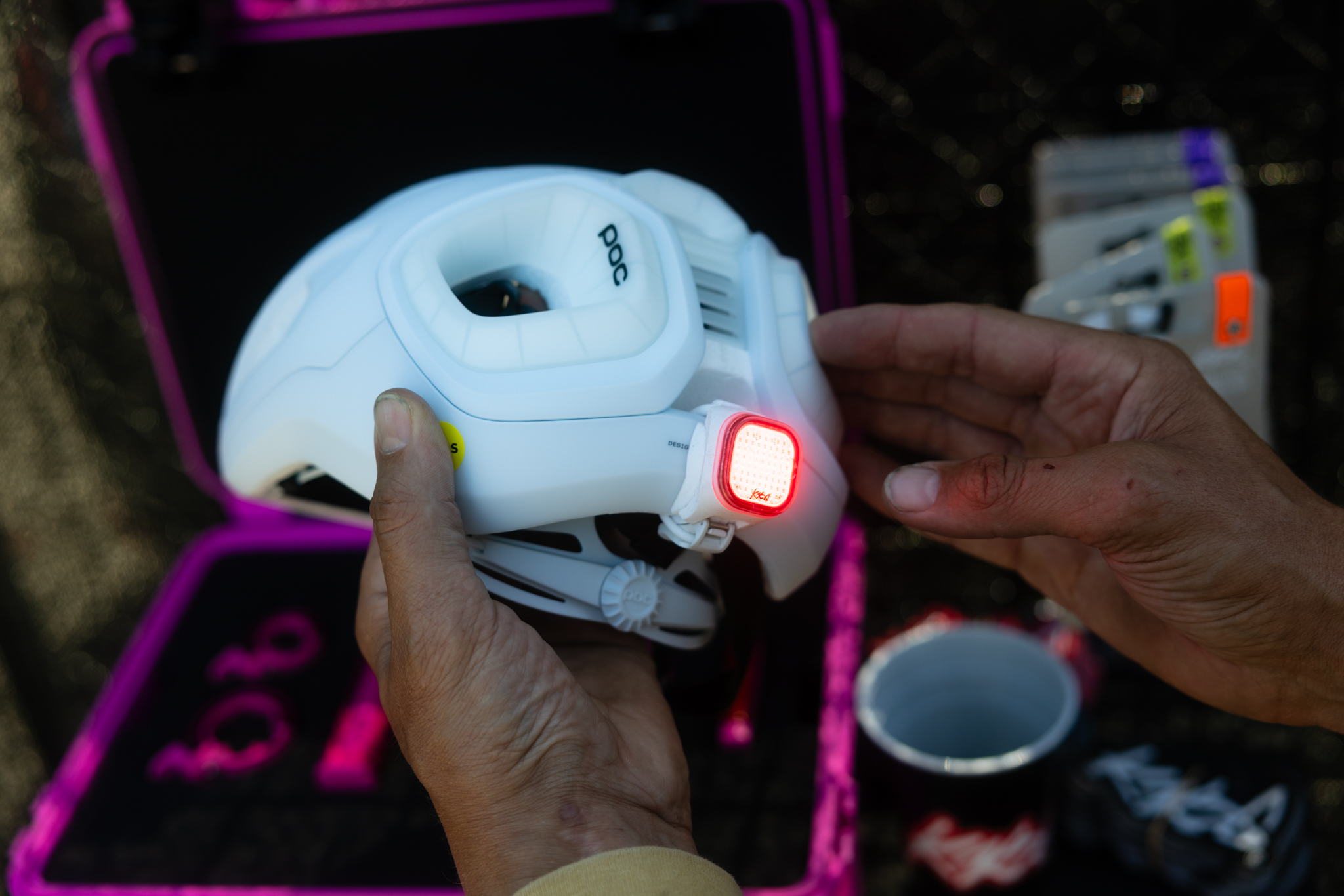
Wanna feel old? Knog’s colorful silicone “Frog” LED lights debuted almost 20 years ago. They’ve been proving that safety can be fun since 2008. And they’re still at it. The Blinder Mini silicone light is kinda what the Frog would look like at 18 years old. It’s much brighter, but it’s still small and light. I remember clipping a Frog through a vent on my helmet, which wasn’t always easy. Knog finally has a clever fix for that, as long as your helmet is the new POC Amidal. Knog made a special insert that helps the Blinder Mini contour through a rear exhaust vent. And of course, it comes in matching colors.
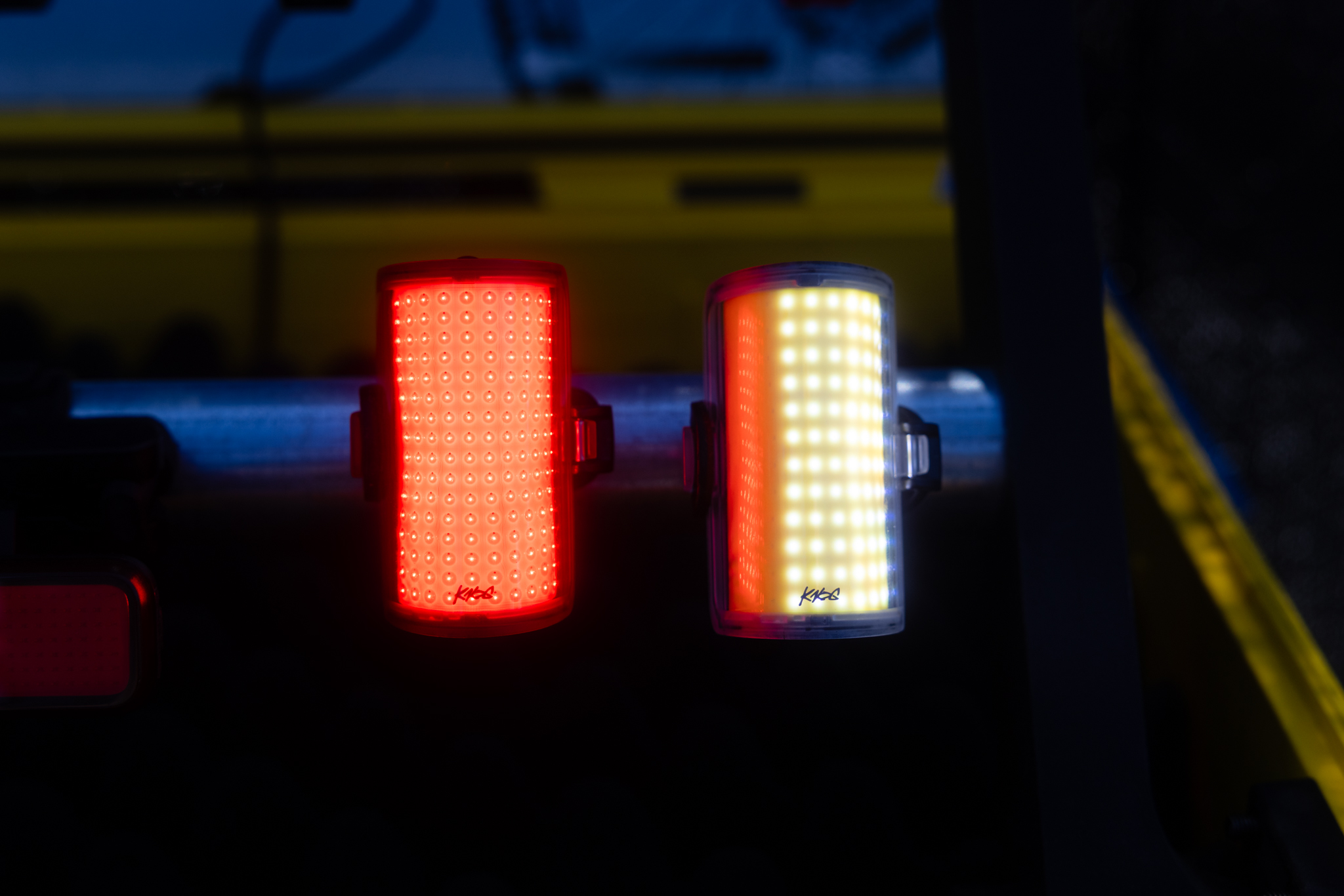
Their higher-tech Cobbler Reflex lights were also on display. They feature an accelerometer that can automatically and instantly increase brightness when you decelerate. That accelerometer also allows them to turn on when your bike is moving and turn off when it’s stationary. There are a lot of creatures that now can be controlled at a pretty granular level with the Modemaker 2.0 app, which allows you to enable or disable the above features, or add, remove, and customize light modes. It of course is also a way to update the firmware, which we know is boring. But remember, we’re old now. We gotta take the boring stuff with the fun stuff.
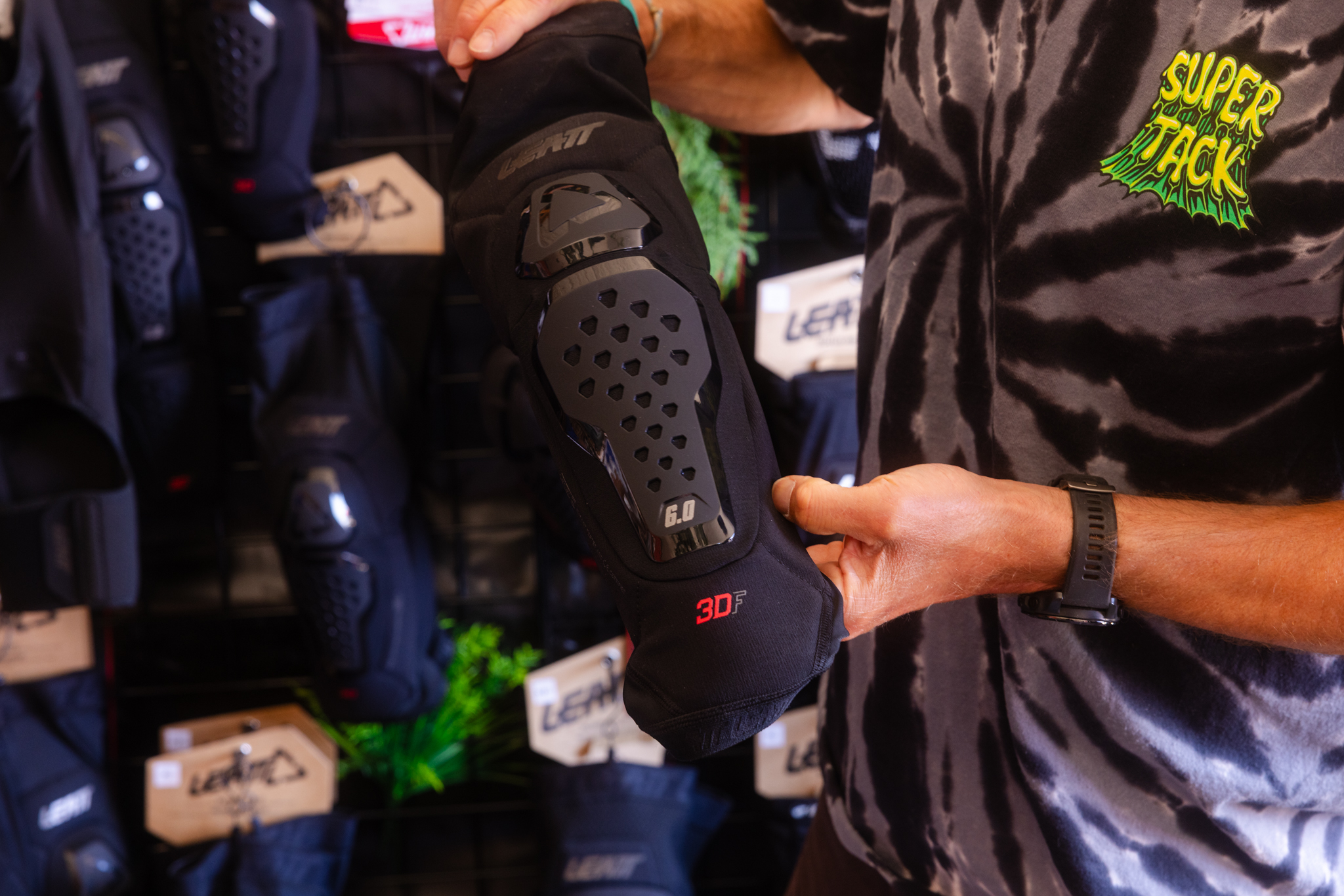
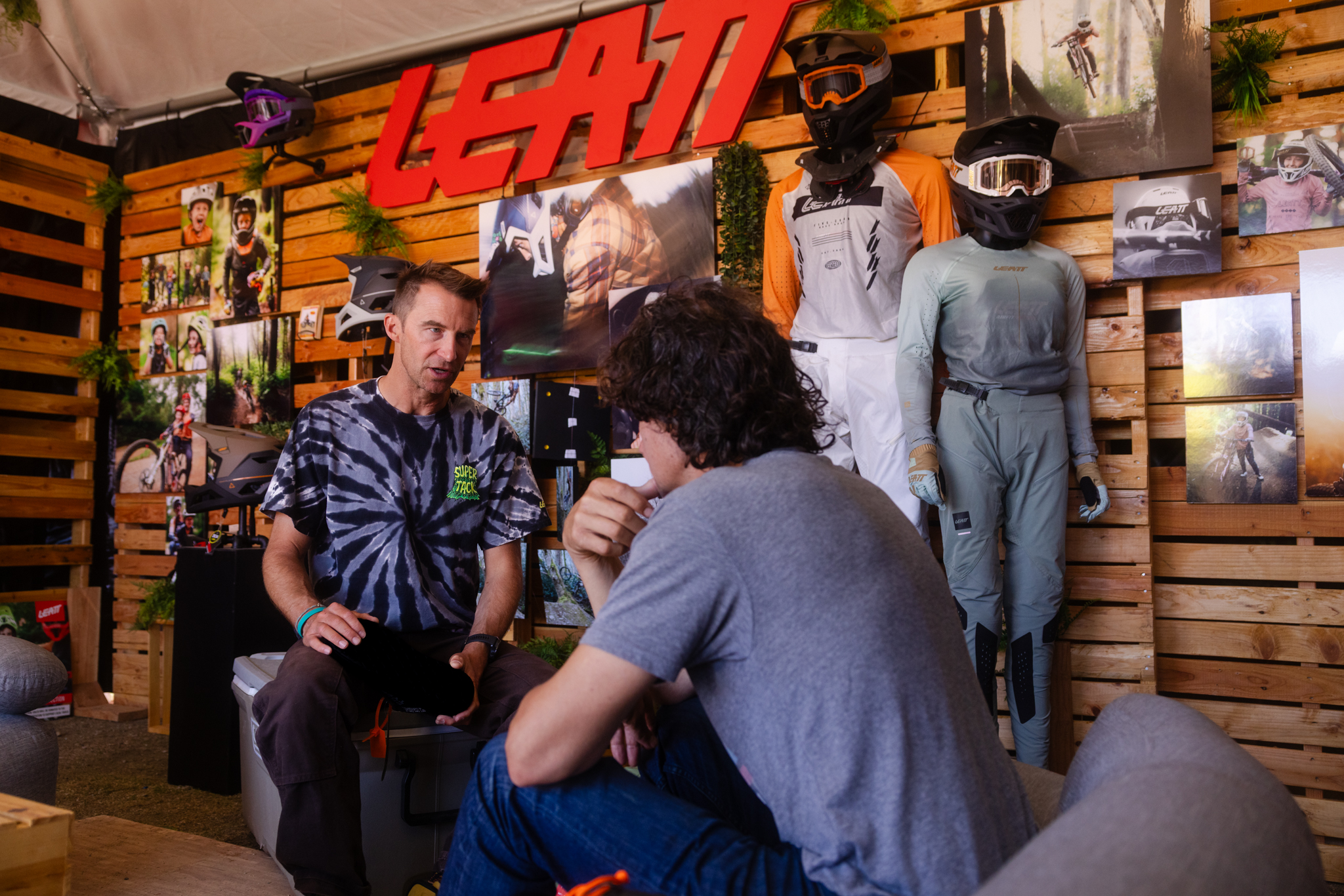
Leatt Knee Guard 6.0 Evo and New ReaFlex 6.0 Grips
Knee pads are hard to shop for without actually being able to hold them in your hands. You can’t tell how stiff or light or soft or stretchy they are until you can bend and twist and pinch them. While bending, twisting, and pinching my way across Leatt’s giant wall of knee pads, I was struck by their new Knee Guard 6.0 EVO. On a ten-point scale from minimalist to maximalist, I guess I’d appropriately put it at a 6.0.
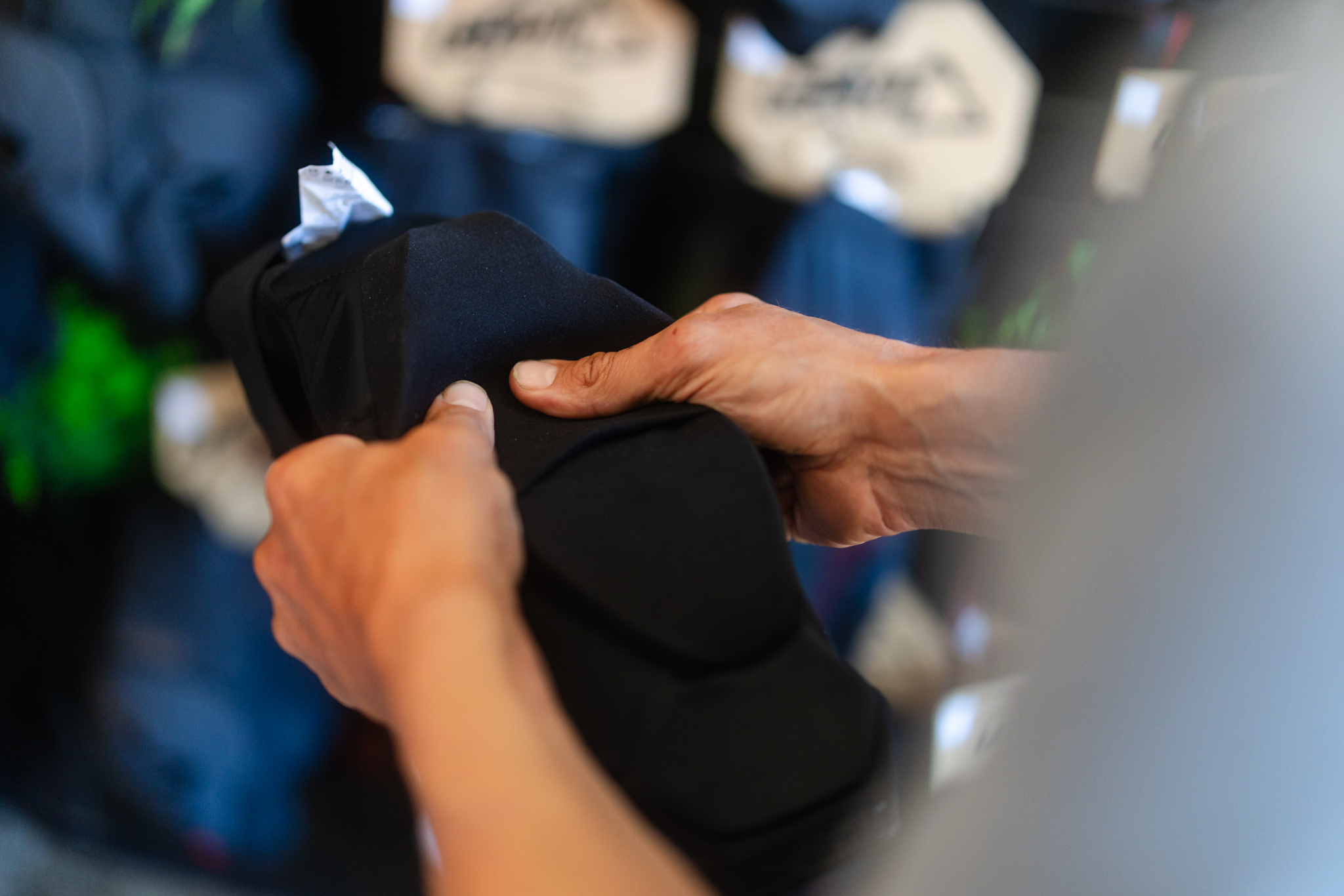
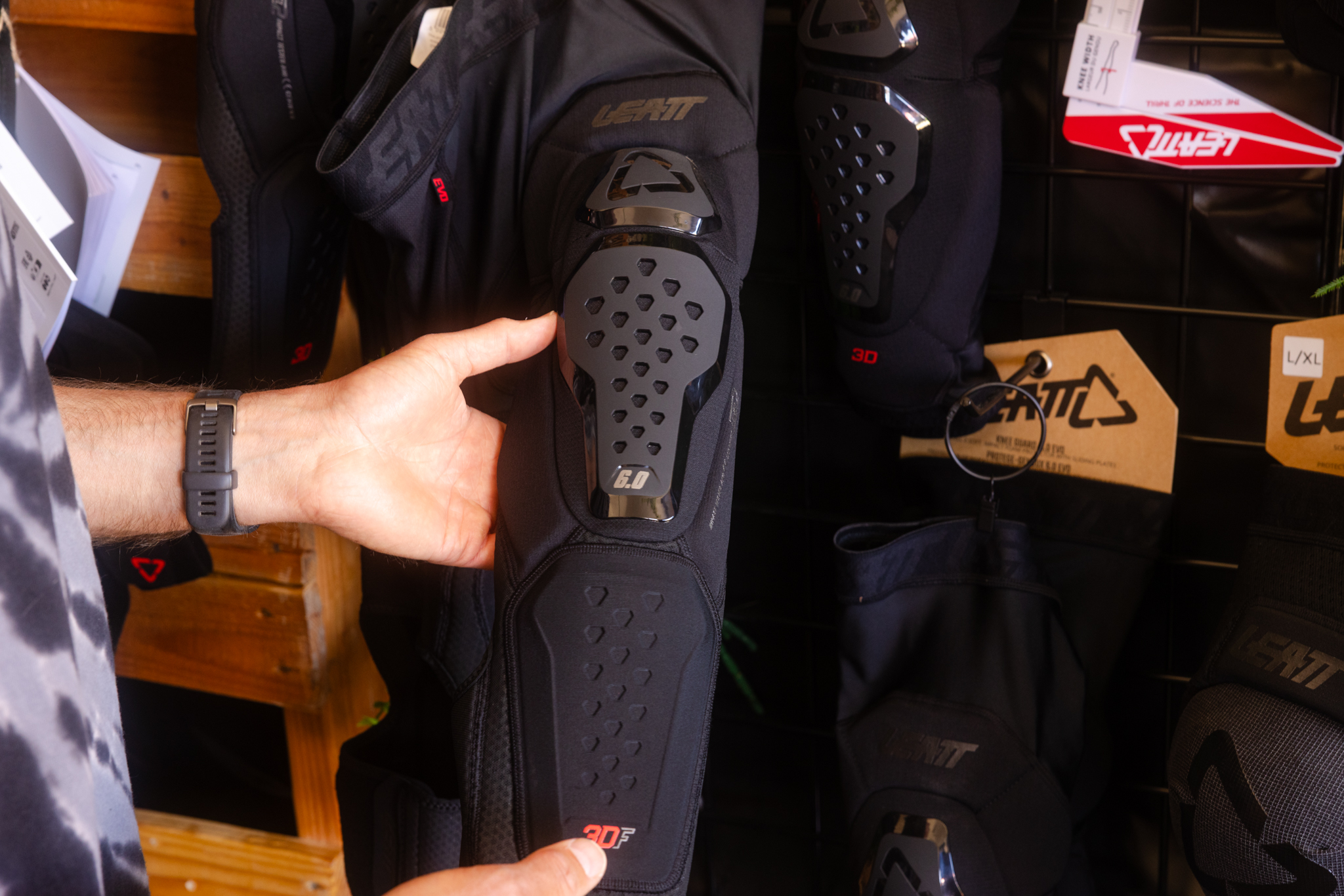
It’d fit underneath moderately slim riding pants, and is pretty flexible. There’s also a pleasant Mips-like sliding sensation between the fabric panel under the impact-absorbing material over the knee cap that helps keep it centered but limber while pedaling. And most importantly, they got a CE 2 protection rating, which puts its safety rating on par with bulkier, less pedal-friendly pads.
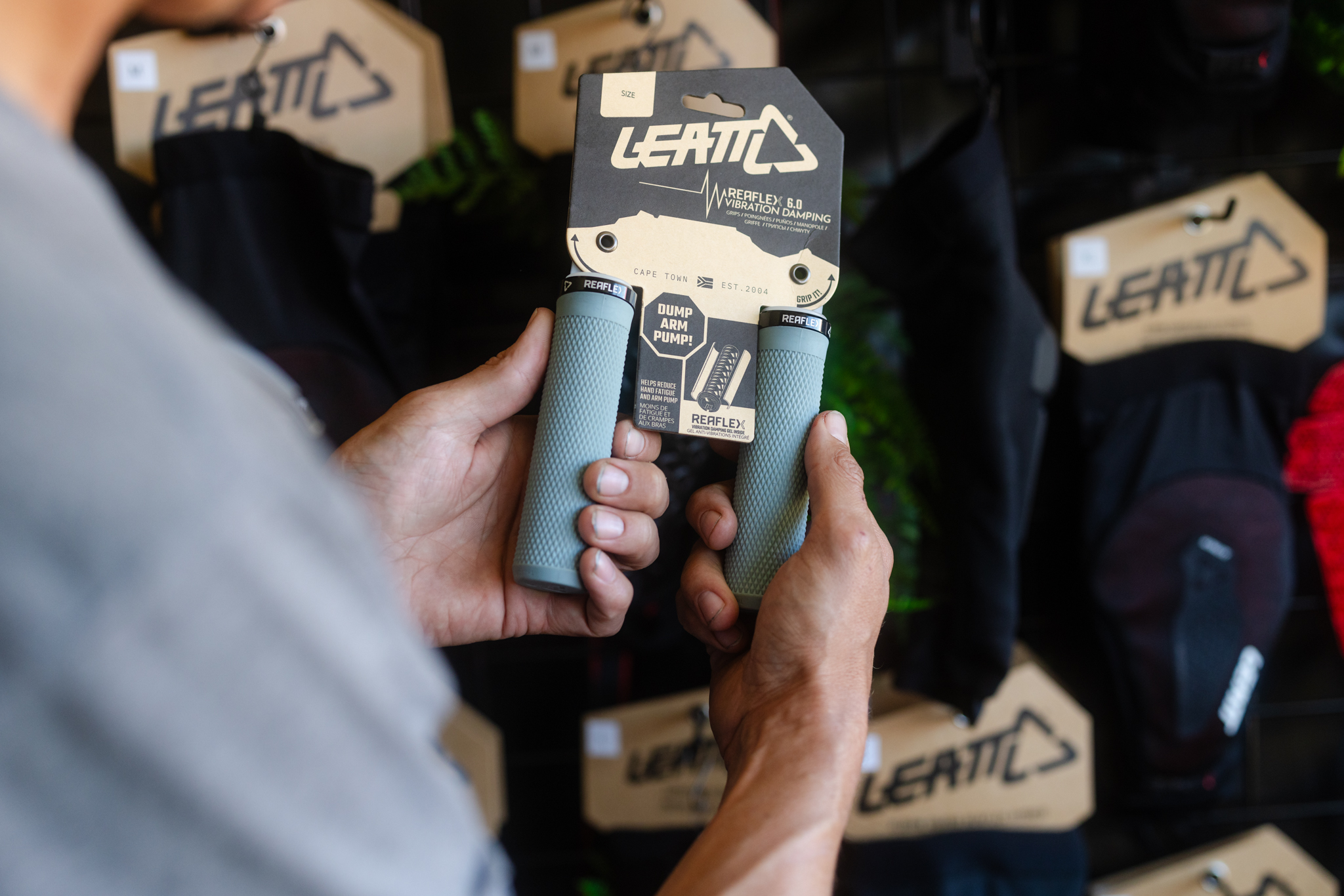
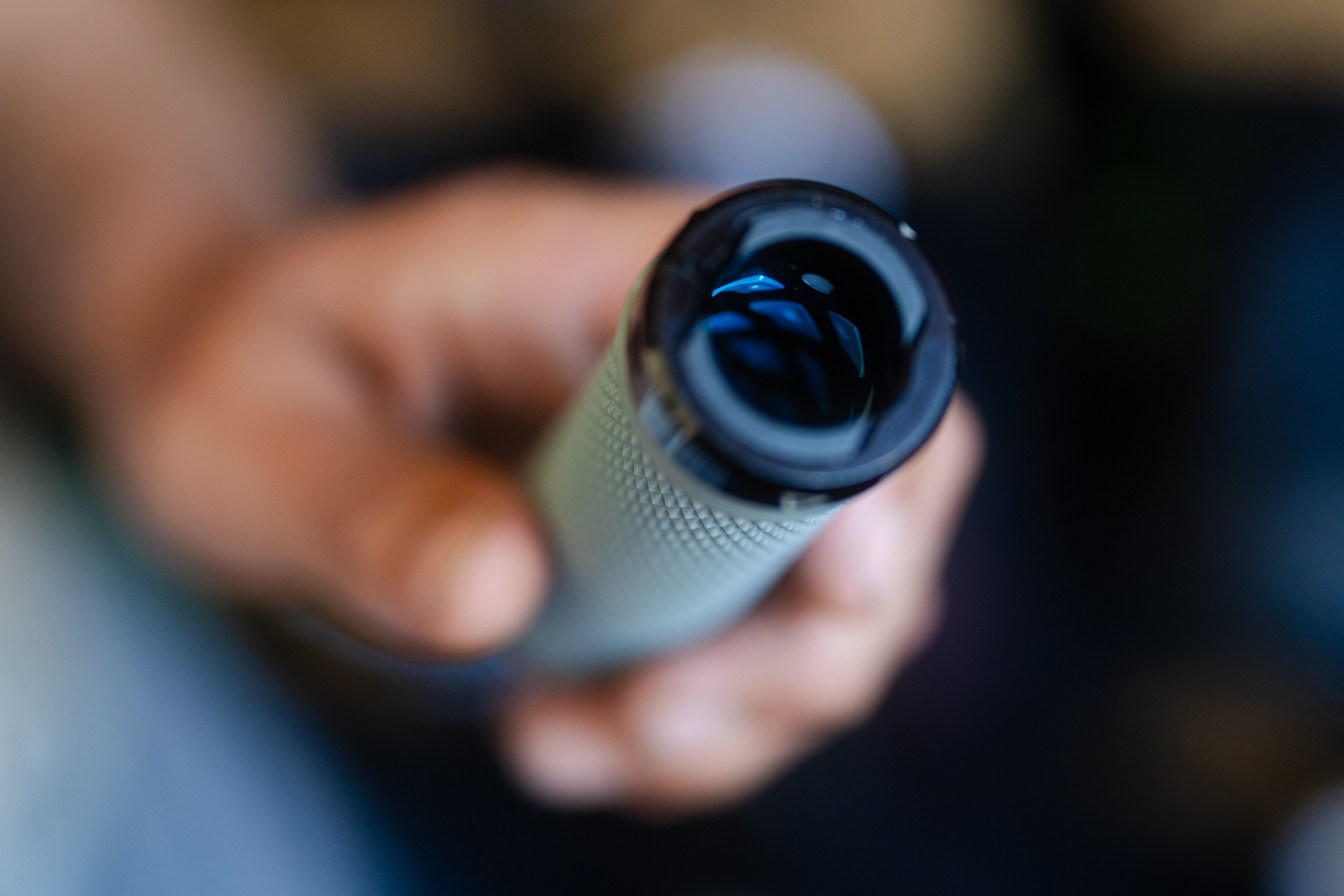
Leatt is also soon to update their ReaFlex 6.0. It’s now a simple, non-contoured, non-waffled model with a consistent diamond print a-la ODI Ruffians. Unlike Ruffians, it features an impact-absorbing layer that extends from a layer just below the grip’s rubber outer skin, through several perforations in the plastic core. It behaves a bit like D30 pad material, staying relatively soft under mild pressure but firming up on impact. They also come in 31 or 33mm diameters, which I love to see. I’m into fat grips.
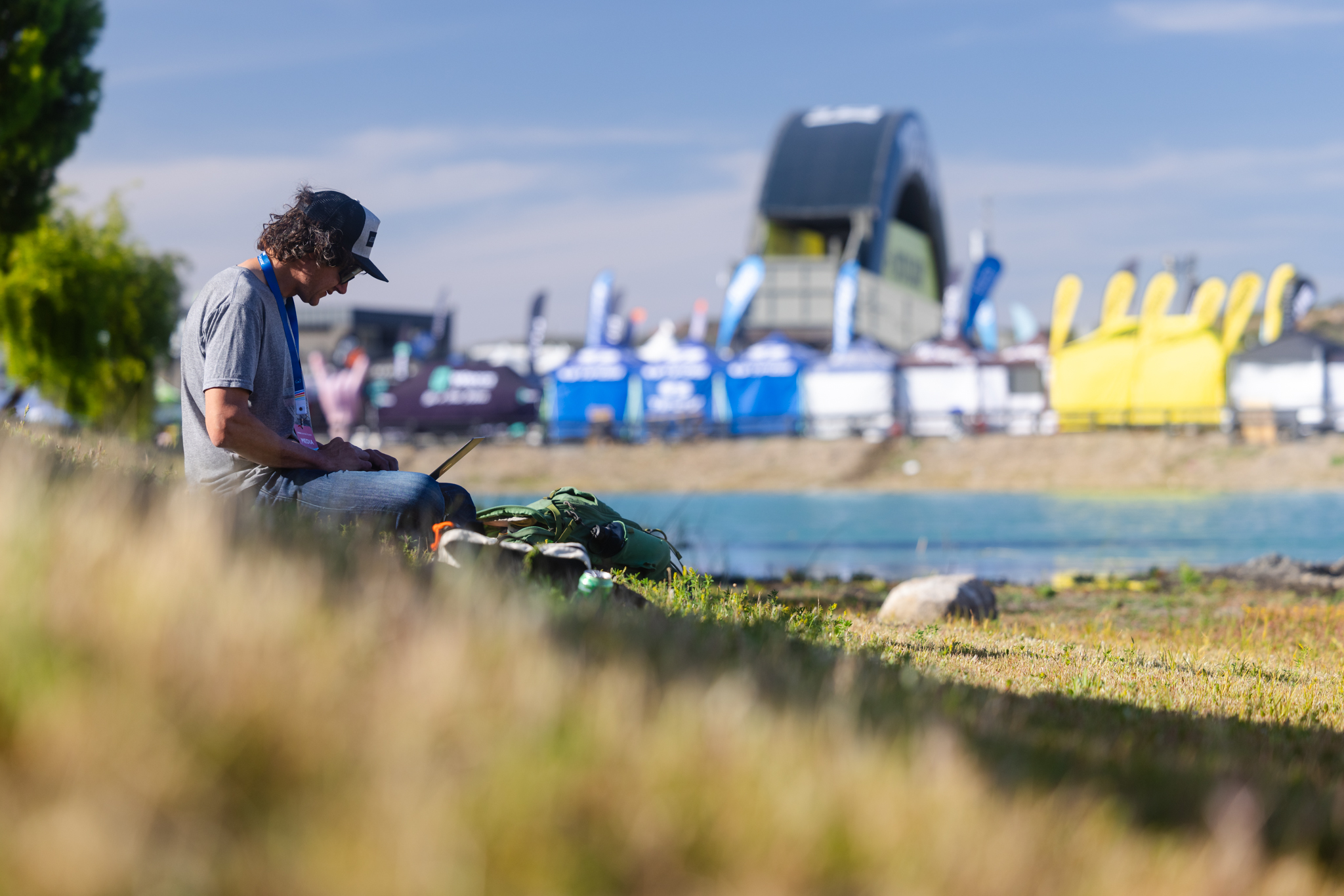
Josh Becker making me look like I’m actually a professional
Shout out to our photographer, Josh Becker, for dealing with my train-wreck approach to covering Sea Otter. Sorry my shadow kept getting in the shots.

The Radavist thanks 1UP USA for sponsoring our Sea Otter Classic coverage and our independent Reportage!