
Cyclists Hub is supported by its readers. We may receive a commission if you buy products using our links.
All content on Cyclists Hub is written by humans, not robots. Learn More
We have been waiting for a new generation of the Garmin Varia RTL515 radar for a couple of years, almost 6 (!) to be exact (not counting the RCT715). Everybody hoped for just a gradual upgrade in battery life and a USB-C port. But Garmin cooked something surprising. The RearVue 820 comes with a couple of new features, but the question is whether they are actually worth the price increase. In this review, you will find out.
KEY TAKEAWAY
Garmin RearVue 820 takes the top-notch accuracy of the previous Varia models a step further. It can recognize vehicle size and lane, providing you with even more information. While impressive on paper, in reality, I found this a bit distracting because I didn’t want to keep glancing at my bike computer screen to see what kind of vehicle was approaching. All I wanted was Varia RTL515 with a USB-C port at a similar price point, and I would be happy.
Unfortunately, the RearVue 820 is too expensive. So, despite it definitely being the most capable radar on the market, I believe there are alternatives offering a better price-to-value ratio, such as the Wahoo TRACKR Radar or Sigma RECO 81. If you decide to buy it anyway, you can buy it here or continue reading for more info.
My RearVue 820 rating at a glance:
Reliability 5/5 | Multi-object Detection 5/5 | Battery Life 5/5 | Brightness 5/5 | Side Visibility 5/5 | Mount 4/5 | App 4/5 | Price 1/5 | WEIGHTED OVERALL SCORE 4.4/5
More about this cycling radar scoring.
Thanks to Garmin Czechia for lending the radar for this review.
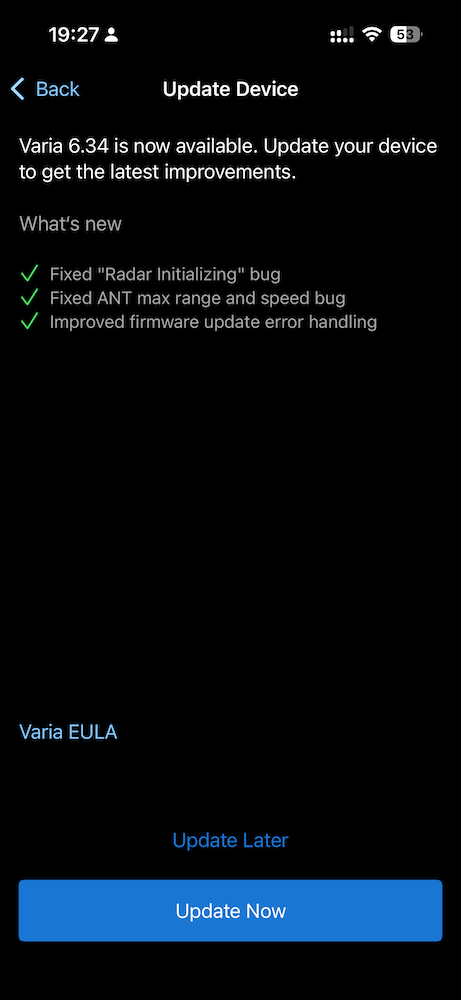
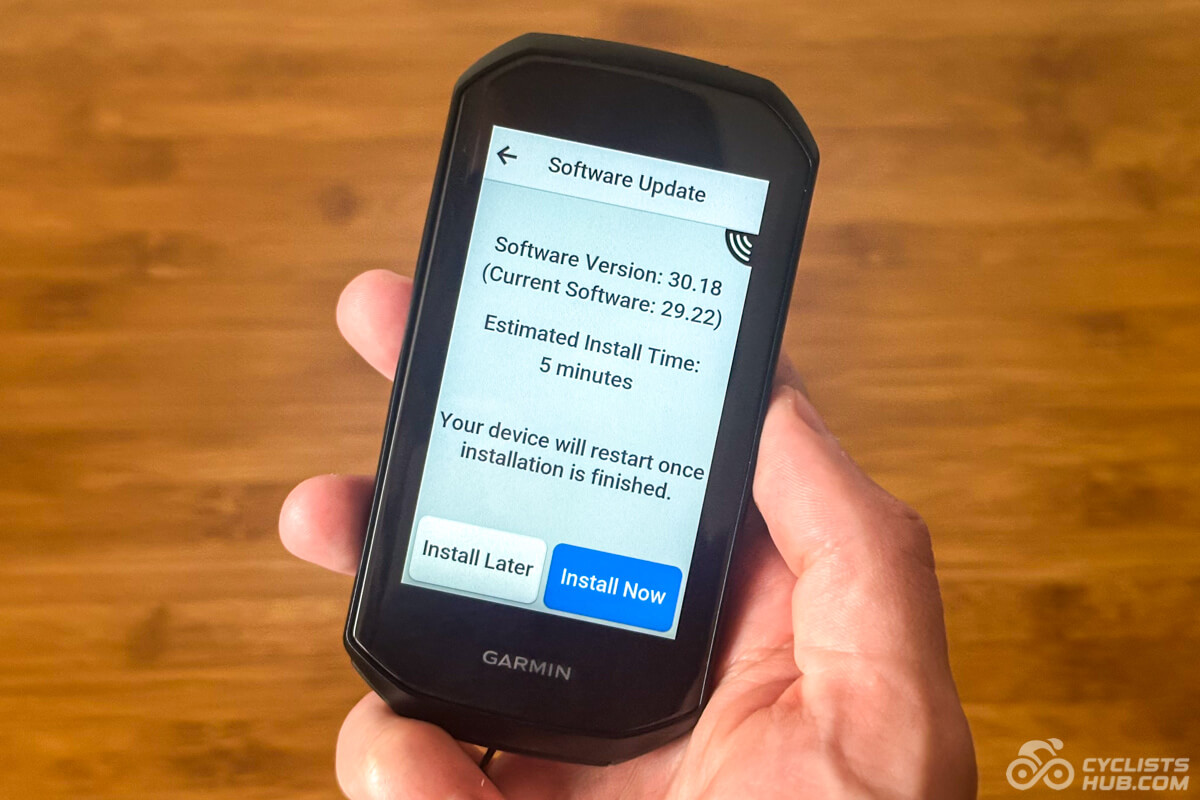
NOTE: I tested this radar with firmware v6.34 and Edge 1050 v30.18.
Garmin RearVue 820 Summary
Below is a summary of the Garmin RearVue 820 technical specifications.
Garmin RearVue 820 Technical Specifications
- Dimensions: 98.9×25.9×43.2 mm
- Weight: 90g
- Claimed battery life: up to 24 hours (day flash)
- Real battery life: 18 hours (day flash)
- Charging: USB-C
- Radar: Yes
- Taillight: Yes
- Brake sensing: Yes
- Auto standby: Yes
- Lumens: up to 100
- Water resistance: IPX7
- Detecting distance: 175m
- Detecting speed: n/a
- Viewing angle: 220°
- Horizontal angle: 60°
- Protocols: ANT+, Bluetooth
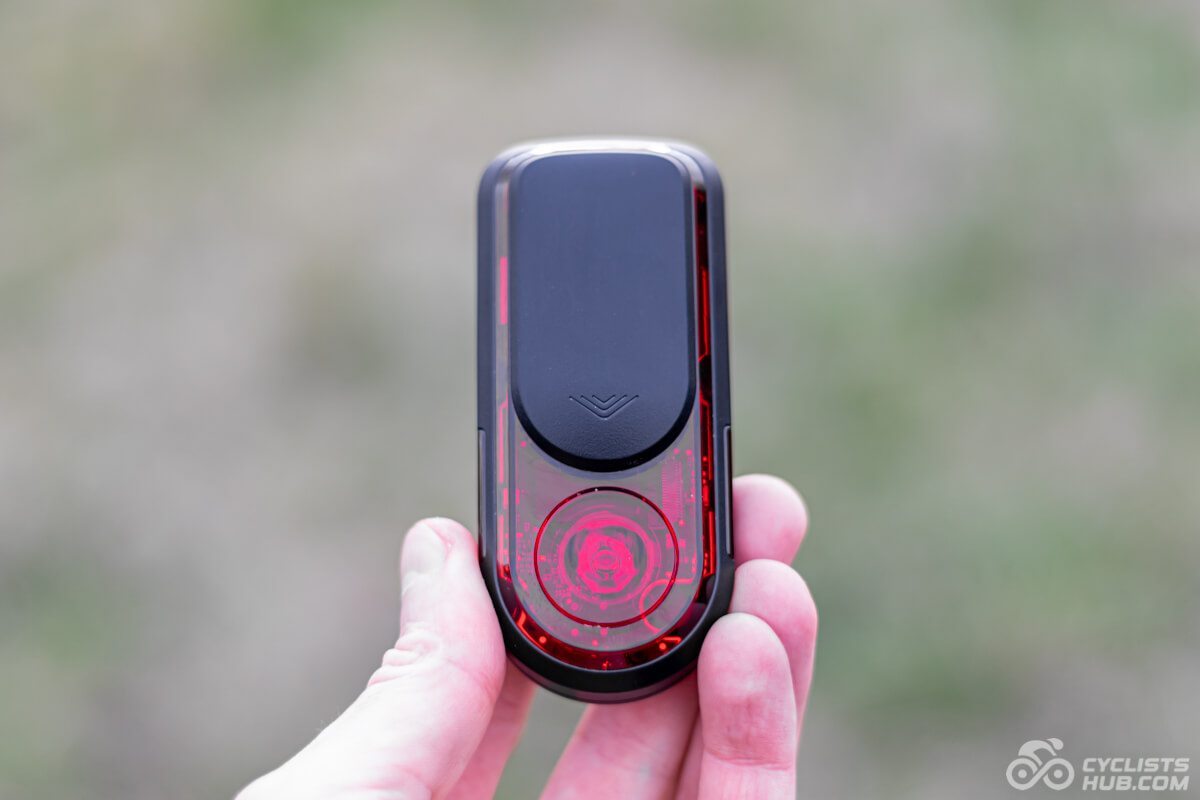
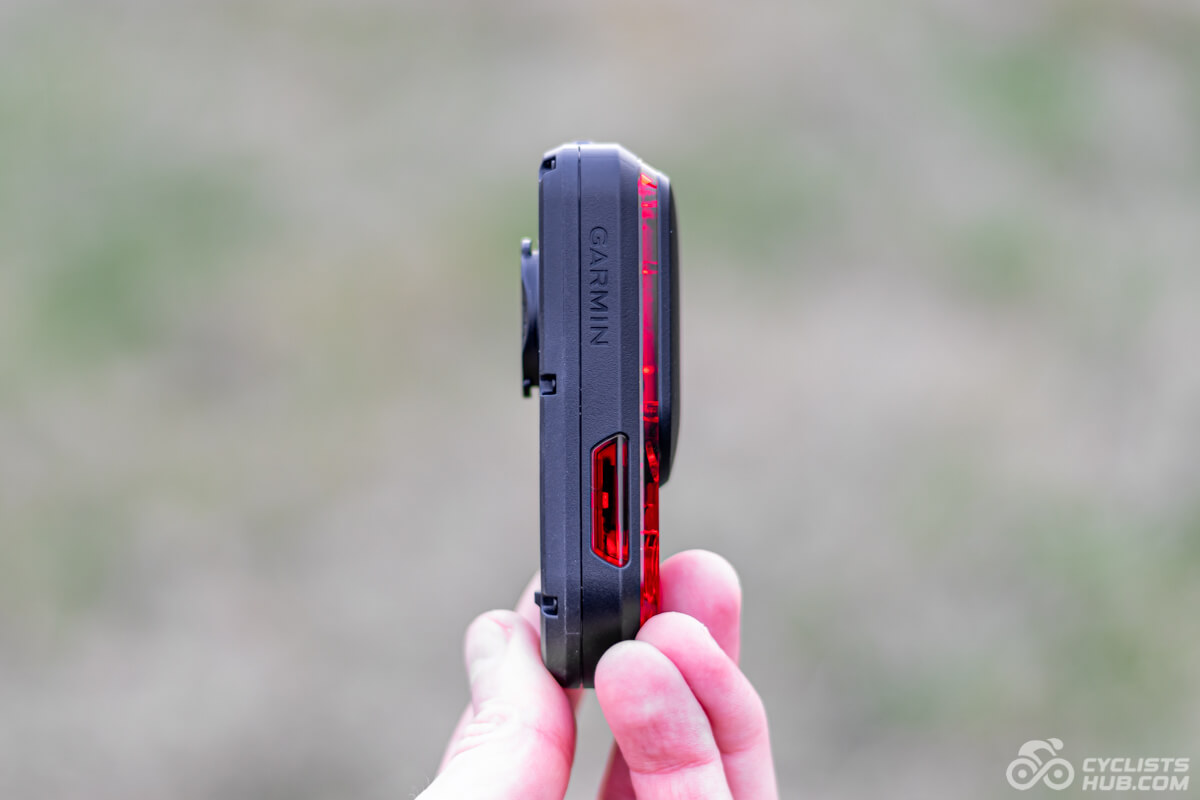
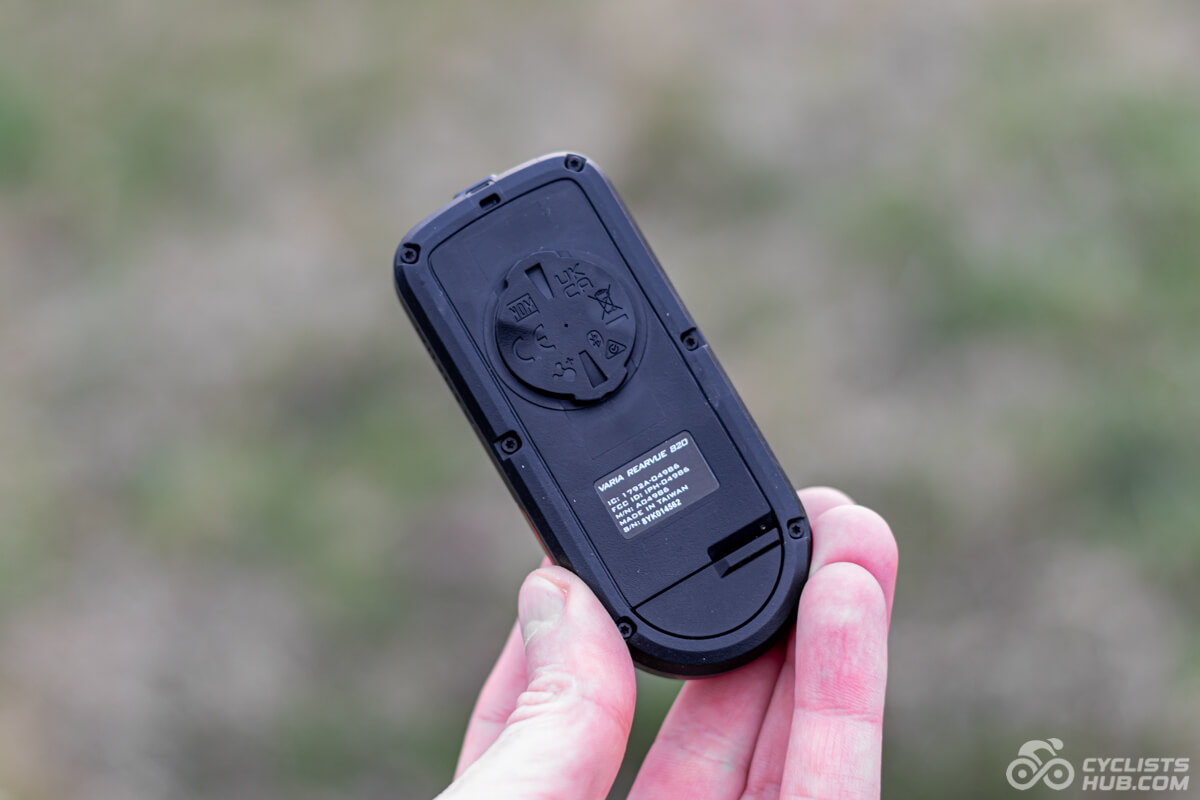
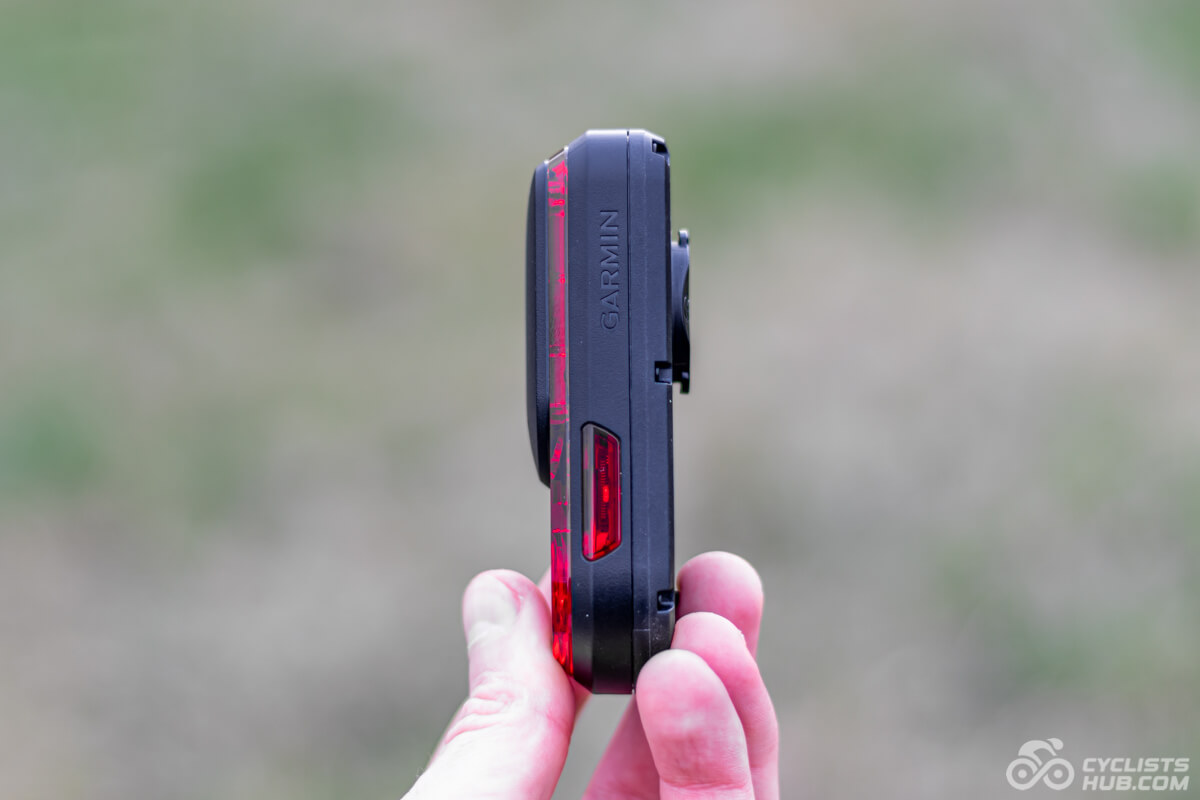
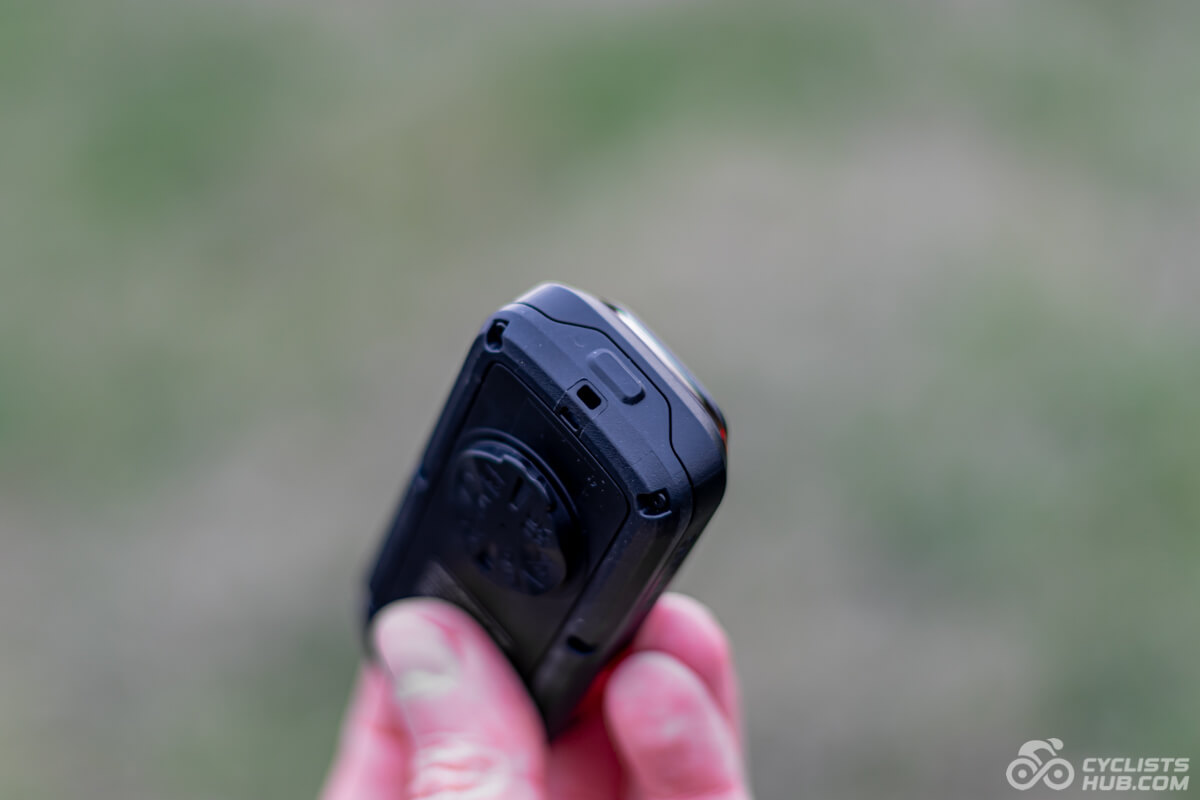
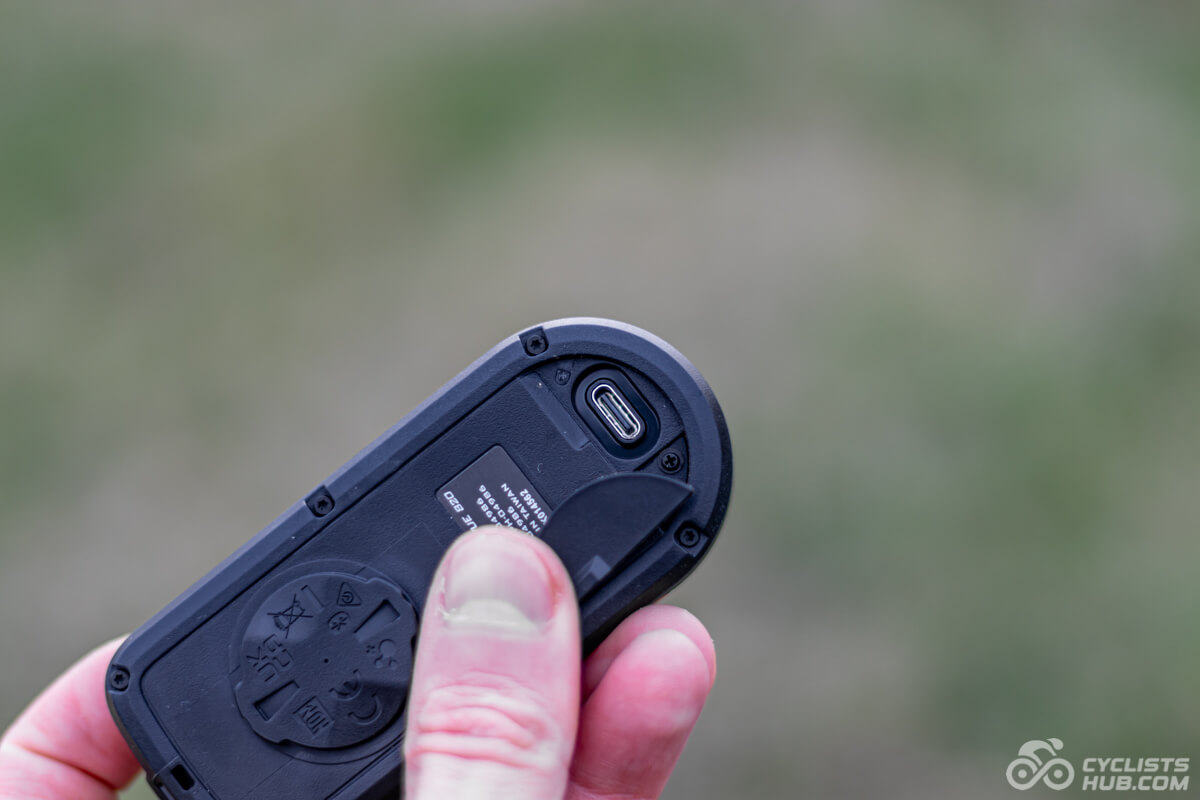
Also available at amazon.com and performancebike.com
What’s New Compared to Garmin Varia RTL515?
There are more upgrades to the RearVue 820 than it might seem at first glance. Here is the complete list:
- RearVue 820 increases the detection range from ~140 m to ~175 m.
- The 820 widens the radar beam from ~40° to ~60°.
- New threat logic factors in vehicle size (small/medium/large) and lateral movement, not just speed.
- RearVue 820 offers the same speed-tracking, showing riders or vehicles behind you moving at a similar speed, whereas the RTL515 often drops them.
- Visibility and brightness are meaningfully improved:
- Day‑Flash jumps from ~65 lm on the RTL515 to ~100 lm on the 820.
- Claimed visibility increases from up to ~1.6 km to up to ~2 km in daylight.
- Battery life is longer across all modes:
- Solid mode goes from ~6 h to ~10 h.
- Day Flash extends from ~15–16 h to ~24 h.
- A dedicated radar‑only mode can run for about 30 h.
- The 820 adds USB‑C charging and a user‑replaceable battery pack (rear cover with screws).
- Light modes are the same basic set as on the RTL515, but now include custom flash patterns and brightness profiles created in the Varia app and synced to the light.
- Integrated brake‑light behavior uses the unit’s accelerometer to briefly boost brightness when you slow or stop.
- Light controls are now also exposed over Bluetooth, giving phones and some watches better integration than on the RTL515.
- The unit is slightly larger and heavier (from ~71 g to ~90 g) but remains compact and IPX7‑rated with a similar seatpost‑mount form factor.
- The 820 is priced higher than the RTL515 ($299 vs. $199).
My Experience with Garmin RearVue 820
Based on my testing, I found the following pros and cons of the RearVue 820.
RearVue 820 Pros
- Gives almost no false positives (close to 0)
- Can detect vehicle size and lane, and vehicles traveling at the same speed
- Improves side visibility
- Offers a longer real detection distance than most radars on the market
- Changes the light pattern during the entire overtaking period
- Features brake sensing, standby, and battery life indicator
- Design allows easier battery replacements
- Safety tether is included
RearVue 820 Cons
- The mount seems overengineered and is ineffective for some seatpost types
- Same-speed vehicle tracking sometimes leads to false threat alerts
- Requires Garmin Edge x40 or newer, or Explore 2 for the full feature set
- High price
Also available at amazon.com and performancebike.com
Unboxing and Setup
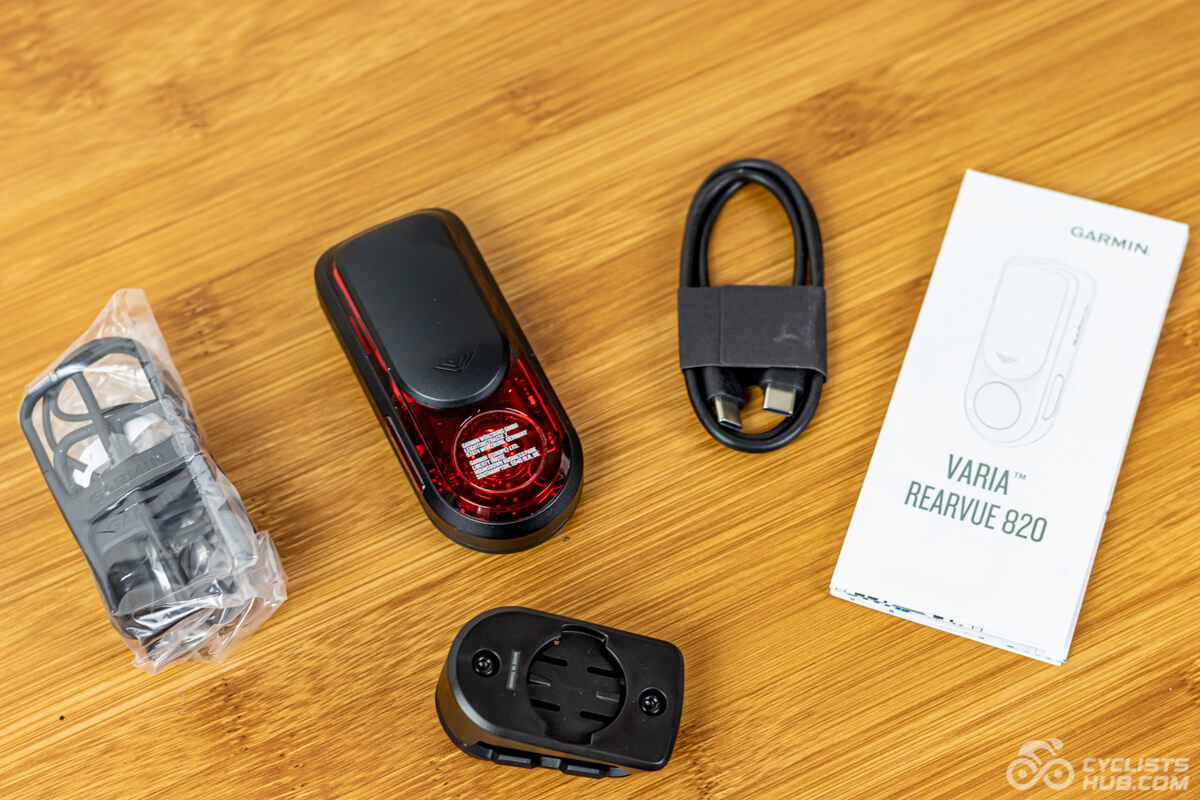
Just based on the box contents, it’s clear that Garmin studied reviews of other cycling radars: you’ll find a safety tether inside (it wasn’t included in the Varia RTL515 box), and the mount has been redesigned to prevent slipping on a seatpost. There are multiple adaptors included, those suitable for an aero seatpost, rounded and D-shaped ones, and two rubber straps to allow tightening the mount.
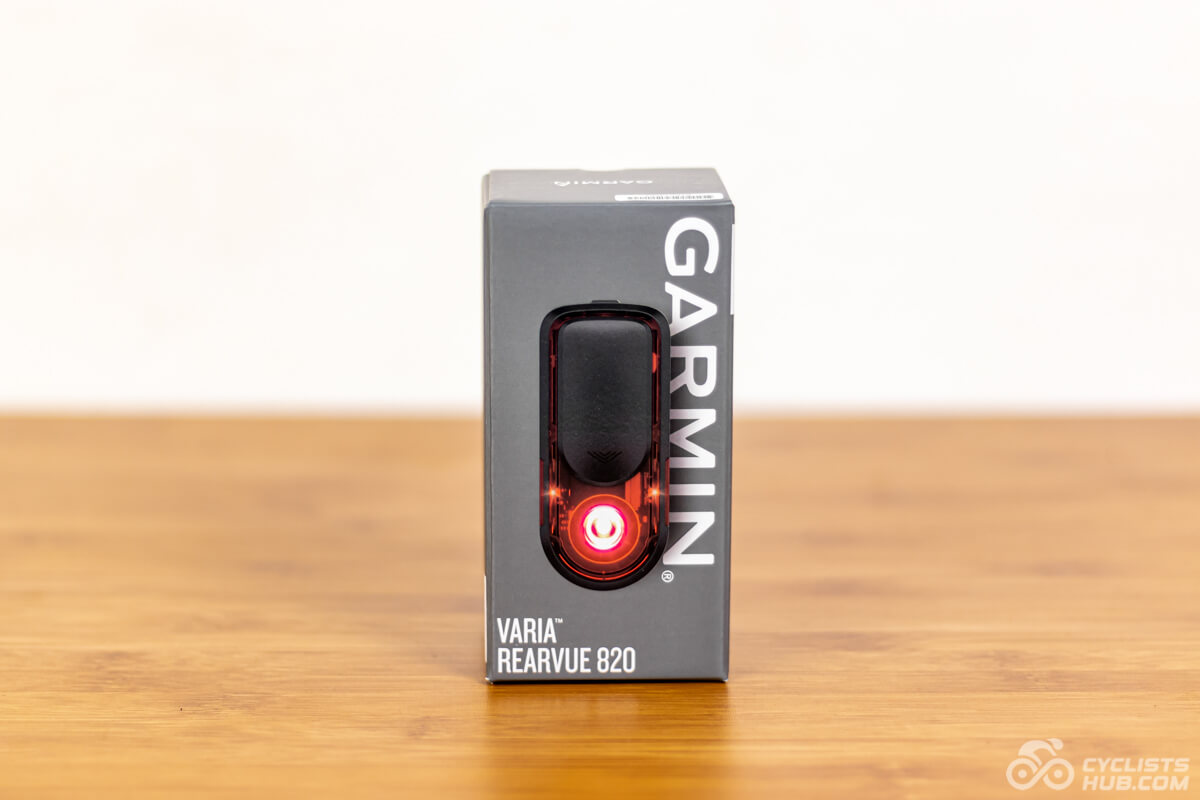
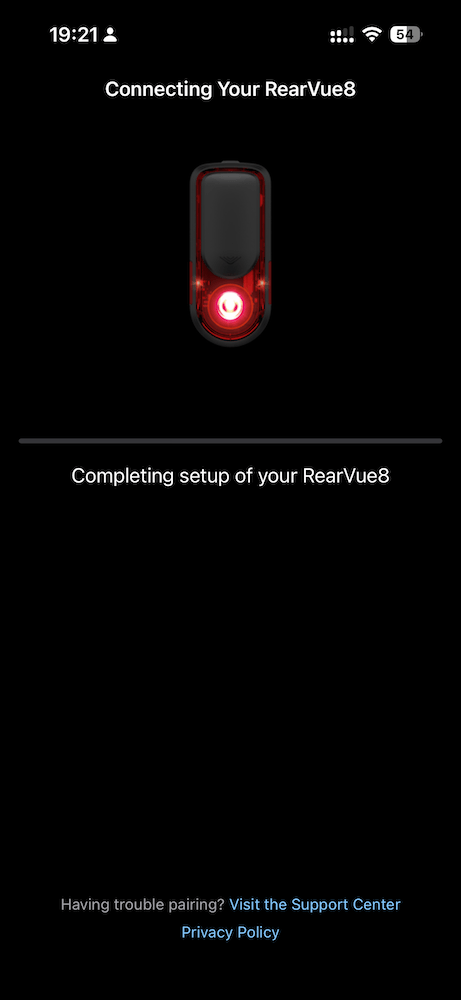
As always with bicycle radars, I first checked for firmware updates via the Varia app. However, I couldn’t turn the radar on. The red LED status indicator was flashing slowly, which I took as a sign that the battery was low and needed charging. But even after plugging it into the charger, it kept flashing in the same pattern. So I looked into the support section and found out that the radar had likely gotten stuck in “error mode.” I had never encountered anything like this before. I had to hard reset it (holding down the power button for about 15 seconds). After that, the light stopped flashing, and I could recharge the radar.
After charging, I tried to install the firmware v6.34 update via the Varia smartphone app, but encountered another problem. Even though the update had downloaded and the app showed that it was downloaded, the LED indicator on the radar kept flashing orange and green for more than 10 minutes. That seemed too long to me, so I used the Garmin Express macOS app to update it over a wired connection, and the firmware update completed in about 5 minutes.
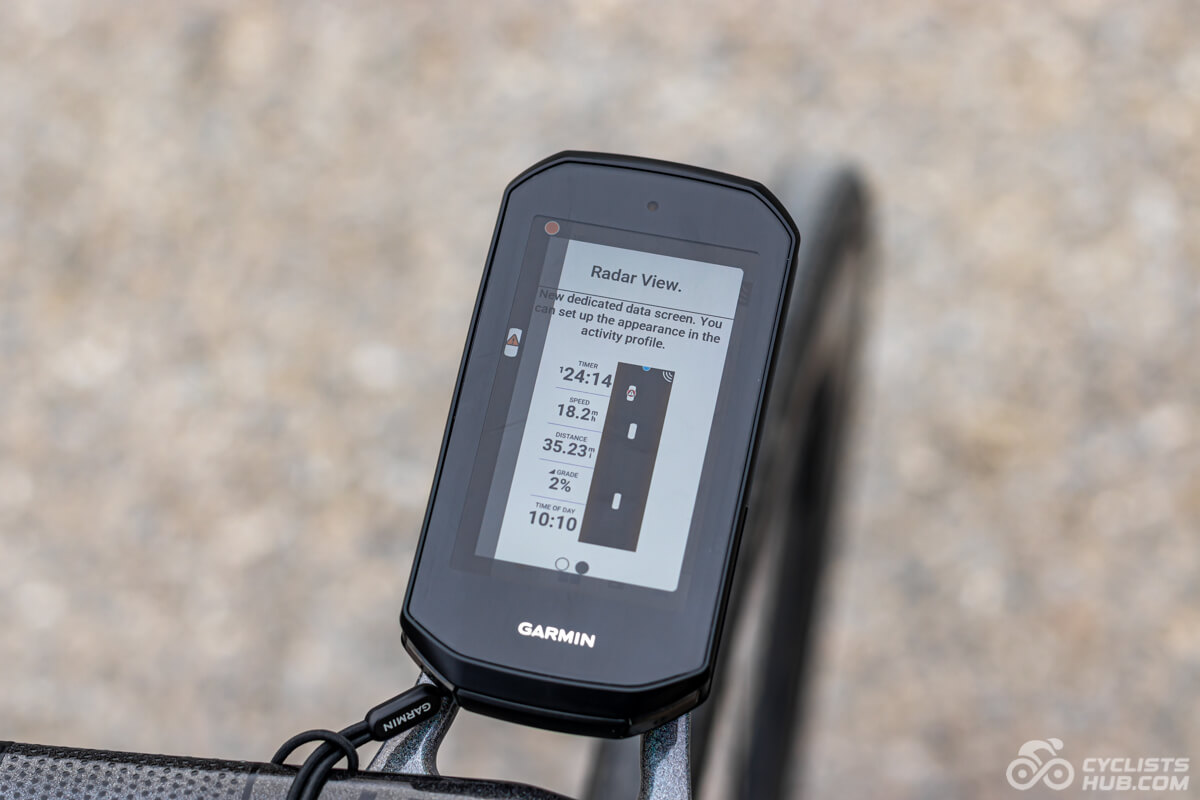
I then paired the radar with the Garmin Edge 1050. However, I saw the old bar with dots, not the new one that shows vehicle sizes and lanes. This was because my E1050 had firmware 29.22, but support for vehicle size detection is available only in versions 30.18 and newer. So, keep in mind to update it! Once you do, you will see the Radar View info when you pair it. If you had the radar paired and you still see the old car dots after the firmware update, unpair it and pair it again.
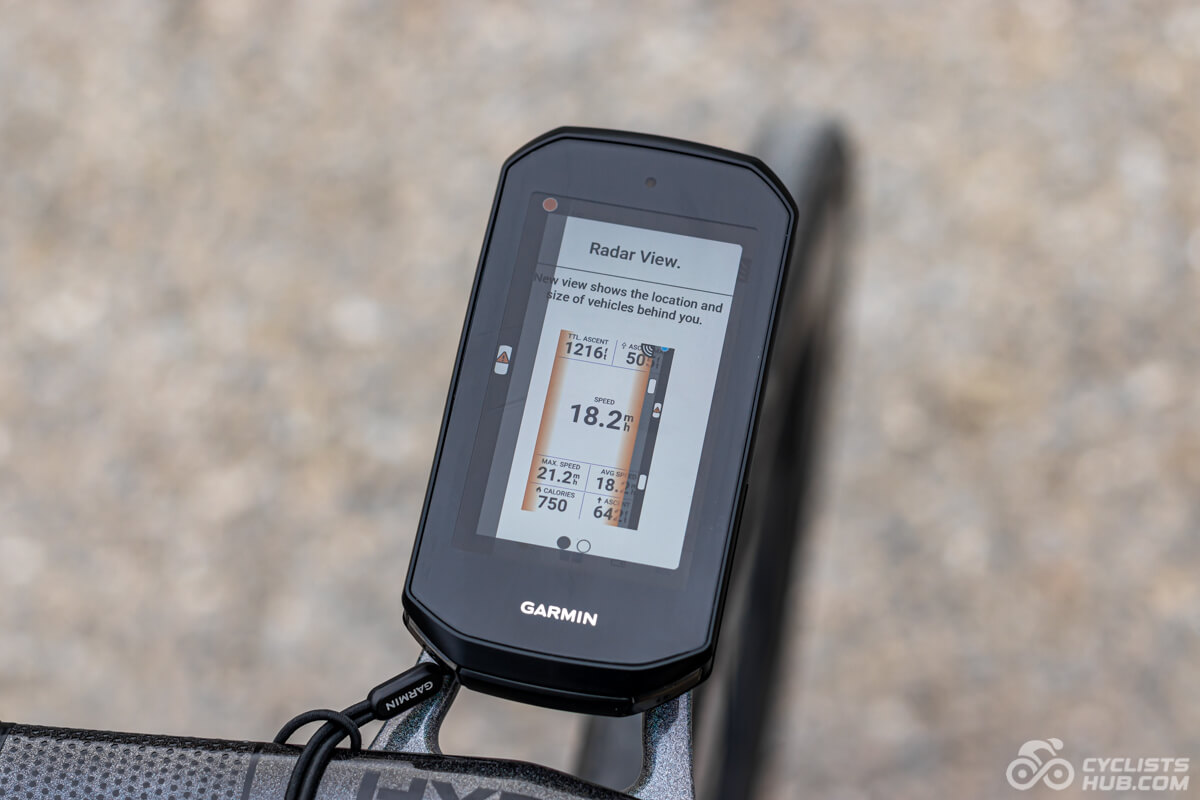
Detection Accuracy
Since I have rich experience with the Varia RTL515 (and I also tested the Varia RCT715), I had a pretty good idea of what to expect. And RearVue 820 did not disappoint.
RearVue 820 has a 60° field of view, which is 20° more than most other radars. From the radars I recently tested, only Sigma RECO 81 offers the same field of view. This means that the radar covers a broader “corridor,” catching cars in adjacent lanes or drifting over sooner. This is useful on multi-lane roads or during overtakes.
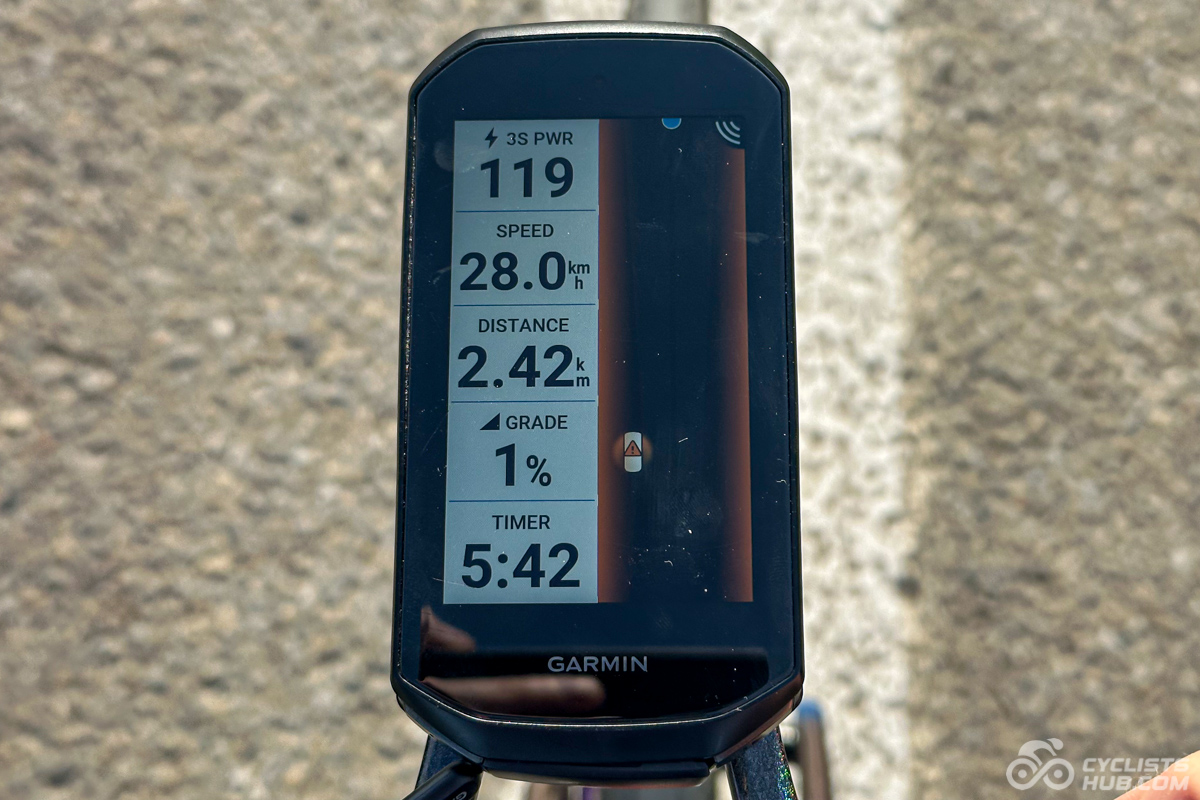
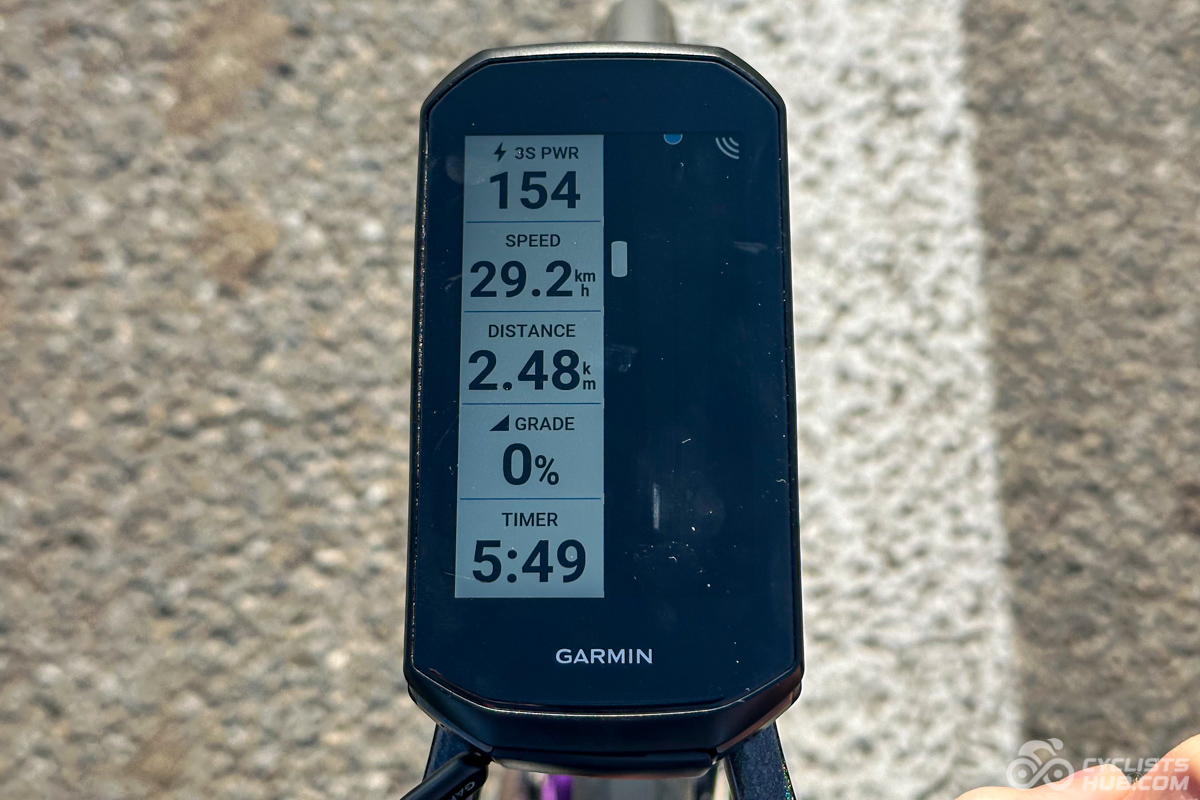
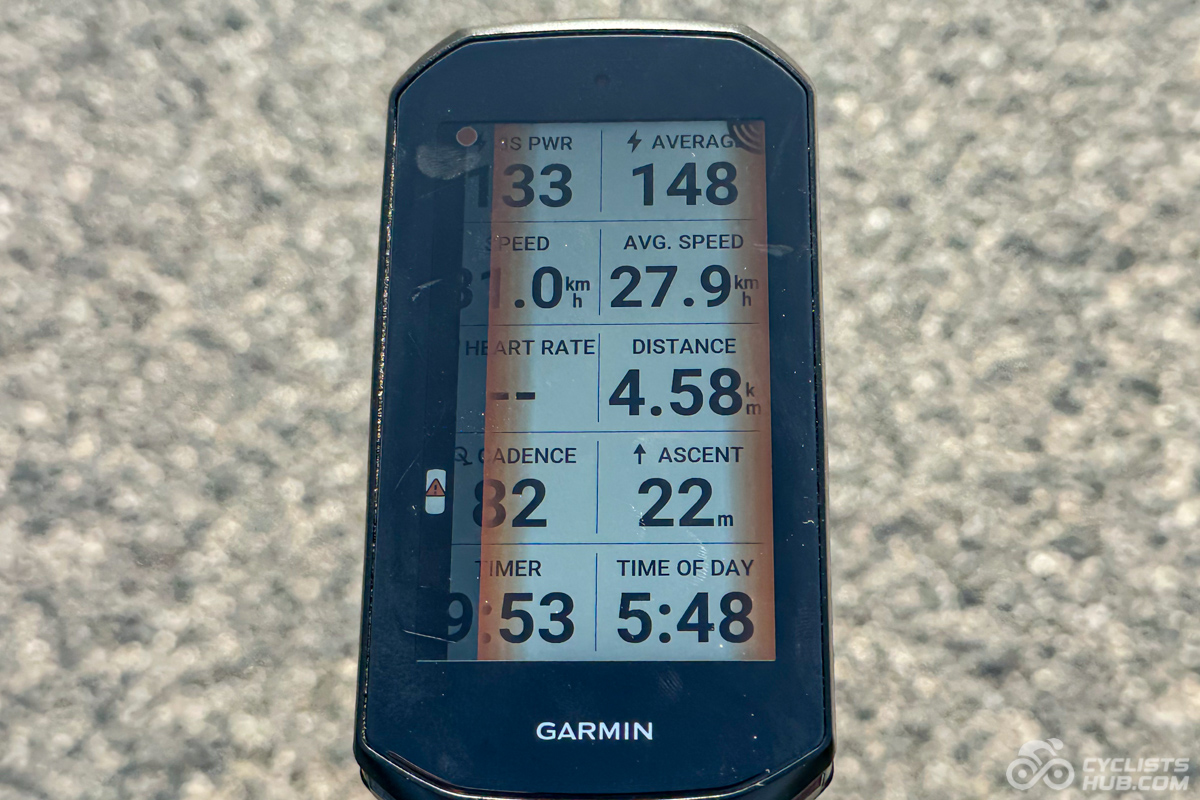
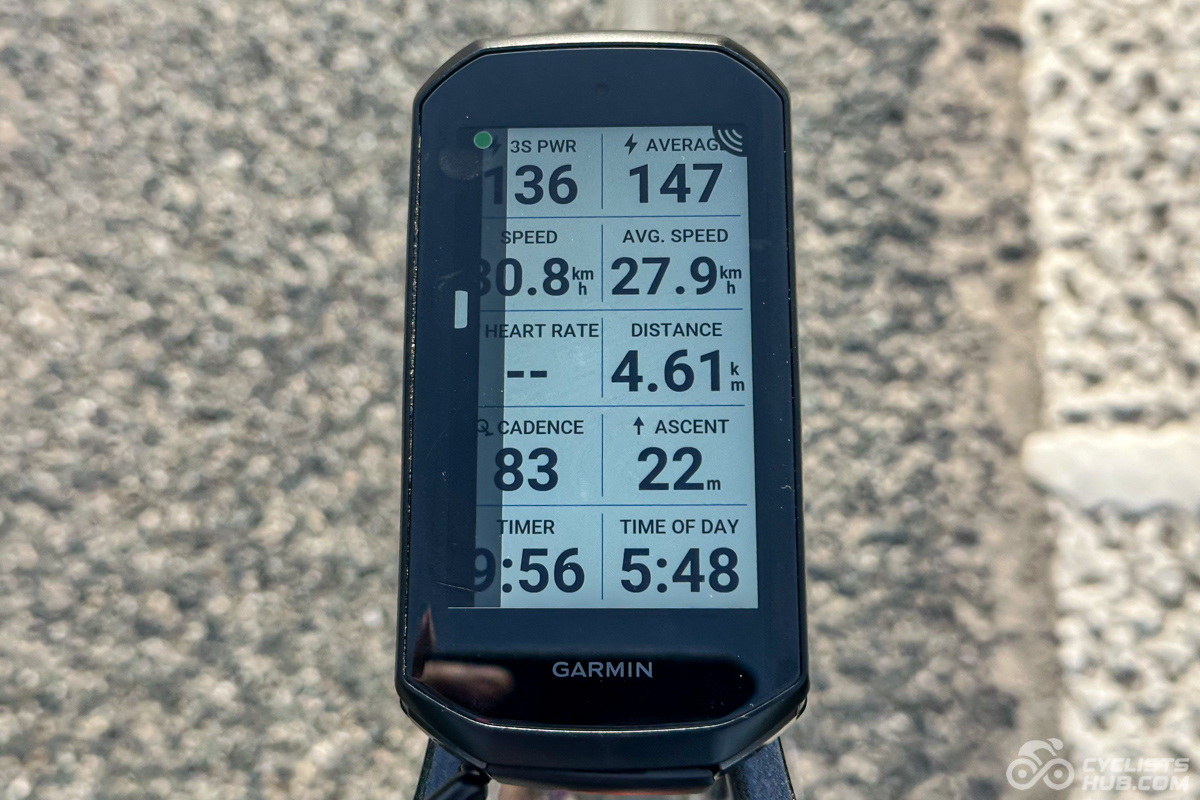
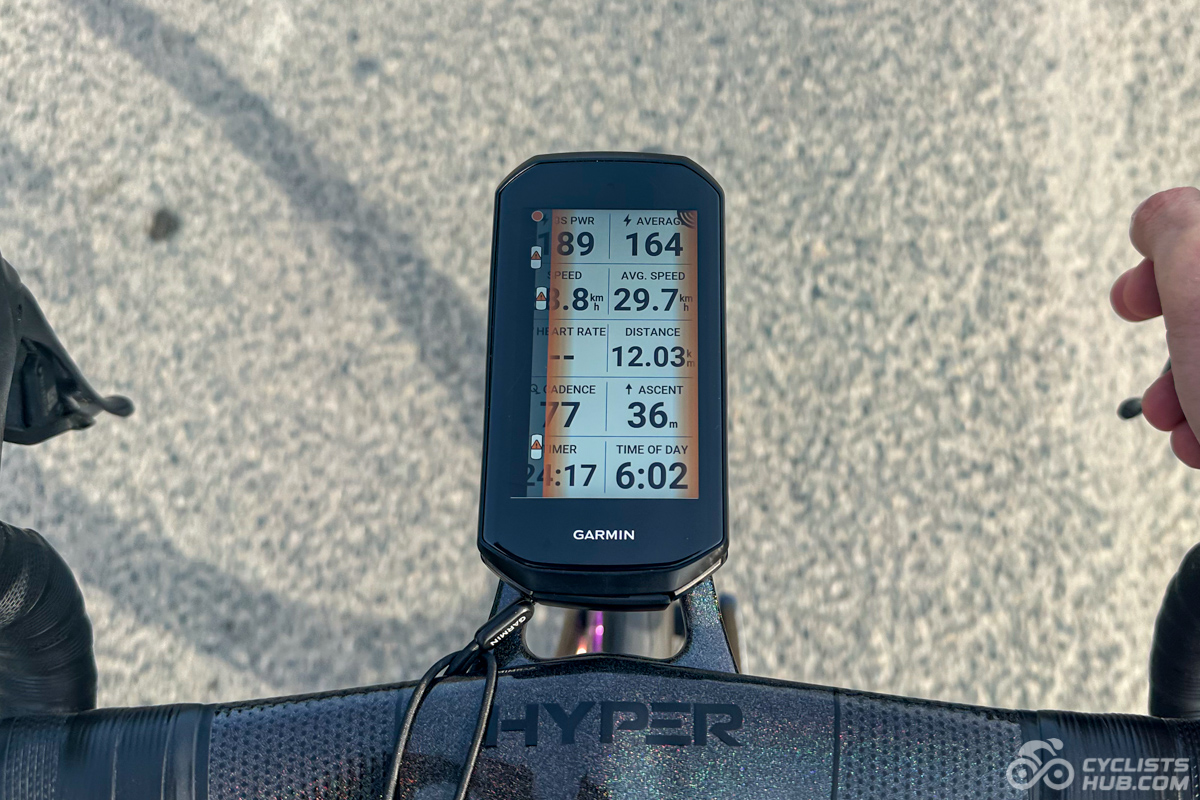
Speaking of multi-lane roads, RearVue 820 can recognize which lane the cars are in, when they change lanes, and also their size. All this while detecting them a bit sooner, thanks to up to 175m detection range. What does this mean in practice?
Well, lane detection isn’t as useful as you might think. Why, you ask? When traffic is heavy, you don’t have time to constantly check your bike computer screen. You have to look ahead. The ability to detect lanes might be helpful in some scenarios, but since we don’t have too many four-lane roads here (and I fundamentally try to avoid them), I find this feature a bit useless. In the end, I want the radar to alert me about cars that might threaten me, not those that drive in a second line (from my view). And this is something RearVue 820 does well, especially thanks to its extended detection range, which alerts me 2-3 seconds sooner than radars with a detection range of around 140m.
Also available at amazon.com and performancebike.com
However, the most significant, but also polarizing, upgrade is the new same-speed vehicle tracking. In previous generations (RTL515, RCT715), the radar worked primarily on “relative velocity.” If a car slowed down and matched your speed exactly while waiting to pass, it would often “ghost” or disappear from your head unit entirely. The RearVue 820 solves this safety gap by maintaining a lock on the target even if the speed differential drops to zero. In terms of pure safety, this is a win; you are never left wondering if the car behind you turned off or is simply hovering in your blind spot.
But this technical precision comes with a trade-off. Because the 820 is so sensitive to objects moving at your pace, it sometimes acts as a “drafting” sensor. If you have a friend sitting on your wheel, the RearVue 820 sometimes detects him as a “threat” and keeps them pinned to your screen for the duration of the ride. While the RTL515 was ignoring objects traveling at the same speed (viewing them as part of your “pack”), the 820 is far more literal.
These “fake threats” are technically not false positives, but they sometimes get stuck on my bike computer screen. This might lead to a bit of “alert fatigue” where you start tuning out the radar when a real car finally approaches.
Battery Life
The battery is supposed to last up to 24 hours in day flash mode. I tested it in real conditions, and it lasted ~18 hours. That’s enough for a week of extensive riding. Thanks to USB-C, you can recharge it from 0 to 100% in about 2.5 hours; however, the first 15 minutes of charging will give you at least 2 hours of battery life. Also, keep in mind that once the temperature is below 20°C (68°F), the charging speed is automatically reduced to protect the battery. The following chart shows the claimed and real battery life of the selected alternatives.
Surprisingly, it doesn’t have an Auto Sleep feature that puts it into a stand-by mode after several minutes of inactivity, like some other Chinese alternatives. However, it supports auto stand-by, meaning that when you end your activity or turn off your bike computer, the radar turns off as well. And when you turn on a new activity or bike computer, it will wake up with the last mode used. This is something I really miss on the Sigma RECO 81.
Brightness
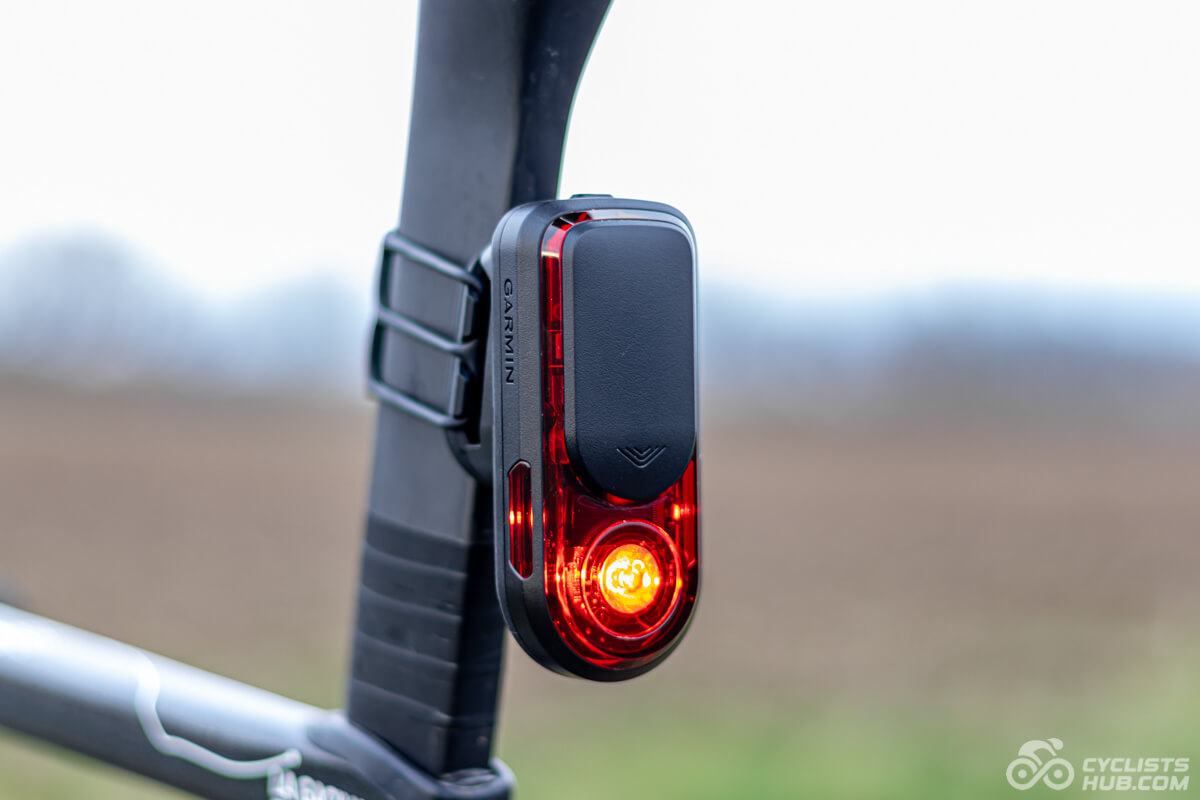
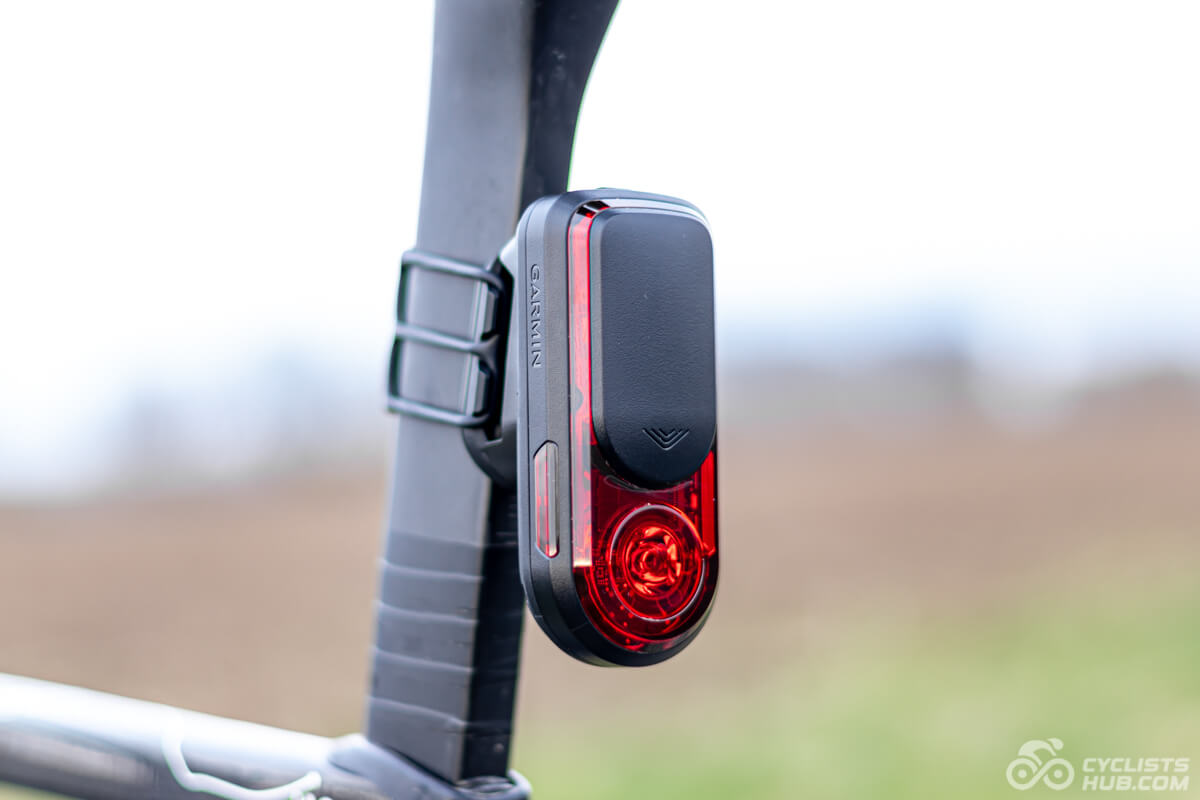
RearVue 820 has excellent brightness. It’s even higher than Garmin Varia RTL515 and any other radar I tested. The following photo compares the Garmin RearVue 820, the Wahoo TRACKR Radar, and the Garmin Varia RTL515.
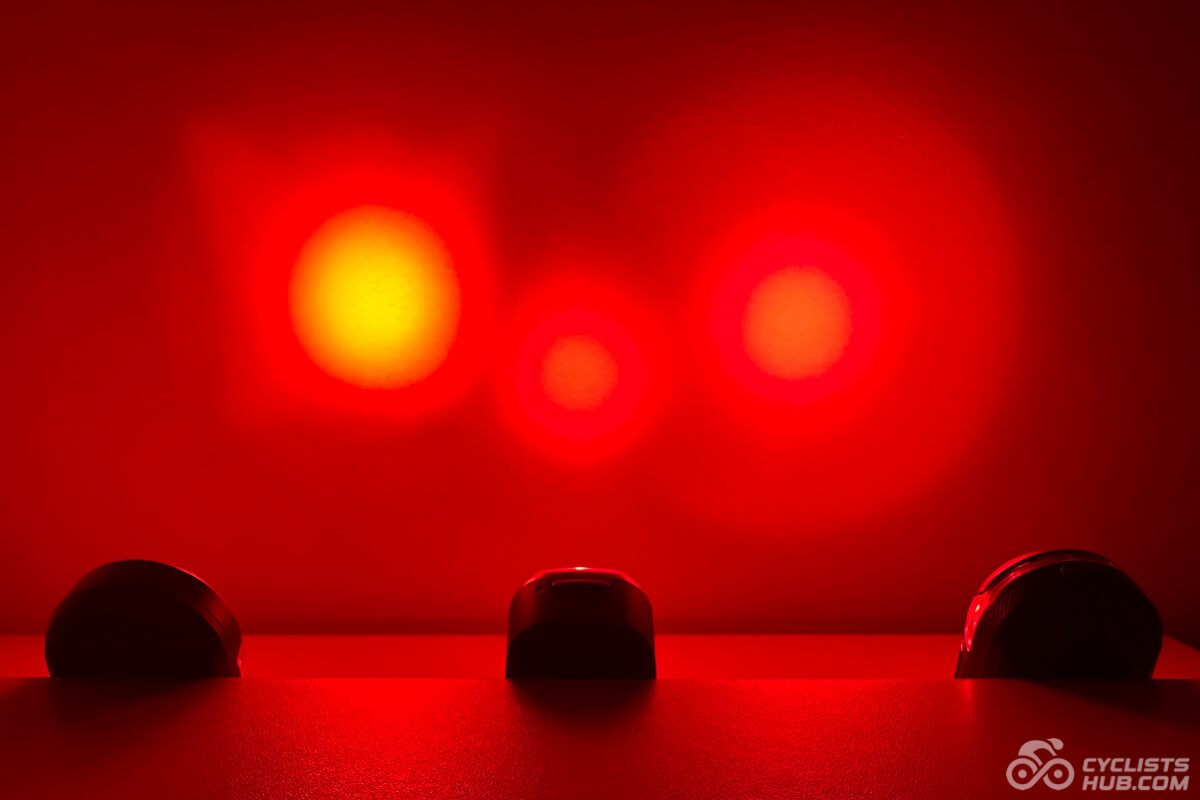
The radar changes the flashing pattern throughout the entire overtaking period. It also features the brake light, meaning the radar will change the light pattern as you brake to alert drivers behind. Lastly, it has side LEDs that improve side visibility. All boxes checked here!
Smartphone App
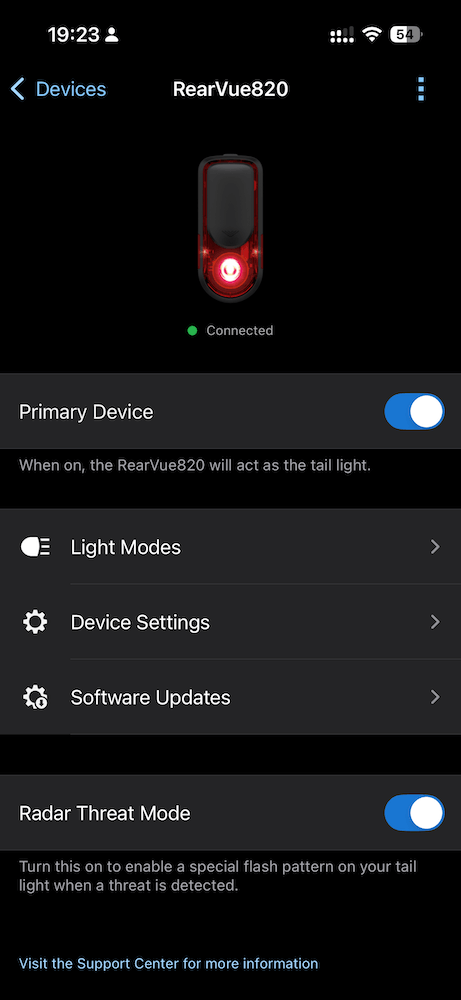
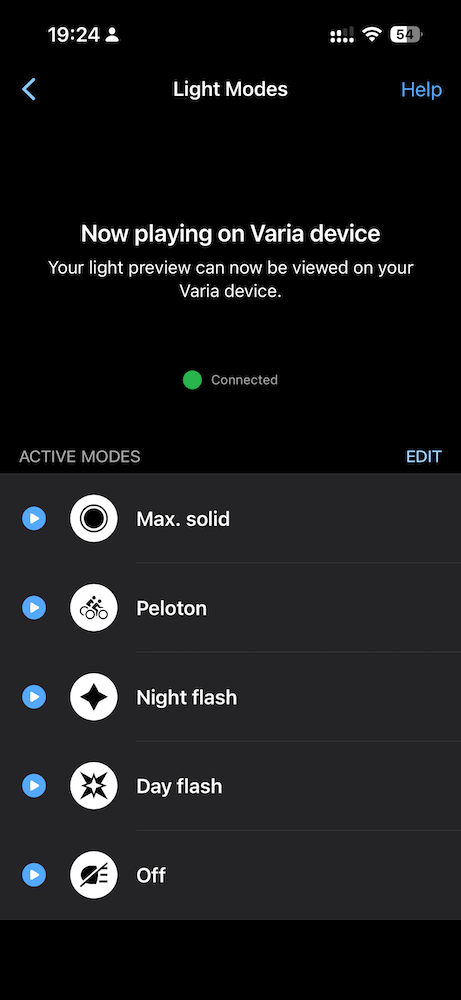
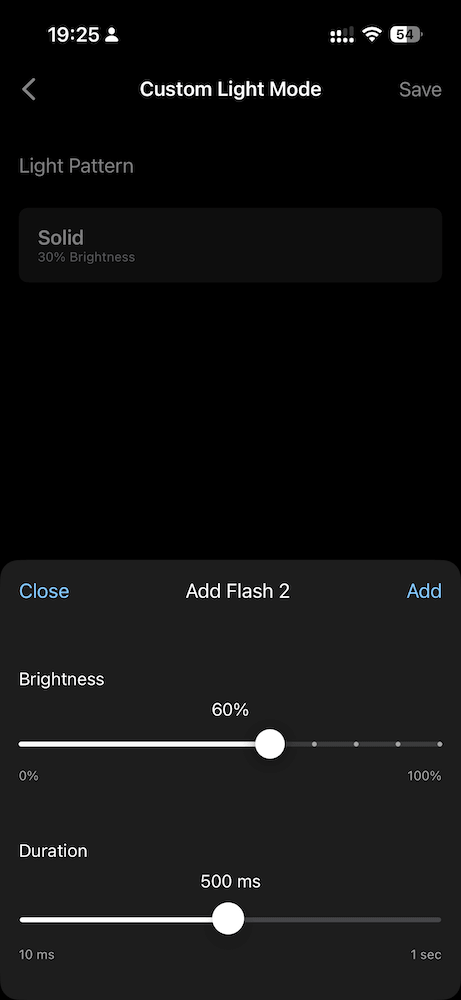
The Varia app offers more options than the RTL515. You can preview and turn light modes on and off, and design your own flashing pattern. I find the default ones sufficient, but you can let your creativity loose.
Naturally, the app can replace a bike computer because it can display information about cars. I don’t know many people who would use a $299 bike radar with a smartphone, but it’s nice to have this flexibility.
Mount
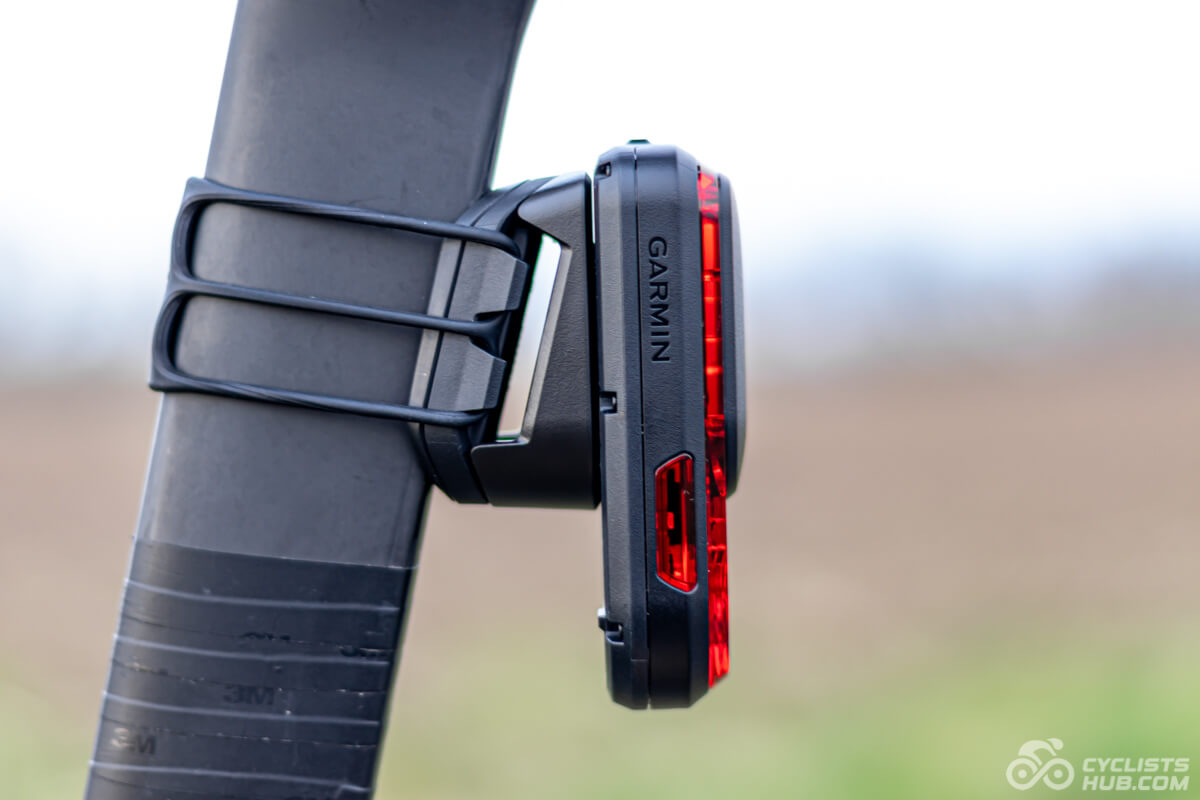
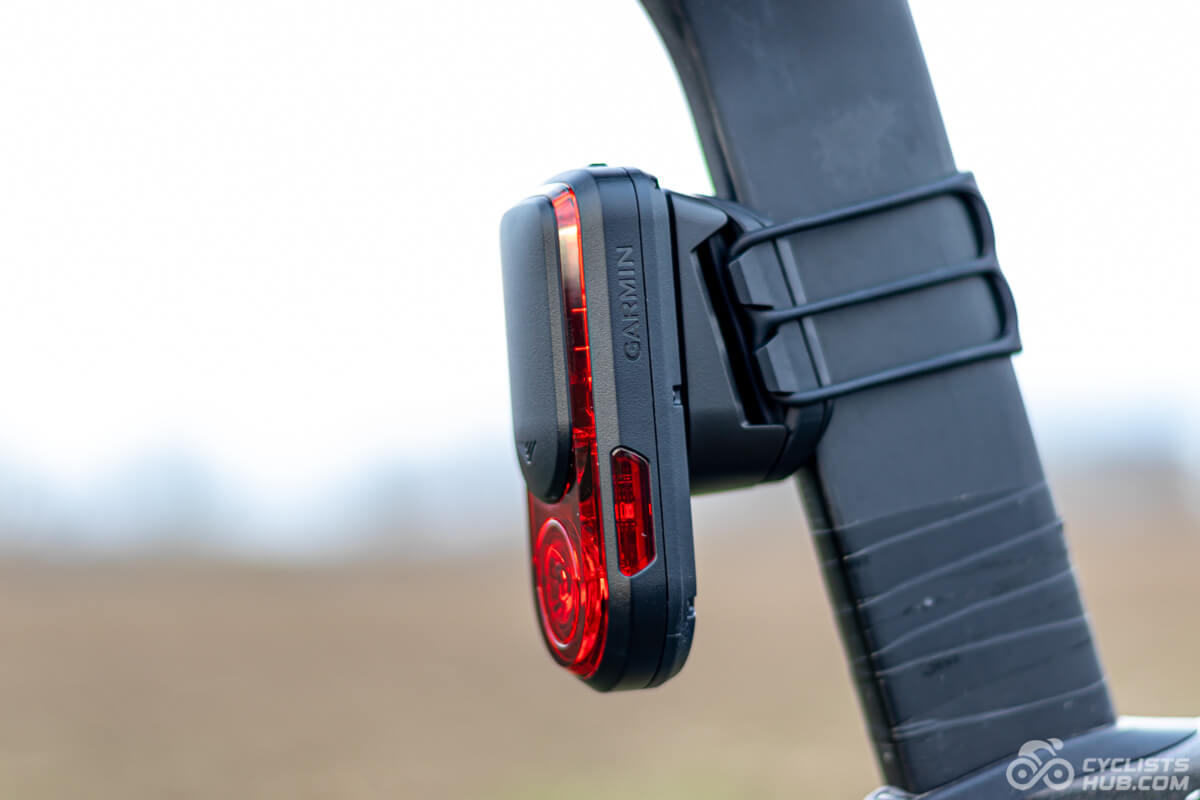
I had high expectations for the redesigned mount because the old one was pretty loose. Unfortunately, despite its bulkiness, it doesn’t work well on certain seatpost types. For example, I have an aero seatpost, but the aero adaptor simply doesn’t fit well; it’s better to use the other two adaptors.
Attaching the mount with the long rubber strap is pretty challenging to deep seatposts. I prefer the Wahoo or Sigma mounts because they let me tighten them as needed, and they don’t slide. So, despite Garmin’s efforts, I find the new mount pretty disappointing.
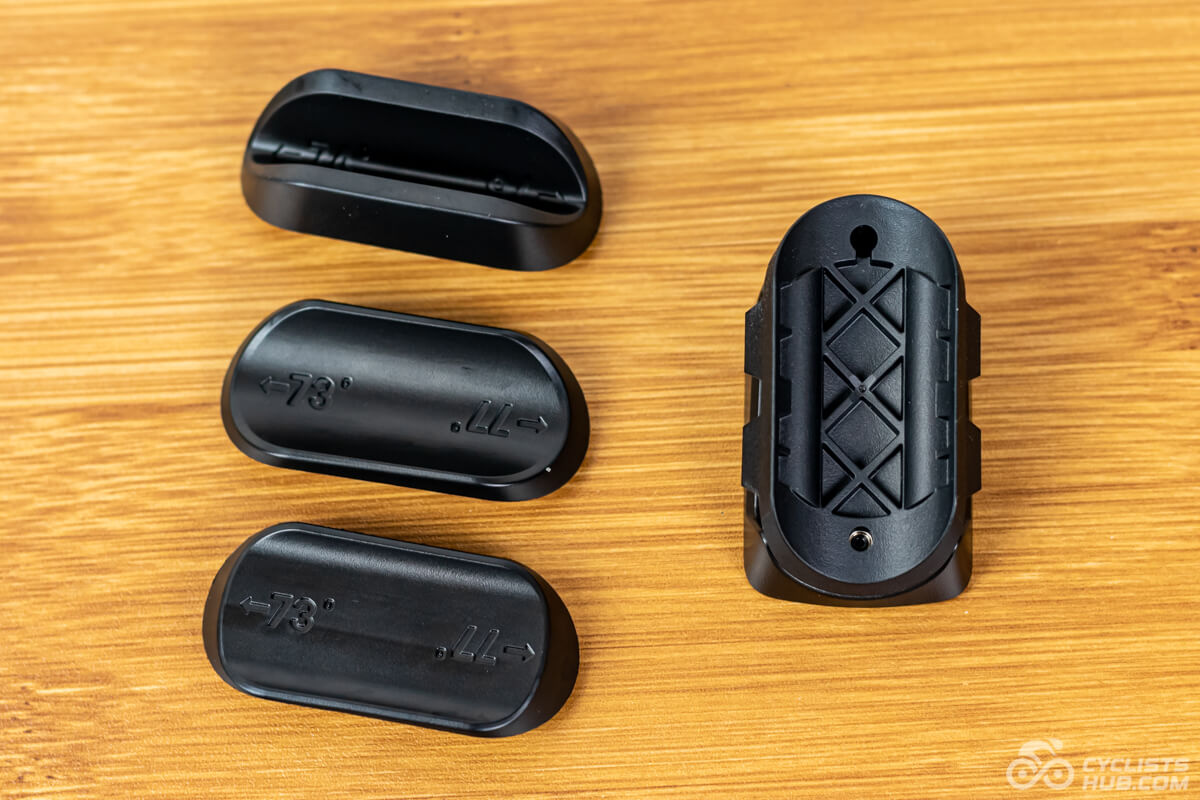
By the way, you may have noticed that the adaptors are marked with 73° and 77°. This ensures that the radar is ideally perpendicular to the ground, depending on the seatpost angle. This seems like a clever solution to a rare problem. But the truth is that the correct radar position is probably the second most important thing (after dialed firmware) to ensure high detection accuracy.
Also available at amazon.com and performancebike.com
Garmin RearVue 820 vs. Other Cycling Radars
The following table summarizes the technical specifications of the RearVue 820 and other popular bicycle radars.
| Feature/Radar | Dimensions | Weight | Claimed battery life | Real battery life (day flash) | Charging port | Brake sensing | Auto stand-by | Customizable light modes | Light pattern change when overtaking | App can replace a bike computer | Lumens | Detecting distance | Relative detecting speed | Water resistance | Viewing angle | Horizontal detection angle | Protocols | Detecting frequency | Mount standard | More Info | Buy |
|---|---|---|---|---|---|---|---|---|---|---|---|---|---|---|---|---|---|---|---|---|---|
| Varia RTL515 | 98.6×19.7×39.6 mm 3.9×0.8×1.6 in |
71g | 16h flash 22h radar only |
9.5¹ | MicroUSB | No | No | No | Yes | Yes | Up to 65 | Up to 140m | 10 to 160 km/h (6 to 99 mph) |
IPX7 | 220° | 40° | Bluetooth, ANT+ | ~24 GHz | Garmin | RTL515 review | Check Price Check Price (rei.com) |
| Magene L508 | 94×25×38 mm 3.7×0.98×1.5 in |
65g | 15h flash 19h radar only |
7.3 | USB-C | Yes | Yes | Yes³ | Yes | No | Up to 40 | Up to 140m | 10 to 120 km/h (6 to 74 mph) |
IPX7 | 220° | 40° | Bluetooth, ANT+ | 24.05 – 24.25 GHz | Garmin-like rotated 90° | L508 review | Check Price |
| Bryton Gardia R300L | 97×20.9×40 mm 3.82×0.82×1.57 in |
66g | 17h flash 24h radar only |
11.7² | USB-C | Yes | Yes | No | Yes | Yes | Up to 73 | Up to 190m | 10 to 120 km/h (6 to 74 mph) |
IPX7 | 220° | 40° | Bluetooth, ANT+ | ~24 GHz | Garmin-like rotated 90° | R300 review | Check Price |
| iGPSport SRTL SR30 | 99×20.3×39.7 mm 3.9×0.79×1.56 in |
68.8g | 12h flash 20h radar only |
16.9 | USB-C | Yes | Yes | No | Yes (just for a few seconds) | Yes | Up to 65 | Up to 150m | 10 to 120 km/h (6 to 74 mph) |
IPX7 | 220° | 40° | Bluetooth, ANT+ | ~24 GHz | Garmin-like rotated 90° | SR30 review | Not recommended |
| Trek CarBack | 70×30×50 mm 2.76×1.18×1.97 in |
70g | 12h flash | 11.3 | USB-C | No | n/a | No | No | Yes | Up to 90 | Up to 230m⁴ | n/a | IPX7 | n/a | n/a | Bluetooth, ANT+ | ~77 GHz | Proprietary | CarBack review | Check Price Check Price (trekbikes.com) |
| Magicshine R300 | 96×29×34 mm 3.78×1.14×1.34 in |
110g | 16.2h flash 26.3h radar only |
9.4 | USB-C | No | Yes | No | Yes | No | Up to 300 | Up to 140m | 10 to 160 km/h (6 to 99 mph) |
IPX6 | 270° | 35° | Bluetooth, ANT+ | 24 – 24.25GHz | Proprietary | R300 review | Not recommended |
| Cycplus L7 | 76.5×25×37 mm 3×0.98×1.46 in |
67g | 25h flash 36h radar only |
15.3 | USB-C | Yes | Yes | No | Yes | No | Up to 40 | Up to 160m | 6 to 160 km/h (3 to 99 mph) |
IPX6 | 270° | 40° | Bluetooth, ANT+ | n/a | Garmin | L7 review | Not recommended |
| Wahoo TRACKR | 77×19×37 mm 3.03×0.75×1.46 in |
99g | 15h high flash 36h radar only |
8.5 | USB-C | Yes | Yes | No | Yes | No | Up to 53 | Up to 150m | n/a | IPX7 | n/a | 35° | Bluetooth, ANT+ | ~24 GHz | Garmin⁵ | TRACKR Radar review | Check Price |
| iGPSport SR mini | 77×37×19 mm 3.03×1.46×0.75 in |
50g | 7h day flash 25 radar only |
8.6 | USB-C | Yes | Yes | Yes | Yes | Yes | Up to 30 | Up to 160m | 4 to 110 km/h (2 to 68 mph) |
IPX7 | 220° | 45° | Bluetooth, ANT+ | n/a | Garmin-like rotated 90° | SR mini review | Check Price |
| Coospo TR70 | 96×23×39 mm 3.78×0.91×1.54 in |
65g | 30h flash 40h radar only |
19.5 | USB-C | Yes | Yes | Yes | Yes | Yes | Up to 70 | Up to 140m | 6 to 128 km/h (3 to 79 mph) |
IP67 | 220° | 40° | Bluetooth, ANT+ | n/a | Garmin-like rotated 90° | Coospo TR70 review | Not recommended |
| Sigma RECO 81 | 98.6×19.7×39.5 mm 3.88×0.78×1.56 in |
62g | 21h flash 30h radar only |
14.5 | USB-C | Yes | Yes | Yes | Yes | Yes | n/a | Up to 160m | 5 to 165 km/h (3 to 102 mph) |
IP67 | 220° | 60° | Bluetooth, ANT+ | n/a | Garmin | Sigma RECO 81 review | Check Price |
| Garmin RearVue 820 | 98.9×25.9×43.2 mm 3.9×1.0×1.7in |
90g | 24h flash 30h radar only |
18 | USB-C | Yes | Yes | Yes | Yes | Yes | Up to 100 | Up to 170m | n/a | IPX7 | 220° | 60° | Bluetooth, ANT+ | n/a | Garmin | RearVue 820 review | Check Price |
This table compares features of the selected bicycle radars.
¹About two years old unit. The battery depreciation probably influenced the battery life.
²Demo unit – I am not sure if this influenced the battery life.
³Paid subscription or free for email subscription.
⁴The real detecting distance is around 150m, which means more or less the same as other radars.
⁵TRACKR Radar won’t fit Garmin mounts due to wider socket.
Updated: March 6, 2026
Things to Consider Before Buying a Bicycle Radar
Cycling radars have to be highly reliable. They may give you false positives, but they should never give you false negatives, which means they never miss a car.
You should have zero tolerance for false negatives if you buy a device like a cycling radar. However, you shouldn’t rely entirely on a bicycle radar, but you should also use your other senses while riding.
Based on my testing, the RearVue 820 never missed a car and proved to be one of the best cycling radars I tested.
My Verdict
After talking to engineers from Terasilic, the supplier of sensors used in many bicycle radars, and learning more technical details about how the bicycle radars actually work, I admire Garmin for developing a radar that can accurately assess vehicle size and lane. Based on my experience with Chinese radars, which often give too many false positives, achieving such precision and accuracy is not standard at all and raises the bar even higher.
The battery life, the light’s visibility even from side angles, and the longer detection range are also impressive. Garmin tried to improve the mount, but it’s quite bulky and not suitable for some seatpost types. This is a bit disappointing. Still, RearVue 820 achieved the highest rating of all the radars I have tested so far. So, is it a clear recommendation?
Well, not quite. I think it’s a bit of overkill, at least in terms of price. If you don’t mind spending 50% more than on the Varia RTL515, you’ll definitely be happy with it. But if you want to save money, I would consider alternatives (like the Wahoo TRACKR Radar) that don’t offer such advanced detection, but in the end, it doesn’t matter much because they are perfectly adequate for their purpose. I was also disappointed by the initial setup issues. I am sure that less tech-savvy users would struggle with finding solutions to them. Finally, “same-speed vehicle tracking” can lead to a specific type of “false positives” during group rides, causing a constant dot on the bike computer screen that represents other cyclists.
I wish Garmin would release a stripped-down version of this radar—one that’s smaller, doesn’t have lane detection, and, most importantly, is half the price. But I don’t think that’s going to happen.
If you decide to buy the RearVue 820, please consider clicking the links below. It won’t cost you anything extra, and it’s the best way to support this website. Thank you very much in advance.
Also available at amazon.com and performancebike.com
Garmin RearVue 820 FAQ
The product for this review was kindly provided by the manufacturer. This did not influence my overall verdict or my opinion about the product. You can learn more about how I approach reviews here.